

Lloyd Lee

These robots are coming for the jobs no one wants — and could fill workforce gaps

Backflipping robots make for splashy demos and viral videos, but Agility Robotics sees humanoid bots doing something simpler — solving an urgent global labor issue inside manufacturing plants.

The Oregon-based startup has so far deployed its humanoid robot, Digit, at Amazon, Schaeffler Group, and GXO, a logistics company. The startup announced in February that a few Digit robots would be deployed in Toyota’s massive manufacturing plant in Canada, marking yet another automaker betting on bipedal bots.

Daniel Diez, Agility’s chief business officer, told Business Insider that there’s a common thread at the companies he visits around the world. In Germany, Korea, Japan, or the US, manufacturers just don’t have enough people who want to work mundane, repetitive jobs.


Headshot of Daniel Diez, chief business officer of Agility Robotics

Daniel Diez, Agility Robotics’ chief business officer, said there’s a labor gap in manufacturing that will require automation.

Courtesy Agility Robotics


“It’s the same exact issue: Labor gaps in these highly repetitive physical tasks,” Diez said. “They simply can’t find the people to do this work.”

There is no shortage of manufacturing roles. According to the Bureau of Labor Statistics, there are more than 400,000 job openings in the sector in the US as of December 2025.

In addition to vacancies, talent retention remains a top concern for manufacturers, according to a 2024 survey of more than 200 companies conducted by The Manufacturing Institute and Deloitte.

Diez said there are “compounding effects” to the so-called labor gap.

A significant share of the manufacturing workforce is 55 and over, he said, meaning they’re approaching retirement. BLS’s Current Population Survey clocks the number at a little over 25%.

Add to that the Trump Administration’s push to bring onshore manufacturing back, which Diez said will only create more jobs and a greater need for automation.

“This re-shoring of manufacturing in the US is going to only occur through a combination of human employment and automation technology, like humans and robotics,” he said.

Automakers are notably bracing for this shifting tide. Tesla, Volkswagen, Ford, Mercedes-Benz, and Hyundai, among others, have made significant investments in humanoid robots with the prospect that they’ll work the assembly lines in the near future.


A humanoid robot stands

Atlas, Boston Dynamics’ humanoid robot, will be deployed in Hyundai’s factory in 2028.

Lloyd Lee/BI


Boston Dynamics in January unveiled a new iteration of Atlas, an all-electric humanoid, that the startup aims to deploy in Hyundai’s Georgia factory in a few years.

The company’s former CEO, Robert Playter, previously told Business Insider that Boston Dynamics is helping companies brace for population decline and increased manufacturing demand.

At Toyota Motor’s manufacturing plant in Ontario, the automaker is starting with three Digit bots that will do the simple task of moving totes, or plastic containers, from one spot to another.


Digit robot moves a tub

Courtesy Agility Robotics


There are robots out there that could execute much more complex tasks, while some industry insiders say humanoids, or bots with two legs and arms, are still years away from scaling. Part of the pitch for the bipedal form factor is easier integration into existing or older factories, Diez said.

“At this moment in time, it feels like an ideal solution for brownfield facilities,” he said, referring to underutilized industrial facilities that tend to have a baked-in layout. In other words, with humanoids, manufacturers can automate their properties without making significant changes to the factory layout and workflow.

Diez said that any industry with highly repetitive tasks is ripe for the adoption of humanoid robots. The industries Agility Robotics is seeing with the most “inbound” requests are coming from warehouse logistics, e-commerce fulfillment, automotive, and pharmaceutical manufacturing, he said.

“We’re not having to convince people that this is a technology need,” Diez said. “We have more than enough hand-raisers who are coming to us.”


Source link

How-AI-can-identify-skill-gaps-in-the-workforce.jpeg

How AI can identify skill gaps in the workforce

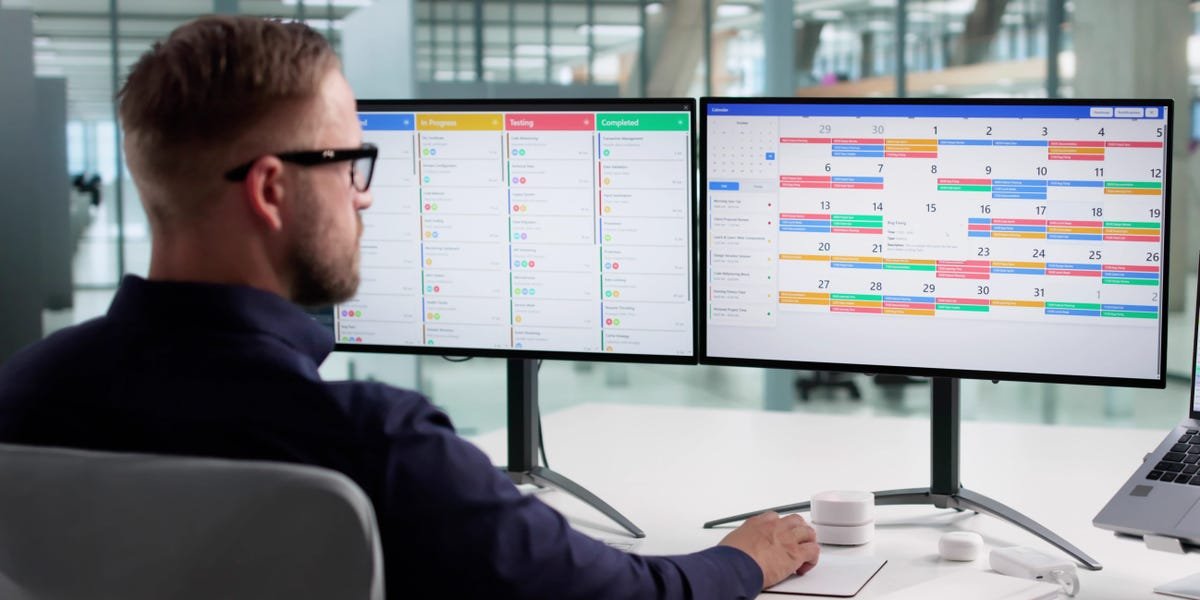
As technology continues to advance and companies look to remain competitive in meeting market demand, the skills that employees will need are also evolving. A growing number of companies are exploring how to address these skills and workforce gaps with artificial intelligence.

HR can use AI to reveal “patterns and gaps” and benchmark “current workforce skills against evolving business needs or industry trends,” said Lauren Winans, CEO and principal human resources consultant at Next Level Benefits.

What AI offers in this realm isn’t exactly new, said Will Howard, practice lead of HR trends and AI at McLean & Company. HR teams have long collected and analyzed workforce data manually, he said, but AI can make the process more “feasible and efficient” through automation.

Here, HR experts share four factors to consider when using AI to identify workforce and skills gaps:

1. Organize your data


Headshot of Sanmay Das

Headshot of Sanmay Das, associate director of AI for Social Impact at Virginia Tech.

Virginia Tech


Organizations have troves of HR data, such as job advertisements, performance reviews, and employee job histories and training, that can be mined to uncover skills gaps, said Sanmay Das, associate director of AI for Social Impact at Virginia Tech. But this data often lacks “quality and completeness,” Winans said.

Before adopting AI, organizations must embrace “good data hygiene” by ensuring the data they plan to analyze is accurate, current, and consistent, said George Denlinger, operational president of US technology talent solutions at Robert Half.

Otherwise, AI insights will be limited or inaccurate. “The phrase ‘garbage in, garbage out’ rings especially true here,” Howard said.

Companies need a clear and consistent process for collecting, maintaining, and updating workforce data, Howard said. For instance, standardize job descriptions, including specific skills, knowledge, and activities, so that AI can make accurate comparisons.

2. Analyze the insights


Headshot of George Denlinger

Headshot of George Denlinger, operational president of US technology talent solutions at Robert Half.

Robert Half


Large language models, like ChatGPT and Microsoft Copilot, can summarize and report on data, Das said. But, for a deeper analysis, companies often need specialized AI tools designed for HR, including workforce planning and analytics, Howard said. Workday and Disco are some examples.

Ultimately, AI tools can leverage your existing data and identify strengths and weaknesses in your workforce, Denlinger said.

For example, with data on employee performance for a specific project and sales forecasts, AI could suggest the skills or roles necessary to meet the organization’s future demands, Howard said. Examining an employee’s job and training history, AI could quantify their capacity to acquire new skills via upskilling or reskilling, Winans said.

IBM, for example, uses an AI system that analyzes its employees’ digital footprints within the company to identify their skills and predict skill proficiency levels. The company then uses that analysis to offer employees personalized educational opportunities and career coaches, helping them identify job opportunities and new career paths. In 2024, IBM reported that the approach had boosted employee engagement by 20%.

3. Understand AI’s limitations

While AI can analyze data, it may overlook nuances and the human aspects of what makes a role successful, such as small tasks not listed in a job description, soft skills, or the behind-the-scenes efforts employees put in, Das said.

Companies should also focus on data privacy, trust, and employee buy-in, Winans said. Employees may worry about how their data is being used and how it could impact them, such as changes to their roles or responsibilities. She suggested communicating transparently about what data will be used, how it will be used, and why.

Data literacy is another challenge: HR teams must know what to do with the AI results, Howard said. “Even the most advanced AI technology still requires a human to put the results into a business context and communicate and take action on the insights within the organization.”

For instance, the AI analysis on skills gaps should inform decisions about new roles the company needs to create or the training necessary for existing employees, Winans said.

4. Refine your strategy

“Skill requirements evolve rapidly,” Winans said. Using AI to uncover skills gaps should be a “continuous process, not a one-time audit,” she added.

While AI can be useful for tracking ongoing skills gaps, Denlinger said this is still an emerging use of the technology that will likely evolve.

Al also isn’t a “silver bullet that can take you from zero to best in class,” Howard said. “Organizations shouldn’t view AI as a shortcut. It still requires the foundational skills and structures that have always been there,” such as clean data and employees confident in using the technology.

Then, he said, AI “becomes the cherry on top that can take your workforce planning and data analysis to the next level.”


Source link