BYDs-global-push-is-accelerating-just-as-expensive-gas-jolts.jpeg

BYD’s global push is accelerating just as expensive gas jolts EV demand

BYD’s global expansion was already accelerating. Now, it’s getting a new shot in the arm: high global gas prices.

Executives at the Chinese automaker, which overtook Tesla as the world’s most popular EV seller in 2025, said on Monday it is “highly confident” it will hit or exceed its target of 1.5 million overseas vehicle sales. Insiders also told Reuters that foreign markets could eventually make up half of BYD’s car business.

It’s a sign of how quickly BYD is moving from a domestic giant to a global contender — and squeezing legacy automakers on price and technology in the process.

“A lot of automakers are really worried for good reasons,” Adam Bernard, founder of AutoPerspectives and a former GM executive, told Business Insider. “BYD is really becoming a full-line automaker. The only thing they don’t quite have is the complete global presence yet — but that’s just a matter of time.”

Simultaneously, global oil prices have been rising since the war in Iran started. Brent crude prices, the global benchmark for the oil market, have floated above $100 a barrel for the past week. They’ve risen more then 40% in the past month.

That’s led to higher prices at gas pumps worldwide, with several nations incentivizing reduced fuel consumption. Many world leaders are asking people to work remotely or use temporarily free public transit.

A wide-ranging lineup goes global


A red Yangwang U9 sports car at an auto show with its doors open.

BYD says the Yangwang U9 has a top speed of 308 mph. That would make it the world’s second-fastest car, just below the 310-mph Koenigsegg Jesko Absolut. 

GREG BAKER/AFP via Getty Images


BYD (which stands for Build Your Dreams) has an expansive lineup of vehicles. Products include everything from the low-cost Seagull hatchback and the eight-passenger Xia luxury van to the world’s second-fastest sports car, the Yangwang U9 Xtreme.

The lineup includes both plug-in hybrids and full electric vehicles.

Now, those cars are increasingly reaching dealerships in South and Central America, Europe, and Australia. They’re also about to begin sales in Canada.

BYD’s concurrent expansion into these markets is showing signs of demand outstripping supply. Dozens of X users in Australia have reported waiting up to a week to even test-drive some models.

The average price for a Toyota, Ford, or Hyundai in Australia ranges from AU$44,000 to AU$62,000, according to AussieMotor. Business Insider found offers to order a BYD Atto 1 hatchback for less than AU$25,000.

American consumers, however, remain largely off-limits. Chinese EVs face steep tariffs and regulatory barriers, including restrictions on software updates, effectively blocking large-scale entry.

China’s tech is advancing. Executives are worried.


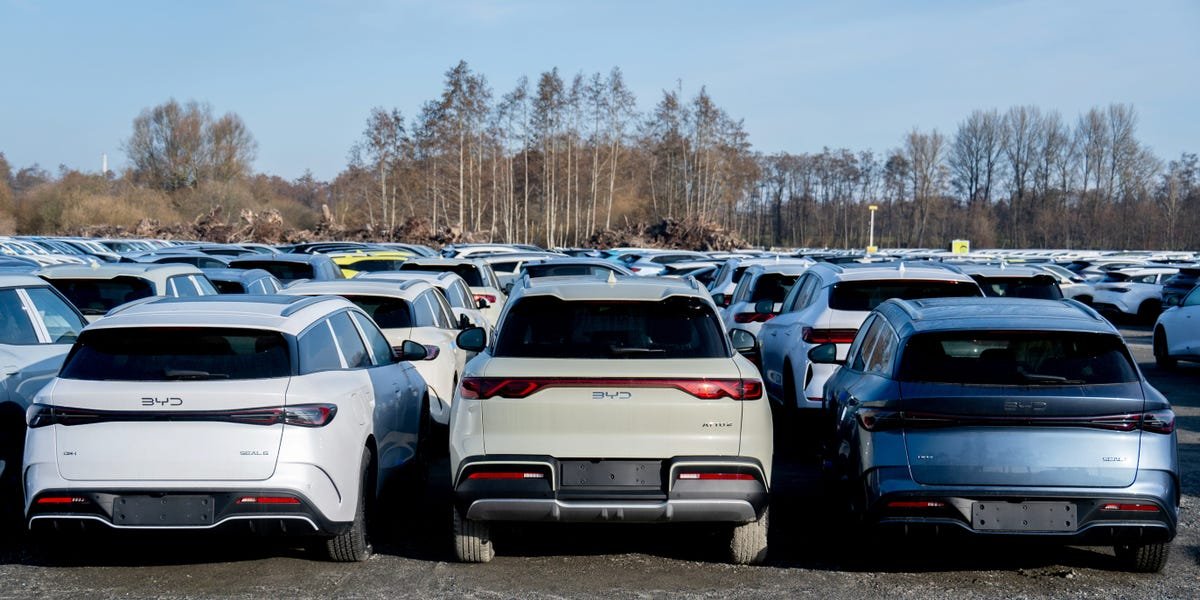
A lineup of cars in a parking lot.

China’s automotive technology is racing ahead. US auto executives have expressed concerns. 

Kevin Carter/Getty Images


Meanwhile, BYD’s technology keeps racing ahead of what legacy automakers offer. This month, the company revealed its new Blade 2.0 battery, which BYD said can charge from 10% to 70% in 5 minutes and deliver enough juice to power a car for more than 620 miles.

Those charging speeds are three times as fast as any EV on the US market.

And BYD isn’t alone. Several Chinese automakers — including Xiaomi, NIO, Li Auto, and XPeng — feature similar pricing and competitive battery technology.

Legacy automaker executives have taken note. In June, Jim Farley, Ford’s CEO, said Chinese EVs were “far superior” to US EV options. He repeated the sentiment in November, saying he was “humbled” after his engineers analyzed how Chinese competitors build their EVs.

“Unless things change, we will not survive,” Toyota’s current CEO, Koji Sato, said during a recent conference with auto parts suppliers, according to Automotive News. “Right now, we in the automotive industry are battling for our very survival.”

Not everything is rosy for the Chinese EV brand, Bernard of AutoPerspectives told Business Insider. He said the Chinese automakers still face challenges with long-term profitability, shifting government incentives (even in China), and potential backlash among US drivers.

Plus, constantly fluctuating gas prices are infrequently a stable driver for EV demand.

“It can become short attention span theater,” he said. “Gas prices move, and behavior follows — but not always for long.”

BYD didn’t immediately respond to a request for comment from Business Insider.


Source link

Decline-and-recline-Uber-and-Lyft-drivers-are-rethinking-what.jpeg

‘Decline and recline’: Uber and Lyft drivers are rethinking what trips to accept to navigate soaring gas prices

War in the Middle East is fuelling a surge in US gas prices — and drivers for services like Uber and Lyft are among the first to feel the pain.

Several ride-hailing drivers told Business Insider they’re prioritizing the most profitable trips offered by the Uber and Lyft apps to protect their earnings from rising gas prices, while dozens bemoaned the “insane” price spike on Reddit.

Oil prices blew past the $100-a-barrel mark on Monday, before falling back to around $90 after President Donald Trump suggested the war with Iran could soon come to a close.

The impact is already being felt at the pumps. The average price of a gallon of gasoline in the US has jumped by about $0.40 over the past week, according to AAA data.

Justin Fisher, who works as a ride-hailing driver for Uber in Houston, told Business Insider that he has changed which rides he accepts on the app in response to gas prices. He now focuses on taking the most profitable rides, even if they involve going to areas that he doesn’t believe are safe.

“The cost of gas is an unpleasant reality,” Fisher said.

Sergio Avedian, a former Wall Street trader who now drives for Uber and Lyft in Southern California, told Business Insider that the price of a gallon of gas at his two local gas stations in suburban Los Angeles had increased by $1 over the past week.

“It’s been extremely noticeable,” Avedian said.

Avedian said he expected Uber and Lyft drivers to adapt by accepting fewer short city trips, which often consume more gas due to frequent stopping and starting in traffic, and instead target longer trips and freeway rides that offer superior gas mileage.

The primary issue for drivers, he said, is that Uber and Lyft control fare prices, meaning drivers can’t raise their prices when their operating costs soar.

“We do not call the shots. The fares are not going up, and Uber and Lyft are not paying us more to make up this difference, which is immense,” Avedian said.

Uber and Lyft did not respond to inquiries about whether they are considering introducing a surcharge, as they did in 2022 after oil prices spiked following the Russian invasion of Ukraine.

EV drivers take a victory lap

One group of drivers appears to be reaping the benefits of the gas price volatility. Jaret, an Uber and Lyft driver in North Carolina, told Business Insider that the past weekend was one of the best he had had on Lyft.

The Tesla driver said owning an EV meant he didn’t have to worry about gas price increases.

“I don’t pay attention, because I haven’t been in a gas station in forever,” he said.

Jaret estimated that charging his Tesla Model Y at home means $1 out of every $14 he earns goes toward refuelling, compared to $1 in every $3 with a gas-powered car.

“I love having an EV,” he said. “I’m not happy that gas prices are going up, but I’m happy that it’s not affecting me.”

Temporary surcharge?

Uber and Lyft both introduced a temporary surcharge of $0.45 to $0.55 per ride to help cover the soaring cost of gas following Russia’s invasion of Ukraine in 2022.

Avedian and Jaret both said that doing the same again would help, but that it would only be a partial fix amid ballooning gas prices and shrinking payouts from rides.

“It isn’t really solving the problem,” said Jaret. “It’s a Band-Aid; it’s treating a symptom more than you’re treating a cause. But will it help? Of course.”

Avedian said he would advise rideshare drivers to take extra care when deciding which trips are profitable, and to decline those that aren’t.

“If a trip that is offered to you as a driver is not profitable, I tell them to ‘decline and recline.’ You have to decline bad offers, because this is not a public service,” he said.

Do you work for Uber, Lyft, or another ride-hailing service? Contact this reporter at abitter@businessinsider.com or via encrypted messaging app Signal at 808-854-4501. Use a personal email address, a nonwork WiFi network, and a nonwork device; here’s our guide to sharing information securely.


Source link

EV-owners-are-taking-a-victory-lap-as-gas-prices.jpeg

EV owners are taking a victory lap as gas prices skyrocket: ‘I had no idea, I drive a Tesla’

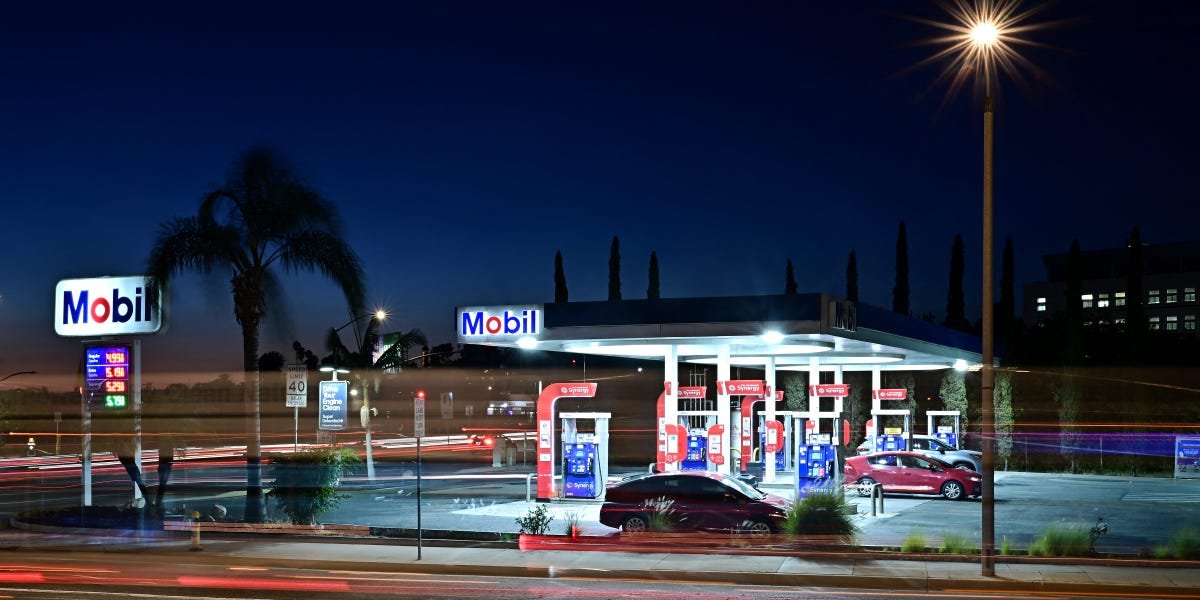
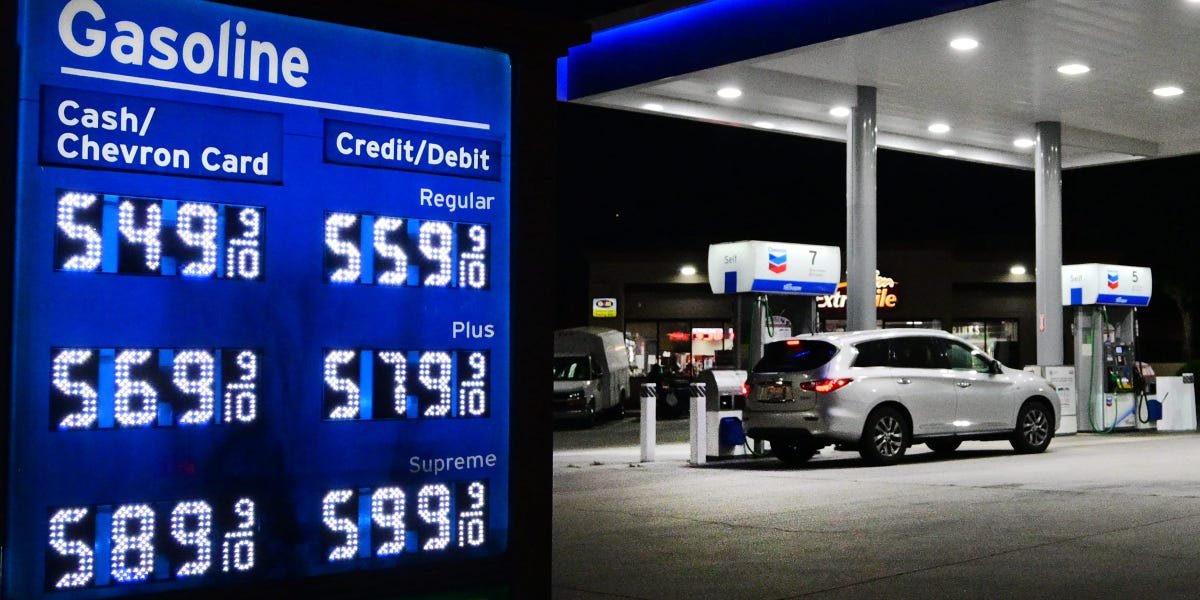
Tickers above American gas stations are flashing higher prices.

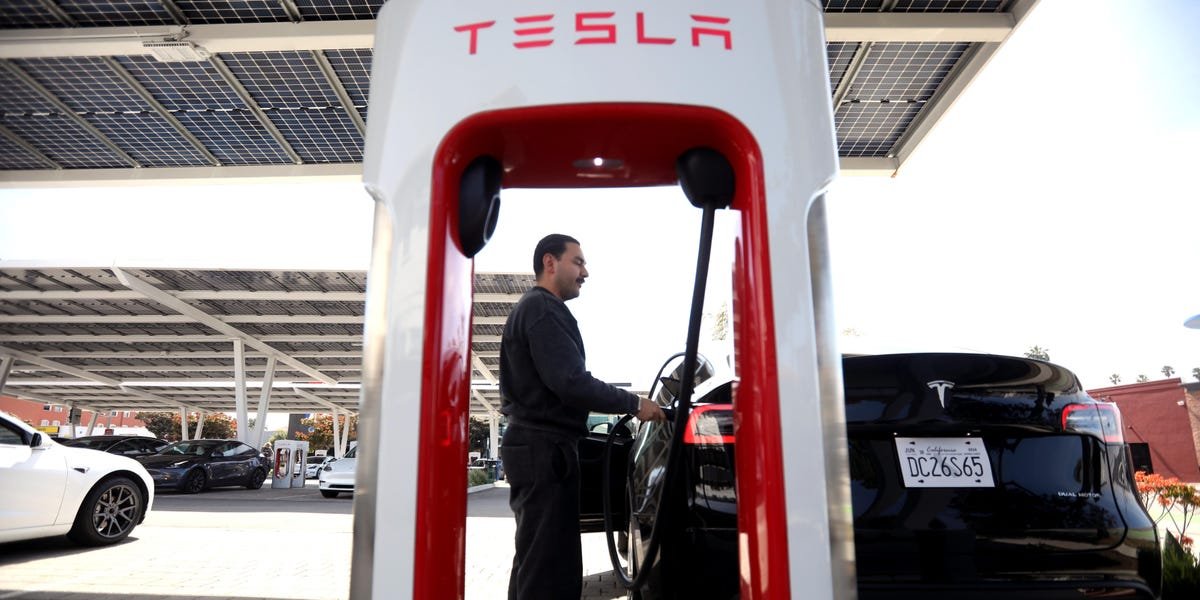
EV owners, meanwhile, are plugging in — and laughing about it online.

Across social media, electric-vehicle drivers are touting their savings as fuel costs climb during the US and Israel’s military interventions in Iran.

Many have posted meme-filled victory laps about the price of “filling up.”

One shared a compilation of a mustached Tom Selleck turning toward the camera with a smug grin in Magnum P.I.” Others are posting screenshots of their cheap charging sessions. Some are sharing gleeful TikToks while plugging their EVs into a home charger.

Juicy J — the cofounder of Three 6 Mafia and a producer of the Academy Award-winning song “It’s Hard out Here for a Pimp” — also weighed in, saying it was “time to go full electric.”

Gas prices have surged as military strikes in the Middle East disrupted oil production and heightened fears about tanker traffic through the Strait of Hormuz — a key artery for an estimated 20% of global oil and liquified natural gas shipments.

Brent crude climbed over $100 a barrel Sunday night as traders reacted to the instability. By Monday afternoon, the price had dropped back to the low $80s.

American drivers are paying more at the gas station. On February 21 — before tensions escalated — the average price of a gallon of regular gas in the US was $2.93, according to AAA.

By Monday, it had risen to $3.48, an 18.7% jump in 15 days.

In some areas, the increases have been even steeper. A Los Angeles gas station advertised prices above $8 a gallon, according to local ABC affiliate KABC.

Public EV charging rates, by contrast, have risen far less.

Over the same period, the national average price per kilowatt-hour at public charging stations increased from $0.39 to $0.42 — a 7.6% bump, according to AAA data.

And most EV owners charge at home, where electricity rates are typically lower and less directly tied to crude oil prices than gasoline.

“I had no idea,” one driver wrote on X about oil prices. “I drive a Tesla.”

Some users on X pointed out that charging costs vary widely by state and utility provider.

In regions where electricity generation relies heavily on natural gas, power prices could rise if energy markets remain volatile.

For example, in Kansas, EV charging costs about $0.30 per kilowatt-hour, according to AAA. In Louisiana — where charging stations are more sparse — the average is $0.47.

The online gloating comes at a complicated moment for the EV market. Even as gas prices heat up, sales of electric vehicles have cooled.

In January 2026, sales of EVs at American dealerships fell by 53.5% compared to the same month last year, per CarGurus’ data shared with Business Insider.

Even as EV sales shrink, Americans who have traded in the gas tank for the battery are taking this time to bask in their money-saving glory.

“Who’s glad to have an EV during this time of high gas prices?” one person wrote on Reddit. “I guess not having to deal with the ups and downs of gas prices is one of the benefits of owning an EV.”

Are gas prices affecting your daily travel? We want to hear from you. Contact Ben Shimkus at bshimkus@insider.com or Signal at bshimkus.41. Use a personal email address and a nonwork device; here’s our guide to sharing information securely.


Source link

Lauren Edmonds Profile Photo

The US secretary of energy says Iran is not a war but a ‘temporary movement’ and that gas prices will go down in weeks

US Energy Secretary Chris Wright made the morning show rounds on Sunday to downplay concerns about surging gas and oil prices, assuring Americans that the war with Iran isn’t “long-term.”

“What you are seeing is emotional reactions and fear that this is a long-term war,” Wright told “Face the Nation” on CBS News. “This is not a long-term war. This is a temporary movement.”

Wright made similar remarks in an interview with Fox News Sunday.

“The run-up on prices doesn’t have anything to do with any shortage of barrels of oil or natural gas. It’s just fear and perception, the unknown that this could be some long, drawn-out crisis, but it won’t be,” Wright said.

After the US and Israel launched airstrikes on Iran on February 28, the Islamic Republic moved quickly to shut down the Strait of Hormuz, a narrow waterway critical to the movement of oil around the world. About 20% of the globe’s petroleum liquids pass through the Strait.

Although there are storage tanks across the Gulf, they are already nearing capacity after a week of conflict and limited shipping options, forcing producers to reduce operations. Iraq’s oil output has shrunk by 60% since last week, Bloomberg reported. Other countries, like Kuwait and the United Arab Emirates, have also reduced output.

All of this means higher gas prices for Americans. The US Energy Information Administration says gas prices averaged $2.93 on February 23. By March 2, they were at $3.15. On Sunday, they were $3.40.

During his media tour on Sunday, Wright said regular ship traffic through the Strait of Hurmoz could resume in “a few weeks,” meaning gas prices could ease sooner rather than later.

“We want it back below $3 a gallon, and it will be again before too long,” Wright told CNN’s “State of the Union.” “You never know exactly the timeframe of this, but, in the worst case, this is a weeks, this is not a months, thing.”


Source link

Line chart

US gas prices climb to the highest point in Trump’s second term. He says, ‘If they rise, they rise.’

Gas prices continued their ascent on Friday as the escalating conflict with Iran sends shockwaves through global energy markets.

The national average price for a gallon of regular gasoline climbed to $3.32 on Friday, according to AAA — that’s an 11.4% increase from last week’s price and the highest level since August 2024.

The jump follows a surge in crude oil prices after the United States and Israel launched strikes on Iranian targets last Saturday, prompting retaliatory attacks from Tehran.

Brent crude, the global benchmark, traded above $91 a barrel Friday morning, its highest level since mid-2024, according to GasBuddy.

US pump prices could continue to climb. BloombergNEF estimates that about half of the eventual increase in retail gasoline prices typically shows up within 10 to 13 days, with roughly 90% reflected within about 21 days.

The firm added that if crude rises by $10 a barrel amid escalating tensions, US gas prices could climb by roughly 30 to 40 cents per gallon in the short term.

Oil supply chains have been particularly sensitive to threats around the Strait of Hormuz, a narrow waterway along Iran’s southern coast that handles roughly one-fifth of global oil consumption.

Iran said it attacked a tanker passing through the waterway on Thursday.

Any disruption there could quickly drive oil prices higher — and those moves would show up at the pump within weeks.

Iran has also targeted regional energy infrastructure, including facilities tied to Qatar’s massive liquefied natural gas exports.

President Donald Trump downplayed the retail price increase when asked by Reuters about rising fuel costs this week, saying he does not “have any concern about it.”

“They’ll drop very rapidly when this is over, and if they rise, they rise, but this is far more important than having gasoline prices go up a little bit,” he said.

He has said that the US Navy will escort tankers passing through the Strait.

Retail analysts warn that the impact of higher energy prices could extend beyond drivers. Higher fuel costs raise shipping and distribution expenses for businesses and can weigh on consumer spending.

“As oil prices rise, gas prices follow,” Carol Spieckerman, an independent retail analyst, told Business Insider. “And with the administration promising lower prices and consumers laser-focused on the pump, this metric has been given arguably more political and psychological energy than any other economic variable.”

She added that the impact will stretch far beyond the gas station. Higher fuel costs can push up travel, delivery, and retail prices — including goods made with petroleum-based materials.

“The ripple effects of fuel prices are far-reaching and underestimated,” she said. “It’s a compounding effect that touches nearly every corner of retail.”


Source link

Americas-average-gas-price-saw-its-largest-single-day-jump-in.jpeg

America’s average gas price saw its largest single-day jump in 4 years

The drive to and from the office just got more expensive.

Prices at the gas pump jumped an average of 11 cents across the US on Tuesday morning, according to AAA. The national price for a gallon of regular gas climbed from $3.00 on Monday to $3.11 on Tuesday, while premium fuel rose from $3.86 to $3.98.

That’s the largest single-day price rise at the pump since March 2022, AAA told Business Insider. Every state except Hawaii experienced Tuesday’s price jump.

It’s also the first time the national average for regular gas has topped $3 a gallon in 2026.

The spike comes as Iran expands attacks in response to bombings by the US and Israel. In recent days, Iran has launched missiles and drones at Israel and at US bases in Bahrain, Iraq, the United Arab Emirates, and Qatar.

Those attacks have rattled oil markets and raised fears of supply disruptions.

On Monday, QatarEnergy throttled production of liquefied natural gas after drone attacks damaged one of its facilities.

Iran has also threatened ships traveling through the 21-mile Strait of Hormuz, where about 20% of the world’s crude oil supply passes through, Patrick De Haan, the head of petroleum analysis at GasBuddy, wrote in a note.

In response, Brent crude oil, the benchmark for global oil pricing, hovered above $80 a barrel on mid-day trading. That’s up about 4% from Monday.

There’s another pressure point for consumers: The summer driving season is about to start.

“Spring weather may be weeks away in much of the country, but the seasonal rise in gas prices is underway,” AAA wrote last Thursday. “Gas demand is also expected to increase next month as spring break season kicks off and more drivers take road trips.”

Higher demand, combined with fears of supply disruptions, is a historic recipe for rising prices.


Source link