I-gave-up-my-corporate-job-to-travel-full-time-and.jpeg

I gave up my corporate job to travel full-time and live in other people’s homes for free

A few years ago, I was working a traditional 9-to-5 corporate management job in the San Francisco Bay Area.

After nearly a decade in my field, I had a car, a home, emergency savings, and no debts to pay off. I’d done everything “right” and accomplished things many strive for, but I wasn’t completely satisfied.

Then, in 2022, I left my job, booked a one-way flight to Italy, and began traveling full-time. What I thought would be a short break turned into over two years of seeing new countries while living entirely off my savings.

I kept thinking, “When am I going to get tired of constantly moving around … and how can I extend this lifestyle until that time comes?”

In an effort to stretch my savings further and extend my travels, I started house-sitting.

House- and pet-sitting has helped me keep traveling and stretch my savings


Woman smiling with cat

By 2022, I wanted something different for my life. 

Alanna Parrish


I came across the idea to house-sit while looking for ways to travel more economically. In return for looking after someone’s home while they are away, I get a place to stay.

For me, this felt like an amazing trade and a way to avoid paying for hotels or rentals. Sometimes, I’m also paid for these gigs — especially if pet-sitting is involved.


Woman smiling taking selfie while holding

I’ve watched homes and pets in many different cities. 

Alanna Parrish


Once I started, I expanded my network through travel, and I discovered a high demand for house-sitters, not only in the United States but also outside of it.

So far, I’ve watched pets and homes in more than 15 different cities, including some international ones.

I’ve woken up to ocean views in Honolulu; explored the food scene in Santa Fe, New Mexico; biked along Chicago’s Gold Coast; and discovered hidden-gem cafés throughout Greenpoint and Fort Greene, Brooklyn.

I love the freedom that comes with this lifestyle and the connections I’ve made


Woman smiling with cat on her shoulder

A lot of my house-sitting gigs involve watching pets. 

Alanna Parrish


Many people’s biggest living expense is rent or housing, but I don’t have to worry about budgeting for those. I try to line up my sits so that I don’t often need to pay for hotels or rentals, either.

This has completely changed the way I live. I love the freedom that this life brings, not only financially but also emotionally.

Since I’m staying in actual homes and often for longer periods, I’m better able to explore different cities and neighborhoods the way locals do, rather than as a tourist passing through.


Perosn holding e-reader, coffee, on sunny balcony

It’s been nice experiencing some neighborhoods as a local. 

Alanna Parrish


I get to meet homeowners from all over the world who’ve been incredibly generous and welcoming, often going above and beyond to make sure I feel at home in their space.

Building these relationships with the homeowners and their animals has been such an amazing part of this experience. I take it very seriously that people are trusting me to live in their spaces and care for every home and pet as if they were my own.

It’s not always easy to live this way, but I’m enjoying it


Woman standing in front of columns and arches

Before I started house-sitting, my life looked very different from how it looks now. 

Alanna Parrish


This lifestyle is not for everyone. I live out of a suitcase and often don’t know where I’m going next.

I am constantly planning where I will be living and how I’m going to get there. Sometimes I am booked months in advance; other times, I am figuring things out a few days before or dealing with last-minute cancellations.

The uncertainty can be stressful, but the trade-off has been worth it for me in the end.

These days, I work remotely while juggling paid sits and free ones so I can keep traveling. I don’t know when I’ll settle down and stay in one place again.

For now, this lifestyle fulfills my desire to explore, connect with others, and discover new places. And I still have a list of cities that I would love to visit — both in the United States and internationally.

Whether I see them through house-sitting or not, I don’t see myself slowing down anytime soon.
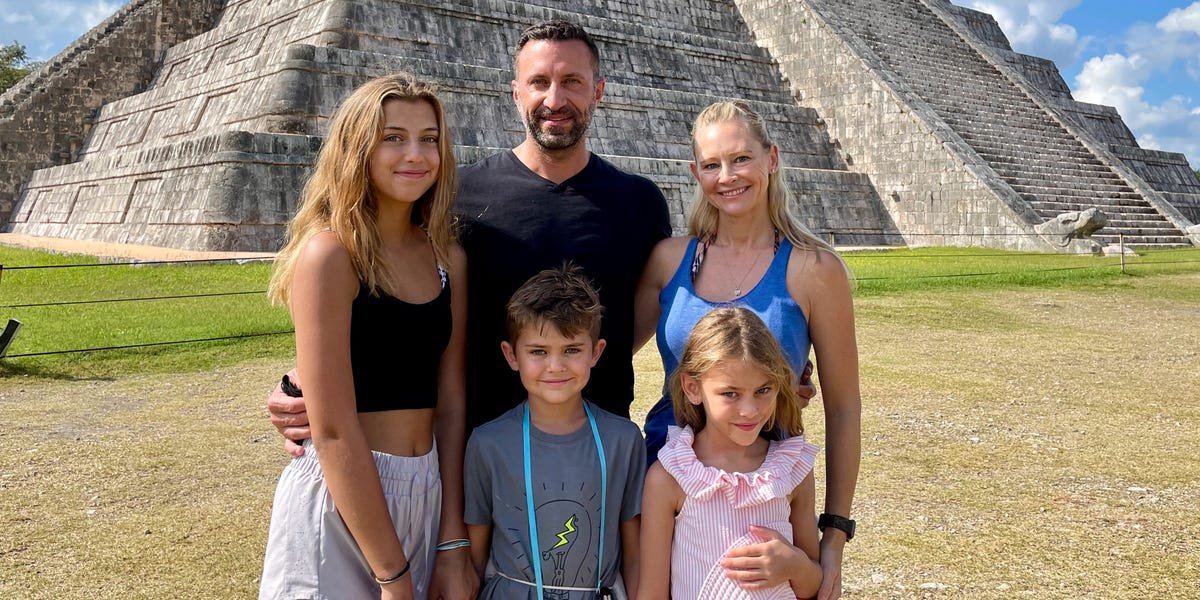


Source link

After-5-years-our-family-gave-up-full-time-travel-and.jpeg

After 5 years, our family gave up full-time travel and YouTube success. I worry we’ve messed up the kids.

After we stopped traveling full-time, our 11-year-old daughter, Brooklyn, became obsessed with her bedroom.

She wanted to repaint it. Rearrange it. Add shelves, plants, posters, and end tables to organize her art supplies. She asked for candles and incense (and permission to burn them).

She pushed back when my wife and I asked her to keep her clothes picked up — not out of laziness, she explained, but because the artist in her liked how it felt to leave things wherever they landed.

At first, this “new normal” bugged me. The requests and pushback felt endless, even erratic, as if we were chasing some moving target of comfort that she would never reach.

Then one night, I walked past her room and was drawn by the scent of vanilla drifting through the crack in the door. Curled up on her bed under a throw, a small reading light on and the warm glow of candlelight around her, she sat reading a hardcover copy of “The Count of Monte Cristo.”

And it finally clicked: After years spent in airports, hotels, and temporary spaces, this was the first place within her control that she could count on staying the same.

At first, a life of travel made sense for our family

My wife and I began traveling the world with our three kids in 2020, at a time when structure had already fallen apart for most families.

School was remote. Routines were fractured. The future felt unpredictable. Travel, oddly enough, felt grounding.

If our kids were going to spend their days on screens anyway, why not replace textbooks with real places? Why not let geography, culture, and shared experience do some of the teaching?


Child on camel in desert

A snapshot of our family’s travels to Abu Dhabi.

Phil Lockwood


Almost immediately, we began documenting our journey on a new YouTube channel. It was a new direction for the entire family, and the excitement was universal. Our kids even started their own channels and began producing their own episodes.

We juggled the challenges of highlighting the far-flung places we were visiting, the mistakes we were making, and the logistics of pulling off long-term travel as a family of five. Friends and family started watching.

Then strangers, too. Our audience grew into the thousands somewhat slowly, then into the hundreds of thousands surprisingly fast. Soon, we’d reached over half a million YouTube subscribers.

Sharing everything online felt natural at the time. It gave structure to our travels and, through ad revenue and brand sponsorships, helped offset the high costs. And it felt useful—like we were showing other families what was possible if they were willing to step outside the usual script.


Family in Antarctica

Our family in Antarctica.

Phil Lockwood


In those early years, it felt like so many high-profile family YouTube channels were presented as success stories — adventurous, tight-knit, and inspirational. I didn’t see as much public skepticism, and some darker stories of family vloggers (like Ruby Franke’s) that would later dominate headlines hadn’t yet come to light.

So, at the time, we didn’t see ourselves as taking a risk — we saw ourselves as joining a small but growing group of households who were filming and sharing their lives publicly before the downsides were so widely discussed, documented, and understood.

For a while, it worked. Or, at least it appeared to. The kids were curious. We were together. We saw parts of the world that most families only talk about. And all five of us were enjoying building something meaningful together.

There were real benefits: closeness, adaptability, and perspective. Our kids learned how to navigate unfamiliar places and unfamiliar people. We learned to function as a family without the usual scaffolding of schedules and routines.

What we didn’t yet understand was what those benefits might be trading against.

As time went on, the cracks began to show — and coming home didn’t repair them all

Not all of our kids experienced the lifestyle the same way.

As our youngest and most adventurous, Colt thrived on the endless variety. Reagan, my oldest from a previous marriage, enjoyed the journey, but eventually chose to return to in-person school, and we adjusted our travel around her schedule with her mom. Brooklyn, though, gradually stopped enjoying it altogether.

There wasn’t a dramatic breaking point. It was a slow accumulation: long-haul flights at odd hours, constant activity, museums and cultural experiences designed for adults, not kids. Plenty of stimulation, but very little continuity.


Child with bird on arm

A moment from our time in Abu Dhabi.

Phil Lockwood


What I didn’t fully appreciate was how much childhood depends on repetition — seeing the same faces, returning to the same places, building friendships that deepen rather than reset with new people every few weeks.

Other nomadic families we met reassured us that this was normal. They told us our kids would grow more worldly, more mature, even more interesting than their peers. That any awkwardness later would be a sign of depth, not loss.

And I wanted to believe that. But as Brooklyn pulled further away from the lifestyle — showing little enthusiasm for new destinations, frustration with red-eye flights, and no desire to highlight her experiences in our episodes — it became harder to ignore the possibility that what we thought was enriching had become simply exhausting for her.

The hardest part wasn’t wondering what she wanted: She was clear that she’d rather be back home, back in school, and back to occasional family vacations. The hardest part was realizing that submitting to her desires would require dismantling a life we had just spent years reorganizing everything around.

Eventually, though — and after five full years of constant travel —we made the decision to stop. We returned to the house that we’d kept in Denver. Reagan graduated and headed to college. Brooklyn enrolled in in-person high school, while Colt chose to continue online for the flexibility. Our pace slowed, and the constant motion ended.

And yes —things got easier. The kids seem more independent than ever. Life feels calmer. There’s a structure where there used to be constant negotiation.


Family of four smiling in front of temple-like buildings

Our family posing in India.

Phil Lockwood


Still, the relief I feel is mixed with doubt.

Brooklyn still carries some resentment about not settling down sooner. She’s now trying to build friendships in a neighborhood where other kids grew up side by side for years. She missed that stretch of middle school — the inside jokes, shared routines, and the quiet accumulation of belonging. I sometimes wonder whether the introversion I see now is simply adolescence, or whether years without steady peer relationships reshaped her in ways we can’t fully undo.

Did the benefits of those experiences outweigh the costs? Did we assume that anything lost along the way would simply return? Or are we just seeing a normal adjustment after an unusual childhood?

I don’t have clean answers. I’ve only accepted that good intentions don’t guarantee harmless outcomes — and that parenting decisions made confidently at the time can look very different in hindsight.

I don’t regret our choice — just parts of the execution

I’m glad we traveled. I’m glad our kids have seen the world. I’m also glad we stopped. I don’t regret the journey my wife and I took our children on, but I no longer assume it was unquestionably right.

If I could do it again? I’d prioritize putting down roots earlier — fewer destinations, more seasons in one place, more chances for the kids to build friendships that weren’t constantly interrupted.

And I’d question whether sharing our adventures online was necessary at all.


Family of four posing with elephants

We visited Chiang Rai, Thailand.

Phil Lockwood


There’s a difference between traveling with kids and building a childhood around constant motion — especially when that motion is public.

We still travel, but only a few times a year, mostly around school breaks. Colt still loves going. Brooklyn hasn’t joined a trip since we settled back down; my sisters stay with her when we leave.

Recently, though, she’s started talking about ancient Greece and asking what it would take to see the ruins in person — but we’re careful not to read too much into that since interest isn’t always the same as readiness.

And if there’s one thing I’ve learned, it’s this: parenting decisions don’t come with clean verdicts. They come with trade-offs.

Sometimes the most honest stories aren’t about success or failure — they’re about realizing, long after the decision has been made, that you’re still not entirely sure where the line really was.


Source link

My-son-bought-a-2-car-and-learned-how-to.jpeg

My son bought a $2 car and learned how to fix it himself. It gave him the independence he was craving.

My eldest felt a strong urge to own a car for most of his teenage years. He would pop into the living room and show his dad and me his latest internet find, usually a 20-year-old jalopy with questionable reliability costing several thousand dollars.

Each summer break, he would talk about buying a car with us. Each time, we wouldn’t say no. We would just urge him to consider his situation as a full-time student with an uncertain future.

We provided transportation to and from school, and while there, he walked, rode a bike, and grabbed rides from friends. Each time, he decided on his own that it might not be the smartest time to invest a couple of thousand dollars in a car of questionable repair.

He got a deal from a family friend

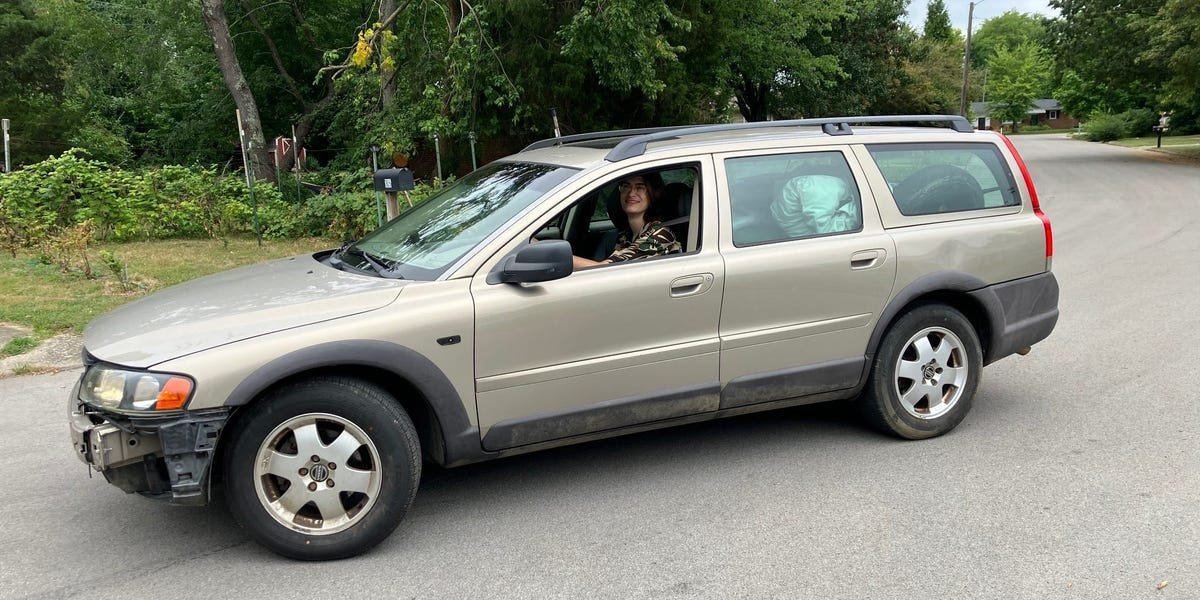
The summer before his junior year of college, however, a family friend offered him a deal he couldn’t pass up. It was a 20-year-old Volvo wagon that had a run-in with a deer. The front end was crumpled, it was undrivable, and he didn’t have the title. But the price was right — $2, twice the friend’s original purchase price of a buck.

In some ways, it was a bold move. My son didn’t have much experience in car mechanics. During that school break, he put money and time into repairs. He straightened the front radiator support with a winch so all the parts would fit again. He replaced the radiator and flushed out the intercooler. By the end, it stayed in motion long enough to limp to a storage barn for the winter.


Abandoned car

The author’s son learned how to fix the car with YouTube videos.

Courtesy of the author


The next summer, it was his main focus. He installed a new radiator fan, bought a new battery. Replaced two tires and had them aligned. Put in a new headlight and did more bodywork. He cleaned it, inside and out. And just a couple of days before returning to college, the crowning glory: a salvaged hood that perfectly matched the golden hue of his car.

He learned a lot from fixing the car

There was a fair amount of angst. Figuring out the process for issuing a new title. Hunting down the owner who last had it and arranging a meeting. Ordering the wrong or incomplete parts and having to send them back. Determining what needed to be fixed and how much it cost. Calculating how much he should spend, even after fixing it up, the car was probably only worth about $2,000.

He elected to do much of the work himself, spending hours at the “University of YouTube.” At one point, as he lamented the money he had spent so far, with the possibility that it would all be for naught, my husband asked him how much a college credit hour costs. My son looked it up. It was exactly what he had spent so far on the car. My husband said, “Haven’t you learned a lot?”


Young man posing with car

The author says her son learned so much from fixing his own car.

Courtesy of the author


That helpful reframing stuck: The night before he drove the car to college, my son commented, “Hey, I got a free car at the end of that college class.” We celebrated with him that evening, telling him how proud we were of his persistence and frugality, of his push to learn something new.

He got the independence he wanted

Seeing him drive off in that car left an indelible impression on me. Armed with his insurance’s roadside assistance, a toolbox gifted by his dad, and a bag of extra fluids in the passenger seat, he set out on the 8-hour, 57-minute drive to York College in Pennsylvania from our home in Kentucky. He couldn’t shake the small, satisfied smile on his face. I couldn’t shake my delight and my apprehension.

Being the mom that I am, I asked him to text whenever he stopped so we could track him on his journey. First stop: at the coffee shop halfway, our usual lunch break, and the new thrift store next door. Next, at a Civilian Conservation Corps museum, he saw signs along the highway. Finally, in the parking lot of his dorm. Even through text, I could sense the satisfaction and pride he felt for accomplishing that trip in his own ride.

In the ensuing months, the $2 car has safely delivered him each week to his internship and to a friend’s house for fall break. It has given him a measure of independence he didn’t have before. And it gave him something we, as parents, couldn’t, no matter how much we wanted to: a sense of self-sufficiency. That was something he had to earn.

We could only encourage him, support him, and talk him through his next steps, then see if he succeeded or failed. In the end, he knew that he could handle the road ahead by himself.


Source link

In-my-60s-I-sold-the-home-I-raised-my.jpeg

In my 60s, I sold the home I raised my son in and took a job on a cruise ship. It gave me the freedom I needed.

At almost 70, with my son grown and building his own creative life, I realized the home I had poured myself into for two decades no longer supported the future I wanted.

For almost 20 years, that house looked like the picture of stability. Teal doors, a tire swing, and a sunny studio beside the garage. It was where I raised my son as a single mother and built my photography career. Most people assumed I would stay there forever.


House exterior

The author decided to sell the house were she raised her son.

Courtesy of the author


But when my son graduated and moved to Orlando, something shifted. I had spent years encouraging him to live the life he wanted. Suddenly, I realized I needed to do the same.

The house was a money pit

Behind the postcard charm, a truth emerged. The house no longer supported my future. What once felt like a comfortable sanctuary had become a moneypit, its growing debt reminding me daily that I could not afford the life or the freedom I wanted. I had built a home to raise a confident and independent child, and I had done that, but holding on to the house was keeping me from evolving into the next chapter of my life, a chapter filled with creative possibilities that debt made impossible to pursue.


Baby items

The author purged her belongings before selling her house.

Courtesy of the author


Sorting through the rooms, I noticed how little the objects mattered. It was never the things, only the memories. And memories do not require storage space. I photographed what mattered, donated most of the rest, and watched the remnants of my old life line the curb. Letting go gave me breathing room for the first time in years. I could imagine what came next.

I sold the house and found confidence

Selling the house gave me the financial and emotional space to address something I had avoided for years. I needed extensive dental work, and with missing teeth, I no longer felt confident in my own smile. As a photographer, I had spent decades coaxing others to relax while I avoided the lens myself.


Rio de Janeiro

The author traveled to Brazil after selling her house.

Courtesy of the author


I trusted a cosmetic dentist in southern Brazil, the parent of an exchange student I once hosted, and the cost was far more realistic than in the United States. After surgery and the initial healing, I traveled to Rio. For the first time in years, I felt free to focus my lens and smile at the world around me without hesitation.

The physical and financial weight I had carried for years began to lift. Brazil restored my confidence and reminded me that reinvention was still possible.

I took a job on a cruise

Before selling my house, I had researched ways to travel while working. A friend hosted dinners as a sommelier on cruise ships, and my algorithm kept suggesting photography jobs at sea. I applied to a few with curiosity.


Cruise

The author took a job as a cruise photographer.

Courtesy of the author


While I was still in Rio, the call came. I was offered a contract as the master photographer on a premium luxury cruise line, a role that would take me across multiple continents. To qualify, I needed a Seafarer Certificate, which at my age required extensive medical tests and functional exams. It was humbling, but I passed.

I was notified with less than a week to prepare that my contract would start in Sydney. After a 31-hour flight, knowing I would board within 24 hours, I dropped my bags at the hotel and walked the waterfront from Darling Harbor to the Opera House. A mist hung in the air, turning the city into a soft shimmer through my lens.

Life at sea was a study in contrasts. I photographed in a studio on the 15th floor but slept far below in a windowless cabin. I climbed endless flights of stairs each day. The ancient programs, cameras, and equipment made my days long and tedious. But above deck, the ocean made everything worth it. An unobstructed sunset on open water can shift your entire mood. Each time we reached a new port, the world opened again. My creative mojo began to gel for the first time in a long while, and I realized I was able to absorb so much only because I had let go of so much.

A new home and a new beginning

In six months, I had visited three continents, become healthier than I had been in years, and for the first time in decades, my smile came without hesitation. My financial responsibilities felt lighter, and the spark I had been missing finally came back after years of accumulating belongings and obligations that had kept me anchored when I was ready to sail into another chapter filled with creativity.

While recovering in Miami from an injury, I received another unexpected call. An apartment had become available in the Asbury Park building where I had applied years earlier. It had an ocean view, a community of artists and musicians, and a rent I could actually afford. It felt like the universe was giving me the chance to finally act on my hopes and creativity.

I had let go of everything that once held me back. What I gained was freedom, the freedom to create, to travel, and to smile freely again, with my camera as my ticket forward.


Source link

Living-abroad-for-28-years-gave-me-everything-I-wanted.jpeg

Living abroad for 28 years gave me everything I wanted — and a quiet guilt I still carry

I grew up on the shores of Lake Erie, in a town just south of Buffalo, New York. Ice was something we chiseled off a car in winter, not something that’s dropped into a drink. For me, life on a tropical island was a pipe dream.

In high school, I was the geeky kid, always excited to read stories in Time and The New York Times about exotic, far-off places. I knew early on that I wanted a job that would allow me to experience global events firsthand.

A semester abroad in France cemented my ambition. I lived with a family who also rented to an American expat. He talked casually about his Swiss ski holidays, escapes to Greece and Turkey, and his favorite cafés in Paris.

I already knew then, at 21, that was the life I wanted. Why work in “boring” New York or Chicago when I could aim for Paris, Hong Kong, or London?

After working as an editor in New York City for several years, my then-wife got offered a job in Singapore. It was the golden opportunity we both wanted. What we thought would be a posting of just a few years turned into decades. We divorced in 2011, but both stayed in Singapore, building our careers and lives.


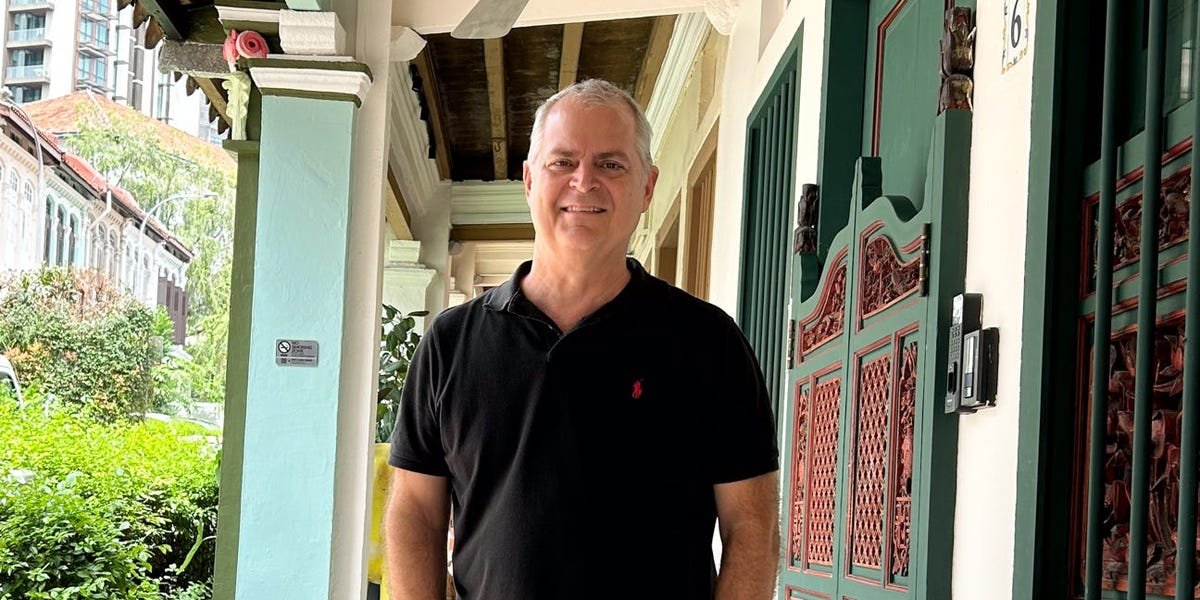
Kris LeBoutillier on assignment 25 years ago in Vietnam, posing with a group of locals near the Ho Chi Minh Mausoleum in Hanoi.

LeBoutillier, 25 years ago in Vietnam, posing with a group of locals near the Ho Chi Minh Mausoleum in Hanoi.

Provided by Kris LeBoutillier


Singapore was the jolt my career needed

I’d always wanted to be a photojournalist, so in 2000 I decided to pursue it full-time. My location made me a standout. Asia was entering a travel boom, and magazine editors needed photographers on the ground. To paraphrase the cliché: I was in the right place at the perfect moment.

I’ve shot for National Geographic Traveler across Australia, Vietnam, Cambodia, Thailand, and India — Singapore was the perfect base. I could be ready to go anywhere in Southeast Asia with just a few hours’ notice.

My photography career eventually gave way to something more permanent and corporate, although still rooted in Singapore. I became a content director, producing and directing videos across the region.

It was a natural evolution for a writer-photographer in a world rapidly shifting to digital content.


Kris LeBoutillier posing with a camera in Rajasthan, India.

LeBoutillier traveled to Australia, Vietnam, Cambodia, Thailand, and India (pictured) on assignment.

Provided by Kris LeBoutillier


Living overseas for 28 years changed me

But it has come with a cost. My mother grew older, got sick, moved into a managed care facility, and then passed away suddenly.

I made every effort to visit twice a year, especially in the summer and around Christmas. But there was always a tinge of guilt and remorse that I wasn’t there more.

On one of my last trips back before she died, I remember her saying, “Haven’t you been in Singapore long enough?” She was always supportive of my choices, but as she approached 80, and her health declined, she wanted me closer to home.

She was getting the care she needed in the nursing home, but there was no substitute for a visit from me, my presence — complete with stories about my life overseas.

Was I selfish? Perhaps, but I also would never trade the life I have.


Kris LeBoutillier and his wife are posing near a sunset in Singapore.

LeBoutillier and his wife, Jamie, are raising their family in Singapore.

Provided by Kris LeBoutillier


Will I return to the US?

Probably, although I’m not sure, because everything is different. I remarried three years ago. I have a 9-year-old daughter from a previous marriage and a toddler son with my wife, Jamie. Both kids have US passports and deserve an American identity and a place to put down roots. They’ve been to the US to meet their cousins and my oldest friends, but have never had the chance to live there or fully experience life as Americans.

Recently, I told my daughter that she’d visited Manhattan when she was a toddler. Her response: “Where is that?” It was a stark realization.

They should know the country that shaped who I am.

Would I recommend an expat life to someone? Absolutely. I got the life I dreamed of. And despite the challenges and distance, it gave me everything I hoped for when I was that kid, growing up near Buffalo, reading about the rest of the world.

Do you have a story to share about living abroad? Contact the editor at akarplus@businessinsider.com.


Source link