
Gilded-Age-townhouse-sells-for-345-million-in-NYC-ending.jpeg

Gilded Age townhouse sells for $34.5 million in NYC, ending 2 sisters’ heated bankruptcy battle

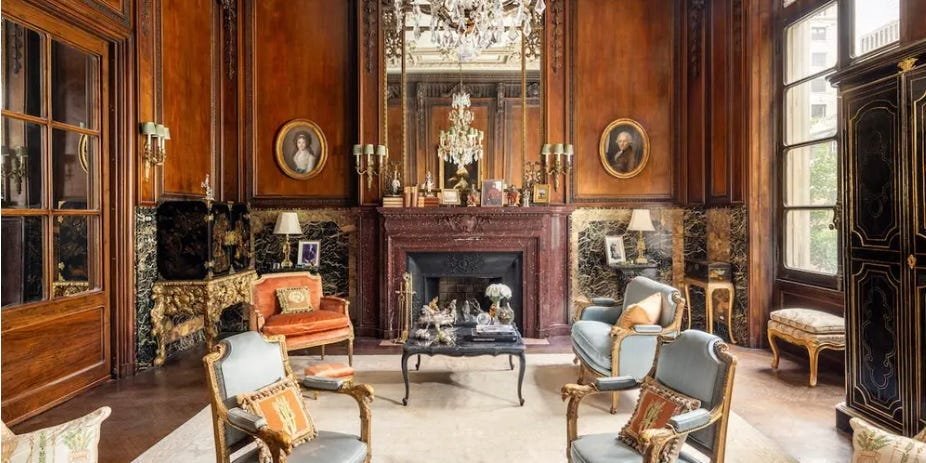
A Gilded Age Manhattan townhouse, the subject of a contentious and lengthy bankruptcy battle by two sisters in their 80s, has been sold for $34.5 million.

The sale, to an LLC whose owner has remained anonymous, closed Tuesday, according to court documents.

Fashion heiress Marianne Nestor and her sister, Peggy Nestor, both self-represented, had fought against foreclosure for six years and in at least three courthouses, most recently in federal bankruptcy court in Manhattan.

“Miserably difficult,” their main opponent, bankruptcy trustee Albert Togut, said during a hearing last week, in describing his war with the litigious siblings — including what he characterized as years of battling a “litigation cloud” filled with “frivolous appeals and objections.”

The sisters had purchased the home together in 1984.

Six years ago, creditors began litigating for its sale to collect on millions of dollars in mortgages and liens against the property.

Peggy Nestor, by then the sole owner, according to their own sworn statements, filed for federal bankruptcy nearly four years ago to keep it from being sold in New York state court. Debts collateralized by property had swollen past $30 million by the time the judge ordered it to be sold — and the occupants removed.

They were forcibly evicted two years ago after the bankruptcy judge found that they had repeatedly refused to let Togut, his lawyers, and court-appointed realtors inside to market and sell the 1901 property.

“I’m suing everybody,” Marianne Nestor told Business Insider, when told Tuesday night of the closing. “They’re crooked as hell,” she said of Togut and US Bankruptcy Judge Michael Wiles.

Marianne is the widow of fashion designer Oleg Cassini, widely credited with creating Jacqueline Kennedy’s “look” as First Lady.

Cassini had used the townhouse as a design studio and showroom until his death on March 17, 2006 — twenty years to the day before the sale closed.

“Today is the day that he died, OK?” Marianne said in a lengthy phone call, during which she called the sale “totally incorrect,” “a set up,” “deed fraud,” and “like Germany in the 1940s.”

“Leave out the F-words,” she asked Business Insider.

The sisters continue to argue that they could have purchased the property back themselves, that it is “rent-stabilized,” and that they remain its 50-50 owners, contentions repeatedly rejected by the judge.

They still have open three cases in federal and state court in Manhattan that challenge Togut’s authority and his appointment as trustee, and accuse him and a former attorney for Peggy Nestor of impropriety.

A lawyer for Togut’s firm declined to comment on the closing when contacted earlier Tuesday.

After taxes, a $1.4 million broker commission, and other closing costs, the net proceeds of the sale will be $32 million, according to court documents — a sum that still won’t cover a decade-long accumulation of debts against the property.

It is unclear where the sisters have been living since US Marshals evicted them from the townhouse; Marianne Nestor has declined to say.

The two continue to have access to a $5 million brick mansion in Norwalk, Connecticut, purchased by Peggy Nestor in 2021.

But in January, the bankruptcy judge found that Peggy had improperly tried to transfer the mansion for $1 to a third sister, Brenda, who lives in Palm Beach.

The judge ordered that the seven-bedroom, 9,800-square-foot mansion, which overlooks Long Island Sound, must also be sold to satisfy Peggy’s debts.

The Norwalk property’s sale remains pending.


Source link

Step-inside-the-Gilded-Age-mansion-that-just-sold-for.jpeg

Step inside the Gilded Age mansion that just sold for $34.5 million after years in bankruptcy

  • Bidding has closed on a 1901 mansion where Oleg Cassini designed fashions for Jacqueline Onassis.
  • On Wednesday, a bankruptcy judge approved a $34.5 million top bid for the Gilded Age townhouse.
  • Look inside the Beaux-Arts beauty and read about its contentious, sometimes violent history.

A 20-room Gilded Age mansion, once the atelier of fashion designer Oleg Cassini, is under contract at a bargain discount: $34.5 million.

A federal bankruptcy judge signed off on the mystery buyer’s winning bid on Wednesday, approving a price tag for the 18,000-square-foot Manhattan townhouse that’s nearly half the original asking price of two years ago.

The bankruptcy — in which two octogenarian sisters, one of them Cassini’s widow, were forcibly removed from the home by federal Marshals — caps a history of transformation.

Built steps from Fifth Avenue’s “Millionaire’s Row” as a stockbroker’s statement mansion in 1901, the stately limestone home was subdivided into apartments throughout the ’60s and ’70s.

And before his death in 2006, Cassini sketched wardrobes for longtime client Jacqueline Kennedy Onassis by the light of a towering window spanning the six-story home’s two topmost floors.

As the new buyer prepares to move in as early as next month, let’s take a look at the stunning rooms and tumultuous history of 15 East 63rd Street.

The 125-year history of the House of Cassini begins and ends with unwelcome intrusions.

The limestone facade of the House of Cassini, a 1901 Gilded Age mansion on Manhattan’s Upper East Side.

Evan Joseph for Sotheby’s International Realty

For all its serene style, the story of the House of Cassini begins and ends with a violent forced entry.

Its first owner, a millionaire broker and banker, was bludgeoned and robbed by armed burglars who broke in soon after his Beaux-Arts beauty was built.

A century later, its most recent owner — Cassini’s 85-year-old sister-in-law, Peggy Nestor — would be physically pulled from the home by federal Marshals, who busted open the brass front door to enforce a bankruptcy judge’s 2024 eviction order.

“They put me on the street in a robe!” Cassini’s widow, Marianne Cassini, also in her 80s, told the judge of being evicted along with her sister and their niece.

The sisters battled in the courts for a decade to manage rising debts.


A fireplace mantle featured a photo of fashion designer Oleg Cassini with longtime client Jacqueline Kennedy from back in her days as First Lady.

A fireplace mantle featured a photo of fashion designer Oleg Cassini with longtime client Jacqueline Kennedy when she was First Lady.

Evan Joseph

For the past decade, the two sisters have battled in state and federal court to keep the home they purchased together in 1984, 12 years after Marianne’s secret marriage to the designer (the union was revealed only after Cassini’s death). Nestor, Cassini’s sister-in-law, took sole title in 2016, according to court papers.

The sisters ultimately lost their battle against the eviction and the bankruptcy judge’s final 2024 order that the home be sold to satisfy more than $30 million of Nestor’s mortgage debts and liens.

“Enough, enough, enough — we’re done,” a frustrated-sounding Judge Michael E. Wiles told the protesting sisters in approving the sale at a hearing on Wednesday.

“It’s in the court file, for heaven’s sake,” Wiles said, rejecting the pair’s repeated claim that they remain co-owners and that rent-stabilization laws somehow bar their eviction from the single-family residence.

In the two years since the eviction, the home’s sale price had plummeted — from $65 million under Sotheby’s International Realty, to $39.5 million under its latest listing with Brown Harris Stevens, to the current $34.5 million purchase agreement.

First stop on our look inside: an ornate and unusual vestibule.


The House of Cassini entryway features an unusual vestibule of marble, brass and curved glass.

The House of Cassini entryway features an unusual vestibule of curving marble, brass, and glass.

Evan Joseph for Sotheby’s International Realty

Before diving into the home’s tumultuous history and tranquil interior, it’s worth pausing at the front door, where the original vestibule still greets visiting guests.

Built of curving marble, brass, and glass, the unusual structure served as an airlock — a buffer against the cold in a home warmed by 14 fireplaces.

Marble, glass, and brass bend together to frame the vestibule.


A closeup of the Cassini mansion vestibule shows its unusual, turn-of-the-century curve of marble, brass and glass.

A close-up of the Cassini mansion vestibule shows its turn-of-the-century beauty.

Evan Joseph

In the summer, the vestibule helps keep in the central air conditioning, a much later and controversial addition.

In 2006, next-door-neighbor Neil Diamond sued Nestor, saying her new rooftop cooling unit illegally added 13 feet to the height of her building.

The “Sweet Caroline” and “Song Sung Blue” singer sought $2 million in damages for the obstruction of views from his terrace. They settled for an undisclosed sum in 2010.

The 1901 mansion was a wealthy stockbroker’s statement home, steps from Manhattan’s “Millionaire’s Row.”


The first floor boasts white marble floors and a sweeping marble staircase.

The first floor has white marble floors and a sweeping marble staircase.

Evan Joseph for Sotheby’s International Realty

The home’s story begins with Wall Street stockbroker Elias Asiel, who purchased 15 East 63rd Street in 1885 as a new Victorian brownstone.

Asiel had grander plans. He hired one of the top architects of the day, John H. Duncan, to reimagine the 25-foot-wide property as a limestone-clad mansion to rival any on the nearby stretch of Fifth Avenue known as “Millionaire’s Row.”

Duncan had just finished the General Grant National Memorial — a mausoleum for the 17th president and Civil War hero, overlooking the Hudson River — when he went to work for Asiel in 1897.

Entering Duncan’s design tour-de-force, guests can cross a 46-foot, marble-tiled gallery to an oval-shaped dining room, or climb a sweeping, curved staircase to the parlor level.

The dining room was the first stop for a pair of burglars in a 1906 break-in.


This view of the House of Cassini's dining room shows its stunning mirrors and the toll taken by time upon the carved wood paneling.

This view of the House of Cassini’s dining room shows its stunning mirrors and the toll time has taken on the carved wood paneling.

Evan Joseph

The dining room, enclosed by pocket doors, mirrors, and fading, carved wood paneling, played a role in a 1906 break-in that left Asiel bloodied and bereft of his silverware.

The pre-dawn, gunpoint robbery was front-page news. “Elias Asiel Pounded Insensible with Brass Knuckles in Bedroom,” blared a headline in the evening edition of the Sun.

According to accounts in four city newspapers, the two robbers broke into the basement service door with a saw and a diamond glass-cutting blade.

Awakened upstairs in bed, Asiel was no easy mark.

He got in a good punch or two before being beaten with brass knuckles and bound at the wrists and ankles “with stout pieces of cord.”

He also refused to give up the combination to his safe, which contained “a fortune in gems” — heirloom jewelry he would bequeath to his daughter, asleep one floor up.

Struggling free in his bedroom, Asiel cut short the robbery.


The sitting room adjoining the mansion's master bedroom, site of a violent struggle a century ago.

The sitting room adjoining the mansion’s master bedroom.

Evan Joseph for Sotheby’s International Realty

“Would one of you please wipe the blood out of my eyes?” the trussed broker asked as the pair ransacked his bedroom.

The younger burglar paused to wet a cloth in the adjoining bathroom and gently wiped Asiel’s eyes, an act of kindness that later swayed a judge to impose a mere five-year sentence.

The robbers pocketed Asiel’s $250 gold watch, 12 of his pearl-and-sapphire scarf pins, and $90 in cash. They then headed back downstairs to the dining room, where they’d left Asiel’s silver in a pile to grab on the way out.

The two managed to pack up just three dozen forks and four dozen spoons when they were interrupted. Wriggling free of his ties, Asiel pulled a bedside bell cord to wake the seven sleeping servants, and was shouting for help out the window.

The thieves fled into nearby Central Park, leaving most of the silver on the sideboard. They were caught and convicted some two years later.

On the second floor — a library and drawing room.


This view of the Cassini mansion's second floor library shows its wood and marble paneling and one of two windows overlooking 63rd Street.

The Cassini mansion’s library overlooks 63rd Street.

Evan Joseph for Sotheby’s International Realty

The mansion’s two most exquisite spaces — a wood-clad library and a bright drawing room — are at either end of the mansion’s second level, the “parlor floor,” where the ceilings are 17 feet high.

The wood and marble-clad library faces the front of the building, its two tall arching windows overlooking leafy East 63rd Street.

The library’s ceiling is the nesting site of four pairs of winged and clever cherubs.


This photo shows the ceiling of the Cassini mansion's library, where owls stand watch and pairs of winged cherubs gazing upon Latin-inscribed scrolls.

The library’s ceilings are populated by watchful owls and pairs of cherubs gazing upon Latin-inscribed scrolls, the room’s only reading material.

Evan Joseph/Sotheby’s International Realty

Photos of the library show no bookshelves. But there is reading material, if you’re a cherub.

Pairs of the erudite tykes roost in each corner of the elaborately coffered ceiling, holding scrolls enscribed in Latin.

“Malo Esse Quam Videri,” reads one, paraphrasing Cicero — “I would rather be than seem.”

The drawing room is a bright sanctuary.


The House of Cassini's second floor drawing room looks like a wedding cake, frosted with garlands and roses.

The House of Cassini’s drawing room looks like a wedding cake, frosted with garlands and roses.

Evan Joseph for Sotheby’s International Realty

The second-floor drawing room is a bright sanctuary where sunlight from the terrace floods inside through two French doors and alights mirror to mirror.

The room resembles an intricate wedding cake, frosted with garlands of roses.


Garlands of plasterwork roses ring the second floor's sunny drawing room.

Garlands of plasterwork roses ring the second floor’s sunny drawing room.

Evan Joseph for Sotheby’s International Realty

A profusion of plasterwork decorates the ceiling and walls, ringing the space in garlands of budding and full-flower blooms.

The effect is like standing atop a wedding cake, under a rose bower, and enclosed by a house of mirrors all at once.

“Elegance upon elegance upon elegance,” Louise Beit, the mansion’s previous broker, enthused of the drawing room, in a YouTube tour of the home last year.

A spacious gallery connects the library and drawing room, and features a balcony for “string quartets” to perform.


The Cassini mansion's second floor gallery connects the library and the drawing room.

The Cassini mansion’s second-floor gallery connects the library and the drawing room.

Evan Joseph for Sotheby’s International Realty

A spacious gallery connects the second floor’s library and drawing room.

“Standing here in the gallery, you can feel how they love lavish entertaining in the Gilded Age,” said Beit, of Sotheby’s International Realty.

“You can greet your guests at the top of the steps with a string quartet entertaining you from the balcony.”

Asiel died in his bedroom in 1920, at age 69.


Another view of the Cassini mansion library shows light from East 63rd street streaming in through a pair of tall, arched windows.

Another view of the Cassini mansion library shows light from East 63rd Street streaming in through a pair of tall, arched windows.

Evan Joseph for Sotheby’s International Realty

Asiel and his two children — his daughter would marry a Bloomingdale — enjoyed the mansion through the nineteen-teens.

In 1920, a year after his retirement, the broker died at home at age 69, missing the stock market crash by nine years.

The robbery was his most lasting claim to fame. His obituary in The New York Times noted that he “gained high praise from the police for his coolness and bravery in a single-handed battle with two burglars.”

In the ’60s and ’70s, the home was divided into seven rent-stabilized apartments.


The sweeping staircase of the House of Cassini spirals up toward its added sixth floor and skylight.

The sweeping staircase of the House of Cassini spirals up toward its added sixth floor and skylight.

Evan Joseph

City records show that in the ’60s and ’70s, the home was owned by a California development company and had been divided into seven rent-stabilized apartments.

In 1984, it was purchased by Nestor and Marianne Cassini, the designer’s secret wife.

The sisters spent the next 30 years taking out mortgages, renovating, evicting the old tenants, and running the designer’s businesses — Oleg Cassini, Inc. and Cassini Parfums, Ltd., both in receivership since 2015.

The winning, anonymous bidder pledged $34.5 million and may need to spend many millions more to renovate.


The front entrance to the Cassini mansion.

The mystery buyer’s architect estimates that renovating the home will cost $25 million and take three to four years.

Evan Joseph

The next owner — named only as “15 East 63rd Street, LLC” in court papers — is now poised to inherit an architectural gem, rich in history and potential.

“It appears that it has been a significant number of years since the townhouse was last comprehensively renovated,” Brown Harris Stevens broker Sami Hassoumi said in a court document on Tuesday.

The mystery buyer’s architect estimates that fully renovating the home will cost $25 million and take three to four years, Hassoumi said.


Source link

Look-inside-Vizcaya-Miamis-45000-square-foot-Gilded-Age-mansion-that-now.jpeg

Look inside Vizcaya, Miami’s 45,000-square-foot Gilded Age mansion that now counts Ken Griffin as a neighbor

Updated

  • Vizcaya, built by James Deering more than a century ago, might be Miami’s most valuable real estate.
  • The 45,000-square-foot mansion has a total of 54 rooms, with the main house open to the public.
  • Citadel CEO Ken Griffin began assembling a waterfront compound next to the historic mansion in 2022.

The exorbitant price tags on Miami’s luxury real estate are not a secret to anyone, least of all the flock of billionaires moving to the city.

But unlike the high-rise apartments in the financial center of Brickell or exclusive mansions in Indian Creek — where you might be neighbors with Jeff Bezos or Ivanka Trump — the city’s potentially most valuable piece of real estate is decorated with limestone, mangroves, and tiles salvaged from Cuban estates.

Built between 1914 and 1922 by International Harvester heir and Gilded Age millionaire James Deering as a winter home, Villa Vizcaya sits fewer than 10 minutes from downtown Miami, in a waterfront neighborhood that’s quickly becoming a magnet for the city’s new billionaire residents.

While built in the years following the Gilded Age, it is notable for its Gilded Age-era extravagance, technologies, and collection of fine art. Vizcaya Museum & Gardens estimates the mansion cost $26 million to build, which is more than $800 million in today’s money, per the Bureau of Labor Statistics. Florida International University estimates that the mansion is worth over $1 billion today.

In 1962, Miami-Dade County bought the property for $1 million, and today, the 45,000-square-foot mansion and its surrounding gardens operate as a museum open to the public.

Shortly after announcing that Citadel would move its headquarters from Chicago to Miami, CEO Ken Griffin bought up a waterfront compound less than a half-mile from Vizcaya, in the neighborhood of Coconut Grove. The $106.9 million sale set a country record for the most expensive residential property purchase at the time.

Since then, the hedge fund magnate has proposed relocating the historic Villa Serena mansion, located on his estate, to Vizcaya’s campus after he donated $20 million to Vizcaya Museum and Gardens.

Take a look inside James Deering’s historic mansion and see how its new neighbor could alter the surrounding landscape.

Vizcaya was James Deering’s winter home from 1916 until his death in 1925.

Deering moved to South Florida in hopes that the tropical climate would help improve his health.

Robin Hill Photography/Courtesy of Vizcaya Museum & Gardens

Struggling with illness toward the end of his life, James Deering came to Miami, then a small city surrounded by mangrove forests and wetlands, looking for tropical warmth, which was believed to help improve health.

By the turn of the century, the Deering family had begun to develop estates around South Florida, with patriarch William Deering purchasing a home in Coconut Grove in 1900.

By the time James Deering began building Vizcaya, his brother, Charles Deering, was also developing a winter home in the south of Miami. The property, known today as Deering Estate, also operates as a museum and is open to the public.

The main house features 54 rooms, including 34 rooms decorated with their original furniture.


entrance to villa vizcaya

Over 30 rooms furnished with their original decoration are open to the public to explore.

Kristine Villarroel/Business Insider

Spanning over 45,225 square feet, Vizcaya’s main house features the living spaces of James Deering himself, his guests, and the house staff.

Envisioned by interior designer Paul Chalfin, Vizcaya drew inspiration from the Italian Renaissance, adapted to South Florida’s subtropical climate, and showcases furniture, artworks, and artifacts purchased by Chalfin and Deering on their travels to Europe.

Although Miami’s population was estimated to be only 10,000 in 1916, the construction of the Vizcaya estate employed an estimated 1,000 workers, many of whom were Black immigrants from the Bahamas.

Apart from the main house, Vizcaya is also home to the Vizcaya Village, the historic quarters of the mansion’s workers and farmers that allowed Vizcaya to serve as a self-sufficient farm-to-table estate. The Village expands over 12 acres and includes 11 “architecturally significant” buildings, according to the museum’s website.

The tour begins in the courtyard, which is adorned with tropical plants.


vizcaya mansion courtyard miami

Crotons, philodendrons, and palms bring Florida’s tropical nature to the European-inspired mansion.

Kristine Villarroel/Business Insider

Lined with tropical plants such as palms and philodendrons, the courtyard highlights South Florida’s natural beauty while reflecting the mansion’s European inspirations.

While today the courtyard is covered by a glass canopy that allows for the estate’s air conditioning, it was originally open to the elements, allowing the tropical climate to seep into the main house.

Meant to be used as Vizcaya’s main entrance, the East Loggia opens up to the Biscayne Bay.


east loggia at vizcaya

The “main” entrance features marble decorations and arches opening up to the Biscayne Bay.

Kristine Villarroel/Business Insider

Featuring marble floors and columns and decorated ceilings, the East Loggia was meant to serve as Vizcaya’s main entrance for guests arriving by sea, which was Deering’s intended — and preferred — way of entering the mansion.

It was used as an entrance for guests who arrived by boat, while the current main entrance of the museum was used as a back entrance for guests arriving by car.

The room also features a model boat hanging from its ceiling in honor of the explorers who inspired Deering’s interpretation of Vizcaya.

Although he began living in Vizcaya during his retirement, Deering included multiple working spaces in the property.


james deering's library in villa vizcaya in miami, florida

Located steps from the entrance hall, the downstairs library was Deering’s business meeting space.

Kristine Villarroel/Business Insider

James Deering was heir to the International Harvester manufacturing firm, which produced tractors and other agricultural machinery, and he worked as its vice president from 1902 until 1909.

Deering might have been one of the first prominent Florida “snowbirds,” retirees who travel South during the colder months.

His downstairs library, located in the northwest corner of the main house, is steps from the entrance hall that welcomes guests. It features Deering’s personal book collection, desks for him and a secretary, and seats for business guests.

When closed, the door leading to the next room — a reception room meant for entertaining guests — is concealed within the book-lined walls.

The reception room features a ceiling imported from Venice, which had to be resized to fit.


reception room vizcaya mansion

The reception room was meant for guests to sit upon arrival during parties and visits.

Kristine Villarroel/Business Insider

The reception room is lined with tropical-inspired silk panels showing palm trees.

Our tour guide brought our attention to the ceiling, which is decorated with sculpted panels that extend to the sides of the room. The ceiling was imported from Venice and purchased before construction on the property was finished. By the time workers were putting up the decorations in the mansion, they realized that the ceiling panel did not fit the room dimensions, leading to the restructuring of the panel, which curved into the walls.

“We should remember that this house was built during the First World War,” curator Flaminia Gennari said in the audio tour. “So to import large quantities from Italy in the middle of the war was very complicated.”

Vizcaya’s telephone line was one of the first in Miami.


phone booth at james deering's villa vizcaya

The mansion features a telephone system that was innovative for the time.

Kristine Villarroel/Business Insider

Wired throughout the house, Vizcaya features a highly innovative telephone system for the time. Only 17 years before the start of Vizcaya’s construction, the Miami Telephone Company began providing telephone service to the city.

Vizcaya’s telephones also featured automatic electric exchange, allowing users to connect directly to the number they dialed without going through a human operator.

The telephone room, located between two of Vizcaya’s main entertainment rooms, was meant for guests to communicate privately without disturbing the flow of the entertainment.

The living room showcased Deering’s most impressive collections.


living room vizcaya mansion

Baroque-style decorations fill the ornately decorated room.

Kristine Villarroel/Business Insider

The living room, with its 1600s limestone fireplace, features some of Vizcaya’s most impressive items, including an “admiral carpet” originally commissioned in the 1450s by the grandfather of King Ferdinand II of Spain, the Spanish king who sponsored Christopher Columbus’ exploration of the Americas.

The room also features throne-like armchairs where US President Ronald Reagan and Pope John Paul II sat in 1987 during the Pope’s visit to America.

A centerpiece of the room is the Welte Philharmonic Organ, designed to fill the house with music through elaborate sound systems. Designed for guests rather than full-time professional players, the organ uses perforated paper rolls to aid the musicians’ performance by adjusting notes and volume.

Concealing the organ pipes is an oil painting, which was cut in half to cover wooden doors.

“Chalfin had the idea of cutting it in half and using it as the doors of the organs, which is not a very respectful thing to do for a representation of the Virgin Mary, the child, and the saints, but it somehow testifies to the freedom and positive carelessness that they had around old objects,” Gennari said in the audio tour.

The mansion’s formal dining room features the house’s oldest artifacts, although it was rarely used.


Formal dining room at the Vizcaya Mansion

The room features marble artifacts unearthed near Pompeii.

Robin Hill Photography/Courtesy of Vizcaya Museum & Gardens

While Deering himself didn’t often eat in the formal dining room, he made sure it was impressively decorated for his guests.

Sitting to the side is the room’s most awe-inspiring feature: a marble tabletop on carved bases resembling mythical creatures, historical artifacts unearthed near Pompeii, dating back to the times before Mount Vesuvius’ eruption.

Next to the dining room, on the south side of the mansion, the enclosed loggia gave guests a view of the gardens.


enclosed loggia at vizcaya mansion

The glass panels were made specifically for Vizcaya.

Kristine Villarroel/Business Insider

The colorful glass panels, designed for Vizcaya, feature the estate’s main symbols: the seahorse and the caravan.

Providing a view of the garden through the glass panels and double doors, the enclosed loggia allowed guests to take in the garden views while staying cool from the Florida sun.

The loggia also connects the gardens to the main house through sculpted iron gates.


loggia at vizcaya mansion

The room is decorated with ornate murals and wall sculptures.

Kristine Villarroel/Business Insider

Aside from giving guests an inside view of the gardens from the ground level, the room also connects the outdoors to the rest of the mansion.

Downstairs, the kitchen worked as a serving space for staff to plate food and bring it to guests.


china at the vizcaya mansion

The downstairs kitchen has one set of Deering’s china on display — the main house had about 24.

Kristine Villarroel/Business Insider

When designing Vizcaya, Deering asked for the main kitchen to be built upstairs as he didn’t want the smell of food to flood the main entertaining rooms on the first floor. To facilitate the transportation of meals and the serving of guests to the dining room, the entertaining rooms, and the loggia, he built a downstairs serving pantry.

Today, the serving pantry cabinets display one set of Deering’s fine dining china, the one designated for his 80-foot-long luxury yacht, Nepenthe. Commissioned in 1912 to be shipped from Europe, the original set of china purchased by Deering was transported to America as cargo aboard the Titanic. After the ship sank, a replacement set was ordered and is now displayed.

The kitchens feature state-of-the-art Gilded Age technology.


kitchen technology at james deering's villa vizcaya

Vizcaya kitchen technology includes a refrigerator, dumbwaiter, and other Gilded Age technology.

Kristine Villarroel/Business Insider

Throughout the house, Deering incorporated cutting-edge technology, including annunciators with bells connected throughout the house that Deering or guests could ring at any time to get the house staff’s attention.

Another then-advanced feature of the serving kitchen were its refrigerators, which were rare at the time. The kitchen also featured a warming oven that helped keep food warm while guests were served.

Connecting to the upstairs kitchen, which serves as the house’s main cooking area, was a dumbwaiter: a food elevator meant to carry the food cooked upstairs to the downstairs plating area, where staff would then take it to the main entertaining rooms, like the dining and sitting rooms.

Upstairs, 24 rooms housed guests, staff, and Deering himself.


guest bedroom at villa vizcaya

The mansion has nine guest bedrooms on the second floor and North and South towers.

Kristine Villarroel/Business Insider

Nine of the bedrooms were dedicated to guests and each was given a name and decorated uniquely, showcasing the artifacts and furniture purchased by Deering and Chalfin on trips to Europe.

While not open to the public, an additional 14 rooms housed staff.

Another then-advanced technological feature of Vizcaya was its elevator.


elevator in james deering's villa vizcaya in miami

The elevator is located next to Deering’s suite.

Kristine Villarroel/Business Insider

Deering was motivated to move to South Florida because of his illness, so accessibility features were built throughout the house, including an elevator he would use when using a wheelchair or to avoid walking upstairs.

Today, the elevator isn’t open to the public, and the museum’s second floor is not wheelchair accessible.

Deering’s main office was inspired by the Napoleonic era.


room at james deering's villa vizcaya

The sitting room features desks for Deering and a secretary.

Kristine Villarroel/Business Insider

Connected to Deering’s bedroom and bathroom, the sitting room was his office where he would tend to business and personal matters, such as sorting his mail.

The decoration style was inspired by Napoleonic France.

Deering’s bedroom was modest compared to some of his guest bedrooms.


james deering's bedroom at the vizcaya mansion in miami, florida

At the end of his bed is his signature monogrammed Louis Vuitton luggage.

Robin Hill/Courtesy of Vizcaya Museum and Gardens

Unmarried all his life, Deering’s room features a single bed rather than a larger size, and his room is furnished for practicality rather than aesthetics.

His personal bathroom has one of the most breathtaking views of the property.


james deering bathroom at villa vizcaya

The owner’s bathroom directly overlooks the Biscayne Bay.

Kristine Villarroel/Business Insider

Opening onto a balcony, Deering’s bathroom overlooks Biscayne Bay and offers one of the best views of the house, although it is not accessible to the public today.

The closed-off balcony also leads to a secret door to the Espagnolette, the guest bedroom located next to his, usually reserved for Deering’s dearest guests.

Spiral staircases lead to the South tower.


staircase at villa vizcaya

The staircases also provide access to the staff offices between the first and second floors.

Kristine Villarroel/Business Insider

A set of spiral staircases leads up to the South tower, one of the two guest suites overlooking the estate.

The tower bedroom has views of the bay and the gardens.


Giudecca upstairs guest room at vizcaya

The room was inspired by Venice.

Kristine Villarroel/Business Insider

The corner room atop the North tower was designed to transport guests to Europe.

“Water reflects upwards to the ceiling and the sound of waves is audible in this room, precisely as upon the quay of this great canal of Venice,” noted Chalfin about the room, according to the mansion’s website.

A central piece in the room is a large wardrobe assembled with 1700s Venetian panels, as well as antique painted closet doors.

The breakfast room was Deering’s preferred dining space.


james deering's breakfast room at the vizcaya mansion in Miami, Florida

The room features floor-to-ceiling oil paintings from Italy.

Robin Hill Photography/Courtesy of Vizcaya Museum & Gardens

Back on the second floor, the breakfast room was the central entertaining spot.

The room is lined with oil paintings depicting ocean scenes, and the windows slide into pocket doors, revealing views of the garden.

It also features a sound system, with a piano hidden in a room off the spiral staircase next door and connected to the breakfast room through floor vents that allow sound to travel into the space.

Most of the time, Deering opted to dine in this room rather than the formal dining space.

Tucked next to the breakfast room is the main kitchen.


upstairs kitchen

The kitchen is designed for peak efficiency.

Kristine Villarroel/Business Insider

Designed to maximize staff efficiency, the main kitchen upstairs has different areas for different tasks, including separate sinks for washing dishes and produce. It also features ice boxes, or refrigerators of the time, powered by salt water.

During Deering’s time at the estate, Vizcaya employed two French chefs dedicated to food and pastries.

Food served at the mansion was sourced from the staff village built across the street, where a farm provided vegetables, dairy, chicken, herbs, and citrus.

“You and I could come down and drive into the farm area, stop and buy a dozen Deering eggs and take them home and have them for breakfast, and I think that was probably particularly important during World War I,” historian Arva Moore Parks said in the audio tour. “He was able to supply not only himself but his workers also.”

Inspired by European designs, the gardens feature mazes, terraces, fountains, and more.


gardens at james deering's villa vizcaya

Today, the gardens cover around 10 acres of land, including native hammocks.

Kristine Villarroel/Business Insider

Inspired by 17th- and 18th-century Italian and French villas, the Vizcaya gardens feature a variety of scenes, from a garden theater to multiple paths and mazes, intended to highlight and enhance the native South Florida flora surrounding the estate.

The original layout of Vizcaya featured over 180 acres of subtropical forests. Today, that number has gone down to 50 acres.

In 1987, President Ronald Reagan hosted Pope John Paul II at the estate.


US President Ronald Reagan and Pope John Paul II at Vizcaya Museum and Gardens

The two world leaders while exploring the gardens.

Diana Walker/Getty Images

On September 10, 1987, President Ronald Reagan welcomed Pope John Paul II at Vizcaya, where the two conversed while exploring the gardens and the estate.

Atop a garden mount is the Casino, a focal point of the gardens.


casino vizcaya mansion miami

The casino gave guests a place to enjoy the garden without sitting out in the sun.

Robin Hill/Courtesy of Vizcaya Museums and Gardens

Located at the top of garden mounds designed to block the reflection of water ponds into the main house, the garden casino — Italian for “little house” — was a space where Deering and his guests could take in the garden views or enjoy the subtropical weather without being in direct contact with the sun.

Inside the building, a painted ceiling depicts heavenly images. Underneath, bathrooms and other now closed-off areas hide under decorated ceilings.

Originally, the casino overlooked a water park part of the estate, where gondolas would be launched, a crucial part of Deering’s vision for Vizcaya. Today, the water park no longer exists, and the land is instead taken up by a Catholic church, hospital, and schools after the Deering family sold part of the property to the Catholic Diocese of St. Augustine in 1946.

The opposite side of the estate was once used for clandestine entertainment; now, it is a café.


vizcaya mansion cafe

Underneath the mansion, Deering used to hide liquor during the Prohibition years.

Kristine Villarroel/Business Insider

While today a café sits underneath the mansion, the space served as a leisure center during Deering’s stay. The rooms were filled with billiard tables, bowling alleys, and leather chairs. Hidden underneath the billiards table was also a roulette table, which Deering often used when his college friends visited the estate.

The mansion, which opened at the peak of the Prohibition era, also had a decent supply of liquor, which Deering smuggled into the estate and hid in secret bars and cellars.

The swimming pool is half-covered, providing relief from South Florida’s relentless sun.


james deering's pool at the vizcaya mansion in miami, florida

Vizcaya’s only swimming pool is located underneath the mansion, next to the café.

Robin Hill/Courtesy of Vizcaya Museum and Gardens

Tucked next to the leisure rooms underneath the main house is the half-indoor swimming pool, in which Deering is said to have only swum once.

Designed as the main entry point to the mansion, the east side of the mansion opens up to a stone barge in the Biscayne Bay.


stone barge at villa vizcaya

The barge serves as a breakwater, protecting the estate from rising tides.

Kristine Villarroel/Business Insider

When he first moved into his winter home in December 1916, Deering arrived by sea on what he intended was the front entrance to Vizcaya.

Opening up to the Biscayne Bay, the waterfront side of the property features a stone barge, a sculpted structure that acts as a breakwater and protects the main house from changing tides and waves.

Today, the mansion hosts private events and has become a local staple for Quinceañera pictures.


vizcaya mansion in miami, florida

The mansion is often used for private events, such as this.

Kristine Villarroel/Business Insider

Purchased from the Deering family by Miami-Dade County for $1 million in 1962, Vizcaya today operates as a museum open to the public and for private reservations.

The estate often serves as the backdrop for Quinceañera pictures among Miami’s large Hispanic population. Walking around the gardens, I saw multiple young women dressed in extravagant gowns posing in the many stunning locations of the estate.

Along with being a photographic hot spot, Vizcaya also hosts private events, from Miami Swim Week runway shows to floral-decorated weddings in the gardens.

Today, the estate remains an icon of Miami, a city that many would often relate to modern luxury rather than the old and classic wealth on display in Gilded Age-style mansions like Vizcaya.

The Vizcaya Village could be the future home of Ken Griffin’s Villa Serena.


Aerial view of the Vizcaya Village in Miami

The Citadel CEO proposed moving the historic Villa Serena to Vizcaya’s campus.

Robin Hil Photography/Courtesy of Vizcaya Museum and Gardens

After purchasing the historic Villa Serena estate in Coconut Grove in 2022, Citadel CEO Ken Griffin proposed relocating the 1913 Mediterranean Revival mansion to Vizcaya’s Village campus.

The home, designed by architect August Geiger for William Jennings Bryan, a three-time Democratic presidential candidate and former US secretary of state, is considered one of Miami’s earliest grand waterfront residences.

The proposal would move the century-old home from Griffin’s property to Vizcaya’s Village grounds, where it would be open to the public for the first time in its history and would benefit from an additional $5 million endowment provided by Griffin for its preservation.

Any relocation would require extensive planning and government approvals, which have not yet been cleared.

Skeptics have said that moving the structure would be an ambitious undertaking that wouldn’t align with preservation goals.

“Moving a historic structure is absolutely a last resort solution, to be done only if (there) is no other way possible to save a structure… It is not a preservation-minded alternative just because someone bought it and now doesn’t want it,” Kathleen Slesnick Kauffman, Miami’s former historic preservation officer, told the Chicago Tribune in 2023.

The Village originally served as Vizcaya’s self-sufficient farm and the servants’ quarters.


One of a dozen buildings in Vizcaya Museum and Gardens' Vizcaya Village

The Village was crucial to the daily operations of the Vizcaya mansion during Deering’s ownership.

Robin Hil Photography/Courtesy of Vizcaya Museum and Gardens

The Vizcaya Village, which covers about 12 acres of agricultural fields and includes nearly a dozen buildings, was originally built as the quarters for the mansion’s servants and farmers.

Today, the campus houses a café and hosts a weekly farmers market, and is undergoing construction and expansions to transform the grounds into a cultural and community space.

The Citadel CEO’s $20 million donation will expand the village’s role in the community.


Courtyards at the Vizcaya Village in Miami's Vizcaya Museum and Gardens

Vizcaya Museum and Gardens announced the creation of a Center for Learning and Discovery within the Village grounds.

Robin Hil Photography/Courtesy of Vizcaya Museum and Gardens

In November 2025, Vizcaya Museum and Gardens announced a $20 million capital donation from Griffin and said that the funds would be used toward building a brand new Center for Learning and Discovery in the village grounds.

Once open, the center will offer educational programming like “hands-on artmaking and urban-agriculture experiences,” the museum organization wrote in the announcement.

The expansion will seek to expand Vizcaya’s role in its community.


Source link