
Goldman-CEO-says-bank-is-working-with-Anthropic-on-AI.jpeg

Goldman CEO says bank is working with Anthropic on AI cyber risks after new model sparks concern

Goldman Sachs is getting an early look at one of the world’s most powerful AI models — and moving quickly to guard against the risks it could pose.

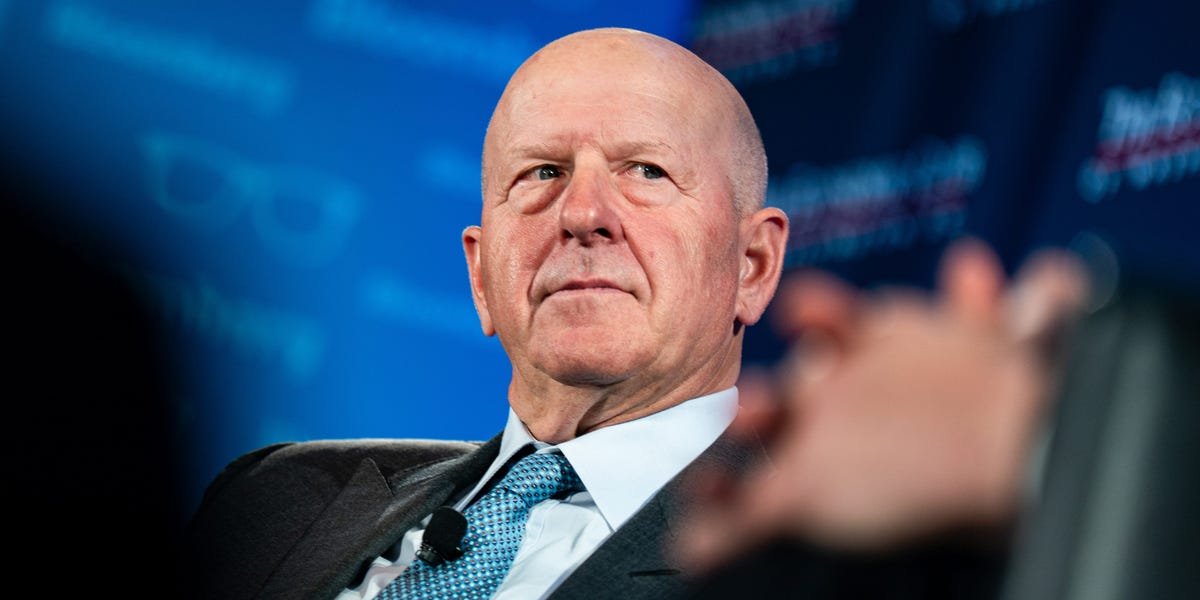
CEO David Solomon said the bank is working closely with Anthropic to assess cybersecurity threats tied to its latest system, after the rollout raised alarms across the industry. Solomon said the bank is “hyperaware” of its capabilities and is coordinating with Anthropic and its own security vendors to guard against potential threats.

Last week, Anthropic said it was not releasing its new model, Mythos, due to cybersecurity concerns. The company warned that the system was advanced enough that even non-experts could exploit vulnerabilities in major operating systems. Instead, it is offering limited previews to a small group of organizations.

“Cybersecurity has long been at the core of our business,” Solomon said during the bank’s first-quarter earnings call. “And we have for a very, very long time, put enormous resources forward.”

The model’s debut also prompted a meeting last week between Federal Reserve Chair Jerome Powell, Treasury Secretary Scott Bessent, and leaders of major US banks. Solomon said such discussions are not new, noting that banks have been engaging with the Treasury on cybersecurity risks for years.

“With the help of the US government and the model publishers, we are very focused on supplementing our cyber and infrastructure resilience,” Solomon said. “And this is part of our ongoing capabilities that we have been investing in and are accelerating our investment in.”

Despite the risks, Solomon emphasized his bullishness about AI’s medium- to long-term effects on Goldman’s business lines.

“Whenever you have acceleration of your technology, there are going to be be bumps, and there are going to be risk issues,” he told one analyst later in the call.”But the power of the technology, the ability to use it in an enterprise, to remake processes, to create efficiency, and also create more capacity to invest the growth — I can’t find a CEO that’s not talking about that,” he said.


Source link

Alice Tecotzky

A Goldman Sachs partner in technology shares the skills young job seekers need in the AI workplace

Bracha Cohen has a front row seat to Wall Street’s AI revolution — and to how young people can compete in it.

“I would tell the new generation of graduates, in this world where AI is so transformational, to build judgment and not just skills,” Cohen, a partner within asset and wealth management engineering, said. “AI may automate execution, but it can’t fully replace decision-making, systems thinking, and ethical reasoning.”

Cohen joined Goldman as a programmer in 1994, long before anyone had to prove AI fluency on their applications. She said that serving in various roles across business lines helped her ascend to partner, the firm’s top leaders.

Today, her engineering team in asset management focuses on automating operations to help the business scale, including through AI. As of now, the booming business — which holds a record $3.6 trillion in assets — uses AI for routine work, like analyzing and summarizing data, Cohen said.

As white-collar hiring slows and anxiety about AI in junior roles grows, Cohen said young engineers should focus less on simply completing tasks and more on how systems function. Mastering engineering fundamentals is key, she said, since AI should serve “as leverage, but not as a crutch.”


Bracha Cohen

Bracha Cohen is a partner and engineer at Goldman Sachs.

Goldman Sachs


She added that computer science majors should practice evaluating risk and crafting good questions, both for other people and AI models. Two other Goldman partners also previously said that interpersonal skills and communication are becoming increasingly crucial in the AI workplace.

And engineers who want to work on AI in particular have their own set of criteria. Dan Popescu, a newly promoted managing director and Goldman’s head of AI engineering for asset management, previously told Business Insider that the most competitive hires need a suite of skills: knowledge in AI engineering, finance, and traditional software engineering.

Goldman spent $6 billion on technology last year and has rolled out internal AI tools, including an assistant and a limited banker copilot. In an October memo, the firm laid out the latest phase of its OneGS initiative, which it says will drive efficiency, slow hiring, and create a “limited reduction” in roles.

CEO David Solomon is one of several big bank leaders who have said that, in the long run, AI won’t reduce head count, and that the firm needs to focus on attracting more high-quality talent.


Source link