
Goldmans-CEO-David-Solomon-says-he-reluctantly-let-top-lawyer.jpeg

Goldman’s CEO David Solomon says he ‘reluctantly’ let top lawyer Kathy Ruemmler resign after Epstein fallout

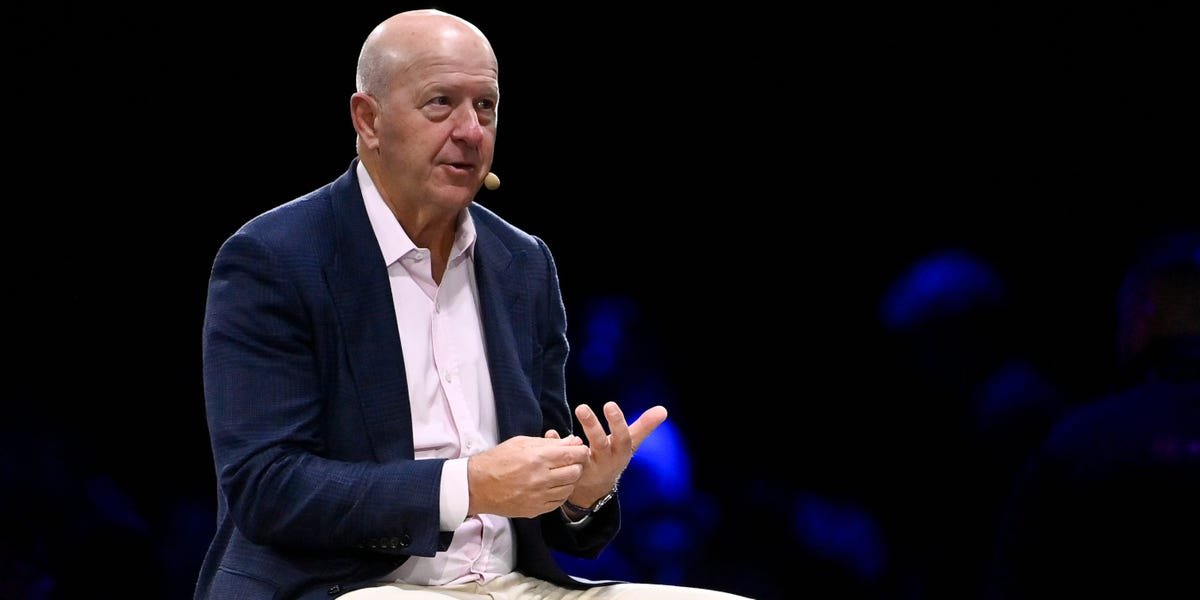
Goldman Sachs CEO David Solomon addressed the complicated situation the firm faced this week as its general counsel and chief legal officer, Kathy Ruemmler, dominated headlines for her past connections and thousands of emails with disgraced former financier Jeffrey Epstein.

She is now set to step down this summer.

Ruemmler submitted her resignation on Thursday, which Solomon said he reluctantly accepted as the media storm grew about a variety of her contacts with Epstein and his lavish gifts to her, all of which transpired before she joined Goldman as its top legal official in 2020.

“She called me yesterday afternoon and told me that the press coverage of the work she had done previously and of this whole situation had just gotten to a level of noise and distraction that she thought it was distracting the firm,” Solomon told CNBC during a live interview on Friday. He added that he had “reluctantly accepted her resignation, but I respect her decision, and she and the firm are looking forward.”

“It was putting her in a position where it was hard for her to execute on her job and her responsibilities,” Solomon said, “and she just thought it was time to step away.”

The CEO said said that Ruemmler’s connections with Epstein predated her time at the Wall Street bank, but acknowledged the complexity the situation presented for the firm’s top leadership. Previously, Ruemmler was a member of President Barack Obama’s White House counsel, advising him on matters related to foreign policy and national security, and later served as a partner at the elite law firm Latham & Watkins before joining Goldman.

“As a CEO and a leadership team, we’re making real-time decisions with a very valued colleague that we worked with very closely, and that’s not an easy thing to work through. There is a lot of nuance to that.” He added that he was “proud of the way Kathy has handled herself and the way we’ve worked through this.”

And he added that Goldman wasn’t the only large organization facing the fallout of high-powered individuals’ apparent connections to Epstein, who died in 2019 but whose legacy has continued to cast a pall over large segments of the corporate sector.

“A lot of people are trying to work through it,” Solomon told CNBC’s Andrew Ross Sorkin when pressed for more detail on how the decision came about. He praised Ruemmler’s contributions, calling her “a tremendous human being” who had served as an “extraordinary general counsel with deep, deep experience” for the banking institution.

Ruemmler’s last day at Goldman is set to be June 30, the bank said.

Last month, Goldman representative Tony Fratto said in a statement that it is “well known that Epstein often offered unsolicited favors and gifts to his many business contacts.”

“As Kathy has said many times, she had a professional association with Jeffrey Epstein when she was a lawyer in private practice, heading the defense and investigations practice at a global law firm,” the statement said. “She regrets ever knowing him.”


Source link

Goldmans-CEO-lays-out-the-3-forces-lining-up-to.jpeg

Goldman’s CEO lays out the 3 forces lining up to make this a breakout year for dealmaking

David Solomon is officially done playing defense.

The Goldman Sachs CEO has steered the bank through several grueling years for the industry, including a multi-year drought in private equity spending and extreme trading volatility. But after a booming 2025, Solomon told investors at a UBS financial services conference on Tuesday that the firm is entering 2026 with the wind at its back.

Solomon praised policymakers in Washington for spurring acquisitive appetites. “You have a massive deregulatory trend in the United States after a very tough regulatory period in the United States, across all industries,” Solomon said.

The receptive comments about the government’s heightened support for M&A came just months after President Donald Trump lashed out at Solomon on Truth Social in August, mocking his former side gig as a DJ and encouraging him to step down from the CEO throne. Trump’s rebuke came after a Goldman Sachs economist suggested that tariff policies could cost consumers.

Despite that dustup, Solomon is now leaning into the administration’s growth-oriented agenda, arguing that the friction of the past has been replaced by a “constructive” new reality for the banking sector.

Here are the three factors Solomon named on Tuesday that have left him feeling bullish about 2026’s dealmaking forecast.

From a ‘no’ to a ‘maybe’

Solomon thinks that, coming off strong results last quarter, 2026 will represent an inflection point for the global mood toward M&A. For the past five years, he said, strategic buyers had encountered a “different regulatory regime,” adding: “Whatever the question was, the answer was no.”

“Now, whatever the question is, the answer’s maybe,” he told UBS Erika Najarian, who hosted the discussion.

That, too, he said, could drive a resurgence in the IPO market, which has been expected to return this year. And in terms of mergers and the kind of corporate dealmaking that is Goldman’s bread and butter, “this could be a top decile” year, Solomon said.

And one major driver he pointed to is cash-rich, asset-heavy private equity sponsors.

The PE gambit

A key pipeline for Goldman has been banking for the world’s top private equity sponsors, many of whom held assets longer than their own investors would like while waiting out a period of lackluster valuations and uncomfortably high interest rates.

That’s left limited partners hungry for capital returns to reinvest in future deals, the secondaries and continuation vehicles markets booming, and banks praying that 2026 is the year that their private equity clients finally indicate they’re ready for action.

Solomon said the pressure for sponsors to return capital to their investors has reached a breaking point.

“We’re reaching a point in time where that unlock” is starting to occur, Solomon said. He pointed to mounting “pressure from the LP community and the cycle life of fundraising has reached a point in time for most of these firms that they can’t get into the valuation debate as much. They’ve got to move forward.”

The downstream effects of AI investments

Solomon has been on a mission to make Goldman AI-ready and has pointed to the massive investment in the space. “The need for capital to continue on this technology cycle is going to have an impact on the overall capital-raising cycle, so I see all this stuff accelerating, and I feel pretty good about it,” he said. He cited mega-tech names that have turned to the debt market to raise liquidity for AI-related projects.

It won’t always be smooth sailing, Solomon conceded, framing Trump’s governing style as something of an open question for markets. “He also has a tendency in policy to move from policy action to policy action,” he said. “I’d still say there’s uncertainty around trade. There is uncertainty around inflation, and there’s uncertainty on geopolitics.”

But, he concluded, “I think the likely outcome in 2026 is we’re going to have a pretty constructive year for capital markets, a pretty constructive year for M&A — particularly large-cap, strategic M&A — and the result of that should be very favorable for the people in this room.”


Source link