
Stop-calling-everything-a-flop-It-was-a-good-year.jpeg

Stop calling everything a flop: It was a good year for the movies.

Every December, cinephiles ask: Was this a good year for movies? By the end of 2025, I knew my answer instantly: Yes.

The box office told a different story. Before the COVID-19 pandemic, annual box-office grosses routinely reached $10 to $11 billion. This year, totals are expected to fall short of $9 billion.

“It looks like it’s going to be two years in a row that the industry flatlined,” Alamo Drafthouse COO Michael Sherrill told Variety.

But if you look beyond the box-office numbers, you’d see the year was packed with wonderful movies. And it’s just one reason we should be paying less attention to what the box office tells us.

Underrated gems were everywhere

Not every year has a “Barbenheimer,” which together raked in $2.4 billion at the box office in 2023, but that doesn’t mean there weren’t plenty of five-star films in 2025.

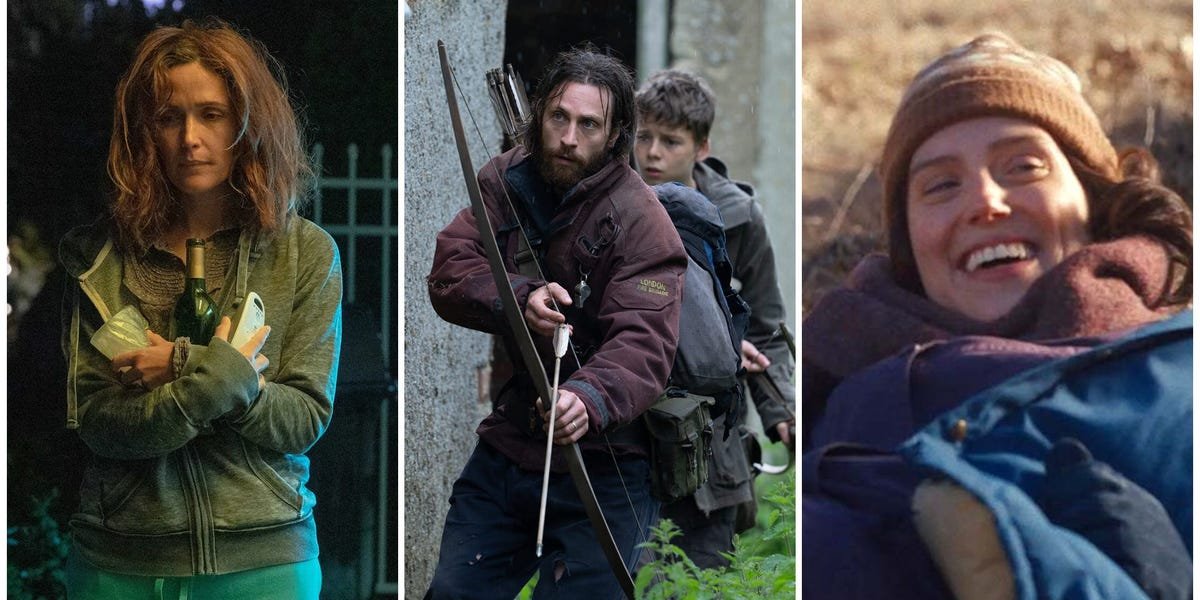
Some of the best movies of the year included “28 Years Later,” “Blue Moon,” “Sentimental Value,” “Splitsville,” “Hamnet,” “If I Had Legs I’d Kick You,” “Black Bag,” and “Mission: Impossible — The Final Reckoning,” and all but two made less than $11 million worldwide.

“The Final Reckoning,” which grossed $598 million at the box office, was still unable to become profitable due to ballooning production costs, according to The Hollywood Reporter.

Another, “Black Bag,” was a slick thriller starring Michael Fassbender and Cate Blanchett as a pair of married spies who are pitted against each other when a mole is discovered. This film was visually stunning, featured strong performances, and the tension never let up.


Michael Fassbender holding a book wearing sunglasses

“Black Bag.”

Focus Features


When it was released in March, “Black Bag” earned $44 million at the box office, likely because it catered to, for lack of a better term, “adults.” Yet Gen Z and Gen Alpha are the generations “sort of single-handedly keeping film alive” more than any others, according to reports from CinemaUnited and the National Research Group, suggesting there may be a ceiling on how far adult-focused theatrical releases like “Black Bag” can go today. By comparison, another Soderbergh-directed thriller, “Out of Sight,” made nearly double that in 1998.

Another great 2025 film, “Sorry, Baby,” was a movie written by, directed by, and starring Eva Victor in their directorial debut. Victor played a college professor grappling with the aftermath of a sexual assault. It was simultaneously heartbreaking, funny, and uplifting.

It also only made $3 million at the box office — a respectable total for a small indie film with a reported budget of $1.5 million and a very limited theatrical run, but not a smash by any means.

Another movie that made $3 million? “Splitsville,” which made me laugh harder than almost anything else I saw this year.


splitsville

“Splitsville.”

Neon


What I learned from these movies: Don’t let the “flop” label or a small box-office number scare you. Just because it didn’t have “Avengers: Endgame”-level marketing, fanfare, and box-office take-home, it doesn’t mean it’s not worth your time.

The new normal

In fact, even some of the biggest hits of the year could be considered flops by Old Hollywood standards.

Movies like “Superman,” “The Fantastic Four: First Steps,” and “Captain America: Brave New World” each earned hundreds of millions of dollars globally but fell far short of the blockbuster heights superhero films once enjoyed.

Arguably the best superhero movie of the year, “Thunderbolts*,” made $382 million worldwide, making it a superhero flop according to outlets like Variety and Screen Crush.


In

“Thunderbolts*.”

Marvel Studios


Over the last decade, viewers’ habits have changed; more people stay home and stream their favorite films, rather than head to theaters.

With the advent of streaming, fewer people are interested in going to cinemas. A US Kagan Consumer Insights survey, released in October, found that the percentage of frequent movie-goers dropped by 22% between 2019 and 2025.

Meanwhile, in July 2025, Netflix reported its best-ever numbers during an earnings call. Free streaming services like YouTube and Tubi increased viewership by 53% between 2023 and 2024, and Peacock gained 3 million subscribers in just the first week of the Olympics.

The era when every major release was expected to make a billion dollars is over.

We should all know less about marketing budgets

This comes as there’s more focus on the theater box office and studio budgets. Over the past decade, trade publications have leaned into coverage of how much money a movie needs to earn “to make its money back.”

This reporting only opens up films like Ryan Coogler’s “Sinners,” a record-breaking, singular film that depicts an area of the country rarely shown on screen, to bad-faith criticism, as viewers use data to tear a movie down, regardless of quality.


A still of

“Sinners.”

Eli Adé


It not only ignores creative value but also obscures other stories, such as how Coogler secured a rights deal to own the rights in 2050, which could set a new precedent for how creatives take ownership of their work.

Instead, the narrative was about how this film, which grossed over $360 million on a $90 million budget, per IndieWire, wasn’t close to making its money back.

It leads to things like this:

This phenomenon isn’t completely new. In Nancy Meyers’ “The Holiday,” a film released almost 20 years ago, a character complains we shouldn’t be tracking box-office returns like baseball scores: “Now a picture has to make a killing the first weekend or it’s dead. This is supposed to be conducive to great work?”

Still, with movies like “Sinners” and “Black Bag” in our rear-view mirrors, we should remind ourselves that box-office success shouldn’t matter to us cinema lovers — we should only care about how the movies are making us feel and think.

So, as 2026 begins, stop worrying and love the bomb — and an entire world of cinema will be opened up to you.


Source link

Spotify-Wrapped-is-one-of-the-best-marketing-strategies-going.jpeg

Spotify Wrapped is one of the best marketing strategies going. Good luck trying to replicate it.

“What’s your age?” isn’t typically a fair question, but Spotify’s making it OK.

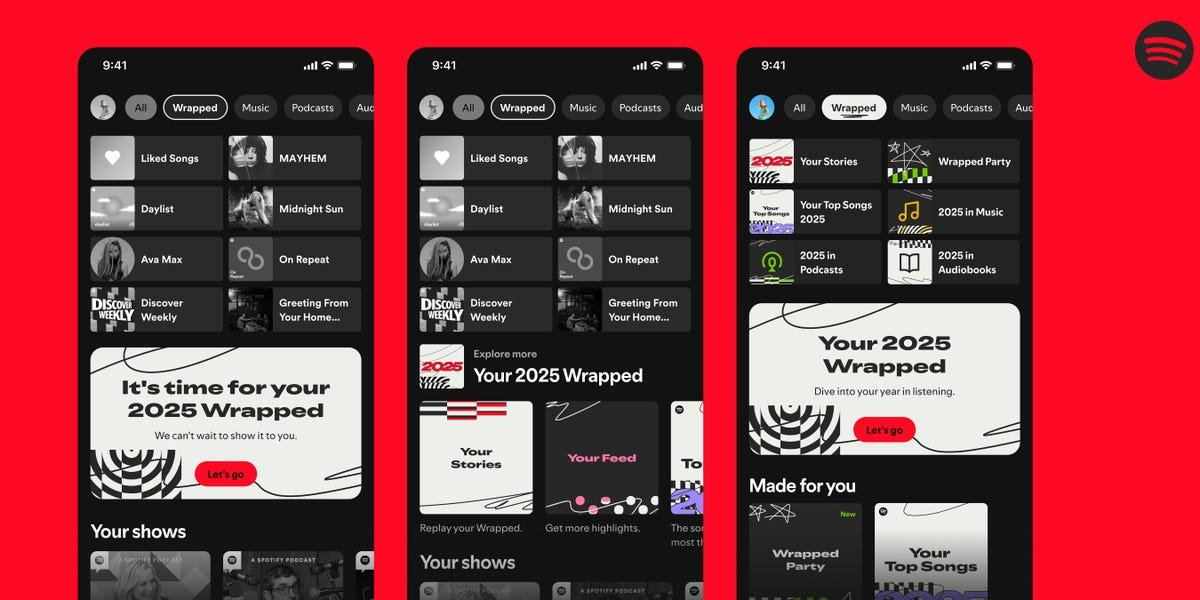
Spotify Wrapped is back, and the big, new feature for the streamer’s year-end recap for users is the “listening age.” While some weren’t too exciting — my listening age (34) wasn’t far off from my real one (36) — others had a different experience, like newsletter editor Grace Lett, 28, whose listening age was 51.

Grace took the news in stride, but others weren’t so happy, writes BI’s Katie Notopoulos.

The whole thing might seem like a silly gimmick (it is), but it’s also the perfect representation of Spotify Wrapped: a smart marketing tool to get people talking about their Spotify use with each other.

There’s also a method to the madness. Wrapped isn’t just about doing a quick search of users’ top artists and songs. (Justice and “Hate” by ThxSoMch for me, since I know you were dying to know.)

Wrapped takes the entire year, with work for next year’s edition beginning as soon as the current year’s drops. Executives analyze reactions on social media and figure out how to adjust going forward. Three Spotify executives walked BI’s Henry Chandonnet through the whole process.

Spotify Wrapped isn’t easily replicable.

Like most popular things, plenty of companies have tried recreating Spotify’s success. That includes rival YouTube, which launched YouTube Recap this year.

But few, if any, have penetrated the zeitgeist quite like Spotify.

Some platforms don’t deserve a recap. I’d be depressed if I saw how much I spent on takeout this year or the number of hours I logged playing video games.

Others come off as too braggadocious. I would rather gouge out my eyes than see a recap of your Strava or Peloton history.

Music is a sweet spot, though. It’s fun to look back at what you listened to throughout the year, kind of like catching up with an old friend. And there’s a genuine interest in how others’ lists stack up. (It’s always fun finding an undercover Swiftie or a lowkey Deadhead.)

One group still seemed unimpressed on Spotify’s big day: investors. Spotify’s stock finished down almost 3.5%.

And isn’t it ironic? Don’t you think?


Source link

OpenAI-is-feeling-the-heat-from-Google-right-now-—.jpeg

OpenAI is feeling the heat from Google right now — for good reason

Two “code red” alerts — the first from a veteran tech giant worried about a buzzy AI upstart, the second from the AI upstart after the tech giant gained ground.

What a difference three years can make.

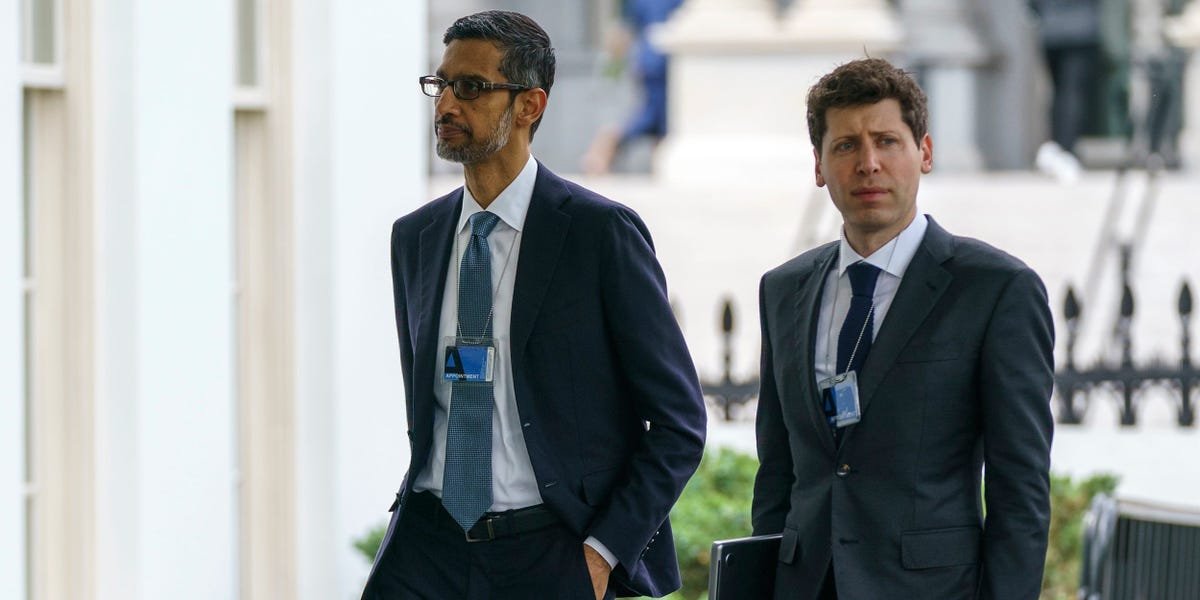
News of a recent Sam Altman memo to OpenAI employees, first reported by The Information, is reverberating around the tech world and highlighting the competitive heat it’s facing as Google narrows the gap in the AI race.

On Monday, Altman reportedly told OpenAI employees in an internal Slack memo that he was issuing a “code red” and that the company would be putting more resources into ChatGPT and delaying other products as a result.

Altman’s memo illustrates just how much the AI race has changed. In 2022, Google’s management issued its own “code red” in the wake of ChatGPT’s launch, a moment that illustrated in sharp relief just how far behind the search giant was in the AI race despite financing the breakthrough research that paved the way for AI’s development.

Three years later, it’s clear that OpenAI’s throne is under threat. Here are some of the pressure points it’s facing as Google nips at its heels.

Google is catching up

The elephant in the OpenAI room is Google’s Gemini 3 AI model, which debuted to widespread praise.

The model’s capabilities demonstrated that Google is no longer far behind in the AI race. It’s not just OpenAI that’s unnerved, either. Nvidia, the world’s most valuable company by market cap, recently found itself defending its AI chips after a report about Google’s own chip progress.

The search giant said in November that Gemini had more than 650 million monthly active users, a large increase from the 450 million such users it reported in July. In comparison, OpenAI has said nearly 800 million weekly active users.

Salesforce CEO Marc Benioff recently said that he was ditching ChatGPT in favor of Gemini 3 because of Gemini’s “insane” improvement.

“Holy shit,” Benioff wrote on X last month. “I’ve used ChatGPT every day for 3 years. Just spent 2 hours on Gemini 3. I’m not going back. The leap is insane — reasoning, speed, images, video… everything is sharper and faster. It feels like the world just changed, again.”

Last month, Google launched “Nano Banana Pro,” its AI image generator, showcasing hyper-realistic images that users quickly used to imagine tech CEOs hanging out together or pretend famous Thanksgiving dinner table guests.

Altman’s “code red,” according to The Information’s report, specifically mentions Gemini 3 and teases a coming OpenAI model that it says tested “ahead” of Google’s flagship model, as well as mentions prioritizing OpenAI’s Imagegen image generation model for ChatGPT users.

Google’s advertising cash cow can fund its AI — while OpenAI faces a $1.4 trillion bill

The AI game is an expensive one, and Google has the advantage of being a cash-generating advertising juggernaut.

Sure, Google plans to spend between $91 billion and $93 billion this year on cap ex, much of which is going toward AI costs. But it also brought in $100 billion in revenue in just the last quarter alone — $74.18 billion of which came from its advertising business.

And unlike OpenAI, Google can leverage its massive size for a full-stack advantage, allowing it to control AI development from research to chip manufacturing to its in-house cloud, which hosts everything.

Meanwhile, some on Wall Street have raised concerns about OpenAI’s mounting AI spending commitments, which tally at least $1.4 trillion over the next eight years. In response, Altman has said OpenAI is on track to bring in $20 billion in revenue this year, and expects its annualized revenue to grow to hundreds of billions in the coming years.

But OpenAI is still figuring out its own ads business — the launch of which could be delayed by Altman’s “code red,” according to The Information.

OpenAI has a head start — but Google has a platform advantage

OpenAI hasn’t squandered its head start, and it’s landed some major wins this year.

In recent months, OpenAI has made significant plays into other industries, including social media with Sora, its TikTok-esque AI video generation app. In a direct shot at Google Chrome, OpenAI also launched Atlas, its own web browser.

And it sounds like OpenAI has more up its sleeve as it battles the bottleneck of lining up enough compute and energy to power its developments.

OpenAI executives have said compute constraints are holding back other initiatives, like making ChatGPT Pulse, a personalized update feature within the chatbot for Pro users, available to everyone. Last week, Bill Peebles, OpenAI’s head of Sora, announced that free users would face significant cuts in the number of videos they could generate per day.

ChatGPT also remains synonymous with AI — not unlike Google and online search. That will likely help continue to drive app downloads and usage and could also stave off Google’s attempts to convince users to switch to Gemini or Google’s other AI-infused products.

But humans are creatures of habit, and many already use a Google product or service everyday — a platform advantage that the tech giant is already utilizing to siphon away ChatGPT users.

Silicon Valley’s history is built on startup disrupting the status quo.

Now, with OpenAI (smartly) looking over its shoulder, we get to watch the AI race heat up as Google, a former startup, gets its AI legs and hits its stride.

For OpenAI, it’s a reminder that tech giants can put up quite a fight when facing the prospect of being disrupted — and sometimes, can turn the tables.

“I try not to think about competitors too much,” Altman said last May before critiquing Google’s aesthetic.

It sounds like those days are gone.


Source link