White-House-turns-down-Elon-Musks-offer-to-cover-TSA.jpeg

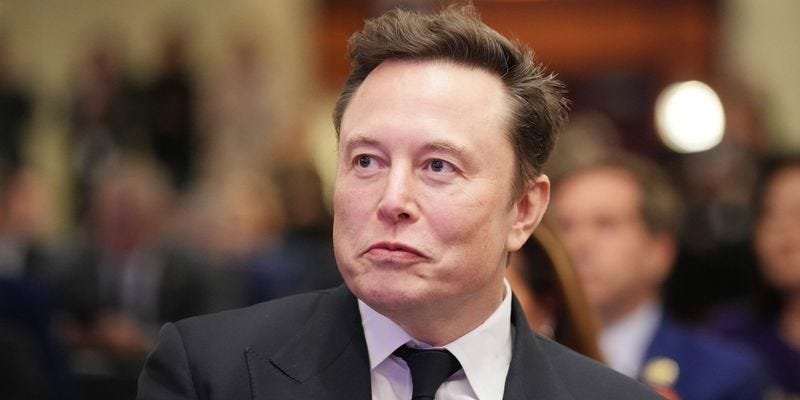
White House turns down Elon Musk’s offer to cover TSA pay during partial government shutdown

The White House turned down Elon Musk’s offer to cover TSA agents’ salaries as they continue to work without pay amid the partial government shutdown.

“We greatly appreciate Elon’s generous offer,” Abigail Jackson, a White House spokesperson, told Business Insider. “This would pose great legal challenges due to his involvement with federal government contracts. The fastest way to ensure TSA employees — and all DHS employees — get paid is for Democrats to fund the Department of Homeland Security.”

Musk did not immediately respond to a request for comment.

The billionaire CEO on Saturday wrote in a social media post that he’d like to cover the salaries of TSA workers “during this funding impasse that is negatively affecting the lives of so many Americans at airports throughout the country.”

As of Wednesday, TSA workers missed at least one paycheck as Congress remains at an impasse over funding for the Department of Homeland Security.

The funding lapse has led to staffing shortages and hourslong lines at airports across the country.

As a countermeasure, the Trump administration deployed Immigration and Customs Enforcement agents to address airport disruptions.


Source link

Lloyd Lee

Anthropic’s lawyer says government is ‘pressuring’ companies to ditch the AI startup, go to competitors

Anthropic’s lawyer said the US government is “pressuring” the startup’s customers to go to rival AI providers amid an escalating fight between the Claude developer and the Department of Defense.

During a status conference on Tuesday, Michael Mongan, an attorney for Anthropic, said the Defense Department’s decision to effectively blacklist the startup from working with the US military is bringing “real and irreparable harm” to the company each day.

Mongan said customers have begun “expressing doubt” about working with Anthropic and that the government has been on a pressure campaign to get Anthropic’s customers to drop the provider and go to competing AI companies.

“We’ve had university systems and business-to-business companies that have switched to competing AI companies,” Mongan said. “And this is all the predictable result of the defendant’s actions and the uncertainty they’ve created, as well as the fact that defendants have been affirmatively reaching out to our customers and pressuring them to stop working with Anthropic and switch to other AI companies.”

Last month, after contract negotiations with the AI startup fell apart, Defense Secretary Pete Hegseth announced that Anthropic was a “supply chain risk” and framed the move as extending beyond direct military work.

“Effective immediately, no contractor, supplier, or partner that does business with the United States military may conduct any commercial activity with Anthropic,” Hegseth said in an X post on February 27.

The scope of the supply chain risk label is in dispute. Microsoft previously told Business Insider that its lawyers concluded the company can still use Anthropic for non-military-related work. The company also filed an amicus brief, urging the federal court to temporarily block the government’s supply chain risk designation.

The issue centers on Anthropic’s stance that its frontier model, Claude, cannot be deployed for autonomous weapons and mass surveillance of US citizens. Defense officials have said in response that a private company cannot dictate what the military can and cannot do.

Anthropic CEO Dario Amodei said in a blog post on February 26 that the company could not accede to the government’s demand for unrestricted, lawful use of its model. A day later, Hegseth formally designated Anthropic a supply chain risk.

Anthropic sued the government on Monday, seeking a temporary restraining order to continue doing business with the government as the case proceeds. The company said in the suit that the Defense Department did not provide adequate grounds to label it a national security risk.

In addition, the company said the designation has never been applied to an American company and that the move was retaliatory, violating the company’s First Amendment rights to express its views on AI safety and limitations.

The fallout from Anthropic’s blacklisting has been swift, according to legal filings.

Krishna Rao, Anthropic’s chief financial officer, said in a declaration filed on Monday that the DoD had contacted several “portfolio companies about their use of Claude” and that those clients have “grown worried and uncertain” about their ability to use the model.

The CFO said the government’s action could reduce Anthropic’s 2026 revenue by “multiple billions of dollars.”

Spokespeople for Anthropic and the Pentagon, as well as Anthropic’s lawyer, did not respond to a request for comment.


Source link

A-57-billion-AI-startup-wants-to-help-cut-government.jpeg

A $5.7 billion AI startup wants to help cut government benefit fraud. Experts aren’t so sure.

An AI startup in SF focused on identity verification has set a lofty goal: securing government contracts.

Daniel Yanisse, the CEO of Checkr, told Business Insider that the company wants to help the government reduce “fraud and waste” by not only screening new employees but also verifying people’s eligibility for benefits such as Medicare and Social Security.

Though Yanisse said the company isn’t ready to make any product announcement yet, he said a frictionless government assistance system may be just years away.

AI and safety experts, however, told Business Insider that there are legal and technical hurdles for any company to undertake the task of automating benefit and welfare systems with AI.

Checkr primarily uses AI to run background checks and surface information such as criminal records and motor vehicle reports. The company has major contracts with Uber and Lyft to screen new drivers, and is valued at more than $5.7 billion after raising $120 million in funding in 2022. In 2025, Checkr reported over $800 million in revenue and surpassed 120,000 customers.

When asked what Checkr wants to do for the government, Yanisse said that for Medicare and other programs, “there’s a lot of fraud happening and just bad actors getting the government dollars instead of the right people who need help,” adding that it’s very hard for the government to actually verify people’s employment status and income.

The Medicare Fee-for-Service program estimated that there were $28.83 billion in “improper payment” in 2025 at a rate of 6.55%, though not all such cases are the result of intentional fraud. Payments made to individuals who did not submit sufficient documentation and have unverified income levels are also considered improper by Medicaid.

“With AI, unfortunately, there’s going to be even more fraud, identity theft, and scams,” said Yanisse. “It’s a lot of friction, it’s a lot of repetition, and now there are also deepfakes.”

Checkr’s spokesperson told Business Insider that the company’s potential involvement in government is “still conceptual at this point.”

The company also pointed toward a study by Middesk, a business identity verification platform, that out of $1.09 trillion in Medicaid payments that went to around 1.6 million providers between 2018 and 2024, $563 million in payouts went to providers that are blacklisted from federal healthcare programs for criminal activity or misconduct.

Automating identity verification can be challenging

Stuart Russell, professor of computer science at UC Berkeley and an AI pioneer, told Business Insider that he is “not optimistic” that the plan to use AI to determine benefits eligibility will work as advertised.

“An AI system of this kind, some version of an LLM, is incapable of producing veridical explanations of its decisions, making it impossible to challenge false decisions,” Russell said.

Russell also cited the General Data Protection Regulation in the European Union, which bars decisions with significant legal effects on individuals from being made entirely by automated systems.

Baobao Zhang, the Maxwell Dean associate professor of the politics of AI at Syracuse University, told Business Insider that though she cannot assess exactly how good Checkr’s verification system is right now, past government attempts to mix people’s benefits with an automated system are cautionary tales.

“If the federal government or other state governments are trying to contract with a vendor to automate welfare fraud detection, they need to have a serious evaluation in the real world before they deploy it, because the stakes are high, as history has proven,” said Zhang.

In Indiana, an attempt to streamline and automate its welfare eligibility system by outsourcing a contract to IBM ended in a legal battle in which the state sued the company for $1.3 billion for the scrapped project in 2010. Based on court records, the Indiana Family and Social Services Administration said that processing errors from IBM led to faulty benefits denials that brought harm to the needy.

In Australia, an automated government plan called Robodebt, designed to detect fraud, told welfare recipients to repay benefits and sent letters claiming they owed thousands of dollars in debt, based on an incorrect algorithm. A royal commission, which is Australia’s highest form of public inquiry, found that at least three people died by suicide after being falsely told to pay back debt they don’t owe by Robodebt. The system was ruled illegal by a court in 2019.

Ifeoma Ajunwa, the founding director of the AI and the Future of Work Program at Emory University, told Business Insider that if any government agency is to adopt AI, there should be an advisory council made up of technologists and social scientists, and affected constituencies should be given a say.

“I think we need to move cautiously when delegating governmental functions to AI technologies,” said Ajunwa. “While these tools are touted to increase efficiency and lower costs, we also need to establish guardrails for their use to protect citizens.”


Source link

The-partial-government-shutdown-has-come-for-TSA-PreCheck.jpeg

The partial government shutdown has come for TSA PreCheck

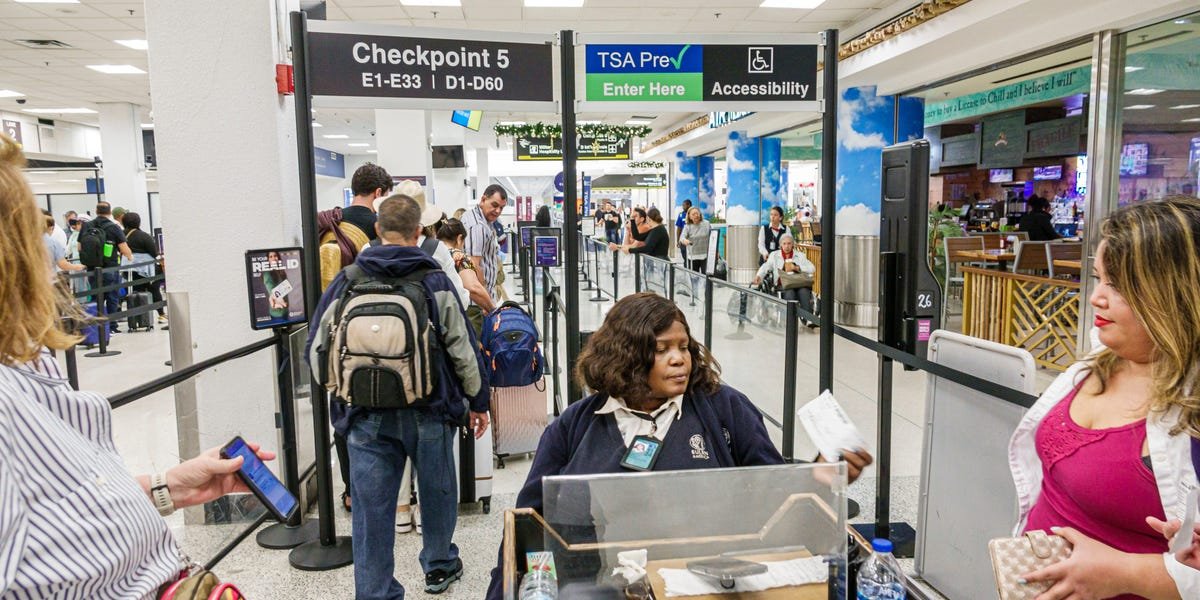
Federal officials said they suspended TSA PreCheck and Global Entry Sunday morning at 6 a.m. ET, but in many US airports, the lanes remained open past the deadline.

The Department of Homeland Security said on Saturday night that it would shut down the expedited airport security and immigration lanes due to the partial government shutdown, which left the department without funding.

The Transportation Security Administration, which operates PreCheck and is an agency of DHS, said it was evaluating the situation on “a case-by-case basis.”

“At this time, TSA PreCheck remains operational with no change for the traveling public,” a TSA spokesperson said Saturday morning. “As staffing constraints arise, TSA will evaluate on a case-by-case basis and adjust operations accordingly.”

Travel chaos at airports is often an impetus to end government shutdowns. TSA and customs agents are considered essential employees and are working without pay during the partial shutdown, as they did for 43 days during the full shutdown in October.

Last year’s shutdown ended after air traffic controllers began to call out after several $0 paychecks. The 2019 shutdown ended soon after mass callouts temporarily halted travel in New York.

Social media posts showed that PreCheck lanes were still operating at major airports on Sunday, including Minneapolis, Washington, DC, and Orlando, hours after the 6 a.m. cutoff.

The injection of confusion comes on an already stressful travel weekend, with many flights canceled as the country prepares for a blizzard in parts of the Northeast. Airlines like JetBlue and Delta have preemptively said some flights in the region will be canceled and have offered travel waivers to affected flyers.

TSA PreCheck allows approved travelers to keep shoes and jackets on and leave laptops and liquids in bags, while Global Entry provides expedited passport control when returning to the US from abroad.

Both programs are widely used by frequent flyers and business travelers and are designed to help agents handle more travelers more efficiently through facial recognition and automation. If the lanes close, wait times at airports could increase significantly.

TSA PreCheck costs $76.75 per traveler for a five-year pass (renewals start at about $58); Global Entry, which includes PreCheck, costs $120. DHS said passengers with active memberships will be able to fly using standard security or immigration lines.

CLEAR, a separate, privately run expedited checkpoint, appears to be operating.

DHS Secretary Kristi Noem said the agency is “making tough but necessary workforce and resource decisions” and prioritizing the “general traveling population” at airports.

“Without appropriations, TSA simply cannot afford to risk overstretching our staff and weakening our security posture,” she added.

The lanes would reopen once the agency secures funding, DHS said.


Source link

The-Senate-just-voted-to-fund-the-government-—-but.jpeg

The Senate just voted to fund the government — but it’ll still partially shut down for a few days anyway

The US federal government is shutting down again, but it won’t be like last time.

Funding for a slew of federal agencies runs out at midnight late on Friday, and lawmakers on Capitol Hill failed to send a series of bills to fund those agencies to President Donald Trump’s desk in time.

Even though the Senate passed a series of bills to fund the government on Friday, the House is not set to vote on them until late Monday at the earliest, meaning the shutdown will last at least a few days.

Some parts of the federal government have already been funded, meaning that the shutdown, even if it drags out, is only partial.

Additionally, it’s unlikely that this shutdown will last as long as the one that began in October, which stretched for 43 days and became the longest government shutdown in American history.

Here’s what could be affected — and what won’t be

In October, funding for the entire federal government was being held up, and the shutdown was far-reaching. This time, some parts of the federal government would remain operational.

That’s because Congress has already passed a series of spending bills that fund agencies and programs through September 30.

Among those programs are SNAP and WIC, which were notably affected by the previous shutdown. Additionally, national parks would likely remain open, veterans would continue to receive benefits through the Department of Veterans Affairs, and staff on Capitol Hill would continue to be paid.

But plenty of other government agencies and programs would be affected if the shutdown drags out, including the Department of Defense (including troops), the State Department, the Treasury Department, the Transportation Security Administration, and the Federal Emergency Management Agency.

Notably, Immigration and Customs Enforcement (ICE) and Customs and Border Protection would remain operational, even though it’s funded via the Department of Homeland Security.

That’s because DHS received $190 billion in funding via the “One Big Beautiful Bill Act” in July, including $75 billion for ICE and roughly $65 billion for CBP.

It’s unlikely to last as long as before

Unlike in the fall, lawmakers in both parties are working together to try to resolve the situation as quickly as possible.

The odds of a shutdown first rose following the fatal shooting of Alex Pretti by Border Patrol agents in Minneapolis on Saturday.

Democrats vowed to oppose a bill to fund the Department of Homeland Security, which oversees ICE and CBP, until reforms to immigration enforcement are made.

The House had already passed a package of six funding bills, including the DHS bill, and they had been stitched together into one package in the Senate.

The Senate has now passed a reformulated version of that package, with DHS funding continuing for only two weeks to allow for a renegotiation.

It’s unclear as of now whether that package will pass the House when lawmakers return to the lower chamber next week.


Source link

The-government-wants-you-to-eat-more-butter-Heres-how.jpeg

The government wants you to eat more butter. Here’s how we got here.

Dairy started to roar back into fashion in 2025 — and if the Trump administration’s new dietary guidelines are anything to go by, it could be about to reach new heights.

The 2025-2030 Dietary Guidelines, which provide Americans with a framework for what the government considers a healthy diet, advise people to aim for three servings of full-fat dairy per day. The document, released on Wednesday, name-checks butter, whole milk, and “real” cheese.

In the past two years, dairy has had a glow-up as innovative products, blending health and food trends with dairy staples, hit the market. Think indie brands selling cinnamon bun butter and mint chocolate-chip probiotic ice cream, and Fairlife Ultra-filtered milk becoming more popular than ever. Dairy is typically minimally processed, high in protein, and fermented versions are good for gut health.

But the new guidance contradicts a strong body of evidence linking a diet high in full-fat dairy products and red or processed meat, which are high in saturated fats, to cardiovascular disease.

Recommending full-fat dairy like butter is a big pivot from the 2020 to 2025 Dietary Guidelines for Americans, which encouraged us to “move to low-fat or fat-free dairy milk or yogurt or lactose-free dairy or fortified make half soy versions.”


new pyramid

“Whole milk” features high up in the US government’s food pyramid, released Wednesday.

realfood.gov


This was partly why plant-based diets and alt-milks became hot commodities in the 2010s. Then, some shoppers started to wonder if some of types of products were high enough in protein and more processed than they’d realized.

In 2024, the organic dairy sector grew by 9.8% up from 5.6% the previous year, according to data shared with Business Insider last year by New Hope Network, an organic-focused consultancy firm. This is far higher than the one or two percent a year increase seen since around 2015.

During this time, whole dairy products like raw milk and home-churned butter have become synonymous with the Make America Healthy Again movement helmed by the health secretary Robert F. Kennedy Jr., an architect of the new guidelines. It’s all part of the conservative vibe shift of the past year.

RFK Jr. said Wednesday these new guidelines are “how we Make America Healthy Again,” but public health experts have been quick to point out their contradictions.

Neal Barnard, president of the Physicians Committee for Responsible Medicine, said that the guidelines recommend limiting cholesterol-raising “bad” or saturated fat, while simultaneously promoting red meat and full-fat dairy products.

Proceed with caution.


Source link