
Americas-grandparents-are-raising-their-grandkids-and-delaying-retirement-Some.jpeg

America’s grandparents are raising their grandkids and delaying retirement. Some expect to work until they die.

Dorenne Simonson didn’t anticipate being a mother again — especially not at 66.

Simonson, who manages a direct care office in New Jersey, took over as the primary caregiver for her granddaughter when her daughter was unable to care for her, just two months after giving birth.

Simonson, a single mother of five grown children, no longer considers herself a grandparent to her now-four-year-old granddaughter; she’s the mom. She’s up at 5:30 a.m., packing lunch, and doing her granddaughter’s hair. She drives her to day care, then works from 8 a.m. to 4:30 p.m. After making her dinner, she tucks her granddaughter in by 8 p.m. Weekends mean laundry, cleaning, and food prep. Her granddaughter was born exposed to drugs and has poor vision, so much of her PTO goes toward caseworker meetings or trying to find proper medical care. Even securing baby formula was a struggle. It’s left her with little time for herself and a limited social life. And given the costs, Simonson expects to work until she dies.

“I’ve always been in a situation where I pretty much had to spend whatever I made, and so I do look at the future and go, ‘This is going to be interesting,'” Simonson says.

In interviews for my 80 Over 80 series, a comprehensive look at America’s oldest workers, dozens of grandparents said their role in their grandchildren’s lives deviates dramatically from what they remembered of their own grandparents. Many said that because they worked at least part-time, there weren’t as many opportunities to see or call their grandchildren. Many wish they could support their grandchildren’s education and well-being, but with the rising costs of long-term care and daily expenses, any extra money goes toward savings. Some said they’ve been forced to choose between buying a birthday gift for their grandson and paying the water bill.

Others, like Simonson, have had to step into a more active role, becoming a full-time caregiver. For many grandparents with additional responsibilities, aging doesn’t come with a golf club membership. Over two dozen grandparents who are caring for their grandchildren full-time told me this year that doing so has been rewarding but wallet-sucking, agitating, and invisible.

Either way, many said they don’t fit the stereotype of the crocheting, cookie-baking, and sweet, if occasional, presence. For some, the new paradigm hurts.

Grandparents are doing more of the caregiving

Rebecca Reed, 87, isn’t sure how she managed to survive raising her two grandchildren. Her son-in-law and daughter died within a year and a half of each other in the mid-2000s, and Reed and her husband, who was in his early 70s, took in their grandchildren, who were 13 and 11. Since her husband worked, she took on many parental responsibilities.

At first, Reed was in “grandparent mode,” giving them whatever they wanted, but quickly pivoted to “parent mode,” setting rules and expectations. After retiring, Reed and her husband relied on their savings, Social Security, and their daughter’s life insurance policy to pay bills and send the kids to private school. Once her husband died in 2011, she filed for bankruptcy and returned to work. Fifteen years later, she works two jobs, earning $12 an hour. She can’t retire, and her schedule gives her few opportunities to see her grandchildren.

“At 90, I’m retiring from work no matter what,” Reed says. “I don’t know if I’ll be able to even pick up a baby at that age. I really hope I’m around for that because that would be icing on the cake.”


Patrick Hennessy and wife.

Pat Hennessy and his wife cherish their grandchildren, though he doesn’t plan to stop working.

Maggie Shannon for BI


Older grandparents — particularly grandmothers — are increasingly taking on caregiving responsibilities. An analysis of the Census Bureau’s American Community Survey (ACS) by researchers from the University of Pittsburgh found that between 2009 and 2021, grandparent caregivers 60 and older living without the child’s parent present rose by nearly 21%. Similarly, Brookings used the 2023 ACS to find that about 1 million children under 18 live with a grandparent who is responsible for their daily care and live without a parent at home. In nearly half of the cases, a single grandmother is left alone to care for her grandchildren.

Madonna Harrington Meyer, a sociology professor at Syracuse University who has studied grandparenting, said that many grandparents who take on additional caregiving responsibilities struggle with expenses, sometimes sacrificing meals for themselves, delaying medical care, or making significant lifestyle changes. Such sacrifices often come with some regret about depleting their savings, she says.

“Juggling work and grandchildren in your 60s and even 70s can be a big ask that can be a lot for an older body to handle,” Harrington Meyer said.


Annie Nicol

Annie Nicol is one of the growing number of older grandparents who are taking on caregiving responsibilities for their children’s children.

Mike Kai Chen for BI


While some supports are in place, such as federal and state kinship care services, assistance from the National Family Caregiver Support Program, and online support groups, there are still major gaps for grandparents in challenging situations. Christine Fruhauf, a professor of human development and family studies at Colorado State University, said most of the grandparents she’s worked with are willing to make major sacrifices to get their grandchildren what they need.

“Grandparents are resilient, and they’ll figure things out. If Facility A is not going to help them, they’ll go to Facility B. They’ll keep seeing where they can get support when they need it,” she says.

Grandparents aren’t retiring as quickly

Not only are grandparents caregiving more often, they’re also working more often. Roughly one in five Americans age 65 and over works, a twofold increase since the 1980s, though the rise has slowed somewhat in just the last few years. A Business Insider analysis of Census data found that 4.2% of the 80+ population still works, up from 3% in 2010. Some of this is for good reasons, such as improvements in health outcomes and an increasing desire to keep feeling productive. On the downside, the increase in jobholding is also due to growing financial instability among lower-income older Americans and cuts (or threats of cuts) to support for older Americans. For millions of those still working into their 70s and 80s, that’s less time with the grandkids.

At 80, Noe Parenteau suspects he won’t retire anytime soon. Parenteau, who lives outside Fort Myers, Florida, works as an operations automation analyst to support his family, as his sister is in memory care, while his ex-wife has dementia. He has few opportunities to see his grandchildren, aside from Christmas. Parenteau knows that at some point, the money he’s set aside for retirement will go toward care for himself or his family. He’s spent many of his non-working hours talking to his grandchildren, often explaining to them about getting older.


Patrick Hennessy

Many grandparents are working past retirement age, some to support their grandchildren and others to maintain a sense of purpose beyond family.

Maggie Shannon for BI


“Over the past decade that I’ve been living in Florida, I try to go up for an extended period of time, where I can take them to school and see them in their daily lives,” Parenteau says. “I want them to see me as part of their daily lives, too.”

Dozens of grandparents who still work told me that though they love seeing their grandchildren and providing for them financially, they find it essential not to lose sight of their own goals. They felt they needed to better not only the loves of their grandchildren but society as a whole. They valued keeping their brains stimulated, muscles active, and savings accounts as large as possible. Many grandparents like Parenteau need to keep working to ensure they have enough in the bank for the inevitable end-of-life medical costs. Many said they didn’t want to give too much of their savings away to family.

On the extreme end, Harrington Meyer tells me that some older Americans are staying on the job precisely because they don’t want to be so involved in their grandkids’ lives.

“One of the things I found in my research is that some grandparents continue to work full time, even though they don’t need to anymore, precisely so that they are not available to take care of the grandchildren,” she says.

But for most people, the role of family elder is all about balance. In many ways, Pat Hennessy, 65, and his wife are traditional grandparents to their six grandchildren in California and Texas, acting as caregivers when needed and providing a financial support network without overstepping. When their children were first learning how to be parents, they would act as coaches.


Patrick Hennessy and wife.

Grandparenting is a labor of love, though that labor has been getting more intense.

Maggie Shannon for BI


Hennessy, who lives outside Los Angeles, pivoted last year from an investigator in insurance fraud claims to launching a newsletter and writing online. His wife still works full-time for the same company she’s been at for 45 years and plans to retire in a few years. Part of the impetus for building his business was to improve his decent financial situation and make it easier to enjoy their family down the line, as well as support extended family members in need, such as his brother with special needs.

“I’m hoping to be as active, aspiring, and adventuresome at 80 as I am now, and we’re trying to position ourselves financially to be able to do all those things,” Hennessy says. “We want to travel more and be around our grandkids and children as much as possible.”

Making do

The modern grandparent experience runs the gamut. I talked to older people who felt they were struggling to find time to be involved, while some grandparents told me they want to live out their retirements in peace without constant nagging or responsibilities, much to the chagrin of their stressed-out children. Many grandparents I spoke to, especially those who are more well-off, said they’ve managed to find a balance between caregiving, work, and alone time. Others said that they’ve had to focus on their own priorities — and they’re at peace with that.

Susan Freeman, 72, missed out on watching her grandchildren grow up as much as she wanted. Freeman sold her pizzeria in 2004 after her mother had a stroke, and she cared for her full-time, relying on her husband’s income and Social Security Disability Insurance. Once her mother went into a nursing facility in 2015, she returned to work at her sister’s store selling uniforms. Because of her work and caregiving duties, she would often miss her grandchildren’s sports games and events. Freeman has about $58,000 saved and $37,000 to go on refinancing her home. There’s little for her to contribute to her grandchildren, as she already helps her own children out financially.

“My grandchildren really are wonderful, and they do always come over for dinner, while my granddaughter picks me up to take me to work once a week,” Freeman says. “Whatever I missed out on, I don’t really think it affected them. It would bother me, but they were good with that and understood everything.”

As expectations around the level of engagement change, many grandparents have had to learn on their own what a steady, fulfilling grandparent experience could look like. Based on my conversations, it’s clear that the modern grandparent experience is a lot more active than sitting in a rocking chair dispensing pearls of family wisdom.


Annie Nicol

Some grandparents, like Nicol, are homeschooling their grandchildren.

Mike Kai Chen for BI


Take Annie Nicol, 76, who started homeschooling her grandson during pandemic-era school closures after consulting with family. She cut back on her work hours to homeschool him and retired a few months ago. His mother died when he was an infant, and now he and his father — Nicol’s son — live in another house on her Bay Area property.

A few days each week, while her husband works as a therapist, she splits homeschooling responsibilities with his other grandmother and his aunt, who are both teachers. She says doing so has given her purpose, and she thinks it could be the key to longevity — her parents both lived into their 90s and had productive retirements. Grandparenting hasn’t been a hit financially, as she lives frugally, though she occasionally splurges on gifts like a trip to Disneyland or the aquarium. In between homeschooling, she runs a small farm on her property and serves on the local board for the homeless population.

“There isn’t a whole lot of support out there for this, but I think culturally, we’re going the wrong direction because family is so important, and everyone in that family has a value and can contribute,” Nicol says.

Business Insider’s Discourse stories provide perspectives on the day’s most pressing issues, informed by analysis, reporting, and expertise.


Source link

A-week-of-taking-care-of-my-8-and-2-year-old.jpeg

A week of taking care of my 8 and 2-year-old grandkids left me exhausted. It also taught me we all need a little grace.

On day five of caring for my 2-year-old and 8-year-old grandsons full-time, I almost snapped.

I had slept just a few hours and woke up dehydrated, my tongue dry and sticky, my head aching. In the bathroom, I noticed yellow specks on the porcelain rim. Not surprising with a 2-year-old in the house.

But then, at 7 a.m., there it was: a puddle circling the toilet with a musty odor rising from it. I flicked on the fan, reached for a paper towel to sop up the mess, and cautioned myself against overreacting.


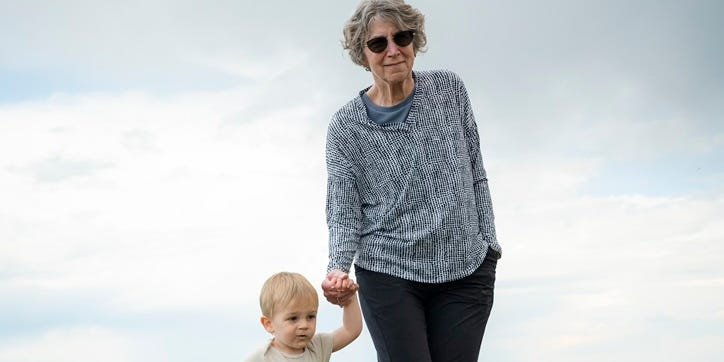
Grandma and grandchild walking

The author took care of her grandsons for a week.

Courtesy of Kenny Withrow


My grandson said he could do things himself

Throughout the week, I had offered to help, but George always said he could do it himself. Then, he’d slam the door into its frame.

That puddle challenged my composure. “Keep calm,” I told myself. “He’s only 2, and at least you’re not changing poopy diapers.”

George knocked and asked if I was taking a shower. I stepped into the hallway and let him know I wasn’t happy.

No answer.

I told him there was pee all over the floor.

Both Grandpa and his older brother, Stanley, had shown him how to pee in a toilet, but apparently, George liked to lift the seat and aim for the circular opening. I’d watched him steer an RC car through impossible turns, so aiming into a toilet shouldn’t have been difficult.


Grandparents with grandchidlren

The youngest grandson is a grandpa boy.

Courtesy of Kenny Withrow


George dropped his head. This non-stop chatterer went silent. He turned toward the wall and buried his face in his shoulder.

After breakfast, George became his talkative self again as he drove trucks through kinetic sand, performed somersaults off the couch, and wheeled his scooter from room to room. When he needed a bathroom break, he opted for nature pees in the backyard.

But then, as I made lunch, George scooted into the bathroom and slammed the door.

I gave him some time, then slowly, silently, peeked inside. He wasn’t sitting. He wasn’t standing. He was kneeling — reaching toward the back wall with a gigantic wad of toilet paper. The bowl was clogged with more paper — voluminous amounts of it.

What I wanted to say: WE TALKED ABOUT THIS!

What I actually said: Nothing. I just sighed.

My grandkids taught me an important lesson

That’s when big brother Stanley intervened. During the day, George followed Stanley around, imitating his every move. At night, they shared a bedroom. They had bunk beds, but instead of using the top and bottom, George and Stanley chose to sleep side by side, arms around each other, in the bottom bunk.

Stanley took one look at George on his knees, flashed a big smile, and suggested I praise him for his good work.


Family brushing teeth together

The author learned an important lesson from her grandkids.

Courtesy of the author


Then Stanley looked right at George and told him what a good boy he was. No mention of clogging the toilet. No scolding that the mess was unnecessary. No criticism of the sticky wet floor. Not even a reminder to wash his hands. Just arms open for a hug.

I stood there speechless for a few seconds. Where I saw disaster, Stanley saw effort. While I considered a lecture, he opened his arms.

I herded both boys to the sink for hand washing before lunch. After a bite to eat, we played with Monster Trucks, and when George got cranky, I put him in bed for a nap. Then I played cards with Stanley and cleaned the bathroom with chlorine bleach.

When George woke up, my husband suggested an hour at the park. With Stanley at a friend’s house, George, Grandpa, and I headed off on foot.

They taught me we all need a little grace

George is Grandpa’s boy. Every sentence begins, “Grandpa, watch…” or “Grandpa, look at this…” or “Grandpa, can I….” He holds Grandpa’s hand in every parking lot and sits in Grandpa’s lap for every book.

But as we approached an intersection and Grandpa prompted him to hold hands, George surprised me.

Instead of taking Grandpa’s hand, he reached for me, squeezed my palm, and held on long after we crossed the street. His tiny fingers curled into my fist said he wanted us to be right again.

At bedtime, when he usually chose Grandpa, George asked me to read him a book. Five books. We didn’t talk about bathrooms or disinfectants or a better aim. I just snuggled him in my lap, pulled a blanket over us, and read the words slowly, to enjoy the story a little longer. I tucked him under the covers with Doggie, his favorite stuffed toy. I kissed him and said I love you.


Grandparents with kids

Courtesy of the author


It was 8 p.m. when I joined Grandpa in the living room, too tired to read my own book, pick up stray Hot Wheels, or empty the dishwasher. Longing for bed myself, I thought about the last several hours and what I should have done better.

And I realized the lesson of the day was not how to pee into a toilet, reason with a 2-year-old, or keep a bathroom spic and span.

The lesson was that we all need a little grace.

Stanley praised George, not for succeeding, but for trying. When was the last time I’d done that?

In our world of high expectations, perfection often feels like the goal. We’re so conditioned to correct and fix — our children, coworkers, or strangers on Instagram — that we forget what encouragement looks like.

And then there was George. Without words, he reached for my hand, an ordinary kindness with extraordinary power. Adults often forget this truth, too, that love repairs itself with simple gestures.

The best love, I realized, isn’t earned through perfection, but offered in the middle of our messes.


Source link

Im-61-with-16-grandkids-Instead-of-downsizing-we-bought.jpeg

I’m 61 with 16 grandkids. Instead of downsizing, we bought a bigger vacation home to finally make family trips work.

This as-told-to essay is based on a conversation with 61-year-old Doug Beachy, a Cincinnati-based business owner who bought a vacation home with Pacaso in 2022. Pacaso is a platform for fractional ownership of luxury vacation homes. The company allows multiple individuals to co-own a second home and share ownership of the property. This conversation has been edited for length and clarity.

I’ve been married to my wife, Jamie, for 37 years. We have four married children and 16 grandchildren. Our oldest grandchild is 12, and our youngest isn’t quite one yet.

Once our kids started having children, they all moved back closer to home in Cincinnati, where we live. We own a five-bedroom home that’s about 4,000 square feet. We’re empty nesters, so there’s plenty of space for us, but when the whole family is over, everyone is on top of each other.

We’ve converted one room into a kids’ playroom and another into a nursery, and we have a finished basement where the kids can play, but family gatherings are still a bit hectic.

In the past, to bring everyone together, we would either rent a large beach house or book a cabin-style retreat in the woods here in Ohio.

We did that about every other year because it’s hard to coordinate everyone’s schedules — especially with grandkids in school — and seasonal rates for a large home are expensive. It was a big chunk of money for just a week’s experience.

We bought a vacation home

Hilton Head Island has always been a fun family destination for us. It’s an island in the Lowcountry of South Carolina, just outside Savannah, Georgia, with about 12 miles of pristine beaches.

There’s so much to do here from a family activity standpoint, in addition to simply soaking up the sun and going to the beach — it’s just a great place to relax and unwind.

Homes here can be expensive, though. The average home is priced in the upper $700,000s, and properties can sell for as much as $10 million. For a while, I thought about buying a second, larger home here, but I’m not retired yet, and I realized that putting that much money into a house where I don’t live full time just didn’t make sense.


An aerial view of homes along the shore in Hilton Head.

Hilton Head Island, South Carolina.

EyeEm Mobile GmbH/Getty Images


In early 2022, I started exploring different homeownership options, including shared or fractional ownership. That’s when I found Pacaso online and saw they had some homes available in Hilton Head.

We ultimately settled on an about 5,000-square-foot home with six spacious suite-like bedrooms — five with king-sized beds, large walk-in closets, and private bathrooms, and one with several bunk beds for the children — and seven and a half bathrooms.

As you can imagine, taking 20 people out to eat all the time is not exactly fun, so we wanted a house with a large, well-stocked kitchen. Our kitchen almost occupies the entire second floor and, by my last count, it can seat 19 or 20 people. It also has a beautiful ocean view.

Co-ownership was the best fit for us

When we bought the home, it was valued at over $5 million. We own a 1/8 share — we made a 50% down payment on our portion of the home — and there are seven other owners, whom we don’t know.

Our friends will say, “It sounds like a timeshare.” But I think it’s much more transparent than a traditional timeshare. There are no extra markups or mystery fees added on top.

I also feel that, unlike a timeshare, which can leave you feeling stuck and lose value over time, this is a long-term investment. Of course, everything depends on the real-estate market, but I feel fairly confident this is an appreciating asset.


Doug Beachy's vacation home.

The Beachy vacation home.

Courtesy of Pacaso


I think going this route, instead of buying another second or vacation home, has eliminated all the concerns I had about upsizing — like having to maintain the home ourselves or deal with high HOA fees. We wanted a place we could share with family, and this setup works well for us at this stage of our lives.

We spend more time together as a family

Pacaso provides a house manager who handles everything. It’s essentially a concierge service — the home is clean when we arrive and fully stocked with towels, linens, soaps, and disposable items, such as paper towels and paper plates.

When we go, the only thing we really need to think about is what food we want to buy, depending on what we plan to cook — and we have a lot of good cooks in the family.

We have the home reserved for 44 nights a year, and we use nearly all of that time. Not everyone in the family is there for every stay, but they come as they please.

Our family gets together more often now, about twice a year. In the summer, during the high season when the kids are out of school, we typically reserve the house for a couple of weeks at a time.


Doug Beachy and his granddaughter.

Beachy and his granddaughter.

Courtesy of Doug Beachy


The grandkids look forward to each trip and talk about it all the time. Many of them are around the same age, and they love the opportunity to spend time with their cousins.

The house came with six beach cruiser bikes, which is perfect because there are plenty of biking trails on the island. It also has a private pool and hot tub, and the grandkids love that it’s fully stocked with games and puzzles.

Our favorite things to do with them are spending time in the pool, watching the sunrise, and hanging out on the beach. We also take a lot of bike rides and play pickleball. We just love how much more quality time we’re spending together as a family.


Source link