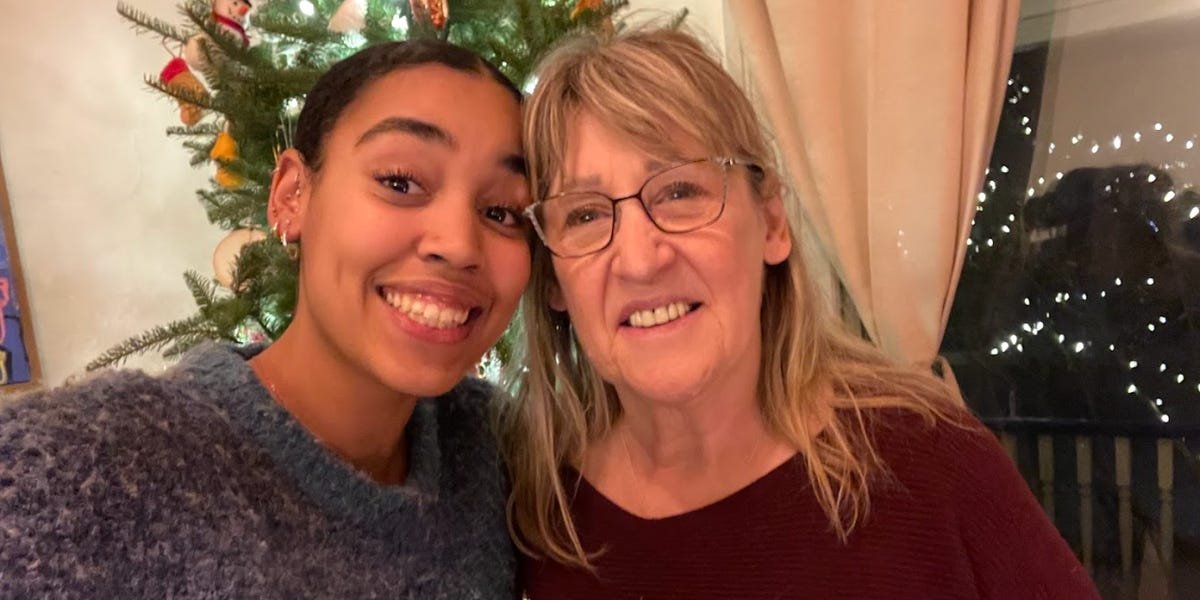
I’m 29 this year, and as the big 3-0 looms, I find myself thinking more deliberately about getting older — about the new wrinkle I recently noticed on my face, whether I’m getting enough steps and sleep, and how all of it might shape the way I feel decades from now.
The number of people 60 and over is expected to rise from 1 billion in 2020 to 1.4 billion by 2030. By 2050, that figure will double to 2.1 billion, according to WHO projections.
But statistics don’t capture what aging can look like in real life — like watching an 86-year-old man swing himself over a pull-up bar at a public fitness corner in Singapore.
I try to keep count of his flips on the bar, but somewhere along the way, I lose track.
Several minutes later, Peng Lin Hua finishes his set and walks toward me with barely a trace of sweat on his face.
He tells me he started practicing headstands with his wife in his 50s. Later, he offers to demonstrate. He bends down, plants his hands on the ground, and slowly lifts his body until he’s upside down, legs extended toward the sky.
Peng is one of four older men, aged between 76 and 85, who call themselves Team Strong Silvers. They are united by their discipline: They work out almost every day.
Every time Amanda publishes a story, you’ll get an alert straight to your inbox!
Stay connected to Amanda and get more of their work as it publishes.
In Singapore, preparing for an aging population has become a matter of policy as much as personal health.
The country has launched national campaigns encouraging older adults to remain physically and socially engaged. In July, the Asian nation is set to raise its retirement age by a year to 64.
The four men didn’t set out to form a team. Over a decade ago, a senior gym had just opened at a neighborhood community center, but few residents were using it.
Robert Ho, who managed the center’s active aging and wellness initiatives at the time, wanted to encourage more seniors to use the gym. So he brought in a few older volunteers who were already active to run calisthenics sessions.
“We wanted to show people that even though they’re older, they can still do this,” Ho, 56, said.
As local media took notice, the informal group gradually evolved into what is now known as Team Strong Silvers.
Ho, now a program executive at Fei Yue Community Services in Singapore, still manages the group’s social media account. The organization is also where the four men now volunteer, demonstrating exercises and inspiring other older adults to keep moving.
It’s a glimpse of how one country is adapting to an aging population — a challenge that extends far beyond its borders.
More and more Americans are working past traditional retirement age, and longevity has become big business, fueling biohacking trends and even tech-backed life-extension research.
But adding years is only part of the story. What those extra years can look like is just as important.
In the stories below, you’ll meet each member of Team Strong Silvers in his own words. None of them is interested in slowing down.
Dorenne Simonson didn’t anticipate being a mother again — especially not at 66.
Simonson, who manages a direct care office in New Jersey, took over as the primary caregiver for her granddaughter when her daughter was unable to care for her, just two months after giving birth.
Simonson, a single mother of five grown children, no longer considers herself a grandparent to her now-four-year-old granddaughter; she’s the mom. She’s up at 5:30 a.m., packing lunch, and doing her granddaughter’s hair. She drives her to day care, then works from 8 a.m. to 4:30 p.m. After making her dinner, she tucks her granddaughter in by 8 p.m. Weekends mean laundry, cleaning, and food prep. Her granddaughter was born exposed to drugs and has poor vision, so much of her PTO goes toward caseworker meetings or trying to find proper medical care. Even securing baby formula was a struggle. It’s left her with little time for herself and a limited social life. And given the costs, Simonson expects to work until she dies.
“I’ve always been in a situation where I pretty much had to spend whatever I made, and so I do look at the future and go, ‘This is going to be interesting,'” Simonson says.
In interviews for my 80 Over 80 series, a comprehensive look at America’s oldest workers, dozens of grandparents said their role in their grandchildren’s lives deviates dramatically from what they remembered of their own grandparents. Many said that because they worked at least part-time, there weren’t as many opportunities to see or call their grandchildren. Many wish they could support their grandchildren’s education and well-being, but with the rising costs of long-term care and daily expenses, any extra money goes toward savings. Some said they’ve been forced to choose between buying a birthday gift for their grandson and paying the water bill.
Others, like Simonson, have had to step into a more active role, becoming a full-time caregiver. For many grandparents with additional responsibilities, aging doesn’t come with a golf club membership. Over two dozen grandparents who are caring for their grandchildren full-time told me this year that doing so has been rewarding but wallet-sucking, agitating, and invisible.
Either way, many said they don’t fit the stereotype of the crocheting, cookie-baking, and sweet, if occasional, presence. For some, the new paradigm hurts.
Grandparents are doing more of the caregiving
Rebecca Reed, 87, isn’t sure how she managed to survive raising her two grandchildren. Her son-in-law and daughter died within a year and a half of each other in the mid-2000s, and Reed and her husband, who was in his early 70s, took in their grandchildren, who were 13 and 11. Since her husband worked, she took on many parental responsibilities.
At first, Reed was in “grandparent mode,” giving them whatever they wanted, but quickly pivoted to “parent mode,” setting rules and expectations. After retiring, Reed and her husband relied on their savings, Social Security, and their daughter’s life insurance policy to pay bills and send the kids to private school. Once her husband died in 2011, she filed for bankruptcy and returned to work. Fifteen years later, she works two jobs, earning $12 an hour. She can’t retire, and her schedule gives her few opportunities to see her grandchildren.
“At 90, I’m retiring from work no matter what,” Reed says. “I don’t know if I’ll be able to even pick up a baby at that age. I really hope I’m around for that because that would be icing on the cake.”
Pat Hennessy and his wife cherish their grandchildren, though he doesn’t plan to stop working.
Maggie Shannon for BI
Older grandparents — particularly grandmothers — are increasingly taking on caregiving responsibilities. An analysis of the Census Bureau’s American Community Survey (ACS) by researchers from the University of Pittsburgh found that between 2009 and 2021, grandparent caregivers 60 and older living without the child’s parent present rose by nearly 21%. Similarly, Brookings used the 2023 ACS to find that about 1 million children under 18 live with a grandparent who is responsible for their daily care and live without a parent at home. In nearly half of the cases, a single grandmother is left alone to care for her grandchildren.
Madonna Harrington Meyer, a sociology professor at Syracuse University who has studied grandparenting, said that many grandparents who take on additional caregiving responsibilities struggle with expenses, sometimes sacrificing meals for themselves, delaying medical care, or making significant lifestyle changes. Such sacrifices often come with some regret about depleting their savings, she says.
“Juggling work and grandchildren in your 60s and even 70s can be a big ask that can be a lot for an older body to handle,” Harrington Meyer said.
Annie Nicol is one of the growing number of older grandparents who are taking on caregiving responsibilities for their children’s children.
Mike Kai Chen for BI
While some supports are in place, such as federal and state kinship care services, assistance from the National Family Caregiver Support Program, and online support groups, there are still major gaps for grandparents in challenging situations. Christine Fruhauf, a professor of human development and family studies at Colorado State University, said most of the grandparents she’s worked with are willing to make major sacrifices to get their grandchildren what they need.
“Grandparents are resilient, and they’ll figure things out. If Facility A is not going to help them, they’ll go to Facility B. They’ll keep seeing where they can get support when they need it,” she says.
Grandparents aren’t retiring as quickly
Not only are grandparents caregiving more often, they’re also working more often. Roughly one in five Americans age 65 and over works, a twofold increase since the 1980s, though the rise has slowed somewhat in just the last few years. A Business Insider analysis of Census data found that 4.2% of the 80+ population still works, up from 3% in 2010. Some of this is for good reasons, such as improvements in health outcomes and an increasing desire to keep feeling productive. On the downside, the increase in jobholding is also due to growing financial instability among lower-income older Americans and cuts (or threats of cuts) to support for older Americans. For millions of those still working into their 70s and 80s, that’s less time with the grandkids.
At 80, Noe Parenteau suspects he won’t retire anytime soon. Parenteau, who lives outside Fort Myers, Florida, works as an operations automation analyst to support his family, as his sister is in memory care, while his ex-wife has dementia. He has few opportunities to see his grandchildren, aside from Christmas. Parenteau knows that at some point, the money he’s set aside for retirement will go toward care for himself or his family. He’s spent many of his non-working hours talking to his grandchildren, often explaining to them about getting older.
Many grandparents are working past retirement age, some to support their grandchildren and others to maintain a sense of purpose beyond family.
Maggie Shannon for BI
“Over the past decade that I’ve been living in Florida, I try to go up for an extended period of time, where I can take them to school and see them in their daily lives,” Parenteau says. “I want them to see me as part of their daily lives, too.”
Dozens of grandparents who still work told me that though they love seeing their grandchildren and providing for them financially, they find it essential not to lose sight of their own goals. They felt they needed to better not only the loves of their grandchildren but society as a whole. They valued keeping their brains stimulated, muscles active, and savings accounts as large as possible. Many grandparents like Parenteau need to keep working to ensure they have enough in the bank for the inevitable end-of-life medical costs. Many said they didn’t want to give too much of their savings away to family.
On the extreme end, Harrington Meyer tells me that some older Americans are staying on the job precisely because they don’t want to be so involved in their grandkids’ lives.
“One of the things I found in my research is that some grandparents continue to work full time, even though they don’t need to anymore, precisely so that they are not available to take care of the grandchildren,” she says.
But for most people, the role of family elder is all about balance. In many ways, Pat Hennessy, 65, and his wife are traditional grandparents to their six grandchildren in California and Texas, acting as caregivers when needed and providing a financial support network without overstepping. When their children were first learning how to be parents, they would act as coaches.
Grandparenting is a labor of love, though that labor has been getting more intense.
Maggie Shannon for BI
Hennessy, who lives outside Los Angeles, pivoted last year from an investigator in insurance fraud claims to launching a newsletter and writing online. His wife still works full-time for the same company she’s been at for 45 years and plans to retire in a few years. Part of the impetus for building his business was to improve his decent financial situation and make it easier to enjoy their family down the line, as well as support extended family members in need, such as his brother with special needs.
“I’m hoping to be as active, aspiring, and adventuresome at 80 as I am now, and we’re trying to position ourselves financially to be able to do all those things,” Hennessy says. “We want to travel more and be around our grandkids and children as much as possible.”
Making do
The modern grandparent experience runs the gamut. I talked to older people who felt they were struggling to find time to be involved, while some grandparents told me they want to live out their retirements in peace without constant nagging or responsibilities, much to the chagrin of their stressed-out children. Many grandparents I spoke to, especially those who are more well-off, said they’ve managed to find a balance between caregiving, work, and alone time. Others said that they’ve had to focus on their own priorities — and they’re at peace with that.
Susan Freeman, 72, missed out on watching her grandchildren grow up as much as she wanted. Freeman sold her pizzeria in 2004 after her mother had a stroke, and she cared for her full-time, relying on her husband’s income and Social Security Disability Insurance. Once her mother went into a nursing facility in 2015, she returned to work at her sister’s store selling uniforms. Because of her work and caregiving duties, she would often miss her grandchildren’s sports games and events. Freeman has about $58,000 saved and $37,000 to go on refinancing her home. There’s little for her to contribute to her grandchildren, as she already helps her own children out financially.
“My grandchildren really are wonderful, and they do always come over for dinner, while my granddaughter picks me up to take me to work once a week,” Freeman says. “Whatever I missed out on, I don’t really think it affected them. It would bother me, but they were good with that and understood everything.”
As expectations around the level of engagement change, many grandparents have had to learn on their own what a steady, fulfilling grandparent experience could look like. Based on my conversations, it’s clear that the modern grandparent experience is a lot more active than sitting in a rocking chair dispensing pearls of family wisdom.
Some grandparents, like Nicol, are homeschooling their grandchildren.
Mike Kai Chen for BI
Take Annie Nicol, 76, who started homeschooling her grandson during pandemic-era school closures after consulting with family. She cut back on her work hours to homeschool him and retired a few months ago. His mother died when he was an infant, and now he and his father — Nicol’s son — live in another house on her Bay Area property.
A few days each week, while her husband works as a therapist, she splits homeschooling responsibilities with his other grandmother and his aunt, who are both teachers. She says doing so has given her purpose, and she thinks it could be the key to longevity — her parents both lived into their 90s and had productive retirements. Grandparenting hasn’t been a hit financially, as she lives frugally, though she occasionally splurges on gifts like a trip to Disneyland or the aquarium. In between homeschooling, she runs a small farm on her property and serves on the local board for the homeless population.
“There isn’t a whole lot of support out there for this, but I think culturally, we’re going the wrong direction because family is so important, and everyone in that family has a value and can contribute,” Nicol says.
Business Insider’s Discourse stories provide perspectives on the day’s most pressing issues, informed by analysis, reporting, and expertise.
My grandparents, whom I call Papa and GG, have been together since they were teenagers and married for 54 years.
As I’ve grown up, I’ve realized the secret to their lasting love hasn’t been perfection or grand gestures. Instead, it’s in finding joy and meaning in life’s small, everyday moments.
Their marriage has taught me how powerful a gentle, consistent love can be, and how beautifully it can shape everything around it.
Here are three of the biggest lessons I’ve learned from them that I hope to bring into my own relationships.
To maintain the “spark,” nurture curiosity
My grandparents still discover new things about each other, more than 50 years into their marriage.
Sierra Newell
Whether it’s by going on a spontaneous camping trip or navigating retirement together, my grandparents delight in discovering new things about each other.
Both avid readers, they often will sit beneath their orange tree and share quotes from their books. After long Sunday walks through the park, they also like to continue their running card game of gin rummy, laughter, and nostalgic stories tumbling between them.
Even after decades together, they also eat dinner with each other nearly every night, eager to unravel each other’s thoughts, feelings, and experiences.
Find creative, consistent ways to express your love
My Papa has clipped many “Love Is…” comics over the years.
Sierra Newell
My grandparents have found a variety of ways to show each other they care.
Every morning, for example, my Papa clips the “Love Is…” comic strip from the newspaper and places it on the kitchen counter for GG. He also writes poems, scribbled on notepads, painted on rocks, or sent as random texts throughout the day.
Meanwhile, GG often sends photos of heart-shaped stones or leaves she finds on her walks, and they both leave handwritten notes in each other’s suitcases when they travel.
Physical affection anchors it all, though. There’s rarely ever a moment when they aren’t holding hands or resting a head on a shoulder. They often seem to do it without even realizing, as though one another is as constant and grounding as gravity.
Remember to prioritize your own happiness, too
I appreciate how each of my grandparents still pursues their own interests.
Sierra Newell
In my opinion, one of the reasons their relationship still feels so alive is because they never stopped making room for their individual interests.
GG started playing mahjong in retirement and now competes in tournaments, and Papa likes to play golf around the world.
Instead of resenting or fearing change, they celebrate each other’s passions, and watching each other reinvent themselves sustains their mutual excitement.
The common thread is joy
These days, it can be hard to sift through the barrage of conflicting advice on how to find and cultivate long-lasting love.
Still, witnessing my grandparents build a life out of tiny kindnesses — notes slipped into suitcases, breakfast cartoons, and shared laughter — has shown me the recipe is simpler than we think.
I see how extraordinary it is to share life’s simplest joys, to choose a partner who is real, steady, and kind. That level of devotion is an everyday miracle, and I try to weave those threads into my own relationships.
I send handwritten letters back and forth with my friends and family, and my boyfriend and I collect concert tickets, printed menus, and postcards from trips and dates we’ve experienced.
These items are arranged in a collage in my apartment, ink-stained and wrinkled, but tangible proof of the love my grandparents have taught me to sow.
I grew up spending weekends, school breaks, and holidays in my grandparents’ home, but moving into it years later with a husband wasn’t something I ever pictured.
We moved into my grandparents’ basement not long after we got married in spring 2025. We both traveled as kids and have gone on a few short adventures as a couple, but we’d never done any long-term.
With our lease ending in the fall, it felt like the perfect time to make a big change, and we started looking at flights to Japan.
I eventually came across a deal on December plane tickets that we couldn’t pass up, but the opportunity left us with a two-month gap to fill before moving away.
Short-term rentals and Airbnbs were too expensive to commit to, especially with a big move ahead. So, when my grandparents suggested we stay in their basement, only 40 minutes away from where we’d been living, it was easily the most practical option.
Being back in my grandparents’ home reminded me how much of my childhood still lives here
Moving in with my grandparents as an adult brought me right back to my childhood.
Alessa Hickman
Even before we started unpacking, the house instantly brought me back to my childhood. My grandparents have moved a few times over the years, but no matter the location, their home always feels the same.
The dishes and teacups I grew up using are still in the cupboards. The same family photos and decorations are on the fridge and walls, with new additions that have been layered in over the years.
Then there’s Crash, my grandparents’ herb-loving budgie bird, who has a habit of landing on people (and plates) without warning. They’ve only had him for a few years, but their home has alwaysincluded animals, so even a new bird felt completely natural.
Being surrounded by the memories, familiar faces, and sense of home that shaped my childhood felt grounding during this period of change.
Moving here as an adult meant learning how to fit our lives together differently
We had to adjust to new routines, boundaries … and my grandparents’ budgie bird, Crash.
Alessa Hickman
Living with my grandparents came with a series of practical adjustments.
As my husband and I prepared to move abroad, we packed up or sold almost everything we owned, and now found ourselves living outside the city, setting up temporary workstations, and cooking for four instead of two.
Before long, the basement had boxes tucked into corners, the kitchen cabinets were full of our spices and small appliances, and my plant collection had completely taken over the front entrance table.
Moving in also meant navigating new boundaries and having conversations about topics that didn’t come up when I was younger — like finances, household responsibilities, and how much space to give each other.
One of the first conversations we had was about food. Cooking is one of my love languages, so even before we moved in, I told my grandparents that I wanted to take on the family meals.
After so many years of being cared for in their home, it felt important to give something back in a way that came naturally to me.
Because I work remotely, we also had to have conversations about my work-from-home schedule. I had work deadlines to meet and calls to take, which meant setting expectations around when I would be working and when I would be free.
That adjustment took some time on all sides, but those early conversations ultimately helped us find common ground.
This time with my grandparents gave me a chance to appreciate family in a new way
The experience turned into a meaningful chapter of my life.
Alessa Hickman
As I’ve grown older and gotten busier, my time with family has naturally become shorter and much more spread out.
Between work, different homes, relationships, and planning a move abroad, so many visits have been quick moments squeezed in on birthdays, holidays, or weekend check-ins.
Having a stretch of time with family like this isn’t something that comes up often, and it made the simple moments with my grandparents feel more meaningful — sitting down for dinner together, cooking a meal we used to eat when I was little, or laughing at the stories we’ve all heard a thousand times.
This in-between season has been filled with memories, lessons, and changes that taught me how much growth can happen in familiar spaces.
As we start this new chapter abroad, I’m grateful that this time with my grandparents was part of our journey. It reminded me to embrace the unexpected moments, make the most of every experience, and start our next adventure with an open mind.
This as-told-to essay is based on a conversation with Lauren Brusie, mom of seven. It has been edited for length and clarity.
Last year, my 87-year-old grandmother, Doris, and 90-year-old grandfather, Jerry, hosted nine of their 14 great-grandchildren for a Christmas sleepover at their house. It’s an annual tradition they started several years ago that involves a night of eating cookies and ice cream, kids playing, boys wrestling, and movie watching, all culminating in Doris and Jerry waking up bright and early the very next day to cook breakfast for everyone, smiling and chipper as ever.
As their 34-year-old granddaughter, I’m not sure how they have the energy they do.
They are the most joyful, generous, busy, and amazing people I know, and they have been a constant presence in my life. They were always there. For all six of us grandchildren, for every game, every school event, they were there. We spent our weekends with them, holidays with them, and summers at their cabin.
They’ve definitely helped shape my cousins and me, and they continue to maintain that loving presence and involvement with all their great-grandchildren, including my seven children.
My grandparents have been there for my kids since day one
Just like I can’t remember a day in my own life without my grandparents in it, neither do my kids. They were waiting outside the door for their first great-grandchild, my daughter, to be born, and they’ve been there for everything, just like they were for me.
We even lived next door to them for a few years, and we spent every day with them. They are two of the people my kids are most comfortable with, and because of that, they are often our first choice for babysitters on a quick errand. The kids just love to be with them.
We have since moved, but they still stop by at least once a week, call the kids, attend their sporting events, and even help me with running them to and from practice or school.
One of their most beloved traditions is taking out each great-grandchild for a birthday lunch/shopping trip to spend one-on-one time with them. They had a rule that the child needed to be 4 years old, but they have bent it twice now for two of my younger children, taking them on their third birthdays because they were just so excited about it.
Both of my grandparents are in great health, and while some of their longevity and energy is probably genetic, I think their overall joy and love of people has kept them going. They always have something going on with others, whether it’s hanging out with their camping club, golf leagues, bowling leagues, card nights, casino trips, or following us kids around. They’ve always just worked hard and enjoyed life.
They are the biggest blessing in our lives
I’m not sure how to put into words what our relationship with my grandparents means. I’m aware of how unique this is, and I’ve never taken a moment with them for granted. I don’t think my kids will understand it all until they’re older, so for now, I just try to take as many pictures as I can so they’ll know how truly blessed and loved they were by these amazing people.
As life has gotten busier and the kids have gotten older, we make it a priority to continue our relationship with my grandparents. For instance, we’ll stop in to visit, and we try to do malt nights on the weekends with them, just like I did as a kid.
I also try to make them my first call if I do need help with the kids. It gives them purpose, and it really does help me too!
I don’t know anyone who has great-grandparents so involved in their family’s lives
When I try to think of anyone who, like my kids, has not just their grandparents, but their great-grandparents so actively involved, it’s not even a close comparison. And it’s not just my kids — Doris and Jerry still travel all over the state to attend events and visit my cousins and their kids, too. I know my cousins feel the exact same way I do about our grandparents: they are the most incredible people we know, and we’re so lucky to have them.
I am not sure I even appreciated how amazing they were when I was a kid. It took me having my own kids to realize that the relationship I had with them wasn’t necessarily normal either. They are truly one of a kind.
There is so much that inspires me about my grandparents, like their joy and how they’ve dealt with all the ups and downs of life. And let’s be honest: I’d love to have their energy too, but I’ll never count on that!
My grandparents are also so humble about their involvement. Doris simply says that the reason they spend so much time with all of us is because they love us, so why wouldn’t they want to be with us?
Both of them attribute their energy and longevity to being “lucky” and hope that all their grandchildren and great-grandchildren will remember that they were good to them and loved them. I’d say mission accomplished!