
The-economy-grew-strongly-last-year-but-hiring-stagnated-Its.jpeg

The economy grew strongly last year, but hiring stagnated. It’s making the gap between the rich and everyone else worse.

The data is in, and last year presents an economic conundrum: Overall growth was relatively strong, but job growth was virtually nonexistent. It bodes ill for the gap between the rich and everyone else.

Newly released data showed the US economy grew 2.2% in 2025. That’s a respectable pace, although cooler than the past few years. Economic activity was affected by the record-long government shutdown in the fall, businesses figuring out how to handle trade announcements, and new investments.

Meanwhile, the US added the fewest jobs since 2003 outside recessions. While unemployment stayed low, hiring and job openings fell, meaning plenty of people couldn’t find a job. It’s an unfortunate situation for new graduates looking to get on the first rung of the career ladder, job switchers eager for a fresh opportunity, and basically anyone looking to land a job quickly outside the in-demand healthcare and social assistance sectors.

The divide between output and jobs is widening another divide: some call it a “K-shaped economy” where the rich are earning and spending more, while everyone else is stagnating. And it doesn’t look like 2026 will be much better.

“Consumers are feeling the weight of the price increases, and combined with the jobs outlook that’s worsening they say, ‘OK, when I look out, I don’t see prices going down that much, but I do see my wage is not growing and my job not being as reliable or secure as it once was,'” Atsi Sheth, the chief credit officer at Moody’s Ratings, told Business Insider.

A historical divide between job and output growth

Economist Mohamed El-Erian said in a Financial Times opinion piece before the newest GDP figures that while this “decoupling of job growth from economic growth” has happened before in the US, it’s typically occurred during recession recoveries and “not in the midst of a prolonged period of robust growth such as the one we are experiencing today.”

“We’re in this unusual environment where economic activity has remained quite robust, and yet job gains have fallen to near zero,” Gregory Daco, the chief economist at EY, told Business Insider.

The US added a measly 181,000 jobs last year; annual figures are often at least a million. It’s comparable to 2003, when the US only added 124,000 jobs in the wake of the 2001 recession.

Daco said GDP’s strength is “masking a growing bifurcation” and thinks the polarization will persist and maybe worsen because supply shocks, such as trade and tax policies, AI, and demographic changes, aren’t reversing.

“In some cases, we’re seeing a more significant effect on economic activity,” Daco said.

Some economic experts are optimistic about the year ahead. “We expect a strong year of economic growth in 2026, driven by business investment, consumer spending and fading trade headwinds,” said Rick Gardner, chief investment officer of RGA Investments. ZipRecruiter economist Nicole Bachaud thinks the job market could be at a “pivot point” after stronger hiring in January.

“Demand in other sectors that are more cyclically based instead of demographically based is starting somewhat to show signs of growth,” Bachaud said.

The gap between the rich and everyone else

The strength in the economy isn’t being felt by all. People at the top are feeling much better than pretty much everyone else. They don’t have to worry as much about rising prices of necessities and slowing wage growth.

“The wealthier, more affluent consumers are benefiting from wealth accumulation, allowing them to still spend relatively freely,” Daco said. “They’re also enjoying faster wage growth, while lower-income families are seeing reduced wage growth, near-zero real wage growth, and not much wealth appreciation outside of real estate, if they have that.”

Sheth said the benefits of GDP growth have been higher for those who earn from investments and capital gains. “They’ve benefited a lot from financial market booms, whereas those who earn their income primarily by wages have benefited some, but not as much,” she said.

Diane Swonk, chief economist at KPMG, told Business Insider that “What productivity growth we’ve seen since basically the turn of the century has accrued mostly to the owners of capital, not rank and file workers. And that means we’ve seen wealth compound, but also income inequality worsen.”

Sheth said regardless of how people refer to the disconnect happening in the economy, the “real trouble” is that wages are no longer keeping up with the rising cost of living and that people are having to pay a lot more to buy essentials.

Swonk said inflation is “the most regressive tax” because of how much lower-income households have to spend on necessities relative to their earnings.

“When those goods go up in price, obviously that affects them even harder, and so it’s a very regressive tax,” Swonk said, adding, “Oftentimes, we lose sight of the fact that it really is the level of prices that people are still reacting to.”

The Federal Reserve Bank of New York said in a report that inflation-adjusted consumer spending has increased for high-income households since 2023, but low-income household spending has mostly trended down. “The trend since 2023 is different from the trend during the pandemic recession and recovery, when consumption growth was similar across income groups,” the report said.

Amid those price increases and changes to spending habits, wage growth has drastically cooled for lower earners. Lower-income wage growth surged between 2021 and 2022, but has since cooled down a lot from the late 2022 peak. Sheth also pointed out that wage growth for hourly workers, who she said are likely “subject to much more fluctuation and downside risk than if you have a steady salary,” has also been falling faster than those not paid hourly.

Sheth said another issue is that the lower end of the wage spectrum is under more credit stress.

“We’re seeing greater credit stress in subprime auto, for instance, some parts of borrowing, but again at the lower end of the spectrum,” Sheth said. “But overall, if you compare household balance sheets today to, say, the pre-global financial crisis era, they’re generally stronger — much stronger at middle- and upper-income levels, of course, but generally stronger.”

Where we’re going in 2026 and how AI could keep widening the gap

El-Erian said in the Financial Times piece that, “This period of decoupling of employment from growth may prove more persistent and more consequential,” partly because the effects of AI are still unfolding.

AI-related investments have already made a dent in real GDP growth based on findings from the Federal Reserve Bank of St. Louis. “As firms continue integrating AI into their operations and building the infrastructure required to support it, these categories are likely to remain significant drivers of investment well into 2026 and beyond,” the authors wrote.

Laura Ullrich, the director of economic research in North America at the Indeed Hiring Lab, described a “precarious balance” between GDP and the job market. Ullrich is unsure whether employers will decide they should hire more to keep up with the relatively robust economic growth or make job cuts because they aren’t keeping up.

“I do think the uncertainty about the role AI plays adds in another interesting pivot,” Ullrich said. “Because if AI is able to take on the work of humans, then we could see economic growth without hiring picking up much. But, I’m skeptical that that’s happening in big ways right this second.”

Aside from the impact of AI, the US doesn’t need as many jobs to hold unemployment stable at a time when the population isn’t growing as quickly, so it’s possible job growth continues to be lower than previously experienced.

“The low-hire, low-fire job market isn’t just about policy changes in the new administration or about AI,” Jed Kolko, senior fellow at the Peterson Institute for International Economics, told Business Insider. “So, there may not be a quick fix.”

Even the Fed is cautious.

“While participants generally assessed that, under appropriate monetary policy, the labor market likely would stabilize and then improve this year, they continued to note that the outlook for the labor market remained uncertain,” minutes from the January Federal Reserve meeting said.



Source link

I-grew-my-tech-income-to-over-250000-in-8.jpeg

I grew my tech income to over $250,000 in 8 years. 1 move has helped me negotiate a higher salary.

This as-told-to essay is based on a conversation with Brian Jenney, 42, who lives in California. The following has been edited for length and clarity.

When I got into tech in my early 30s, I had no clue how crazy lucrative the industry was.

I started as a web application developer in 2015, earning roughly $60,000 a year.

Over the years, I became savvier at negotiating my salary, and by 2023, I was making over $250,000.

I’ve earned more than I could have ever imagined, without working in Big Tech, where people often assume the big money is made.

Here’s what I’ve learned along the way.

1. It was dumb not to negotiate a starting salary because it already sounded impressive

I used to have addiction issues, so I didn’t really work from the ages of 25 to 30 and lost knowledge that people gain from white collar jobs at this stage of life.

I was naive about the salary potential of my industry, and when people in tech said they were on $150,000, it blew my mind, and I began to feel underpaid.

In 2017, after two years in the web developer role, I landed a job at a startup. I was so impressed when I was offered $120,000 that I didn’t negotiate my salary, which was dumb in retrospect.

The environment was extremely fast-paced and high-caliber. I struggled with imposter syndrome as one of the team’s more junior members. I felt like one of the worst developers there and that I was already being paid more than I deserved. It discouraged me from asking for a raise.

In 2019, I joined the media intelligence company Zignal Labs. I was so happy about the job offer that I didn’t negotiate the salary, so my pay initially stayed roughly the same as in my previous job. It felt like I had plateaued, even though I had more money than I needed. An unfortunate symptom of working in tech is that you get drawn to wanting more.

Choosing this role turned out to be the right move, though. I had more room to grow and was in a better learning environment at a larger company.

During the tech hiring spree of 2020, my peers said they were getting crazy offers, and I didn’t want to miss out. That August, I joined The Clorox Company, a manufacturing firm, as a software engineer. By 2023, I was making over $250,000: the peak of my earnings in tech.

In 2024, I was laid off, and I’ve continued to work in various software engineering roles. I bought a business in 2023, and my focus has shifted to seeking out flexibility and time to build it, instead of maximizing corporate compensation.

2. I prepare for the pressure of job interviews by practicing with strangers

Interviews are like a carnival game where you can win big money by performing well, and you can’t get to the negotiation stage without passing them. They’re structured, learnable, and winnable with the right preparation.

When I have job interviews lined up, I do technical practice and use a platform called Pramp, which pairs you with strangers for practice interviews. I’ve found this helps simulate the nerves and pressure of real interviews better than practicing with friends.

I’ll try to do at least two mock interviews before an interview I really care about.


Brian Jenney is standing on a stage giving a talk.

Jenney uses a platform called Pramp to practice job interviews.

Courtesy of Brian Jenney


3. I learned to ‘play the game’ of salary negotiation. Now I ask for at least 10% more.

Over the years, I’ve benefited a lot from people in tech being open about their salaries and career paths, which helped me understand what was possible and gave me confidence to negotiate and aim higher.

I’ve learned that salary negotiation is a game you have to play, and if you don’t, you lose money.

I began consistently negotiating pay in the late 2010s. I usually tell the employer that I’m really excited to start the job, but that I was hoping to come in at a higher salary range, usually 10 to 20% more.

I’ve found this to be very effective, and it has never gone badly for me. If an employer sounds firm on their offer, I usually try to explore whether a sign-on bonus is possible instead, but I don’t push aggressively beyond that.

I have more money than I need, even though I never worked in Big Tech


Brian Jenney is pointing at a wall with computer code written on it.

Jenney said a salary of $150,000 is more than enough for him.

Courtesy of Brian Jenney


I’ve interviewed with but never been hired by the Big Tech companies. Besides, I like working at smaller startups and non-tech companies where I think you can have a greater impact.

Big Tech employees are going to “beat me” on pay because their stock compensation will outpace my earnings. But I see my current lifestyle as comparable to theirs. I believe there’s a reason software engineers aren’t driving around Mountain View in Ferraris: they can’t cash out all their stock money yet.

There’s always more you can earn, but when my salary hit the $150,000 mark, I knew it was more than I needed. I’d rather prioritize jobs where I’m happy, I’m learning, and I can cover my needs while still saving. That’s all I really need.

Do you have a story to share about growing your salary in tech? Contact this reporter at ccheong@businessinsider.com


Source link

How-Reco-raised-30-million-and-grew-an-additional-400.jpeg

How Reco raised $30 million and grew an additional 400% last year as companies sprint into AI

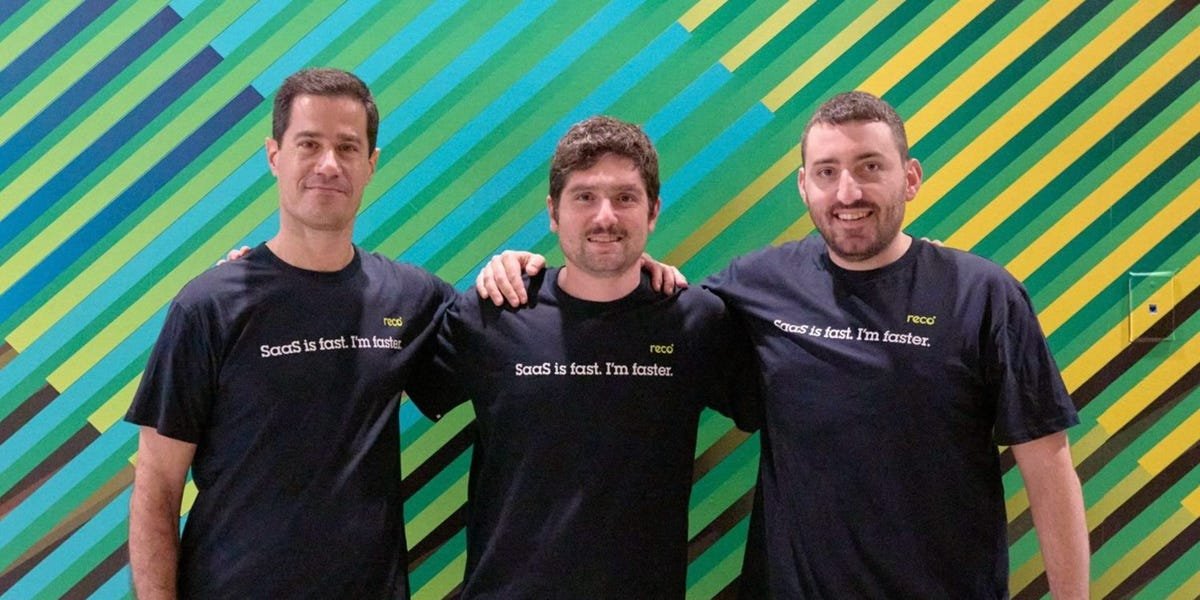
New York-based cybersecurity startup Reco has raised $30 million in Series B funding as companies rapidly expand their AI use.

Ofer Klein, Gal Nakash, and Tal Shapira founded Reco in 2020 to fill the gap between a company’s existing cybersecurity protections and the other tech tools employees use, which is often AI.

“AI adoption has accelerated exponentially, and companies that blocked AI access a year ago cannot block it anymore,” Klein told Business Insider. “And I’m not talking about small mom-and-pop shops; I’m talking about the biggest banks, insurance, healthcare, pharma, and hospitals.”

Zeev Ventures led its latest round, with participation from all existing investors, which includes Insight Partners and Boldstart Ventures. New corporate investors for this round include Workday Ventures, TIAA Ventures, S Ventures, and Quadrille Capital.

“My investment strategy has always been to double down on what’s working,” Oren Zeev, the famed seed investor behind Zeev Ventures, said in a statement. “I’ve seen this pattern with successful companies like Navan and Tipalti, and I’m seeing it again with Reco. The signals we see show rapidly growing market demand for AI SaaS security, and we are experiencing exceptional growth.”

While software-as-a-service (SaaS) stocks have recently plunged amid concerns about AI disruption, Zeev sees a “massive” opportunity in AI for security.

After growing 500% year-over-year in 2024, Reco said it grew an additional 400% in 2025, driven by a sharp increase in business AI adoption.

Cybersecurity startups also raised nearly $14 billion in 2025, according to Pinpoint Search Group. That represented a 47% increase from 2024 and the most funding since 2021.

Klein said Reco began pulling in far larger companies than expected, repeatedly beating internal plans as AI went from blocked to mandatory.

“We built a plan, and we overachieved, and we updated the plan, and we overachieved again,” said Klein. “We said, ‘OK, enough is enough, let’s take more money and double down on AI SaaS.”‘

Klein said the biggest challenge for Reco now is keeping up with demand.

“The business is driving this huge traction into AI enablement,” he said. “Our biggest challenge right now: how we grow fast enough to meet this market need.”

Klein’s cofounders also bring in experience from working with the government. Nakash previously headed research at the Office of the Prime Minister of Israel, while Shapira holds a machine learning Ph.D. and also worked at Israel’s Office of the Prime Minister.

Reco faces competition from Torq, backed by Insight Partners and now valued at $1.2 billion, according to PitchBook. It also competes with Blackstone-backed Cyera, recently valued at $9 billion.


Source link

girl with brown hair and blue shirt smiling in front of plain white background

Burnout led me to build Bala — and caught up with me again as we grew. Here’s how I manage now.

This as-told-to essay is based on a conversation with Natalie Holloway, a 37-year-old cofounder of Bala, based in Los Angeles. The following has been edited for length and clarity.

The first time I recognized I was experiencing burnout, my husband and I left our advertising jobs and traveled without any set plans. This trip got me out of the nonstop grind mindset I’d functioned in for too long.

I came back to corporate work refreshed and inspired in October 2016. Our company, Bala, was supposed to be a side hustle, creating cute wrist and ankle weights inspired by our travels. We never imagined it would take off the way it did. I went full-time on Bala in 2019, and my husband joined in 2020.

After building the business for five years, we had to lay off our entire team due to the post-COVID-19 fitness industry downturn. I felt immediate burnout knowing the work that was ahead of me, but this time, I couldn’t take a year off to recover.

Having experienced burnout in multiple stages of my career, I now understand what it looks like, and I can navigate it effectively with the right tools and tactics.

I fell into advertising and burned out quickly without realizing it

After college, I landed a job in advertising and fell in love with that career path. As my career progressed, I would often stay at the office late into the night and miss 9 p.m. dinner reservations. I felt creatively inspired by what I was doing, but the hours were so long that I began to wonder what the point was.

My husband, whom I had met at work and just started dating, suggested that we quit our jobs to recover and travel, and I said yes. We were both experiencing burnout, and I didn’t even realize how bad it was until that moment.

We spent several months saving money and planning before leaving our jobs in March 2016.

We came up with the idea for Bala Bangles on our recovery trip

It was so freeing to leave with no real plan, but also scary. We didn’t have jobs, we didn’t have an income, and our résumés were not being built. But we did finally have the mental space to slow down, look around, and feel inspired.

One day, we were taking a yoga class in Indonesia, and the class was too easy; we wanted to work up a sweat. After the class, my husband, Max, had the idea for wrist and ankle weights that look like cute bracelets. We decided to try creating them when we returned.

This trip taught me that detachment is what helps the most when I’m feeling burned out, and that’s the easiest to achieve through time away from the source of my stress.

We came back and our side hustle became our full-time jobs, but then we had to rebuild again

We got back and both got new jobs in advertising, but started working on Bala on the side. We never thought it would be our full-time jobs, but it started growing.

Once we were carried in stores and had enough orders coming in, we felt we couldn’t keep up with both our corporate jobs and Bala. I left my advertising job first, and my husband followed a few months later.


Two people packing items at tables in a room with scattered boxes and a dog lying on the floor.

Shipping out Bala orders.

Courtesy of Natalie Holloway


Then the COVID-19 pandemic happened, and the fitness industry experienced a surge in demand. However, after the pandemic, the fitness industry experienced a decline, and we had to lay off our entire staff.

I was pregnant and felt like I didn’t have enough stamina to take on the work of 30 people. It was a really demoralizing time, and the burnout hit me immediately because all of our hopes and dreams were on the line.

The second time I experienced burnout, I had to confront my mindset

I was determined not to let burnout destroy my health during my pregnancy. This time, I focused on and learned the value of how I speak to myself.

During my second experience with burnout, I learned that giving myself a mantra helps ground my anxiety. Sometimes it’s something like ‘I’m calm, present, and have an abundance of time.’ Repeating this helps when I’m feeling overwhelmed and burned out.

I can’t control when stress creeps in, but I can control how I talk myself through it because my head is my reality, and I’m trying to create a positive one.


A woman stands holding baby in Bala store.

Natalie Holloway in the Bala store in Los Angeles.

Courtesy of Natalie Holloway


When we started rebuilding the business, my husband and I decided that no matter how long it took for the company to recover, we were determined to see it through to the end. We had to prepare for a marathon, not a sprint.

We’ve started regrowing our team back to its original size.

These small changes have made all the difference

I started working with a life coach, and that’s really helped. They’re helping me understand what’s on my to-do list that aligns with my values, which will give me energy, and what doesn’t align with my values, which will deplete my energy.

Although we can’t travel to cure burnout as we once did, I now take mini recovery trips, either for a weekend, a week, or a month, when I can. We sometimes visit Joshua Tree as a family to escape from LA, unwind, and mentally reset.

We also spend every July in Lakeside, Ohio. We don’t make any plans. It’s just our kids and us. We still do some work, but we’re able to meaningfully downshift our lives in a way that recharges us.

I always have my mantras going now, and I’ve learned how to feel comfortable being kind to myself. I realized that burnout is inevitable, but it’s about how I handle it. I try to prevent it by reminding myself that I’m working toward the long game.


Source link