

When-my-daughter-was-born-disabled-I-had-a-hard.jpeg

When my daughter was born disabled, I had a hard time finding a Mom group that felt right for us

Before my daughter was born, I carefully laid the groundwork for the support system everyone told me I would need as a new Mom, especially one living far from family.

I took to heart the advice that I would need a village to make it through the early years of navigating motherhood, and I wanted my child to be surrounded by love.

Yet, when my daughter was born with disabilities and complex medical needs, my village vanished, and I had to create a new one entirely.

I worked hard to meet other first-time moms

As soon as I found out I was pregnant, I joined online groups for women who were due around the same time as me. I signed up for prenatal yoga classes because I enjoyed the gentle stretches that eased my aches and pains. However, I kept going back because I enjoyed the company of other women who, like me, were pregnant for the first time. In my natural birth class, I constantly arranged (decaf) coffee dates and offered rides to other moms-to-be who wanted to look at cribs and bouncers at suburban big-box stores.

I loved navigating pregnancy with my newly found group of expecting mothers. Together, we navigated prenatal woes like the dreaded glucose test and celebrated joys, like settling on the perfect baby name.

I grew close to several of these women. We vowed to support each other by cooking meals for one another after delivery. We vowed to get together at least a couple of times a week during maternity leave. Someone suggested creating a babysitting co-op once our newborns were a few months old, and I was all in.

My daughter was born with disabilities and complex medical needs

After a picture-perfect pregnancy, everything changed. My daughter was born disabled and with complex medical needs. She spent weeks in the NICU while I pumped milk for her round-the-clock and slept on uncomfortable hospital fold-out chairs made out of vinyl that stuck to my skin.

Most days, I forgot to eat. I didn’t know whether my daughter would live or die, or what kind of life she would live if she ever saw the world outside her hospital room. When it came time to give my daughter a Hebrew name, I chose “Chaya,” meaning “life” or “to be strong.” I was willing her to pull through, but I seemed to be alone.

My daughter survived, but my village disappeared

My daughter survived those fraught few weeks. Eventually, she went home, albeit with monitors and oxygen tanks instead of teddy bears and soft blankets.

I reached out to the moms I had thought would be my support system, knowing I would be there for any one of them if they needed me. I discovered that the moms in the group that formed when we were pregnant had indeed been getting together as planned. They didn’t want to bother me, they said, so they hadn’t reached out. They assumed I needed my space, they told me, when what I really needed was their friendship and support.

I often wondered if I was their worst nightmare, a Mom with a sick and disabled baby who made problems with sleep regression seem like child’s play. Their reaction made sense. Throughout our pregnancies, all we ever heard was that if our babies were born healthy, everything else would be OK. Now that one of us had a baby that had not been born healthy, there was no road map for how to react or for what came next.

Eventually, I found my group. Without meaning for it to happen, all of my close friends have a child with a disability or complex medical needs. I am incredibly grateful that I was able to create a village, even if it’s not the one I originally planned.


Source link

NBCUniversal-is-suing-Group-Black-alleging-breach-of-contract-and.jpeg

NBCUniversal is suing Group Black, alleging breach of contract and seeking nearly $36 million

Comcast’s NBCUniversal has sued Group Black, a firm created to direct ad dollars to Black-owned and Black-led media, alleging it owes the media giant $35.8 million in unpaid invoices and guaranteed payments.

The suit, filed February 11 in New York Supreme Court, stems from a partnership that gave Group Black exclusive rights to sell ads in Black-led shows on NBCU’s streamer, Peacock, with Group Black and NBCU sharing the revenue.

“We dispute the claims made by NBCUniversal and intend to respond through the appropriate legal process,” Group Black said in a statement. “Group Black remains focused on its mission and serving its partners.”

NBCU has said that more than 30 brands signed on to the partnership in its first year, which began in September 2023. Group Black had predicted that NBCU would be its largest source of revenue in 2024, according to a board document dated November of that year, which was submitted in a separate court case.

NBCU’s lawsuit alleged that Group Black failed to fulfill the terms of the contract in the months after it began in September 2023, despite selling more than $30 million worth of advertising.

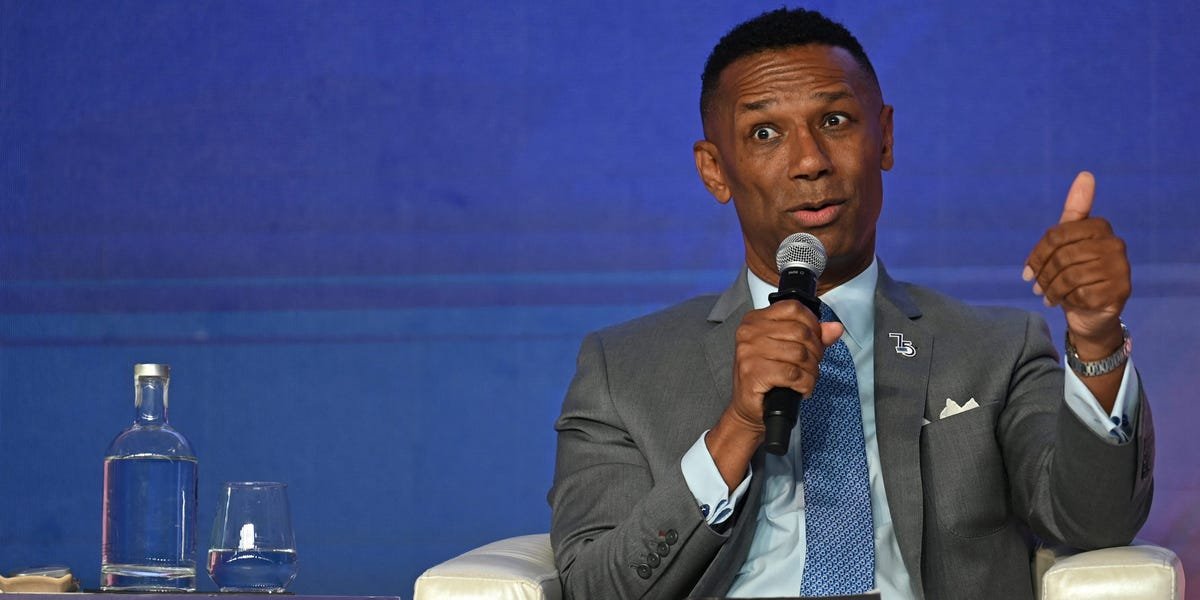
The suit alleged that in 2024, Group Black agreed ​​to shift its revenue share to zero to pay down the shortfall. NBCU says in the lawsuit that it repeatedly demanded payment, and that Group Black cofounder Bonin Bough had acknowledged the company’s liability multiple times, emailing at one point that he took it “very seriously.”

The partnership ended in September 2025.

Group Black has faced internal and market challenges

Group Black was launched in 2021 after the George Floyd protests that led to a national reckoning and prompted big advertisers like Coca-Cola and Walmart to increase their spending on Black-owned media. In the years that followed, the company faced a mix of internal struggles, executive departures, and broader market challenges. It pivoted last summer to focus on a wider audience with the launch of a new venture, Portrait Media Group.

Group Black has faced other legal action alleging nonpayment. Two companies owned by Essence Ventures, part of a venture led by a second Group Black cofounder, Richelieu Dennis, sued Group Black in 2024, alleging it owed them about $20 million. Group Black said in a court filing that Essence loaned it money but otherwise denied the allegations in the suit. The suit is ongoing.

In another case, Audiomob, an ad agency that provided mobile app advertising inventory for Group Black to sell to its clients, demanded about $181,000 from Group Black for invoices it alleged the company had failed to pay. The suit was terminated in August after Audiomob sought dismissal, saying Group Black had made a “partial payment” of the money owed, per court filings.


Source link

I-quit-my-job-at-JPMorgan-to-run-a-restaurant.jpeg

I quit my job at JPMorgan to run a restaurant group with my dad. It’s the best decision I’ve ever made.

This as-told-to essay is based on a conversation with Kassidy Angelo, a 25-year-old managing director at Gioia Hospitality Group in Fort Lauderdale, Florida. It has been edited for length and clarity.

I never imagined myself entering the restaurant business at the age of 24. I majored in American Studies at Georgetown University with the hope of attending law school.

Instead of pursuing a law career, I decided to apply for finance jobs and eventually landed an internship at JPMorgan in New York. Ultimately, I became an analyst in Miami, but I quit after two years.

My dad, an attorney by trade and restaurateur for many years, asked me if I’d ever consider partnering with him on a new venture. He already owned successful restaurants, and I thought this was a unique opportunity to learn from him and pursue my own entrepreneurial path. It’s the best decision I have ever made.

My biggest concern was how working together would change our father-daughter dynamic

Together, my dad and I are attempting to create a new world-class dining experience from the ground up, Daniel’s Steakhouse, in Fort Lauderdale. My dad is 62 years old and already owns several other successful restaurants, so he doesn’t really need to build this brand for himself.

Working with him, I can gain hands-on experience alongside someone who has already mastered the art of entrepreneurship. We’ve always had a close relationship, and I’ve long admired his work ethic; however, I wasn’t sure how it would feel to work side by side, day in and day out.

Before I left my job at JPMorgan, we had a long conversation about expectations and how we wouldn’t only build a strong professional relationship but also maintain the personal closeness we had created throughout my life. He’s an amazing dad and has become an incredible business partner.

If the opportunity to work with my dad had not happened, I probably would have stayed in finance

Working in finance is always a great opportunity to seize. It helped me become more financially literate and gave me a lot of experience working with all types of people.

Ultimately, you’re in a client service role. Private finance, especially, is a people business. Every single day, I communicated with clients, assistants, coworkers, and others, and ultimately, I learned to work as part of a team and how to correspond effectively with high-net-worth individuals. But working in finance has a lot of pressures too.

The analyst role at JPMorgan is intended to be a two-year program. When the opportunity to work with my father came up, I had to make a decision: stay for the full two years and then make the leap, or leave to go through the process of a true restaurant opening.

Ultimately, I realized that if I were going to pursue a career in the restaurant industry, learning the ins and outs of an opening would be the best way to truly understand the business. I viewed it as a once-in-a-lifetime opportunity not only to work with my dad, but to build something from the ground up.

There are lots of positives, but it’s sometimes difficult to separate work and family

Working with family has been one of the most rewarding experiences of my life. One of the biggest pros is the amount of quality time I get to spend with my father. He understands my day-to-day, where my head is at, and where I may be struggling, and he’s always in my corner — not just as a resource, but as a true partner.

In terms of cons, I wouldn’t say there’s anything inherently negative, but it can sometimes be hard to find the “off button.” Family dinners, vacations, and time away often circle back to conversations about how we can improve and grow the business.

Being a financial analyst helped prepare me for building a new restaurant

I entered the restaurant industry with less experience, but more authority than I had as an analyst, which is the bottom of the totem pole in finance. Having worked with senior management at JPMorgan, I had the confidence to run the restaurant.

I also believe it was important that I worked for someone else before working with my dad. It taught me how to take constructive criticism, recognize my shortcomings, and develop confidence outside of my family’s influence. On my first day at the restaurant, I learned how to run the door, be a hostess, serve, and run private events. Now, I’m mentoring a woman who works for us, and I work six days a week on the floor, overseeing everything that goes into running a restaurant.

While there may not be the same financial benefits in the short term, and I must work holidays like Thanksgiving and Christmas, being an entrepreneur allows me to work and live in my home city.

Taking the unknown route can sometimes be the most rewarding

Working at JPMorgan immediately after graduating gave me an instant sense of accomplishment. On the other hand, joining a family business at its foundation was a bigger risk — but one that has been incredibly fulfilling.

I never like to say never to going back to finance, but I truly believe I’ve found my calling in the hospitality world, and doing it alongside my dad makes it even more meaningful.

Do you work with a family member and want to share your story? Please email this editor, Manseen Logan, at mlogan@businessinsider.com.


Source link

I-left-a-mom-group-over-parenting-decisions-I-dont.jpeg

I left a mom group over parenting decisions. I don’t regret it.

I should have sensed the judgment the minute I arrived at the first playdate with four kids in tow and another on the way. Instead, I was thrilled to finally find my “village” that I’d heard so much about — a group of moms who met a few times a month at nearby play spaces and coffee shops to commiserate and encourage each other.

I even brushed off the first comment I was met with, which, in hindsight, should have been a warning sign. “Wow, are they all yours?” It wasn’t the first or last time someone had a “witty” one-liner about my family size, which was completely on purpose and by choice, if they must know. My kids jumped into the playground with the others, and I settled in to find my new besties.


Mom and daughter

The author felt her parenting style didn’t match that of her moms’ group.

Courtesy of the author


The thing about mom groups, though, is that they often aren’t obviously terrible. In fact, they check all the boxes — moms at similar ages, stages, and struggles, getting together for camaraderie and community. We all had similar jogger set mom uniforms and extra-strong lattes on hand, hidden in the pockets of diaper bags to make it past “no food or drink” signs at indoor parks (no? Just me?).

But they aren’t always necessarily a good fit. All the feelings from this almost-perfect mom group I was once a part of resurfaced when Ashley Tisdale wrote an essay in The Cut, talking openly about how her mom group turned toxic.

I’m a free-range parent

My first feelings that I was “different” came when two of the younger kids had a small collision at the bottom of a slide. They tripped, fussed a bit, and in my parenting world, were ready to get back up and carry on. I’m used to being around people with widely differing parenting styles, but not used to being judged for mine.

I felt like my free-range parenting was judged by other moms who were more helicopter parents. The mom of the other kid who collided picked the child up, brushed them up, and performed a full check-up. Meanwhile, my own child popped up, whined a little, and ran off.


Boy in park

The author needed a safe space to vent and felt like the group she found was not it.

Courtesy of the author


Band-Aids and tissues were coming out to counteract tears, and a full-scale breakdown of the situation, complete with apologies and moment-by-moment recaps, had commenced. I enjoyed my coffee and didn’t give it much thought. I hadn’t noticed yet that my parenting style was a mismatch. To be clear, this is just my perception.

I needed a place to vent and feel safe

Slowly but surely, questions about my family size began to infiltrate conversations. I was used to one-liners from grannies at the grocery about having my hands full, but it felt like an onslaught.

It was the same thing with my career. After the group learned I was a working mom, running my own business full-time, I started to feel like an outsider. People spoke a lot about the negative sides of daycare, and the perks of being able to be a full-time mom, Their comments made it seem they weren’t interested in a different perspective, nor was there a question about why I work (because I want to) or about the immense benefits my kids have gotten through day care. I felt like there was an assumption that I was stuck in this terrible world of working motherhood against my will, with no way out.

Over time, I felt like the circus spectacle, and felt I had to have all the i’s dotted and t’s crossed on parenting topics, to show the naysayers that I was doing just fine with many kids, rather than finding a soft landing place to vent and share.

Parenting can be so isolating

I was lonely and desperate, so I clung to my mom group. The alternative was too scary. Nobody to hang out with on a boring Saturday or text when things get tough. It’s not just me — two-thirds of parents find the role isolating and lonely. But one day, I realized the abyss was better than the alternative.

This was the day they moved all the get-togethers to 10 a.m. on weekdays. They knew exactly where I’d be at 10 a.m. every weekday — working.

Although I haven’t found a similar style group, I realized that instead of looking for a whole village of besties, my village was already around me. It just didn’t look like 10 moms with lattes at play group. Instead, it involves the trainer who asks if my kid is over his third bout of strep, or my mom’s friend who texts me with some press-on nails she likes that would look good on me.

My real friends don’t demand we have precisely only 1.5 children, helicopter around our babies, or only wear pink on Wednesdays.


Source link

A-group-of-about-20-US-investors-is-already-planning.jpeg

A group of about 20 US investors is already planning a trip to Venezuela in March

A group of about 20 US investors is already planning to travel to Venezuela in March, following Saturday’s news that the country’s president, Nicolás Maduro, had been taken into US custody.

Charles Myers, the chairman of the political risk advisory firm Signum Global Advisors and a former vice-chairman of the investment advisory firm Evercore, told Business Insider that the mood among investors he has spoken to is one of “cautious optimism” following news of Maduro’s ouster.

“I think the centerpiece of Venezuela’s success, looking out 12 months or even 24 months, is foreign investment,” Myers said. “A big part of the Venezuela story, starting today, is foreign investment, especially in oil and gas, which is pretty straightforward, but there are massive opportunities in construction, in tourism.”

Myers said it’s not the responsibility of his firm to take a “moral position” on whether it was right or wrong for the US to involve itself in Venezuela’s government, but rather to help the firm’s clients anticipate investment opportunities or mitigate risk due to geopolitical events.

However, he added, his firm “very much expected” the situation in Venezuela would unfold as it has, and has been preparing investor groups to be ready to travel to the country when the opportunity presents itself. Signum previously hosted similar trips for asset managers and hedge funds to visit Syria and Ukraine.

“People have seen this coming, especially very smart investors, and many of them have actually bought bonds in anticipation of this,” Myers said. “But there’s a very strong degree of cautious optimism, even more so than we saw with Syria, just because this is a United States-directed action.”

“The United States will play a pivotal role in everything, especially the Venezuelan economy, starting today,” Myers added, “So, I think the reaction has been more enthusiastic than perhaps other situations like this.”


Source link

SHRM-the-worlds-largest-HR-group-has-been-hit-with.jpeg

SHRM, the world’s largest HR group, has been hit with an $11.5 million verdict in a racial discrimination lawsuit

A jury on Friday issued an $11.5 million verdict against the world’s largest HR organization over allegations it had racially discriminated and retaliated against a former employee.

The Society for Human Resource Management, known as SHRM, was found liable for racial discrimination and retaliation and hit with a ruling of $1.5 million in compensatory damages and $10 million for punitive damages, according to Ariel DeFazio, a lawyer for the plaintiff.

SHRM said it plans to appeal the decision. “Today’s decision does not reflect the facts, the law, or the truth of how SHRM operates,” the trade group said in a statement. “We have acted with integrity, transparency, and in full alignment with our values and obligations.”

SHRM was sued in 2022 by Rehab Mohamed, who worked at the trade group as an instructional designer from 2016 to 2020. The case was tried over the course of five days in a Colorado federal court.

“The optics are bad because they’ve held themselves out as an authority on best practices,” said Alice K. Jump, an employment attorney and partner at law firm Reavis Page Jump.

Mohamed said in her suit that she was racially discriminated against by a white supervisor and faced retaliation for complaining to management. She said she raised concerns about racial discrimination and retaliation with leadership, including SHRM’s CEO, Johnny C. Taylor Jr., and its head of human resources, throughout the summer of 2020.

While testifying on December 4, Taylor said he wasn’t involved in Mohamed’s termination. A former SHRM employee, Mike Jackson, who said he was responsible for investigating the matter, told the court that Mohamed’s was the only discrimination claim he had ever investigated.

In response to questions from Hunter Swain, another of Mohamed’s lawyers, Jackson said that he left SHRM in 2021 and his title was manager of employee experience. He said he became a certified HR professional while employed there and that he had undergone one training session on HR investigations just a few months before the discriminatory events that Mohamed cited in her lawsuit took place.

When asked by Swain what he learned from the training, Jackson said he couldn’t remember any specifics.

SHRM has consistently denied Mohamed’s claims. In September, SHRM asked the court to bar Mohamed from introducing evidence or argument that the organization is a specialist in HR best practices.

The following month, US District Judge Gordon P. Gallagher denied SHRM’s request, saying its “asserted expertise in human resources is integral to the circumstances of this case and cannot reasonably be excluded.”

In his testimony, Taylor said SHRM’s work includes advising HR professionals about best practices, including those pertaining to investigating internal complaints of discrimination and retaliation. He said SHRM has a set of curricula around best practices for investigating employment complaints.

The verdict was not surprising given that SHRM promotes itself as an expert in HR, Boston employment lawyer Evan Fray-Witzer told Business Insider. “You’re going to be held to a higher standard,” he said.

In recent years, SHRM has been embroiled in various controversies, as Business Insider recently reported. These include a new attendance policy that penalizes workers who arrive even a minute after 9 a.m.; a memo about a “conservative” dress code that bans sequins; and a companywide meeting in which Taylor said some staffers were “entitled,” “complacent,” and “sloppy.”

During pre-trial discovery for Mohamed’s case, SHRM revealed the existence of two other discrimination complaints from employees. One case, filed with the Equal Employment Opportunity Commission in 2018, was settled. The other, filed with a California regulator in 2021, is pending. SHRM also denied wrongdoing in those cases.

“We are very happy that the jury spent a week listening very closely to the evidence and that they decided, as a result, to hold SHRM accountable,” Mohamed’s lawyer, DeFazio, told Business Insider. She said the verdict would “send a message to workplaces in the entire country.”


Source link

Sports-Illustrated-ex-publisher-wants-200-million-from-Authentic-Brands-Group.jpeg

Sports Illustrated ex-publisher wants $200 million from Authentic Brands Group, saying it stole website and employees

The former publisher of Sports Illustrated has filed a $200 million legal counterpunch against the magazine’s new publisher and the owner of its intellectual property.

In late 2023, the Arena Group lost the rights to publish SI, its best-known brand, after the 5-Hour Energy creator Manoj Bhargava took over Arena and missed a licensing payment to Authentic Brands Group. ABG awarded the publishing license to Minute Media and sued Bhargava for $49 million, accusing him of acting like a “gangster” in their negotiations.

On Friday, Bhargava and his company hit back — and they’re seeking $200 million for what they claim was a plot by ABG and Minute Media to string the Arena Group along while making copies of its websites and laying the groundwork to poach its employees and biggest spenders.

“ABG deceived Arena by promising to work with Arena in good faith to renegotiate Arena’s license so as to allow Arena to continue to operate Sports Illustrated,” the complaint says, adding, “Privately, ABG and Minute had been partnered for weeks, conspiring to steal Arena’s code and publisher relationships.”

The countersuit also took aim at CVC Capital Partners and BlackRock, investors in ABG, though they weren’t named as parties to the lawsuit. In the complaint and in a statement, Steve Janisse, a spokesman for Arena and Bhargava, said it was unethical for them to have assisted in what Arena and Bhargava characterized as ABG’s sham negotiations.

“It’s amazing that CVC Capital and BlackRock would condone this type of corporate behavior,” Janisse said. “To be honest, we’re surprised they aren’t calling for a change of leadership at ABG.” An executive at CVC didn’t immediately respond to emails, and a representative for BlackRock declined to comment.

Bhargava has a history of aggressive legal action. A 2012 Forbes profile noted that he had already filed more than 90 lawsuits. Bhargava, who made his billions selling 5-Hour Energy drinks, showed the Forbes reporter a “cemetery” bookcase in his office, lined with energy-shot bottles from competitors his company had sued or legally bullied out of the market, calling them the gravestones of his vanquished rivals.

Bhargava’s lawsuit adds to the morass of legal actions that have formed around the Arena Group. In early April, ABG sued Arena and Bhargava over the missed licensing payment and a $45 million termination fee.

Arena, whose stock trades for less than half of what it did at the start of 2024, included that $45 million fee in a loss of nearly $91 million that it recorded in connection with the loss of the SI brand last quarter.

Ross Levinsohn, the Arena CEO who was fired in 2023 when Bhargava took over, has also sued Arena, claiming he was retaliated against. Shortly thereafter, Levinsohn, who became the CEO of Arena in 2020, became the target of a lawsuit filed by Arena’s founders, who claim he mounted a “fraudulent coup” to enrich himself at the expense of Arena and other shareholders, according to Front Office Sports.

ABG and Minute Media didn’t immediately reply to requests for comment.


Source link