

Headshot photo of Laura Italiano

Alexander brothers found guilty on all counts. Wealthy siblings face potential life terms for a decade of rapes.

A trio of wealthy brothers was found guilty of federal sex-trafficking charges in Manhattan on Monday in a grand-slam verdict convicting them of each count they faced in a 10-count indictment.

The jury deliberated for three days before announcing a verdict for former luxury real estate brokers Tal Alexander, 39, and Oren Alexander, 38, as well as for Oren’s twin, Alon Alexander, a former executive in his parents’ private security firm.

The three brothers sat at the defense tables, shaking their heads as the verdict was read. Sentencing was set for August 6 for each defendant.

Any sex trafficking conviction, including for the top count of sex-trafficking conspiracy, carries a potential maximum sentence of life in prison.

The verdict follows a five-week trial in which prosecutors called 10 rape accusers to testify, none of whom had reported their incidents to police.

The women gave compelling, sometimes tearful testimony about attacks in luxe locations in Manhattan, the Hamptons, Aspen, and Tel Aviv stretching back to 2008, when the brothers were in their early 20s.

They said the brothers used false promises of “afterparties” or fun weekend getaways to lure them into the worst experiences of their lives — being sexually violated through violence or a drugged drink.

Two women told jurors that they were drugged and then attacked by two of the brothers at the same time.

One said the twins took turns raping her inside a cruise ship cabin in 2012. The other said she was attacked by Tal and Alon Alexander and two other men in the bedroom of a Southampton vacation home in 2009, when she was 16 years old.

“I was wondering why they hated me,” the woman recalled thinking as she fell in and out of consciousness on a bed.

All ten women told jurors that in the hours and days after they were attacked, shame and fear kept them from telling anyone but their closest friends.

Only when they saw that the brothers were being sued and arrested — over allegations like their own — did they find the courage to step forward, the women testified.

“Because this feels bigger than me,” one accuser explained of coming forward now, fourteen years after she said she was drugged and raped at age 20 after a party at the Manhattan penthouse of actor Zac Efron.

“I’m 34 years old now, and I know who I am,” another accuser explained of coming forward. “And I wanted someone to be held accountable for what happened to me.”

Defense lawyers maintained that any sex was consensual and that the accusations were the product of regret and faulty memories.

They pointed to inconsistencies about timing and the women’s failure to take drug tests or report the incidents to law enforcement, and noted that many of the women communicated with the brothers

The defense also challenged whether the accounts the women described added up to sex trafficking, the charge behind half the counts in the ten-count indictment.

To convict on sex trafficking, jurors needed to find that the brothers used force, fraud, or coercion — including by secretly drugging drinks — to cause a commercial sex act, defined as sex in return for something of value.

Prosecutors said that the “something of value” was the brothers’ promise of a beach weekend at a Hamptons mansion, or an invite to go from a club to a hotel room for a fun “after-party.”

Defense lawyers countered that what was described in testimony was not sex trafficking because, in their view, there was no quid-pro-quo relationship proven between the lure — the “something of value” — and the alleged sex.

“The commerce — the thing of value — must be a result of the sex,” argued Marc Agnifilo, defense attorney for Oren Alexander.

In July, Agnifilo won a partial acquittal in another high-profile Manhattan sex trafficking case, that of entertainment and lifestyle entrepreneur Sean “Diddy” Combs.

In that trial, Agnifilo similarly argued that the federal sex-trafficking statute was being stretched beyond its original purpose of protecting sex workers.

Combs was also acquitted of racketeering; he was convicted of transporting for purposes of prostitution and is serving a four-year prison term.



Source link

I-landed-a-dream-job-after-college-but-it-was.jpeg

I landed a dream job after college, but it was in Seattle, far away from my close-knit family. I felt guilty leaving them behind.

Growing up in the suburbs of southern California, I knew a few things to be true about my family. Most importantly, I knew that all we had were each other. Unlike my friends at school, we did not have any extended family. There were no big Thanksgivings, hangouts with our cousins, or sleepovers at our grandparents’ house.

It was just us four, navigating the differences between the Western culture we lived in and the Eastern culture of our roots.

I grew up in Los Angeles as the eldest daughter of an immigrant family. My parents had left their motherland in search of new possibilities in this one. The only family they would have here was the one that they would go on to create: my little sister and me.

But all that changed when I landed a job in a different city after college.

My parents encouraged me to move

When I received my acceptance letter to a university in Los Angeles, I was reassured that I would not be too far from home. When I was not on campus, I was back in my childhood living room, catching up with my little sister over our favorite boba orders and proudly taking pictures of her high school theater performances. I was playing Chinese checkers with my mom on our dining room table, followed by walking our family pup with my dad under the palm trees.

Meanwhile, in college, my life was actively progressing. By the end of my degree, I landed a dream job that would be the first building block of my future career.

It was based in Seattle.

All my life, my parents had encouraged me to go where the opportunity is. After all, that is what led them to America, where they were able to give their children the childhood they never had. In their eyes, if Seattle was where the opportunity was, that is where I should go.

“The flight is not too far,” my mom said, “but we will miss you.”

I couldn’t shake the guilt of leaving my family

I felt a continuous wave of internal conflict. On one hand, I was excited to experience something new. On the other hand, I felt guilty for leaving my already small family.

When I asked my friends if they ever felt guilty about moving away from home, I was surprised by their responses. For most of them, it never even crossed their minds. They chose to move because they never saw themselves living in the same area they grew up in, and they knew it would not provide the industries they needed.


Sherri Lu in front of mt rainier

The author decided to move to Seattle.

Courtesy of Sherri Lu


They took possibly never living near their parents again as a given part of adulthood. Their parents share this belief and, like mine, encouraged them to carve out the life path that best suits them.

Perhaps my guilt stemmed from the fact that I was choosing to leave a city that could potentially offer similar career prospects. Would I feel the same guilt about moving away if my family were located somewhere I did not feel as warmly about?

Eventually, I did talk myself into taking the job. As I settled into Seattle, I thought about how my grandparents felt when their daughter moved across the ocean from China to America. By comparison, my living just a few states away felt minor.

“How did you feel when Mom told you she was considering leaving home?” I asked my grandma over video chat.

“She needed to make her own decisions on what she thought was best for her life, but I did secretly cry about it,” she told me. “I made sure your mother never saw because I did not want it to influence her decision.”

I made the right decision

Beyond my career, living on my own gave me the space to understand myself more deeply. I began sharing my self-discovery journey online with “Eldest Daughter Club” and grew it into a community of other women doing the same. I found different forms of family as I bridged the distance between my own.

I called my family often and planned routine trips back home. Although our in-person time was now more limited, I made sure that a larger percentage of it was true quality time.

Guilt was the feeling that encompassed the discomfort of leaving behind the familial support system that I had always counted on. In the end, support transcends location.

We must all make the decisions on what we think is best for our lives. Guilt is just a signal of what you cherish, but it does not tell your whole story. That is for us to build, wherever we decide to call home.


Source link

A woman in glasses wearing a blue dress standing in front of a bush.

When I was diagnosed with low sperm count, I felt guilty and embarrassed. I want to break the taboo.

This story is based on an interview with Brian Mazza, 41, who has appeared on the cover of “Men’s Health.” Mazza was recently named “Champion for Male Fertility Advocacy” by the World Fertility Awards. The conversation has been edited for length and clarity.

Before we got married in 2014, my wife, Chloe Melas, a journalist, and I were very much aligned on wanting children in the future. It’s a huge step for anybody in a relationship, but we agreed that it would be great to start a family together.

Then, around a year after the wedding, we tried to get pregnant — without success.

The sense of disappointment each month was challenging and disheartening. Like anything else in life you want to accomplish, it becomes frustrating when it’s not working out.

It wasn’t ideal for both of us and caused a lot of issues, which weren’t fun. It was a strain and kind of brutal.

The test to determine my sperm count felt awkward

Fortunately, we were able to find a good, straight-talking doctor who ran a series of tests. Chloe was found to have a diminished ovarian reserve, but they wanted to check me out, too.

It was awkward and strange. Everybody in the waiting room knew why you were there, which was fine, but then you were ushered into a room next to the secretary’s desk. It felt a bit strange.

My test was back in 2016. Thankfully, there are now a lot of companies that allow you to sort everything out in your own home.


A man wearing a tuxedo

Mazza attends the Michael Rubin Reform Alliance Casino Night Event in September 2025 in Atlantic City, New Jersey.


Photo by Dimitrios Kambouris/Getty Images for Reform Alliance


The results showed I had a low sperm count, which proved to be the primary cause of the issues. If someone asked if I felt guilty, embarrassed, or was worried that Chloe was resentful toward me, I’d answer yes.

I was extremely fit, eating well, and doing everything to meet the expectations of an elite performer in life. I thought, “What is getting in the way of this goal?”

I began to wonder if I’d done something in the past that was responsible. It wasn’t the case, but I wanted to look at the full road map.

I went to every appointment with the fertility doctor

Then, since I’ve always been a problem solver and a reverse engineer, I thought, “How can we approach the situation?”

We had no luck with intrauterine insemination (IUI) and moved on to IVF. The process was pretty easy from a male perspective because you are physically removed.

Still, I went to every doctor’s appointment to listen to the advice. It was hard to see Chloe go through what she did, but we tried to focus on the end result.

We didn’t share our journey with family or friends at the time. It was to protect the situation and not feel like we were letting people down.


A family of four on a dinghy

Mazza and Melas with their sons.


Courtesy of Brian Mazza.


Thankfully, we got pregnant on our first round of IVF. We were thrilled, and it turned into elation when our son, Leo, was born in July 2017.

We went through the same process, and Luke arrived exactly two years later.

I advocate for increased awareness of male factor infertility

Holding Leo and Luke in my arms was every dream that I’d ever dreamed. I’d wanted to become a father so much.

I’m speaking up about male factor infertility because it’s a topic that should be openly discussed. I hope that I’m helping to remove the stigma. It’s useful when someone who has been through an experience like ours can share their story.

As the years pass, I find myself gazing at my boys — now 8 and 6 — with joy and wonder. They’re bright, athletic, and kind. Chloe and I call them our miracles.


Source link

Dating-after-your-partner-dies-is-hard-I-feel-guilty.jpeg

Dating after your partner dies is hard. I feel guilty for wanting connection, but I also need it.

Dating is difficult at any age. Dating when you have a child is complicated. But, when you decide to date after the passing of your partner, there’s even more to consider. I was 48 when my husband succumbed to cancer. My daughter was almost 10.

Why would I want to date? I was heartbroken. A piece of my life and my entire vision of the future had been ripped away from me. I didn’t want love. I wasn’t interested in a replacement. I’d lost the illusion of forever.

I just wanted conversation, companionship, and a new way of looking forward and reimagining. But, any kind of reimagining requires imagination and reconciliation. I was parenting a traumatized child while also trying to care for myself.

What would my daughter think about me dating? Would she think I was betraying her dad?

I didn’t tell my daughter I was going on dates at first. I didn’t bring anyone to meet her until I’d had a few positive dates. I didn’t introduce her to anyone I didn’t think of as potential friend, a good person.

I was clear with everyone I went out with that I wasn’t looking for something permanent and that I certainly wasn’t looking for a new dad for my daughter. My daughter adored her dad, and rightfully so. She had thoughts on the few people I did introduce her to:

“He’s too young for you.”

“He likes you too much.”

“I don’t have a good feeling about him. Even if he got me a good present.”

And, eventually, “He seems pretty chill.”

Then, when you find someone you’re interested in seeing, there’s the challenge of when and where

Solo parenting is not single parenting. My daughter didn’t split time between me and another parent. I couldn’t tell a potential date, “my daughter’s with her other parent this weekend — I’m free.”

I had to define what my boundaries were and enforce them. So, no one could be in the space I shared with my daughter. I couldn’t make him dinner, invite him in for drinks.

There’s also not a lot of free time for a solo parent with a full-time job. I needed to be there for soccer, Girl Scouts, school plays. Those were nonnegotiable. I wouldn’t date someone who wanted me to prioritize them over my daughter.

There were also internal challenges I had to settle for myself

Dating as a widowed parent means accepting a need for connection and feeling guilty for wanting it at the same time.

What did it say about me? Did it mean that my feelings about my husband hadn’t been sincere? Was it fair to the men I went out with?

I wanted conversation with people who didn’t know me in my married life, people who could see present and future me, but who also wouldn’t push too much for a future with me.

Even with so much to consider, dating has not only been possible, but it’s been positive

Despite all of the challenges, I’m not only making it work, I’m thriving. I’ve met some really good people who want connection, whatever that looks like, in this iteration of our lives.


Source link

Guilty-on-all-counts-Jury-convicts-Netflix-director-Carl-Rinsch.jpeg

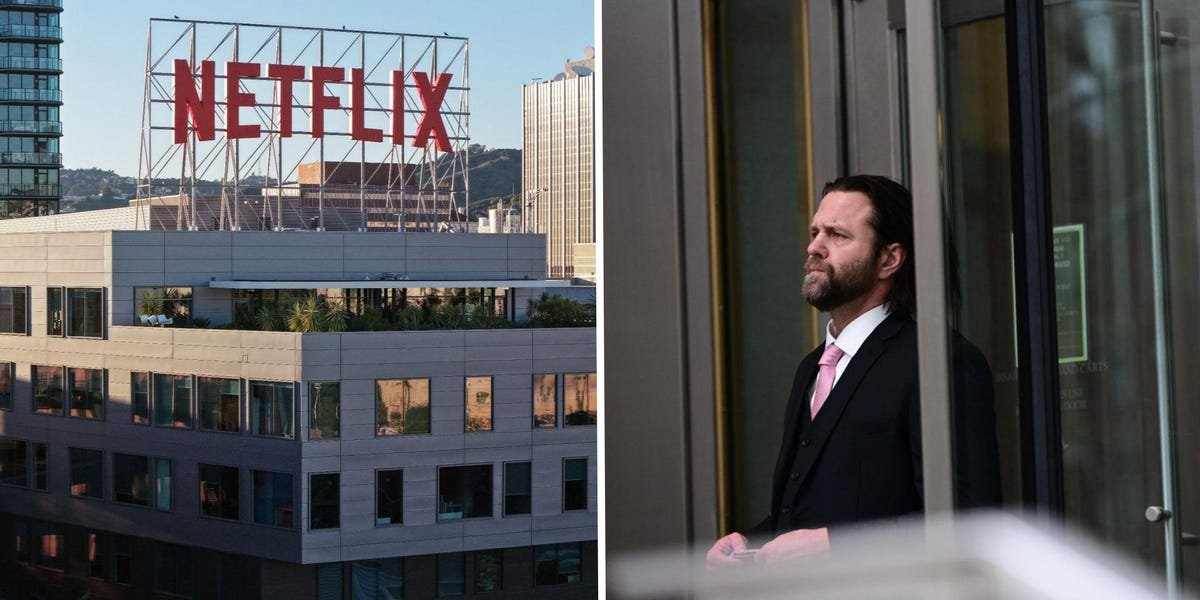
Guilty on all counts: Jury convicts Netflix director Carl Rinsch in $11 million fraud case

A Manhattan federal jury on Thursday found Carl Rinsch guilty on charges that he scammed Netflix out of $11 million in a lavish spending spree.

After less than five hours of deliberation, the jury said it found Rinsh guilty on all seven counts, including fraud, money laundering, and illegal money transmission. He faces up to 90 years in prison, but is expected to be sentenced to far less.

Rinsch, wearing a purple-plaid tie and matching pocket square, looked straight at the judge as the jury foreman read the verdict.

The case centered on the millions of dollars Netflix paid Rinsch to film “White Horse,” a sci-fi epic about a world where clone-like beings, after a schism with humankind, create their own society walled off from the rest of the world. Rinsch testified in his own defense earlier this week.

Rinsch — a Ridley Scott protege who previously directed the Keanu Reeves-starring “47 Ronin” — shot footage for “White Horse” on two continents. But by the fall of 2019, he exceeded the $44 million Netflix budgeted for the project and asked for more money.

Through the end of 2019 and early 2020, Rinsch negotiated with Netflix to figure out how to move “White Horse” forward and realize his ambitions. He envisioned a franchise like “Star Wars” and “Game of Thrones,” complete with an elaborate fantasy world, that could become part of Netflix’s catalogue.

In March of 2020, the streaming service agreed to give Rinsch’s production company another $11 million.

Then, everything went wrong.

On the witness stand in Manhattan federal court, he said he believed the bulk of the $11 million was meant to reimburse him for keeping the production of “White Horse” afloat the previous fall, when it had gone over-budget. According to him, Netflix expected him to conduct only “soft pre-production” on a potential second season.

Netflix balked. Former executives testified in the trial that the $11 million was meant to go toward finishing a first season that Rinsch never delivered. According to prosecutors, the entire negotiation for the $11 million was a sham, and Rinsch meant to defraud the company all along.

At closing arguments on Wednesday, Assistant US Attorney David Markewitz presented the jury with a Buzzfeed-style list of “10 Ways You Know Carl Rinsch is Guilty.” In a slideshow, he walked them through what he said were Rinsch’s contradictory claims — on the witness stand, in emails and text messages, and in prior statements in a civil legal dispute with Netflix — that he said demonstrated Rinsch wasn’t telling the truth.

He argued it was absurd to think Rinsch’s lavish purchases — like a $439,000 handmade Hastens mattress — could not have possibly been meant for the production of “White Horse.” And Rinch’s 2021 purchases of Rolls-Royces were insured in his own name, rather than insured by Netflix.

“In a TV show, a mattress is going to be covered by sheets and a blanket,” Markewitz told the jury. “No one watching ‘White Horse’ from home is going to have any idea what is under those linens.”

Daniel McGuinness, an attorney representing Rinsch, told the jury that Rinsch never had the “intent” required to find him guilty.

He showed them emails and texts leading up to the March 2020 agreement that he said demonstrated Rinsch’s negotiating posture had always been that Netflix owed him about $11 million for reimbursement. Rinsch never said he would spend all the money on additional production for “White Horse,” McGuinness said.

In reality, according to McGuinness, the situation was a “contract dispute” based on misunderstandings between Rinsch and Netflix.

“They were talking past each other, and the government has turned it into a nefarious fraud conspiracy,” McGuinness said.

This is a breaking story. Please check back for updates.


Source link