
What-happened-after-Elon-Musk-took-the-Russian-army-offline.jpeg

What happened after Elon Musk took the Russian army offline

This story originally ran in Welt and appears on Business Insider through the Axel Springer Global Reporters Network.

“All we’ve got left now,” the Russian soldier said, “are radios, cables and pigeons.”

A decision earlier this month by SpaceX to shut down access to Starlink satellite-internet terminals caused immediate chaos among Russian forces who had become increasingly reliant upon the Elon Musk-owned company’s technology to sustain their occupation of Ukraine, according to radio transmissions intercepted by a Ukrainian reconnaissance unit and shared with the Axel Springer Global Reporters Network, to which POLITICO and Business Insider belong.

The communications breakdown significantly constrained Russian military capabilities, creating new opportunities for Ukrainian forces. In the days following the shutdown, Ukraine recaptured roughly 77 square miles in the country’s southeast, according to calculations by the news agency Agence France-Presse based on data from the Washington-based Institute for the Study of War.


Three men sitting at brown desks in military fatigues

Analysts in Ukraine’s Bureviy Brigade eavesdrop on Russian communications from an underground listening post in northeastern Ukraine.

Viktor Lysenko/BI


SpaceX began requiring verification of Starlink terminals on Feb. 4, blocking unverified Russian units from accessing its services. Almost immediately, Ukrainian eavesdroppers heard Russian soldiers complaining about the failure of “Kosmos” and “Sinka” — apparently code names for Starlink satellite internet and the messaging service Telegram.

“Damn it! Looks like they’ve switched off all the Starlinks,” one Russian soldier exclaimed. “The connection is gone, completely gone. The images aren’t being transmitted,” another shouted.

Dozens of the recordings were played for Axel Springer Global Reporter Network reporters in an underground listening post maintained by the Bureviy Brigade in northeastern Ukraine. Neither SpaceX nor the Russian Foreign Ministry responded to requests for comment.

“On the Russian side, we observed on the very day Starlink was shut down that artillery and mortar fire dropped drastically. Drone drops and FPV attacks also suddenly decreased,” said a Ukrainian aerial reconnaissance operator from the Bureviy Brigade who would agree to be identified only by the call sign Mustang, referring to first-person view drones. “Coordination between their units has also become more difficult since then.”

The satellite internet network has become a crucial tool on the battlefield, sustaining high-tech drone operations and replacing walkie-talkies in low-tech combat. Since Russia’s February 2022 invasion, which destroyed much of Ukraine’s traditional communications infrastructure, Western governments have provided thousands of the Starlink units to Kyiv.


A man in military fatigues with a Ukrainian flag on his shoulder.

At some point, it felt like the Russians had more devices than we did,” said a Ukrainian soldier identified by the call sign Mustang

Viktor Lysenko/BI


Walkie talkies under red light on a shelf

Viktor Lysenko/BI


With the portable terminals, there is no need to lay kilometers of cable that can be damaged by shelling or drone strikes. Drone footage can be transmitted in real time to command posts, artillery and mortar fire can be corrected with precision, and operational information can be shared instantly via encrypted messaging apps such as Signal or Telegram.

At the outset of the Russian invasion, Starlink access gave Ukraine’s defenders a decisive operational advantage. Those in besieged Mariupol sent signs of life in spring 2022 via the backpack-size white dishes, and army units used them to coordinate during brutal house-to-house fighting in Bakhmut in 2023.

Satellite internet became “one of, if not the most important components” of Ukraine’s way of war, according to military analyst Franz-Stefan Gady, an adviser to European governments and security agencies who regularly visits Ukrainian units. “Starlink constituted the backbone of connectivity that enabled accelerated kill chains by helping create a semi-transparent battlefield.”

The operational advantages of Starlink did not go unnoticed by Russian forces. By the third year of the war, Starlink terminals were increasingly turning up in Russian-occupied territory. One of the first documented cases surfaced in January 2024 in the Serebryansky forest. Month by month, Ukrainian reconnaissance drones spotted more of the devices.

The Ukrainian government subsequently contacted Musk’s company, urging it to block Russian access to the network. Mykhailo Fedorov, then digital minister and now defense minister, alleged Russian forces were acquiring the devices via third countries. “Ukraine will continue using Starlink, and Russian use will be restricted to the maximum extent possible,” Fedorov pledged in spring 2024.

Yet Russian use of the terminals continued to grow throughout 2025, and their use was not limited to artillery or drone units. Even Russian infantry soldiers were carrying mini Starlink terminals in their backpacks.

“We found Starlink terminals at virtually every Russian position along the contact line,” said Mustang. “At some point, it felt like the Russians had more devices than we did.”

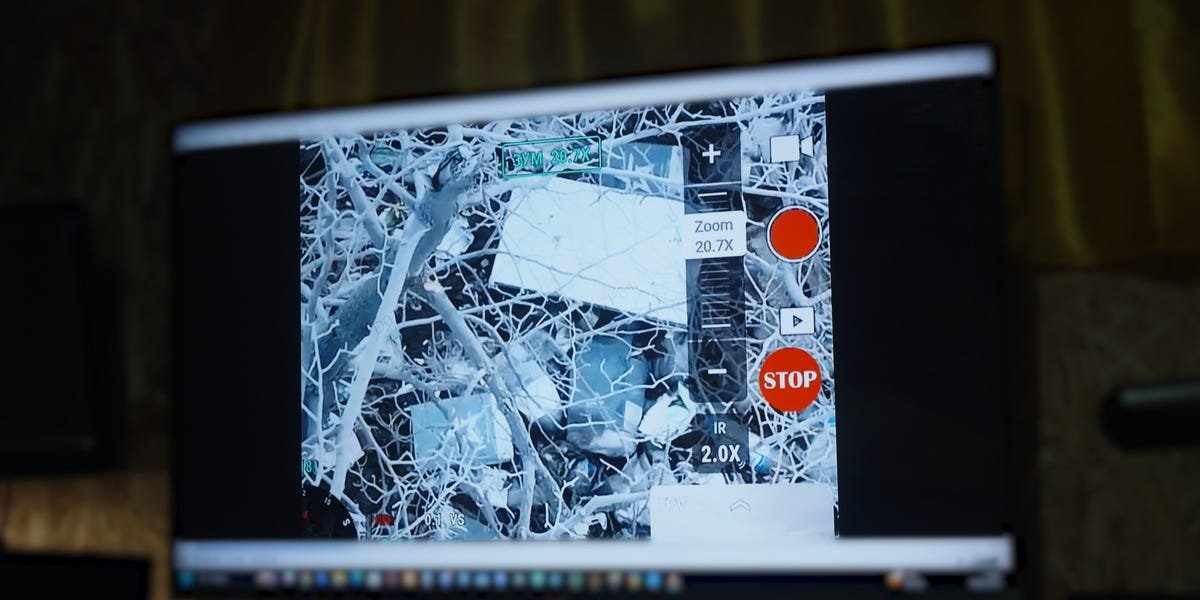
In the listening post this month, he scrolled through more than a dozen images from late 2025 showing Russian Starlink terminals set up between trees or beside the entrances to their positions.

“We targeted their positions deliberately,” Mustang continued. “But even if we destroyed a terminal in the morning or evening, a new one was already installed by the next morning.”

In the Russian-occupied eastern Ukrainian city of Kreminna, there was even a shop where soldiers could buy Starlink terminals starting in 2024. According to Ukrainian officials, these devices were not registered in Russia.

SpaceX’s move in early February to enforce a stricter verification system effectively cut off unregistered Starlink terminals operating in Russian-occupied areas. Only devices approved and placed on a Ukrainian Ministry of Defense “whitelist” remained active, while terminals used by Russian forces were remotely deactivated.

“That’s it, basically no one has internet at all,” a Russian soldier said in one of the messages played for Axel Springer reporters. “Everything’s off, everything’s off.”

The temporary shutdown allowed Ukraine to slow the momentum of Vladimir Putin’s forces, although the localized counteroffensives do not represent a fundamental shift along the front. Soldiers from other Ukrainian units, including the Black Arrow battalion, confirmed the military consequences of the Starlink outage for Russian forces in their sectors in interviews with the Axel Springer Global Reporters Network.

By mid-February, Russian shelling had increased again, though largely against frontline positions that had long been identified and precisely mapped — suggesting that Russia has yet to fully restore all of its lost capabilities.

Now, analysts from the Bureviy Brigade say Russian forces are scrambling for alternatives. They have been forced to rely far more heavily on radio communication, according to Mustang, which creates additional opportunities for interception.

Russian units will likely attempt to switch to their own satellite terminals. But their speed and connection quality are significantly lower, Mustang says. And because of their size, the devices are difficult to conceal.”The shutdown of Starlink, even if only of limited effect for now, highlights the limited ability of the Russian armed forces to rapidly implement ongoing cycles of innovation,” said Col. Markus Reisner of the Austrian Armed Forces. “This could represent a potential point of leverage for Western supporters to provide swift and sustainable support to Ukraine at this stage.”

Ibrahim Naber is a chief reporter at Welt.


Source link

After-Jeff-Bezos-bought-the-Washington-Post-things-went-great.jpeg

After Jeff Bezos bought the Washington Post, things went great — for a while. I asked an insider what happened.

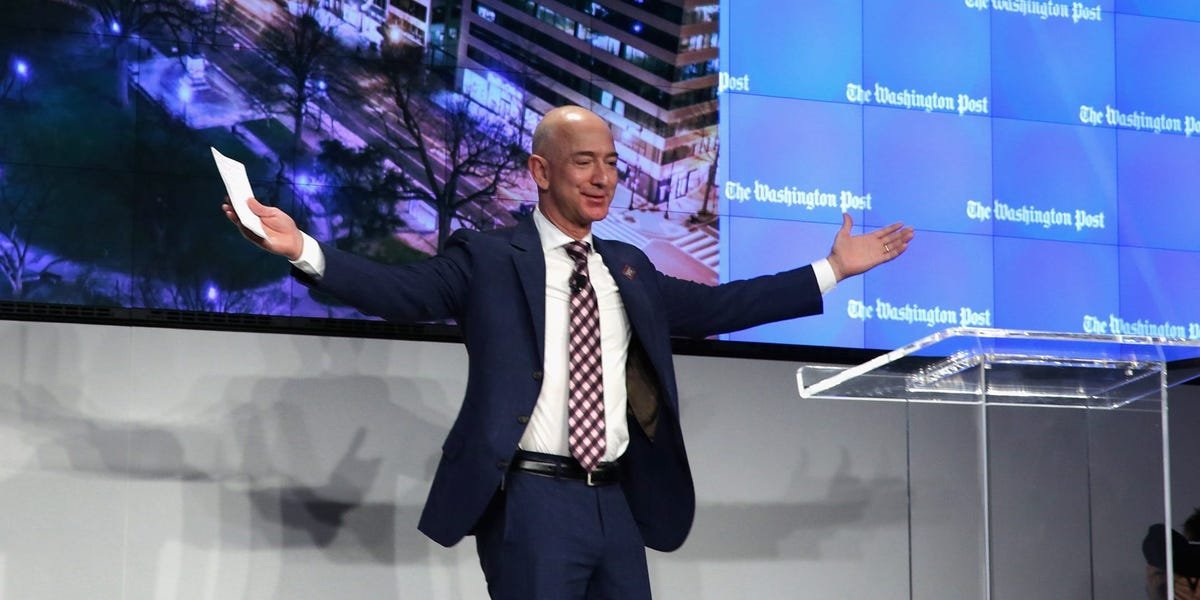
Lots of people are angry at Jeff Bezos because of the massive cuts he’s ordered at his Washington Post. But a decade ago, Bezos was widely celebrated for his ownership of the Post, which he had bought for $250 million in 2013.

Under Bezos’ ownership, the Post made huge investments in tech and staff. And readers loved the results — especially during the first Trump era, when the paper turned profitable.

Now things are very different: The Post says it has been losing gobs of money for the past few years, and Bezos has made a series of moves interpreted as a shift toward Trump — which spurred reader revolts, which made things even worse. And all of that led to this week’s cuts.

I talked to Erik Wemple, a New York Times media reporter who previously worked at the Post for 14 years, to try to reconcile the two eras of Bezos and the Post, and to get a sense of what might happen next. You can hear our entire chat on my Channels podcast; what follows is an edited excerpt from our conversation.

Peter Kafka: What shape was the Post in when Bezos bought it in 2013?

Erik Wemple: The Graham family, which had owned the Post forever, was an amazing steward for the paper. But they had to scale back their newsroom, because the internet had blown holes in classified ads. Classifieds used to be huge at The Washington Post.

At the time Bezos bought it in 2013, it was not dysfunctional. These were really good journalists, but the paper was in a bit of a funk. It wasn’t a reclamation project, but it had seen better days.

It was faded when he bought it.

Correct. And when Bezos came in 2013, he really wowed the staff. We all asked him questions. He answered those questions with tremendous enthusiasm and competence. He seemed really energized by this.

What did he think he was going to do?

When he came in, he was energetic, but deferential on the particulars of running the newspaper. He’s like, “You know what? I’m not in this business, but I do know how to organize discussions about the future of a business.” And that’s what he did. I was in one of them; it was really remarkable.

He had these things that he believed in. He was important in guiding conversations. And it was really remarkable because he backed it up with money. He invested in the newspaper. He invested in political coverage, big time. Investigative went up. International got a huge, huge boost. And the technology did too.

This is exactly what you want from your billionaire tech owner: Give us a bunch of money. Improve our tech. Also, stay away. Don’t tell us what to do.

That was exactly the sentiment. And one of the things you mentioned in there is really worth pausing on for a second, which is the lack of intervention, the lack of meddling. He just sort of looked on. And the newsroom really, really, really roared. Especially in the first Trump period.

So not only does this produce great journalism, it seems like it becomes a business success story — the paper becomes profitable again. Then, after Trump left the White House, there was a lot of hand-wringing about what happens after the Trump bump. People expected audiences to decline across lots of different publications, and that happened, so it makes sense that the Post would struggle a bit. But the numbers you hear about the reported losses — $77 million in 2023, $100 million in 2024 — are staggering. I still don’t understand how you can swing to losses like that just because your traffic goes down. What am I missing?

I share your knowledge gap.

One of the things that has been reported and pretty well substantiated is they may have over-indexed on staff growth. They vaulted up over a thousand in early 2021, up to 1,100. So I think they got ahead of themselves, and they had to pair that back. That’s one of the things.

Another consideration is that the digital advertising market sort of dried up, so that was a big deal.

It’s all somewhat of a mystery, but I don’t doubt that there are meaningful losses.

Can this just be as simple as the Post overhiring? Lots of companies have done that — the tech guys did during the pandemic.

No, I don’t think so. Especially if you look at the more recent past, when they tinkered with the opinion side and shot themselves in the foot.

In October 2024, the Post announced it would not be endorsing a candidate in the presidential election. And that happened after the Washington Post editorial board had drafted an editorial in favor of Kamala Harris. And hell broke loose — a subscription desertion of hundreds of thousands.

That’s an astonishing number. I remember thinking that it couldn’t be real.

The cause and effect could not have been more direct. People said, “No way. I’m not giving my money to this organization.”

The Post has continued to do lots of news reporting that is critical of the Trump administration. Which made me curious about this line in editor Matt Murray’s explanation of the cuts this week. He praises the work the paper has done, and then points out problems, and says “even as we produce much excellent work, we too often write from one perspective, for one slice of the audience.”

It almost sounds like what David Ellison and Bari Weiss say about remaking CBS News. Does that mean we should expect the Post’s news reporting to change in some sort of ideological way?

If Matt Murray or any of his top editors had actually edited that memo, they would’ve asked for specifics. And they would’ve put a big question mark alongside that and ask, “What the hell are you talking about here? Why are you speaking in such elliptical language? Why are you trying to whisper to the newsroom some message that you’re not willing to articulate?”

We need to ask him exactly what he’s saying. I think that that is coded language, and I think that could be political.

It’s a strange thing for the executive editor to be saying. It’s almost as if he’s asking for some force to adjust the newsroom cadence and its sensibility — when he has the power to do that.

(Editor’s note: Business Insider contacted the Post for comment, but didn’t hear back immediately.)

Why does Jeff Bezos own The Washington Post? It seems to be nothing but a headache for him the last few years. It doesn’t seem like it helps him curry favor with Donald Trump. It’s not like he’s using it to buy the “Melania” documentary for $75 million. What is the upside for him, and why does he continue to own it, do you think?

Erik Wemple: I have no idea. That is something all of us in the media trade have been trying to figure out. It is entirely a black box.

Many years ago, he seemed to be deriving a great deal of satisfaction from this. There was a close bond between The Washington Post Establishment and Bezos. I’m pretty sure it isn’t as strong as it once was.

So I think that the enjoyment he got from his association with his institution has probably faded.

But in 2024, he said, “We saved The Washington Post once, and we’re going to save it a second time.” So there’s another challenge, right? I guess that that would be something that he would derive some pleasure from. And I would imagine that if he wanted to get really involved and engaged, the way he was back in 2013-2015, the newsroom would welcome that.

A lot of the success stories we hear about in digital media these days are specifically publications that are focused largely or entirely on Washington, DC: Politico, Axios, Punchbowl, Semafor. Some of them have direct DNA from The Washington Post. Is there any chance of the Post reclaiming any of that, either through an acquisition or just by focusing on Washington and policy?

They have this Washington Post Intelligence thing now, which is sort of akin to that. But I don’t know if there are new streams of revenue opening up at the Post. And I think that that’s one of the reasons that the staff is so disaffected and so disappointed in the current management — they don’t see any sort of progress towards new business.

They’re just seeing cuts.

I think they’re seeing cuts. And also a fair amount of silence. I don’t think that they’re getting the feedback from management that they deserve.


Source link

A-rattlesnake-bit-my-toddler-at-a-birthday-party-What.jpeg

A rattlesnake bit my toddler at a birthday party. What happened next changed me.

I was sick at home when my 2-year-old son was bitten by a rattlesnake at a kid’s fairy-themed birthday party in LA.

My husband, Mac, was with our two kids when our son fell into the grass, crying and pointing to his hand. At first glance, Mac thought he was having an allergic reaction to a bee sting, a fair assessment for an Angelino parent, until he identified a second puncture wound in the divot between his little fingers.

It’s one thing to be present when your child gets hurt. The self-blame is straightforward — “It’s all my fault. I wasn’t quick enough. I should have seen it coming.” But when it happens without you, the guilt wanders until it emboldens — “Had I been there, I would have prevented it. I would have lured the snake away with the live mouse I keep in my first aid kit next to the Paw Patrol Band-Aids and butt cream.”


Toddler at hospital crying

The author’s son was admitted to the hospital after being bitten by a snake.

Courtesy of the author


Mac rushed to the Children’s Hospital LA while I went through the suddenly delicate motions of being a parent to our oldest. The CHLA attending doctors, in tandem with California’s leading poison specialist, determined that he would require an anti-venom treatment. A Marvel comic book plotline except this was real life, and the idea of Mads becoming Sssnake-Man was far-fetched, even in our desperation. Ironically, this is when you’re meant to conjure hope. Even if your son’s hand has gone from swollen pink to rigid gray.

As we waited to see if the anti-venom would work, I ran through the unthinkable what-ifs until I landed on a firm bed of memories from the last time I feared death.

My mom died at 67

The first time someone deeply close to me died was 10 years ago, when I lost my mother.

Her death made no sense to me. She was 12 years younger than my dad and only 67 when she died. She’d lived a self-proclaimed glamorous life before meeting my dad and becoming surprisingly pregnant with me at 39.

Before that, she was a “walking model” at Bal Harbour Shops in the 70s, touting signage from the then-emerging designers of couture. We loved each other completely, but it was no secret that becoming a mother deprived her of her golden years.


Mom and daughter

The author’s mom died when she was 67.

Courtesy of the author


I traveled across the county to be with her after her first heart attack. She refused medical advice to be added to a heart transplant list and was vehemently against keeping a low-sodium diet. For this, I was angry. I plead with her. I begged. Did she want to live? What if I were to get married one day? Wouldn’t she want to meet her future grandkids? All she wanted was sodium-rich tomato soup. I was so mad, I decided to cut my trip short so I didn’t have to watch her kill herself. Harsh, maybe, but that’s what it felt like at the time.

“Won’t you stay and hold my hand?” she asked before I left.

She died a few weeks later from sepsis after another heart attack. I made it back in time for her last breath.

Then my dad died at 82

I tried to do better when my dad became ill three years later. His death made more sense. He was an 82-year-old personal injury attorney with diabetes, Parkinson’s disease, and eventually bladder cancer.


Dad and daughter

The author’s dad died at 82.

Courtesy of the author


In a word, my dad was basic before it became a popular insult. I mean it in the most endearing way. He was a New York Jew who grew up at the tail end of the Great Depression and was generally satisfied as long as he had a Miami Hurricanes game on and a palmful of peanuts that, in his final hours, he wouldn’t be able to swallow. It was then that I’d watch the games with him and drop ice chips into his mouth to offer some relief.

I knew it wouldn’t be long before he died, but I guess I expected to be there when it happened. Instead, I got a call very early one morning to let me know that my father had “expired.” Like a carton of milk.

My son’s snake bite taught me something important

In the weeks leading up to Madsen’s snake bite, we were preparing to move across the country to be closer to Mac’s family. The decision was made at the last minute, and we had limited assistance. We were moving so fast, we forgot what mattered until Mads was admitted to the ICU.

A decade ago, I had somehow mistaken my mother’s autonomy for abandonment. It was only now that I understood, far too late, that my mom needed me just as much as I needed her.

Madsen received 21 doses of anti-venom over a 72-hour period. And it worked. When I saw him, he kept saying “I got you!” which is what Mac had been telling him since they arrived.

“I got you, too, little buddy,” I said and held his hand in mine.


Source link

Trumps-hush-money-judge-alerted-lawyers-about-a-Facebook-comment-claiming.jpeg

Trump’s hush-money judge alerted lawyers about a Facebook comment claiming Trump would be convicted 24 hours before it happened. The commenter describes himself as a ‘professional s—poster.’

About 24 hours before a Manhattan jury made Donald Trump the first-ever former president to become a convicted felon — a person going by the name “Michael Anderson” made a little-noticed Facebook comment.

“Thank you for all your hard against the MAGA crazies!” he wrote in a comment on an unrelated post on the official page of the New York State Unified Court System.

“My cousin is a juror on Trumps criminal case and they’re going to convict him tomorrow according to her. Thank you 🙏 New York courts!!!! ❤️”

In a Friday afternoon letter, New York Supreme Court Justice Juan Merchan, who presided over the trial, alerted prosecutors and Trump’s defense lawyers about the comment.

“Today, the Court became aware of a comment that was posted on the Unified Court System’s public Facebook page and which I now bring to your attention,” Merchan wrote.


juan merchan trump juror comment letter

A portion of the Friday filing from New York Supreme Court Justice Juan Merchan.

New York courts


But it’s far from clear that the comment is genuine.

Anderson — if that is his real name — claims to be a troll.

Business Insider located the Facebook comment, which was timestamped 4:39 p.m. on May 29, a day before the jury verdict. It was made in response to an unrelated Facebook post about a program from the New York state court system to promote diversity.

“Now we are married ❤️ 😁,” he posted in response to another Facebook comment, which criticized his purported cousin.


michael anderson facebook screenshot

A screenshot of Michael Anderson’s Facebook comment.

Facebook


On his Facebook page, Anderson describes himself as “Transabled & a professional shit poster.” His profile picture is an image claiming his account is restricted. His cover photo broadcasts the slogan: “Facebook: Wasting peoples lives since 2004.”

Few posts are publicly visible on Anderson’s page. Visible ones appear to be food videos and comedic Reels, a product from Facebook owner Meta that seeks to emulate TikTok videos.


michael anderson facebook screenshot

Michael Anderson’s Facebook page describes him as a “professional shitposter.”

Facebook


“As appropriate, the Court informed the parties once it learned of this online content,” Al Baker, a spokesperson for the New York State Unified Court System, told Business Insider, declining to comment further on the incident.

Trump lawyers Todd Blanche and Susan Necheles, as well as representatives for the Manhattan District Attorney’s office, did not immediately respond to requests for comment from Business Insider.

Anderson did not immediately respond to a request for comment from BI sent through Facebook, but in a public post added to his profile shortly after BI reached out, he wrote, “Take it easy, I’m a professional shitposter,” along with a laughing emoji and the Wikipedia definition of shitposting.

While it remains unclear how significant the Facebook post will become during the proceedings leading up to Trump’s sentencing, it could complicate things.

Neama Rahmani, a former federal prosecutor, told BI that the social post, though apparently trolling, could raise questions about whether outside influences managed to find their way into the jury deliberation room, which is one of the few times the defense could use jury deliberations as grounds to appeal for a new trial.

However, he said, the burden for a new trial is high and would require the defense to show an outside influence prejudiced the jury enough that the outcome may have been different without exposure to it.

“A stray comment on social media is not enough for a new trial,” Rahmani said. “But if the defense can get a declaration from a juror that they discussed the case with family members, then Judge Merchan would hold an evidentiary hearing to examine the juror to determine whether the improper influence and prejudice took place.  I don’t think a statement from the family member is enough if it’s not supported by a juror affidavit.”


Source link