Im-a-76-year-old-retiree-who-travels-often-with-my-grandma.jpeg

I’m a 76-year-old retiree who travels often with my grandma friends. We’re learning that the secret to healthy aging is adventure.

This journey started with me feeling sorry for myself.

Sixteen years ago, I was single and about to become an empty nester. That brought up regrets. I had always wanted to get an RV and travel across the US with my kids, but that never happened.

But instead of wallowing in my past mistakes, I decided to think outside the box and find a way to make travel a reality. With my web design business, I could work from anywhere.

I thought of a friend of mine, Ginny, who was a freelance graphic designer, a grandmother, and single. She would be the perfect companion.

Then the name came to me: Two Grannies on the Road.

I’ve brought several grandmas on the road with me

The next several years brought changes, but the dream remained. We started filming our journeys, interviewing baby boomers who had reinvented themselves after retirement. But then Ginny retired from her business and Two Grannies. I continued doing the show with Debbie, another retired grandmother.

By then, we had some new skills in our toolbox: videography, hosting, interviewing, and editing film.

We decided that it would be fun to visit every city and town in Massachusetts, all 351. But not long after we began this quest, Debbie decided to move a thousand miles away.

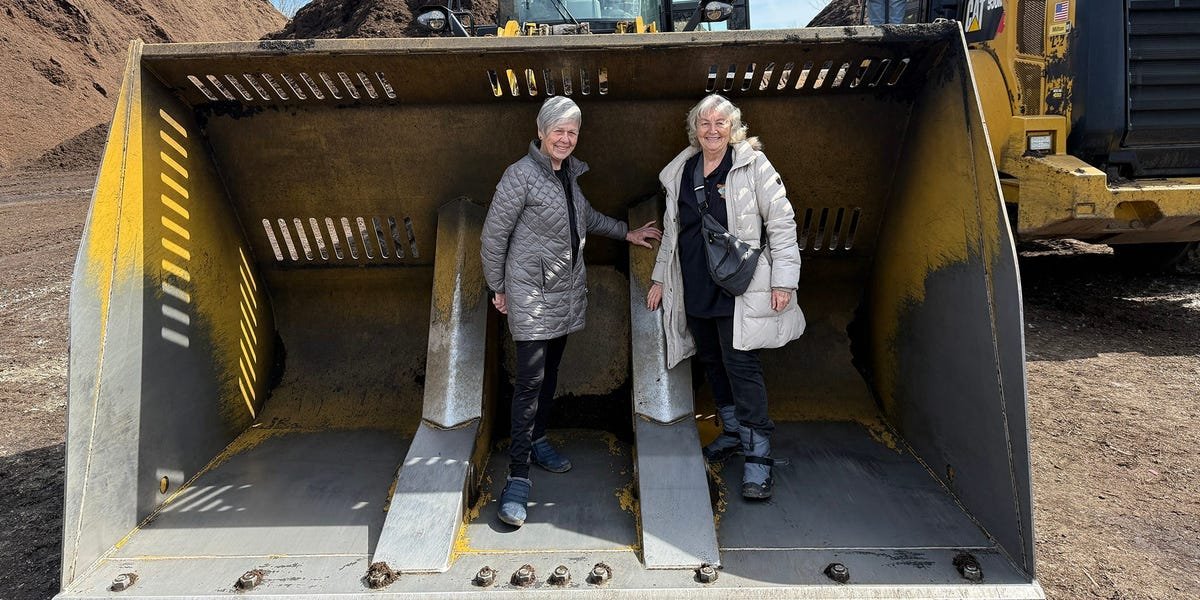
Within a month, I met Marcia, a retired nurse with six grandchildren, a love for travel, and lots of energy. We have been traveling all over Massachusetts ever since then, recently achieving the milestone of visiting one-third of all the cities and towns.


Beth Sobiloff's toyota with

The author travels around in her Toyota. 

Courtesy of Beth Sobiloff


Marcia and I do everything, from planning the day to filming, interviewing, editing, and posting on social media.

This may seem like a big compromise from the original plan to travel across the country. However, I see it as a series of pivots that got me to a place where I’m having a blast, learning a lot, and meeting great people.

We’re having the time of our lives

We usually have breakfast and lunch in every town that we visit, and I can honestly say that we’ve never had a bad meal. We’ve eaten at diners that haven’t changed their prices in 15 years. We’ve been to a feast in an historic restaurant where they cook prime rib on a rotisserie over a huge fireplace. The meal includes a horse-drawn wagon ride, mulled wine or cider, fish chowder made over the fire, and homemade apple pie with a huge dollop of freshly whipped cream. We’ve had Indian, Egyptian, Thai, Hungarian, and Italian cuisine.

I have gravitated to local farms, where we have sampled fresh apples, cider, peaches, strawberries, cranberries, maple syrup, and sweet potatoes, to name a few. We’ve cuddled cows, fed alpacas, watched sheep being sheared, and held baby goats.

Marcia is partial to local shops that house several antique dealers, collectors, and crafters, as well as country stores that stock many locally made items.

We’ve watched bread, savory pies, pretzels, cider doughnuts, roasted coffee, ice cream, and organic mulch being made. We’ve even gotten our hands dirty with clay, dough, and paint.

We keep meeting people who are starting new lives after retirement

We met a school superintendent who took early retirement and opened a bakery. He now admits to working harder than he ever did before. Not to mention, his baked goods are incredible.

We’ve also met a former schoolteacher who had been collecting coins since he was a kid, and now has the world’s largest collection of “Back to the Future” memorabilia, including three Deloreans.

I’ll never forget the woman who ran the Iditarod in Alaska and now runs a business offering trail rides with her huskies and camps for kids, teaching them how to care for and train the dogs.

Retirement is what you make it

We enjoy hearing from people who have been inspired to explore more, go to a restaurant they had never heard of, visit a museum they had been meaning to visit, or go to a shop they hadn’t been to in a while.

What we get out of doing this is in line with healthy aging. We are staying physically and mentally active, engaging with others, and learning new things. And yes, an occasional bowl of ice cream is part of the prescription.

Marcia’s attitude toward retirement is that she gets to create her own schedule rather than operate on someone else’s. She spends her time pursuing many passions, including traveling, arts and crafts, and visiting with family and friends.

My attitude is that I will never consider myself retired if I have dreams to pursue.


Source link

Im-81-years-old-and-I-still-love-going-to.jpeg

I’m 81 years old, and I still love going to the gym. It’s helped me stay social and physically healthy.

When our family moved to Oregon from Southern California in 1974 for my husband’s new job, I fell in love with the Pacific Northwest. But there was one problem: There wasn’t enough sunshine or swimming pools — both of which I had enjoyed in California.

When the community college where I taught offered free memberships at a new gym, I quickly signed up. I expected exercise, but I got so much more.

Over 30 years later, I’m 81, and still going to the gym every other day. It’s still an important part of my health routine.

I found that the gym isn’t just for young people

The weight room is full of young people lifting weights, and they pound their feet on treadmills like the start of the Kentucky Derby.

But the gym is also filled with older people. There’s the 87-year-old woman who runs up and down the stairs “because it feels good,” while her 91-year-old husband maintains a steady pace on the treadmill.

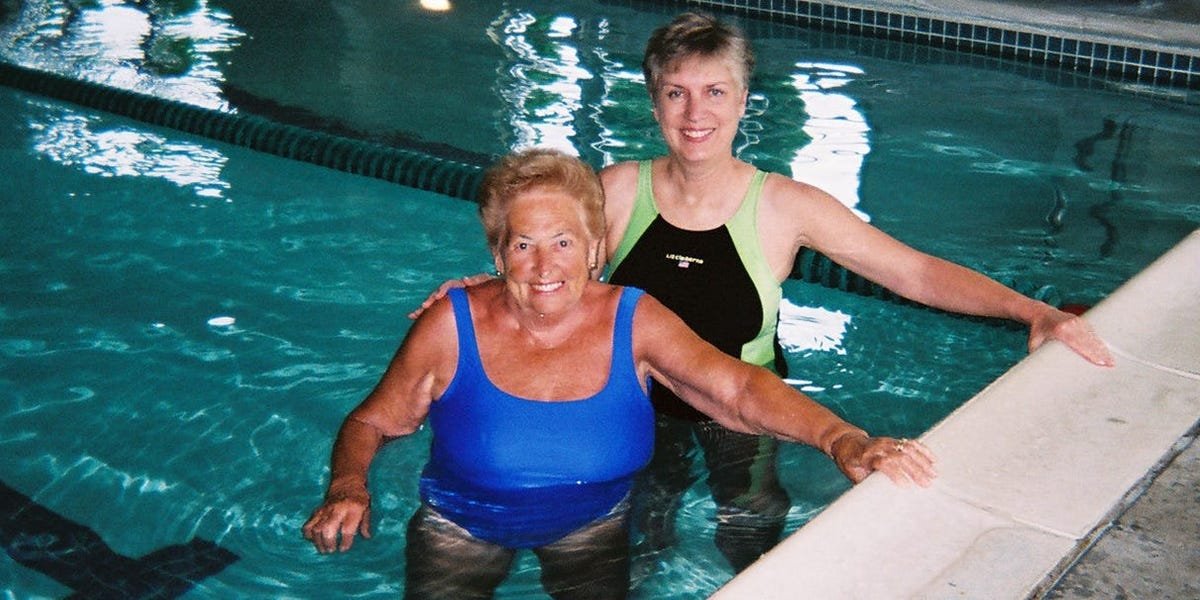
As a swimmer, I’ve met several people around my age, welcoming each other into the pool.

With a somewhat older crowd, I am pleasantly surprised at how disabilities and imperfections are of no consequence in the pool. Surgery scars, including mastectomies and even amputations, are not worthy of the slightest stare or question. The miracle of being in the water is that handicaps and age disappear.


Cynthia Wall and her friends in the pool at her gym

The author says she’s stayed healthy thanks to the pool at her gym.

Courtesy of Cynthia Wall


Even those who enter the pool in a lift achieve equality once they are buoyant. I’ve witnessed physical challenges that make me realize how insignificant my own are.

I was surprised to find deep friendships at the gym

When I first came to the gym to exercise, I didn’t expect to make friends — acquaintances, yes, but not friendships that mattered.

But then I met Maria, an 80-year-old Austrian with an infectious laugh. I heard her in the locker room as she shared a recipe for Wiener Schnitzel with someone. I had seen her in the pool, swimming with her head held high to keep her beautifully coiffed hair dry. I smiled and said goodbye as I left. The next day, I swam alongside her. I switched to a slow breaststroke so I could keep my head out and hear her story — and what a story it was.

A well-to-do Austrian, married to a doctor, she, her husband, and three children were reduced to refugee status under the Russian occupation at the end of World War II. In 1957, they were able to emigrate to the US. Because of their belief in the American Dream, they thrived. Maria often commented on their good fortune; she also taught me European history. She taught me a little German and showed me that laughter is the best antidote for any problem.

Soon, our casual acquaintance became a dear friendship that lasted until her death at 103 in 2022. We spent over 20 years together at the gym, four days a week. I made other friends as well. All of us loved and admired Maria.

I believe moving my body and socializing are keeping me young

Going to the gym multiple times a week has kept me more than young; it’s kept me moving into my 80s.

I have fairly severe scoliosis, and it hurts. Without swimming and core strengthening at the gym, I don’t want to think about how much worse it would be.

Over the years, I’ve learned that going to the gym is the best thing I can do for myself.

I am stronger than yesterday — stronger in my body, stronger in friendships, and stronger in optimism.


Source link

hilary brueck backyard headshot

What ‘healthy fats’ actually are — and how to choose the right ones for your diet

US Health Secretary Robert F. Kennedy Jr. says his diet message is clear: “Eat real food.”

That was his main mantra during a White House press briefing on the new Dietary Guidelines for Americans, released Wednesday.

The new guidelines feature an inverted pyramid, with protein, dairy, and so-called “healthy fats” as the foundational corner of the new American diet.


new pyramid

Protein, dairy, and ‘healthy’ fats are the foundation for RFK Jr.’s new pyramid.

realfood.gov


“Protein and healthy fats are essential, and were wrongly discouraged in prior dietary guidelines,” Kennedy said.

If you’re trying to eat healthier, the problem isn’t that you need more fat — it’s that “healthy fat” is a vague term that means very different things depending on the source.

But what is a healthy fat, exactly? Here’s how nutrition experts say to tell the difference, and how to use that information when you shop, cook, and eat.

A ‘healthy fat’ isn’t just about fat — it’s about the whole food


olive tree

Olive oil is a healthy fat that everyone can agree on. Others spark more debate.

Philipp von Ditfurth/picture alliance via Getty Images


The new federal guidelines don’t provide a strict definition of “healthy” fat, only saying that healthy fats come from whole foods.

Business Insider reached out to the Department of Health and Human Services multiple times, asking for a clear definition of “healthy” fat, but didn’t get an answer.

Typically, when nutritionists talk about healthy fat, what they mean is sources that have:

  • More unsaturated fat and less saturated fat
  • Other nutrients traveling with the fat

Take olives. An olive is a fruit that includes a mix of both unsaturated and — to a much lesser extent — saturated fats. It also has other nutrients in it, including fiber, iron, and vitamin E, plus plant chemicals called polyphenols, which are good for your brain. That’s why olive oil is widely regarded as a healthy choice.

The same goes for chia seeds. They’re high in omega-3 fatty acids, an essential fatty acid that we need to consume because we can’t make it on our own. They’re naturally low in saturated fat, and also provide other nutritional benefits, including decent doses of both fiber and protein.

Walnuts provide another great example. Until the 1990s, they were thought to be bad for your heart, due to their high fat content. It turns out the opposite is true: walnuts are packed with polyunsaturated omega-3s, making them actively good for your heart.

Dr. Joan Sabaté, who pioneered that walnut research in the 90s, said the key is to think about your fats in a broader context, not just focusing on one metric.

“It’s not only the type of fat, but the source of the fat, and how the fat is together with [other nutrients],” Sabaté, a Blue Zone epidemiologist who directs the Center for Nutrition, Lifestyle and Disease Prevention at Loma Linda University, told Business Insider.

What’s the deal with saturated fat?


buttered bread

Butter is a classic example of a food that’s high in saturated fat. Fine, in moderation.

ArtMarie/Getty Images


Unveiling the new guidelines, Kennedy said, “We are ending the war on saturated fats.”

The new food pyramid features beef, butter, and whole milk high up.

“Eating a little bit of animal products is good,” Sabaté said. Red meat and full-fat dairy are packed with nutrients like vitamin B12 and iron, for example, which is hard to find in plants. Experts agree that a little saturated fat is not that bad for your body.

Still, it’s controversial that the new guidelines front-load meat and animal products as “healthy” fats, and mention them first.

Meat and dairy contain significantly more saturated fat than plants like olives and avocados. Research has linked diets rich in red meat and dairy to a higher incidence of chronic health issues, including heart disease and cancer. Animal products are also more pro-inflammatory than whole grains and vegetables.

“That is not the way to go,” Sabaté said, echoing concerns that many health experts shared this week.

(Plus, the new guidelines still recommend limiting your saturated fat consumption to 10% of total daily calories, which means you can’t actually live on a diet of butter, red meat, and cream.)

The takeaway: How to apply this to your diet


drizzle olive oil

Fat packs a punch, more than doubling the calories per gram of a protein or carbohydrate.

AzmanL/Getty Images


So, what should you cook with tonight?

Most days, consider swapping butter for olive oil in your frying pan. That will mean more heart-healthy fats get in your system.

The best change you can make, though, is to curb ultra-processed snacks. Packaged cakes and cookies are often loaded with saturated fat from cooking oils. If you had a buttery steak for dinner, and skipped after-dinner snacks, that could be a good thing.

Don’t fear fat — but don’t center your diet on it either.


Source link