The author of the viral essay warning about impending AI disruption says he couldn’t wait any longer to get the word out.
“Let’s say there is just a 20% chance of it happening, which is maybe realistic, maybe underselling it,” Matt Shumer, GP of Shumer Capital, said during an interview with Business Insider. “Even if there is a 20% chance of this happening, people deserve to know and have time to prepare.”
The people in tech who previously warned about AI’s impact were mostly speaking to others in the industry, he said. Shumer said he wanted something that spoke to his dad, a lawyer who is just a few years from retirement and is hopeful he can run out the clock on the potential massive change on the horizon.
He’s certainly found an audience.
His essay, titled “Something Big is Coming,” has been viewed over 60 million times on X alone, as of Wednesday evening. In the nearly 5,000-word post, Shumer wrote that AI’s disruption to people’s lives could be “much bigger” than COVID — a comparison that has drawn some pushback online. Shumer’s past controversy over an open-source model he promoted in 2024 has also come under scrutiny, after AI researchers discovered the model didn’t live up to his performance claims. He previously apologized, saying “I got ahead of myself when I announced this project.”
In his essay, Shumer also wrote that what he’s seeing in tech is likely what awaits other industries.
“I don’t know that this is coming for sure, but I think a lot of us in tech really see this progress, and it’s frankly dizzying, and there’s a good chance of this,” he said. “And the more people know, the better.”
Shumer is not alone in his fears about the future.
Anthropic CEO Dario Amodei, who is known for writing eyebrow-raising essays of his own, has said that up to half of all entry-level, white-collar jobs may be wiped out in the next one to five years. xAI CEO Elon Musk has called AI a “supersonic tsunami” that will quickly eliminate jobs that don’t involve physical labor.
Shumer said even he is unsettled about the prospects of AI. After all, he’s 26 and still near the beginning years of his career. In 2020, he cofounded OthersideAI, which later spawned HyperWrite, an AI-assisted writing tool.
“I don’t know how many more years of my career there will be if this all actually comes to pass,” he told Business Insider. “So, it’s frankly a little confusing and terrifying for someone like me.”
Part of the issue is that AI is unlikely to affect all industries in the same way or at the same time, making career advice highly dependent on a person’s specific situation.
“If you’re a nurse, you’re probably going to be fine for quite some time,” he told Business Insider, adding that junior associates at law school face significantly more risk because many of the introductory-type tasks they do are already being targeted by AI companies.
In his essay, Shumer wrote that his realization of what’s in store came after his experience with OpenAI’s GPT-5.3-Codex, which was released last week. In its release notes, OpenAI said GPT-5.3-Codex was its “first model that was instrumental in creating itself.”Shumer wrote that AI is now capable of doing his technical work.
As for the other tasks, Shumer has been quite open about how AI helped him write his viral essay about AI. He said he spent hours working with Claude to craft his message.
“It did help a lot,” he told TBPN on Wednesday, “and I think that’s kind of the point.”
It’s why Shumer’s message to everyone who turned away from AI, perhaps after a clunky experience with an early version of ChatGPT years ago, is that they should seize the opportunity to see the breadth of what the technology can do now.
“If you look back 10 years from now and this did come to pass, you’ll be very glad you did,” he told Business Insider.
When I first found out I was pregnant, I frankly didn’t put much thought into long-term childcare plans. Living in New York City, my husband and I knew we wouldn’t have the traditional village available to us — my parents, while local and thrilled to get a first grandchild, are older and weren’t particularly eager to volunteer for solo babysitting, while his parents live thousands of miles away.
But we were in a uniquely lucky situation: We both happened to have flexible, largely remote jobs.
For the first few months of my surprisingly generous parental leave, my husband and I, cocooned in newborn bliss (and perhaps slightly delirious from sleep deprivation), didn’t stress about what would happen when I went back to work. I figured we could make it work through a combination of creative time management and strategically scheduled naps — at least until our daughter was eligible for 3-K, free schooling available in New York City for kids the year they turn 3.
My husband became the primary parent
Surprisingly, this plan ended up working, for the most part, and for just shy of a year, we managed a fairly even 50-50 split in parenting duties. As time went on and my own work ramped up and the baby potato turned into a sprinting toddler, it became clear that my husband would need to become the primary parent.
It wasn’t something either of us had considered before having a child, but it made the most sense: He found far greater fulfillment in being a father than he’d ever found in his career, whereas I had always defined myself by my work as a writer and editor. He kept his job but scaled back, working largely in the evenings and weekends so he could be free during the day for stay-at-home parenting.
As our daughter became a toddler, she blossomed under my husband’s full-time care, with constant adventuring and frequent playdates keeping her days busy. We didn’t need outside childcare — but as it turned out, she did.
I’d considered traditional childcare, but couldn’t stomach the cost
New York City has notoriously high childcare costs.
The author says traditional childcare was too expensive in New York City.
Courtesy of Michael Matassa
In the interim between our delicate balancing act and deciding my husband would drastically scale down his work, I considered a number of different options, from traditional daycares (upward of $2,500 a month in my neighborhood for full-time programs) to nanny-share arrangements with other local families (maybe slightly cheaper, but a pain to coordinate).
We were lucky in that we were able to avoid childcare costs, which would have effectively canceled out one of our salaries, though I still toyed with the idea of enrolling her somewhere part time to get her used to the idea in case our situation changed.
Enter Barnard College’s Center for Toddler Development.
I first heard about the program in a local moms’ book club I’d joined. One of our first reads was “How Toddlers Thrive” by Tovah P. Klein, a prominent child psychologist — and incidentally the then-director of the Toddler Center. Another mom in the book club with a daughter two years older than mine mentioned she was now applying.
I was frankly flabbergasted when she explained the details. It’s part research program, where the toddlers are minded by teachers and selected students from the college’s graduate program and observed for published research purposes from behind a one-way mirror, and part “school,” albeit an extremely part-time one, with each “class” of toddlers meeting only twice a week for two hours each day for the duration of the school year.
I was intrigued by the program’s unique “gentle separation period” and its said mission to help toddlers have a positive first school experience while supporting healthy social and emotional development through hands-on, child-guided play.
At that point, my daughter was only 18 months old (the halfway point to our 3-K end goal), but I’d already started to suspect that separation might be an eventual issue. With two working-from-home parents, she was used to having us around constantly — and had never had a babysitter.
The few times we’d tried to step out to grab a coffee and handed her to a grandparent, she would shriek like she was being abandoned. Over the next several months, she also grew more shy, coinciding with her stranger danger peaking.
We paid $7,500 for our 2-year-old
Convinced our future would be filled with school refusals and drop-off meltdowns, I hardcore pitched the Toddler Center to my husband for the coming school year. We didn’t need it for childcare, but I became convinced we did need it to help give our daughter the gentlest, most gradual introduction to being away from us. He was less convinced, sure she would grow out of it and be OK with separating by 3-K, but agreed in the end.
If the program details were mind-boggling, the price point was eye-watering. Though there isn’t a set, publicly announced tuition rate, the Toddler Center offers sliding-scale tuition and payment plans to make the program accessible to a broader range of the population. According to its website, a third of Toddler Center families pay tuition on a sliding scale (I assume the higher-profile alum parents like Amy Schumer, Sarah Jessica Parker, and Robert De Niro paid full sticker price for their kids to attend).
After submitting a sliding-scale tuition application, which required forking over the previous year’s tax returns to prove we were indeed not flush with cash, we landed on $7,500 as the final figure for our almost 2-year-old to take her first baby steps toward school.
At first, it was torturous
It did not go well.
The author says at first, her daughter wasn’t comfortable with either of her parents leaving.
Courtesy of Michael Matassa
The first few weeks of the program allowed the parents in the classroom, gradually moving us farther from it (a separate, no-toys-allowed room in the back, meant to be unappealing to the kids) to encourage the toddlers to ignore them and play in the main classroom area. That trick didn’t work on our daughter, who simply sat next to the chair of whichever of us had taken her in that day, chattering happily as we tried to gently encourage her to go away.
As I’d dreaded, the initial actual separation — when parents would bring their kids into the classroom and tell them they were leaving — was horrendous. The Toddler Center mandated that only one parent or caregiver drop off their child each morning.
For the first few weeks after separation, we could both sit in the observation room, where we were treated to a front-row show of our daughter sobbing hysterically and trying to reason with the grad students to open the door she was convinced we were right behind. It was excruciating, and plenty of tears were shed on our end as well.
There was virtually no improvement for months, which was far longer than I expected. And I felt an immense amount of guilt for having come up with this idea in the first place: Were we actually traumatizing her instead of helping her? Had I epically miscalculated this? Did I pay $7,500 to torture my toddler and myself?
I was wracked with doubt, and we debated withdrawing her from the program before the first semester had even finished. It was particularly hard on my husband, who, as the primary parent, was typically the one dropping her off and dealing with the meltdowns — and who also really missed her on school days.
Suddenly, though, and for no particular reason at all, it got better. A lot better.
Instead of sobbing by the door for a full hour and a half, she started interacting with the other kids. She found a favorite grad student she’d attach herself to. She played happily on the classroom slide. And eventually, she comforted the other toddlers during their hard separation days, assuring them their mommies or daddies would be back.
The Toddler Center was expensive, but extremely worth it for us
While it was difficult for my husband to be apart from his little buddy for the few hours a week she was at the program, they turned it into an opportunity for new adventures. In the spring semester, he began biking with her to school, stopping to pick up flowers on the way there and back. Another tradition became that he would bring her a blueberry muffin from a local café every day at pickup. These small rituals helped them bond even more.
The author says the $7,500 she spent was worth it.
Courtesy of Michael Matassa
I don’t pretend to have a handle on the intricacies of toddler psychology, and I can’t tell you what the flipped-switch moment was where it finally clicked for my kid that being left at school with her teachers didn’t mean we were gone forever. And yes, for the record, she still cried during drop-off the first few weeks of 3-K.
But I am convinced that completing the Toddler Center program drastically reduced her adjustment period for “real school.” Tossing her into the deep end for six hours a day, five days a week, was simply not the right option for our family.
In the end, I’m glad I listened to my gut, dug into our pockets, and toughed out the tears — and I’d like to think my daughter, somewhere deep down in her toddler brain, is too.
This story is available exclusively to Business Insider
subscribers. Become an Insider
and start reading now. Have an account? .
Former Apple designer Jony Ive’s firm worked together for five years to fashion the new Ferrari interior.
The sports car has tons of physical buttons that Ferrari says enhance “tactility” and reference its legendary racing history.
The Italian brand has also unveiled a new name for its EV project: it’s now called the Luce.
Jony Ive designed the iPhone, which famously ditched most of a phone’s physical buttons for virtual ones. His take on the new Ferrari interior shows a very different approach.
Ferrari has spent five years working with LoveFrom, the design studio founded by Ive and fellow Apple design alum Marc Newson, to shape the interior of its first EV, the Luce.
The result is a button-heavy, screen-forward cabin that blends Ferrari’s performance ethos with high-end, Apple-style minimalism.
Ferrari hasn’t released photos of the exterior or a full list of specs, but earlier disclosures suggest the Luce will be a four-door, four-seat electric car capable of reaching 60 mph from a standing start in 2.5 seconds. It’s expected to have a 330-mile range.
The Luce marks Ferrari’s leap into electrification — with an interior wrapped in Ive’s distinctive design language. Here’s what the interior looks like.
A five-year partnership to build a classic racer – but with a battery.
Ferrari’s all-new EV will feature an interior with elements designed by LoveFrom, a creative collective founded by Jony Ive and Marc Newson. Ferrari
Ferrari — long synonymous with grunting, high-performance racers — is moving into the near-silence of electric power.
To guide that transition, the automaker worked with LoveFrom to refine the interior’s materials, shapes, and controls.
The result looks nothing like most EVs. The Luce’s cabin is lined with tactile hardware — rows of machined-metal toggles and physical switches designed to be clicked, not swiped.
For any curious Apple fans, there are some familiar flourishes: brushed aluminum, slim leather surfaces, and a minimalist layout.
Oh, wow. Buttons on the steering wheel!
The new Ferrari will have a ton of interior buttons, including on the steering wheel. The company said its focus is on “tactility, clarity, and intuitive interaction.” Ferrari
The slim, three-spoke steering wheel keeps things simple — starting with directional controls mounted directly on the wheel.
More buttons sit beneath the silver spokes, putting most core functions within thumb’s reach.
On the left are controls for cruise, drive modes, and dash lighting. On the right are power modes, suspension settings, and wipers.
Volume and track controls are tucked behind the wheel, while paddles manage torque delivery, mimicking the engagement of traditional gear changes. Even in an EV, Ferrari wants drivers to feel like they’re choosing their own gears.
An almost Apple-like tablet in the middle — but with knobs and switches.
The Luce’s interior features familiar design cues for iPhone users: the infotainment system has curved edges similar to Apple’s products and blends side-mounted physical buttons for added control. Ferrari
The center infotainment display looks a bit like an oversized Apple Watch. Ferrari’s system comes complete with fan-speed settings, heated-seat controls, and a built-in circular clock.
The tablet-like screen sits on a ball-and-socket joint, allowing it to swivel toward either the driver or the passenger.
Ferrari also says the silver bar below the screen is a palm rest — perfect for drivers to stabilize their hand while switching Spotify playlists in a sharp corner.
Glass all around — and a funky key option.
Ferrari will use high-strength glass to make its gear selector. Ferrari
Ferrari is leaning heavily into glass for the Luce’s interior, using Corning Gorilla Glass across many hard surfaces — including the gear selector.
The company says the material is more crack-resistant than typical smartphone glass and is designed to withstand scratches from daily use.
There’s also a touch of whimsy in the key fob. The square Ferrari badge is the key: slot it into the console, and the glass fob turns black, disappearing into the surrounding trim.
Pick it up and walk away, and it glows Ferrari’s signature racing yellow.
A helicopter-like speed-reader.
Ferrari said its instrument cluster mixed digital interfaces with “historic automotive cues.” Ferrari
The gauge cluster behind the steering wheel takes inspiration from helicopter cockpits.
Ferrari says the digital display is mounted directly to the steering column, keeping critical high-speed information locked in the driver’s line of sight.
The setup is also a first for Ferrari.
At the center is a hybrid speedometer: a physical needle floating over layered digital driving data, all viewed through a curved lens. While most modern cars have abandoned analog needles entirely, Ferrari kept one — blending old-school driving cues with a fully digital display.
An all-new name for the all-new EV.
Ferrari is changing the name of its all-electric project. The car was initially called the Elettrica, but will now go by the name Luce. Ferrari
Ferrari first revealed its all-electric project in October 2025 under the working name “Elettrica.” Now, it has an official name: the Luce (pronounced LOO-che).
In Italian, luce translates to “light.”
The next reveal will come in May.
Ferrari executives (from left – CEO Benedetto Vigna, Chairman John Elkann, and design chief Flavio Manzoni) partnered with LoveFrom’s design leads, Jony Ive (in blue) and Marc Newson (in red). Ferrari
The partnership between Ferrari and LoveFrom — first reported in 2021 — resulted in an interior designed to signal the automaker’s ambition to reimagine the electric-car experience from the ground up.
It’s an unusual move for Ferrari, which rarely brings in outside design firms.
“The team focused on perfecting and refining every solution to its purest form,” the automaker said in a press release.
The rest of the car, which was developed in-house, will be revealed in May. Ferrari has not confirmed pricing or availability for the new EV yet.
When our family moved to Oregon from Southern California in 1974 for my husband’s new job, I fell in love with the Pacific Northwest. But there was one problem: There wasn’t enough sunshine or swimming pools — both of which I had enjoyed in California.
When the community college where I taught offered free memberships at a new gym, I quickly signed up. I expected exercise, but I got so much more.
Over 30 years later, I’m 81, and still going to the gym every other day. It’s still an important part of my health routine.
I found that the gym isn’t just for young people
The weight room is full of young people lifting weights, and they pound their feet on treadmills like the start of the Kentucky Derby.
But the gym is also filled with older people. There’s the 87-year-old woman who runs up and down the stairs “because it feels good,” while her 91-year-old husband maintains a steady pace on the treadmill.
Every time Cynthia publishes a story, you’ll get an alert straight to your inbox!
Stay connected to Cynthia and get more of their work as it publishes.
As a swimmer, I’ve met several people around my age, welcoming each other into the pool.
With a somewhat older crowd, I am pleasantly surprised at how disabilities and imperfections are of no consequence in the pool. Surgery scars, including mastectomies and even amputations, are not worthy of the slightest stare or question. The miracle of being in the water is that handicaps and age disappear.
The author says she’s stayed healthy thanks to the pool at her gym.
Courtesy of Cynthia Wall
Even those who enter the pool in a lift achieve equality once they are buoyant. I’ve witnessed physical challenges that make me realize how insignificant my own are.
I was surprised to find deep friendships at the gym
When I first came to the gym to exercise, I didn’t expect to make friends — acquaintances, yes, but not friendships that mattered.
But then I met Maria, an 80-year-old Austrian with an infectious laugh. I heard her in the locker room as she shared a recipe for Wiener Schnitzel with someone. I had seen her in the pool, swimming with her head held high to keep her beautifully coiffed hair dry. I smiled and said goodbye as I left. The next day, I swam alongside her. I switched to a slow breaststroke so I could keep my head out and hear her story — and what a story it was.
A well-to-do Austrian, married to a doctor, she, her husband, and three children were reduced to refugee status under the Russian occupation at the end of World War II. In 1957, they were able to emigrate to the US. Because of their belief in the American Dream, they thrived. Maria often commented on their good fortune; she also taught me European history. She taught me a little German and showed me that laughter is the best antidote for any problem.
Soon, our casual acquaintance became a dear friendship that lasted until her death at 103 in 2022. We spent over 20 years together at the gym, four days a week. I made other friends as well. All of us loved and admired Maria.
I believe moving my body and socializing are keeping me young
Going to the gym multiple times a week has kept me more than young; it’s kept me moving into my 80s.
I have fairly severe scoliosis, and it hurts. Without swimming and core strengthening at the gym, I don’t want to think about how much worse it would be.
Over the years, I’ve learned that going to the gym is the best thing I can do for myself.
I am stronger than yesterday — stronger in my body, stronger in friendships, and stronger in optimism.
In a 2019 graduation speech at George Washington University, she said leaving law was “one of the biggest, craziest jumps” she ever made.
“It wasn’t a cliff; it was the federal courthouse here in Washington, DC,” she said.
Months before she was due to start as a law clerk for a federal judge, she had an epiphany.
“It wasn’t my dream,” she said. “What I really wanted was to go back to my roots in journalism. I still had that nagging hope that one day I could really make it in television news.”
Guthrie spoke with the judge. He asked why she didn’t come work for him for a year, since it would help her career, especially since she didn’t have a job lined up.
“And that’s when I looked at him and told him: ‘I know you’re right. What you say makes perfect sense,'” she said. “‘But I also know myself, and if I don’t do this, right this minute, I will never have the guts again.'”
From 2004 to 2006, she was Court TV’s legal-affairs correspondent.
She covered cases like the Zacarias Moussaoui trial, the Boston clergy sex-abuse scandal, and the Scooter Libby case.
Miranda Kerr, 42, says choosing forgiveness helped her co-parent peacefully with her ex, Orlando Bloom.
On Tuesday’s episode of the “We Need To Talk” podcast, the former Victoria’s Secret Angel spoke about the dynamics of her relationship with Bloom, whom she was married to from 2010 to 2013.
“I think because from day one, Orlando and I had done a lot of spiritual work, and forgiveness was a big part of that. Forgiving each other, forgiving ourselves, creating peace within the situation,” Kerr told podcast host Paul C. Brunson.
The model said she and Bloom recognized their relationship “was not bringing out the best in each other.” When they eventually separated, she said they agreed to put their son, Flynn, first.
“Let’s not make it about us. Let’s make it about what’s in the best interest for Flynn. But at the same time, let’s make sure that we completely forgive each other, make peace with each other, because otherwise it really weighs on you,” Kerr said.
Every time Amanda publishes a story, you’ll get an alert straight to your inbox!
Stay connected to Amanda and get more of their work as it publishes.
Having “animosity” toward someone because “they didn’t live up to your expectations” can be exhausting, especially when that person will still remain in her life, she said.
Kerr said she and Bloom chose to forgive each other and stay peaceful so they could maintain a “harmonious” co-parenting relationship.
“When you have a child with someone else, they’re always going to be that person’s parent for the rest of their life. There are going to be situations where you’re going to need to talk if you like it or not. So why not make it harmonious?” Kerr said.
On the podcast, Kerr also spoke about her relationship with her husband, Snapchat cofounder Evan Spiegel, whom she married in 2017.
She said Spiegel, who is also a child of divorce, didn’t want her son Flynn “to ever feel any of this stuff that he felt.”
“And so he makes an effort to be peaceful and to be kind, and he knows that I love him and he knows that he’s the man for me,” Kerr said.
In fact, Kerr said that Spiegel helped her set better boundaries with Bloom.
“In the beginning, when Orlando and I had recently separated, I was just very, very giving, as always, and wanting to please. And if Orlando had a last-minute change — and he would say this himself — I would always accommodate him to that,” Kerr said.
She added that her husband encouraged her not to be afraid to say no.
“He’s like, you know, you don’t have to. So you can be clear and merry and say, ‘I’m so sorry that your plans changed, but we planned according to this,'” Kerr said, recalling Speigel’s words.
Kerr isn’t alone. Other celebrities have also opened up about how they navigate co-parenting after splitting from their exes.
Kristin Cavallari told Business Insider in 2020 that she was focused on putting her kids first amid her split from ex-husband Jay Cutler.
“They’re the only things I care about right now,” she said. “And so I’m removing any of my emotions or feelings and just thinking about them and putting them first.”
In a 2022 podcast appearance, Kim Kardashian spoke about the challenges of co-parenting with Ye, formerly known as Kanye West. The reality TV star said she protects her ex-husband in the “eyes of my kids, for my kids.”
“One day my kids will thank me for not sitting here and bashing their dad when I could,” Kardashian said.
This story is available exclusively to Business Insider
subscribers. Become an Insider
and start reading now. Have an account? .
We’ve asked Wall Street stars about the books that informed both their careers and personal growth.
The list includes biographies of billionaires and handbooks on leadership and decision-making.
We’ve compiled their 35 picks for those kick-starting their career in finance.
Aspiring to build a career on Wall Street? While there’s no one single playbook, one of the best ways to learn the ropes is by picking up the books that helped industry insiders get to where they are today.
Over the past few years, we’ve asked Wall Street’s rising stars to share the titles that helped them understand their industries, sharpened their skills, and inspired their career paths.
Their recommendations span everything from biographies of billionaires to practical handbooks on time management, decision-making, and leadership.
Whether you’re just starting or looking to level up, this list of 35 books offers a look at what ambitious professionals on Wall Street have read—and why it matters.
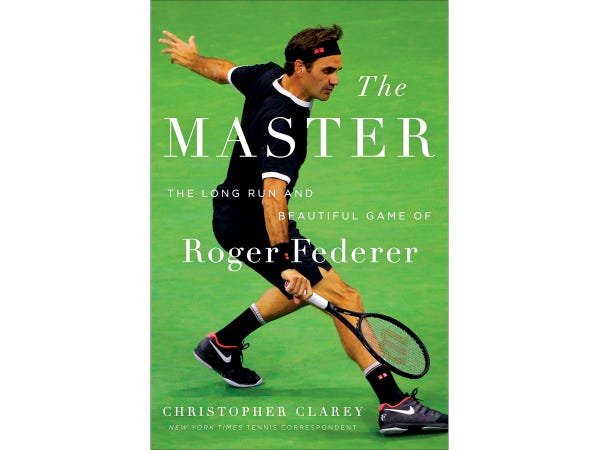
“The Master: The Long Run and Beautiful Game of Roger Federer” by Christopher Clarey
Amazon
“I recently read ‘The Master, ‘ the biography of Roger Federer, who some would argue is one of the best (tennis) players, if not the best player, of all time. Every time I read one of the tennis biographies, you’re reminded that it’s a very all-consuming commitment to be one of the greatest. At least in the case of tennis, it’s a very lonely existence. You’re the only person out there. You in your mind battling it out. The key is making sure you surround yourself with the right team.
“Every player, at least in the major tournaments, has a player’s box. You’ll have the family, the coach, and some friends in the player’s box.
“The lesson I think is who’s in my player’s box? How do they help me keep going? And, similarly, at least in the investing world, am I in the player’s box for others? How do I be the best person on the sidelines supporting?”
– Vinay Trivedi, General Atlantic
“How to Lead: Wisdom from the World’s Greatest CEOs, Founders, and Game Changers” by David Rubenstein
Amazon
“It’s kind of an anthology of various industries. A key takeaway from these stories is the importance of finding your passion. I’m obviously very passionate about finance.”
– Will Boeckman, Citadel Securities
“Why We Sleep: Unlocking the Power of Sleep and Dreams” by Matthew Walker
A
“This book explores sleep’s impact on your body and mind.”
“Before the coronavirus pandemic, I was a daily 4:30 A.M. workout warrior and advocate for holistic nutrition, but I certainly was not prioritizing sleep in my health equation. This was an eye-opening and convincing read that has helped me to get significantly more shut-eye.”
– Lacey Vigmostad Giliberto, JP Morgan
“I’m a bad sleeper. This book puts in layman’s terms why you need to sleep and why it’s important for so many reasons.”
– Julia Dworkin, Jefferies
“The Short and Tragic Life of Robert Peace” by Jeff Hobbs
Amazon
“It was a really interesting dichotomy. It’s about a young African-American man who grew up in a rougher neighborhood in Newark but went to Yale and ended up being really successful in his academic work. But he struggled at times to mesh the two worlds together.”
“It shows that the path to equality isn’t always as easy and seamless. Going to Yale on a scholarship, it can still be really hard for people. People often don’t get that.”
-Mir Subjally, Compass Rose Asset Management
“Liar’s Poker” by Michael Lewis
Amazon
“I am a little biased because I started my career at Citigroup, which is formerly Salomon Brothers. I also recommend ‘Panic!’ by Michael Lewis, and I generally like all the ‘Market Wizards’ series, which are helpful in knowing what fits your trading style and what doesn’t.”
-Tian Zeng, Nirvana Capital
“Give and Take” by Adam Grant
Amazon
“It shows that it’s not just about you. In the grand scheme of things, it’s how you help others along the way. How you can grow the pie for everyone.”
– Rachel Murray, Moelis
“It’s about striving to be somebody who gives to others and then expects nothing in return,” she said, “and how ironically fruitful that can be for your own life and career.”
– Lacey Vigmostad Giliberto, JP Morgan
“Young Money” by Kevin Roose
Amazon
The book holds insights into “all the wrong reasons why you can go into finance.”
– Daniel Costanza, previously a head of data analytics at Yieldstreet
“Dare to Lead” by Brené Brown
Amazon
“Leaders are in the arena, and there are lots of people in the stands who are there just to criticize or comment on what you’re doing. But being in the arena takes courage. It gives you a lot of advice around, how do you think about having that courage?”
– Alexis Rosenblum, Capital Group
“The Most Important Thing” by Howard Marks
Amazon
“It taught me that all decision-making should be driven by the gap between expected value and market price, and expected value is calculated by weighing each outcome by its probability of occurring.
“Second-level thinking is all about finding value that others don’t appreciate yet. It’s risk/reward times the coefficient of likelihood for being right.”
-Mark Stearns, Goldman Sachs
“Active Portfolio Management: A Quantitative Approach for Producing Superior Returns and Selecting Superior Returns and Controlling Risk” by Richard Grinold and Ronald Kahn
Amazon
“It’s pretty technical, but a must-read for any quant.”
-Robert Lam, Man Group’s Man Numeric
“Bad Blood: Secrets and Lies in a Silicon Valley Startup” by John Carreyrou
Amazon
“Theranos founder Elizabeth Holmes was a few years ahead of me at Stanford. It’s one of the greatest diligence misses of all time. As you think about that as investor, there are a lot of lessons to be learned.”
-Katherine Wood, TPG
“Originals: How Non-Conformists Move the World” by Adam Grant
Amazon
“I spend a lot of time with founder-led companies within the tech world. I like working with them because they’re very focused on disrupting the status quo, not just in the businesses they’re building but in anything they do, and that includes working with bankers and advisors writ large.”
“They really force their advisors to think outside the box and challenge the traditional way of doing things. Part of Adam Grant’s book is talking about what makes founders founders, and it’s been incredible watching them ask a question that might be perceived as basic, but there’s really sort of that double layer of, ‘Why is it being done this way, and why can’t we do it in a better, more efficient way?'”
– Lalit Gurnani, Goldman Sachs
“The Happiness Equation” by Neil Pasricha
Amazon
“He wrote this book that really shares some tips about how to have a happier life and ways that you can streamline things in your work; how to find a better work-life balance; and how to think about where you’d like to spend your time and how you’re spending your time and the types of things you’re investing in.”
“I’ve picked up so many helpful tips and tricks from there. I feel like it’s a must-read for people — financial-related or not, I think it applies to all different industries — on really how to take a step back and identify what is meaningful to you. And are you spending the right amount of time on things that you deeply care about versus things that are just, you know, background noise?”
– Samantha Merwin, BlackRock
“Drive: The Surprising Truth About What Motivates Us” by Daniel Pink
Amazon
“I always thought a lot about what motivates people, how humans work, and what motivates them. I really appreciated his research and his take on that.”
– Julia Jaskólska, HarbourVest
“The Effective Executive” by Peter Drucker
Amazon
“It’s one of the best management books. I think what’s unique about the book is when I first looked at the title, I was a little bit intimidated by it — like, this is just for executive positions.
“But he looks at everyone being an executive in their role, and he provides some extremely practical advice on how to become more effective in anything we do in our everyday life. Some are well-known — such as time management, focusing on strengths.
“Even those obvious things that he brings up, he makes it so simple to apply in your everyday life. For example, on time management, there are just two questions you need to ask yourself on a regular basis: What would happen if I don’t do certain things? And can these things be done by somebody else?
“That helps you to eliminate a lot of time-wasters and use time more wisely. Super simple, but at the same time, quite practical.”
– Mikhail Krayzler, Allianz Global Investors
“The Obstacle Is the Way: The Timeless Art of Turning Trials Into Triumph” by Ryan Holiday
Amazon
“It’s a book framed through the teaching of Marcus Aurelius, who was also a Roman emperor, and it covers how to optimize situations and make the best out of everything. The book does a great job of translating philosophy into modern context.”
“As for how that translates to me: Clients expect a trusted advisor to maintain poise and equanimity in situations that are stressful to them. So this has been helpful in taking a teaching that is 2,000-plus years old and transferring it to the 21st century.”
– Christopher Oglesby, Bank of America
“How to Win Friends and Influence People” by Dale Carnegie
Amazon
“Everything in the investing business is relationship-based, and Henry and George, the KKR founders, often talk about doing business with people you like and trust. This is a book I’ve read three or four times and is really a staple.”
– Evan Kaufman, KKR
“Factfulness: Ten Reasons We’re Wrong About the World — and Why Things Are Better Than You Think” by Hans Rosling
Amazon
“What the author is trying to do is to help the reader look at the world and analyze global trends in a more objective way. In a very engaging and comical way, he shows you that human beings tend to think that the world is more dramatic than it really is. So people’s brains are systematically misinterpreting the state of the world.
“Something that really hits on that point is the beginning of the book. He presents the reader with a set of 13 questions. Each question has three multiple-choice answers. The bottom line is that most people actually score lower than the theoretical chimpanzee would have on these questions.
“He tries to walk you through a formula to avoid looking at the world in this overly dramatized way. I think he’s not talking specifically about the financial markets, but I think it’s so relevant to investing because this is part of the way you can capitalize on opportunities.”
– Unoma Okolo, Artisan Partners
“Lords of Finance: The Bankers Who Broke the World” by Liaquat Ahamed
Amazon
“It’s a great book about monetary policy in the Depression era that has major implications for how monetary policy and currencies have evolved.”
– Phil Salinger, former Bridgewater Associates
“Mindset” by Carol Dweck
Amazon
The book emphasizes “how a growth mindset — or the belief that talents can be developed with hard work and good strategies and input from others — can enable much better outcomes than people with a fixed mindset, which is believing that talents are just innate gifts.”
“The reason that a growth mindset matters so much is that it fosters an emphasis on learning and intellectual curiosity instead of trying to seem like the smartest person in the room, and that’s something that I often reflect on for my own personal development as well, as a quality to look for as we bring on really amazing management teams.”
– Lexie Bartlett, General Atlantic
“Drawdown: The Most Comprehensive Plan Ever Proposed to Reverse Global Warming” edited by Paul Hawken
Amazon
“For me, it’s a game plan of how to actually seek solutions to the biggest existential threat that we actually face as a species and as a planet. Whenever I introduce people to the book, you see people get obsessed with the kinds of things that we can be doing, whether that’s regenerative agriculture, renewable energy, or reducing food waste.”
– Jay Lipman, Ethic
“Beating the Street” by Peter Magellan
Amazon
“Being a Fidelity person, I had to pick a Peter Lynch book. Beating the Street has been one of my favorites, such a classic. It’s about how Peter ran Magellan day-to-day. And so I’ve just found it to be an excellent guide to investment processes for new fund managers.”
– Jennifer Fo Cardillo, Fidelity
“Security Analysis” by Benjamin Graham and David Dodd
Amazon
“Much has been said about ‘Margin of Safety’ over the years, but in my opinion nothing quite compares to the original “Security Analysis” by Benjamin Graham and David L. Dodd. They epitomized the concept through their careful approach, still relevant to this day.”
– Paul Kamenski, Man Group’s Man Numeric
“Shoe Dog” by Phil Knight
Amazon
“I recently read ‘Shoe Dog,’ which is Phil Knight’s autobiography and the story of how he founded Nike. I chose it because our firm is, in some respects, a startup, as we are launching new lines of business and building upon others, and I wanted to learn about an entrepreneur’s success story.
Nike certainly had some difficult and existential issues in its early years, and the book was a good reminder about the importance of perseverance and believing in the value of one’s work.”
– Jackie Klaber, Rockefeller Capital Management
“Fooling Some of the People All of the Time,” by David Einhorn
Amazon
“It is an interesting read, and I enjoy how David Einhorn seems so relentless when he believes in something.”
– Tanaka Maswoswe, Carlyle Group
“The Ride of a Lifetime: Lessons Learned From 15 Years as a CEO” by Bob Iger
Amazon
Bob Iger, a former CEO at Disney, “early on saw the need to create digital channels for his customers and understood the virtuous cycle he could create around the right types of content, which informed his M&A strategy. Some of the M&A moves that he did in the preceding 10 years were really prescient.”
– Tyler Parker, EQT Group
“A Man for All Markets: From Las Vegas to Wall Street, How I Beat the Dealer and the Market” by Ed Thorp
Amazon
“Reading the stories of great investors is both fun and informative. What’s most interesting is the commonalities you see between the two investors despite radically different approaches and asset classes.”
– Philip Dobrin, Bridgewater Associates
“Foundation” by Isaac Asimov
Amazon
“There’s a lot of game theory involved, analyzing big data to predict outcomes. The concepts in that book and trilogy are very relevant today.”
– Vlad Moshinsky, Stifel
“Range: Why Generalists Triumph in a Specialized World” by David Epstein
Amazon
“Looks at the benefits of late specialization and a diversity of experience, and how knowledge in a variety of arenas can pay off, especially when solving complex problems that require creative solutions.”
– Shaan Tehal, Morgan Stanley
“Breaking the Bamboo Ceiling: Career Strategies for Asians” by Jane Hyun
Amazon
We read it as part of an Asian-American affinity group at TPG. It’s a very tactical book on how Asian Americans can advance in the workplace, and it’s written in a style that gives stories of actual people but gives very tangible advice. I enjoyed it quite a bit.
– Akash Pradhan, TPG
“Contrarian Investment Strategy: The Psychology of Stock Market Success” by David Dreman
Amazon
“Compared with what has now often become fairly complex and evolved, his works as an early adopter of the approach were simple, intuitive, and persuasive, establishing clear roots for what it means to use a systematic approach.”
– Paul Kamenski, Man Group’s Man Numeric
“Crossing the Chasm: Marketing and Selling Disruptive Products to Mainstream Customers” by Geoffrey A. Moore
Amazon
A “must-read” for any aspiring tech investors.
– John Curtius, Cedar Capital
“The Outsiders: Eight Unconventional CEOs and Their Radically Rational Blueprint for Success” by William Thorndike Jr.
Amazon
“The book best represents how I think about investing and also articulates the success stories and habits of the best CEOs of the 20th century.”
– Sims Lansing, Lansing Management
“Flash Boys: A Wall Street Revolt” by Michael Lewis
Amazon
“‘Flash Boys’ was a prime example of how technological innovation and forward-thinkers can reshape an entire industry. In ‘Flash Boys,’ novel computer algorithms and communications networks caused both market structure and behavioral changes to the trading industry.
“Similarly, today we’re experiencing the confluence of cryptography, blockchain technology, and distributed systems, which are meaningfully challenging preconceived notions of not just the financial industry but what constitutes money.”
– Michael Sonnenshein, Securitize
“Building a Second Brain: A Proven Method to Organize Your Digital Life and Unlock Your Creative Potential” by Tiago Forte
Amazon
“We have all this data and information on our laptops and on our phones, but it’s not organized. So is it really serving us, is it really useful for us?
“The book talks about knowledge management systems and how to organize the data in such a way that works for the individual, and ultimately, getting to a point where we can share that with others.”
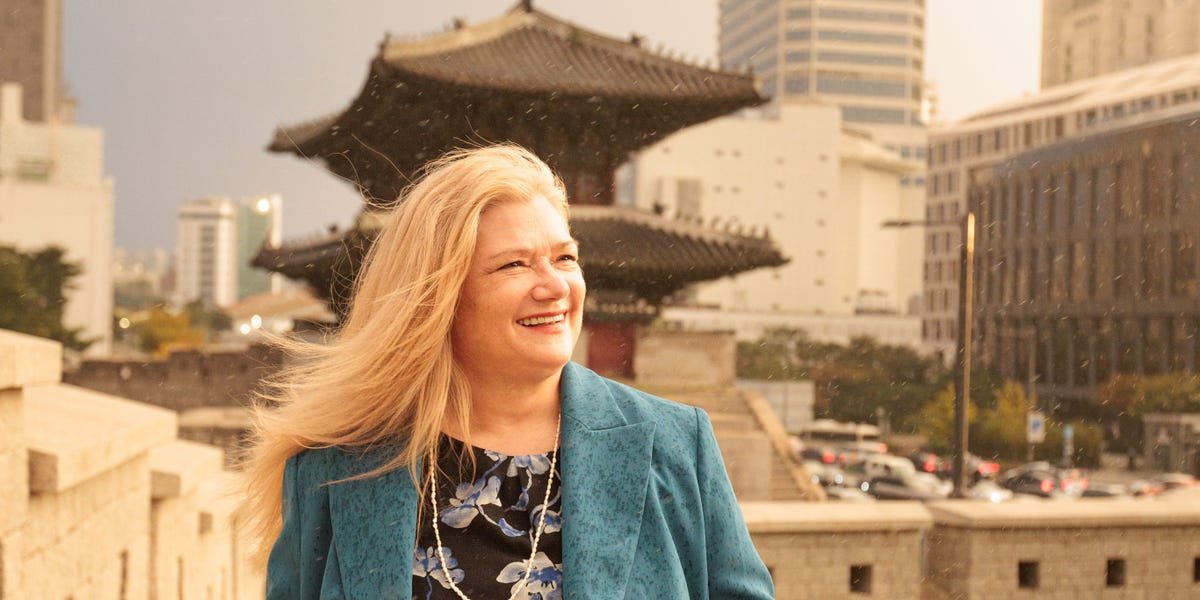
Jane Newman spent her eveningswatching K-dramas on her recliner during the pandemic lockdowns. She didn’t expect they’d spark a curiosity about South Korea that would eventually lead her to move there and start over.
In 2023, Newman was working for a consulting firm in Brisbane, Australia. As a manager, her heavy workload didn’t let up even as the world began to return to normal.
After months of long hours spent in front of a screen, she was burned out and beginning to feel the strain.
“I started out with a whole lot of shoulder and back pain, and then it developed into arm pain, and I couldn’t use my mouse,” Newman, now 60, told Business Insider.
Jane Newman said she burned out from her corporate job in Australia.
Standing desks and different chairs fixed little, so she took a sabbatical.
Newman had first visited South Korea the previous year, curious about the country she’d only seen on TV. Remembering how much she had enjoyed that trip, she decided to return for a two-month break.
When she went back to work, the symptoms didn’t take long to resurface. This time, Newman found herself struggling mentally and emotionally, too.
“I found it more and more difficult to do my work,” she said. By July 2024, she and her employer agreed it was best for her to step away from the company.
“I knew that South Korea was a place that I loved, and it made me feel good,” Newman said. “So I made the decision to go back and stay for a few months to see how it felt.”
New career, new home
For three months, she lived in an Airbnb in Gwacheon, a cityjust outside Seoul. Newman lived with her host, a local woman who had invited her to participate in the community events.
There, she joined a group supporting former US military “comfort women,” as well as two English clubs where members met to discuss news, read English fiction together, and give weekly presentations on various topics.
“I met the most wonderful people, and they really invited me into their conversations. And I got to know a lot more about Korea itself, and its history,” she said.
Newman says she found healing in a small community outside Seoul, where she learned more about South Korean history and culture.
“All of those things made me feel really welcomed, and at home, and part of a community, which is what I was really lacking back in Australia,” Newman added.
In Brisbane, her social life largely revolved around people she knew at work, or old friends she’d kept in touch with from her years living in the UK when her daughters were young. She was part of a bushwalking community and a social dining community, but most of those groups faded after the pandemic.
As Newman considered her next career steps, she found herself drawn toward public speaking and coaching to help people navigate the pressures of modern society and technology.
That focus also eventually led her to begin developing a tech startup in South Korea aimed at helping young people struggling with social isolation.
By February 2025, Newman moved to Seoul to begin her next phase of life.
She said her Gen Z daughters weren’t surprised by her decision since they already knew how much she loved South Korea. Both had already taken trips to visit her there.
When it was time for Newman to look for an apartment, she wanted a place that was close to public transport, with separate spaces for living and sleeping, and a good view.
It took her about two weeks to find a place. She now lives in Dongdaemun, a popular neighborhood, where her two-bedroom apartment costs 1.43 million Korean won, or about $1,000, a month.
Newman lives in Dongdaemun, a popular neighborhood in Seoul.
South Korea has become an increasingly popular choice for foreigners in recent years.
Data from the Ministry of Justice showed that the number of foreigners living in South Korea at the end of 2024 stood at 2.65 million, a 5.7% increase from the year before.
For Newman, building friendshipsin Seoul came more naturally than she expected.
“I’ve found that every time I’ve come to Korea, I’ve made new friends,” Newman said, adding that this included people she met through a fan group for a Korean actor she admired.
Newman says she makes it a point to get out of the house once a day to enjoy her surroundings.
These days, Newman’s routine is a mix of work and settling into life in Seoul.
She starts her mornings with a coffee from the Starbucks across the street before diving into her coaching sessions and working on getting her startup off the ground.
Compared to her previous job, where working 60 hours a week was common, Newman says she now works around 20 to 30 hours a week.
With the more flexible schedule, she has time to exercise, meet people, and sometimes work from libraries or cafés.
“But I do make sure I get out once a day to go out and enjoy this beautiful place I’m living in,” she said.
Do you have a story to share about relocating to a new city? Contact this reporter at agoh@businessinsider.com.
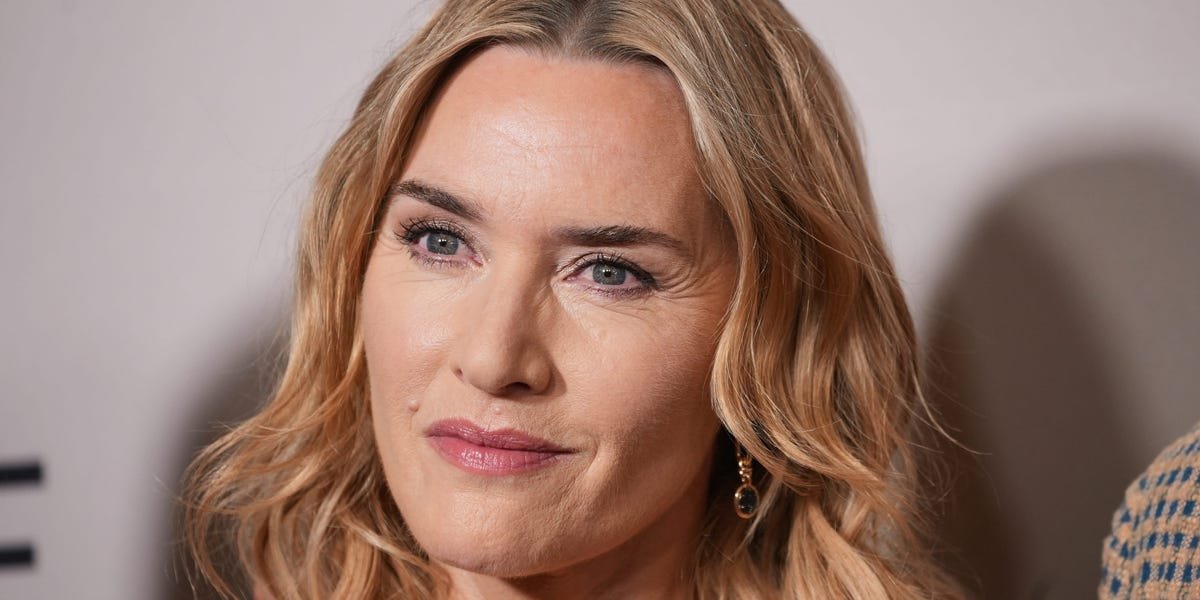
Kate Winslet has a secret to staying sane among the madness of celebrity: motherhood.
“I was very fortunate because I became a mother when I was really young,” Winslet said during an appearance on the podcast “Talk Easy with Sam Fragoso,” which aired Sunday, December 21. “I was, you know, blessed to be taking care of this gorgeous little baby,” she said.
Winslet, 50, had her first child, actor Mia Threapleton, in 2000 when she was 25 years old. She welcomed her eldest son, Joe Anders, 21, in 2003, and her youngest, Bear Blaze Winslet, 12, in 2013.
Caring for her children, two of whom have followed her into the entertainment industry, helped her drown out the outside noise and public scrutiny she has endured over the years, she explained.
When the Hollywood star first became “very famous very quickly,” after starring alongside Leonard DiCaprio in the blockbuster “Titanic” in 1997, her mental health suffered, she said. Winslet, who is English, said she was bodyshamed and “actively bullied” by the British media and that she couldn’t “function like a normal person,” explaining that she would be followed into everyday places like the grocery store.
“I found it quite distressing,” she said.
The actor and director said it made her “really self-critical,” and that there were days when she felt like she “couldn’t face the day,” but being a mother “saved” her.
Winslet is not the only celebrity to cite her kids as a positive force on their mental health. In June, “Mad Max: Fury Road” star Charlize Theron, 49, told the “Call Her Daddy” podcast that adopting her two daughters in 2012 and 2015 was “one of the healthiest decisions” she has ever made. And “Empire State of Mind” singer Alicia Keys has said that motherhood has helped her become more introspective and identify unresolved issues.
Winslet has been on a press tour promoting her directorial debut, “Goodbye June,” which was released in select US and UK theaters on December 12 and will be on Netflix on December 24. The screenplay was written by her son, Anders.
In the interview with podcast host Fragoso, Winslet said that “protecting” herself creatively has also helped her maintain her mental health while living in the public eye.
Since rising to fame in 1997, she said she has only pursued roles that would make her happy.
“I had the good sense to know that I loved acting and that somehow the most important thing in terms of opportunity was only to pursue things that I really want to do,” she said.