
Some-ships-are-sailing-through-the-Strait-of-Hormuz-Others.jpeg

Some ships are sailing through the Strait of Hormuz. Others are turning around. Here’s what ‘completely open’ looks like for now.

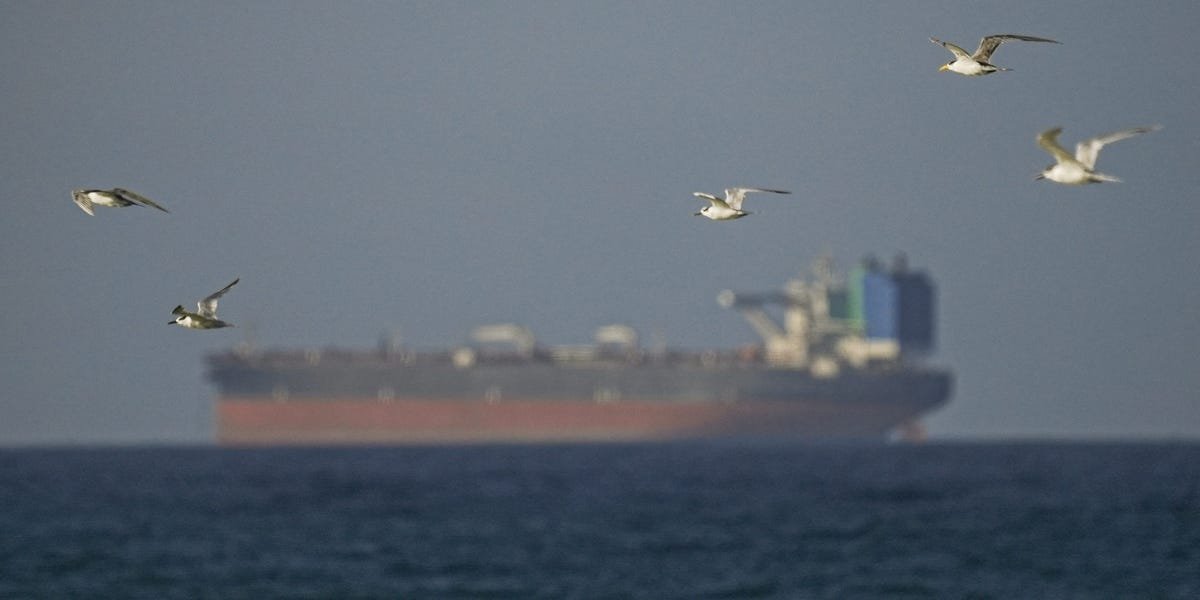
Iran announced Friday morning that the Strait of Hormuz is open for maritime traffic, and mid-afternoon data showed that commercial vessels were passing through the strategic waterway, though only a small number.

Friday evening, a large group of vessels sailed toward the strait but inexplicably turned away, ship-tracking data shows, raising questions about the status of this critical chokepoint.

Opening the strait has been a central demand since the start of a fragile ceasefire earlier this month and amid the ongoing negotiations between Washington and Tehran.

Seyed Abbas Araghchi, Iran’s foreign minister, said in a statement on social media Friday that “the passage for all commercial vessels through Strait of Hormuz is declared completely open for the remaining period of ceasefire, on the coordinated route as already announced by Ports and Maritime Organization of the Islamic Rep. of Iran.” The announcement follows a ceasefire between Israel and Lebanon.

Iran’s coordinated route appears to refer to previously released guidance that takes ships through the northern part of the waterway closest to Iran, which has said that the route was determined by security needs. Separate from Iranian considerations, US forces have been working to establish safe passage in the strait, where mines continue to represent a potential threat.

Shipping organizations have had mixed reactions. Some welcomed the news as a positive signal, while others urged caution. It is unclear how much has changed with Friday’s announcement from Iran.

President Donald Trump acknowledged Iran’s Friday statement in a Truth Social post, writing that “Iran has just announced that the Strait of Iran is fully open and ready for passage.” The market reaction to the announcement saw stocks climb higher and oil fall.

The strategic Strait of Hormuz is a narrow chokepoint linking the Persian Gulf to the Gulf of Oman and a major artery for global shipments of oil and natural gas.

MarineTraffic data from Friday afternoon showed that just over half a dozen commercial vessels had transited the strait since the announcement.

Data from KPler, a real-time trade intelligence platform, showed that eight commercial vessels had crossed as of 2 pm EST Friday compared to five on Thursday. The data refers to commercial fleets of crude tankers, LPG, LNG, and dry bulk vessels. Containerships are not included in the count. But by the evening, new data showed ships were turning back.

The limited number of ships that have gone through is a fraction of the pre-war normal. Before the war, the strait saw an average of over 120 transits daily.

Earlier in the week, days before the announcement on the strait, US Navy warships set up a blockade of Iranian ships and ports. Trump said the blockade will remain in effect until Washington and Tehran reach a deal to end the war.

US Air Force Gen. Dan Caine, chairman of the Joint Chiefs of Staff, has highlighted the role of the Navy’s Arleigh Burke-class destroyers in the blockade during a briefing Thursday but didn’t specify numbers involved.

Dozens of surveillance aircraft, refueling planes, and drones are also involved in the blockade. US Central Command, which oversees operations in the Middle East, said Friday that 19 vessels have turned around to comply with blockade restrictions since it began on Monday.

The US set up the blockade amid a tenuous ceasefire between the US and Iran, which was reached after more than a month of war. US military leaders have asserted that American forces remain poised to resume combat operations should the negotiations fail.


Source link

Allbirds-pivot-to-AI-is-a-Hail-Mary-Heres-what.jpeg

Allbirds’ pivot to AI is a Hail Mary. Here’s what the company needs to do to pull it off.

In November, Allbirds told shareholders it was on the brink of insolvency. Transforming the shoe company into an AI compute company is its last-ditch plan.

It won’t be easy.

Allbirds, which intends to change its name to NewBird AI, currently lacks the money, the physical assets, the expertise, and the relationships it will need to compete in an increasingly crowded space, AI industry insiders say.

Here’s what the company would have to do to reinvent itself.

Raise more money

Allbirds last month said it had sold its shoe business and the underlying intellectual property for $39 million. The company Wednesday said it had raised $50 million in a convertible note that it could use to purchase graphics processing units used to train and deploy AI language models.

Even so, Allbirds’ war chest, some $90 million or so, is still small change in an industry that’s raising tens of billions of dollars to build the data centers and buy the chips needed to run large language models. And the company owned no warehouses or real-estate assets as of the end of 2025, according to company filings. Allbirds didn’t respond to a request for comment for this story.

CoreWeave, the leader of a class of firms known as neoclouds that Allbirds appears aimed at joining, plans to spend $30 to $35 billion this year building its capacity.

“To run institutional grade compute clusters it can be in the order of a couple hundred, a few hundred million, at least,” Warren Hosseinion, the head of capital markets at GPU investor Compute Labs, told Business Insider.

Find customers

One of the first tasks will be signing contracts with the likes of Amazon, Google, Meta or Microsoft. Allbirds could then use those contracts to secure the additional financing to buy more GPUs.

Though CoreWeave has pioneered such a model, Allbirds may struggle to persuade potential partners as well as potential investors that it’s in the game for the long haul, AI industry executives said.

“If you can pass the underwriting diligence…that will be their biggest hurdle,” Hosseinion said.

Consider an acquisition

One way for Allbirds to move faster would be to acquire a private company already doing this work, said Darren Kimura, CEO of AI Squared, which helps companies deploy artificial intelligence tools.

The merged company would then be publicly traded and have access to public markets capital.

Allbirds’ $50 million in financing should be enough to hire a management team, some chips, and begin what would essentially be a proof of concept, Kimura said.

“You could buy enough to get going, and use that as an example to demonstrate the model working, and then build it out.”

Hire leaders with AI experience

AI infrastructure companies need management with expertise in politics and energy, said Paul Calatayud, the founder of AI data center developer VoltScape, who said he has several billion-dollar-plus projects under development.

“Somewhere in between there has to be a group that knows how to handle running a data center,” he said.

Allbirds Chief Executive Joe Vernachio, who succeeded founder Joey Zwillinger in 2024, comes from the retail clothing industry. He led a turnaround at Mountain Hardwear, and also held executive roles at The North Face and Spyder Active Sports, according to his LinkedIn profile.

Annie Mitchell, the CFO, worked at Gymshark and Adidas before joining Allbirds, according to a press release announcing her hire.

Both executives will receive retention bonuses if they stay at the company through the closing of the sale of the shoes business, expected sometime in the second quarter. It’s unclear how much longer after that they will stick around.