A-700M-Nvidia-backed-AI-search-startup-is-hiring-rebellious-engineers.jpeg

A $700M Nvidia-backed AI search startup is hiring ‘rebellious’ engineers, its CEO told us

An Nvidia-backed startup is looking for “rebellious” engineers to help rebuild search for the AI era.

Exa, which builds search infrastructure for AI applications, said it is opening a Singapore office on Monday as part of its push into Asia-Pacific. Exa has only a handful of staff in Asia-Pacific, and plans to hire up to 10 engineers across backend, infrastructure, and product roles in the coming months.

In an exclusive interview with Business Insider, CEO Will Byrk said he is hiring “rebellious” engineers.

“Someone who doesn’t care about the status quo, how things were done in the past, can think from first principles about everything — that’s really important,” he said.

Search systems built for AI are still new, and they require rethinking how search works because humans and AI behave differently, he added.

“I don’t believe it when people say you can’t do something. So I think we want engineers who feel the same way,” Byrk said.

Byrk also said Exa prioritizes candidates’ values above all else, and the company is open to hiring junior and senior engineers.

“Do they really have passion for building search or building large-scale systems?” he said, adding that experience is “not as important.”

To assess candidates for their character, Exa flies them to San Francisco to work with the team for one to two days. Exa has about 80 employees globally and is actively hiring in San Francisco, Zurich, and Singapore.

“That allows us to really see what a person’s like, because you don’t just get to see their output on a real project, but you also, you know, eat with them at lunch and dinner,” he said. “You really get to know a person.”

Byrk added that the best engineers should move fast and use AI tools effectively. Most of the company’s code is written by AI, he said.

Expansion into Singapore

Exa raised $85 million in a Series B round led by Benchmark in September at a $700 million valuation. Investors include Lightspeed, YCombinator, and NVentures, Nvidia’s venture capital arm.

The company, founded in 2021, said it serves web search to thousands of customers, including AI startups such as Cursor, as well as private equity and consulting firms.

“The number of searches from AIs are going to exceed the number of humans,” Byrk told Business Insider. “The whole world of search is shifting.”

Byrk said the Singapore office will serve as a “massive scale infrastructure,” including data pipelines and crawling infrastructure to gather and process information across the internet.

“Singapore has some of the best engineering talent in the world,” Byrk said. “People are really smart, and they have a lot of hustle.”

Do you have a story to share about AI startups in Asia? Contact this reporter at cmlee@businessinsider.com.


Source link

Goldman-Sachs-says-companies-are-getting-better-at-hiring-—.jpeg

Goldman Sachs says companies are getting better at hiring — and doing less of it

Hiring has slowed sharply across many advanced economies, but companies may simply be getting better at picking the right people, according to Goldman Sachs.

That’s due in part to a decline in short-term job separations: workers leaving or losing jobs soon after being hired. That decrease suggests firms and workers are increasingly finding better matches from the start, even as labor markets cool after the post-pandemic hiring surge.

“Most of the pullback in churn reflects a decline in job separations within one or two quarters after hiring, a pattern that suggests that workers and firms have gotten better at identifying ‘good’ matches over time,” Goldman’s economists wrote in a Tuesday note.

Historically, short-term separations have been common because some hires turn out to be poor matches between employers and workers. However, they have steadily fallen across developed economies over the past two decades, and the decline accelerated after the pandemic.

The trend is borne out by US Census Bureau data and Canadian labor force data.

Fewer bad hires

The decline appears broad across industries. It’s explained by changes in the workforce composition, suggesting a structural shift in how workers and firms form job matches.

“In our opinion, the best explanation of the decline in short-term separations is that increased information and improved screening processes have increased both firms’ and workers’ ability to identify ‘good’ matches,” wrote the Goldman economists.

Platforms such as LinkedIn, Glassdoor, and Indeed give workers insight into company culture and working conditions before they accept a role. At the same time, employers are increasingly using digital screening tools — including AI — to evaluate candidates and screen applicants.

Those tools may help reduce hiring mistakes, the economists wrote.

Better matches mean fewer early job exits — and less need for companies to hire replacements.

The shift could also make the labor market more efficient overall. With fewer failed job matches, there is less frictional unemployment — the type of joblessness that occurs when workers move between jobs.

Goldman’s analysis comes amid debate about the current labor market, which some economists describe as a “low hiring, low firing” environment.

In such an environment, a further drop in hiring could push unemployment higher more quickly because displaced and younger workers have fewer opportunities.


Source link

Wealthy-people-are-chartering-planes-and-hiring-drivers-to-evacuate.jpeg

Wealthy people are chartering planes and hiring drivers to evacuate the Middle East

Six-figure private charter flights, chauffeured drives, hours-long waits to cross borders: Some wealthy travelers and expats in the UAE are doing whatever it takes to evacuate the Gulf region amid air strikes and the possibility of escalation.

“Demand is definitely increasing,” Glenn Phillips, a PR and advertising manager at global charter firm Air Charter Services, told Business Insider, adding that “there are an increasingly limited number of aircraft willing and able to fly to and from the area.”

On Monday, two days after the start of the US and Israel’s war against Iran, flights out of the United Arab Emirates — whose two main airports were damaged by Iranian air strikes — were still few and far between, and major hubs, including Qatar, Bahrain, and Kuwait, had to shut down due to airspace restrictions.

That left wealthy people in financial hotspots like Dubai and Abu Dhabi — hubs for monied tourists and Western expats in recent years — scrambling to reach Oman or Saudi Arabia, two countries that had open airspace through Monday. They spent hours in the car to reach the airports, as border-crossing waits increased by the day.

It may soon get harder for travelers to reach functioning private jets. Some commercial flying had resumed from the UAE on Monday evening, but that appears to have slowed amid new missile threats. Reported attacks on the US embassy in Riyadh have similarly forced several flights to turn around or divert from the Saudi city.

In what appears to be a warning of escalating tensions that could further snowball the conflict, the US State Department on Monday night urged Americans to evacuate over a dozen Middle Eastern nations — including those that still had their airspace open to commercial and private flights, like Oman and Saudi Arabia.

Flights out for $200,000+

Charter flights can cost as much as $200,000, Jay Smedley, the owner of luxury concierge firm Dubai Key, told Business Insider. The company has arranged short-haul private charter flights to Istanbul, Cairo, and the Maldives for clients since requests began to increase on Saturday.

Flights to Europe can cost even more, with Ameerh Naran, the CEO of Vimana Private Jets, saying the firm is pricing the flights between $175,000 and $235,000.

Air Charter Services has arranged “a number” of evacuation flights — and has more scheduled on Tuesday — out of Muscat, Oman, largely for people looking to leave Dubai, Phillips said.

The trip involves a five-hour drive, plus an additional three- to four-hour wait at the Hatta border crossing, which he expects will increase.

The demand to leave the region began last week, Naran told Business Insider, adding that there was “a noticeable increase in enquiries from Friday onwards.”

“Expect long waiting queues and security check delays,” Camille d’Harambure, a general manager at luxury travel firm Lightfoot Travel, told Business Insider.

Mike D’Souza, the operations coordinator for Dubai-based chauffeur service Indus Chauffeurs, told Business Insider that the “demand appears precaution-driven rather than panic-driven.”

“There has been a clear emphasis on speed and certainty of departure, with many clients prioritizing the earliest viable routing rather than specific aircraft types or traditional preferences,” Naran said. “We have also seen increased demand for coordinated ground support to facilitate access to airports where airspace remains open.”

Phillips echoed that clients just want to get out and are not all that concerned about where “out” is.

Prices have increased with demand, Phillips added — and in some cases, even those wealthy enough to pay their way out of the Middle East are looking twice at the price tag of departure.

“Many people are taking shorter flights to places out of the region and then picking up scheduled connections for the rest of their journey to reduce full journey costs,” he said.


Source link

Lloyd Lee

Jack Dorsey just laid off 40% of staff. He said he’s still hiring AI engineers.

Jack Dorsey said he’s still hiring for his fintech company Block — even after he just laid off 40% of its workforce.

The cofounder said during an earnings call on Thursday that he expects to bring in more senior AI engineering talent to the team. The company’s stock was up nearly 23% after trading hours as of 7 p.m. Eastern Time.

On Thursday, Dorsey said in a memo to employees that Block was cutting its head count from 10,000 people to “just under 6,000.” The reason, he said, was because AI is unlocking “a new way of working” with “smaller and flatter teams.”

“We’re not making this decision because we’re in trouble. Our business is strong. Gross profit continues to grow, we continue to serve more and more customers, and profitability is improving,” Dorsey wrote in the memo. “But something has changed.”

Dorsey said in an earnings call on Thursday that AI tools have increased productivity at the company with a 40% increase in production code shipment per engineer since September.

“We’ve seen engineering work that would have taken weeks to complete be done by a small team in a fraction of the time with agentic coding tools,” he said.

Despite the layoffs, Dorsey said during the call that Block expects to invest in hiring.

“We see meaningful opportunity to invest in our people and invest in hiring, invest in retaining a world-class team to deliver for our customers; ultimately, we expect to hire some more senior AI engineering talent who will continue to level up our engineering and product capabilities,” he said.

Dorsey and a spokesperson for Block did not immediately respond to a request for comment.

AI’s impact is being felt across industries and roles, as companies find ways to automate work. One study by Stanford University researchers found that early-career positions in fields such as software engineering and customer service are on the decline.

Some workers have also said that their responsibilities have increased with AI. A software engineer told Business Insider that the simultaneous increase in productivity and workload is leading to “AI fatigue.”


Source link

The-economy-grew-strongly-last-year-but-hiring-stagnated-Its.jpeg

The economy grew strongly last year, but hiring stagnated. It’s making the gap between the rich and everyone else worse.

The data is in, and last year presents an economic conundrum: Overall growth was relatively strong, but job growth was virtually nonexistent. It bodes ill for the gap between the rich and everyone else.

Newly released data showed the US economy grew 2.2% in 2025. That’s a respectable pace, although cooler than the past few years. Economic activity was affected by the record-long government shutdown in the fall, businesses figuring out how to handle trade announcements, and new investments.

Meanwhile, the US added the fewest jobs since 2003 outside recessions. While unemployment stayed low, hiring and job openings fell, meaning plenty of people couldn’t find a job. It’s an unfortunate situation for new graduates looking to get on the first rung of the career ladder, job switchers eager for a fresh opportunity, and basically anyone looking to land a job quickly outside the in-demand healthcare and social assistance sectors.

The divide between output and jobs is widening another divide: some call it a “K-shaped economy” where the rich are earning and spending more, while everyone else is stagnating. And it doesn’t look like 2026 will be much better.

“Consumers are feeling the weight of the price increases, and combined with the jobs outlook that’s worsening they say, ‘OK, when I look out, I don’t see prices going down that much, but I do see my wage is not growing and my job not being as reliable or secure as it once was,'” Atsi Sheth, the chief credit officer at Moody’s Ratings, told Business Insider.

A historical divide between job and output growth

Economist Mohamed El-Erian said in a Financial Times opinion piece before the newest GDP figures that while this “decoupling of job growth from economic growth” has happened before in the US, it’s typically occurred during recession recoveries and “not in the midst of a prolonged period of robust growth such as the one we are experiencing today.”

“We’re in this unusual environment where economic activity has remained quite robust, and yet job gains have fallen to near zero,” Gregory Daco, the chief economist at EY, told Business Insider.

The US added a measly 181,000 jobs last year; annual figures are often at least a million. It’s comparable to 2003, when the US only added 124,000 jobs in the wake of the 2001 recession.

Daco said GDP’s strength is “masking a growing bifurcation” and thinks the polarization will persist and maybe worsen because supply shocks, such as trade and tax policies, AI, and demographic changes, aren’t reversing.

“In some cases, we’re seeing a more significant effect on economic activity,” Daco said.

Some economic experts are optimistic about the year ahead. “We expect a strong year of economic growth in 2026, driven by business investment, consumer spending and fading trade headwinds,” said Rick Gardner, chief investment officer of RGA Investments. ZipRecruiter economist Nicole Bachaud thinks the job market could be at a “pivot point” after stronger hiring in January.

“Demand in other sectors that are more cyclically based instead of demographically based is starting somewhat to show signs of growth,” Bachaud said.

The gap between the rich and everyone else

The strength in the economy isn’t being felt by all. People at the top are feeling much better than pretty much everyone else. They don’t have to worry as much about rising prices of necessities and slowing wage growth.

“The wealthier, more affluent consumers are benefiting from wealth accumulation, allowing them to still spend relatively freely,” Daco said. “They’re also enjoying faster wage growth, while lower-income families are seeing reduced wage growth, near-zero real wage growth, and not much wealth appreciation outside of real estate, if they have that.”

Sheth said the benefits of GDP growth have been higher for those who earn from investments and capital gains. “They’ve benefited a lot from financial market booms, whereas those who earn their income primarily by wages have benefited some, but not as much,” she said.

Diane Swonk, chief economist at KPMG, told Business Insider that “What productivity growth we’ve seen since basically the turn of the century has accrued mostly to the owners of capital, not rank and file workers. And that means we’ve seen wealth compound, but also income inequality worsen.”

Sheth said regardless of how people refer to the disconnect happening in the economy, the “real trouble” is that wages are no longer keeping up with the rising cost of living and that people are having to pay a lot more to buy essentials.

Swonk said inflation is “the most regressive tax” because of how much lower-income households have to spend on necessities relative to their earnings.

“When those goods go up in price, obviously that affects them even harder, and so it’s a very regressive tax,” Swonk said, adding, “Oftentimes, we lose sight of the fact that it really is the level of prices that people are still reacting to.”

The Federal Reserve Bank of New York said in a report that inflation-adjusted consumer spending has increased for high-income households since 2023, but low-income household spending has mostly trended down. “The trend since 2023 is different from the trend during the pandemic recession and recovery, when consumption growth was similar across income groups,” the report said.

Amid those price increases and changes to spending habits, wage growth has drastically cooled for lower earners. Lower-income wage growth surged between 2021 and 2022, but has since cooled down a lot from the late 2022 peak. Sheth also pointed out that wage growth for hourly workers, who she said are likely “subject to much more fluctuation and downside risk than if you have a steady salary,” has also been falling faster than those not paid hourly.

Sheth said another issue is that the lower end of the wage spectrum is under more credit stress.

“We’re seeing greater credit stress in subprime auto, for instance, some parts of borrowing, but again at the lower end of the spectrum,” Sheth said. “But overall, if you compare household balance sheets today to, say, the pre-global financial crisis era, they’re generally stronger — much stronger at middle- and upper-income levels, of course, but generally stronger.”

Where we’re going in 2026 and how AI could keep widening the gap

El-Erian said in the Financial Times piece that, “This period of decoupling of employment from growth may prove more persistent and more consequential,” partly because the effects of AI are still unfolding.

AI-related investments have already made a dent in real GDP growth based on findings from the Federal Reserve Bank of St. Louis. “As firms continue integrating AI into their operations and building the infrastructure required to support it, these categories are likely to remain significant drivers of investment well into 2026 and beyond,” the authors wrote.

Laura Ullrich, the director of economic research in North America at the Indeed Hiring Lab, described a “precarious balance” between GDP and the job market. Ullrich is unsure whether employers will decide they should hire more to keep up with the relatively robust economic growth or make job cuts because they aren’t keeping up.

“I do think the uncertainty about the role AI plays adds in another interesting pivot,” Ullrich said. “Because if AI is able to take on the work of humans, then we could see economic growth without hiring picking up much. But, I’m skeptical that that’s happening in big ways right this second.”

Aside from the impact of AI, the US doesn’t need as many jobs to hold unemployment stable at a time when the population isn’t growing as quickly, so it’s possible job growth continues to be lower than previously experienced.

“The low-hire, low-fire job market isn’t just about policy changes in the new administration or about AI,” Jed Kolko, senior fellow at the Peterson Institute for International Economics, told Business Insider. “So, there may not be a quick fix.”

Even the Fed is cautious.

“While participants generally assessed that, under appropriate monetary policy, the labor market likely would stabilize and then improve this year, they continued to note that the outlook for the labor market remained uncertain,” minutes from the January Federal Reserve meeting said.





Source link

More-hiring-managers-want-you-to-prove-youre-good-with.jpeg

More hiring managers want you to prove you’re good with AI during job interviews

Leaders at the software company Canva used to wonder whether job candidates were secretly using AI during technical interviews.

By early last year, that concern gave way to a bigger question: How good are they with AI?

Managers saw the company’s engineers getting more done with the technology, so they needed to ensure new hires could do the same.

“We just flipped the script and went, ‘OK, we’re going to invite you to use AI,'” Brendan Humphreys, Canva’s chief technology officer, told Business Insider.

The result, he said, has been stronger hires better equipped to wield powerful AI tools to help write code and solve problems.

Canva is one of a growing number of companies — including Meta and McKinsey — that are inviting some job candidates to use AI in parts of the hiring process.

Broadly, when ChatGPT emerged in late 2022, many employers worried that job seekers would use AI to help talk their way past interviewers. Yet as the technology becomes more capable and embedded in daily work, a number of companies are moving from policing it to evaluating candidates’ AI know-how.

That’s what happened at Arcade, an IT infrastructure startup. The company has always asked technical candidates to complete a take-home exercise. Yet now, it expects them to use AI in the process, Alex Salazar, the company’s cofounder and CEO, told Business Insider.

As the technology’s capabilities surged over the past year or so, he realized that candidates would likely turn to AI regardless of whether Arcade sanctioned it. Ultimately, Salazar said, the company wants its workers, including new hires, to use AI.

“So why are we creating this artificial test that doesn’t even really reflect the work they’re going to do when they get here?” he said.

Humphreys came to a similar conclusion at Canva. To factor in AI, he said, the company reworked its technical interview to make the questions “complex, ambiguous, and problematic.”

“If you just dump the question that we’re giving you into an AI, you’re going to get a substandard answer,” Humphreys said.

To land a job at the company, which has about 265 million monthly users of its graphic design software, technical candidates need to know how to thoughtfully question AI, he said.

Show us you can work with AI

One way to avoid concerns that candidates might be leaning too hard on AI is to have job seekers show their work. In Canva’s case, the company asks candidates to share their screen during a technical interview.

“We want to see the interactions with the AI as much as the output of the tool,” Humphreys said.


Brendan Humphreys

Brendan Humphreys, CTO at Canva

Courtesy of Canva


Arcade tells candidates to use whatever AI tools they want on their exercise, then include a transcript of their conversations with the AI. The idea is to learn who knows how to do the job and to work with an agent. Doing so, Salazar said, comes with a “very real learning curve.”

He said that the shift to allowing AI use in the exercise meant that Arcade placed greater emphasis on a candidate’s “taste.” That sensibility is important, he said, because AI can kick out answers, yet the best results often come from repeated iteration with these tools, he said.

“It’s going to show their ability to use the AI, but it’s also going to show what they think ‘good’ is,” Salazar said of candidates’ interactions with AI.

‘Ride the dragon’

Other companies want workers to demonstrate their AI acumen during the hiring process, too.

In a June post on an internal message board, Meta said it was developing a coding interview in which candidates could use an AI assistant, Business Insider previously reported.

That mode of working, Meta wrote, was “more representative” of the environment in which future developers would be operating. It also makes “LLM-based cheating less effective,” the company said, referring to large language models.

The consulting firm McKinsey & Company is piloting a change to its graduate recruiting process, asking candidates to use the company’s internal AI assistant, Lilli, during case interviews to assess how they work with the technology, several media outlets reported in January.

The acceptance of, or even the preference for, AI in some parts of hiring doesn’t mean companies will welcome job seekers who use the tools to misrepresent their skills. Even if a candidate gets away with it at first, hiring managers are likely to eventually discover that someone doesn’t have the goods, Susan Peppercorn, an executive coach, told Business Insider.

That’s because candidates who complete an assessment, for example, “are going to have to explain how they arrived at their thinking,” she said.

Understanding that thought process is what Canva seeks in its hiring, said Humphreys, who oversees roughly 2,600 technical employees in roles including software engineering, IT, and machine learning.

It’s a way of seeing whether a candidate makes sound technical decisions when it starts producing code, he said.

“What we’re testing for now in our interview process is an ability to harness that power, to control that power — to kind of ride the dragon,” Humphreys said.

Do you have a story to share about your career? Contact this reporter at tparadis@businessinsider.com


Source link

Line chart

AI job listings surge to a record, even as broader hiring slows

Even as the broader US job market cools, AI keeps punching above its weight.

New data from Indeed shows overall job postings ended 2025 just 6% above pre-pandemic levels, but postings that mention AI are up more than 130% since early 2020.

The standout stat: more than 1 in 25 job postings now reference AI, pushing Indeed’s AI Tracker to a record 4.2% in December.

The skew is striking. Nearly 45% of data and analytics roles mention AI, compared with about 15% in marketing and 9% in HR, even as hiring across many knowledge-work fields remains weak.

As employers narrow hiring plans, AI roles are absorbing a growing share of expectations, raising a big question: Can AI carry the labor market in 2026?

Sign up for BI’s Tech Memo newsletter here. Reach out to me via email at abarr@businessinsider.com.


Source link

Elon-Musks-hiring-advice-Dont-look-at-the-resume-—.jpeg

Elon Musk’s hiring advice: ‘Don’t look at the resume — just believe your interaction’

Even Elon Musk sometimes hires the wrong people.

“I’ve fallen prey to the pixie dust thing as well, where it’s like, ‘Oh, we’ll hire someone from Google or Apple, and they’ll be immediately successful,'” Musk told Stripe cofounder John Collison and tech Dwarkesh Patel during a 3-hour-long appearance on a special joint episode of their podcasts.

It’s why Tesla’s CEO doesn’t put his full faith in a candidate’s résumé.

“Generally, what I tell people—I tell myself, I guess, aspirationally—is, don’t look at the résumé. Just believe your interaction. The résumé may seem very impressive, and it’s like, ‘Wow, the résumé looks good.’ But if the conversation after 20 minutes is not “Wow,” you should believe the conversation, not the paper,” he said.

He said he’s made other mistakes, too. “My batting average is still not perfect, but it’s very high,” he said. That includes the times he’s discounted certain personality traits.

“I think it’s a good idea to hire for talent and drive and trustworthiness,” he said. “And I think goodness of heart is important. I underweighted that at one point. So, are they a good person? Trustworthy? Smart and talented and hard working? If so, you can add domain knowledge.”

Musk said that it takes a lot to truly impress him.

“The things I ask for are bullet points for evidence of exceptional ability.”

The examples “can be pretty off the wall,” but he’s looking for evidence of something truly great.

“If somebody can cite even one thing, but let’s say three things, where you go, ‘Wow, wow, wow,’ then that’s a good sign,” he said.

Hiring is just part of the battle.

When companies like Tesla are successful, Musk said, their competitors take notice and do everything they can to poach top talent.

“Tesla had a further challenge where when Tesla had very successful periods, we would be relentlessly recruited from,” he said. “Like, relentlessly.”

Musk said when Apple had its own electric car program, recruiters for the tech giant were “carpet bombing” Tesla employees to the point that some engineers just unplugged their phones. (In 2024, Apple reportedly abandoned its secretive car program.)

“Their opening offer without any interview would be like double the compensation at Tesla. So we had a bit of the ‘Tesla pixie dust’ thing where it’s like, ‘Oh, if you hire a Tesla executive, suddenly everything’s going to be successful,'” he said.

Some former employees have complained about Musk’s management style. During the interview, the Tesla CEO joked about his reputation as a micro manager, insisting that it be called “Nano management, please.” Musk said that, in reality, he now doesn’t have enough time to oversee every aspect of his sprawling empire.

Ultimately, though, Musk said he just wants one thing.

“If somebody gets things done, I love them, and if they don’t, I hate them,” he said. “So it’s pretty straightforward. It’s not like some idiosyncratic thing.”


Source link

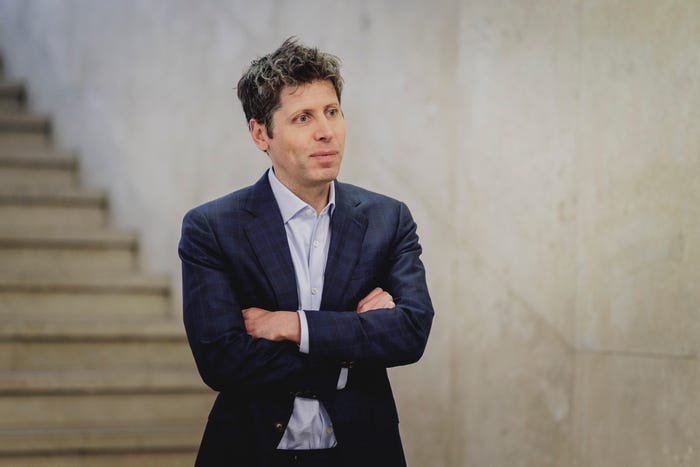
Sam Altman.

Sam Altman said OpenAI was planning to ‘dramatically slow down’ its pace of hiring


Florian Gaertner/Photothek via Getty Images

  • Sam Altman said that AI would “dramatically slow down” how quickly OpenAI hires.
  • Altman said the company will “hire more slowly but keep hiring.”
  • Altman’s comments came after a year when job growth stalled and hit young job seekers hard.

Sam Altman is addressing AI’s impact on the workforce, including on OpenAI’s hiring practices.

During a live-streamed town hall event on Monday, catered mainly toward developers, the OpenAI CEO said that AI has changed how quickly the company expands its head count, but the company is not in a hiring freeze and is nowhere close to doing away with human employees entirely.

“We are planning to dramatically slow down how quickly we grow because we think we’ll be able to do so much more with fewer people,” said Altman in response to a participant who asked if AI has changed OpenAI’s interview process of potential candidates.

“What I think we shouldn’t do, and what I hope other companies won’t do either, is hire super aggressively, then realize all of a sudden AI can do a lot of stuff, and you need fewer people, and have to have some sort of very uncomfortable conversation,” Altman added. “So I think the right approach for us will be to hire more slowly but keep hiring.”

Altman’s comments come amid the “Great Freeze” and concerns that job creation in America has lost momentum. The unemployment rate in November 2025 climbed to its highest level since 2021, while job openings have fallen 37% from their peak in 2022, according to data from the Bureau of Labor Statistics.

Business Insider previously reported that, while in 2022 there were roughly two job openings for every unemployed worker, by September 2025 that ratio had fallen to one. Workers who have been jobless for at least 27 weeks also now make up about a quarter of all unemployed Americans.

Based on data from the US Census Bureau, young workers have been hit especially hard by the hiring slowdown. The unemployment rate for Americans ages 20 to 24 reached 9.2% in August and September, the highest level since the recovery from the pandemic recession.


Source link