Figma-CEO-Dylan-Field-says-he-has-a-bias-for.jpeg

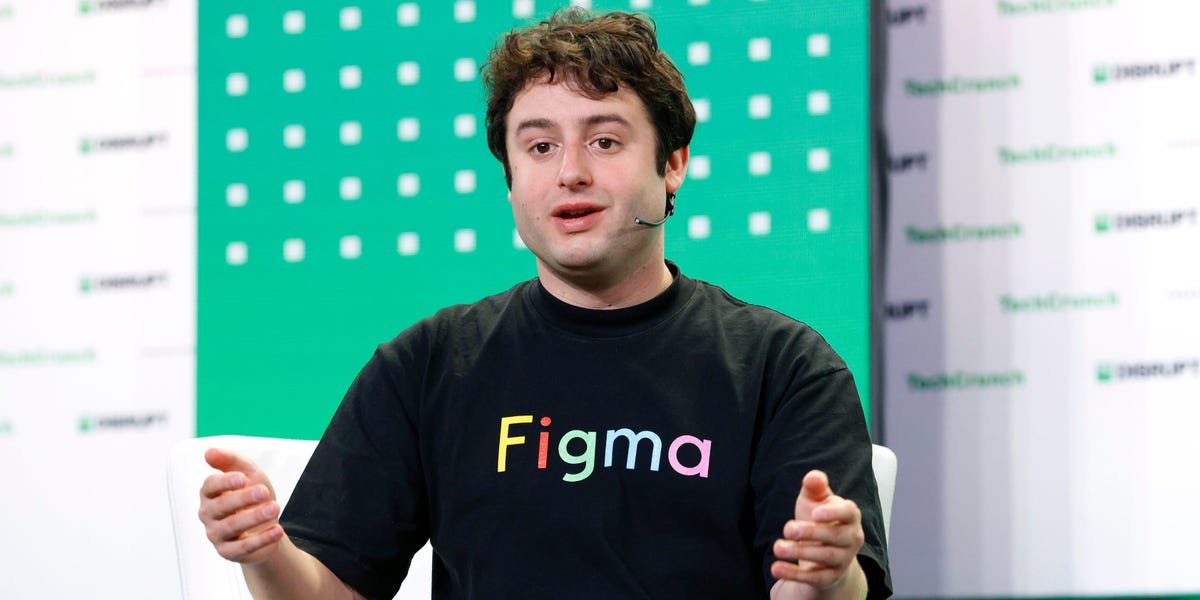
Figma CEO Dylan Field says he has a ‘bias’ for hiring young workers because they’re likely AI natives

Many young people are worried that AI is muscling in on the entry-level job market.

Dylan Field, the 34-year-old billionaire CEO of Figma, however, says AI gives young people an advantage in the hiring process.

During a recent appearance on the “In Good Company” podcast, produced by Norges Bank Investment Management, Field said the effect of AI on hiring is a “critical” debate happening now in the software industry.

“Does AI mean that you should hire senior people or middle-level, or junior, or are all the jobs going to go away because AI will replace them all?” Field asked. “I’ve heard that last one a bunch of times, and it hasn’t come true yet. All the people have said that. They continue to hire.”

Field said that, in his opinion, young professionals have an advantage because they tend to have a better understanding of AI, an increasingly important skill.

“My bias actually is a lot more toward the junior folks, and I think people that are younger are AI native in a way that folks that are older have to learn,” Field said.

He said Figma, which offers design products and services and competes directly with Adobe, has always hired a mix of ages, but that an understanding and passion for AI is a must going forward.

“I think that it is important that people come in, first of all, knowing that we’re pushing full steam ahead into the AI era,” Field said. “So, if you have a bias against AI, that’s a great dinner-table conversation between us, but we’re very focused on making sure that we build for this AI age.”

Young professionals are navigating a labor market bogged down in unemployment and uneven job growth. The Bureau of Labor Statistics in December published its final 2025 jobs report, which showed that the job market has remained stagnant, economists said.

The rise of AI has only added to that instability. Many companies these days are betting that AI will be able to do many of the tasks of entry-level workers, and economists say that could lead them to pause hiring young professionals.

Field, however, doesn’t share that outlook.

During an October 2025 appearance on “Lenny’s Podcast,” Field said he doesn’t think AI will take human jobs at all.


Source link

Image of Lakshmi Varanasi

The ‘Godfather of SaaS’ says he replaced most of his sales team with AI agents: ‘We’re done with hiring humans’

Jason Lemkin, known to some as the Godfather of SaaS, says the time has come to push the limits of AI in the workplace.

In practice, Lemkin, the founder of SaaStr, the world’s largest community of business-to-business founders, said on Lenny’s Podcast recently that this means he will stop hiring humans in his sales department.

Instead, SaaStr is going all in on agents, which are commonly defined as virtual assistants that can complete tasks autonomously. They break down problems, outline plans, and take action without being prompted by a user.

He said the company now has 20 AI agents automating tasks once handled by a team of 10 sales development representatives and account executives.

That move from an entirely human workforce to an agent-based workforce was rapid.

In May, SaaStr had just one AI agent in production that it used for various digital tasks, Lemkin said. That month, though, during the SaaStr Annual — its yearly gathering of over 10,000 founders, executives, and VCs — two of its high-paid sales representatives abruptly quit.

Lemkin said he turned to his chief AI officer and said, “We’re done with hiring humans in sales. We’re going to push the limits with agents.”

Lemkin’s calculus was that it just wasn’t worth the cost of hiring another junior sales representative for a $150,000 a year position who would eventually quit, when he could use a loyal AI agent instead.

Amelia Lerutte, SaaStr’s chief AI officer, told Business Insider by email that by June, the company began ramping up the number of agents it had in production.

“We had only 1 non-core agent at the time with Delphi, but didn’t go deep on 2 to 20+ until the beginning of June,” she said. “It was a conscious choice after their departure to reallocate some (but not all) head count spend to agents.”

At the SaaStr office, the 10 desks that once belonged to humans on the go-to-market team are now labeled with the names of agents, like “Quali for qualified,” “Arty for artisan,” and “Repli for Replit,” Lemkin said.

Lemkin said SaaStr is training its agents on its best humans.

“Train an agent with your best person, and best script, then that agent can start to become a version of your best salesperson,” he said.

SaaStr’s process is similar to how Vercel, the cloud-based platform for developers, trained a sales agent off its top performer for six weeks by documenting every step of their work, and then building an agent to mimic their process.

Many companies are experimenting with AI agents, but risks remain. One of the big ones is the threat of data leaks and cybercrime.

“AI agents, in order to have their full functionality, in order to be able to access applications, often need to access the operating system or the OS level of the device on which you’re running them,” Harry Farmer, a senior researcher at the Ada Lovelace Institute, recently told Wired.

All of that access creates more potential attack points for cybercriminals.

Security threats aside, Lemkin said that the net productivity of agents is about the same as humans. However, he said, agents are more efficient and can scale — just like software.


Source link

The-economy-is-growing-That-doesnt-mean-companies-are-hiring.jpeg

The economy is growing. That doesn’t mean companies are hiring more.

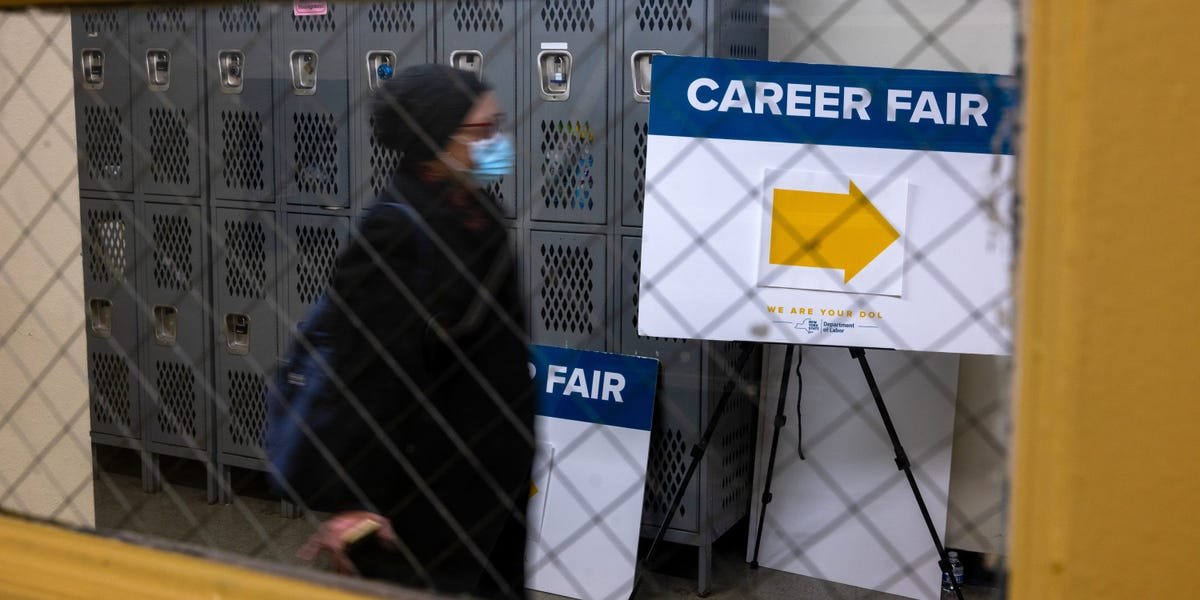
The US economy continues to surprise on the upside — except when it comes to jobs.

Hot growth, as seen in this week’s GDP report, typically corresponds to stronger hiring and personal earnings, which then enable consumers to continue spending. However, this year, the trend has been the opposite. Spending is driving the economy, but the job market is stuck in a “Great Freeze.”

As KPMG’s chief economist Diane Swonk wrote on Tuesday, “Growth and labor market outcomes have decoupled.”

It’s shaping up to be the story of 2026. The US has found itself in what some are calling a “jobless boom.” Money is flowing in and out of the economy at a healthy clip, but it’s not going toward creating a new job for you.

Instead, all eyes are on artificial intelligence, investment in which drove much of the year’s economic growth, along with still-strong consumer spending. The big AI investors were larger companies, including those that have led white-collar job cuts. In some cases, their profits have skyrocketed, and “do more with less” has been the mantra of the year.

“Firms are doing more with fewer workers,” Swonk wrote. “Many overshot on staffing during the hiring frenzy and are now using attrition or layoffs to bring staffing levels more in line with demand. Others are offsetting the squeeze on profit margins due to tariffs with layoffs and hiring freezes.”

Spend on essentials powered growth

Economists are still grappling with how the US ended up in this rare scenario. This year, although overall layoffs have crept up, they remain relatively low. Corporate America and Big Tech were the exceptions, with companies such as Amazon, Microsoft, Meta, Google, and Tesla announcing big cuts.

Business Insider has heard from dozens of white-collar job seekers who said that finding a new role has felt “impossible,” and those with jobs have, in many cases, held onto them for dear life.

In addition to a tough job market, consumers had no income growth last quarter. However, spending held strong — despite tariff uncertainty and stubborn inflation still above the Federal Reserve’s 2% target. A large percentage of this spending uptick was in healthcare and medical services, as costs for hospital and nursing services climbed. This year marks the most Americans have spent on healthcare services since 2022, when the Omicron wave of COVID-19 spread.

This suggests that, despite strong spending by affluent households, much of this rise in consumer spending wasn’t necessarily powered by confidence. In fact, consumer sentiment levels are among the lowest they have ever been, and many Americans have been cautious about spending because of tariff uncertainty.

The tough job market isn’t helping. Unemployment is at 4.6%, the highest since 2021. Total job growth has stayed slow.

Dozens of job seekers across generations told Business Insider this year that they were frustrated about suspected ageism, cumbersome hiring processes, competition with hundreds of others for a single role, and the suspected role of AI in screening out their applications. Some told reporters they’ve applied for thousands of roles with no interviews, while others said it took well over a year to get a single offer, often at a lower pay than their previous job.

2026 could be the year we see AI payoff — which may fuel an even bigger jobless boom

In his 2026 wish list for the business world, Business Insider’s Dan DeFrancesco asked for “ROI for AI.”

“I just want to see some noticeable returns on all these massive AI projects,” he wrote, referring to the eye-popping AI spending from Big Tech — and their plans for even more next year.

If that does come, the jobless boom may only grow. Companies want to use AI to boost productivity without hiring more people, which would only exacerbate a sluggish job market.

Although it’s difficult to determine if this year’s investments in AI have yielded results, the GDP’s spike to 4.3% in the third quarter is an encouraging sign overall. The largest growth since the third quarter of 2023 prompted President Donald Trump to say that the “Trump Economic Golden Age is FULL steam ahead.”

Still, many Americans may worry about what this means for their jobs. Some companies have cited the need to be efficient in an AI-driven future as justification for layoffs. The US already operates with fewer jobs than it had pre-COVID, and Federal Reserve Chair Jerome Powell has recently said that the grim jobs data may be overstating this year’s deflated gains.


Source link