
I-adopted-a-new-fitness-strategy-in-my-40s-thats.jpeg

I adopted a new fitness strategy in my 40s that’s helped me run half-marathons, hold handstands, and do pull-ups as I age

At 61, I did my first unassisted pull-up — something I considered impossible just nine months prior.

It was the goal I’d challenged myself to achieve in my 60s, following a pattern I’d established in the two previous decades. In my 40s, I wanted to finish a half-marathon, and in my 50s, I set out to hold a handstand. I accomplished both.

Reaching a physical milestone as I age spills into every area of my life, particularly when there are curveballs. Whether I’m helping one of my children through an issue, dealing with a health scare, or mourning a loss, I tap into the same mindset I use to do a pull-up, hold a handstand, or run 13.1 miles. It’s one of grit and consistency.

For me, setting physical goals at the top of each decade has improved my perspective on aging.

I first started seeking physical challenges in my 40s


Lorraine C. Ladish doing a half-marathon

I ran a half-marathon with a friend when I was 48 years old. 

Lorraine C. Ladish


Exercise has always been my anchor, and I’ve relied on it to navigate mental health struggles throughout the years. As I grew older, exercise and movement evolved into a means of coping with the effects of aging.

Instead of fixating on how my postpartum body looked or how my skin sagged, I started to focus on how my body felt and what it could do.

In my late 40s, a friend who is 15 years my junior coaxed me to do a half-marathon with them. By then, I’d gone through a divorce and rebuilt my personal and professional life.

Running helped me stay afloat through all the hard moments, so I decided to give 13.1 miles a go. Without realizing it, I’d set my first major goal. When I crossed the finish line, I cried.

I’ve found that the harder the goal is, the more motivated I am to accomplish it


Lorraine C. Ladish doing a handstand

At 57, I accomplished my goal of comfortably holding a handstand. 

Lorraine C. Ladish


I knew that I wanted to challenge myself further as I get older, channeling my strength through the highs — like marrying the love of my life and launching a new business — and the lows — like a close call with colon cancer and parenting struggles.

I picked physical goals that were completely new to me. Even when I did gymnastics in school, I couldn’t do a handstand, yet that’s what I worked toward in my 50s.

It took me years of tireless training, but I did it. The day I finally stood on my hands was a spiritual experience. Time felt like it stood still, and nothing else mattered.

Training for these challenges has given me a healthy perspective on aging


Lorraine C. Ladish doing a pull-up

I regularly practice my unassisted pull-ups at the gym. 

Lorraine C. Ladish


The goals I set have never been about achievement, though I do get a confidence boost when I master them. In my book, the win is working toward something that feels like a long shot and still staying the course.

I’ve found that when I’m running long distances, standing on my hands, and doing pull-ups, I focus on my endurance, strength, and stamina — not the skin sagging on my knees or the veins on my hands.

There’s so much in life I can’t control, including the inevitability of aging, but I can control how I approach it.

Working my body in new, challenging ways as I get older reinforces that I can be strong and visible, no matter how old I am. It also helps me feel better physically and mentally.

Yes, I have aches and pains, but listening to them and working around them is an art. I enjoy each step of the process.

Brainstorming what’s next is also half of the fun. At 62, I can do three overhand-grip, full-range-of-motion pull-ups. Because I want to see how far I can push myself, I hope to do five consecutive pull-ups by the end of the year.

As I look ahead at my 70s, I’m already eyeing a hike along El Camino de Santiago in Spain, where I was born.



Source link

Jobs-report-updates-Dow-SP-futures-hold-steady-ahead-of.jpeg

Jobs report updates: Dow, S&P futures hold steady ahead of employment data release

It’s jobs Wednesday!

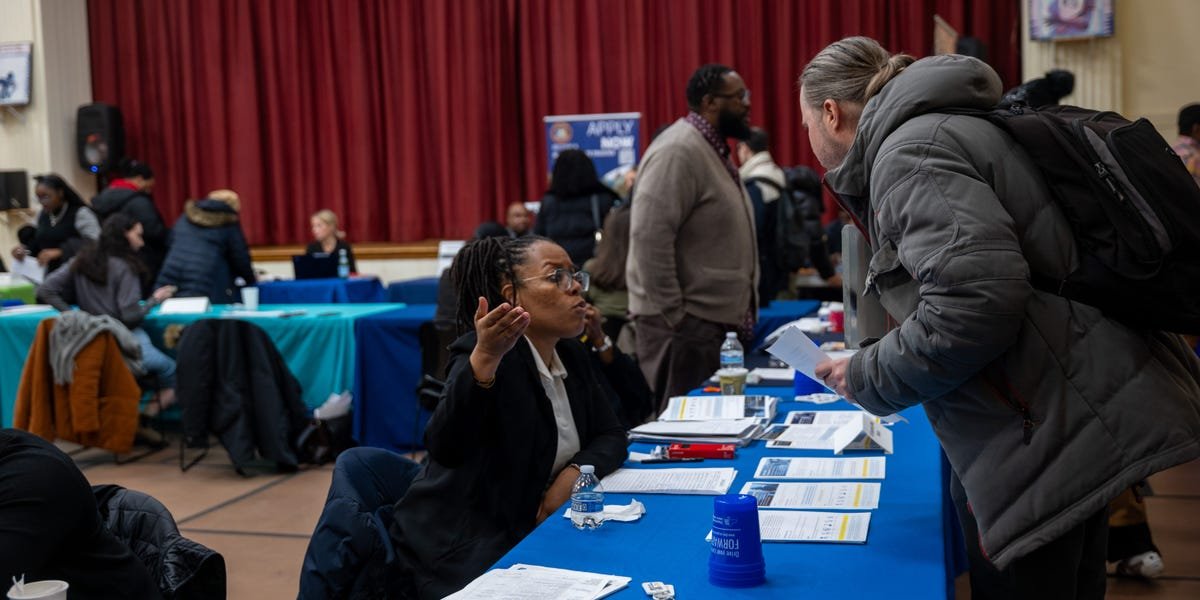
Yes, you read that right. The monthly jobs report, a Friday tradition, is coming out this morning, five days later than originally scheduled due to the partial government shutdown.

Economists expect the US added 65,000 jobs in January and unemployment remained at 4.4%.

Investors are looking at the January jobs report to see if the job market has continued stabilizing following a difficult 2025. The US added only 584,000 jobs last year, the lowest employment growth since 2003, excluding recessions.

The coming report will include revisions to past job growth, so last year’s employment level could change.

The report is expected to drop at 8:30 a.m. ET. Stay with us as we preview the data and then give you an inside look at everything you need to know about the report when it drops.


Source link

Asias-biggest-aviation-event-shows-how-the-counter-drone-craze-is.jpeg

Asia’s biggest aviation event shows how the counter-drone craze is taking hold

This year’s Singapore Airshow was a true display of how the world has come to both love drones and fear them.

Fighter jets danced in the sky and a slew of commercial airliners sat on the baking tarmac for military officials, students, and eager interns to gawk at.

But inside the main hall, you’d be hard-pressed to look anywhere and not see “drone” or “UAS” plastered on a placard or wall.

Roughly 550 organizations were listed as exhibitors at the event, which hosted a mix of civil aviation companies, defense contractors, and air forces. A third were in the uncrewed aerial system business.

Around every corner, it seemed as though there was a system to fight drones: Big drones, small drones, drones with bombs strapped to them, drones that spy on you from miles away, drones that spy on you from 300 feet in the sky — and increasingly, drones that fly at you in swarms.

Recent conflicts, especially the Ukraine war, has brought to the fore the fear of an unknown $600 device flying into a military base or a football stadium to deal untold damage or take lives.

The implications go beyond war. Last fall, repeated unidentified drone sightings forced European countries to disrupt hundreds of passenger flights.

The solutions on offer at the airshow covered almost everything one imaginable for preventing those scenarios. There were the usual radio frequency area jammers, designed to cut off any nearby drone from its link to the operator. These came in anything from handheld devices to boxes that you have to mount on flatbed trucks.

Skylock, an Israeli company, brought along a 13-pound, two-handed jamming gun called Skybeam, which is supposed to mess with electronics that you point the device toward.


The Skybeam sits on display.

The Israeli Skybeam is a hefty, two-handed gun for fighting smaller drones.

Matthew Loh for Business Insider


There were actual guns, such as Saab’s new “Loke” system that features a truck-mounted, software-assisted machine gun to knock out drones in a “one shot, one kill” fashion. The company hopes to add airburst rounds soon.

There were, of course, drones to kill other drones, easily denoted by their aerodynamic design of a missile-like body, tear-shaped tail, and four propellers.

French manufacturing giant Thales was promoting the “ThunderShield,” a remotely operated dome-like device that targets small, Class 1 drones with an invisible electromagnetic beam that spreads out in a cone.

The company said the device has already been deployed at a major public event in France two years ago, though it wouldn’t say which (the biggest one that year was the Olympic Games.)

One standout was the CROSSBOW, a device developed by laser company IPG Photonics’ brand new defense division, IPG Defense.

Tucked away on the side of the exhibition hall, the Massachussetts-based company’s showcased an invention that fires lasers to destroy drones via thermal damage.


The IPG Defense CROSSBOW system on display.

The CROSSBOW system uses IPG’s commercial laser technology to destroy drones.

Matthew Loh for Business Insider


An accompanying radar helps the CROSSBOW identify drones from other flying objects, such as unsuspecting bald eagles, and an Xbox controller allows the operator to choose whether to engage the target.

Still, as one anti-drone tech salesman noted to me, many of the world’s counter-UAS inventions run on tech that isn’t necessarily novel. Like the idea of a hobbyist drone strapped with a grenade, most of these companies have simply merged older concepts that no one thought of combining before.

Some will say they merge that tech better than others, but it’s still no F-35 or F-47.

It’s another sign of how accessible air warfare is becoming, with quadcopters sitting alongside multimillion-dollar fighter jets and hulking Rolls Royce engines in the main hall.

The airshow, which is running its 11th edition of the biennial event, said that it’s seen the largest involvement so far from small and medium-sized companies this year.


Source link

Lauren Crosby

My friend and I hold presentation nights. We get to know each other better, and it helps us understand who we are now.

This as-told-to essay is based on a conversation with Rachel Jones, cohost of the “Is It Normal” podcast. It has been edited for length and clarity.

I was recently introduced to Eloisa by a mutual friend who was certain we’d become fast friends.

That friend was right, because Eloisa and I clicked straight away. We shared similar interests — books and art — and had this chemistry that I can’t quite explain. I knew we’d be best friends.

As we began to get to know each other, both of us keen to “dig deep” and understand each other as fully as possible, we would often say things like, “To understand this part of me, you need some context.”

We started presentation nights

Although we would have liked to jump into each other’s histories, we were limited by time constraints.

I work full-time, volunteer, own a house, participate heavily in church activities, and have family and friends I’m already committed to. Eloisa has a husband and is a full-time student. We’re both very busy people, but we’re keen to connect on a deeper level because neither of us wants coffee-once-a-month friendships.

In your late teens and early 20s, forming friendships is relatively easy, as people often have less responsibility and more time. But the older you get, the harder it can be to form meaningful relationships — because there are only so many hours in a day. And yet, when you meet friends at an older age, there is so much more life to catch up on, just not the time to do it.

I’d seen on social media a trending way to get to know friends as adults — presentation evenings. Each person involved gives a short presentation about themselves, which may include both serious and humorous topics.

Typically, people create slideshows with lots of pictures to accompany whatever is being presented. I’d seen a huge range of topics: what’s my love language, favorite books, favorite memories, teenage years, and the list of ideas for these nights goes on and on.

Excited about the possibility, I asked Eloisa if she’d be up for it, and as I suspected, she couldn’t wait.

We started with our childhoods

For our first presentation night, we decided to kick off our monthly series by sharing stories about our childhoods.

Just the process of preparing my slideshow was precious. I went through dozens of photos of my family, reflecting on the significant changes I experienced as a child, and remembering how fortunate I was to grow up in such a close-knit family with my parents and three siblings.


Friendship presentation

Rachel Jones started presenting about her childhood to her new friend.

Courtesy of Rachel Jones


We planned to present after dinner one evening, both allowing each other to share without interruption.

When I’m typically getting to know a friend just through conversation, both of us are lovingly interrupting each other, interjecting thoughts in response to what the other person has said. But in presenting, you’re quiet when it isn’t your turn, so the listener has a chance to fully absorb what the other person says.

I listened to Eloise speak about her childhood, and I immediately could piece together why she is the way she is because of her history.

When I presented, I methodically talked about my birthday, my parents, my siblings, and how I had lived in several houses in multiple countries.

It was a lighthearted theme, but even so, she now understands why stability is so important to me, and why I tend to crave acceptance from people. A lot of that is down to my childhood.

We are hoping to do these monthly

As a visual learner, I found the presentation night so helpful in remembering the people Eloise spoke about. So now, when she tells me about her sister, I can visualize her sister and recall Eloise’s relationship with her growing up. Facts about Eloise get ingrained in my memory because I’ve had photos and so much context.

I expect that as we hold these presentation nights more frequently — we’re hoping to do them monthly — we’ll get to know each other better, both on a serious and a silly level.

As we continue to be friends, carrying on with these presentations, we’ll understand each other’s triggers more and be able to respond better and give informed advice.

It’s the first time I’ve had presentation nights with a friend, but I suspect I’ll bring in other friends to join us on our evenings. I also think it would be a really helpful thing to do with a boyfriend or partner in the future.

The fact that Eloise wanted to have these presentation nights with me felt like a privilege, because it’s someone who wants to know me and invest in our friendship.

To be known and feel seen is one of the greatest desires we have a humans, and these presentations provide a way to do this in our busy, modern, adulting worlds.


Source link