Im-57-and-helping-raise-my-6-grandchildren-in-a.jpeg

I’m 57 and helping raise my 6 grandchildren in a crowded multigenerational home. I thought my life would be easier by now.

I turned 57 this year. I always thought that by this point in my life, I would be taking bucket-list trips, tending a garden, and writing the novel I’ve always known was in me. Instead, my days are filled with wiping noses and every surface imaginable while keeping tabs on everything from medications to musical instruments.

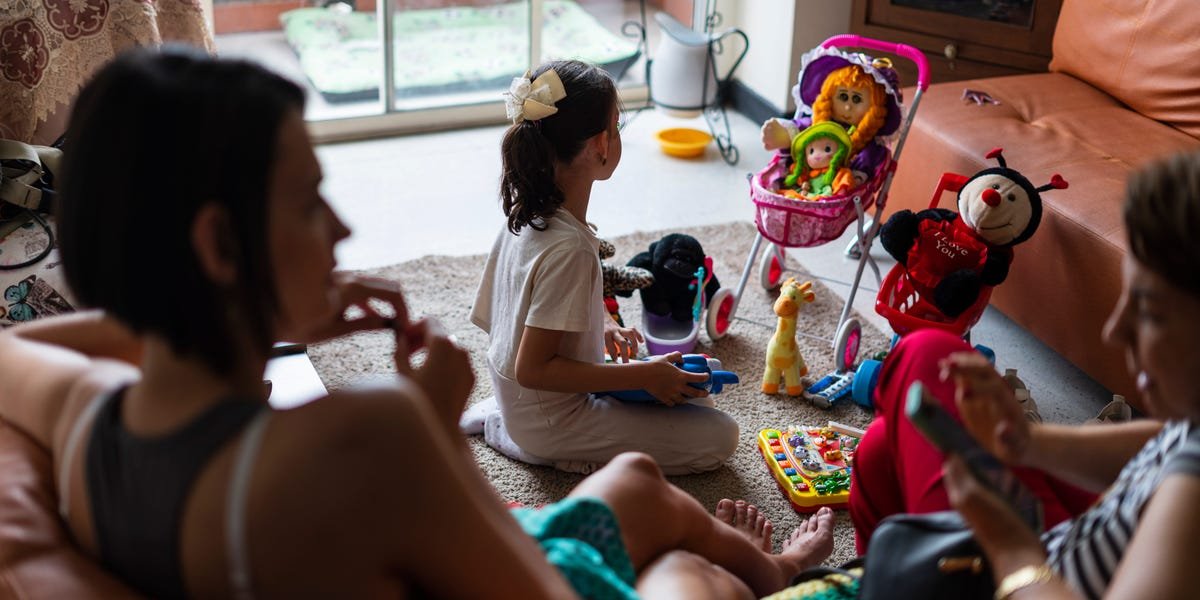
My husband and I now live with our adult daughter and her six children, and because it makes the most sense, I take care of the kids, the house, the dog, and everything else while the other two adults go to work.

One day, when my daughter had to take five hours of mandatory overtime, and I was losing my cool at hour 10 of juggling meltdowns and messes, it hit me. I wasn’t the fun, easygoing, they-grow-up-so-fast-so-nothing-is-worth-getting-upset-about Grammie anymore. I had become the person holding everything together, and if nothing changed, I was going to burn out.

My busy mornings show how much I care for my grandkids

On a typical morning, I hit the ground running at 6 a.m. My daughter is able to take the first grader to the bus stop before work, so I’m “only” responsible for five kiddos most mornings.

After getting myself dressed and ready, I take the dog out and feed him, and then get my oldest grandson ready for the bus that picks him up at our door.

By then, the two preschoolers are awake, which means diaper changes and getting everyone dressed and fed. The middle schoolers need to be up, dressed in clean clothing (which is a bigger struggle than you’d think), and out the door on time. Somewhere in there, I’ll manage a cup of coffee and some sort of breakfast before we settle into the rest of our daily routine.

That’s when everything goes as it should. But when the 14-year-old misplaces his headphones, the dog gets frantic because of an early morning Amazon delivery, and the commotion wakes the toddler, it can feel like there’s no way I’ll make it through the day. Even then, the work doesn’t end when the workday does. It simply shifts into a different part of the day.

Loving my family doesn’t make the daily weight any lighter

I would take a bullet for every single member of my family. But the load is heavy, and I carry a lot of guilt for the moments I mourn the version of midlife I thought I would live.

It’s not that my daughter or my grandchildren are a burden; they’ve all been through more heartache and struggle than most people could imagine, and I’m so thankful we can provide emotional support.

But I’d be lying if I said I don’t sometimes long for the clean, quiet home I used to wake up to. My longing for that other life sometimes admittedly makes me cranky with my grandkids.

I had to change the way I showed up, or I wasn’t going to make it

A series of steps helped me change the way I show up without breaking myself down. I set an (almost) concrete bedtime for myself, completing tasks, chores, and self-care by 9 p.m. This gives me a little time to read or catch a podcast before getting to sleep at a decent hour.

The extra rest also allows me to get up a little earlier. Now, I have at least 30 minutes of quiet alone time while everyone else is still sleeping. It helps me start the day feeling grounded, rather than immediately pouring from an empty cup. I’ve experienced a huge shift in my attitude, and it seems to set the tone for everyone.

I’ve also started following some of the life advice I often give to the kids, like “Done is better than perfect.” I’m working on not holding myself to expectations I would never put on others. While I still won’t allow things to pile up until they’re unmanageable, I’m learning to be OK with leaving a load of laundry in the dryer for tomorrow.

Helping raise six grandchildren has reshaped my understanding of midlife

If there’s one thing I’ve learned in my nearly six decades on this planet, it’s that life rarely goes as planned. Letting go of dreams is tough, especially when we’re sold a picture of how midlife ought to look — but whether it defines you is your choice.

I’m choosing to embrace my current purpose and see the significance in helping to shape the hearts and minds of six amazing human beings.

This chapter of my life is messy, exhausting, noisy, and chaotic. But at the heart of it all is unconditional love, and the simple truth I carry with me is that there’s nowhere else I’d rather be.


Source link

A-family-built-a-multigenerational-home-in-Oregon-thats-basically.jpeg

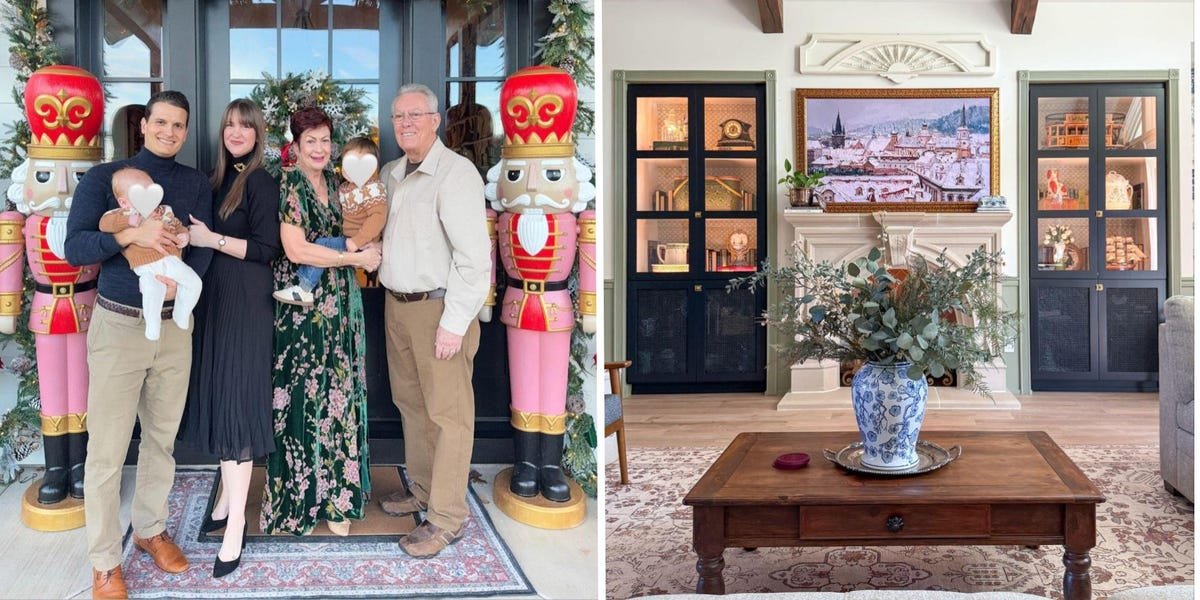
A family built a multigenerational home in Oregon that’s basically 2 houses connected by a hallway

Ochoa thinks of her parents’ side of the house as a distinct home.

“Once you hit that door, you basically walk into a whole separate house,” Ochoa said. “They also have the open concept, and I feel like their side feels a lot bigger than it is because of that.”

Their space has a living room, kitchen, an office, and a half bathroom in addition to their primary suite. They don’t have a separate dining area, but they have a table big enough for four people to eat.

The entire home is also mostly ADA accessible, which may come in handy as everyone ages.

“All of our doorways throughout the entire house are wider than standard doorways,” Ochoa said. Their showers are also wheelchair accessible. No one in their family needs the accessibility at the moment, but they wanted the home to suit their needs, no matter what.

“We’re not planning on moving,” Ochoa said. “I didn’t build this house for nothing.”


Source link

Joi-Marie McKenzie

Business Insider’s entertainment team predicts who will take home an award, and why.

Grammy’s night forecast: cloudy with a chance of snubs

After covering the Grammy Awards for nearly two decades, there are a few moments I know will happen on music’s biggest night: Someone will go home happy, and someone will go home sad.

Either way, we’ll get Trevor Noah as the host for his sixth and final time, performances you’ll text about, and candid moments between our favorite singers seated inside LA’s Crypto.com Arena on Sunday. It’ll all air on CBS.

Kendrick Lamar leads with nine nominations, including in the major categories such as Record, Album, and Song of the Year, followed by Lady Gaga and producers Cirkut and Jack Antonoff with seven. We’ll also be watching Super Bowl performer Bad Bunny, Sabrina Carpenter, and my personal favorite, Leon Thomas, to see if they go home with trophies after nabbing six nods.

I asked Business Insider’s entertainment team who they thought would go home with a small, 24K gold-plated gramophone. Here’s what they’re betting on:

Jason Guerrasio, Entertainment correspondent: Tucked away in the midst of the 90-plus Grammy categories is Best Album Cover. I hope it goes to Perfume Genius’ “Glory” cover. Google it. It’s instantly eye-catching.

Samantha Rollins, deputy editor of Entertainment: When “Mayhem” single “Abracadabra” debuted during a commercial break at last year’s Grammys, many posited that Lady Gaga’s newest album would take a back-to-basics approach to the edgy electropop that made her famous. What emerged instead was far more interesting. Lady Gaga’s “Mayhem” is an invigorating return to form that proves one of pop’s most famous shape-shifters can still keep us guessing. She’ll take it for Album of the Year.

Callie Ahlgrim, senior pop culture writer: Record of the Year is supposed to honor the most superb blend of production and performance, but since it tends to favor ubiquity, I have to give the edge to the global pop smash “APT.” Bruno Mars has the cross-generational appeal that Grammy voters can’t resist, and Rosé would make history as the first K-pop star to win in a competitive category.


Source link

Im-set-to-inherit-my-childhood-home-abroad-Im-not.jpeg

I’m set to inherit my childhood home abroad. I’m not sure it will be worth the headache.

This as-told-to essay is based on a conversation with Katarina Polonska, a relationship scientist and coach who will be inheriting her childhood home in Slovakia. Vancouver-based Polonska, 36, said the home needs a lot of work, and it may not be worth managing renovations from abroad. The conversation has been edited for length and clarity.

I’m going to be inheriting my childhood home where I was born. I love it, and it’s very precious to me. But I don’t have any right to it yet.

It’s mostly used as a family holiday home, but ultimately when my mother passes, it’s going to be given to me.

My mother owns it, and there’s no plan to sell it — the value of the home isn’t very high, in fairness. It’s a two-bedroom, one-bathroom. It’s not worth much at all; maybe $80,000 CAD. I don’t think the money would go very far in Canada.

Also, selling it would require a lot of renovations. It’s very old school and needs a lot of TLC, and my mother doesn’t live in Slovakia, she lives in England. So from her perspective, she’s thinking, “Why would I invest 30,000 or 50,000 euros (about $35,245 or $58,742) in a property that I go to a few times a year max? What’s the point?”

She also knows it would to be really complicated to sell it from abroad, having to navigate viewings and trusting realtors and all of this stuff.

The reality is, I’m going to own this foreign property when she passes.

My husband is in a similar situation with a Barbados property

My husband is also waiting to inherit. His mother inherited a property in Barbados from her parents, though she never lived in Barbados.

His mother had to wait to take over the Barbados property, and by the time she took it over, it had declined a little bit and there are always complications with it.


A man and a woman taking a selfie with a mountain range behind them.

Polonska and her husband.

Courtesy of Katarina Polonska


I’ve actually never seen it myself, but I know that there’s a lot of work to be done with the house. But his mother has been holding onto it saying, “You can inherit it and you and Kat can enjoy it.”

But he’s like, “We don’t go to Barbados enough.” It’s just more hassle having to manage and protect a property when you’re not physically in the country.

I think from my perspective, because I’m naive about it, I’m like, keep it, it’d be really nice to have it. But his argument is that the place isn’t in the area of Barbados that I would necessarily want to go to.

He’s really wary. He doesn’t want to be managing the property and he would rather sell it and then distribute the money within his family.

So we both know that there’s going to be this new responsibility on our heads and, candidly, I think life is difficult enough as it is.

The home in Slovakia needs so much work that I probably can’t rent it out as-is

I’m not going to rent the Slovakia home out because it’s from, like, the 1980s. It’s not been renovated. It’s ancient; the wallpaper’s faded.

While Slovakia is kind of an up-and-coming country from a tourism perspective, I don’t think anyone would want to stay in this place as an Airbnb unless it was literally advertised as a historical relic: “Come stay in this ancient old-school apartment!”


The exterior of a residential building in Slovakia.

Polonska’s property in Slovakia.

Courtesy of Katarina Polonska


My husband and I have talked about how we’re probably going to have to renovate it. We know that at some point, we’re probably going to have to take a couple of months to be there physically to renovate it. But when is that going to happen? We both work, and getting to Slovakia is like a 20-hour journey from here.

I think, more realistically, we could just keep the place and treat it as a little getaway to escape to. There is really lovely nature nearby and I don’t have any other properties, so there is merit psychologically to knowing that there is a place that’s home, even if it is halfway across the world.

There needs to be more dialogue between parents and children about inheritances

When it comes to inheriting property, I think there needs to be more dialogue between the parent and the child of, “What do you actually want to do?”

I think a lot of parents have this assumption that leaving a kid the property is the ultimate goal; we’ve made it, we’ve paid off the mortgage, we have this home, and now the kid gets it. Those days are kind of gone.

We don’t live in a world where everyone grows up and lives in the same town or city as their parents. We live in a really global economy. People are moving, people are more transient, and the world has become smaller. It’s also become a lot more expensive, and home ownership isn’t what it used to be.

Parents need to recognize that the world we’re in is very different, and Millennials are not an anxious generation for no reason. We have a lot of stresses. It makes more sense to have a dialogue with your kid around what they want.

I wish parents would ask, “What do you want? Where are you at with your life, and what kind of inheritance makes sense?”

Is it, in fact, a lump sum of cash, because maybe you’re a busy entrepreneur and you don’t have time to sell? Maybe you actually would prefer the parent to sell, which is annoying for the parents, but maybe the kid would prefer that.

Thank you for the inheritance — that’s very generous. But I think quite a lot of kids would probably say it’s not worth it. Either enjoy the money, mom and dad, or cash out, downsize, and just give us a down payment or something.


Source link

An-interior-designer-shares-11-things-shed-never-have-in.jpeg

An interior designer shares 11 things she’d never have in her own home

  • An interior designer told Business Insider which items and trends she would never have in her home.
  • She said she’s not a fan of unorganized clothing racks, matching bedroom sets, or textured walls.
  • You also probably won’t find faux flowers, mirrored walls, or textured ceilings in her home.

With so many design options and changing trends, it can be difficult to decide what items are worth buying and which you may want to skip in your own home.

So, Business Insider has been checking in with interior designers for tips and inspiration. This time, we spoke with Alessandra Wood, an interior designer and design historian with over a decade of industry experience.

Here are a few items and trends Wood said she’d never have in her own home — plus a few styles she’d opt for instead.

Decorative mason jars just aren’t her cup of tea.

Mason jars don’t work with every interior-design style.

Anthony SEJOURNE/Getty Images

Mason jars have been a popular interior-design trend for years, especially among those who like rustic or farmhouse aesthetics. They can be found on Pinterest as repurposed soap dispensers, lighting fixtures, flower vases, candle holders, and so on.

However, these decorations can feel a bit too homemade for Wood.

Though mason jars work well for storing leftovers and dry goods, she said she’d never use them as decorative accents in her home.

Instead, she’d opt for more stylized accents and fixtures that fit her personal design style.

“For soap dispensers, you can find beautiful natural materials that take a sculptural vibe,” she told BI. “And for lighting fixtures, the world is your oyster.”

She swaps out “filler” decorative accessories for items with more personal meaning.


Living room with fireplace, green couch

A shelf feels more meaningful when it’s styled with souvenirs or special mementos.

Vasyl Cheipesh/Getty Images

Wood said she also avoids “filler” accessories, or decorative objects that are mass-produced and essentially meant to fill empty space.

“While these pieces can be great when they really speak to you, oftentimes we find ourselves buying them just to buy something,” Wood said.

Instead, she prefers to have a more curated look in her home, focusing on displaying decor with meaning.

“Choose decorative accents that you find yourself drawn to and really love or ones that you collect on your journeys,” Wood told BI. “I like to use this approach when deciding what to put in my home space and nix the objects that don’t support a larger narrative.”

For window treatments, Wood avoids roller shades, which can look dated.


Window with roller shades

Roller shades aren’t for everyone.

Ratchat/Getty Images

She’s not a huge fan of roller shades, a type of window covering that typically features a single piece of material that can be rolled up and down using a string or chain.

“I had these in my bedroom as a child,” Wood said. “I know they’ve come a long way since then, but I can’t have them in my current home.”

Cordless roman shades, which can be pushed and pulled, can be a stylish alternative, she added. They’re easy to operate and can add softness to a window.

An on-display clothing rack requires too much maintenance.


Clothing rack next to poster in bedroom

Clothing racks can look cluttered if they’re not carefully curated.

Photographee.eu/Shutterstock

Though a clothing rack can look chic in a bedroom, Wood said, it’s just too hard to keep it organized and display-worthy on a daily basis.

“This only looks good when curated and perfect, which is a lot to ask for something that you use every single day,” she told BI.

She said she’d rather have an armoire, which allows you to store clothing and accessories behind closed doors. That way, you don’t have to rearrange your belongings daily to keep your room looking perfect.

She tries to avoid textured walls and ceilings.


Beige wall with textured paint effect

It can be hard to get rid of textured walls and ceilings if you decide you no longer want them.

FollowTheFlow/Getty Images

Textured walls and ceilings aren’t her cup of tea, either, though she acknowledges they can be costly to remove in a home if they’re already there.

“Unless your walls are made of plaster, which has a gorgeous, natural texture, I would always refrain from adding texture to sheetrock,” Wood said.

Smooth sheetrock has a crisp look and feel, and doesn’t limit your decor options later. For example, she said, it’s challenging to put up wallpaper on textured walls and nearly impossible to use peel-and-stick options.

You won’t find her painting any rooms red and black.


Black and white bookshelves

Black paint can work nicely with a lot of different shades, but some aren’t harmonious.

tulcarion/Getty Images

A room that’s painted red and black screams “teenage boy” or “boudoir,” Wood said. She avoids this color palette in her home.

“Pure reds can be quite aggressive and carry a lot of energy with the color, especially when paired with black,” she told BI.

If you really like red, you may want to use a reddish brown that retains the hue’s warmth while adding softness. You can pair this color with earthy neutral tones for a more subdued look or with earthy greens for a bit of contrast, she suggested.

Faux flowers can just end up being dust collectors.


home decor shelf with faux flowers in pitcher, moss ball, stack of books

Real flowers look fresher than fake ones.

Laura Bergeron/Shutterstock

Faux flowers are also a pass for Wood.

“I’m not a fan of faux flowers,” she told BI. “While they do add a pop of color, they feel like dust collectors to me.”

Instead, it’s better to use a real bouquet or living plant to add life to a room.

She’ll pass on the polypropylene rugs, which can wear down quickly.


Living room with faded red couch, green bookshelves, green paneling halfway up wall

If a rug isn’t made of a durable material, it probably won’t last long.

Vasyl Cheipesh/Getty Images

Though polypropylene rugs can be affordable and often come in trendy colors and patterns, their synthetic material is not ideal.

They’re primarily made of plastic, which can break down and look worn in a few years, Wood said.

“Instead, I prefer to invest a bit more in natural-fiber rugs such as wool or cotton blends,” Wood said. “These rugs are meant to last years — even lifetimes — and bring great benefits.”

For example, wool rugs can be easy to clean, durable, and hypoallergenic.

Matching bedroom sets should stay at the furniture store.


Bedroom with backlights and wallpaper behind bed

Do some mixing and matching instead of buying full sets.

Mindaugas Dulinskas/Getty Images

“When you see a room that has a bed, nightstands, and dressers totally matching, it feels like the set was purchased right off the showroom floor and lacks the personality of the occupant,” Wood told BI.

Though a few matching pieces can create harmony for those who love order, she said, don’t go for the full furniture suite.

It’s important to mix in different textures and materials so your space looks more organic and feels much more personalized, she added.

Mirrored walls can make a room look like a dance studio.


Dining room with mirrored wall

Mirrored walls can also be tricky to keep clean.

foamfoto/Shutterstock

According to Wood, mirrored walls have a certain vibe that’s just not ideal for a home.

“While mirrors do wonders to add light and brightness to rooms, floor-to-ceiling mirrored walls have a distinctly dated feel,” she said. “They feel more appropriate for a ballet studio than a living room or bedroom.”

Wood recommended hanging large mirrors above a sofa or on a bedroom wall to get the same effect without having the feel of a 1980s Miami Beach condo.

Bathroom vanities with an all-in-one molded sink and counter lack personality.


Wallpaper bathroom with marble-top vanity with mirror above it

Some bathroom vanities can upgrade a space.

Joe Hendrickson/Getty Images

Bathroom vanities with an all-in-one molded sink can look really basic, Wood told BI.

She said these are often the cheapest options available and a “quintessential piece” in flipped homes that lack style.

Instead, Wood prefers vanities with stone counters and a separate sink made of a different material.

“This will make your bathroom look much more personalized and feel a bit more luxurious,” she added.

Click to keep reading other things interior designers say they would (or would never) have in their own space.

This story was originally published on June 4, 2021, and most recently updated on January 22, 2025.


Source link

I-moved-back-home-after-living-abroad-for-12-years.jpeg

I moved back home after living abroad for 12 years. I worried it would be a step backward for my daughter and me.

After 12 years living abroad in Berlin and then Madrid, I never imagined returning home to Ireland. However, a breakup, becoming a single parent to a young teen, and growing concerns about my father’s health made moving back home something I had to consider.

The decision wasn’t easy. I worried about uprooting my daughter from the life we’d built in Madrid and returning to a country I’d once been so desperate to leave. Growing up in Dublin in the 1980s, a time marked by unemployment, diminishing women’s rights, and a deeply conservative church and state, greatly prompted my desire to live elsewhere. The following decades of living on and off in London, France, Germany, and Spain only reinforced that there was a greater world outside my home country.

Sure, there was no denying that Ireland had changed a lot since the ’80s. But there were still elements of the small-town mindset I despised.

Would my daughter resent me later for taking her away from a life in a more progressive and larger European city?

Moving back home was a difficult decision to make

Like many Western countries, Ireland’s housing crisis was at its peak. Moving back would likely mean temporarily living in my childhood home with my older parents — and that certainly felt like a step backward.

Still, in other ways, it felt right. My daughter, an only child, saw her extended family only a few times a year, and I believed being closer to them would help her through her parents’ breakup and those often-difficult teenage years.


Siobhan Colgan drinking outside in madrid

The author loved living abroad.

Courtesy of Siobhan Colgan


Plus, my father, now in his late 80s, had spent much of the year in and out of the hospital. After months of flying back and forth from Madrid to support him and my mother, staying abroad no longer felt realistic.

So I made the decision I never thought I’d make, and we moved back.

The move home surprisingly benefited all of us

Within a month of our return, my father was discharged from the nursing home he had been sent to after a six-month hospital stay. Being there to deal with doctors and carers, support my mother, and share the load with nearby relatives made me feel really grateful. I had always been close to my dad, but now that I was physically around, our bond deepened even more.

My daughter, too, began to thrive. She began building real relationships with aunts, uncles, cousins, and her grandparents. After becoming withdrawn during our final year in Madrid, I now saw her going out shopping with my mom or sitting laughing with my dad; she was slowly opening up again.

Then, four months after coming back, my father died suddenly after a short infection. It was devastating for everyone. But among the grief and tough emotions, I couldn’t deny feeling so thankful that my daughter and I spent those last few months with him.

Additionally, for all my misgivings about “small-town Ireland,” I got to see another side of living in a small community: friends, neighbours, and even locals who just knew them in passing rallied round my mother.

It was the best decision I never wanted to make

It’s still hard to accept my dad is gone, but, of course, life has continued. We now have our own home, a short walk from my mom, and my daughter loves her local school and the friends she’s made.

I still miss parts of our life abroad — my friends, the relaxing outdoor café culture, and reliable public transport. However, I’m building a stable life for my daughter, with deeper ties to family and community.

I will say that when it comes to big life choices, such as moving abroad or moving home, you can only make the decision that feels right to you in the moment. It’s rarely easy, but I’m relieved and glad that I made the choice I did.


Source link

In-my-60s-I-sold-the-home-I-raised-my.jpeg

In my 60s, I sold the home I raised my son in and took a job on a cruise ship. It gave me the freedom I needed.

At almost 70, with my son grown and building his own creative life, I realized the home I had poured myself into for two decades no longer supported the future I wanted.

For almost 20 years, that house looked like the picture of stability. Teal doors, a tire swing, and a sunny studio beside the garage. It was where I raised my son as a single mother and built my photography career. Most people assumed I would stay there forever.


House exterior

The author decided to sell the house were she raised her son.

Courtesy of the author


But when my son graduated and moved to Orlando, something shifted. I had spent years encouraging him to live the life he wanted. Suddenly, I realized I needed to do the same.

The house was a money pit

Behind the postcard charm, a truth emerged. The house no longer supported my future. What once felt like a comfortable sanctuary had become a moneypit, its growing debt reminding me daily that I could not afford the life or the freedom I wanted. I had built a home to raise a confident and independent child, and I had done that, but holding on to the house was keeping me from evolving into the next chapter of my life, a chapter filled with creative possibilities that debt made impossible to pursue.


Baby items

The author purged her belongings before selling her house.

Courtesy of the author


Sorting through the rooms, I noticed how little the objects mattered. It was never the things, only the memories. And memories do not require storage space. I photographed what mattered, donated most of the rest, and watched the remnants of my old life line the curb. Letting go gave me breathing room for the first time in years. I could imagine what came next.

I sold the house and found confidence

Selling the house gave me the financial and emotional space to address something I had avoided for years. I needed extensive dental work, and with missing teeth, I no longer felt confident in my own smile. As a photographer, I had spent decades coaxing others to relax while I avoided the lens myself.


Rio de Janeiro

The author traveled to Brazil after selling her house.

Courtesy of the author


I trusted a cosmetic dentist in southern Brazil, the parent of an exchange student I once hosted, and the cost was far more realistic than in the United States. After surgery and the initial healing, I traveled to Rio. For the first time in years, I felt free to focus my lens and smile at the world around me without hesitation.

The physical and financial weight I had carried for years began to lift. Brazil restored my confidence and reminded me that reinvention was still possible.

I took a job on a cruise

Before selling my house, I had researched ways to travel while working. A friend hosted dinners as a sommelier on cruise ships, and my algorithm kept suggesting photography jobs at sea. I applied to a few with curiosity.


Cruise

The author took a job as a cruise photographer.

Courtesy of the author


While I was still in Rio, the call came. I was offered a contract as the master photographer on a premium luxury cruise line, a role that would take me across multiple continents. To qualify, I needed a Seafarer Certificate, which at my age required extensive medical tests and functional exams. It was humbling, but I passed.

I was notified with less than a week to prepare that my contract would start in Sydney. After a 31-hour flight, knowing I would board within 24 hours, I dropped my bags at the hotel and walked the waterfront from Darling Harbor to the Opera House. A mist hung in the air, turning the city into a soft shimmer through my lens.

Life at sea was a study in contrasts. I photographed in a studio on the 15th floor but slept far below in a windowless cabin. I climbed endless flights of stairs each day. The ancient programs, cameras, and equipment made my days long and tedious. But above deck, the ocean made everything worth it. An unobstructed sunset on open water can shift your entire mood. Each time we reached a new port, the world opened again. My creative mojo began to gel for the first time in a long while, and I realized I was able to absorb so much only because I had let go of so much.

A new home and a new beginning

In six months, I had visited three continents, become healthier than I had been in years, and for the first time in decades, my smile came without hesitation. My financial responsibilities felt lighter, and the spark I had been missing finally came back after years of accumulating belongings and obligations that had kept me anchored when I was ready to sail into another chapter filled with creativity.

While recovering in Miami from an injury, I received another unexpected call. An apartment had become available in the Asbury Park building where I had applied years earlier. It had an ocean view, a community of artists and musicians, and a rent I could actually afford. It felt like the universe was giving me the chance to finally act on my hopes and creativity.

I had let go of everything that once held me back. What I gained was freedom, the freedom to create, to travel, and to smile freely again, with my camera as my ticket forward.


Source link

I-stayed-home-while-my-family-traveled-because-I-needed.jpeg

I stayed home while my family traveled because I needed a break. I loved my alone time.

When people asked me what I was doing for the holidays, I responded almost too giddily, “I’m spending it alone.” Their eyes narrowed, “What?”

I told them I was sending my husband and the kids to his family in Massachusetts, and I’d stay back in Pennsylvania. All. By. Myself. I wouldn’t have to answer to anyone or for anything. Not requests for snacks or one more backrub. I wouldn’t have to sit rigid, wondering if one of my three kids was creeping out of a bed that wasn’t theirs. Or defend my parenting style while my oldest yelled about how life wasn’t fair and we must all really hate him, and why should he have to listen to anyone anyway.

After a beat, every single mom (and a few dads) told me: “I’m jealous. I want to do that. How did you swing that?”

I had hit a breaking point

The decision to be alone during the holidays came slowly at first and then all at once. I’d hit a breaking point that most parents, especially moms, are all too familiar with. But the moment I toyed with the idea of staying back — in a quiet, clean, empty house — that was it. It was all I could think about.


Family at the beach

The author’s spouse was supportive of her taking time off.

Courtesy of the author


I broached the topic, gently, with my husband, who couldn’t have been more supportive and emphatic. “You should take a few days away!” But I didn’t want to be away. I wanted to be home alone. That was the key.

As the days ticked closer to The Big Departure, people asked me when Jeff and the kids were leaving. “Wednesday, but I can’t ask when, specifically,” I’d laugh.

I explained to the kids that I needed some alone time; I needed to take a break. They, who are 8, 5, and 3, were relatively unfazed. My middle, big-feeling daughter made me promise to call her every two minutes. I wanted them to know that it was OK for Mom (or Dad) to step away and be alone. It didn’t mean I loved them any less. Something, something about distance making the heart grow fonder.

Self-care is crucial

Mental health experts agree. Solitude can be a crucial form of self-care (unless it makes you truly uncomfortable to be totally alone). “When you seek out intentional solitude, and the demands on your attention and focus melt away, it allows you to have a level of awareness that can support healing and growth,” Emily Moriarty, M.Ed., a licensed professional counselor and director of clinical services at Reset Outdoors, told Business Insider.

Finally, they were off. And I didn’t know what to do with myself. Everything was weirdly quiet. Clean. Empty. I loved it. I had a couple of low-key plans over the next few days, but my goal was to savor the silence and the lack of a schedule.


Living room

The author really enjoyed her time alone.

Courtesy of the author


When 5 p.m. rolled around on the first night, I started making dinner while listening to music. I danced a little. I ate while reading a book. No one argued with me that they didn’t like what was served. Cleanup was easy. I put my dishes away. I didn’t need to sweep — I don’t spill things on the floor.

I turned my phone off; I didn’t need an alarm. No one needed to reach me, and if they did, they could wait. Dad was more than capable. I slept in. I drank coffee on the couch in front of the fire in my pajamas. I forced myself to allow things to move slowly — something I have a hard time doing with or without kids.

“Solitude doesn’t include sitting alone in an office working,” Moriarty said. “It has to be non-work, non-caregiving time.”

When it was time for the Big Holiday Meal, I thought I’d feel a little lonely. But I didn’t, and that, I realized, was because this was my choice. I knew my family was enjoying themselves with relatives they don’t often see and having a little vacation. And I knew that they’d all be home before I knew it.

I had a little mom guilt

By the end of the fourth day, the air was thick with anticipation of the kids and Jeff coming home. I felt like I couldn’t watch TV fast enough. I couldn’t sit in a quiet, empty house fast enough. I couldn’t drink enough coffee fast enough. But when I started making dinner at 5 p.m., awaiting their 8 p.m. arrival, I realized if I had to keep doing this, I might get a little… bored?

I’m sure that has more to do with the stark contrast of raising three kids, co-running a household, and having a (fairly successful) career, and four days of abrupt, near-total solitude. If I didn’t have kids at all, I’m sure I wouldn’t be bored at 7 p.m.

People have since asked me if this will be my new holiday tradition. I did like it, maybe a bit too much, but it feels wrong to indefinitely celebrate the holidays without my kith and kin. Four days weren’t enough to assuage Mom Guilt, apparently.


Source link

Bessent-Private-equity-firms-wont-have-to-sell-single-family-home.jpeg

Bessent: Private equity firms won’t have to sell single-family home rentals

Treasury Secretary Scott Bessent said that President Donald Trump’s proposal to keep Wall Street players from buying single-family homes would not force them to sell their current holdings.

“These big institutions buy housing, then rent them out, and they’re able to depreciate it. They hide their earnings, pay lower taxes,” he said on Thursday at the Economic Club of Minnesota.

“The idea here is bygones are bygones,” Bessent added. “We’re not going to have a forced sale here.”

On Wednesday, Trump said he would ban institutional investors from purchasing single-family homes in an effort to make housing more affordable for Americans. Single-family homes refer to standalone residential buildings with their own entrance designed for one household.

“For a very long time, buying and owning a home was considered the pinnacle of the American Dream,” Trump wrote on a Truth Social post. “That American dream is increasingly out of reach for far too many people, especially younger Americans.”

Shares of asset manager Blackstone fell 5.6% on Wednesday after Trump’s post. Blackstone, which manages $1 trillion in assets, oversees one of the largest rental housing portfolios in the US, with several hundred thousand single-family homes and apartments. Other stocks similarly fell.

Critics say firms like New York-based Blackstone put pressure on the housing market, reducing the availability of homes and driving prices up. Blackstone closed 1.1% higher at the end of the trading day on Thursday.

The institutional players, meanwhile, say lack of housing supply — not big-business ownership — is pushing prices up.

In Minnesota on Thursday, Bessent said that the administration has not decided on the “exact contours” of this new proposal.

“We want to keep the traditional mom and pop owners in. We want to keep families who rent out to their other family members,” he said.

Bessent said that this practice of large firms buying up single-family homes started during the 2008 financial crisis, when private equity companies were among the few parties with the money to buy these homes.

“They hoovered up the single-family housing stock,” he said.

The US Government Accountability Office found that in 2022, the five largest institutional investors owned nearly 2% of single-family rental homes.


Source link

I-spent-2-weeks-in-Italy-Here-are-5-things.jpeg

I spent 2 weeks in Italy. Here are 5 things I’m glad I brought with me, and 2 I should’ve left at home.

  • I travel to northern Italy often and have a good idea of what to pack.
  • However, I still find myself bringing along a few items I don’t need.
  • Some of my must-have items include a small umbrella, a good travel adaptor, and a tripod.

I’ve traveled to northern Italy for the past three years in a row, and there are a few things I never leave for my flight without. However, I still learn something new on every trip about what I need to bring and what I should have left at home.

This time, after two full weeks of trains, spritzes, hilltop towns, and cobblestone streets, I finally have a clear list of what actually earned its spot in my suitcase — and what I’m officially retiring from future Europe trips.

Here are five items I’m glad I packed for my trip to Italy, and a few things I could have done without.

A packable umbrella came in handy and didn’t take up too much space in my suitcase.

I always bring a small umbrella with me when I travel.

Chloe Caldwell

It has rained at least one day on each of my trips to Italy, so this time, I prepared by ordering a compact umbrella that came with a small, packable case.

It was easy to fit in my purse or backpack during our outings, and I whipped it out more than once. It wasn’t the highest quality, but it was convenient and portable.

A tripod makes it easy to get group photos.


Chloe and her friends pose for a photo in a vineyard.

Having a tripod means I no longer have to ask strangers to take my photo.

Chloe Caldwell

We’ve all asked a stranger to take our photo on vacation, and when we get the phone back, it’s fuzzy and there’s a thumb in the corner of the frame.

That’s why I bring a slim and easy-to-pack phone tripod with me on every trip. It fits in most small totes and can be propped up in seconds. The one I have also operates as a selfie stick.

Just set your phone on self-timer or download a remote shooting app, and you’re ready for finger-free group photos. This has also come in handy many times while I was solo traveling.

A backpack with a luggage flap is essential for seamless transportation.


Chloe poses on a train platform with a suitcase and backpack.

I love my Beis travel backpack.

Chloe Caldwell

Getting through airports, hopping on and off trains, and dragging my stuff across bumpy cobblestone walkways is the price I pay to visit such a beautiful destination.

One way I (literally) take some of the weight off my shoulders when moving from place to place is by using a backpack with a flap on the back that slips over the handle of my luggage.

I actually have more than one backpack with this feature now because it’s that much of a gamechanger for traveling. I regularly rotate between my Beis backpack and Portland Gear version.

I always bring a travel adaptor that works for multiple devices.


Chloe holds a travel adaptor.

I have a Tessan adapter for several regions of the world.

Chloe Caldwell

I love this Tessan adapter from Amazon because I can plug in multiple devices at once.

It has four outlets, two USB-A ports, and one USB-C port, so I know I can rely on it for charging my phone, plugging in my hair tools, and anything else I might need.

Plus, the plug folds down, making it even easier to pack. In addition to my universal adapter, I have this specific converter for several regions of the world.

I always travel with a small belt bag for daily essentials.


Two belt bags on a bed.

A belt bag makes it easy to stay hands-free during tours and activities.

Chloe Caldwell

When wandering through major tourist cities, I always carry an over-the-shoulder belt bag to keep my money, passport, phone, and cards safe and within arm’s reach.

These bags are also practical for sightseeing. For instance, I went on a three-hour walking tour of St. Mark’s Basilica in Venice, and wanted to participate without worrying about carrying or keeping track of my things.

Being hands-free for big activities like this always makes the experience more convenient and enjoyable.

On the other hand, I’m done bringing outfits I’ll only wear once.


Chloe smiles over her shoulder while posing on a bridge.

From now on, I’m prioritizing versatile clothing options.

Chloe Caldwell

Planning outfits for a trip is one of my favorite parts of travel prep. I love to dress on theme and get a snapshot of the moment.

However, on my last trip, I realized that packing items I’ll only wear once for a couple of hours just isn’t worth the hassle. For example, I packed a long red gown to wear just in case we went to a fancy dinner. And, yes, it did sit folded in my suitcase for two weeks.

Next time, I’ll bring more versatile items that I can mix and match for various occasions throughout the trip.

I also brought too many pairs of similar shoes.


A pair of white shoes dangles out of a plane.

I don’t know why I brought two pairs of white sneakers with me.

Chloe Caldwell

Don’t ask me why I packed two pairs of white sneakers. It seems silly now, but my logic was that one pair was for active outings and one was for more fashionable outfits.

However, this was unnecessary, and I could have just brought one pair and been fine. In fact, I’d avoid white shoes altogether in the future, as they can get dirty and matted on the cobblestone streets.


Source link