
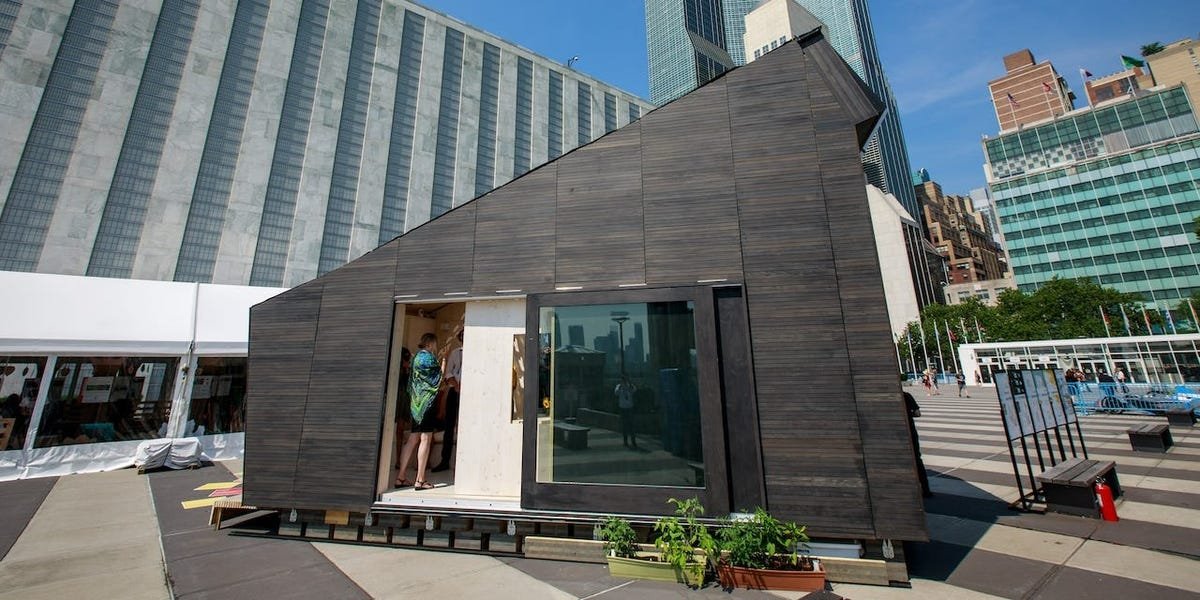
New-York-City-homeowners-can-apply-to-build-a-backyard.jpeg

New York City homeowners can apply to build a backyard tiny home

It’s open season for some New York City homeowners interested in building a tiny home in their backyard.

Under a sweeping zoning reform Mayor Eric Adams signed into law late last year, the city made it legal for certain one- and two-family homeowners to add an additional home, also known as an “ancillary dwelling unit” or ADU, to their property.

On September 30, 2025, the city finalized its rules for backyard and attic ADUs and began accepting applications from homeowners, although the government is still working on the rules for basement units. The city estimates that the reform — part of its City of Yes for Housing Opportunity package — will help create about 25,000 new homes in backyard cottages and converted garages, attics, and basements over the next 15 years. But the success of the reform will depend in large part on homeowners navigating high construction costs and regulations.

Wil Fisher has spent the last year preparing for this. The former city government employee founded a Queens-based firm, Unit Two Development, that helps homeowners determine whether their property is eligible for an ADU and connects them with contractors and others who can help them build one. Fisher said he and his team have identified well over 100,000 eligible individual properties, and they’ve talked with more than 100 of these homeowners, who largely live in Queens and Staten Island.

“The rules of the road are now written,” Fisher said. “It was a long process, but for the most part we’re off to the races.”

Most of the people Fisher has talked with are interested in adding an ADU to house a family member, including an aging parent or a relative with disabilities who needs care, or an adult child.

Maggie Ornstein is one of these homeowners. Ornstein, 47, lives with her mother in a house in western Queens that has been home to five generations of her family since the 1800s. She hopes to build an ADU for her mother, who’s undergoing treatment for cancer and is having difficulty navigating the stairs in their two-and-a-half-story home.

Ornstein, a public health geographer, has consulted with Fisher and determined that she could legally convert her garage into a home.

“My dream for an ADU on my property would be something that would be accessible, but might also have a second floor where a family member could potentially stay if they wanted to visit, or if I wanted to be with my mom in the ADU,” she said.

After months of planning and big picture discussions with potential clients, Fisher is starting to nail down the specifics of what his clients could build and what it might cost.

“Now is sort of the pivot from the conceptual to here’s exactly what it will take, and here are the cost implications of that,” he said.

Are you a New Yorker interested in building an ADU? Reach out to this reporter to share your experience at erelman@businessinsider.com.

Dealing with costs and regulations

One inevitable obstacle homeowners face is the steep price of building in the city. Fisher estimates that adding a backyard unit or converting a garage will start between $300,000 and $400,000, depending on the project’s size. That’s compared to the city’s median home price of $800,000.

The construction cost is out of reach for many homeowners who’d benefit most from adding an ADU to their property, said Thomas Yu, executive director of Asian Americans for Equality, an advocacy organization and affordable housing provider. Yu said there needs to be a much clearer and more affordable path to adding an ADU before the regulatory reform will unleash construction in lower and middle-income neighborhoods. He suggested tax abatements or grants for homeowners with more modest means.

Many of the New Yorkers Yu and his team work with live in overcrowded homes with multiple generations of their family. They could benefit from having a home for an older relative or an adult child who couldn’t otherwise afford to stay in the city.

“The ability for that generation to achieve independent homeownership is zero, particularly in New York City,” Yu said of younger New Yorkers. “So ADUs are the next half-step that’s needed for that.”

Ornstein said she’s been discouraged by the price tag on her potential project. She’s also turned off by how extensive and involved the construction would likely be, especially given her work schedule and caregiving responsibilities. She’s hoping to find some government funding to help pay for the project.

“It’s so much more expensive than I would have anticipated,” she said. “On the one hand, you wouldn’t be able to buy an apartment in New York City for what an ADU would cost to build. But on the other, it’s really a lot of upfront cost.”

The expense and hassle of adding an ADU might not make sense for homeowners who are just looking for rental income, Fisher said. But he expects the units will be easily rentable for those who want a tenant either immediately or in the future. Adding an ADU also tends to hike the property’s resale value.

“As far as I’m seeing, construction costs are a little too high for them to be a slam dunk rental investment from day one,” Fisher said. “But for folks who have a relative or an immediate need that exists within their own family or social network, these are going to be good investments in the long term.”

ADU construction is also limited by a slew of regulations. The units can’t be bigger than 800 square feet or take up more than a third of a homeowner’s backyard. The law also restricts basement ADUs in areas prone to flooding and prohibits them in attached homes, like townhouses.

The Regional Plan Association, a pro-housing nonprofit focused on the tri-state area, found that just 68,000 lots — 12% of the city’s one- and two-family properties — are eligible to add an ADU.

The city says it’s creating a “one-stop shop” full of information for homeowners interested in building an additional unit. The site will include a set of public, pre-approved backyard ADU designs submitted by architects, designers, and builders that homeowners can use to lower design costs and speed up the construction process.

“Efficiencies that can be built in are really going to be make or break for this market,” Fisher said.



Source link

I-backpacked-across-Europe-for-2-weeks-Here-are-the.jpeg

I backpacked across Europe for 2 weeks. Here are the best things I packed and the items I wished I’d left at home.

  • I traveled by train through four European countries for two weeks with just a backpack.
  • I packed light, but there were some items I could have skipped to save room for souvenirs. 
  • I was glad I brought a tote and quick-dry clothing, but I wish I had brought fewer pairs of socks.

Two weeks, six cities, four countries, and one backpack.

In 2022, I spent two weeks living out of a backpack while traveling from NYC to Europe by plane and train.

I flew from NYC to Berlin and traveled by train from Berlin to Vienna, Rome, Milan, Venice, Italy, and Zurich.

I explored cities in each country on foot, taking photos and notes along the way. I also stayed in a variety of accommodations, from train bunks to unique Airbnbs and luxury hotels.

Packing for this trip was hard for me. It was the lightest I’d ever packed for the longest trip I’d ever taken. However, after a few practice packs, I was surprised to find that I could fit everything I truly needed in a single 32-liter backpack.

For this trip, I used a 32-liter backpack, the largest one I own, to hold everything I needed for two weeks.

Everything the author packed for her two-week trip to Europe.

Joey Hadden/Business Insider

I packed my work computer, camera, and chargers; snacks, toiletries, and medications; one packing cube stuffed with clothing; and additional necessities, including a raincoat, a tote, and a pair of shower shoes.

While I longed for more outfit variety, I was glad I packed so little. I didn’t feel as weighed down by my backpack as I have on previous trips, so I had more energy throughout the day.

One of the most important things I packed was an all-in-one soap that cleans everything from clothes to bodies.


wet clothes hang on the side of a stand-alone tub

The author washed clothing in her accommodations.

Joey Hadden/Business Insider

When I pack light, I usually bring laundry sheets, which are small, dry, scented squares that resemble dryer sheets but are actually pads of laundry detergent that turn into a bubbly soap when mixed with water.

But I wanted to save more space on this trip, so I brought a 2-ounce bottle of Dr. Bronner’s Pure-Castille soap, which is an all-in-one soap that cleans everything from dishes to bodies. It also works as laundry soap.

I plan to travel with it from now on instead of laundry sheets and a separate container of body wash. 

Aside from Dr. Bronner’s soap, the most essential toiletries I made room for were my electric toothbrush and sea salt hairspray.


The author's packed toiletries on a white background

The author’s packed toiletries.

Joey Hadden/Business Insider

No matter how lightly I’m packing, I always make room for my electric toothbrush. Although I find it bulky, with a battery, charger, and case, maintaining my usual hygiene routine away from home makes me feel more comfortable while traveling.

Another necessity I packed was for my hair: the Sea Spray from Lush. I hate doing my hair. I like to just let it do what it wants, avoiding heat products and gels, but this hair product has my heart. Made from mostly natural ingredients, according to the Lush website, the spray adds texture and shine. I find that this product is easy for me to apply with just a few spritzes, and I think it always makes my hair look good with minimal effort. That’s why I never travel without it. 

I think I did a great job packing versatile clothing pieces that work well for travel.


The author stands smiling in front of a castle in Italy

The author wears versatile pieces in Italy.

Joey Hadden/Business Insider

I brought quick-dry shirts and pants made of thin, moisture-wicking materials, designed to dry quickly in the sun.

Most of my quick-drying clothes are from Under Armour or Prana and are good for exercise, but I thought they’d serve a dual purpose on this trip, considering my laundry strategy. I dried these articles on the balconies of hotel rooms and the porches of Airbnbs, and it never took longer than 20 minutes.

I was also satisfied with the versatility of the clothing I selected. With mostly neutral tones, like my gray T-shirt and navy sweater, as well as pops of color, every article I brought paired well with everything else.

I wore every combination of pieces to have as many different outfits as possible. While I still longed for more variety in my style abroad, I was impressed by how many outfits I was able to make with such a small selection. 

I was happy with the single pair of shoes I packed, which were black and gray sneakers.


The author wears her black sneakers in Milan

The author wears her black sneakers in Milan.

Joey Hadden/Business Insider

I find that shoes take up quite a bit of room in my backpack, so I try to travel with just one pair. I thought these black and gray New Balance sneakers were the perfect everyday shoes for this trip because they were comfortable enough to walk around in all day without hurting my feet. And with a neutral color scheme, I think they looked good with every outfit.

I found that my slides were crucial for showers throughout my trip.


Nike slides on a wooden shelf

The author brought slides for showering.

Joey Hadden/Business Insider

Besides my pair of sneakers, I also brought a pair of rubber slides to wear in the shower.

Unless I’m at a nice hotel, I prefer to wear shoes in the shower when I’m traveling. I can be a bit of a germaphobe, so having a layer of protection between my feet and the floor makes me feel at ease in places like the outdoor shower at my Airbnb in Switzerland or the tiny home hotel in Germany, where the toilet and shower shared the same floor. 

The weather on my trip ranged from 40 to 80 degrees Fahrenheit, so I was glad I brought a windbreaker.


The author wears her windbreaker in Switzerland.

The author wears her windbreaker in Switzerland.

Joey Hadden/Business Insider

My Members Only jacket is my go-to travel jacket in the fall, and I thought it was the perfect pick for this trip, as it’s comfortable in various temperatures. Since this jacket is a little big on me, I was able to fit long-sleeved layers underneath on cooler days. And it’s black, so I think it goes with everything.

It also has four pockets, one of which is hidden on the inside. I used that pocket to hold essentials, such as my phone, while walking around each city. 

I packed a rain jacket, too, which came in handy when it rained in Vienna and Switzerland.


The author stands smiling in a rain jacket with an airstream trailer behind her

The author wears a rain jacket in Vienna.

Joey Hadden/Business Insider

I checked the forecast during the week leading up to my trip and saw that some locations were expecting rain. I packed my smallest rain jacket so I could wear it alone on warmer rainy days and layer it underneath my windbreaker on cooler days. 

I caught the most rain of the trip during my second day in Vienna. Although it was pouring, I was able to walk around the city all day and stay relatively dry thanks to the jacket. When it cooled down at night, I wore my windbreaker over the rain jacket and felt cozy.

I also packed a tote bag in my backpack to separate some items for easier access during my travels, like my notebook and camera.


The author carries her tote bag in Rome.

The author carries her tote bag in Rome.

Joey Hadden/Business Insider

On travel days, I used a tote to separate and hold personal belongings I wanted quick access to, so I could stuff my backpack into the overhead bins of planes and trains.

This made it easy to quickly find items I needed, such as my headphones, while keeping my bulky backpack out of the way. By stowing my backpack on the shelf above me, I was able to maximize legroom, too.

On non-travel days, I left my backpack at my hotel or Airbnb and explored with a lighter load in the tote. The tote was large enough to fit all the essentials for a day out on the town, including my camera. 

Having an outlet adapter was essential for charging my devices.


A composite image of a European plug to US plug converter

European plug to US plug converter.

Joey Hadden/Business Insider

Different countries have different outlet ports, so my outlet adapter was one of the most important items in my backpack. One side has a European plug, and the other has a US outlet port. On the bottom, there are four USB ports.

I brought my iPad, phone, laptop, and camera on this trip, and I was able to charge all of them at once with this device.

To keep myself entertained during flights and train rides, I brought my iPad for reading, watching TV, and drawing.


The author watches TV on her iPad in the shared cabin.

The author watches TV on her iPad on an overnight train.

Joey Hadden/Business Insider

I bought several e-books on my iPad to read as much as I wanted during the trip, and to avoid bringing physical books that would take up too much space.

Before my trip, I downloaded some guidebooks for each country I visited. As I made my way to each destination, I read about the sights that awaited me. These books helped me decide how to spend my time in each location and built up my excitement for my coming adventures. 

During my trip, I downloaded a few episodes of my favorite TV shows to bring me comfort when I felt homesick, which was usually around bedtime. I also used my iPad to draw cover art for my band with the Procreate app, so I spent some time sketching designs for our coming singles. Watching TV and engaging in hobbies that I enjoy at home made me feel more grounded while traveling.

I packed my film camera and my digital camera. I was glad I made room for both.


The author's film camera (L) and a photo she took with it in Switzerland (R).

The author’s film camera (left) and a photo she took with it in Switzerland (right).

Joey Hadden/Business Insider

While I take photos digitally for work, I shoot and develop film as a hobby. For me, this includes manually loading film into a mechanical camera and taking my time with each shot before developing the negatives in my kitchen using a combination of chemicals. 

I hadn’t brought my film camera on previous work trips, but since Europe was my longest adventure yet, I packed my Minolta Autocord to help me find a work-life balance by taking film photos just for myself.

When I was in work mode, I shot digitally, and during my breaks, I took pictures with my film camera. This made me feel so much more creative during my trip, and I think I got some great photos. Although this camera is quite heavy for its size, I thought it was worth bringing to feel inspired and maintain an artistic mindset throughout my European adventure. 

Bringing snacks and meal bars helped me save money while traveling.


A hand holds a pack of goldfish in front of a tray table on a flight

The author recommends packing your own snacks for long trips.

Joey Hadden/Business Insider

Packing meal bars and snacks for travel days helped me save money I would have spent on munchies in airports and train stations. 

During my 8-hour flight from NYC to Berlin, I saved money on an in-flight meal by consuming an entire bag of Combos. On busy days spent exploring, I often had RX bars for breakfast or lunch to save money and keep me energized. 

However, I also think it’s important to try local cuisines while traveling to new places, so I maintained a balance of meal bars and dining out during my trip.

There were a few items I could have left behind to make my bag even lighter. For my next work trip, I’ll leave some camera gear at home.


A composite image of a digital camera and an extra lens and a hand holding three rolls of film

The author could have left some gear at home.

Joey Hadden/Business Insider

I brought way too much film for this trip. I packed eight rolls and only shot four of them due to some rainy days. I was also surprised by how easily I could buy film in Europe. If I’d needed more, I could have stopped at one of the many film stores I passed in Vienna and Berlin. In Vienna, I even spotted a film vending machine on the street.

Because I overestimated the number of film pictures I’d take, next time, especially if I’m traveling to Europe, I’ll bring half the film I think I’ll use.

I find that rolls of film feel bulky in my bag if I have too many, but my camera lenses feel even bulkier. I brought two lenses for my digital camera: a zoom lens and a fixed wide-angle lens. I think I could have just brought the zoom lens.

I brought a maxi dress for more formal settings, but found it wasn’t very versatile.


The author wears her dress in Rome.

The author wears a dress in Rome.

Joey Hadden/Business Insider

I brought a maxi dress for days when I wanted to dress formally. But apart from different jackets over top, my dress looked the same to me every time I wore it. And since it was so long, I thought it took up the amount of space in my packing cube that a pair of shorts and a couple more shirts could have taken.

Replacing the dress with a pair of nice shorts and some blouses would have provided me with more versatile outfits.

Since I spent two nights in most of the locations I visited, I had ample time to dry my socks after washing them, so I wish I’d brought fewer pairs.


The author's 11 pairs of socks she brought to Italy.

The author’s 10 pairs of socks she brought to Europe.

Joey Hadden/Business Insider

I brought 10 pairs of socks for my two-week trip since I’d had trouble drying my socks in just one night on previous trips, leaving me wishing I had packed more.

But since I booked two nights in most of the cities I visited in Europe, I found I had plenty of time to dry my socks. I probably could have done with six pairs to leave more room in my bag for small souvenirs. 

Packing so lightly allowed me to bring home some small souvenirs, like 3D puzzles and tiny sculptures. Next time, I’ll save even more space for treasures I find along the way.


3D puzzles and other small souvenirs the author picked up during her trip.

The author brought home a few souvenirs.

Joey Hadden/Business Insider

Apart from having less stuff to keep track of and less weight on my back, the best part of packing so lightly was saving room for trinkets to remind me of my trip.

In Vienna and Zurich, I bought tiny framed paintings of landscapes to display on my desk at home. In Venice, I purchased three 3D puzzles, which came in small, flat packs, to put together and display once I got home. I also picked up a few other flat items I like to collect that slid easily into my backpack, like bookmarks and a thin, paperback photo book. 

With so many reminders of my European adventure scattered around my apartment in NYC, I think having fewer belongings during my journey was worth gaining extra space to bring a piece of each place home with me. And next time, I’ll pack even lighter. 


Source link

I-moved-to-a-small-beach-town-in-another-country.jpeg

I moved to a small beach town in another country. My new home felt like paradise, but I struggled to belong.

In 2017, I moved from Los Angeles to Panama to teach English.

My first year in the country was filled with excitement. I was based in Panama City, and I found it easy to make friends through the many dance classes and meet-ups.

My social life felt full, and most weekends were spent wandering through Casco Viejo (the downtown area), trying to find the best rooftop bars and underground nightclubs playing a mix of Reggaeton and pop music.

Soon, though, the fast-paced lifestyle, combined with the constant traffic and sweltering heat, became overwhelming. I grew tired of living in a city of millions and craved a slower pace.

So, I relocated to a small coastal town called Playa Venao, which is about 200 miles and a five-hour drive from Panama City.

I hoped I could quickly build a community there as I did in the capital, but it didn’t come nearly as easily to me.

At first, my quieter town felt like paradise


Surfers on beach at sunset

Many parts of Panama have a rich surfing culture.

Kiersten Brown


Although Playa Venao is now more developed, at the time I lived there, it was primarily a handful of hotels, hostels, and homes scattered along the shoreline.

A single road split the town: real estate on one side, jungle and cow pastures on the other. Only a few hundred people called Playa Venao their full-time home.

I was living in a place where there were more trees than buildings. In fact, I could pick and eat papayas, coconuts, and mangos straight from the trees on the property of my rental.

The school I worked at was quite small and, because of our remote location, nature often became our third instructor. Children shared their outdoor play area with centipedes and howler monkeys, and splashed in the nearby stream and waterfall.

Between teaching, I spent my days peacefully walking along the beach and hiking near the river. I was no longer overwhelmed by the sounds of honking horns and revving engines. Instead, I was soothed by the songs of exotic birds.

My social life wasn’t bustling like it was before, though at first, I enjoyed meeting people from all over the world who were in the area on vacation.

But once the novelty of being somewhere new wore off, I started to see the downside of living in a place that felt like paradise.

Unfortunately, I didn’t feel like I fit in with most of the visitors or locals


Waves at Playa Venao

I didn’t have much to say about surfing — a popular topic among tourists.

helivideo/Getty Images


I struggled to find my place in a community that felt largely split between locals and tourists.

I was a bit of an in-between: I’d only been in the country for a year, so I wasn’t a local … but I’d been living in this beach town for a few months, so I wasn’t a tourist, either.

Building community with transient tourists seemed impossible.

Many tourists I met spent their time surfing or talking about surfing, not surprising given Playa Venao’s reputation as one of the best surf spots in the world.

Unfortunately, as a beginner, I couldn’t keep up with the experienced surfers during conversations or out on the water.

Whenever I’d meet someone who had more to talk about than waves, we only had a week or two to get to know each other because they were vacationing where I was living.

I felt I never had time to share more about myself beyond surface-level topics, like work, hobbies, and where I was from. These limited interactions made my relationships feel shallow and made me feel like I didn’t have any real friends.

Over time, the loneliness ate away at me, and I grew tired of reintroducing myself to a new tourist every other week. So, I tried connecting with the locals. This wasn’t an easy task.

The director of the school I was working at had warned me that locals were often closed off to newcomers. I felt it.

One night, I managed to play a game of pool with some locals at a nearby bar. I thought I’d made a breakthrough, but the next morning, the same people who had been friendly the night before wouldn’t give me the time of day — it hurt.

I could understand why a tight-knit community of people who grew up together might be wary of trusting outsiders. However, it was hard being treated like just another visitor in the place I lived.

After weeks of failing to make lasting connections, part of me wanted to call it quits and return to the city. I missed feeling like I belonged and having a calendar filled with dance classes and happy hours with friends.

However, I’d committed to working through the whole school year, and I didn’t want to walk away from the children — some of the only people I had created bonds with.

Finally, one conversation with my mom helped me reevaluate and give my new home another shot.

Focusing on gratitude and living in the moment helped me feel more at home


Cloudy day shot of beautiful Playa Venao

Panama has several famous beaches.

Piero Zanetti/Getty Images


After listening to my sorrows, my mom reminded me that life wasn’t happening to me, it was happening for me.

I needed to embrace each moment, even the not-so-great ones, and treat my situation as an opportunity. So, instead of ruminating on what I lacked, I focused on appreciating more of what I had.

To ease my frustration of not being able to pop over to a movie theater or hop into a nightclub like in the city, I found entertainment within nature.

I’d wake up early to enjoy the colorful sunrises and collect different rocks and shells along the shore. I’d pass the time by going for a swim or setting up my speaker and dancing barefoot in the sand.

Focusing on my internal peace helped me to stop forcing connections, and I allowed them to form naturally.

I stopped viewing relationships as temporary experiences. It didn’t matter if a friendship lasted five days or four months — I cherished every connection made.

Soon, routine visits to the local coffee shop led to casual chats with the barista. I ordered the same dish so often that one day, they wrote out the recipe for it and gave it to me — it kick-started our friendship.

More connections began to blossom as I prioritized attending community events, from kayak races to surfing competitions. As time passed, locals could see that I was consistently making an effort, and perhaps they started to view me as less of a tourist.

Meanwhile, I was forming stronger relationships with the parents of the children I worked with, and they helped advocate for me to the other locals. I’d also started to build a strong connection with my coworker, who became one of my first real friends in the area.

With a little bit of patience and a mindset shift, I eventually found the community I craved and ended up staying in Playa Venao for about a year.

In that time, I learned that sticking through uncomfortable situations — and staying present for both the good and the bad — can lead to unexpected peace and happiness.


Source link

Im-61-with-16-grandkids-Instead-of-downsizing-we-bought.jpeg

I’m 61 with 16 grandkids. Instead of downsizing, we bought a bigger vacation home to finally make family trips work.

This as-told-to essay is based on a conversation with 61-year-old Doug Beachy, a Cincinnati-based business owner who bought a vacation home with Pacaso in 2022. Pacaso is a platform for fractional ownership of luxury vacation homes. The company allows multiple individuals to co-own a second home and share ownership of the property. This conversation has been edited for length and clarity.

I’ve been married to my wife, Jamie, for 37 years. We have four married children and 16 grandchildren. Our oldest grandchild is 12, and our youngest isn’t quite one yet.

Once our kids started having children, they all moved back closer to home in Cincinnati, where we live. We own a five-bedroom home that’s about 4,000 square feet. We’re empty nesters, so there’s plenty of space for us, but when the whole family is over, everyone is on top of each other.

We’ve converted one room into a kids’ playroom and another into a nursery, and we have a finished basement where the kids can play, but family gatherings are still a bit hectic.

In the past, to bring everyone together, we would either rent a large beach house or book a cabin-style retreat in the woods here in Ohio.

We did that about every other year because it’s hard to coordinate everyone’s schedules — especially with grandkids in school — and seasonal rates for a large home are expensive. It was a big chunk of money for just a week’s experience.

We bought a vacation home

Hilton Head Island has always been a fun family destination for us. It’s an island in the Lowcountry of South Carolina, just outside Savannah, Georgia, with about 12 miles of pristine beaches.

There’s so much to do here from a family activity standpoint, in addition to simply soaking up the sun and going to the beach — it’s just a great place to relax and unwind.

Homes here can be expensive, though. The average home is priced in the upper $700,000s, and properties can sell for as much as $10 million. For a while, I thought about buying a second, larger home here, but I’m not retired yet, and I realized that putting that much money into a house where I don’t live full time just didn’t make sense.


An aerial view of homes along the shore in Hilton Head.

Hilton Head Island, South Carolina.

EyeEm Mobile GmbH/Getty Images


In early 2022, I started exploring different homeownership options, including shared or fractional ownership. That’s when I found Pacaso online and saw they had some homes available in Hilton Head.

We ultimately settled on an about 5,000-square-foot home with six spacious suite-like bedrooms — five with king-sized beds, large walk-in closets, and private bathrooms, and one with several bunk beds for the children — and seven and a half bathrooms.

As you can imagine, taking 20 people out to eat all the time is not exactly fun, so we wanted a house with a large, well-stocked kitchen. Our kitchen almost occupies the entire second floor and, by my last count, it can seat 19 or 20 people. It also has a beautiful ocean view.

Co-ownership was the best fit for us

When we bought the home, it was valued at over $5 million. We own a 1/8 share — we made a 50% down payment on our portion of the home — and there are seven other owners, whom we don’t know.

Our friends will say, “It sounds like a timeshare.” But I think it’s much more transparent than a traditional timeshare. There are no extra markups or mystery fees added on top.

I also feel that, unlike a timeshare, which can leave you feeling stuck and lose value over time, this is a long-term investment. Of course, everything depends on the real-estate market, but I feel fairly confident this is an appreciating asset.


Doug Beachy's vacation home.

The Beachy vacation home.

Courtesy of Pacaso


I think going this route, instead of buying another second or vacation home, has eliminated all the concerns I had about upsizing — like having to maintain the home ourselves or deal with high HOA fees. We wanted a place we could share with family, and this setup works well for us at this stage of our lives.

We spend more time together as a family

Pacaso provides a house manager who handles everything. It’s essentially a concierge service — the home is clean when we arrive and fully stocked with towels, linens, soaps, and disposable items, such as paper towels and paper plates.

When we go, the only thing we really need to think about is what food we want to buy, depending on what we plan to cook — and we have a lot of good cooks in the family.

We have the home reserved for 44 nights a year, and we use nearly all of that time. Not everyone in the family is there for every stay, but they come as they please.

Our family gets together more often now, about twice a year. In the summer, during the high season when the kids are out of school, we typically reserve the house for a couple of weeks at a time.


Doug Beachy and his granddaughter.

Beachy and his granddaughter.

Courtesy of Doug Beachy


The grandkids look forward to each trip and talk about it all the time. Many of them are around the same age, and they love the opportunity to spend time with their cousins.

The house came with six beach cruiser bikes, which is perfect because there are plenty of biking trails on the island. It also has a private pool and hot tub, and the grandkids love that it’s fully stocked with games and puzzles.

Our favorite things to do with them are spending time in the pool, watching the sunrise, and hanging out on the beach. We also take a lot of bike rides and play pickleball. We just love how much more quality time we’re spending together as a family.


Source link

We-gave-our-daughter-20000-for-a-wedding-but-she.jpeg

We gave our daughter $20,000 for a wedding, but she used it for a home down payment and paid for her own wedding. Everyone was happy.

When Mike’s daughter got engaged, he and his wife wanted to help pay for it.

Mike, who asked Business Insider to only use his first name for privacy reasons, estimated that a wedding in the Kansas City area would cost between $15,000 and $25,000 at the time, which was around 2015.

Mike and his wife decided they could put $20,000 towards the wedding, but they knew wedding spending can get out of hand and that emotions tend to run high during the planning process.

So instead of working closely with their daughter on her wedding plans and talking through each potential cost, they came up with a straightforward solution: give her and her fiancé a lump sum of $20,000 and let them do all the planning.

“I didn’t want to be telling my daughter what she could and couldn’t do,” he said. “She was an adult.”

Mike said the strategy took the pressure off him and his wife and helped avoid any wrestling over who was buying what or what his daughter could and could not have at her own wedding. He also said it helped him and his wife contribute the amount they wanted without going over budget by adding on things here and there.

In 2023, the national average cost of a wedding was $35,000, according to The Knot, while the average cost in Kansas was $25,000. Still, most couples end up going over their budget. A Real Weddings Study by The Knot found 56% of couple spent an average of $7,600 more on their wedding than they planned. Others exceeded their budget by more than $10,000.

While tradition typically has the bride’s family primarily paying for a wedding, those customs are changing, especially as Americans get married later in life and are more able to take on their own wedding costs. A 2023 study from The Knot found it’s more common for couples and their families to split the costs equally.

Mike, his wife, their daughter, and her fiancé were all happy with the lump-sum agreement.

“Then they kind of tricked me,” he said, laughing. “One day, they came home and said, ‘Hey, we bought a house.'”

The couple took the $20,000 and used it to put a down payment on their home — before they actually had their wedding, which they then planned to pay for out of their own pocket.

Initially, Mike was surprised, but ultimately, he thought it was a good thing that his daughter and her fiancé paid for their own wedding.

“If kids are not given carte blanche on wedding plans, if they’re forced to budget from their own standpoint, the whole thing just doesn’t get out of hand,” he said.

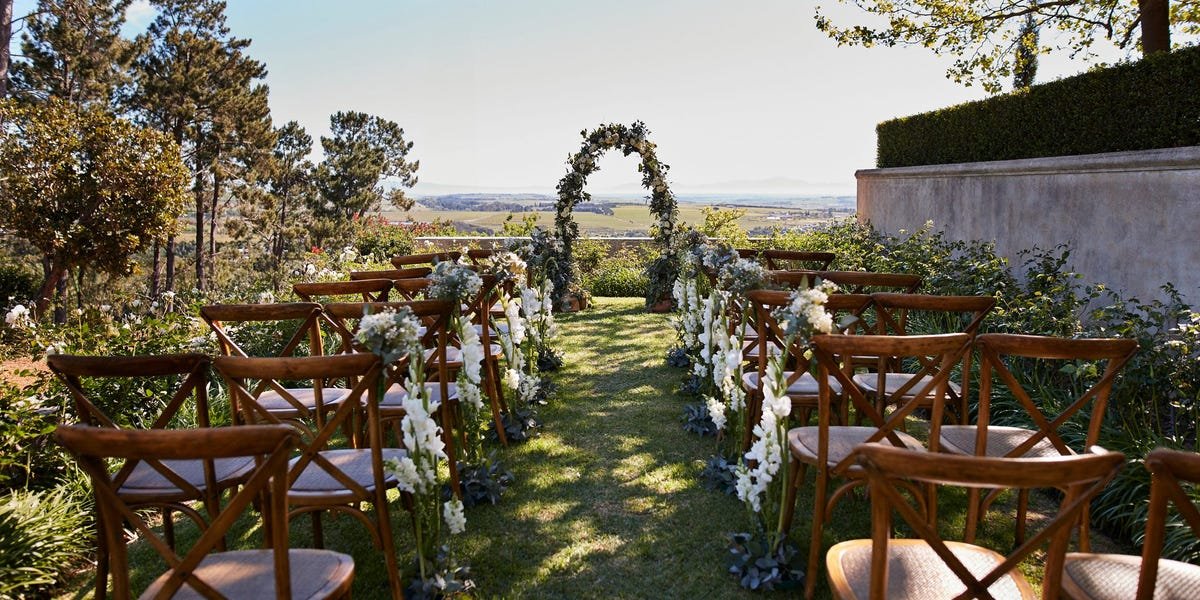
The couple held the wedding at the rose garden in Loose Park, a large public park in Kansas City, and at a popular reception hall. Mike said everything about the wedding seemed reasonable but that he never learned what they ended up spending.

“I never asked,” he said.

If the couple had used the money for a down payment and then eloped, Mike said that may have bothered him. But as long as he and his wife were still able to attend their daughter’s wedding, they were happy.

“I figured I got off for a reasonable amount of money for the wedding, and they got a down payment on a house out of the deal and a wedding,” he said.

Mike said he thinks too many people get caught up on the lavish weddings they see on TikTok, but that it can take away from the “whole point of having a wedding, which is to have a marriage.”

He also said that he thinks by helping them learn how to budget their money for a wedding, it was also a good step towards learning how to budget in a marriage.

Mike’s wife did end up giving their daughter a bit more money in the end, which he thinks was for something having to do with her dress.

“She snuck it in,” he said, laughing. “She couldn’t resist.”

Have a news tip or a story to share about the costs of throwing a wedding or being in a bridal party? Contact this reporter at kvlamis@businessinsider.com.


Source link