The US has been battling Iran for more than 24 hours, and the scale of what the American military brought into the fight is now coming into focus.
After a slow but steady drip of details, we now have a clearer, more comprehensive picture of the kind of US combat platforms involved and the targets struck on the opening day of combat, executed alongside the Israeli military.
US Central Command said forces involved in Operation Epic Fury struck over 1,000 Iranian targets with destroyer-launched Tomahawks, stealth B-2 Spirit bombers armed with 2,000-pound bombs, and US-made drones modeled after Iranian Shaheds, among other assets and munitions. It called the drones “American-made retribution” as the US struck Iran with a weapon Tehran designed.
Here’s the breakdown from US Central Command, which oversees US operations in the Middle East, on what went into the fight. It’s extensive, though some things are left off, covered by a note that says the operation also includes “special capabilities we can’t list.”
A graphic breaking down the weapons used in Operation Epic Fury from US Central Command
US Central Command
Beyond the B-2 bombers, the list of aircraft includes fifth-generation fighters like the F-35 Lightning II Joint Strike Fighter and F-22 Raptor, as well as a mix of attack aircraft and fourth-gen fighters.
There are also electronic attack planes, airborne early warning and control aircraft, surveillance platforms, and logistics aircraft, such as airlift and refueling planes, listed. The Airborne early warning aircraft can detect and track targets that can be passed off in real-time to fighter jetss like the F-22 and F/A-18.
Drones include the MQ-9 Reaper, a combat and reconnaissance system, and the new Low-Cost Unmanned Combat Attack System, or LUCAS, drones. The former is intended to return home, while the latter is purposefully expendable.
Suppression operations aimed at breaking down Iranian defenses set the conditions for air superiority and permitted damaging strikes across Iranian territory. There have been no credible reports of aircraft losses.
Other assets involved include High Mobility Artillery Rocket Systems, or HIMARS, weapons that can fire both guided rockets and missiles. They gained notoriety for their combat effectiveness in Ukraine. In addition to destroyers, American aircraft carriers are in the area, launching fighter aircraft like the F/A-18 Super Hornet and F-35C, the carrier-based variant of the stealth fighter.
While much of the weaponry on the list is offensive or intended to support offensive operations, some assets are strictly defensive. These include Patriot surface-to-air missile systems and Terminal High Altitude Area Defense, or THAAD, batteries. These have been used in air defense battles as Iran launched its missiles.
Prior to the beginning of “major combat operations” against Iran, which President Donald Trump announced early Saturday morning in a video message, the US spent weeks building up its military presence not seen in the area in decades.
The impact of operations, in which the US has suffered some personnel losses, has been felt across Iran. The US has hit command and control centers, operational centers of Iran’s Islamic Revolutionary Guard Corps, missile sites, navy warships, and critical communication sites.
The Israeli military, as part of Operation Roaring Lion, has also struck hundreds of targets across the country, which has seen much of its military and political leadership killed.
Passengers flying from Japan to Europe endured a 14-hour-long flight to nowhere on Tuesday after an engine issue.
All Nippon Airways Flight 223 left Tokyo around 11 a.m. and was scheduled to land in Frankfurt, Germany, about 14 hours later.
However, over six hours into the journey, it turned around while flying over the Arctic Ocean, north of Alaska.
Flight-tracking data shows how the Boeing 787 then headed back to the Japanese capital.
It took another eight hours to reach Tokyo’s Haneda Airport, where Flight 223 touched down around 1 a.m.
The plane diverted due to a “low engine oil level,” an ANA spokesperson told Business Insider.
Engine oil differs from jet fuel and is used to lubricate and cool the moving parts inside the engine.Returning to Tokyo, the airline’s main hub, would mean more resources for maintenance and repair.
The spokesperson added that the flight departed again on Wednesday morning, with a change of aircraft and crew.
Data from Flightradar24 shows the new plane departed at around 7:30 a.m. and is supposed to land in Frankfurt around 1 p.m. local time. That’s about 20 hours later than passengers initially expected to get there.
“The safety of our passengers and crew is our top priority,” the spokesperson said. “We sincerely apologize for the inconvenience caused to our customers by this extensive delay.”
Since the plane turned around roughly halfway through a huge journey, it was a particularly gruelling flight to nowhere — but not the longest.
Last June, a Qantas flight to Paris returned to Perth after 15 hours. It was mid-flight when Iran launched strikes against a US air base in Qatar, closing some of the world’s most congested airspace.
And in 2023, Air New Zealand passengers had a 16-hour flight to nowhere after an electrical fire in a terminal at New York’s JFK Airport.
We flew from London Gatwick Airport rather than Heathrow because the flights were about $1,000 cheaper.
Arriving at Gatwick, it was a luxury to have a dedicated check-in counter with barely any queue and then fast-track through security too.
After that, though, I wasn’t super blown away.
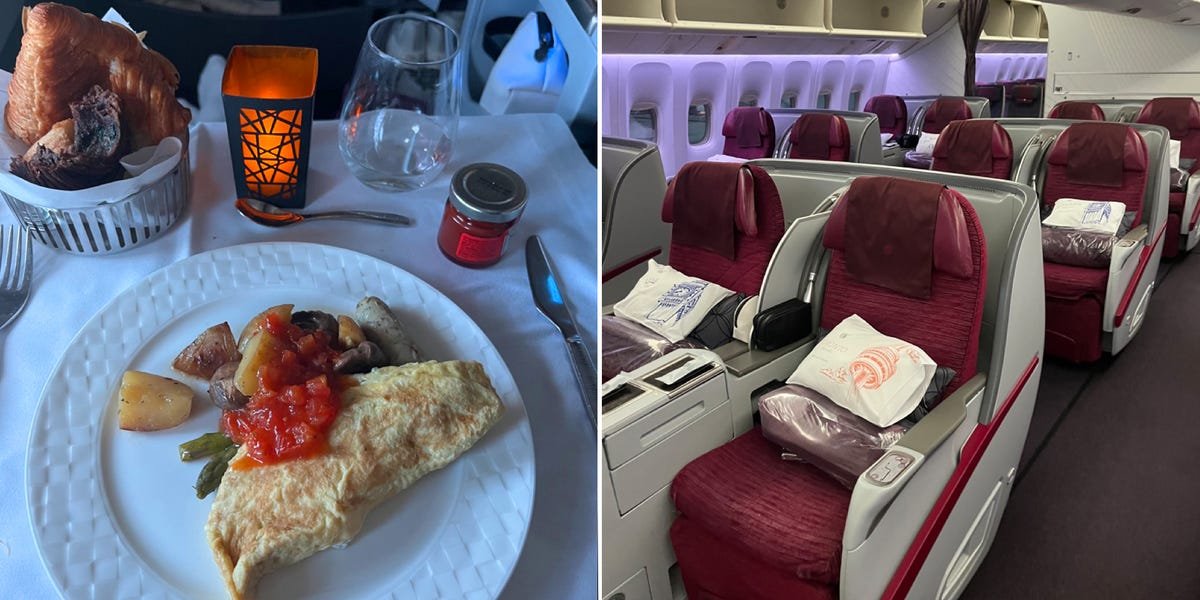
Qatar Airways doesn’t have a dedicated lounge at Gatwick, so its business-class travelers can use the Plaza Premium Lounge, which anyone can pay to use. I found it to be quite busy and a bit underwhelming, with a rather uninspiring view.
However, it has a separate area for Qatar Airways customers where we could order from a small à la carte menu. I got a burger, and my husband had a goat-cheese sandwich — it was nice to have complimentary food.
We were also given “premium” drinks vouchers for certain beverages, such as prosecco, though Champagne would’ve cost extra.
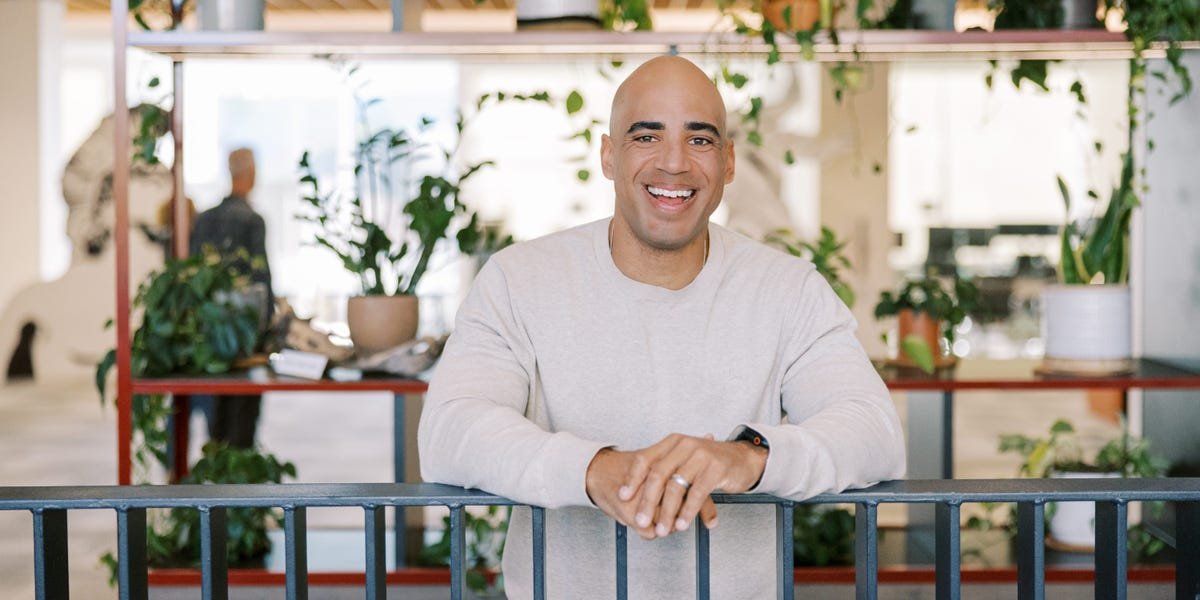
This as-told-to essay is based on a conversation with Tyler Smith, founder ofHundred Health. It has been edited for length and clarity.
I used to brag about how little sleep I got. It felt like a superpower: I could sleep just three or four hours a night, and still operate at a very high level.
That helped me get ahead early on. As a teen, I bused tables and sold firewood. By the time I was 19, I bought a house (which was possible because it was the subprime mortgage days). Having a mortgage gave me real responsibility at a young age.
It also got me thinking about a career. I couldn’t believe how much my real estate agent made on the sale. Her commission was about $13,000 — which seemed like $1 million to me at the time — and I thought she didn’t do a very good job. I realized that if I did good work in real estate, I could make even more.
I did well in real estate and developed software that took off
I dropped out of college to get into real estate. During the financial crisis, I found a niche helping banks sell foreclosures. In 2006 and 2007, I oversaw about 1,000 home sales a year and managed triple that number of properties.
I was working 14-hour days, seven days a week. It wasn’t a good life, but I was young enough that it didn’t matter. I fueled myself on energy drinks and embraced the fact that work was my life.
To help scale, I developed software to track my business’s transactions. Other brokerages inquired about what I was using, and soon I had clients paying $2,000 or $5,000 a month to use the software.
I was in the right place at the right time with the right product as real estate transactions went digital. By 2012, that software, SkySlope, was doing $12 million in annual revenue. In 2017, Fidelity bought a majority stake, valuing the company at more than $80 million.
I wanted to focus on my passion: health
That deal meant that I had enough money to never work again. I’m wired to build, though, so I planned to use my financial freedom to focus on something with purpose: a mission-driven business.
When I was 39, my wife and I were trying to have a child. I took a biological age test, which said my biological age was 47. That stopped me in my tracks, because my own father had died suddenly of a heart attack at 47.
The test showed me that what I was telling myself wasn’t true. I was working out and eating relatively healthy. I looked fit, but the data showed that what was happening inside my body didn’t match what was on the outside.
I spent over $1 million building a home wellness center
Once I saw that data, I couldn’t ignore it. I spent well over six figures hiring a top-notch healthcare team. My wife and I rented a 2,000 square-foot unit in Sacramento, which we transformed into our own personal wellness center. It had IV infusions, a hyperbaric chamber, a red light bed, cold plunges, massagers — basically anything you can name in the health and fitness world.
We were building a home in Napa and wanted to know which equipment we would actually use. We spent about $700,000 fitting out the Sacramento space, and eventually over $1 million building the wellness center in our home.
Today, I use the red light bed, oxygen therapy, and cold plunge almost daily. Other therapies — like massagers and bikes — didn’t make the final cut. I love the results of the hyperbaric chamber, but don’t like lying in it for an hour, so for now, that’s out of rotation.
I want to help others have more access to health information
I changed everything about my health and fitness, and because of that, everything in my life changed: my muscle mass and energy levels went through the roof, and my mood improved. I felt better than ever, and friends began to notice.
I know not everyone has the money and access I do. Most people have more data about their health than ever due to smart watches and wearable monitors, but they don’t have a team of doctors helping them use that information.
I started Hundred Health not only to provide data, but also to offer a personalized plan for what to do with it. I used to think that wealth was freedom, but now I know that health is — and I would like to help more people access that.
When I first found out I was pregnant, I frankly didn’t put much thought into long-term childcare plans. Living in New York City, my husband and I knew we wouldn’t have the traditional village available to us — my parents, while local and thrilled to get a first grandchild, are older and weren’t particularly eager to volunteer for solo babysitting, while his parents live thousands of miles away.
But we were in a uniquely lucky situation: We both happened to have flexible, largely remote jobs.
For the first few months of my surprisingly generous parental leave, my husband and I, cocooned in newborn bliss (and perhaps slightly delirious from sleep deprivation), didn’t stress about what would happen when I went back to work. I figured we could make it work through a combination of creative time management and strategically scheduled naps — at least until our daughter was eligible for 3-K, free schooling available in New York City for kids the year they turn 3.
My husband became the primary parent
Surprisingly, this plan ended up working, for the most part, and for just shy of a year, we managed a fairly even 50-50 split in parenting duties. As time went on and my own work ramped up and the baby potato turned into a sprinting toddler, it became clear that my husband would need to become the primary parent.
It wasn’t something either of us had considered before having a child, but it made the most sense: He found far greater fulfillment in being a father than he’d ever found in his career, whereas I had always defined myself by my work as a writer and editor. He kept his job but scaled back, working largely in the evenings and weekends so he could be free during the day for stay-at-home parenting.
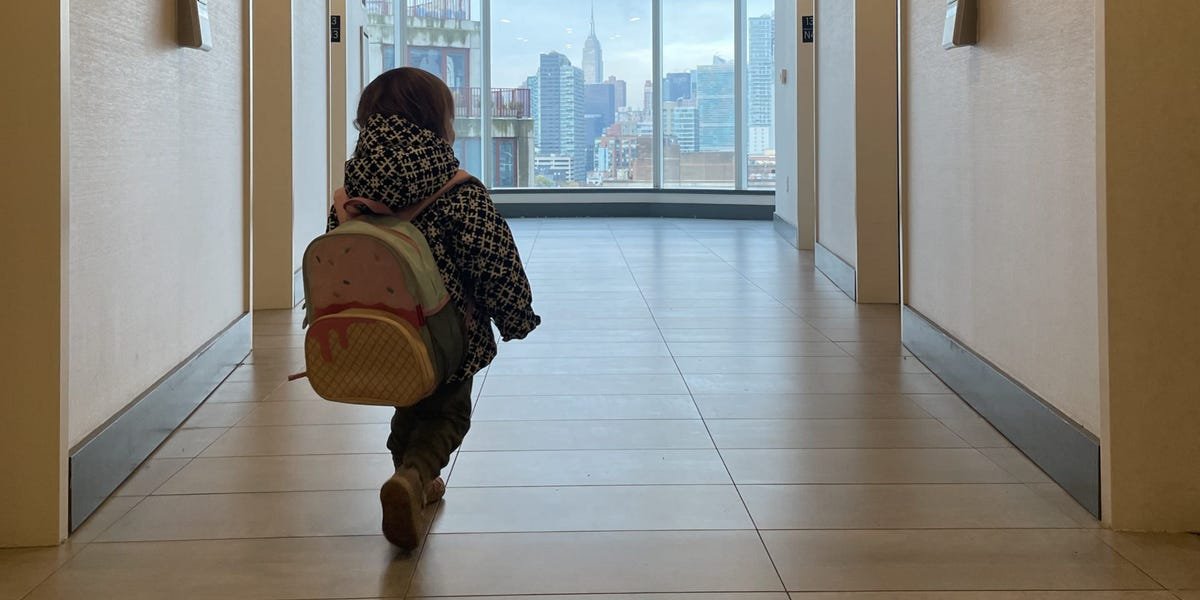
As our daughter became a toddler, she blossomed under my husband’s full-time care, with constant adventuring and frequent playdates keeping her days busy. We didn’t need outside childcare — but as it turned out, she did.
I’d considered traditional childcare, but couldn’t stomach the cost
New York City has notoriously high childcare costs.
The author says traditional childcare was too expensive in New York City.
Courtesy of Michael Matassa
In the interim between our delicate balancing act and deciding my husband would drastically scale down his work, I considered a number of different options, from traditional daycares (upward of $2,500 a month in my neighborhood for full-time programs) to nanny-share arrangements with other local families (maybe slightly cheaper, but a pain to coordinate).
We were lucky in that we were able to avoid childcare costs, which would have effectively canceled out one of our salaries, though I still toyed with the idea of enrolling her somewhere part time to get her used to the idea in case our situation changed.
Enter Barnard College’s Center for Toddler Development.
I first heard about the program in a local moms’ book club I’d joined. One of our first reads was “How Toddlers Thrive” by Tovah P. Klein, a prominent child psychologist — and incidentally the then-director of the Toddler Center. Another mom in the book club with a daughter two years older than mine mentioned she was now applying.
I was frankly flabbergasted when she explained the details. It’s part research program, where the toddlers are minded by teachers and selected students from the college’s graduate program and observed for published research purposes from behind a one-way mirror, and part “school,” albeit an extremely part-time one, with each “class” of toddlers meeting only twice a week for two hours each day for the duration of the school year.
I was intrigued by the program’s unique “gentle separation period” and its said mission to help toddlers have a positive first school experience while supporting healthy social and emotional development through hands-on, child-guided play.
At that point, my daughter was only 18 months old (the halfway point to our 3-K end goal), but I’d already started to suspect that separation might be an eventual issue. With two working-from-home parents, she was used to having us around constantly — and had never had a babysitter.
The few times we’d tried to step out to grab a coffee and handed her to a grandparent, she would shriek like she was being abandoned. Over the next several months, she also grew more shy, coinciding with her stranger danger peaking.
We paid $7,500 for our 2-year-old
Convinced our future would be filled with school refusals and drop-off meltdowns, I hardcore pitched the Toddler Center to my husband for the coming school year. We didn’t need it for childcare, but I became convinced we did need it to help give our daughter the gentlest, most gradual introduction to being away from us. He was less convinced, sure she would grow out of it and be OK with separating by 3-K, but agreed in the end.
If the program details were mind-boggling, the price point was eye-watering. Though there isn’t a set, publicly announced tuition rate, the Toddler Center offers sliding-scale tuition and payment plans to make the program accessible to a broader range of the population. According to its website, a third of Toddler Center families pay tuition on a sliding scale (I assume the higher-profile alum parents like Amy Schumer, Sarah Jessica Parker, and Robert De Niro paid full sticker price for their kids to attend).
After submitting a sliding-scale tuition application, which required forking over the previous year’s tax returns to prove we were indeed not flush with cash, we landed on $7,500 as the final figure for our almost 2-year-old to take her first baby steps toward school.
At first, it was torturous
It did not go well.
The author says at first, her daughter wasn’t comfortable with either of her parents leaving.
Courtesy of Michael Matassa
The first few weeks of the program allowed the parents in the classroom, gradually moving us farther from it (a separate, no-toys-allowed room in the back, meant to be unappealing to the kids) to encourage the toddlers to ignore them and play in the main classroom area. That trick didn’t work on our daughter, who simply sat next to the chair of whichever of us had taken her in that day, chattering happily as we tried to gently encourage her to go away.
As I’d dreaded, the initial actual separation — when parents would bring their kids into the classroom and tell them they were leaving — was horrendous. The Toddler Center mandated that only one parent or caregiver drop off their child each morning.
For the first few weeks after separation, we could both sit in the observation room, where we were treated to a front-row show of our daughter sobbing hysterically and trying to reason with the grad students to open the door she was convinced we were right behind. It was excruciating, and plenty of tears were shed on our end as well.
There was virtually no improvement for months, which was far longer than I expected. And I felt an immense amount of guilt for having come up with this idea in the first place: Were we actually traumatizing her instead of helping her? Had I epically miscalculated this? Did I pay $7,500 to torture my toddler and myself?
I was wracked with doubt, and we debated withdrawing her from the program before the first semester had even finished. It was particularly hard on my husband, who, as the primary parent, was typically the one dropping her off and dealing with the meltdowns — and who also really missed her on school days.
Suddenly, though, and for no particular reason at all, it got better. A lot better.
Instead of sobbing by the door for a full hour and a half, she started interacting with the other kids. She found a favorite grad student she’d attach herself to. She played happily on the classroom slide. And eventually, she comforted the other toddlers during their hard separation days, assuring them their mommies or daddies would be back.
The Toddler Center was expensive, but extremely worth it for us
While it was difficult for my husband to be apart from his little buddy for the few hours a week she was at the program, they turned it into an opportunity for new adventures. In the spring semester, he began biking with her to school, stopping to pick up flowers on the way there and back. Another tradition became that he would bring her a blueberry muffin from a local café every day at pickup. These small rituals helped them bond even more.
The author says the $7,500 she spent was worth it.
Courtesy of Michael Matassa
I don’t pretend to have a handle on the intricacies of toddler psychology, and I can’t tell you what the flipped-switch moment was where it finally clicked for my kid that being left at school with her teachers didn’t mean we were gone forever. And yes, for the record, she still cried during drop-off the first few weeks of 3-K.
But I am convinced that completing the Toddler Center program drastically reduced her adjustment period for “real school.” Tossing her into the deep end for six hours a day, five days a week, was simply not the right option for our family.
In the end, I’m glad I listened to my gut, dug into our pockets, and toughed out the tears — and I’d like to think my daughter, somewhere deep down in her toddler brain, is too.
XAI cofounder Jimmy Ba said he left Elon Musk’s startup on Tuesday.
“It’s time to recalibrate my gradient on the big picture. 2026 is gonna be insane and likely the busiest (and most consequential) year for the future of our species,” Ba wrote on X.
Ba reported directly to Musk. He ran a large portion of the company until late last year, when several of his responsibilities were split between two other cofounders, Tony Wu and Guodong Zhang, people with knowledge of the move told Business Insider.
Ba also previously ran the team that oversaw more than a thousand AI tutors, according to an org chart from earlier last year. That role was given to Diego Pasini in September, Business Insider previously reported.
Ba is the second cofounder to depart the company in less than 48 hours. Wu announced he’d resigned from the AI startup on Monday night. Wu’s Slack account was deactivated shortly before the announcement, Business Insider previously reported.
Ahead of Wu’s departure, xAI underwent another restructuring, and several of his responsibilities were shifted under Zhang.
Musk launched the AI company in 2023 with 11 other founders. Six have now left the company — five of them within the last year.
In addition to his work at xAI, Ba is an assistant professor at the University of Toronto in the computer science department. He received his Ph.D. from the school while studying under Nobel Prize winner Geoffrey Hinton, often referred to as the “godfather of AI.”
Musk has said he built xAI as an alternative to what he’s called “woke” chatbots, like OpenAI’s ChatGPT. Over the past year, the company has become known for pushing the envelope. Last July, xAI launched a sexy digital avatar called “Ani,” and its Grok chatbot went on an antisemitic rant.
Most recently, xAI has come under fire after Grok began generating nonconsensual sexual images of real people in response to X user prompts. The backlash eventually prompted the company to restrict Grok’s image-generation features on X.
Last week, Musk announced that xAI would merge with his rocket company, SpaceX. The company is reportedly gearing up for an initial public offering this year that could value SpaceX at $1.5 trillion.
Ba and xAI did not immediately respond to a request for comment.
Do you work for xAI or have a tip? Contact this reporter via email at gkay@businessinsider.com or Signal at 248-894-6012. Use a personal email address, a nonwork device, and nonwork WiFi; here’s our guide to sharing information securely.
This story is available exclusively to Business Insider
subscribers. Become an Insider
and start reading now. Have an account? .
A few times each year, NFL stadiums like Mercedes-Benz Stadium have events on consecutive nights.
Crews have to strip and repaint the field, clean up confetti, and make food for thousands of people.
Take a look at how crews prepare Mercedes-Benz Stadium in Atlanta for game day in just 18 hours.
A few times each year, NFL stadiums pull off a logistical feat that most fans never see.
When venues like Atlanta’s Mercedes-Benz Stadium, home of the Falcons, host major events on consecutive nights, crews race against the clock to transform the space in less than a day — repainting the field, clearing confetti, cleaning the stands, and prepping food for tens of thousands of people.
Here’s a behind-the-scenes look at how Mercedes-Benz Stadium gets ready for kickoff in just 18 hours.
As soon as the final whistle blows, the clock starts ticking to reset Mercedes-Benz Stadium in Atlanta for its next event.
Staff have to move stages and prepare the field for the next game. Jeffrey Moustache/Joseph Funk/Business Insider
To prepare the field for an NFL game in less than 18 hours, crews have to strip and repaint the field, clean 2 million square feet of stadium space, and fire up thousands of meals in crowded kitchens, all in a matter of hours.
Cleanup starts with collecting all of the confetti dropped onto the field during the last game.
Crews cleaned up millions of pieces of confetti off the field. Jeffrey Moustache/Joseph Funk/Business Insider
The first step in clearing the field and prepping for it to be painted with the Falcons’ logo is collecting roughly 5 million pieces of confetti launched from confetti cannons.
Beyond raking, crews use vehicles fitted with large nets to collect every piece of confetti.
A truck with a net used to collect confetti. Jeffrey Moustache/Joseph Funk/Business Insider
Cleanup crews use rakes, leaf blowers, and utility vehicles fitted with large nets to collect every last piece — even the smallest piece of debris can interfere with repainting the turf.
Groundskeepers deploy a P-Rex machine to scrub paint from the field’s logos and end zones.
A P-Rex machine helped scrub the field of logos from the previous game. Jeffrey Moustache/Joseph Funk/Business Insider
The paint removal process takes around one to two hours to complete.
To speed things up, P-Rex machines spray a cleaning solution onto painted logos and use spinning brushes and a vacuum to remove the paint.
The process is surprisingly precise. Too many chemicals can soak the turf, and too much pressure can permanently damage the field.
While the field is being scrubbed, teams of clean-up workers fan out across the stadium’s 2 million square feet.
Crews fanned out across the stadium to clean up waste. Jeffrey Moustache/Joseph Funk/Business Insider
Every area has to be cleared of waste, including the private suites, locker rooms, kitchens, and stadium bowl seating.
What fans leave behind adds up fast.
Trash left behind in the seating bowl. Jeffrey Moustache/Joseph Funk/Business Insider
In the seating bowl, workers hand-pick everything from aluminum cans and plastic bottles to food containers and pom-poms, with each person assigned a specific type of waste to speed up sorting.
By the end of the cleanup process, crews will have collected hundreds of thousands of pounds of trash.
Pressure-washing crews move in right behind them to clear away spilled drinks, dirt, and other residue.
Pressure washers were used to clean the seating bowl after waste was collected. Jeffrey Moustache/Joseph Funk/Business Insider
After trash is collected from the stands, power-washing crews race behind the waste-collecting crews, scrubbing away spills and sticky residue before the next crowd arrives.
Trash flows nonstop into the stadium’s Resource Recovery Room, where workers sort bags of trash by hand.
The Resource Recovery Room in Mercedes-Benz Stadium. Jeffrey Moustache/Joseph Funk/Business Insider
Even though waste is pre-sorted, each bag still has to be inspected.
The goal: recycle or compost 96% of all waste generated during the event.
Then, repainting begins, with crews tackling the center logo and the end zones first.
Workers painted the center logo and the end zones first. Jeffrey Moustache/Joseph Funk/Business Insider
Once paint is removed from the field, the turf must completely dry before repainting can begin.
Grounds crews use this small window of time to prep stencils and get ready to tackle the “hot areas” of the field — the center logo and the end zones — which are the most time-consuming.
Crews use a large stencil to speed up the painting process.
A large stencil was used to paint the Falcons logo. Jeffrey Moustache/Joseph Funk/Business Insider
The logo is hand-painted using spraying machines that ensure accuracy.
Crews have to pay special attention to the sidelines and end zones to ensure everything is up to code before kickoff.
By midnight, all painting is finally finished.
Mercedes-Benz Stadium’s food operation is more complex than just hamburgers and chicken tenders.
Kitchen staff must handle food production for concessions, suites, and more. Jeffrey Moustache/Joseph Funk/Business Insider
About 100 cooks prepare different menus for concessions, suites, catering, and eight all-inclusive clubs — some serving up to 1,000 people.
At this game, the stadium’s food team sold more than 25,000 hot dogs, 10,000 slices of pizza, and over 5,000 pounds of wings.
Kitchen staff have just a few hours of rest after a big game before they’re back preparing food for the next night.
Cooks had just a few hours of rest before prepping for the next night. Jeffrey Moustache/Joseph Funk/Business Insider
The menu changes for every event, and food is largely prepared in a central kitchen and distributed to multiple secondary kitchens throughout the stadium.
Kitchen staff rely on production boards to keep everything organized.
Production boards with the team and menus for the following event. Jeffrey Moustache/Joseph Funk/Business Insider
Executive chef Matt Cooper told Business Insider that having detailed boards allows him to keep track of his massive team and ensure everything runs smoothly.
“This is the magic behind everything we do,” he said. “We have all the chefs, all the supervisors, junior sous chefs, all the cooks, and we’re able to kind of move the pieces around. It’s a big kitchen, a lot of space, and I love being able to kind of visualize and see the whole team.”
By 10 a.m., concessions are up and running. Not long after, barbecue platters are delivered to the private suites.
Workers delivered barbecue platters to private suites before the gates open to fans at 11 a.m. Jeffrey Moustache/Joseph Funk/Business Insider
At the same time, club spaces are stocked with fruit and sandwich trays, employees place fan giveaway items on every seat inside the stadium, and excitement builds for kickoff.
Eighteen hours after the last crowd left, the stadium is once again full of screaming fans.
The entire process of resetting the stadium took 18 hours to complete. Jeffrey Moustache/Joseph Funk/Business Insider
Lights flash, cameras roll, fans cheer, and players take the field, with most of the stadium’s attendees oblivious to the overnight operation that made it all happen.
When the final whistle blows, it’s mere hours before employees at Mercedes-Benz Stadium start planning for the next event.
This as-told-to essay is based on a conversation with Harry Luu, owner ofPlantZaddyTherapy. It has been edited for length and clarity.
I’ve always been a gardener and enjoyed being around plants. While I was in graduate school studying math, my collection of houseplants grew. There’s an attention to detail and a hyperfocus that I found in both mathematics and plants, so my hobby complemented my academic career.
During the pandemic, my interest in rare plants blew up. I started getting a bigger collection and trading up for more valuable plants.
Eventually, my hobby transformed into a business. I finished my graduate degree and started teaching math in California, but three years ago, I left academia to sell plants full-time.
My academic career was a safety net for my family of 8
I grew up in Vietnam, and I’m the embodiment of the American dream for my family. They put all their eggs in my basket, which allowed me to come to America and study. Now, I feel it’s fair to return their investment. I support not only myself and my husband, but also my parents, my brother, my sister-in-law, my niece, and my nephew.
Every time Kelly publishes a story, you’ll get an alert straight to your inbox!
Stay connected to Kelly and get more of their work as it publishes.
Leaving my job while supporting a family of eight in California might seem risky, but it was calculated. I had reached the point where I saw the potential for financial freedom from investments I had made during grad school that had very good returns. I had years of data on plant sales, and also knew I could return to academia if needed, so I had a safety net.
I price based on rarity and desirability, without going too high
I was already connected to the rare plant community, so selling increasingly expensive plants felt like a natural progression. I grew my platform on Palmstreet, an online marketplace.
This year, I had two record-breaking sales in one day. I sold a $16,000 plant (an Anthurium Variegated Forgetii x Heinz, one of only two in the world), then a $26,000 plant (the only specimen of the True Variegated Lux Albo Mother Plant).
A $16,000 plant sold on Palmstreet by Harry Luu
Courtesy of Palmstreet
I’m a math person, so I use a formula to price. I calculate rarity and desirability and compare them with price data from the previous three years. These plants were both very rare and highly desirable, which drove prices up. However, I didn’t want to price them too high, because I’m thinking about the long-term viability for my brand: people have to be able to purchase what I’m selling. Given how rare the plants were, their five-figure prices weren’t too big a splash.
I want to be able to connect with the community more
Despite those big numbers, the business’s income fluctuates dramatically. My best single week was over $200,000 in sales, but other weeks I might have no sales. The market is seasonal, and winter is slow. I’ve had to adapt to not having a steady, reliable income.
The money comes and goes, but the work never stops. Right now, I spend about 100 hours a week on the business. We have plants in our home, and also a large greenhouse on our property. My brother does some of the maintenance care for the plants, but all the breeding decisions are made by me.
I’m on the cusp of the company being able to sustain itself without me working so much. I look forward to that — when I can step back from the business side and focus more on the joy of growing. I would like to share my knowledge about rare plants and take the plants on the road to connect with my community more, since that’s what got me hooked on growing in the first place.
This as-told-to essay is based on a conversation with Maddi Thimont, 37, based in London. It has been edited for length and clarity.
I always wanted a big career in law. I finished my law degree in 2007 with first-class honors and got my big break at a private law firm, gaining experience in corporate law.
It was very busy, with long hours, but it was amazing training, so it suited me really well at the time.
Securing my next role in corporate counsel at a Big Tech firm was a real career high. It was intense, but the experience really shaped me. But then, I became a mother of two, and at first, the perks of working for such a big brand were indisputable. Despite that, I started wondering if I could really have it all.
I wanted a 4-day week
This company had a great plan allowing a phased return from maternity leave, so both times, I did two and a half days a week for eight weeks. Being able to gradually get back into my career while still spending time with my children was priceless. Then, for the second half of the year, I worked a four-day workweek.
That was when it started to get tricky, and when I began to question: can I have it all? I had hoped that I could make a four-day workweek my new normal, but there wasn’t much of a precedent for it in my team, so I felt like I’d be navigating uncharted territory on my own.
Maddi Thimont says her weekends start at 3:10 p.m. on Fridays.
Courtesy of Maddi Thimont
And based on the pace I was already familiar with, I anticipated that I would have just had to fit a full-time load into less time. The thought of that didn’t thrill me, so that’s when I started to think about other opportunities.
I took a job that allowed me to have a shorter workday
I booked a call with a life coach to talk about what I wanted to do. I told her my ideal job would involve being intellectually stimulated during the day, but then to be around for my children, now aged 3 and 5, in the evening.
I started manifesting, in a way, by looking for my dream job as a senior lawyer that I could do during school hours. I did a double take when I saw a head of legal role advertised on LinkedIn for data analytics company Sagacity for 25 hours a week.
Just before Christmas 2023, I had an interview with the outgoing general counsel there. She talked about how she gave up her legal career for 15 years while raising her kids, and when she wanted to get back into it, someone gave her a chance in a part-time role. She wanted to pay that forward.
I did the math with my husband, and with our eldest close to starting school — meaning we’d have lower day care fees to pay — we were confident that we could make my new part-time salary work. I started my new job in March 2024 as Sagacity’s head of legal, working 10 a.m. to 3 p.m., five days a week. A year later, I was promoted to general counsel.
I have clear priorities and processes
What helps is having a really clear “ticket” system at the company for anyone who needs legal support. They raise a ticket, which goes into our legal dashboard with a deadline and a priority level (high, medium, or low). My team and I then provide an anticipated response date.
I’ve also created more templates and FAQs so people can be empowered to not have to come to legal for every single thing.
I am now on the senior leadership team and have frequent one-to-ones with other members to help prioritize my work. Then, obviously, if the CEO needs something, it usually takes priority.
I’m also very efficient with my time. If someone asks for a half-hour meeting, I try to cut it down to 15 minutes. I won’t accept a meeting without an agenda, either. I also don’t tend to have many coffee breaks or lunches with colleagues. I know it might sound a bit sad, but every minute counts.
I get to have a big career and be with my kids
I recognize that I’m in a privileged position to do this, as my husband is a lawyer too and works full-time as a partner at a firm. But I honestly feel so lucky, because our lives have totally changed.
Now, I still get to be a senior lawyer, and I can take the kids to their afternoon activities, like swimming and piano, and I can see how well they’re doing, which I love being part of. On Fridays, we just chill. I always say that our weekend starts at 3:10 p.m. on Friday.
With my shorter working hours, I have also found time to fit in additional opportunities. For example, I recently passed a well-recognised GDPR data protection qualification. I was also able to train for and complete the London Marathon.
Without this way of working, I would have likely continued on the corporate path with the long hours, paying for nannies, and after-school clubs. The alternatives may have been to take a demotion or find a part-time job doing something else, or just not work at all – none of which were right for me.
Committing to both work and the kids can feel intense at times – but I think the positives outweigh the negatives. Our family life is quite calm, so everything feels fulfilling.
Money is pouring in for workers impacted by Wednesday’s layoffs at The Washington Post.
As of writing, over 1,000 supporters had donated more than $130,000 combined to a GoFundMe page set up for let-go journalists.
The fundraising push, launched just a few hours after company executives began cutting workers, was set up by Post reporter Rachel Siegel and the newsroom’s union. Its top donor, tech journalist and former Post employee Kara Swisher, gave $10,000.
Swisher, who recently made a push to buy the Post from its billionaire owner, Amazon founder Jeff Bezos, wrote on Threads that she had the means to “donate a decent chunk of dough to these hardworking employees,” and urged others to follow.
Other top donors appeared to be former Washington Post staffers, such as Eugene Robinson and Fred Barbash.
The Post’s haul, and the speed at which it drew in six figures, make it an outlier among media layoff fundraisers. Laid-off staffers at Vox Media pulled in about $7,000 in their January GoFundMe, while Teen Vogue got about $41,000 after November layoffs.
“Post Guild members have come together to support their colleagues with this GoFundMe,” said a spokesperson for the Washington Baltimore News Guild, which represents the paper’s union. The spokesperson blamed “inexcusable business decisions of top Post leadership” for the cuts.
“The Washington Post is taking a number of difficult but decisive actions today for our future, in what amounts to a significant restructuring across the company,” a Post spokesperson said in a statement on the layoffs. “These steps are designed to strengthen our footing and sharpen our focus on delivering the distinctive journalism that sets The Post apart and, most importantly, engages our customers.”
The Post’s layoffs, which its newsroom union said impacted hundreds of workers, were designed to trim costs and refocus its efforts around a smaller set of coverage areas, executive editor Matt Murray told employees over Zoom on Wednesday morning.
The company is shutting down its podcast, “Post Reports,” and letting go of journalists focused on sports, books, and foreign affairs. It’s restructuring its D.C. metro coverage, and investing in areas like politics and national security that “demonstrate authority, distinctiveness, and impact,” Murray wrote in a memo to staff, viewed by Business Insider.
“Today is about positioning ourselves to become more essential to people’s lives in what has become a more crowded, competitive, and complicated media landscape,” Murray told staffers during the call. “For too long, we’ve operated with a structure that’s too rooted in the days when we were a quasi-monopoly local newspaper.”