For-20-years-I-lived-hundreds-of-miles-away-from.jpeg

For 20 years, I lived hundreds of miles away from my mom and sister. Then, I bought the house next door.

Growing up, I wanted to live in every city my family visited on vacation. As an adult, I started to work through that list.

After college in Virginia, I moved to DC, went to grad school in Wisconsin, and then followed jobs to Denver and New York. I loved city life, and leaving never crossed my mind.

That changed when my father died. Worried about my 75-year-old mom living alone in Louisville and struggling with grief, I felt guilty about not living closer. For the first time, I questioned whether living so far away was what I really wanted.

When my sister announced she was moving back to Louisville in 2019, I got a bad case of FOMO. After a phone call from her and mom about the best pea pesto they’d ever had at a new local Italian spot, I knew it was time.

Later that year, I left my job, sold everything that wouldn’t fit into a rented minivan, and returned to the Bluegrass State. Once in Louisville, we went from separate lives to an interdependent existence.

When my sister bought a bungalow 20 minutes away from my mom, I moved in with her so we could both save money. Then the pandemic hit. After quarantining for a year, her house felt cramped, so I bought the place next door.

This time, it was my mom’s turn to have FOMO. Tired of missing out on impromptu karaoke nights and needing some help around the house, she moved three blocks away.

Old family dynamics reemerged amid proximity and health scares

The last time we were this geographically close, my sister and I were in high school. Our teenage bickering over who was hogging the phone leveled up, and now we were going rounds over how to load the dishwasher.

When we found ourselves in an absurd screaming match about the “right way” to make dinner, we realized we needed professional help.

In therapy, we looked at our past roles in the family system and evaluated them against how we each had grown since then. We also learned to communicate our needs more clearly and recognize when we were listening versus making assumptions.

Spending an hour a week talking about our feelings was out of our comfort zone, but it helped us better understand each other so that we could stop arguing and start enjoying each other’s company.

Now we spend that energy dominating trivia night together, instead of getting the last word.


Three women sitting in front of wood panels outside wearing winter jackets

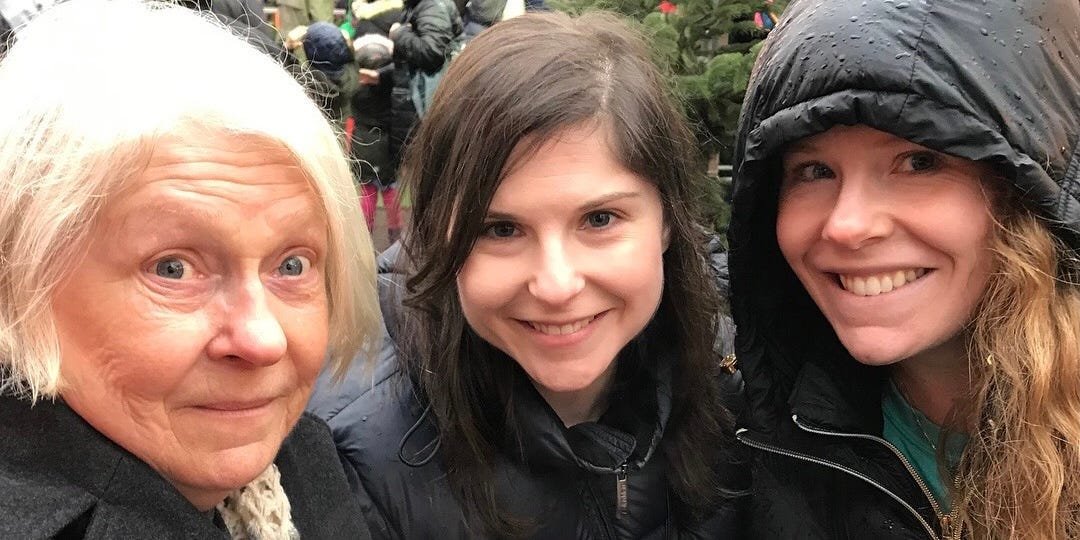
My sister, mom, and I share resources and split some bills since we live in the same neighborhood. 

Sydney McClure


A few years ago, a small health scare also shifted our dynamic.

My mom was experiencing some concerning health symptoms, but was dismissing them because her recent physical had been normal.

However, as the weeks dragged on without improvement, we urged my mother to see the doctor and to let my sister, who’s a nurse, join her.

At first, Mom felt we were being patronizing, but a few months in, she got worried too and let my sister accompany her to an appointment.

With my sister in the room to help fill in gaps and use her medical background to ask the right questions, doctors were able to diagnose and manage my mom’s condition.

I worry it would’ve gone untreated for much longer if we hadn’t lived close enough to see what was happening firsthand. I’m also glad she didn’t have to go through that health scare alone and that we were able to support her.

Despite the challenges, living in the same neighborhood has been worth it


Three women smiling in a photo

Moving closer made us financially interdependent in both good and bad ways 

Sydney McClure


Being a short walk away has allowed us to pool resources in ways that would be impossible if we lived in different states.

The three of us share a Peloton bike and tread. We also exchange household items like a lawnmower or kitchen gadgets.

And then there’s Costco — after living alone most of my adult life, I finally can enjoy all the glory of bulk shopping. Being able to take advantage of economies of scale has been financially beneficial for us all.

At the same time, there are drawbacks. For instance, I helped my mom set up and manage online bill pay. Although she wanted my help, once we started to set up online accounts, my mom found it invasive that I had visibility into her finances.

When I suggested that she use autopay, she felt I was overstepping and telling her how to manage her money. After a long conversation, we identified boundaries that would make the process better.

Once we were on the same page, paying bills wasn’t fraught; it was the impetus for us to have dinner and movie nights.

All in all, evolving roles, difficult conversations, and the minutiae of daily life ultimately strengthened our relationships. Living so close also improved our daily lives in a myriad of tiny ways.

I wouldn’t trade it for anything.


Source link

I-quit-my-job-because-I-couldnt-afford-to-rent.jpeg

I quit my job because I couldn’t afford to rent or buy a house. I then moved to Thailand, where the cost of living is cheaper.

My stable job in the UK allowed me to save, but rental prices in my area would have taken up a huge portion of my income. Each month, I withdrew from my savings as everyday expenses became luxuries. I still had bills to pay, such as car finance, insurance, gas, phone, and a contribution to my parents’ mortgage.

I couldn’t move out of my parents’ house at 28. My goal was to buy my own place, but this was unrealistic. Renting was just as high as a monthly mortgage payment. Saving for a down payment while renting in the UK was impossible on a single average salary.

Even though I was employed, I couldn’t afford the life I wanted. I felt like I was surviving, not living. I was craving financial freedom and independence, but the UK couldn’t offer them.

Two years prior, I had traveled around Thailand and fallen in love with the food, the pace of life, and the value for money. It was a country that had always been on my mind, and eventually I reached a point where I couldn’t live comfortably in the UK anymore. I felt financially stuck and embarrassed that I was still living with my parents.

The only way out was to quit my job, become a freelancer, and relocate to Bangkok — a city filled with opportunity where housing costs half as much as in the UK.

Staying in the UK no longer felt sustainable

For months, I was figuring out what to do. I could spend years trying to catch up, or I could change my environment and live a more affordable lifestyle.

After researching Thailand and reminiscing about my travels there, I realized it was the perfect country to start my own business as a freelance writer.

While I was backpacking there previously, I ate freshly cooked meals for as little as $1. I looked into rental listings in Bangkok, and I was shocked. A modern one-bedroom condominium with a gym and swimming pool costs as little as $400 a month.


Sally seaton sitting at a table in a restaurant with bangkok skyline in the background

The author in Thailand.


In comparison, the average rent in my area of the UK was around $1,200 — more than a third of my monthly salary before bills. In Bangkok, I could pay half that and have more space and amenities.

I had been building a freelance writing business alongside my 9 to 5 job to create freedom to live in Thailand. By the time I decided to leave, I had one client secured. It didn’t guarantee stability, but there was no positive future for me in the UK.

Last June, I handed in my notice and booked a one-way flight to Bangkok. Within a month, I said my goodbyes, packed up my life, and left the UK behind.

My life in Thailand costs less, I get more, and I’m happier

Moving to a new country alone and starting my own business was terrifying, but I knew it would eventually give me the financial independence I couldn’t find in the UK.

Now that I’m my own boss, I still work hard. But the difference is that I’m building something for myself. In the eight months I’ve lived in Bangkok, my client base has grown. I earn slightly less, but my money stretches further.

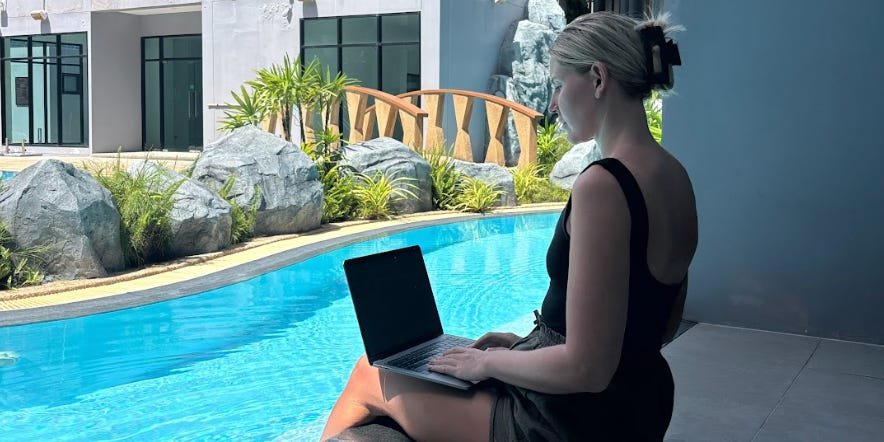
I rent my own condominium for $500 a month, which includes a swimming pool, a gym, and a coworking space. My electricity bill is $40 a month, and water costs just $2.

Things that once felt like luxury in the UK are now part of my everyday life. I buy fresh fruit from local markets. I pay $6 an hour for a weekly cleaner. I don’t cook; I eat out every day without calculating whether I should skip it to save money.

Getting around is affordable, too. I no longer own a car. A train journey costs around $1, and bike rental rides start at $1.

Since moving to Thailand, I’ve embraced what the Thais call “sabai sabai” — a stress-free way of life. For the first time in years, I feel fulfilled, financially free, and happy.


Source link

My-parents-had-no-retirement-plans-after-selling-their-house.jpeg

My parents had no retirement plans after selling their house. They now live in Airbnbs, and I’m worried about them.

Last fall, my mother was diagnosed with cancer, and, seemingly minutes later, my father had some heart problems and ultimately suffered a stroke.

I knew I was inching toward simultaneously caring for my young kids and aging parents. Suddenly, I was squarely in the sandwich generation.

I now had to deal with the terrifying reality that my parents did not have a plan for how to spend their retirement years — especially where they plan to live.

My parents had no retirement plans once they sold their house

As an only child, I have been aware that I might need to be more invested in my parents’ retirement plans, but I wasn’t prepared to feel like their therapist, estate planner, realtor, and case manager all in one.

My father’s unfortunate reality was that he had to retire while in the hospital recovering from his stroke. Like many men, my father struggles to find his identity outside work.

While I was home with my parents during my father’s recovery and before my mother’s cancer treatment, I broached the subject of their retirement plan by asking them about the sale of their home. They had long lamented that they no longer wanted to maintain their home. However, I did not realize how little my parents had discussed what would happen beyond this sale.

Once my mother and father recovered, they moved forward and sold their home in Florida. Shortly after that, they stayed near my family in Texas, in a long-term Airbnb. I soon realized they had no intention of settling.

They have since stayed in 15 Airbnbs.

Their planless lifestyle has continued to create issues

My parents like stability. I know that they don’t like living out of suitcases. They often go to an Airbnb in a new city and immediately contact the host about shortening their stay or finding a different place because they don’t like the area they are in. Additionally, they would rather have a plan, a home to call their own, and a city to set up some roots.

That’s why their Airbnb living doesn’t make much sense to me. When I push them to find a long-term plan, I realize they aren’t even having the conversation with each other.

The lack of actual conversations only came to a head when my father landed in the hospital again while traveling. Ultimately, my father learned he would need extensive open-heart surgery. They ended up going to the Cleveland Clinic and staying at two different Cleveland Airbnbs during their six-week stay, which, while you are recovering from open-heart surgery, is not necessarily the best plan.

When aging is avoided, it creates more issues

Going through all of these experiences with my parents has made it clear that avoiding retirement conversations can be rooted in other issues, like not wanting to face our mortality or that we might disappoint other family members by making a clear decision for ourselves.

It’s not like my parents don’t have a will or aren’t organized, and I am certainly lucky that they have saved diligently for their retirement.

I do not feel fortunate, however, about their lack of a concrete plan. As their only child with children of my own, the uncertainty of their future adds a layer of stress for me. I often worry about their Airbnb accommodations, whether the roads nearby are well lit, and whether they have social support nearby.

I suspect their decision to wing it has been driven by a desire to sidestep the discomfort of planning for one’s golden years. By opting to stick with short-term rentals rather than anything more permanent, they avoid confronting their own individual desires —and the risk that they might not be in alignment.

While I am only in my 40s, I am already working on a retirement plan. I am well aware that my children will have things to worry about; that just comes with the territory of aging parents. But confronting the inevitability of aging and embracing a concrete plan for my retirement is a gift I am giving to my children.

Having honest conversations about making definitive plans is incredibly challenging, but it also has huge payoffs: a season of life rooted in desire and as much agency as this time can offer.


Source link