7-companies-that-have-signaled-they-are-replacing-human-employees.jpeg

7 companies that have signaled they are replacing human employees with AI

  • Companies like HP and IBM have signaled they’re replacing jobs with AI.
  • HP plans to cut up to 6,000 jobs by 2028, citing AI-driven productivity measures.
  • Klarna’s workforce has halved in the last four years, and its CEO says it will shrink more.

Worries about AI one day replacing human workers have intensified in recent years — and as it turns out, that future has already arrived.

MIT released a study last year that found that AI can already replace 11.7% of the US labor market. The study utilized a labor simulation tool called the Iceberg Index, which models 151 million US workers and measures how AI overlaps with skills in each occupation.

As AI starts to replace human workers, companies have been increasingly open about the role AI adoption is playing in recent layoffs. However, while some companies have directly cited AI as a reason for workforce reductions, others have vacillated with their messaging, leaving ambiguity around the exact reasoning and whether AI is directly replacing workers.

Even as some companies replace human workers with AI, they might end up hiring more people in other roles because of it. A World Economic Forum survey found that 41% of companies globally are expected to reduce their workforces over the next five years because of AI. Meanwhile, tech jobs in big data, fintech, and AI are expected to double by 2030, the WEF said.

Here’s a list of companies that are replacing — or signaling they may replace — humans with AI.

HP

HP CEO Enrique Lores.

HP Inc.

HP said it’s reducing the size of its corporate workforce as a result of AI initiatives. In an earnings report last November, the company said it plans to cut between 4,000 and 6,000 jobs by the end of 2028, estimating the changes would save around $1 billion.

HP’s earnings presentation at the time said part of its strategy was to cut costs through “workforce reductions, platform simplification, programs consolidation, and productivity measures” and to increase customer satisfaction, innovation, and productivity with “artificial intelligence adoption and enablement.”

IBM


Arvind Krishna, Chairman and Chief Executive Officer of IBM addresses the gathering on the first day of the three-day B20 Summit in New Delhi on August 25, 2023

IBM’s CEO has said the company has replaced hundreds of employees with AI.

Sajjad Hussain/Getty Images

Arvind Krishna, CEO of IBM, told The Wall Street Journal last year that it had replaced hundreds of human resources employees with AI.

More recently, the company announced last November that it would cut thousands of workers in the fourth quarter of 2025, affecting a “single-digit percentage of its global workforce.” Its CEO, Arvind Krishna, said the company is shifting priorities to hire more people around AI and quantum. He also said the company plans to increase hiring among recent college graduates over the next year.

Krishna has also said AI adoption has led to the company hiring more employees in programming and sales.

In 2023, Krishna told Bloomberg that IBM had halted or slowed hiring for back-office roles, like in human resources, that could be replaced by AI.

“I could easily see 30% of that getting replaced by AI and automation over a five-year period,” he told the outlet at the time.

Amazon


Amazon CEO Andy Jassy

Amazon CEO Andy Jassy.

Noah Berger/Noah Berger

Amazon CEO Andy Jassy said that AI-driven efficiency gains would shrink the retail giant’s workforce in the coming years — but in the company’s two recent mass layoffs, Jassy said the cuts were about culture, not AI.

“Our ambition is to be the world’s largest startup,” Amazon executives wrote in two memos viewed by Business Insider in January. “That means doubling down on a culture of ownership, speed, and experimentation — which requires us to continue evolving how we’re structured.”

An Amazon spokesperson also previously reiterated to Business Insider that the cuts last October were not driven by AI.

When the October layoffs were announced, Amazon’s senior vice president of people experience and technology wrote in a blog post that the move reflected a continued effort to run the company “like the world’s largest startup.” The SVP, Beth Galetti, also referenced a need to be leaner in the age of AI.

“This generation of AI is the most transformative technology we’ve seen since the internet, and it’s enabling companies to innovate much faster than ever before,” Galetti wrote in the post.

Salesforce


Salesforce CEO Marc Benioff at the Annual Meeting of the World Economic Forum in Davos, Switzerland, in January 2025.

Salesforce CEO Marc Benioff said he reduced head count from 9,000 to 5,000 in customer support.

AP Photo/Markus Schreiber

In an episode of “The Logan Bartlett Show” released last August, Salesforce CEO Marc Benioff said the company was using AI agents in its customer support division to replace humans and help the company work through more sales leads.

“I was able to rebalance my head count on my support,” he said in the interview. “I’ve reduced it from 9,000 heads to about 5,000 because I need less heads.”

A Salesforce spokesperson told Business Insider that Benioff was referencing an organizational transformation that took place over several months to reshape its customer support function.

After deploying Agentforce, the company no longer needed to “actively backfill support engineer roles,” the spokesperson said, adding that it successfully redeployed hundreds of employees into other areas of the company, like professional services, sales, and customer success.

Klarna


Klarna CEO Sebastian Siemiatkowski

Klarna CEO Sebastian Siemiatkowski.

David M. Benett/Getty Images for Klarna

Klarna’s CEO says its workforce has halved over the last four years and will shrink further in the coming years.

In an interview with Harry Stebbings on the “20 VC” podcast on Monday, Sebastian Siemiatkowski said there are about 3,000 employees at Klarna, and he expects the company’s workforce to drop below 2,000 by 2030. The company had 7,000 employees in 2022, he said.

The CEO said the reduction is a result of layoffs and “natural attrition,” which is when the company doesn’t replace workers who leave.

Siemiatkowski said on Monday that “human connection” will be vital for the company, and jobs involved in that will not be replaced by AI.

“Those jobs will remain, but for the rest it’s going to be definitely smaller,” he said.

Klarna declined to comment further when contacted by Business Insider. A spokesperson previously said that its AI assistant handles the equivalent workload of 853 full-time agents, up from 700 at launch. The spokesperson said it was saving the company an estimated $58 million annually.

Fiverr


Micha Kaufman

Micha Kaufman, CEO and founder of Fiverr.

Micha Kaufman

Micha Kaufman, the CEO and founder of Fiverr, said last September that the company was slashing roughly 30% of its workforce. The cut would affect about 250 team members, and the freelancing platform had 762 full-time employees as of 2024, according to an SEC filing.

The CEO said that the cuts were needed to help turn Fiverr into a leaner and faster “AI-first company.”

Kaufman said in a staff memo last April that AI was “coming for your jobs,” and in May, he told Business Insider that Fiverr would only hire people who know how to use AI.

“If you don’t ensure that you sharpen your knives, you’re going to be left behind. It’s that simple,” Kaufman said.

Wisetech


Wisetech logo on smartphone screen

Wisetech is cutting 2,000 jobs.

Illustration by Thomas Fuller/SOPA Images/LightRocket via Getty Images

Zubin Appoo, the CEO of Wisetech, said the logistics software maker is cutting 2,000 jobs, or 30% of its staff, because of AI-led efficiency.

In a conference call on February 25, Appoo said that AI enables greater productivity in less time and with fewer employees. The Sydney-based company employed about 7,000 people, according to an annual report released in October.

“I am prepared to say this clearly: the era of manually writing code as the core act of engineering is over,” Appoo said. The technology is “unlocking levels of efficiency gains across WiseTech that were previously out of reach.”

In some parts of the workforce, such as customer service, one in two workers will disappear, he added.

Correction: December 1, 2025 — The bullet points of this article have been updated to clarify Amazon’s statements about how AI may affect its workforce.


Source link

Sam-Altman-says-concerns-of-ChatGPTs-energy-use-are-overblown.jpeg

Sam Altman says concerns of ChatGPT’s energy use are overblown: ‘It also takes a lot of energy to train a human’

Sam Altman is pushing back on the idea that ChatGPT consumes too much energy.

“One of the things that is always unfair in this comparison is people talk about how much energy it takes to train an AI model relative to how much it costs a human to do one inference query,” Altman told The Indian Express last week on the sidelines of a major AI summit. “But it also takes a lot of energy to train a human.”

Altman suggested it’s not an apples-to-apples comparison, arguing that it’s unfair to discount the years spent nurturing and educating someone to be capable of making their own inquiries.

“It takes a lot of energy to train a human,” he said, prompting some laughter in the crowd. “It takes, like, 20 years of life, and all of the food you eat during that time before you get smart.”

Altman said the clock really began thousands of years ago.

“It took, like, the very widespread evolution of the 100 billion people that have ever lived and learned not to get eaten by predators and learned how to, like, figure out science or whatever,” he said.

Altman also called out what he said were “totally insane” claims on the internet that OpenAI is guzzling down water to power ChatGPT.

“Water is totally fake,” Altman said, when asked about concerns AI companies use too much water. “It used to be true, we used to do evaporative cooling in data centers, but now that we don’t do that, you know, you see these like things on the internet where, ‘Don’t use ChatGPT, it’s 17 gallons of water for each query’ or whatever.”

In June, Altman said that the average ChatGPT query consumes roughly the amount of energy needed to power a lightbulb for a few minutes.

“People are often curious about how much energy a ChatGPT query uses; the average query uses about 0.34 watt-hours, about what an oven would use in a little over one second, or a high-efficiency lightbulb would use in a couple of minutes,” he wrote on X.

Altman said it is fair as a whole to point out the AI industry’s overall energy consumption because of the large growth in usage. He said it’s why he and other AI CEOs have pushed alternative energy sources like solar, wind, and nuclear.

Unlike other CEOs, namely xAI’s Elon Musk, Altman is dismissive of the idea that space-based data centers are realistic in the next decade, a concept that some companies have floated as a way to reduce energy consumption.

Outside of OpenAI, Altman is a major investor in nuclear energy. He previously served as chairman of Oklo, a nuclear energy startup, and has been a major backer of Helion, which plans to build what it calls “the world’s first fusion power plant” in Washington state.

In the US, data center energy consumption is becoming a major topic. Last month, President Donald Trump said he was working with tech companies on “a commitment to the American people” to ensure that citizens don’t pay higher energy bills because of a nearby data center.

Consulting firm McKinsey & Company estimated last year that data centers could account for 14% of total power demand in the US by 2050.


Source link

Lloyd Lee

Why Waymo believes robotaxis must be safer than human drivers

If people can drive with their eyes, can an AI drive only with cameras?

Tesla leans on that analogy to defend its hotly debated cameras-only approach to autonomous cars.

“It should be solved with cameras just like how every other human or animal lives around this world,” Ashok Elluswamy, Tesla’s vice president of AI, said at the ScaledML Conference on January 29. “Self-driving problem is thought of as a sensor problem. It’s actually not a sensor problem, it’s an AI problem.”

Alphabet’s Waymo has a fundamentally different engineering approach to autonomy. Srikanth Thirumalai, Waymo’s vice president of onboard software, pushed back on Elluswamy’s comparison.

“I think the bar is higher than human driving,” he told Business Insider.

The contrast between Waymo and Tesla goes beyond philosophy and is built into the hardware.

Tesla wants to reach autonomy with fewer than 10 cameras and an AI trained on billions of miles of real-world driving data. Waymo also relies on AI, but is paired with a multi-sensor system — 29 cameras, five lidars, and six radars — to give the AI driver different ways to perceive an environment. The Alphabet company has so far deployed about 2,500 robotaxis across multiple US cities.

The debate often boils down to cost and safety: More sensors could increase costs, which could be a barrier to scale. Fewer sensors could present safety challenges, some say, which is another constraint for mass robotaxi adoption.


Srikanth Thirumalai

Srikanth Thirumalai, Waymo’s vice president of onboard software

Lloyd Lee/BI


Thirumalai manages a team of more than 600 people building Waymo’s AI driver software. During a rare interview at Waymo’s HQ, which spans multiple buildings, the vice president told Business Insider he expects the sensor suite to shrink over time as the hardware improves and gets cheaper. But he framed the lidar or no-lidar debate as a distraction from the company’s safety-oriented objective.

“Given where the technology is right now, the question is what is it going to take for that product to be safe?” he said. “So you work backwards from that safety bar and say, ‘What does it take to build a safe product?’ And then keep pushing and iterating and innovating to reduce the cost of the sensors, and to improve the quality of the software and how it uses the sensors.”

The soft-spoken Thirumalai looked to the future and explained his position.

“In three to five years, will our sensor stack look different than it is right now? Absolutely.”

Waymo has previously said it expects the next generation of robotaxis to have fewer sensors: 13 cameras, four lidars, and six radars. A Waymo spokesperson previously told Business Insider that the company expects to serve public riders by late 2026.

A Tesla spokesperson did not respond to a request for comment.

How safe should a robotaxi be?

Humans can be bad drivers. They’re easily distracted, swayed by emotions, and can be slow to make the right decisions. Leaders in autonomy will say they’re driven by a mission to build something safer than humans. The challenge is defining what “safer” means in a way that regulators, riders, and engineers can measure.

“This notion of what the bar is is a very important question,” Thirumalai said. “And one that we have only refined over the years, and in some cases, we’re still sort of discovering what the bar is.”

Instead of an arbitrary goalpost that says robots will be multiple times safer than a human driver, Thirumalai said Waymo looks at individual driving cases and assesses how often those events can occur.

“We break it down and say, ‘Well, how often do those events actually occur per million miles of driving? And how serious are those events?” he said, adding that his team can then aim for a lower incident rate.

Thirumalai and even Waymo’s top brass aren’t selling perfection. A human fatality caused by a robotaxi isn’t a matter of if but when, Waymo co-CEO Tekedra Mawakana has said.

Reports and videos shared across social media have shown that AVs can make mistakes, whether in school zones, emergency response scenes, bad weather, or even seemingly ordinary driving scenarios.

“People might say, ‘Hey, look, this is AI. We never want it to make a mistake.’ That is an unachievable bar,” Thirumalai said.


Source link

I-choose-to-go-to-the-human-cashier-at-the.jpeg

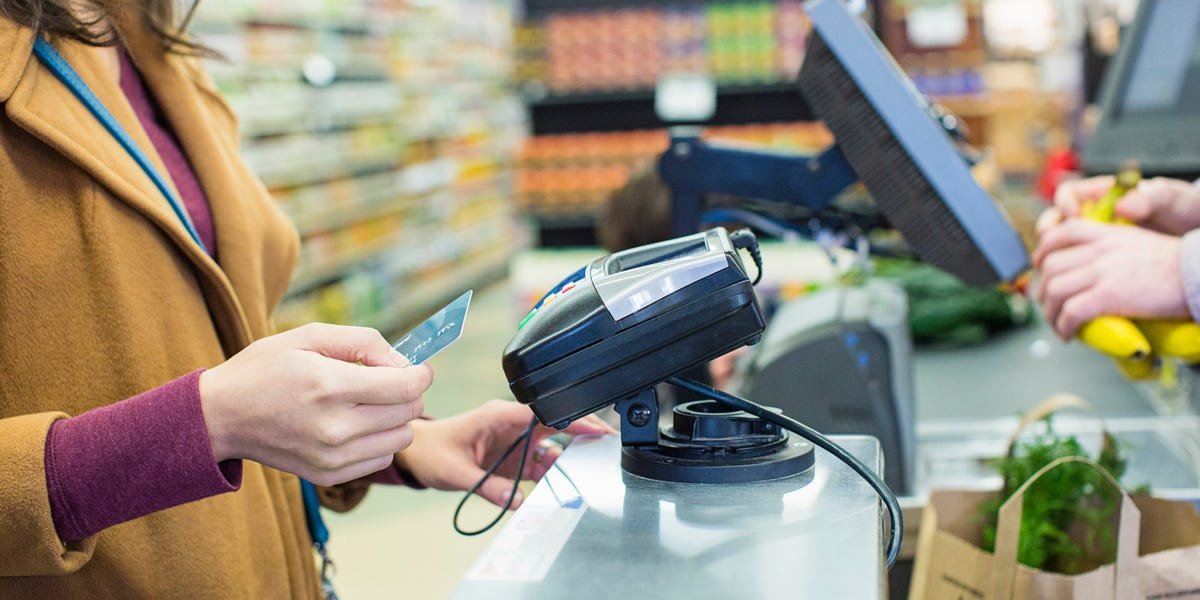
I choose to go to the human cashier at the grocery store. I’m opting for more human interaction.

I was initially resistant to the self-checkout kiosks at my local grocery store when they were introduced a few years ago.

It didn’t take long, however, for me to start choosing those kiosks when the regular check-out lines were long. By that time, New Jersey had banned plastic bags, so I reverted to the “I can do it faster myself” way of thinking, armed with cute bags made from recycled materials.

The way it had become so easy to breeze past the friendly faces of cashiers standing at the end caps of their respective, often empty, check-out lanes waiting to welcome customers might not seem unusual. For me, though, it’s started to feel like a sign of something bigger.

There’s a loneliness epidemic

Not only did I not have to interact with anyone in the case I’d rolled out to the store looking less than my best, but I was also saving time, I reasoned. A recovering dishwasher loading control freak, I’m also pretty specific about the way I think groceries should be bagged — heaviest to lightest, eggs, bread, and chips on top.


Jennifer Cannon headshot

The author decided to change from self-checkout lines to human cashiers for a more personal connection.

Courtesy of the author


Meanwhile, the US is facing a loneliness epidemic, and our culture, especially post-pandemic, is to blame. I’m guilty of leaning into leaving my house and socializing less over the past several years, despite considering myself a social person.

According to a recent report from the American Psychological Association, many teens are turning to AI chatbots for friendship and emotional support. My college-age daughters confirmed this to be true, which should be concerning to everyone. As someone with a lifelong obsession with human behaviors, I also find it thought-provoking. It raises the question, what can we as a society do about it?

I went back to regular cashiers

I decided that the first step for me personally was to prioritize more human interaction at the grocery store. There was a part of me that missed simply saying “Hello” and asking how the person, who was specifically there to help fellow humans, was doing. If my daughters are with me, they often find something to compliment, “I like your nails,” or “Your tattoo is so cool, what does it mean?”

These days, it seems to catch some by surprise, and then to see smiles or share an unexpected laugh with a stranger — there’s something mutually fulfilling in that. In the smallest moments, we remember how others make us feel. That’s humanity, and community.

When we first moved to our little town in South Jersey, just outside Philadelphia, I knew the produce guy by name. Al had also worked on our house, and his granddaughter and our daughters went to the same elementary school. For many years, I looked forward to exchanging a few pleasantries with him and didn’t care, or correct him, when he called me Stephanie instead of Jennifer.

It’s been so nice to interact with other people

We’re officially at a point where too many people are longing for connection and to be seen, to have someone be interested in even the smallest thing about them. I make at least a couple of trips to the grocery store each week (because I’m too indecisive to plan meals in advance) and have been choosing to go to the human cashier over self-checkout whenever possible.

It’s been a breath of fresh air to overhear the chatter between cashiers and customers. I stopped in for a few things recently in anticipation of some bad weather, which people from the northeast will tell you means “milk, bread, and eggs.” The cashier, an older woman, called me “honey” but not in the passive-aggressive way Taylor Swift sings about on her latest “The Life of a Showgirl” album. She told me to be careful driving home as a coworker walked by and handed her a bag of homemade ginger snap cookies. Her face lit up.

In conversation with another cashier, a young woman, I learned she hates the cold. The high temperature that day was 25 degrees. We chatted about how she could move south, but then she’d fear tornadoes, and Florida was out of the question because of snakes. We laughed.

Walking away, I thought about how I’ve been missing the minutiae that are only present when we choose to see and acknowledge each other in person.


Source link