Im-a-Chinese-CEO-who-jumped-on-the-OpenClaw-hype.jpeg

I’m a Chinese CEO who jumped on the OpenClaw hype and built AI employees. We had to create a human-only Slack channel to escape them.

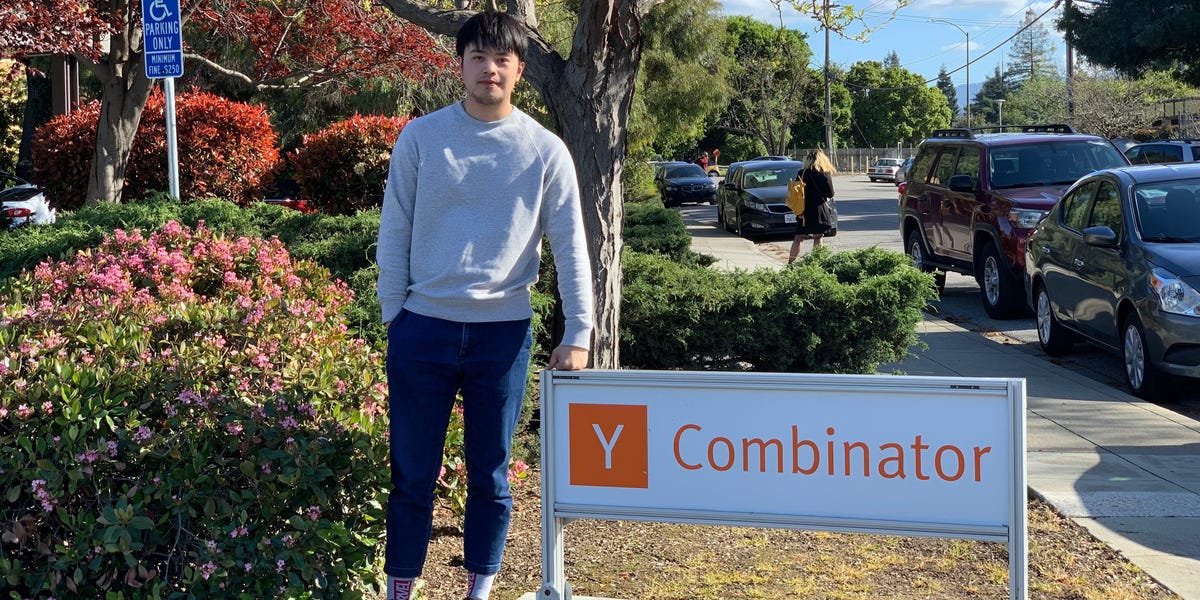
This as-told-to essay is based on a conversation with Xiankun Wu, the CEO and cofounder of Kuse, an AI-powered visual workspace headquartered in San Mateo, California. The conversation has been edited for length and clarity.

In the near future, you may have a workplace with AI employees, much like non-player characters.

AI can handle repetitive work, allowing people to spend more time on creative work.

Early this year, things changed because of OpenClaw. AI became more autonomous and customized. Because it understands the company and employees, the AI employees OpenClaw creates can assign tasks, even to humans.

When you see an AI assigning you a task, the relationship shifts. It feels like a real colleague.

I think around 60% to 70% of work can now be done by AI employees. It has dramatically improved efficiency. It’s a no-going-back experience.

Putting OpenClaw into our workspace

At the beginning of January, OpenClaw caused a lot of trouble for us because it was designed for personal assistants. It was meant for one person, not for a team.

Here’s what that means: If you connected the AI to company data, it would share everything with anyone who asked. For example, if it had access to financial data, anyone could ask and receive that information. That’s not acceptable for a company.

So we modified the structure and architecture of OpenClaw to better suit a company or team setting. The AI employees created by OpenClaw now understand roles, permissions, and relationships — who is who, what each person’s job is, and what they are allowed to know. If someone is not authorized, the AI will not share that information.

Kuse has about 20 human employees. As the system matured, we realized it was becoming very useful to our team. We felt like we were a completely different company. We could do many things at once.

The AI works 24/7 and constantly identifies work that can be done. Everything we tell it, it processes and asks: How does this affect the business? What should we do next? What improvements should we make based on user feedback?

AI employees can work 24/7, but humans can’t

As humans, we need rest. It can be overwhelming, especially in East Asian culture, where we feel we must solve problems before resting.

So we created a Slack channel called “human only.” AI is not allowed there, since almost every channel in the company has AI employees.

This gives us a space to rest and talk casually. Otherwise, even random messages trigger the AI to generate tasks.

For example, if I share a random link, a human employee would probably take a look and not say anything, but the AI would say, “This is crucial information. We can do something based on this new information. We can do A, B, C, and D.”

I was like, “OK, maybe we should do that, but we still have 1,000 other things we need to do.”

In a world of infinite work and workforce time, prioritizing tasks becomes a more important skill. You have so many things that can be done. Even though in the end you can do three times or even 10 times more things, you still need to decide what matters most. Otherwise, you will be exhausted.

AI employees push us to work better

At the beginning, the team was terrified. AI employees could do many things that humans used to do. People wondered if they would be replaced.

But after working with AI employees, we felt strongly that they amplify our capabilities rather than replace us. They help us focus on our core strengths instead of repetitive work.

They push us to ask: What is my real expertise? What is my true contribution to this company, industry, or world?

Human employees need to strengthen their ability to communicate with real people. In the future, building trust between humans will become more important.

Do you have a story to share about tech in Asia? Contact this reporter at cmlee@insider.com.


Source link

Gary-Marcus-calls-out-viral-AI-essay-as-alarmist-hype.jpeg

Gary Marcus calls out viral AI essay as alarmist ‘hype’

If that viral essay about AI had been printed on paper, there’s a good chance AI researcher Gary Marcus would’ve ripped it up in disgust.

Marcus acknowledges something is happening in AI — just nowhere near the scale described in the recently viral essay, which predicted a looming disruption “worse than COVID.”

Marcus, who on X criticized the essay written by entrepreneur and investor Matt Shumer as having “not a shred of actual data,” dismissed its contents as alarmist in an interview with Business Insider.

“Hyped-up views have gotten us into a bad place, possibly one that’s going to lead to a serious economic recession or something like that,” Marcus told Business Insider. “And I guess I think that one should work from the facts rather than just trying to cause an alarm.”

In his essay titled “Something Big is Happening,” Shumer, whose past startup sells a subscription-based AI-assisted writing tool, warned that AI would upend not just software engineering, but most jobs done “on a screen.” Shumer also has a small VC fund.

Marcus said that while AI will replace some labor and affect jobs, the process will be much slower than what Schumer and others are describing.

AI can do some things well and help speed up work, but it’s just not near the point of replacing humans, Marcus said.

“AI can do a small subset of the tasks, and that sometimes speeds up human beings and things like that, but it rarely does all of what a human being can do in any particular domain,” he told Business Insider. “This will change over time, just to be clear. It is likely that AI will replace most human labor over the next century, but it’s not likely that it will over the next year or two.”

Companies that move too quickly to replace jobs with AI are likely to find themselves in a similar position as Klarna, Marcus said. In 2024, Klarna touted an AI assistant that could do the equivalent work of 700 people. By May 2025, CEO Sebastian Siemiatkowski, long a proponent of AI, said that “as cost unfortunately seems to have been a too predominant evaluation factor when organizing this, what you end up having is lower quality.” He added that “investing in the quality of the human support is the way of the future for us.”

“Six months or a year later, they come back with their tails between their legs because it turns out that the AI systems don’t do things as well as the human,” Marcus said. “So, I’m not saying that there’s nothing going on. I’m not saying that there’s no value in these AI systems, but they’re premature.”

Klarna told Business Insider that the number of its customer service queries handled by AI has increased “as it gets better at more complex requests,” and the company “has not reversed or scaled back its AI strategy.”

Marcus said that the more likely outcome in the short-term is not that AI will replace junior employees but rather that executives think it’s capable of doing so — and make what could ultimately prove to be a costly gamble.

“The biggest thing I think junior people have to worry about right now is a misapprehension by the C-suite that these techniques work better than they actually do,” Marcus said.

As of Friday morning, Shumer’s post has been viewed more than 80 million times on X alone. In a Substack post expanding on his criticisms, Marcus called Schumer’s post “weaponized hype.”

“The general impression that he conveys is basically that the sky is falling now, and at most, I think what’s really happening is the junior people are under some threat, and I think that threat is actually exaggerated,” Marcus told Business Insider.

Shumer previously told Business Insider that he wrote his essay in part to reach people like his dad, who may be skeptical or avoid AI entirely. He felt compelled to warn them about what might be on the horizon, even “if there’s just a 20% chance of it happening.”

Marcus’s biggest critique of Schumer’s post is that it doesn’t take into account current data and research showing that AI still has a long way to go, and that it didn’t present the full context behind a famous Model Evaluation & Threat Research graph assessing AI progress.

He said that other studies, including a June 2025 paper published by Apple’s Machine Learning Research Group, found limitations in what current models can do.

Marcus also said that many leading AI CEOs who have made bold predictions about the future of work have failed to deliver on past ones. He points to xAI CEO Elon Musk’s frequent rosy outlook on the number of robotaxis Tesla will put on the road (Musk once said one million by 2020) and to Nobel laureate Geoffrey Hinton’s 2016 statement that the world should stop training radiologists. (Last May, Hinton told The New York Times that his prediction was poorly worded and that while he was wrong on the timeline, the general direction for AI’s capabilities in radiology was correct.)

“What they have all learned to do is to sell the rosiest picture possible, and the media rarely calls them out,” Marcus told Business Insider.

On Thursday, Microsoft AI CEO Mustafa Suleyman made waves by predicting that most, if not all, white-collar tasks could be automated within the next year and a half.

One of the industries Suleyman mentioned is accounting. Marcus isn’t convinced.

“Think about accounting in particular,” he told Business Insider. “Even one mistake can cost a client hundreds of thousands of dollars or get them sent to jail or whatever. Accounting is a business that is built on accuracy. If you’re not accurate, you don’t have a business.”


Source link

Davos-updates-Trump-lands-in-Switzerland-as-speech-hype-builds.jpeg

Davos updates: Trump lands in Switzerland as speech hype builds

It’s all eyes on President Donald Trump at Davos.

Business Insider will be in the room when he speaks. We’ll share real-time updates on what he says and how World Economic Forum attendees react.

After an issue with Air Force One, Trump landed in Switzerland on a replacement plane just after 12:30 p.m. local time, and is scheduled to speak at 2:30 p.m.

Follow along here for real-time updates, reaction, and on-the-ground commentary from Business Insider’s staff in Davos.


Source link