

Tokenmaxxing-has-techies-debating-if-leaderboards-tracking-AI-token-use.jpeg

‘Tokenmaxxing’ has techies debating if leaderboards tracking AI token use are a good idea

Forget lines of code written, engineers have a new way to compete amongst each other.

Welcome to the era of “tokenmaxxing.”

Armed with shiny new AI coding tools, software developers across the tech industry have a wallet full of tokens to spend. Tokens, a measure of computing that determines how AI work is priced, have been floated as a form of compensation for engineers, even cropping up in job descriptions for AI fellowships at OpenAI and Anthropic.

But is token spending a good measure of developer productivity?

The question has lit up on social media this week as techies debate the concept of tokenmaxxing after The Information reported that some Meta engineers are racing to spend tokens to rank on an employee-made “Claudeonomics” dashboard that tracks usage and lets employees compete for titles like “Token Legend.” The company didn’t respond to a request for comment from Business Insider.

Some say it’s a helpful marker of employees embracing new tools; others say it could incentivize inefficient use of AI within companies — leading to performative gaming of the metric.

“Ranking engineers by token spend is like me ranking my marketing team by who spent the most money,” Linear COO Cristina Cordova wrote on X. “Don’t mistake a high burn rate for a high success rate.”

What is tokenmaxxing?

To understand tokenmaxxing, you first have to know what a token is. Large language models break words into numerical inputs, treating each token as roughly ¾ of a word. AI models charge based on the number of tokens used.

Tokenmaxxing, then, is the drive to spend as many tokens as possible. Meta and OpenAI are just some of the tech companies with token leaderboards, The New York Times previously reported.

While it’s difficult to measure how widespread tokenmaxxing has become, companies’ AI spending is clearly on the rise. The fintech company Ramp called it a “$1 trillion blind spot” on X, citing Gartner data showing that monthly AI spending among businesses has quadrupled over the last year.

It’s also a flex. Founders and future-forward engineers post their token spending on X to signal how all-in they are on AI. One xAI employee wrote that tech was turning every good idea “into theater.”

Y Combinator CEO Garry Tan appears to be a fan. Quoting a prior post that chided companies that are “stingy” with tokens, Tan wrote: “We’ve been tokenmaxxing longer than most people.”

Is tokenmaxxing a good incentive?

Some within the tech world argue tokenmaxxing is an effective metric; others call it reckless spending.

Khosla Ventures partner Jon Chu called token spending measurement an “absolutely stupid policy” on X.

“Plenty of my Meta friends told me folks have been building bots that just run in a loop burning tokens as fast as they can due to this policy,” he wrote.

Cursor employee Edwin Wee Arbus offered a nuanced take on the metric, calling it a “useful, fast proxy, but slightly flawed.” He compared it to body mass index, or BMI, which can provide health insights but does not capture muscle or bone mass.

While Nvidia CEO Jensen Huang hasn’t directly weighed in on “tokenmaxxing,” he has stressed the importance of engineers using a lot of tokens, saying that if a $500,000 engineer didn’t consume at least $250,000 worth of tokens, he would be “deeply alarmed.”

“The Pragmatic Engineer” newsletter author Gergely Orosz called the practice wasteful. “Devs game everything and anything seen as a target for more bonus or promos,” he wrote. “This was no different.”

BEP Research founder Ben Pouladian pulled a different takeaway from the trend, calling compute the bottleneck for innovation. “In the AI era, every employee becomes a compute consumer,” he wrote on X.

“Token spend is always an output not an input,” wrote Persona software engineer Arush Shankar, who previously worked at Square and Microsoft, according to his LinkedIn. “Worth looking at, but never in isolation. It’s a signal but not THE signal.”

Does your company track token spending or token use? Contact the reporter from a non-work email and device at hchandonnet@businessinsider.com, or on Signal at henrychand.30


Source link

Paramount-ally-RedBird-says-using-Middle-East-money-to-help.jpeg

Paramount ally RedBird says using Middle East money to help buy Warner Bros. could be a good idea

  • Last year, Paramount said it would use $24 billion in funding from Saudi Arabia, Abu Dhabi, and Qatar to help buy WBD.
  • Now that Paramount has won that deal, it won’t say whether that’s still the plan.
  • A key Paramount backer suggests that Gulf money would be a good thing for this deal.

We still don’t know if Paramount intends to use billions of dollars from Gulf states like Saudi Arabia to help it buy Warner Bros. Discovery.

But if Paramount does end up doing that, it wouldn’t be a bad thing, says a key Paramount backer.

That update comes via Gerry Cardinale, who heads up RedBird Capital Partners, the private equity company that helped finance Larry and David Ellison’s acquisition of Paramount last year and is doing the same with their WBD deal now.

In a podcast with Puck’s Matt Belloni published Wednesday night, Cardinale wouldn’t comment directly on Paramount’s previously disclosed plans to use $24 billion from sovereign wealth funds controlled by Saudi Arabia, Abu Dhabi, and Qatar to help buy WBD.

Instead, he reiterated Paramount’s current messaging on the deal’s financing: The $47 billion in equity Paramount will use to buy WBD will be “backstopped” by the Ellison family and RedBird — meaning they are ultimately on the hook to pay up. The rest of the $81 billion deal will be financed with debt.

Cardinale also acknowledged what Paramount has disclosed in its current disclosure documents: It intends to sell portions of that $47 billion commitment to other investors: “We haven’t syndicated anything at this time,” he said. “We do expect to syndicate with strategic, domestic, and foreign investors. But at the end of the day, that alchemy shouldn’t matter because it’ll be done in the right way.”

And when asked about concerns about Middle Eastern countries owning part of a media conglomerate that includes assets like CNN, Cardinale suggested that could be a plus.

“I think we want to be a global company,” he said. “You look at what’s going on right now geopolitically. What’s going on right now geopolitically out of the Middle East wouldn’t be, the positives of that would not be happening without some of those sovereigns that you’re referring to.”

He continued:

“The world is changing. We can stick our head in the sand and pretend it’s not, or we can embrace globalization and the derivative benefits both geopolitically and otherwise that come from that. Content generation coming out of Hollywood is one of America’s greatest exports.
I firmly embrace the global nature and orientation that we bring to this from a capital standpoint, from a footprint standpoint, etc. At the end of the day, I do understand some of the concerns that you’ve raised, but that will work itself out between signing and closing because at the end of the day, worst-case scenario, Ellison and RedBird are 100% of this thing.”

All of which suggests to me that Paramount still intends to use money from Gulf-based sovereign wealth funds to buy WBD.

What I don’t understand is why the company won’t say that out loud. Does that mean it’s still negotiating with potential investors? Or that it’s reticent to disclose outside investors, for whatever reason, until it has to? A Paramount rep declined to comment.


Source link

Sam-Altman-says-Elon-Musks-idea-of-putting-data-centers.jpeg

Sam Altman says Elon Musk’s idea of putting data centers in space is ‘ridiculous’

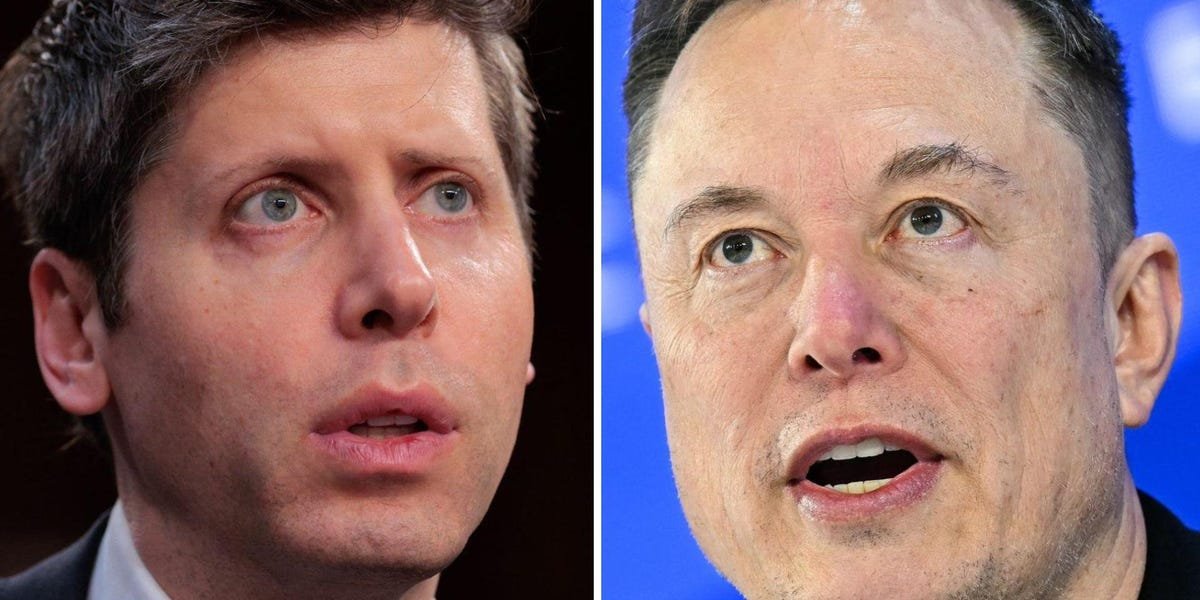
SpaceX CEO Elon Musk and OpenAI CEO Sam Altman famously don’t agree on much.

The latest point of contention: data centers in space. Musk has made it a priority. Altman thinks it’s a fantasy, at least for now.

“I honestly think the idea with the current landscape of putting data centers in space is ridiculous,” Altman said during a live interview with local media in New Delhi on Friday, causing audience members to laugh.

Altman said that orbital data centers could “make sense someday,” but factors like launch costs and the difficulty of repairing a computer chip in space remain overwhelming obstacles.

“We are not there yet,” Altman added. “There will come a time. Space is great for a lot of things. Orbital data centers are not something that’s going to matter at scale this decade.”

Musk would almost certainly disagree.

While many Big Tech and AI companies are spending billions on data center construction on Earth, Musk’s eyes are on the stars, per usual. Orbital data centers are his latest ambition, as he mentioned in an all-hands xAI meeting in December.

In February, SpaceX said its goal is to launch a “constellation of a million satellites that operate as orbital data centers.” The company has already begun hiring engineers to make that happen.

During an all-hands meeting with xAI employees this month, Musk said SpaceX’s acquisition of xAI will allow them to deploy the orbital data centers faster.

Despite Altman’s skepticism, other tech leaders are also racing to place data centers in space. Google’s Project Suncatcher, unveiled in November 2025, aims to do just that. Google CEO Sundar Pichai told Fox News Sunday the company could start placing data centers — powered by the sun — in space as early as 2027.

Tech and AI companies rely on data centers to power their products, like large language models and chatbots. Those data centers, however, can deplete water resources, strain power grids, increase pollution, and decrease the overall quality of life.

An investigation by Business Insider published last year found that over 1,200 data centers had been approved for construction across the US by the end of 2024, nearly four times the number from 2010.

Now, proposed data center campuses in Texas, Oklahoma, and elsewhere are increasingly facing stiff resistance from local communities.


Source link

Delivery-driver-briefly-detained-in-Nancy-Guthries-disappearance-says-he.jpeg

Delivery driver briefly detained in Nancy Guthrie’s disappearance says he has no idea who she is

Arizona authorities briefly detained a man for questioning in the disappearance of Nancy Guthrie. And the man, later identified as a local delivery driver, told reporters that he had no idea who the elderly woman even was.

A spokeswoman for the Pima County Sheriff’s Department said that deputies detained the man during a traffic stop south of Tucson on Tuesday.

That man was later identified in news reports as Carlos Palazuelos, who said he was driving around working when authorities stopped him, handcuffed him, hauled him off, and held him “against my will.”

“I don’t know anything,” Palazuelos told reporters, according to video posted on X. The man said he wasn’t even aware that Nancy Guthrie, the mother of “Today” show host Savannah Guthrie, had been missing.

“I don’t follow the news,” said Palazuelos, adding, “I hope they get the suspect because I’m not it.”

Authorities believe 84-year-old Nancy Guthrie, who has limited mobility, a pacemaker, and relies on daily medication for a heart condition, was abducted from her Arizona home in the middle of the night 11 days ago.

Tuesday’s detainment took place hours after the FBI and the Pima County Sheriff’s Department released images recovered from Nancy Guthrie’s missing Nest doorbell camera showing a person in a ski mask who appeared to be tampering with Guthrie’s security device. Authorities said the video of the person, who they said was armed, was captured the day she disappeared.

Palazuelos told Fox News during an interview that it was a “possibility” that he may have once delivered a package to Nancy Guthrie’s ranch-style home, but that he wasn’t sure.


Photo of a masked person at Nancy Guthrie's door.

Surveillance image of a masked person at Nancy Guthrie’s door the day she disappeared.

FBI/Pima County Sheriff’s Department


“All I know is that they showed my in-law a picture of somebody wearing a mask or something, and they supposedly looked like my eyes,” Palazuelos said.

The man also told reporters that investigators searched his Rio Rico home and damaged the front door and garage door.

The Pima County Sheriff’s Department did not immediately return a request for comment from Business Insider regarding the man’s detainment.


Source link

Bryan Metzger

Trump says his call for a 10% credit card cap sounds like Zohran Mamdani’s idea

President Donald Trump knows he’s aligning himself with the progressive left when it comes to credit cards.

During an interview with CNBC’s Joe Kernen in Davos on Wednesday, Trump acknowledged that his call for a 10% cap on credit card interest rates isn’t a standard conservative policy.

In fact, he joked that it’s something that New York City Mayor Zohran Mamdani, a Democratic socialist, might have come up with.

“I know it’s sort of like… it sounds like the mayor of New York maybe came up with that,” Trump said with a laugh.

Following Mamdani’s election in November, the two met in the Oval Office and appeared to share some common ground in remarks to the press afterwards.

“I’m conservative, but I think I’m common sense, you know?” Trump said on Wednesday. “People say, ‘Are you a conservative?’ I say, ‘Yeah, but I’m a common-sense person.’ I mean, I do things that aren’t necessarily that conservative sometimes.”

Trump said he respected credit card companies but that consumers can’t afford to pay high rates.

“Whatever happened to usury? They can’t pay 28%,” Trump said.

Earlier on Wednesday, Trump called on Congress to pass a bill capping credit card interest rates at 10% for one year.

Key Republicans in Congress have been cool to that idea, with House Speaker Mike Johnson telling reporters last week that Trump “probably had not thought through” the potential downsides of the policy and that credit card companies may “just stop lending money” or “cap what people are able to borrow at a very low amount.”

Many business leaders have also been critical of the idea.

Yet Trump’s call has also been met with agreement from some progressives, including Sen. Elizabeth Warren of Massachusetts, whom Trump called last week.

In Congress, Independent Sen. Bernie Sanders of Vermont and Republican Sen. Josh Hawley of Missouri have introduced a bill that would do just what Trump said, capping credit card rates at 10% for a year.


Source link