Lucia Moses

Leaked deck shows Elon Musk’s X is promoting Grok’s brand-safety scores after sexualized images backlash

Elon Musk’s X is promoting itself to potential advertisers with a new deck that underlines its commitment to brand safety, according to the leaked deck shared with Business Insider.

It comes after the AI chatbot shared “deepfake” sexualized images of women and children — a practice it stopped in late January after a backlash. The company said it would no longer generate AI images of real people in sexualized clothing.

The deck shows X is also promoting its use of “blocklists.” A blocklist is a list of sites or accounts that advertisers explicitly prevent their ads from appearing on. In the past, Musk’s X has taken legal action against advertisers who have used such tools to safeguard their ad placements.


X brand safety deck shows it uses Grok for brand safety

X touts its use of Grok to make the platform safe for advertisers.

X


In the deck, X said it had achieved a nearly 100% perfect “brand safe” or suitable scores using Grok, as measured by tech companies IAS and DoubleVerify.

It mentions ways it uses Grok to review posts and users’ profiles for brand suitability. For instance, if a user regularly posts about sensitive topics, the system can block ads from appearing alongside that user. X said it can target up to 4,000 keywords and 2,000 author handles this way.

The deck also promotes X as a place for brands to manage crises in real time.

X didn’t comment on the deck when reached by Business Insider.


X promotes use of blocklists in brand safety deck

X says its blocklists stop ads from appearing on up to 50 specific publishers per ad group.

X


The deck was shared at an event for clients and agencies on February 26. The 2026 Brand Suitability Webinar was billed as “empowering brands with new tools for safety & reach on X.”

It’s unclear if X’s newest charm offense will sway advertisers.

X is one of the smallest social media platforms by ad spending, with EMARKETER estimating it has less than 1% of worldwide digital ad revenue. It has an outsized influence because of its use by public figures and as a news channel.

Since Elon Musk bought X, formerly known as Twitter, in 2022, its relationship with advertisers has been fraught, with Musk publicly criticizing advertisers that cut or limited advertising on the platform.


X brand deck shows how it uses Grok and blocklists to assure brand safety

The deck details what X says it’s done to be brand-safe.

X


Advertisers left en masse after Musk’s acquisition. EMARKETER estimated its revenue would reach $2.2 billion in 2026, below its pre-acquisition level of $4.5 billion.

In 2023, Musk lashed out at advertisers, using an expletive on stage at an event directed toward those who had left.

And X is suing an advertiser trade group, alleging that its members conspired to boycott the platform in contravention of antitrust laws. The group denied it violated antitrust laws. The case is pending, with the last filing occurring on February 19.

X has also been criticized for loosening moderation and account-verification rules and for reinstating some banned accounts of provocative figures.


Source link

Images-show-destruction-at-Irans-drone-bases-naval-sites-radars.jpeg

Images show destruction at Iran’s drone bases, naval sites, radars

Newly captured satellite imagery shows destruction and damage to infrastructure at military installations across Iran after waves of US and Israeli airstrikes.

The images, collected on Sunday by the US spatial intelligence firm Vantor and obtained by Business Insider, show that a wide range of targets have been struck since Saturday, including a drone base, a naval facility, and a radar system.

The US involvement is more widespread than the brief round of American strikes in June 2025, which primarily targeted Iran’s nuclear sites.

In the southern coastal city of Konarak along the Gulf of Oman, the images reveal destroyed and damaged buildings, storage bunkers, and aircraft shelters at Iranian drone and air bases.


A close-up view of destroyed buildings in Konarak, Iran.

Destroyed buildings at a drone base in Konarak.

Satellite image ©2026 Vantor.


A close-up view of destroyed storage bunkers in Konarak, Iran.

Destroyed storage bunkers in Konarak.

Satellite image ©2026 Vantor.


At a nearby naval facility in Konarak, the imagery shows destroyed and sinking vessels and damaged buildings adjacent to the pier. The US military confirmed on Sunday that it had struck a Jamaran-class corvette and said it was “sinking to the bottom of the Gulf of Oman.”

President Donald Trump said on Sunday that the US has “destroyed and sunk” nine Iranian naval vessels and would continue to target the remainder of the fleet.

At the Zahedan airbase in eastern Iran, near the country’s borders with Afghanistan and Pakistan, imagery reveals an obliterated radar system.


A close-up view of strikes on aircraft shelters at an airbase in Konarak, Iran.

Strikes on aircraft shelters at an airbase in Konarak.

Satellite image ©2026 Vantor.


A close-up view of destroyed and sinking vessels and damaged buildings at a naval base in Konarak, Iran.

Destroyed and sinking vessels and damaged buildings at a naval base in Konarak.

Satellite image ©2026 Vantor.


The US military said on Saturday that it had targeted Iran’s Islamic Revolutionary Guard Corps (IRGC) command and control facilities, air defenses, missile and drone launch sites, and military airfields. B-2 stealth bombers struck fortified missile sites with 2,000-pound bombs.

In contrast, the US focused its attacks in June 2025 — the first direct American strikes against Iran in decades — on fortified sites associated with Iran’s effort to enrich uranium.

The Israeli military said it has targeted Iranian air defense systems, missile launchers, and fighter jets in strikes that began Saturday and have continued into Sunday. Israel said it has killed 40 senior Iranian commanders, as well as the country’s Supreme Leader Ayatollah Ali Khamenei.

Despite these blows, Iran has managed to launch a steady pace of drones and missiles, damaging buildings and ships across the region.

Israeli fighter jets have dropped thousands of munitions over more than 700 aircraft sorties. More than 200 people have been killed or wounded in the joint strikes, according to local reports.


A view of destroyed buildings at Khamanei's compound in Iran.

Destroyed buildings at Khamanei’s compound.

Satellite image ©2026 Vantor.


A view of a destroyed radar system at Zahedan airbase in Iran.

A destroyed radar system at Zahedan airbase.

Satellite image ©2026 Vantor.


Iran has retaliated to the strikes by launching hundreds of missiles and drones at Israel and more than half a dozen other countries across the Middle East, including at major US military bases in several Gulf states.

The retaliatory fire has killed and wounded dozens of people in Israel and the United Arab Emirates, officials said, and caused significant damage to civilian infrastructure across the Gulf.

US Central Command, which oversees Middle East operations, said on Sunday that three service members have been killed and five more seriously wounded as part of combat operations against Iran. It said several other American personnel sustained minor injuries.

The announcement marks the first time the US has acknowledged casualties during the operation. Trump warned of potential losses on Saturday when he announced the start of the strike campaign.

“The lives of courageous American heroes may be lost, and we may have casualties. That often happens in war,” Trump said in a video address to the nation. “But we’re doing this — not for now — we’re doing this for the future, and it is a noble mission.”


Source link

Satellite-images-show-an-Iranian-warship-burning-pierside-after-US.jpeg

Satellite images show an Iranian warship burning pierside after US and Israeli strikes

New satellite imagery shows an Iranian warship burning pierside following widespread US and Israeli airstrikes.

The imagery, collected Saturday by US spatial intelligence firm Vantor and obtained by Business Insider, shows some of the initial aftermath of the joint US and Israeli attack on Iran, a major combat operation against Tehran after the collapse of talks on nuclear weapons.

The Vantor images show a frigate burning at the Konarak naval base in southern Iran. A large billow of smoke can be seen rising from the wounded vessel.


Overview of a burning vessel at Iran's Konarak naval base on February 28.

A frigate on fire at Iran’s Konarak naval base.

Satellite image ©2026 Vantor.


In a close-up image, two other frigates are seen sitting nearby, appearing unscathed.

Trump said earlier in his video message announcing the US campaign, Operation Epic Fury, that the US military was “going to annihilate” the Iranian navy, as well as the country’s other military capabilities.

Trump said the goal was to ensure that Iran can “never” have a nuclear weapon. The president also urged Iranian citizens to “take control” in the aftermath of US operations.

“This will be, probably, your only chance for generations,” he said.


A burning frigate at Konarak naval base in Iran.

A close-up of a burning frigate at Konarak.

Satellite image ©2026 Vantor.


War analysts at the Institute for the Study of War think tank said on Saturday that there had been unconfirmed reports of strikes on Iranian naval assets.

“An Israeli OSINT [open source intelligence] account reported strikes on the IRGC Navy frigate Jamaran,” ISW said. “There are also unverified reports of strikes on the IRGC Navy Imam Ali Navy Base in Chabahar, Sistan and Balochistan Province.”

Other images collected by Vantor show drone launch activity at two nearby airbases in Konarak. After the initial attacks by the US and Israel, Iran launched retaliatory missile and drone strikes at US military bases around the region in Bahrain, Qatar, the United Arab Emirates, Kuwait, Jordan, and Saudi Arabia.


Drones dispersed at an airbase in Iran on February 28.

Drones dispersed at an airbase in Konarak.

Satellite image ©2026 Vantor.


Iran has also launched multiple barrages at Israel, including missiles and drones, and said it was carrying out an “extensive drone offensive operation” against its longtime foe.

US strikes on Iran included a mix of weapons such as Tomahawk cruise missiles, High Mobility Artillery Rocket Systems, drones, and undisclosed standoff weapons designed for long-range strikes outside the reach of enemy air defenses.

In response to retaliatory attacks from Iran, various air defense weapons have been active, including the MIM-104 Patriot surface-to-air missile and Terminal High Altitude Area Defense, or THAAD, batteries.


Drones dispersed and a runway blocked at the Konarak drone strip.

Drones dispersed on a blocked runway.

Satellite image ©2026 Vantor.


Saturday’s strike is the second time in less than a year that the US has launched a strike campaign against Iran. In June 2025, US forces targeted Iranian nuclear facilities. In the weeks prior to the most recent attack, the US built up a massive force presence in and around the Middle East.


Source link

The-EUs-privacy-watchdog-is-investigating-X-over-sexualized-AI.jpeg

The EU’s privacy watchdog is investigating X over sexualized AI images

X is facing mounting criticism from foreign watchdogs over its generative AI chatbot, Grok.

The Irish Data Protection Commission said Tuesday that it had opened an inquiry into Elon Musk’s X, formerly known as Twitter.

The commission said in a press release that the inquiry was linked to the creation and publication of non-consensual, sexualized images of European Union residents on X using Grok’s generative AI functions. This included pictures of children.

The commission, which is responsible for enforcing the EU’s General Data Protection Regulation, said in the release that it notified X of the investigation on Monday.

X did not respond to a request for comment from Business Insider.

Grok is a chatbot developed by Musk’s xAI, now a subsidiary of his aerospace company SpaceX.

The commission’s investigation follows several weeks of controversy around Grok and X. The platform came under fire worldwide in January after reports emerged of Grok users generating sexualized images of real people, including minors.

Countries like Indonesia, Malaysia, and the Philippines temporarily suspended access to Grok. The European Commission launched an investigation into Grok, while India’s information technology ministry voiced its opposition via a letter to the chief compliance officer of X’s India operations.

California’s Attorney General, Rob Bonta, also said in early January that he had launched a probe into Grok’s AI deepfakes.

In response, X made Grok’s AI image generation tool a premium feature limited to paying subscribers and later stopped it from generating sexualized images altogether. However, a Business Insider report found that it was still possible to trigger these images in Grok’s web and mobile applications.

In response to backlash over Grok, Musk said in an X post on January 3, “Anyone using Grok to make illegal content will suffer the same consequences as if they upload illegal content.”


Source link

Nancy-Guthrie-update-Authorities-release-images-of-armed-individual-from.jpeg

Nancy Guthrie update: Authorities release images of ‘armed individual’ from surveillance footage

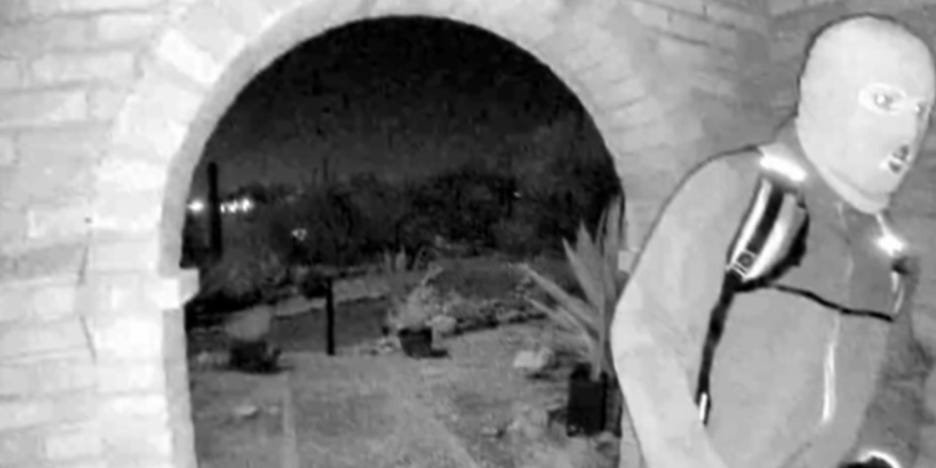
Authorities investigating the mysterious disappearance of “Today” show host Savannah Guthrie’s mother, Nancy Guthrie, have released surveillance images of a person of interest in the case.

The photos, released to the public by the FBI on Tuesday, shows a masked person captured on the Nest doorbell camera on Nancy Guthrie’s home.

Up until this point, law enforcement officials have not identified any persons of interest or suspects in the case.

Authorities believe 84-year-old Nancy Guthrie was taken from her Arizona home against her will 10 days ago.

The elderly woman, who has limited mobility, a pacemaker, and depends on daily medication for a heart condition, was reported missing by her family on February 1 after she was last seen the night before when they dropped her off at home following a dinner.

Pima County Sheriff Chris Nanos has said that Nancy Guthrie’s doorbell camera had been removed and that blood discovered on her porch matched back to her.

The case has captured national attention amid reports of purported ransom notes and emotional video pleas by Savannah Guthrie and her siblings.

On Monday, the famed NBC anchor posted a new Instagram video, telling her nearly two million followers: “We are at an hour of desperation, and we need your help.”

“Law enforcement is working tirelessly around the clock trying to bring her home, trying to find her. She was taken, and we don’t know where,” Savannath Guthrie said as she called the situation a “nightmare.”

The FBI, which is assisting in the case, has offered a reward of up to $50,000 for information related to Nancy Guthrie’s disappearance.


Source link

xAI

California sends xAI cease-and-desist letter, saying it must stop allowing sexualized deepfake images of minors


Anadolu/Anadolu Agency via Getty Images

  • California sent xAI a cease-and-desist letter, demanding it stop allowing deefake images of minors.
  • Elon Musk’s xAI faces sustained criticism over Grok’s ability to create nonconsensual sexualized images.
  • The letter, sent by AG Rob Bonta, threatens legal action if the deepfakes continue to be permitted.

California Attorney General Rob Bonta has demanded that xAI prevent its chatbot, Grok, from continuing to create sexualized deepfake images of children.

Bonta’s office sent a cease-and-desist letter to Elon Musk’s AI startup on Friday after sustained criticism over the bot’s ability to create nonconsensual sexualized images, including those of minors.

Earlier this week, X said that it implemented restrictions on Grok.

“We have implemented technological measures to prevent the Grok account from allowing the editing of images of real people in revealing clothing such as bikinis,” X’s safety account said in a blog post on the platform on Wednesday. “This restriction applies to all users, including paid subscribers.”

However, that didn’t stop the X or Grok app from creating sexualized images, Business Insider’s Henry Chandonnet found on Thursday.

Representatives for the CA Attorney General’s office did not immediately respond to requests for comment from Business Insider.

In an automated response to Business Insider, xAI said, “Legacy Media Lies.”

This is a developing story. Please check back for updates.


Source link

Ashley-St-Clair-sues-Elon-Musks-xAI-over-alleged-explicit.jpeg

Ashley St. Clair sues Elon Musk’s xAI over alleged explicit Grok deepfake images

Ashley St. Clair, who gave birth to one of Elon Musk’s sons in 2024, sued Musk’s xAI in a New York court on Thursday, alleging that its chatbot Grok generated sexually explicit deepfake images of her at users’ request.

In the complaint, St. Clair, a writer, influencer, and political strategist, claims X users prompted Grok to manipulate images of her, including photos from when she was 14, into graphic sexual content. She alleges some images remained online for more than a week and that her premium X account was later terminated after she complained.

She is also requesting a temporary restraining order to compel xAI to immediately cease from “the intentional disclosure of nonconsensual intimate images.”

xAI did not immediately respond to a request for comment.

“Grok first promised Ms. St. Clair that it would refrain from manufacturing more images unclothing her,” the complaint read. “Instead, Defendant retaliated against her, demonetizing her X account and generating multitudes more images of her,” the suit alleged.

St. Clair is also involved in a separate suit with Musk over the custody of their son, in which she sought sole custody.

xAI responded the same day with a separate lawsuit, arguing that St. Clair agreed to its terms of service, which requires any litigation to be heard in Texas. St. Clair is represented by attorney Carrie Goldberg, who specializes in cases involving abuse and has represented clients against Harvey Weinstein.

“xAI is not a reasonably safe product,” Goldberg said in a statement to Business Insider. “This harm flowed directly from deliberate design choices that enabled Grok to be used as a tool of harassment and humiliation. Companies should not be able to escape responsibility when the products they build predictably cause this kind of harm.”

The lawsuit followed international backlash against the Grok chatbot for its ability to undress images of real people and create sexualized images without their consent at users’ request.

Indonesia and Malaysia blocked access to Grok, while UK Prime Minister Keir Starmer called explicit images generated by Grok “disgusting” and “shameful” in a meeting with the House of Commons.

On Wednesday, California Attorney General Rob Bonta also announced that his office is investigating the “non-consensual, sexually explicit material that xAI has produced and posted online” of “women and children in nude and sexually explicit situations.”

X said on the same day in a blog post that users would no longer be allowed to create AI photos of real people in sexualized or revealing clothing on the platform, adding that the restriction “applies to all users, including paid subscribers.”

As of Thursday morning, Business Insider reporter Henry Chandonnet found that it is still “surprisingly easy” to prompt Grok to create nude images of him by going to the app itself instead of using the Grok chatbot on X.


Source link

Shuby headshot

Grok stops users from making sexualized AI images after global backlash

Grok will no longer be allowed to create AI photos of real people in sexualized or revealing clothing, after widespread global backlash.

“We have implemented technological measures to prevent the Grok account from allowing the editing of images of real people in revealing clothing such as bikinis,” X’s safety account said in a blog post on the platform on Wednesday. “This restriction applies to all users, including paid subscribers.”

The change was announced hours after California’s top prosecutor, Rob Bonta, said he launched an investigation into sexualized AI deepfakes, including those of children, generated by Grok. Bonta said that there had been a flood of reports in the last few weeks that Grok users were taking pictures of women and minors they found online and using the AI model to undress them in images.

Indonesia and Malaysia suspended Grok because of the images, the first countries in the world to ban the AI tool. Lawmakers in the UK publicly considered a suspension.

In Wednesday’s blog post, the social media company reiterated that image creation and the ability to edit images via Grok on the X platform will now only be available to paid users as an additional safety measure.

The company restricted non-paying users last week after complaints from officials globally, but it was slammed for being insufficient.

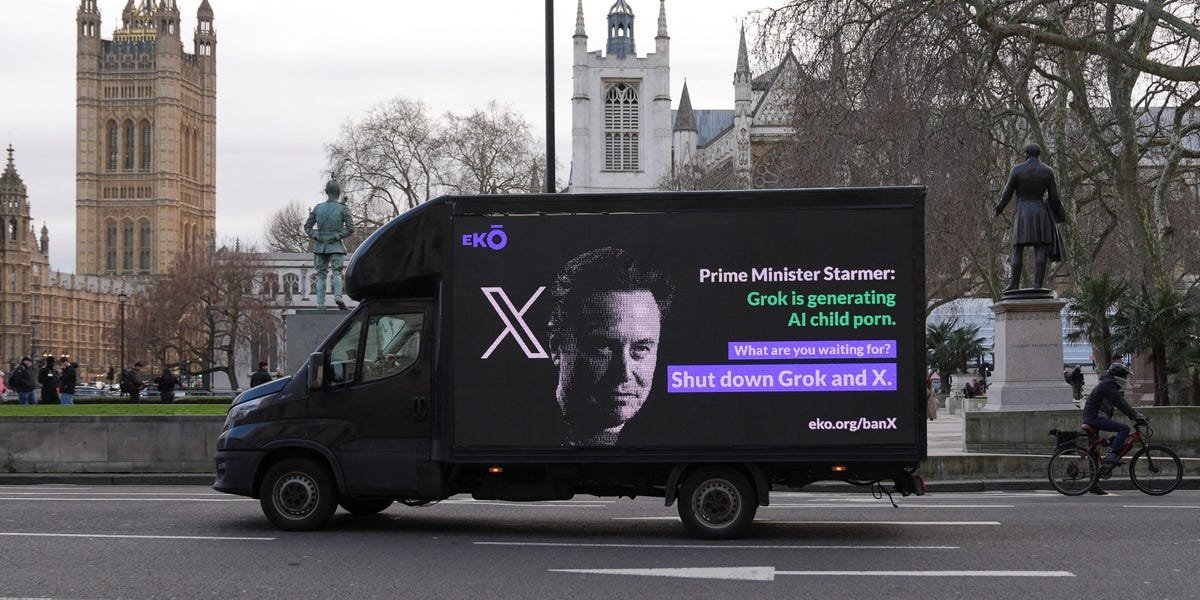
A spokesperson for British Prime Minister Keir Starmer said it “simply turns an AI feature that allows the creation of unlawful images into a premium service.”

Elon Musk, who owns xAI, the maker of Grok, said that the UK government wanted “any excuse for censorship” in response to a post questioning why AI tools like Gemini and ChatGPT were not being looked into.

On Wednesday, a few hours before X’s official account posted about the ban on creating sexualized images, Musk asked users to try to get around the AI model’s image restrictions.

Bonta’s office and Starmer’s office did not immediately respond to requests for comment from Business Insider.


Source link