
Rosamund-Pike-says-it-was-important-to-cement-her-relationship.jpeg

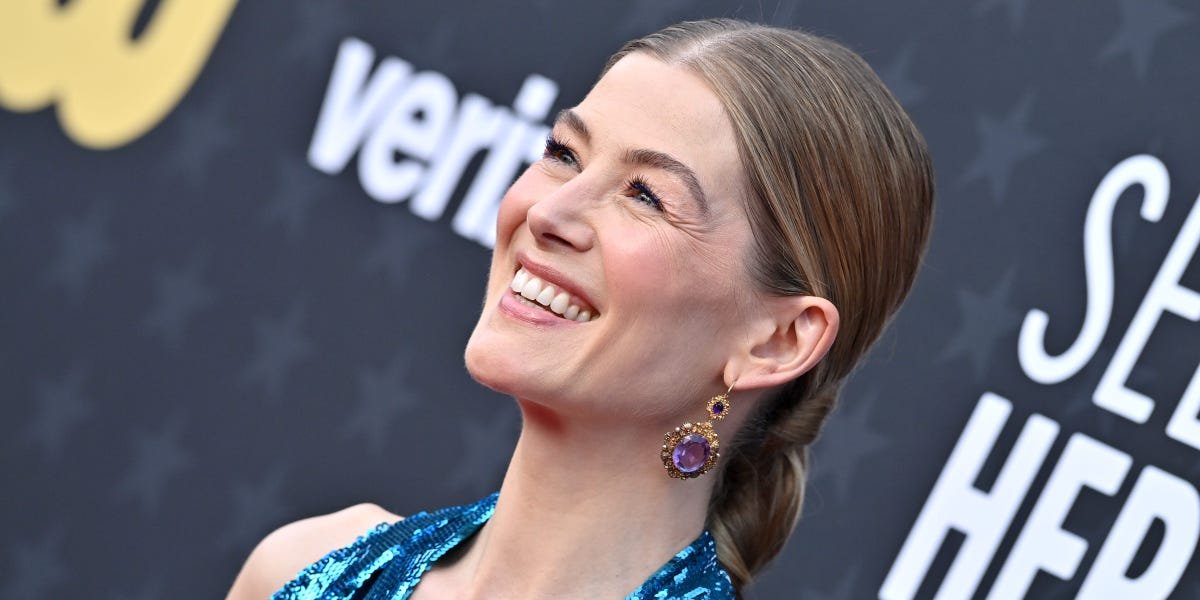
Rosamund Pike says it was ‘important to cement’ her relationship by starting a family — not having a wedding

Rosamund Pike, 47, says she stepped away from the traditional expectation of marriage and built a family her own way.

On Wednesday’s episode of “How to Fail with Elizabeth Day,” the actor reflected on a broken engagement in her late 20s that reshaped her view of relationships.

Pike was engaged to filmmaker Joe Wright in the late 2000s, though the couple ultimately called off the wedding. Looking back, she said the experience made her question the conventional milestones many women feel pressured to reach.

“My failure to get married. Well, it’s a big deal for a 28-year-old, isn’t it? Your, sort of, template for womanhood — you’re doing the right thing. Got a lovely boyfriend, he’s asked you to marry him, you’re getting engaged, and there’s going to be a wedding, and you know, it’s the right age,” Pike told podcast host Elizabeth Day.

The actor also recalled her then-fiancé asking if she was “pleased” to be marrying before 30. She added that she thought it felt “right” and “romantic” at the time, until their relationship fell apart.

The breakup was “utterly devastating,” and public scrutiny made it worse, she said.

However, Pike eventually began to see the experience in a new light.

“The freedom from that afterward is that you sort of think, OK, so you haven’t achieved the thing, I suppose, the template,” Pike said. “He was a man who was eight years older than me. He was successful, he was good-looking, he was funny — he was great. And then it doesn’t happen, and you think, ‘Oh, no.'”

“But then you realize that actually you’re free in a way, because you think there are so many other templates of what life can look like for a woman,” she continued.

The breakup also helped her see that there are “so many other ways that love can look like.”

Pike has since been in a long-term relationship with businessman Robie Uniacke, and they share two sons together. Their first child, Solo, was born in 2012, and their second, Atom, in 2014.

“Here I am. I’m not married, but I have a family, and I’ve been with someone for 14, 15 years, happily not married,” Pike said.

She added that she was intentional about marking commitment in a “different way” in this relationship.

“It was more important to cement that or, sort of, mark that with starting a family than having a wedding, because also, I thought I’m the center of attention so often. I don’t need a wedding,” she said.

Pike isn’t the only celebrity to question traditional expectations around marriage and motherhood.

Charlize Theron has called single motherhood “one of the healthiest decisions” she ever made, despite the stigma around it.

“With women, it’s always like, something must be wrong with her. She can’t keep a man. And it’s never part of the discussion of like, ‘Wow, she’s really living her truth. She’s living in her happiness. This is actually a choice that she made,'” Theron said during a July episode of “Call Her Daddy.”

Michelle Obama has similarly pushed back on the idea that women must hit certain milestones by a certain age, saying turning 35 shouldn’t be viewed as a deadline for marriage or success.

“I would just say there are no ‘shoulds’. There are so many ways to live a happy, fulfilling life,” she said on a November episode of her podcast.



Source link

My-99-year-old-grandma-taught-me-important-lessons-about-the-power.jpeg

My 99-year-old grandma taught me important lessons about the power of silence, change, and living a good life

My grandma and I spent most of our lives apart, yet she taught me a deeper way to live.

I grew up in California, while my Grandma Jackie lived in Minnesota. We saw each other only on special occasions — summer visits, my high-school graduation, and a few holidays.

Because of the distance, I got to know her through stories from my parents. Most of what I knew about my grandma came from tales of her days fishing, playing slots, and trying her luck at Pokeno.

These stories, mixed in with my own memories of her wide smile and the taste of her one-of-a-kind sweet-potato pie, cemented my connection to her. Yet when she passed away at 99, I felt guilty for not being closer to her.

During my grieving, I reflected on our relationship that flourished despite the time and miles between us. Through our scattered time together, Grandma Jackie gave me three lessons that shape how I live today.

Love doesn’t need many words


Woman smiling in chair lift wearing Minnesota sweatshirt

Although my grandma didn’t always say much, I knew she loved me.

Kiersten Brown


My grandma wasn’t much of a talker — oftentimes, she could communicate more with a smile than with words.

Whenever I visited her, her brown eyes would light up, and in her raspy voice, she would say, “Well, hi sweetie, how ya doing?”

After a few minutes of pleasantries, the conversation would end. Then we would sit together and watch “Wheel of Fortune.” Occasionally, I’d glance at her, and she’d shoot me a smile.

The same pattern played out during her yearly birthday calls, which lasted three minutes, at best. She would sing “Happy Birthday,” ask how I was doing, and end with, “Well, I’ll holla at you later.”

Interactions felt more like small talk with a coworker than chats with a loved one, and these brief interactions made me question our connection. Short conversations made me feel like we weren’t close because we didn’t have much say.

Yet one day after my grandma’s passing I was talking with my aunt who revealed that love is measured in time spend together.

My aunt mentioned that Grandma Jackie often asked about me and prayed for me nightly. Although we didn’t speak often and saw each other less, she was always thinking of me.

This insight made me realize that silence was more of a way of being than a reflection of our relationship. I realize now that not having much to say was a choice rooted in acceptance and love — she was content with simply having me around.

Because of her, I now focus more on appreciating someone’s presence rather than filling space with chatter.

It’s never too late to change how you live and chase life — no matter the circumstances

My grandma had an unwavering will to live and really took charge of her health at the age of 80 when the doctor’s told her that her she might not have much time left.

She quit smoking, cold turkey. She enrolled in exercise programs, walked daily laps around the house, took supplements, and focused on eating more fruits and vegetables.

More than fearing death, I believe my grandma enjoyed life too much not to fight for it. She had always been someone who loved spending time with her friends, enjoyed traveling within her own state, and considered everyone she met a friend.

When I visited my family a year ago, my grandma attended nearly every event. If she saw someone getting ready to leave, she’d ask, “Where we going?” and expected us to bring her with us. It didn’t matter whether we went to the park or out to eat; she made sure to tag along.

Every day I’m reminded that circumstances don’t have to dictate how I live, and her strength has inspired me to live life to the fullest.

Never stop doing what you enjoy


Group of women smiling outside

My grandma tried to spend time with friends and family as much as she could.

Kiersten Brown


As a music lover, she danced whenever her favorite songs came on. When she became less mobile, she would still rock her hips and sway in her chair.

She loved visiting casinos, never focusing on hitting big wins, but rather finding pleasure in simply playing. During her last few years of life, she attended virtual and in-person family bingo every Friday night. When she craved cake and ice cream, she would have some — in moderation, of course.

As time goes on and I grow older, I’m committed to following my grandma’s example. I will be dancing, hiking, and hanging out with friends for as long as I’m alive.

I’d say my grandma reached 99 for two reasons: good genes and complete dedication to living her life the best way she could. Because of her, I live with more purpose and intention.


Source link

Joshua Zitser's face on a grey background

Steven Bartlett says using AI in this way is the most important thing he’s done for his business

Steven Bartlett said one use of AI has mattered more to his business than anything else: translating his podcast into other languages.

“There’s nothing more important than what we’ve done for our business than translations. Period,” Bartlett said during the “What it Takes to Build” panel at the World Economic Forum at Davos on Tuesday.

The British entrepreneur and host of “The Diary of a CEO” podcast was in conversation with Jessica Lessin, the CEO of The Information, alongside Bret Taylor, formerly the co-CEO of Salesforce and CTO of Meta.

Bartlett said using AI tools to translate the podcasts was initially an “expensive experiment.” The problem he was trying to solve, he said, was reaching the untapped market of non-English speakers.

“If we’re just in English, we’re reaching like 10% of the world,” Bartlett added.

There were technical challenges, too. Some languages use longer words, Bartlett said, meaning three-hour English-language conversations could become significantly longer when translated, risking the audio and video falling out of sync.

Two years ago, Bartlett announced on LinkedIn that “The Diary of a CEO” had hired a full-time data scientist who helped the company achieve a technological breakthrough, enabling them to use AI to translate the podcast into “EVERY language.”

At Davos and in the LinkedIn post, Bartlett did not elaborate on exactly how the AI translations work. Today, however, the videos show Bartlett speaking Spanish in a voice similar to his own, a shift he said had significantly expanded the podcast’s reach.

“This month, 28% of my audience is Spanish,” he said, adding that Spanish speakers now have access to interviews with some of the world’s most high-profile podcast guests, citing his own interview with former first lady Michelle Obama as an example.

Other guests on the podcast include former vice President Kamala Harris, Simon Cowell, and the psychologist Jordan Peterson.

Spotify said in its “2025 Wrapped” press release in December 2025 that “The Diary of a CEO with Steven Bartlett” was the platform’s second-most-listened-to podcast globally, behind “The Joe Rogan Experience.” On YouTube, Bartlett’s podcast channel has 14.5 million subscribers.


Source link

Metas-Reality-Labs-chief-is-calling-the-most-important-meeting.jpeg

Meta’s Reality Labs chief is calling the ‘most important’ meeting of the year and says employees should show up in person

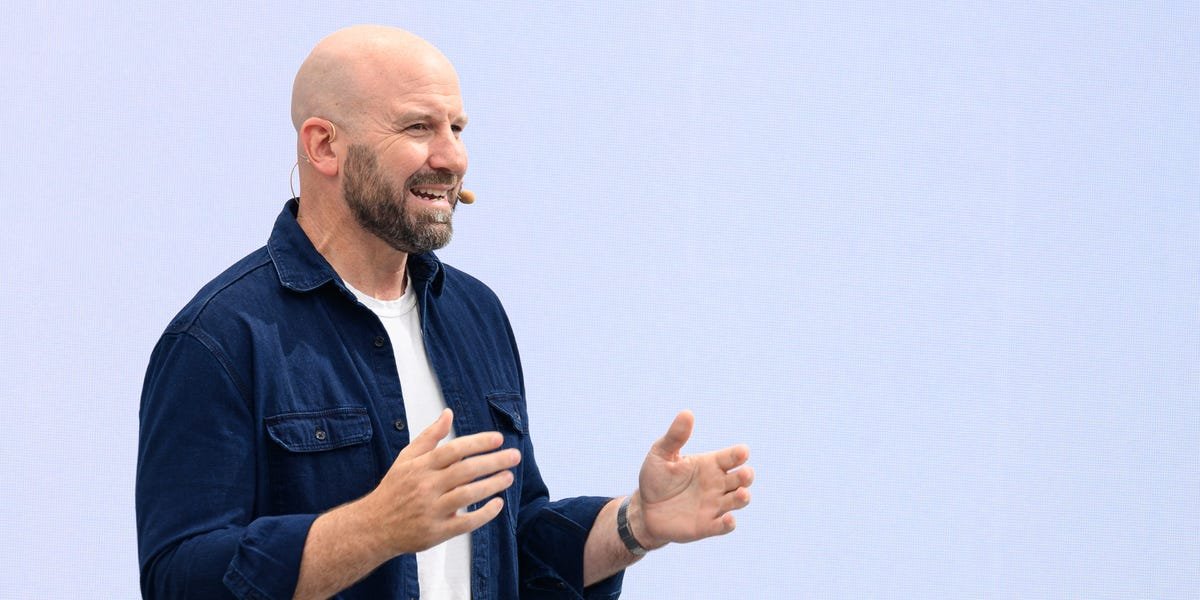
Meta’s Chief Technology Officer and head of Reality Labs, Andrew Bosworth, has called an all-hands meeting for January 14, describing it as the “most important” of the year.

Bosworth is also strongly recommending that Reality Labs employees attend the division’s meeting in person, two Meta employees told Business Insider.

The emphasis on in-person attendance is unusual for the division, which oversees the company’s wearables, virtual and augmented reality initiatives, and a nascent robotics unit, these employees said. Some managers have told employees to “drop what they’re doing” to attend the all-hands in person, one employee told Business Insider.

Meta did not immediately respond to a request for comment about the meeting.

While the division has seen some success, such as its Ray-Ban smart glasses, Reality Labs has been a costly venture for Meta, incurring losses of more than $70 billion since 2020.

Last year, Meta CEO Mark Zuckerberg shifted the company’s strategic focus toward AI and away from the metaverse. In 2025, Meta invested $14.3 billion in Scale AI and hired its CEO, Alexandr Wang, as part of the major reset of the company’s AI efforts. Meta then embarked on a multibillion-dollar hiring spree, poaching top-tier AI researchers and engineers from rivals such as OpenAI and Google DeepMind.

Reality Labs has faced repeated rounds of cuts over the past year. In December, Business Insider reported that Meta was planning budget cuts up to 30% and considering job cuts in Reality Labs.

Last April, Meta laid off employees in Oculus Studios, its in-house gaming division, and the team behind Supernatural, the VR fitness app Meta acquired for over $400 million. Those cuts followed Meta’s broader January 2025 layoffs that eliminated nearly 4,000 roles companywide, with at least 560 affecting Reality Labs employees.

In a memo obtained by Business Insider earlier last year, Bosworth referred to 2025 as “the most critical” year in his eight-year tenure at Reality Labs.

“This year likely determines whether this entire effort will go down as the work of visionaries or a legendary misadventure,” he wrote.

Have a tip? Contact Pranav Dixit via email at pranavdixit@protonmail.com or Signal at 1-408-905-9124. Use a personal email address, a nonwork WiFi network, and a nonwork device; here’s our guide to sharing information securely.


Source link