The-guy-who-designed-the-iPhone-helped-craft-the-interior.jpeg

The guy who designed the iPhone helped craft the interior of Ferrari’s first EV — and it’s full of physical buttons and knobs

  • Former Apple designer Jony Ive’s firm worked together for five years to fashion the new Ferrari interior.
  • The sports car has tons of physical buttons that Ferrari says enhance “tactility” and reference its legendary racing history.
  • The Italian brand has also unveiled a new name for its EV project: it’s now called the Luce.

Jony Ive designed the iPhone, which famously ditched most of a phone’s physical buttons for virtual ones. His take on the new Ferrari interior shows a very different approach.

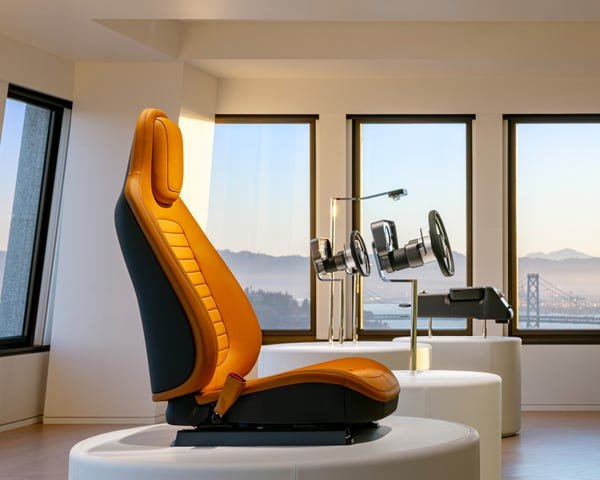
Ferrari has spent five years working with LoveFrom, the design studio founded by Ive and fellow Apple design alum Marc Newson, to shape the interior of its first EV, the Luce.

The result is a button-heavy, screen-forward cabin that blends Ferrari’s performance ethos with high-end, Apple-style minimalism.

Ferrari hasn’t released photos of the exterior or a full list of specs, but earlier disclosures suggest the Luce will be a four-door, four-seat electric car capable of reaching 60 mph from a standing start in 2.5 seconds. It’s expected to have a 330-mile range.

The Luce marks Ferrari’s leap into electrification — with an interior wrapped in Ive’s distinctive design language. Here’s what the interior looks like.

A five-year partnership to build a classic racer – but with a battery.

Ferrari’s all-new EV will feature an interior with elements designed by LoveFrom, a creative collective founded by Jony Ive and Marc Newson.

Ferrari

Ferrari — long synonymous with grunting, high-performance racers — is moving into the near-silence of electric power.

To guide that transition, the automaker worked with LoveFrom to refine the interior’s materials, shapes, and controls.

The result looks nothing like most EVs. The Luce’s cabin is lined with tactile hardware — rows of machined-metal toggles and physical switches designed to be clicked, not swiped.

For any curious Apple fans, there are some familiar flourishes: brushed aluminum, slim leather surfaces, and a minimalist layout.

Oh, wow. Buttons on the steering wheel!


A black and silver steering wheel with a yellow Ferrari logo in the middle.

The new Ferrari will have a ton of interior buttons, including on the steering wheel. The company said its focus is on “tactility, clarity, and intuitive interaction.”

Ferrari

The slim, three-spoke steering wheel keeps things simple — starting with directional controls mounted directly on the wheel.

More buttons sit beneath the silver spokes, putting most core functions within thumb’s reach.

On the left are controls for cruise, drive modes, and dash lighting. On the right are power modes, suspension settings, and wipers.

Volume and track controls are tucked behind the wheel, while paddles manage torque delivery, mimicking the engagement of traditional gear changes. Even in an EV, Ferrari wants drivers to feel like they’re choosing their own gears.

An almost Apple-like tablet in the middle — but with knobs and switches.


An overhead shot of the Luce's interior. It shows the driver-focused angle of the infotainment screen and the brown leather seats.

The Luce’s interior features familiar design cues for iPhone users: the infotainment system has curved edges similar to Apple’s products and blends side-mounted physical buttons for added control.

Ferrari

The center infotainment display looks a bit like an oversized Apple Watch. Ferrari’s system comes complete with fan-speed settings, heated-seat controls, and a built-in circular clock.

The tablet-like screen sits on a ball-and-socket joint, allowing it to swivel toward either the driver or the passenger.

Ferrari also says the silver bar below the screen is a palm rest — perfect for drivers to stabilize their hand while switching Spotify playlists in a sharp corner.

Glass all around — and a funky key option.


A small gear selector next to a Ferrari-badged square key.

Ferrari will use high-strength glass to make its gear selector.

Ferrari

Ferrari is leaning heavily into glass for the Luce’s interior, using Corning Gorilla Glass across many hard surfaces — including the gear selector.

The company says the material is more crack-resistant than typical smartphone glass and is designed to withstand scratches from daily use.

There’s also a touch of whimsy in the key fob. The square Ferrari badge is the key: slot it into the console, and the glass fob turns black, disappearing into the surrounding trim.

Pick it up and walk away, and it glows Ferrari’s signature racing yellow.

A helicopter-like speed-reader.


The dashboard with three circular gauges. They all have white and yellow numbers and meters.

Ferrari said its instrument cluster mixed digital interfaces with “historic automotive cues.”

Ferrari

The gauge cluster behind the steering wheel takes inspiration from helicopter cockpits.

Ferrari says the digital display is mounted directly to the steering column, keeping critical high-speed information locked in the driver’s line of sight.

The setup is also a first for Ferrari.

At the center is a hybrid speedometer: a physical needle floating over layered digital driving data, all viewed through a curved lens. While most modern cars have abandoned analog needles entirely, Ferrari kept one — blending old-school driving cues with a fully digital display.

An all-new name for the all-new EV.


A black

Ferrari is changing the name of its all-electric project. The car was initially called the Elettrica, but will now go by the name Luce.

Ferrari

Ferrari first revealed its all-electric project in October 2025 under the working name “Elettrica.” Now, it has an official name: the Luce (pronounced LOO-che).

In Italian, luce translates to “light.”

The next reveal will come in May.


Five men in a yellow room in front of a Ferrari badge. They're all next to design tables with a smattering of interior parts.

Ferrari executives (from left – CEO Benedetto Vigna, Chairman John Elkann, and design chief Flavio Manzoni) partnered with LoveFrom’s design leads, Jony Ive (in blue) and Marc Newson (in red).

Ferrari

The partnership between Ferrari and LoveFrom — first reported in 2021 — resulted in an interior designed to signal the automaker’s ambition to reimagine the electric-car experience from the ground up.

It’s an unusual move for Ferrari, which rarely brings in outside design firms.

“The team focused on perfecting and refining every solution to its purest form,” the automaker said in a press release.

The rest of the car, which was developed in-house, will be revealed in May. Ferrari has not confirmed pricing or availability for the new EV yet.


Source link

An-interior-designer-shares-11-things-shed-never-have-in.jpeg

An interior designer shares 11 things she’d never have in her own home

  • An interior designer told Business Insider which items and trends she would never have in her home.
  • She said she’s not a fan of unorganized clothing racks, matching bedroom sets, or textured walls.
  • You also probably won’t find faux flowers, mirrored walls, or textured ceilings in her home.

With so many design options and changing trends, it can be difficult to decide what items are worth buying and which you may want to skip in your own home.

So, Business Insider has been checking in with interior designers for tips and inspiration. This time, we spoke with Alessandra Wood, an interior designer and design historian with over a decade of industry experience.

Here are a few items and trends Wood said she’d never have in her own home — plus a few styles she’d opt for instead.

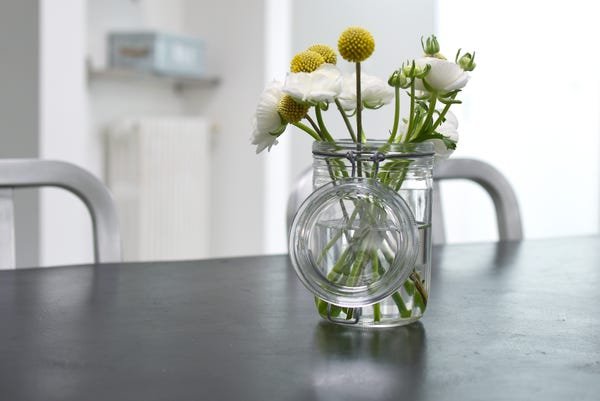
Decorative mason jars just aren’t her cup of tea.

Mason jars don’t work with every interior-design style.

Anthony SEJOURNE/Getty Images

Mason jars have been a popular interior-design trend for years, especially among those who like rustic or farmhouse aesthetics. They can be found on Pinterest as repurposed soap dispensers, lighting fixtures, flower vases, candle holders, and so on.

However, these decorations can feel a bit too homemade for Wood.

Though mason jars work well for storing leftovers and dry goods, she said she’d never use them as decorative accents in her home.

Instead, she’d opt for more stylized accents and fixtures that fit her personal design style.

“For soap dispensers, you can find beautiful natural materials that take a sculptural vibe,” she told BI. “And for lighting fixtures, the world is your oyster.”

She swaps out “filler” decorative accessories for items with more personal meaning.


Living room with fireplace, green couch

A shelf feels more meaningful when it’s styled with souvenirs or special mementos.

Vasyl Cheipesh/Getty Images

Wood said she also avoids “filler” accessories, or decorative objects that are mass-produced and essentially meant to fill empty space.

“While these pieces can be great when they really speak to you, oftentimes we find ourselves buying them just to buy something,” Wood said.

Instead, she prefers to have a more curated look in her home, focusing on displaying decor with meaning.

“Choose decorative accents that you find yourself drawn to and really love or ones that you collect on your journeys,” Wood told BI. “I like to use this approach when deciding what to put in my home space and nix the objects that don’t support a larger narrative.”

For window treatments, Wood avoids roller shades, which can look dated.


Window with roller shades

Roller shades aren’t for everyone.

Ratchat/Getty Images

She’s not a huge fan of roller shades, a type of window covering that typically features a single piece of material that can be rolled up and down using a string or chain.

“I had these in my bedroom as a child,” Wood said. “I know they’ve come a long way since then, but I can’t have them in my current home.”

Cordless roman shades, which can be pushed and pulled, can be a stylish alternative, she added. They’re easy to operate and can add softness to a window.

An on-display clothing rack requires too much maintenance.


Clothing rack next to poster in bedroom

Clothing racks can look cluttered if they’re not carefully curated.

Photographee.eu/Shutterstock

Though a clothing rack can look chic in a bedroom, Wood said, it’s just too hard to keep it organized and display-worthy on a daily basis.

“This only looks good when curated and perfect, which is a lot to ask for something that you use every single day,” she told BI.

She said she’d rather have an armoire, which allows you to store clothing and accessories behind closed doors. That way, you don’t have to rearrange your belongings daily to keep your room looking perfect.

She tries to avoid textured walls and ceilings.


Beige wall with textured paint effect

It can be hard to get rid of textured walls and ceilings if you decide you no longer want them.

FollowTheFlow/Getty Images

Textured walls and ceilings aren’t her cup of tea, either, though she acknowledges they can be costly to remove in a home if they’re already there.

“Unless your walls are made of plaster, which has a gorgeous, natural texture, I would always refrain from adding texture to sheetrock,” Wood said.

Smooth sheetrock has a crisp look and feel, and doesn’t limit your decor options later. For example, she said, it’s challenging to put up wallpaper on textured walls and nearly impossible to use peel-and-stick options.

You won’t find her painting any rooms red and black.


Black and white bookshelves

Black paint can work nicely with a lot of different shades, but some aren’t harmonious.

tulcarion/Getty Images

A room that’s painted red and black screams “teenage boy” or “boudoir,” Wood said. She avoids this color palette in her home.

“Pure reds can be quite aggressive and carry a lot of energy with the color, especially when paired with black,” she told BI.

If you really like red, you may want to use a reddish brown that retains the hue’s warmth while adding softness. You can pair this color with earthy neutral tones for a more subdued look or with earthy greens for a bit of contrast, she suggested.

Faux flowers can just end up being dust collectors.


home decor shelf with faux flowers in pitcher, moss ball, stack of books

Real flowers look fresher than fake ones.

Laura Bergeron/Shutterstock

Faux flowers are also a pass for Wood.

“I’m not a fan of faux flowers,” she told BI. “While they do add a pop of color, they feel like dust collectors to me.”

Instead, it’s better to use a real bouquet or living plant to add life to a room.

She’ll pass on the polypropylene rugs, which can wear down quickly.


Living room with faded red couch, green bookshelves, green paneling halfway up wall

If a rug isn’t made of a durable material, it probably won’t last long.

Vasyl Cheipesh/Getty Images

Though polypropylene rugs can be affordable and often come in trendy colors and patterns, their synthetic material is not ideal.

They’re primarily made of plastic, which can break down and look worn in a few years, Wood said.

“Instead, I prefer to invest a bit more in natural-fiber rugs such as wool or cotton blends,” Wood said. “These rugs are meant to last years — even lifetimes — and bring great benefits.”

For example, wool rugs can be easy to clean, durable, and hypoallergenic.

Matching bedroom sets should stay at the furniture store.


Bedroom with backlights and wallpaper behind bed

Do some mixing and matching instead of buying full sets.

Mindaugas Dulinskas/Getty Images

“When you see a room that has a bed, nightstands, and dressers totally matching, it feels like the set was purchased right off the showroom floor and lacks the personality of the occupant,” Wood told BI.

Though a few matching pieces can create harmony for those who love order, she said, don’t go for the full furniture suite.

It’s important to mix in different textures and materials so your space looks more organic and feels much more personalized, she added.

Mirrored walls can make a room look like a dance studio.


Dining room with mirrored wall

Mirrored walls can also be tricky to keep clean.

foamfoto/Shutterstock

According to Wood, mirrored walls have a certain vibe that’s just not ideal for a home.

“While mirrors do wonders to add light and brightness to rooms, floor-to-ceiling mirrored walls have a distinctly dated feel,” she said. “They feel more appropriate for a ballet studio than a living room or bedroom.”

Wood recommended hanging large mirrors above a sofa or on a bedroom wall to get the same effect without having the feel of a 1980s Miami Beach condo.

Bathroom vanities with an all-in-one molded sink and counter lack personality.


Wallpaper bathroom with marble-top vanity with mirror above it

Some bathroom vanities can upgrade a space.

Joe Hendrickson/Getty Images

Bathroom vanities with an all-in-one molded sink can look really basic, Wood told BI.

She said these are often the cheapest options available and a “quintessential piece” in flipped homes that lack style.

Instead, Wood prefers vanities with stone counters and a separate sink made of a different material.

“This will make your bathroom look much more personalized and feel a bit more luxurious,” she added.

Click to keep reading other things interior designers say they would (or would never) have in their own space.

This story was originally published on June 4, 2021, and most recently updated on January 22, 2025.


Source link