
JPMorgans-investment-in-the-American-Dream-comes-during-a-crisis.jpeg

JPMorgan’s investment in the ‘American Dream’ comes during a crisis of faith in capitalism

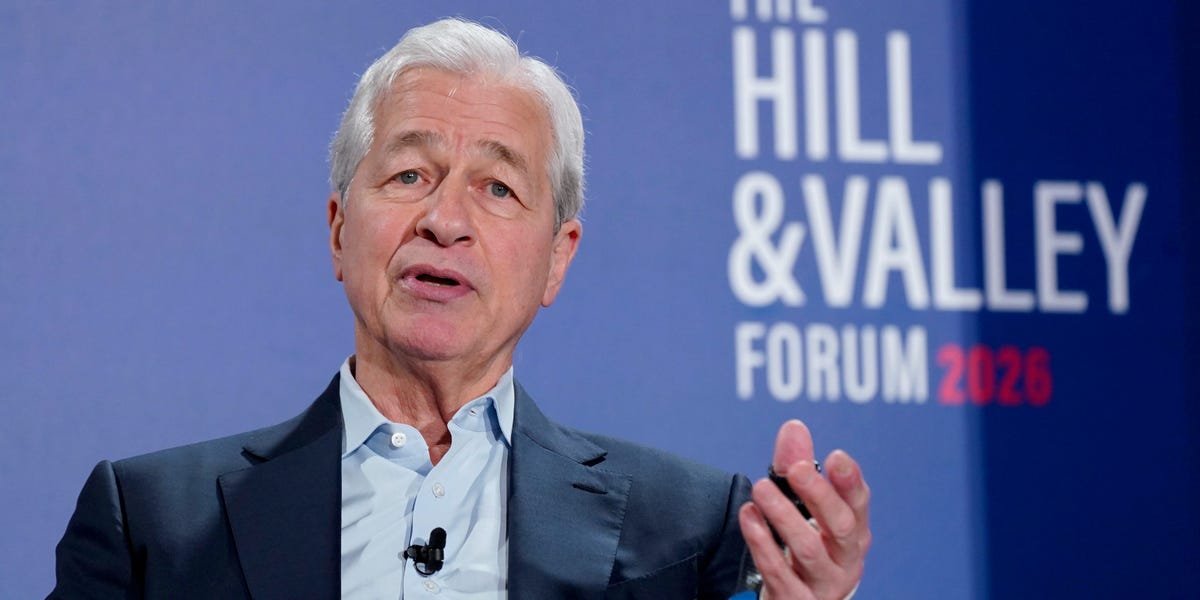
Jamie Dimon wants his bank to save the American dream at a moment when many Americans are losing faith in its economic promise.

JPMorgan announced a sweeping initiative aimed at expanding opportunities for upward mobility on Tuesday. It’s “American Dream Initiative” will focus on six key areas: small-business growth, housing affordability, financial literacy, skills-based training, healthcare, and local institutions, such as schools and hospitals.

While JPMorgan CEO Dimon, who made $43 million last year, is bullish on the American promise, Americans themselves are increasingly skeptical that capitalism, at its heart, still works. A Gallup poll in September found that a record-low 54% of Americans view capitalism favorably, down from 60% in 2021.

Small business owners are among those feeling an economic crunch — 77% of small and midsize business owners said their costs have risen over the past year, according to a November report from Bank of America — and JPMorgan is first focusing its new initiative on supporting them.

Through the American Dream Initiative, JPMorgan will work to bank 10 million small businesses, up from 7 million today. The firm outlined plans to provide nearly $80 billion in lending over the next decade, along with hiring more small business bankers and consultants. JPMorgan didn’t provide specific dollar amounts for many of the other investments — it will, according to the release, “support efforts that provide better access to healthcare” and “improve affordability for hundreds of thousands of renters” — and said the initiative will roll out over multiple years.

Dimon, who has said he salutes the flag in the lobby of his global headquarters every morning, has made other big commitments recently. In October, JPMorgan announced a $1.5 trillion Security and Resiliency Initiative to boost key US industries, focusing on defense and aerospace, “frontier” technologies, energy technologies, and supply chains. Earlier this year, the bank joined the list of companies committed to contributing to “Trump Accounts” for the kids of US-based employees, saying it would match the government’s one-time $1,000 contribution to the investment accounts for eligible newborns.

Government and corporate investments in Americans’ finances come amid something of a crisis of capitalism, especially among Democrats and younger generations. The most recent Harvard Youth Poll found that 39% of 18- to 29-year-olds surveyed support capitalism, down from 45% in 2020.

Though some Business Insider readers have told us that their belief in capitalism remains strong, others have cited rising living costs, the brutal job market, and AI as factors eroding their trust in the bedrock of America’s economy.

Even some big names on Wall Street have warned that capitalism is on potentially shaky ground. Longtime Citi banker Jay Collins, who has spent decades advising government officials through crises, recently told Business Insider that AI and robotics could challenge the capitalistic system.

“We have to tweak it, remodel it, remake it to allow for this, just like we did during the Industrial Revolution,” he said.




Source link

Wall Street employees

Elite investment bank settles case that put Wall Street’s 100-hour weeks on trial


Momo Takahashi, Business Insider

  • A junior banking analyst sued her former firm over its unpredictable, grueling work hours.
  • A settlement in the case was reached just before the case was set to go to trial.
  • The terms of the settlement were not disclosed.

Centerview Partners and former junior banker Kathryn Shiber have reached a settlement, ending a closely watched lawsuit about Wall Street work culture that was set to go to trial in Manhattan federal court.

The case centered on allegations that the boutique investment bank violated disability discrimination laws when it fired Shiber in 2020 after she said she needed eight to nine hours of sleep each night because of an underlying mood and anxiety disorder.

Court filings and depositions in the case offered a rare look into the grueling demands placed on first-year analysts, including testimony that they typically work between 60 and 120 hours a week and that “in some projects, you are working 24 hours a day.”

Centerview has denied wrongdoing.

“Centerview has said all along that Ms. Shiber’s legal claims have no merit,” a Centerview spokesperson told Business Insider in a statement. “We were ready to prove that in court, and are confident we would have prevailed at trial. But we are nonetheless happy to put this distraction behind us and focus on delivering for our clients.”

The resolution means a jury will not weigh in on questions about Wall Street’s long hours and workplace accommodations.

Terms of the settlement were not disclosed. Lawyers for Shiber did not respond to requests for comment from Business Insider.


Source link

Paul Squire Headshot

Logan Paul’s Pokémon card investment pays off; he just sold it for millions in profit

Logan Paul just made millions off a Pokémon card.

The influencer turned wrestler sold his one-of-one Pikachu Illustrator card — one of 41 ever distributed and the only one graded the highest quality by collectibles company PSA — at auction Monday for a jaw-dropping $16.492 million.

The winner? AJ Scaramucci, the founder of venture capital firm Solari Capital and the son of former White House communications director Anthony Scaramucci.

Scaramucci appeared on Logan Paul’s livestream early Monday after auction house Goldin announced him the winning bidder in the auction, which closed at 1:14 am ET.

“My ambition for the card is just a small story,” Scaramucci said at the event. “The real story is that I’m on a planetary treasure hunt. I’m planning to buy a T. rex dinosaur fossil, the Declaration of Independence, and I’m not stopping there. This is only the beginning.”

“You’re just starting?” Paul replied. “Bro. Bro, that is so epic.”

Paul also used the livestream to open packs of Pokémon cards and announce RipIt, a new collectibles business he’s launching.


This Pikachu illustrator Pokémon card set a new record for the most expensive Pokémon card sold privately.

This Pikachu illustrator Pokémon card set a record for the most expensive Pokémon card sold privately.

Goldin


In a statement, Goldin described the Pokémon card, which was originally given to winners of an illustration competition in Japan, as “one of the Holy Grails of the collectibles industry.”

Paul previously set the world record back in July 2021 when he purchased the same card for $5.275 million, meaning he will make millions in profit.

The card also came with a diamond-encrusted chain appraised at $75,000, Goldin said. Paul wore the card during his WWE debut at WrestleMania 38 in 2022.

In an Instagram post on Saturday, Paul bid farewell to the card.

“Goodbye my friend 😢 What a privilege it’s been to be the owner of the greatest collectible in the world,” he wrote.

The markets for Pokémon cards, along with other collectible card sets like Magic: The Gathering and Yu-Gi-Oh!, have become huge in recent years among collectors — especially Gen Z — with the rarest cards selling for tens of thousands of dollars, if not more.

Some people are even forgoing stocks and investing in Pokémon cards instead.


Source link

Alice Tecotzky

JPMorgan’s commercial and investment bank gets an AI-driven reshuffle

JPMorgan is consolidating power to move faster on AI.

The bank is reshuffling its commercial and investment bank to “maximize the impact of AI,” according to an internal memo seen by Business Insider that was sent this week.

The firm has named Guy Halamish as the chief operating officer of the CIB and tasked him with overseeing the ongoing effort to “harness the power of our data and fully leverage rapidly evolving AI capabilities,” the memo, signed by the CIB’s co-CEOs, Doug Petno and Troy Rohrbaugh, said. Halamish’s new role was first reported by Bloomberg.


Guy Halamish

Guy Halamish is taking on a new role as part of the AI push.

JPMorgan


Under the new structure, each major business in the division, including banking, markets, payments, and securities services, will have its own chief data and analytics officer reporting jointly to Halamish and business heads. The bank recently hired Zachery Anderson as the chief data and analytics officer of its payments division, after a nearly six-year stint at UK-based lender NatWest. In a LinkedIn post about the new job, Anderson said he wants to push the “edge of the possible with AI.”

The move is part of a new strategy to break silos across the unit and speed up adoption of AI.

The team of officers will work with the wider firm on a range of efforts, including “preparing our infrastructure for more advanced AI and the expanded use of AI agents” and “driving end-to-end transformation” in areas such as client onboarding.

The CIB is a huge profit driver for JPMorgan — in 2024, it generated $25 billion in net income out of a firmwide total of $58.5 billion, according to that year’s annual report.

JPMorgan, backed last year by an approximately $18 billion tech budget, is one of the financial industry’s leaders in AI, with its own proprietary genAI platform and additional tools in the pipeline. CEO Jamie Dimon defended the firm’s AI spending on a recent earnings call.

“We are going to stay out front, so help us God,” Dimon said about the spending.

Work at JPMorgan or have a tip? Contact this reporter via email at atecotzky@insider.com or Signal at alicetecotzky.05. Use a personal email address and a nonwork device; here’s our guide to sharing information securely.


Source link

Amazons-8-billion-Anthropic-investment-balloons-to-61-billion.jpeg

Amazon’s $8 billion Anthropic investment balloons to $61 billion

Talk about return on investment. Amazon’s bet on Anthropic looks like an enormous win, at least on paper.

The cloud giant disclosed on Friday that it holds $45.8 billion of convertible notes and $14.8 billion of nonvoting preferred stock in the AI startup. Taken together, the figures show that Amazon’s Anthropic stake is now worth $60.6 billion.

Amazon has invested $8 billion in Anthropic since late 2023, indicating a seven-fold increase in value. If borne out, that would rank among the most lucrative strategic technology investments the company has ever disclosed.

The two companies have a deep commercial tie-up. Anthropic has committed to buy 1 million of Amazon’s Trainium chips, binding one of the leading AI labs closely to Amazon Web Services.

Anthropic last raised $13 billion in September at a $183 billion post-money valuation, following a $3.5 billion round in March that valued the company at $61.5 billion. The AI startup is in talks for another funding round that would push its value to $350 billion.

The convertible notes held by Amazon convert to preferred stock as Anthropic raises additional capital. So every time the startup closes a round, Amazon gets valuable new stock in one of the hottest AI companies on the planet.

Some of the upside has already flowed through to Amazon’s earnings. Conversions in 2025 generated about $5.6 billion in recognized gains, and Amazon booked a further $7.2 billion upward adjustment to its “other income” in the third quarter as Anthropic’s valuation climbed.

An Amazon spokesperson told Business Insider that the value of the company’s Anthropic stake rose from $38.5 billion in the third quarter to $60.6 billion in the fourth. The company expects to book a further $15 billion gain in first-quarter “other income” as some of the notes convert to nonvoting preferred stock, the spokesperson added.

Amazon also disclosed that these valuations relied on “significant judgment.” The company classified the convertible notes as “Level 3” assets, meaning their values are based on unobservable inputs and Amazon’s own assumptions rather than market prices, the company disclosed.

That’s common with stakes in startups, which don’t have securities that trade regularly on liquid public markets. That’s what IPOs are for — and Anthropic is reportedly eyeing a listing this year.

Have a tip? Contact this reporter via email at ekim@businessinsider.com or Signal, Telegram, or WhatsApp at 650-942-3061. Use a personal email address, a nonwork WiFi network, and a nonwork device; here’s our guide to sharing information securely.


Source link

Alice Tecotzky

Grok’s new recruits? Investment bankers.

Grok wants Wall Street.

Elon Musk’s xAI is recruiting investment bankers to train its chatbot, offering between $45 and $100 an hour for a remote “Investment Banking Expert” in mergers and acquisitions, debt capital markets, and equity capital markets, according to new job postings.

The hires will help train Grok, the company’s chatbot, Jeffrey Weichsel, who identifies himself as a member of the program staff at xAI on LinkedIn, said in a post on X. It’s not clear how many roles the company is looking to fill, and representatives for xAI did not respond to Business Insider’s request for comment.

In their positions, the employees will be expected to improve xAI’s models by “providing high-quality data annotations and inputs,” the job descriptions said. They will partner with xAI’s technical teams, focusing on annotation tools for investment banking data and analyzing “complex problems.” Ideally, candidates should have experience relevant to their line of expertise, like having been an M&A advisor, analyst, associate, or vice president, as well as mentoring or training others.

Workdays will last 8.5 hours, according to the postings, compared to the notoriously grueling hours of a traditional investment banking analyst. An employee working those hours and making $100 per hour could expect to earn around $221,000 per year, before taxes. For those making $45 per hour, the annual pay comes out to around $99,450 before taxes.

In 2024, first-year investment banking analysts made an average base pay of more than $110,000 and earned a bonus that equaled around 50% of their base salary, according to a survey from recruiting firm Prospect Rock Partners. The base salary for associates at bulge-bracket banks that year, however, ranged from $176,000 to $221,000, plus a bonus that could top $130,000.

xAI also posted new roles for a “Finance Expert” in various fields, including private credit, crypto, and quantitative trading, with the same pay ranges. Applicants for the expert roles need to provide a resume and cover letter, and describe some “exceptional work” they’ve done in no more than 100 words. (This paragraph, excluding this sentence, is 50 words.)

Musk’s AI company is hardly the first to tap bankers’ expertise. Business Insider analyzed 18 job postings in November from 8 AI training companies for Wall Street gigs, including one that offered $150 an hour. xAI has previously posted roles for AI tutors across investment banking, trading, and private equity. In October, Bloomberg reported that OpenAI had hired more than 100 former investment bankers to train AI on how to create financial models, with the goal of eventually replacing some of the rote work junior bankers grind through. The company was offering $150 an hour, according to the outlet.

One former investment banker that Business Insider spoke to said he started training AI models as a side hustle to make extra cash and set himself up for the workplaces of the future.

Have a tip? Contact this reporter via email at atecotzky@insider.com or Signal at alicetecotzky.05. Use a personal email address and a nonwork device; here’s our guide to sharing information securely.


Source link