
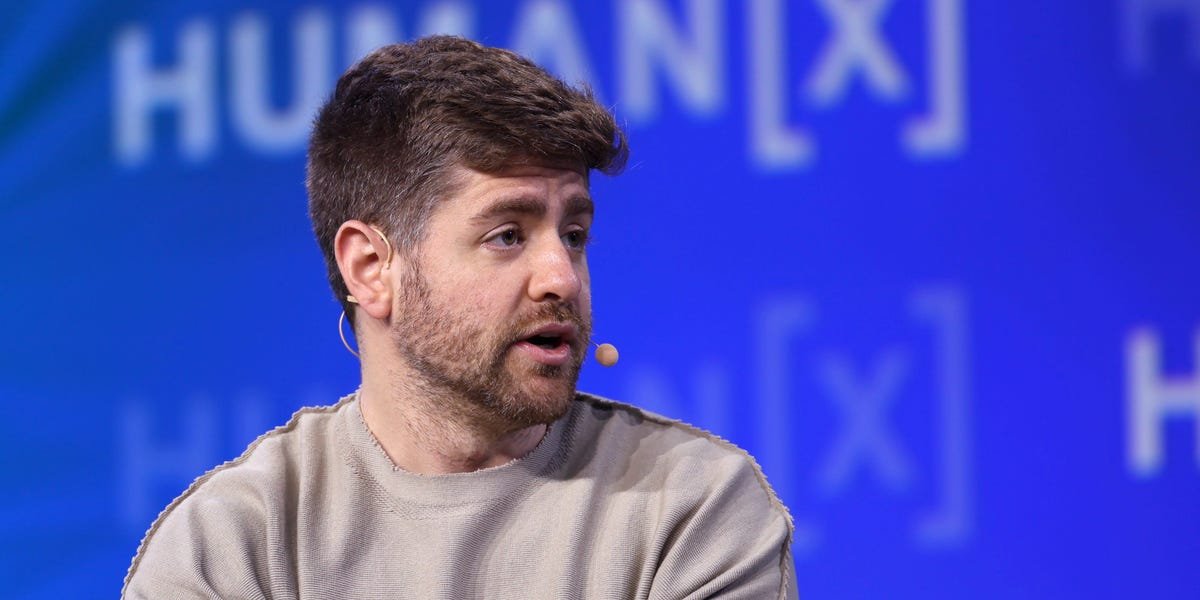
Ramp-is-telling-investors-it-is-about-to-hit-14.jpeg

Ramp is telling investors it is about to hit $1.4 billion in revenue a year, as the company prepares to go public.

Ramp, a New York-based fintech startup, has told potential investors it is on track to reach a $1.4 billion in annual recurring revenue this quarter as it prepares for a potential IPO, according to people familiar with the matter. That is up sharply from the $1 billion in Ramp’s annualized revenue— the revenue a company expects to collect over a year — in September.

The company did not respond to a request for comment.

Founded in 2019, Ramp sells a suite of financial tools centered on its corporate charge card, along with software for expense management, bill pay, and procurement. Its core pitch is that it helps companies spend less and operate more efficiently.

Run rate typically extrapolates recent revenue, often from a single month or quarter, over a full year. For a company like Ramp, whose business includes transaction-based revenue tied to customer spending, that figure can fluctuate with usage and may not reflect fully predictable revenue.

Ramp also said it is growing its customer base by about 70% year over year and expects to generate roughly $125 million in free cash flow this year, the company has been telling investors.

Additionally, Ramp stated its plans to be IPO-ready by the end of the year and is building the financial reporting and compliance infrastructure required of a public company. That does not mean it will actually go public this year, but it is preparing the company for that opportunity.

Only 30% of traders on Kalshi, a prediction marketplace, are betting the company will go public before May of 2027.

Ramp’s surging revenue has piqued VCs’ interest as the company nearly tripled its valuation in a matter of months in 2025.

Starting the year with a $13 billion valuation, Ramp closed three rapid-fire equity rounds between June and November of 2025, jumping to $16 billion, then $22.5 billion, and finally peaking at a $32 billion valuation in a round led by Lightspeed Venture Partners. Other investors include Founders Fund, Khosla Ventures, General Catalyst, Iconiq Capital, and 1789 Capital.

That valuation represents a sharp rebound from the fintech downturn, when Ramp raised a so-called down round of $5.8 billion in 2023.

Geoff Charles, chief product officer of Ramp, made headlines earlier this year when he said that all employees are expected to be AI-native.

“If you’re not using Claude code this year, no matter what your role is, you’re probably underperforming compared to others in the company,” he said on a podcast.

“The people who are still in L0, they will most likely not be at the company,” he added, referring to level zero.




Source link

Image of Lakshmi Varanasi

An OpenAI researcher turned venture capitalist says investors are 3 to 5 years behind the latest AI studies

There is a yearslong lag in the AI hype cycle, according to one former AI researcher turned venture capitalist.

Jenny Xiao, who cofounded Leonis Capital in 2021 after a stint at OpenAI, said the current investment excitement around AI is far behind the actual research.

“There is a massive disconnect between what researchers are seeing and what investors are seeing,” Xiao said on the Fortune Magazine podcast this week.

What’s being discussed at the biggest AI conferences is as much as 3 to 5 years behind what researchers are thinking about, Xiao said.

“We are so behind the technical frontier, and that’s the gap I really want to bridge,” she added.

Xiao, who dropped out of a Ph.D. program in economics and AI to take a researcher role at OpenAI, founded Leonis Capital to bridge the worlds of venture capital and deep academic AI research.

“With AI, there needs to be a new generation of founders. There needs to be a new generation of VCs,” she said.

It’s also the first time investors need to be able to provide financial support to both the market and the technology, she added. Unlike SaaS companies, which were built on a “stable tech stack,” AI is moving fast. To keep up, Xiao said investors are going to need to be as technical as the founders.

If she has one piece of advice for investors who haven’t gone deep into the technical side, it’s that they should know “AI progress isn’t linear,” she said.

They should know AI progress happens in “lumps,” she said. So, questions about why AI progress is slowing down or speeding up aren’t the best way to characterize the rate of development.

“It’s neither of those two extremes,” she said. “It’s somewhere in between.”

Leonis Capital did not immediately respond to a request for comment from Business Insider.


Source link

35-books-Wall-Street-investors-dealmakers-and-traders-say-helped.jpeg

35 books Wall Street investors, dealmakers, and traders say helped them succeed

Updated

  • We’ve asked Wall Street stars about the books that informed both their careers and personal growth.
  • The list includes biographies of billionaires and handbooks on leadership and decision-making.
  • We’ve compiled their 35 picks for those kick-starting their career in finance.

Aspiring to build a career on Wall Street? While there’s no one single playbook, one of the best ways to learn the ropes is by picking up the books that helped industry insiders get to where they are today.

Over the past few years, we’ve asked Wall Street’s rising stars to share the titles that helped them understand their industries, sharpened their skills, and inspired their career paths.

Their recommendations span everything from biographies of billionaires to practical handbooks on time management, decision-making, and leadership.

Whether you’re just starting or looking to level up, this list of 35 books offers a look at what ambitious professionals on Wall Street have read—and why it matters.

“The Master: The Long Run and Beautiful Game of Roger Federer” by Christopher Clarey


Amazon

“I recently read ‘The Master, ‘ the biography of Roger Federer, who some would argue is one of the best (tennis) players, if not the best player, of all time. Every time I read one of the tennis biographies, you’re reminded that it’s a very all-consuming commitment to be one of the greatest. At least in the case of tennis, it’s a very lonely existence. You’re the only person out there. You in your mind battling it out. The key is making sure you surround yourself with the right team.

“Every player, at least in the major tournaments, has a player’s box. You’ll have the family, the coach, and some friends in the player’s box. 

“The lesson I think is who’s in my player’s box?  How do they help me keep going? And, similarly, at least in the investing world, am I in the player’s box for others? How do I be the best person on the sidelines supporting?”

– Vinay Trivedi, General Atlantic

“How to Lead: Wisdom from the World’s Greatest CEOs, Founders, and Game Changers” by David Rubenstein


How to lead David Rubenstein


Amazon

“It’s kind of an anthology of various industries. A key takeaway from these stories is the importance of finding your passion. I’m obviously very passionate about finance.”

– Will Boeckman, Citadel Securities

“Why We Sleep: Unlocking the Power of Sleep and Dreams” by Matthew Walker


why we sleep matthew walker


A

“This book explores sleep’s impact on your body and mind.”

“Before the coronavirus pandemic, I was a daily 4:30 A.M. workout warrior and advocate for holistic nutrition, but I certainly was not prioritizing sleep in my health equation. This was an eye-opening and convincing read that has helped me to get significantly more shut-eye.”

– Lacey Vigmostad Giliberto, JP Morgan

“I’m a bad sleeper. This book puts in layman’s terms why you need to sleep and why it’s important for so many reasons.”

– Julia Dworkin, Jefferies

“The Short and Tragic Life of Robert Peace” by Jeff Hobbs


The short and tragic life of Robert peace jeff hobbs


Amazon

“It was a really interesting dichotomy. It’s about a young African-American man who grew up in a rougher neighborhood in Newark but went to Yale and ended up being really successful in his academic work. But he struggled at times to mesh the two worlds together.”

“It shows that the path to equality isn’t always as easy and seamless. Going to Yale on a scholarship, it can still be really hard for people. People often don’t get that.”

-Mir Subjally, Compass Rose Asset Management

“Liar’s Poker” by Michael Lewis


Amazon

“I am a little biased because I started my career at Citigroup, which is formerly Salomon Brothers. I also recommend ‘Panic!’ by Michael Lewis, and I generally like all the ‘Market Wizards’ series, which are helpful in knowing what fits your trading style and what doesn’t.”

-Tian Zeng, Nirvana Capital

“Give and Take” by Adam Grant


Give and Take Adam Grant


Amazon

“It shows that it’s not just about you. In the grand scheme of things, it’s how you help others along the way. How you can grow the pie for everyone.”

– Rachel Murray, Moelis

“It’s about striving to be somebody who gives to others and then expects nothing in return,” she said, “and how ironically fruitful that can be for your own life and career.”

– Lacey Vigmostad Giliberto, JP Morgan

“Young Money” by Kevin Roose


young money 1


Amazon

The book holds insights into “all the wrong reasons why you can go into finance.” 

– Daniel Costanza, previously a head of data analytics at Yieldstreet

“Dare to Lead” by Brené Brown


Dare to lead by  Brené Brown


Amazon

“Leaders are in the arena, and there are lots of people in the stands who are there just to criticize or comment on what you’re doing. But being in the arena takes courage. It gives you a lot of advice around, how do you think about having that courage?” 

– Alexis Rosenblum, Capital Group

“The Most Important Thing” by Howard Marks


'The Most Important Thing' by Howard Marks


Amazon

“It taught me that all decision-making should be driven by the gap between expected value and market price, and expected value is calculated by weighing each outcome by its probability of occurring.

“Second-level thinking is all about finding value that others don’t appreciate yet. It’s risk/reward times the coefficient of likelihood for being right.”

-Mark Stearns, Goldman Sachs

“Active Portfolio Management: A Quantitative Approach for Producing Superior Returns and Selecting Superior Returns and Controlling Risk” by Richard Grinold and Ronald Kahn


active portfolio richard ginold and ronald kahn


Amazon

“It’s pretty technical, but a must-read for any quant.”

-Robert Lam, Man Group’s Man Numeric 

“Bad Blood: Secrets and Lies in a Silicon Valley Startup” by John Carreyrou


Bad Blood by John Carreyrou


Amazon

“Theranos founder Elizabeth Holmes was a few years ahead of me at Stanford. It’s one of the greatest diligence misses of all time. As you think about that as investor, there are a lot of lessons to be learned.”

-Katherine Wood, TPG

“Originals: How Non-Conformists Move the World” by Adam Grant


'Originals: How Non-Conformists Move the World' by Adam Grant


Amazon

“I spend a lot of time with founder-led companies within the tech world. I like working with them because they’re very focused on disrupting the status quo, not just in the businesses they’re building but in anything they do, and that includes working with bankers and advisors writ large.”

“They really force their advisors to think outside the box and challenge the traditional way of doing things. Part of Adam Grant’s book is talking about what makes founders founders, and it’s been incredible watching them ask a question that might be perceived as basic, but there’s really sort of that double layer of, ‘Why is it being done this way, and why can’t we do it in a better, more efficient way?'” 

– Lalit Gurnani, Goldman Sachs

“The Happiness Equation” by Neil Pasricha


'The Happiness Equation' by Neil Pasricha


Amazon

“He wrote this book that really shares some tips about how to have a happier life and ways that you can streamline things in your work; how to find a better work-life balance; and how to think about where you’d like to spend your time and how you’re spending your time and the types of things you’re investing in.” 

“I’ve picked up so many helpful tips and tricks from there. I feel like it’s a must-read for people — financial-related or not, I think it applies to all different industries — on really how to take a step back and identify what is meaningful to you. And are you spending the right amount of time on things that you deeply care about versus things that are just, you know, background noise?”

– Samantha Merwin, BlackRock

“Drive: The Surprising Truth About What Motivates Us” by Daniel Pink


'Drive: The Surprising Truth About What Motivates Us' by Daniel Pink


Amazon

“I always thought a lot about what motivates people, how humans work, and what motivates them. I really appreciated his research and his take on that.”

– Julia Jaskólska, HarbourVest

“The Effective Executive” by Peter Drucker


'The Effective Executive' by Peter Drucker


Amazon

“It’s one of the best management books. I think what’s unique about the book is when I first looked at the title, I was a little bit intimidated by it — like, this is just for executive positions.

“But he looks at everyone being an executive in their role, and he provides some extremely practical advice on how to become more effective in anything we do in our everyday life. Some are well-known — such as time management, focusing on strengths.

“Even those obvious things that he brings up, he makes it so simple to apply in your everyday life. For example, on time management, there are just two questions you need to ask yourself on a regular basis: What would happen if I don’t do certain things? And can these things be done by somebody else?

“That helps you to eliminate a lot of time-wasters and use time more wisely. Super simple, but at the same time, quite practical.”

– Mikhail Krayzler, Allianz Global Investors

“The Obstacle Is the Way: The Timeless Art of Turning Trials Into Triumph” by Ryan Holiday


Amazon

“It’s a book framed through the teaching of Marcus Aurelius, who was also a Roman emperor, and it covers how to optimize situations and make the best out of everything. The book does a great job of translating philosophy into modern context.”  

“As for how that translates to me: Clients expect a trusted advisor to maintain poise and equanimity in situations that are stressful to them. So this has been helpful in taking a teaching that is 2,000-plus years old and transferring it to the 21st century.”

 – Christopher Oglesby, Bank of America 

“How to Win Friends and Influence People” by Dale Carnegie


'How to Win Friends and Influence People' by Dale Carnegie


Amazon

“Everything in the investing business is relationship-based, and Henry and George, the KKR founders, often talk about doing business with people you like and trust. This is a book I’ve read three or four times and is really a staple.”

– Evan Kaufman, KKR

“Factfulness: Ten Reasons We’re Wrong About the World — and Why Things Are Better Than You Think” by Hans Rosling


'Factfulness: Ten Reasons We're Wrong About the World — and Why Things Are Better Than You Think' by Hans Rosling


Amazon

“What the author is trying to do is to help the reader look at the world and analyze global trends in a more objective way. In a very engaging and comical way, he shows you that human beings tend to think that the world is more dramatic than it really is. So people’s brains are systematically misinterpreting the state of the world. 

“Something that really hits on that point is the beginning of the book. He presents the reader with a set of 13 questions. Each question has three multiple-choice answers. The bottom line is that most people actually score lower than the theoretical chimpanzee would have on these questions.

“He tries to walk you through a formula to avoid looking at the world in this overly dramatized way. I think he’s not talking specifically about the financial markets, but I think it’s so relevant to investing because this is part of the way you can capitalize on opportunities.”

– Unoma Okolo,  Artisan Partners

“Lords of Finance: The Bankers Who Broke the World” by Liaquat Ahamed


'Lords of Finance: The Bankers Who Broke the World' by Liaquat Ahamed


Amazon

“It’s a great book about monetary policy in the Depression era that has major implications for how monetary policy and currencies have evolved.”

– Phil Salinger, former Bridgewater Associates 

“Mindset” by Carol Dweck


'Mindset' by Carol Dweck


Amazon

The book emphasizes “how a growth mindset — or the belief that talents can be developed with hard work and good strategies and input from others — can enable much better outcomes than people with a fixed mindset, which is believing that talents are just innate gifts.” 

“The reason that a growth mindset matters so much is that it fosters an emphasis on learning and intellectual curiosity instead of trying to seem like the smartest person in the room, and that’s something that I often reflect on for my own personal development as well, as a quality to look for as we bring on really amazing management teams.” 

– Lexie Bartlett, General Atlantic 

“Drawdown: The Most Comprehensive Plan Ever Proposed to Reverse Global Warming” edited by Paul Hawken


drawdown book


Amazon

“For me, it’s a game plan of how to actually seek solutions to the biggest existential threat that we actually face as a species and as a planet. Whenever I introduce people to the book, you see people get obsessed with the kinds of things that we can be doing, whether that’s regenerative agriculture, renewable energy, or reducing food waste.”

Jay Lipman, Ethic

“Beating the Street” by Peter Magellan


beating the street


Amazon

“Being a Fidelity person, I had to pick a Peter Lynch book. Beating the Street has been one of my favorites, such a classic. It’s about how Peter ran Magellan day-to-day. And so I’ve just found it to be an excellent guide to investment processes for new fund managers.”

– Jennifer Fo Cardillo, Fidelity

“Security Analysis” by Benjamin Graham and David Dodd


Security Analysis Benjamin Graham David D


Amazon

“Much has been said about ‘Margin of Safety’ over the years, but in my opinion nothing quite compares to the original “Security Analysis” by Benjamin Graham and David L. Dodd. They epitomized the concept through their careful approach, still relevant to this day.”

– Paul Kamenski, Man Group’s Man Numeric 

“Shoe Dog” by Phil Knight


Amazon

“I recently read ‘Shoe Dog,’ which is Phil Knight’s autobiography and the story of how he founded Nike. I chose it because our firm is, in some respects, a startup, as we are launching new lines of business and building upon others, and I wanted to learn about an entrepreneur’s success story.

Nike certainly had some difficult and existential issues in its early years, and the book was a good reminder about the importance of perseverance and believing in the value of one’s work.”

– Jackie Klaber, Rockefeller Capital Management

“Fooling Some of the People All of the Time,” by David Einhorn


Amazon

“It is an interesting read, and I enjoy how David Einhorn seems so relentless when he believes in something.”

– Tanaka Maswoswe, Carlyle Group

“The Ride of a Lifetime: Lessons Learned From 15 Years as a CEO” by Bob Iger


'The Ride of a Lifetime: Lessons Learned From 15 Years as a CEO' by Bob Iger


Amazon

Bob Iger, a former CEO at Disney, “early on saw the need to create digital channels for his customers and understood the virtuous cycle he could create around the right types of content, which informed his M&A strategy. Some of the M&A moves that he did in the preceding 10 years were really prescient.”

– Tyler Parker, EQT Group

“A Man for All Markets: From Las Vegas to Wall Street, How I Beat the Dealer and the Market” by Ed Thorp


A man for all markets


Amazon

“Reading the stories of great investors is both fun and informative. What’s most interesting is the commonalities you see between the two investors despite radically different approaches and asset classes.”

– Philip Dobrin, Bridgewater Associates

“Foundation” by Isaac Asimov


Foundation issac


Amazon

“There’s a lot of game theory involved, analyzing big data to predict outcomes. The concepts in that book and trilogy are very relevant today.”

– Vlad Moshinsky, Stifel

“Range: Why Generalists Triumph in a Specialized World” by David Epstein


Range david epstein1


Amazon

“Looks at the benefits of late specialization and a diversity of experience, and how knowledge in a variety of arenas can pay off, especially when solving complex problems that require creative solutions.” 

– Shaan Tehal, Morgan Stanley

“Breaking the Bamboo Ceiling: Career Strategies for Asians” by Jane Hyun


book cover of


Amazon

We read it as part of an Asian-American affinity group at TPG. It’s a very tactical book on how Asian Americans can advance in the workplace, and it’s written in a style that gives stories of actual people but gives very tangible advice. I enjoyed it quite a bit. 

– Akash Pradhan, TPG

“Contrarian Investment Strategy: The Psychology of Stock Market Success” by David Dreman


Contrarian investments


Amazon

“Compared with what has now often become fairly complex and evolved, his works as an early adopter of the approach were simple, intuitive, and persuasive, establishing clear roots for what it means to use a systematic approach.” 

– Paul Kamenski, Man Group’s Man Numeric 

“Crossing the Chasm: Marketing and Selling Disruptive Products to Mainstream Customers” by Geoffrey A. Moore


crossing the chasm moore


Amazon

A “must-read” for any aspiring tech investors.

– John Curtius, Cedar Capital

“The Outsiders: Eight Unconventional CEOs and Their Radically Rational Blueprint for Success” by William Thorndike Jr.


Amazon

“The book best represents how I think about investing and also articulates the success stories and habits of the best CEOs of the 20th century.”

– Sims Lansing, Lansing Management

“Flash Boys: A Wall Street Revolt” by Michael Lewis


Amazon

“‘Flash Boys’ was a prime example of how technological innovation and forward-thinkers can reshape an entire industry. In ‘Flash Boys,’ novel computer algorithms and communications networks caused both market structure and behavioral changes to the trading industry.

“Similarly, today we’re experiencing the confluence of cryptography, blockchain technology, and distributed systems, which are meaningfully challenging preconceived notions of not just the financial industry but what constitutes money.”

– Michael Sonnenshein, Securitize

“Building a Second Brain: A Proven Method to Organize Your Digital Life and Unlock Your Creative Potential” by Tiago Forte


Book cover for “Building A Second Brain” by Tiago Forte


Amazon

“We have all this data and information on our laptops and on our phones, but it’s not organized. So is it really serving us, is it really useful for us?

“The book talks about knowledge management systems and how to organize the data in such a way that works for the individual, and ultimately, getting to a point where we can share that with others.”

– Richesh Shah, Oaktree


Source link

A-group-of-about-20-US-investors-is-already-planning.jpeg

A group of about 20 US investors is already planning a trip to Venezuela in March

A group of about 20 US investors is already planning to travel to Venezuela in March, following Saturday’s news that the country’s president, Nicolás Maduro, had been taken into US custody.

Charles Myers, the chairman of the political risk advisory firm Signum Global Advisors and a former vice-chairman of the investment advisory firm Evercore, told Business Insider that the mood among investors he has spoken to is one of “cautious optimism” following news of Maduro’s ouster.

“I think the centerpiece of Venezuela’s success, looking out 12 months or even 24 months, is foreign investment,” Myers said. “A big part of the Venezuela story, starting today, is foreign investment, especially in oil and gas, which is pretty straightforward, but there are massive opportunities in construction, in tourism.”

Myers said it’s not the responsibility of his firm to take a “moral position” on whether it was right or wrong for the US to involve itself in Venezuela’s government, but rather to help the firm’s clients anticipate investment opportunities or mitigate risk due to geopolitical events.

However, he added, his firm “very much expected” the situation in Venezuela would unfold as it has, and has been preparing investor groups to be ready to travel to the country when the opportunity presents itself. Signum previously hosted similar trips for asset managers and hedge funds to visit Syria and Ukraine.

“People have seen this coming, especially very smart investors, and many of them have actually bought bonds in anticipation of this,” Myers said. “But there’s a very strong degree of cautious optimism, even more so than we saw with Syria, just because this is a United States-directed action.”

“The United States will play a pivotal role in everything, especially the Venezuelan economy, starting today,” Myers added, “So, I think the reaction has been more enthusiastic than perhaps other situations like this.”


Source link