
Oil-prices-climb-as-the-US-and-Israels-war-on.jpeg

Oil prices climb as the US and Israel’s war on Iran enters its 3rd week

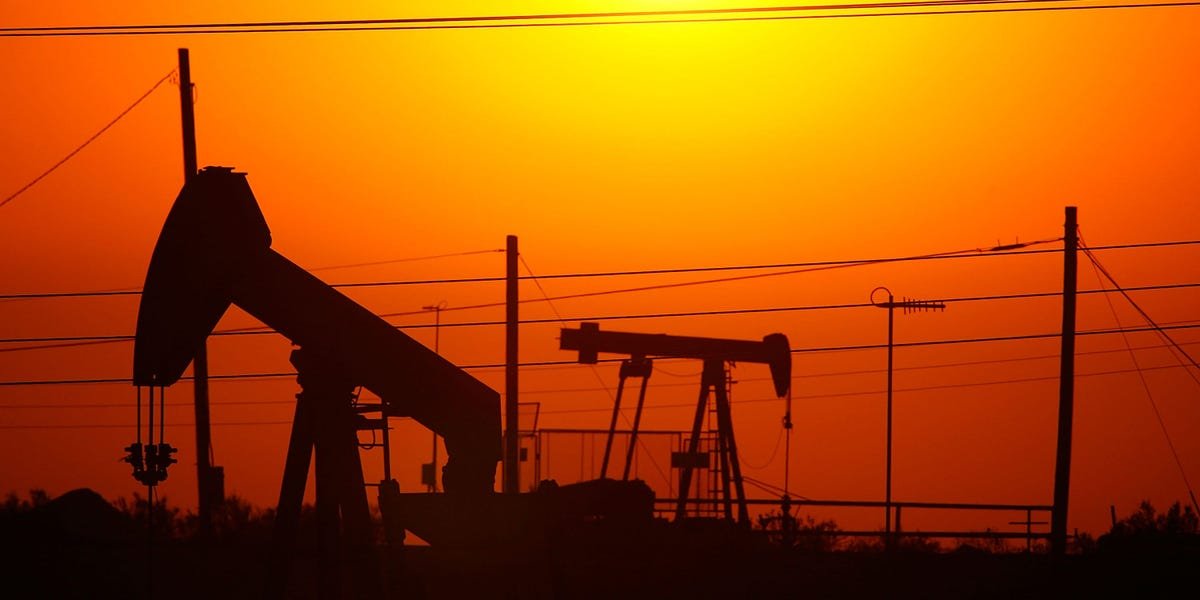
Oil futures climbed in early trading on Sunday as the US and Israel’s war with Iran entered its third week, disrupting the global supply chain.

Brent oil reached $106.33, up nearly $3 from when the market closed on Friday. West Texas Intermediate hit $101.19 on Sunday.

For Americans, surging oil prices mean spending more at the pump. The national average price for gasoline hit $3.69 on Sunday. Gas prices have surpassed $3 in all 50 US states for the first time since 2023.

The International Energy Agency said last week the war has caused the largest oil market disruption in history, and that global oil supply will drop by 8 million barrels per day in March.

Kevin Hassett, the US director of the National Economic Council and a top aide to President Donald Trump, said Sunday on CBS News’ “Face the Nation” that the US is working to minimize the fallout for American consumers.

“The big problem right now would be energy prices, and we’re watching and monitoring closely,” Hassett said.

Much of the instability in the oil market stems from the near-closure of the Strait of Hormuz, which Iran controls and through which about 20% of the world’s petroleum passes. Trump has called on other nations to help secure the strait, but has so far received either lukewarm replies or none at all.

Attacks on major oil hubs are also likely driving up prices. Trump said late Friday that the US had “totally obliterated” military targets on Iran’s Kharg Island, where refineries process almost all of the nation’s oil exports.

The president threatened to target oil infrastructure on the island if Iran continued to prevent ships from passing through the Strait of Hormuz. An attack on the key Iranian oil center would further destabilize the global oil market.

In response, Iran said that ports, docks, and “American hideouts” in the United Arab Emirates could be targeted. Fire later broke out near the Port of Fujairah in the United Arab Emirates, the only multipurpose maritime facility on the UAE’s east coast and a major oil depot, on Saturday. The local government said an intercepted drone caused the fire.

Any end to the conflict, meanwhile, appears to be a long way off. Iran’s foreign minister, Abbas Araghchi, said on Sunday that there has been no discussion of a ceasefire.

“We are only defending our people from this act of aggression,” Araghchi said on “Face the Nation.”We don’t see any reason why we should talk with Americans, because we were talking with them when they decided to attack us, and that was for the second time.”



Source link

Matthew Loh Headshot

The US and Israel’s war in the Middle East spills open further with Hezbollah joining the fight

Israel and Hezbollah both said on early Monday local time that they had launched strikes at each other, blowing open a new front in the ongoing regional war.

In a statement published by Lebanese media, Hezbollah said that it had launched “a barrage of advanced missiles and a swarm of drones” against a missile defense site in Haifa, which is in northern Israel.

The group said the attacks were carried out “in revenge for the pure blood of the Supreme Leader of Muslims,” referring to the death of Iranian leader Ayatollah Ali Khamenei.

The Israel Defense Forces also said in a statement that it had begun striking Hezbollah targets in Lebanon “in response to projectile fire toward northern Israel.”

“Hezbollah is operating on behalf of the Iranian regime, opening fire against the Israeli civilians, and bringing ruin to Lebanon,” it said.

The statement further said that Israeli troops were prepared for “an all-fronts scenario.”

The Israeli air force said that the Hezbollah launches “fell in open areas” within Israeli territory, and that Israeli forces had begun striking the Beirut area.

Social media videos of the Lebanese capital have so far shown damaged cars and buildings, particularly in the southern suburb of Dahieh. The full extent of the strikes there is not immediately clear.

Israeli forces have told about 50 villages in southern and eastern Lebanon to evacuate, saying that it is likely to begin conducting strikes against Hezbollah targets there.

Hezbollah has long been backed by Iran, which the US and Israel began attacking on Saturday with an onslaught of strikes from ground, air, and sea forces amassed in the region.

Tehran, Washington, and Tel Aviv said that Khamenei, a central figure for decades among militant groups in the region, had been killed within the first 24 hours.

Iran has responded by launching missiles and drones at over half a dozen of its neighbors, such as the United Arab Emirates and Bahrain, saying it is attacking military sites.

Hezbollah’s entry into the fight means that Tehran’s response is now joined by one of its regional allies. However, it remains to be seen how deeply involved the politically powerful Lebanese group will become.

Fears remain that the Houthis, a rebel group in Yemen that is closely tied to Iran’s government, may soon renew attacks in the Red Sea.

The Yemeni militia previously launched drones and missiles at commercial vessels attempting to pass through the key shipping lane, saying they were protesting Israel’s extensive bombardment campaign and occupation in Gaza.

Meanwhile, in the Strait of Hormuz, a vital waterway for the global oil market between the Persian Gulf and the Gulf of Oman, several tankers reported coming under attack on Sunday as the war raged.

Although Iran maintains significant control over the strait, it’s not yet clear who is orchestrating or launching these attacks.


Source link