
I-visited-the-Rikers-jail-kitchen-I-left-shaken-by.jpeg

I visited the Rikers jail kitchen. I left shaken by what I’d seen.

  • Rikers Island jail in New York City holds nearly 7,000 detainees, who consume about 7 million meals a year.
  • I wanted to see how the operation works, so I visited its largest kitchen.
  • I was surprised by how much is made from scratch, and by the constant state of readiness for the worst-case scenario.

Rikers Island, New York City’s most notorious jail complex, sits in the water between the Bronx and Queens.

When I visited the complex in April 2025, I expected it to be hard to reach — and I wasn’t wrong. There’s just one small, mile-long bridge for everyone entering and exiting the facility.

Nearly 7,000 detainees are in custody at Rikers. In 2024, the city spent $19 billion to feed them all, amounting to 7 million meals. I wanted to learn why the price tag is so high and how the operation works.

Here, chefs — not detainees — do the cooking. When they’re on shift, the cooks are locked in, too.

Visiting Rikers shook me more than I expected, and I couldn’t help but wonder how the chefs and officers carry it every day.

The larger of the two kitchens at Rikers is in the Anna M. Kross Center.

No detainees were housed here at the time of filming.

Abby Narishkin

After traversing the mile-long bridge, we passed through three security gates. I was surprised to learn that many chefs rely solely on public transportation to get to work, often traveling two or more hours each way.

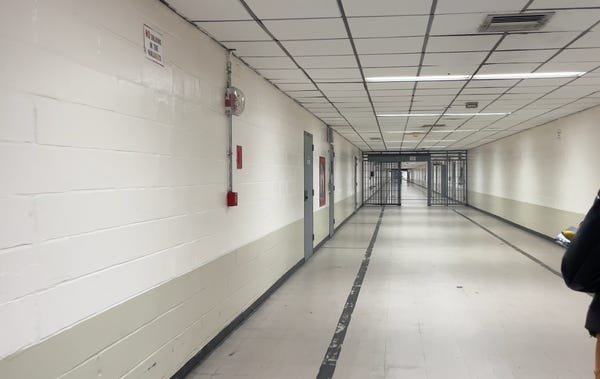
Once inside AMKC, we went through metal detectors. This building hasn’t held detainees since 2023. It was an eerie 10-minute walk down the silent, seemingly endless hallways.

Eight guards watch over the kitchen.


Rikers PIC

Five chefs were cooking while five people in custody washed dishes.

Adam Miller

People in custody wash dishes, push carts, and serve food.

They can’t have any infraction tickets. They must be serving time for nonviolent offenses and be approved by custody management to work here.

Everything’s cooked in huge batches.


Rikers tartar sauce

This vat of tartar sauce was for the next day’s dinner.

Adam Miller

There are no open fires here. They cook chicken in rotisserie ovens.

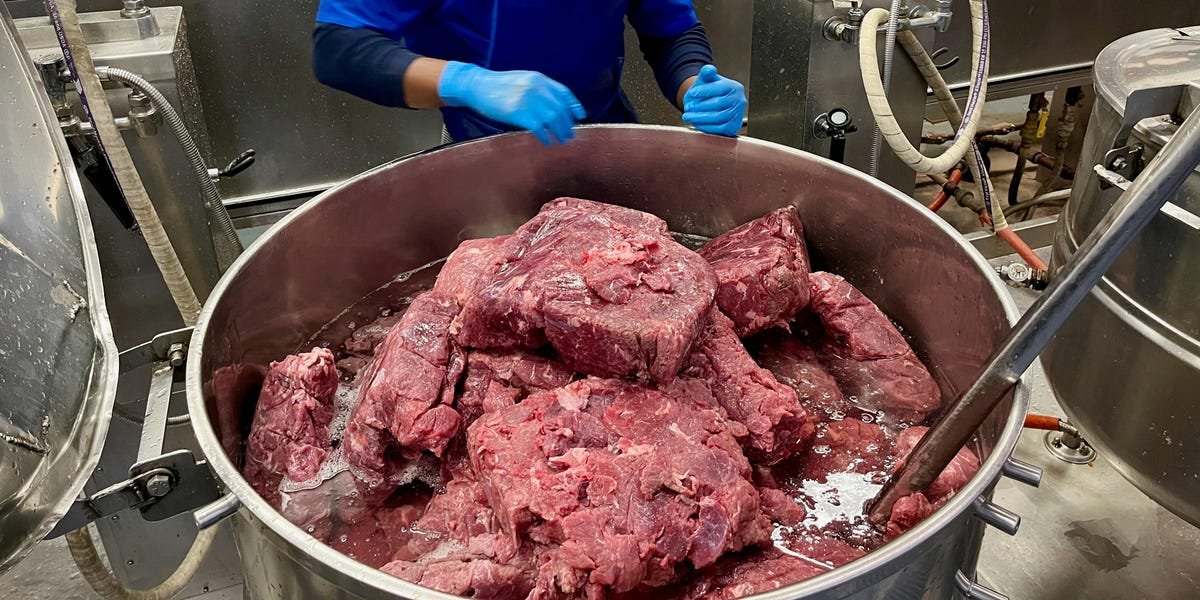
I was shocked to see how many dishes chefs made from scratch. Tartar sauce started as mayo and pickles. Pepper steak, a favorite among detainees, started as blocks of frozen beef.

There are security cameras everywhere in the kitchen.


Rikers security cameras

Cameras are monitored from a guard’s office, inside the kitchen.

Adam Miller

Inside the kitchen, it still felt like a jail. I felt the cameras everywhere.

Guards watched over the detainees and checked every incoming shipment of food for contraband. They frisked down detainees before they entered the kitchen, and again before they left.

Dull knives are chained up.


Knives in rikers

Guards lock the knives onto the massive cooking vats or stainless steel tables.

Adam Miller

Knives are kept on chains for their protection. When a chef needs the knife at a different location, they have to get a guard from the office to come unlock it and move it.

The chefs told me it felt awkward at first, the chain brushing against their hands, but they eventually got used to it.

Still, they say it can be tricky. I watched one chef wrestle the chain into position before cutting into a large frozen block of beef.

Chefs also secure the lids they remove from cans.


Can lids Rikers

A mechanical can opener quickly removes the lids, and then chefs slide them down this caged trash can.

Mark Miller

Even things I wouldn’t normally consider dangerous — like cans of green beans — are treated as potential threats. Chefs are required to throw them away immediately.

Cans go into wagons, and lids go into a caged trash can. Officers told us they have to be cautious about everything. Even small pieces of plastic, wood, and metal can be turned into weapons. That goes for spoons and ladles, too.

Spoons, ladles, and whisks are kept in a locked box in the guard’s office.


Rikers guards office

All tools are kept behind lock and key in the guard’s office when they’re not in use.

Mark Miller

Whenever a chef needs a ladle or whisk, they have to get a guard to unlock a box in the office.

I couldn’t help but think how tedious that must be. “It’s for security,” the chefs reminded me.

Despite all the security measures, I was surprised at how relaxed the chefs seemed.


Packing food carts Rikers

Mr. Ageda is the senior cook on staff.

Mark Miller

Chef Ageda was cracking jokes and laughing with me. He didn’t seem phased by the detainees in the kitchen. He said he can’t be friends with the people in custody because he knows why they’re here. But he said he treats them all with respect.

In an email statement to Business Insider, the Department of Corrections said, “violent incidents that occur in our kitchens are extremely rare.”

Getting a job in the kitchen is a coveted role among people in custody (PICs).


Nadine Leach Rikers

Nadine Leach has worked in the kitchen for 17 months.

Mark Miller

Nadine Leach was a chef before serving time at Rikers. She’s one of the detainees approved to push food carts to the housing units.

At the time of filming, Leach earned $1.45 an hour. She’s saving money for her grandkids, she told me.

Officers check the wagons for contraband and pat down detainees.


pat-down rikers

Guards pat down every PIC before they leave the kitchen area.

Mark Miller

Leach has worked in the kitchen longer than any other person in custody, clocking 56 hours a week by choice, she said. She calls the kitchen her “sanctuary” because she doesn’t feel like she’s in jail while working there.

But even in her sanctuary, officers pat her down, along with all the other people in custody, before they deliver food to the housing units.

There’s a delicate relationship between officers, chefs, and detainees.


hallway rikers

As an officer accompanies Leach after a food delivery, she passes through metal detectors every few paces.

Mark Miller

One moment, Leach is telling me about her grandkids and her goals when she gets out. Then reality sinks in, and she’s up against the wall.

She says she understands the officers are doing their jobs and that she’s doing her time. They’re living in two different worlds.

Leach is one of the people in custody allowed to serve food.


lunch is served Rikers

Leach serves up lunch in the women’s housing unit.

Mark Miller

A dinner might include grilled chicken or pepper steak, which smelled delicious.

The day I visited, pasta salad and tuna were on the lunch menu. It didn’t look particularly appetizing, but it was way better than I expected. There were multiple veggies, from coleslaw to the beets.

In 2024, a Department of Corrections representative told the City Council that each meal costs about $9.

Rikers Island is legally required to close by 2027.


Rikers island aerial

Rikers sits in the waters between the Bronx and Queens. A runway at LaGuardia Airport is only a few hundred feet away.

John Moore/Getty Images

In October 2019, NYC’s city council voted to close Rikers for good, citing years of violence and unmanageable conditions. The deadline to cease all jail operations on the island was 2027.

However, a 2025 report from the Independent Rikers Commission found that the city likely won’t meet that deadline. One criminal justice reporter I spoke to said 2031 was more likely.

I left the day pretty shaken by what I’d seen.


Abby Narishkin in front of rikers
We spent three days inside Rikers. This was me after filming in the kitchen at AMKC. I didn’t feel like smiling.

Abby Narishkin

Obviously, this is jail. I knew it was going to be tough to see life inside Rikers. On one hand, the chef and officers’ ease helped me relax. But it was clear — simmering just beneath the surface — that there was a constant readiness for the worst-case scenario.

It was like this huge elephant in the room. We were laughing with the chefs, talking with Leach about her grandkids — but I never forgot where we were. I could feel the cameras. I could always spot an officer in the corner of my eye.

I left Rikers wondering how chefs and officers return to their normal lives every night. Are they able to shake that alertness?

I left thinking about Leach, and my heart sank. Every second she’s watched. Every time she leaves a room, she’s patted down.

Even so, she maintains a positive outlook, telling me she plans to open up a restaurant when she gets out. A goal I hope she achieves.


Source link

How-Rikers-Island-jail-makes-7-million-meals-a-year.jpeg

How Rikers Island jail makes 7 million meals a year

New York City’s infamous jail, Rikers Island, currently houses nearly 7,000 detainees. Chefs, not inmates, do the cooking. But while they’re on their shift, the chefs are locked in, too. There are cameras everywhere, monitored from the guard’s office. Knives are chained to heavy machinery. Can lids slide into a locked cage. Spoons are locked up in the office. Inside Rikers’ kitchens, there’s a delicate balance between the chefs, guards, and the detainees who wash the dishes.


Source link

Inside-the-hell-on-earth-Brooklyn-jail-reportedly-housing-Nicolas.jpeg

Inside the ‘hell on earth’ Brooklyn jail reportedly housing Nicolás Maduro

Venezuelan President Nicolás Maduro and his wife Cilia Flores are reportedly awaiting their first court appearance at a Brooklyn jail famous for its poor conditions.

Numerous publications, including The Wall Street Journal, have reported that the pair were escorted to the Metropolitan Detention Center late Saturday after arriving by plane in New York.

MDC, which has yet to confirm the transfer to Business Insider, has been home to numerous high-profile defendants facing trial in New York City, including music mogul Sean “Diddy” Combs, Sam Bankman-Fried, the founder of fallen bitcoin exchange FTX, and Ghislaine Maxwell, who was convicted of aiding the sex trafficking operation of the deceased sex offender Jeffrey Epstein.

Luigi Mangioni has been housed at MDC while awaiting trial for the murder of UnitedHealthcare CEO Brian Thompson. He has pleaded not guilty.

The jail has been widely criticized over the years for its poor conditions, having been described as “inhumane” and “hell on earth.”

Last year, the Legal Aid Society issued a press release lamenting the jail’s “documented history of violence, medical neglect, and human and civil rights violations.” It cited reports of no heat during the winter and “maggot-infested food.”

In 2024, a federal judge in Brooklyn made headlines when he carved out a special exemption during sentencing to help a defendant avoid the MDC. The judge ruled that if the 74-year-old, convicted of tax fraud, were assigned to the MDC, he could serve his time under house arrest, The New York Times reported.

In March, Brooklyn federal prosecutors announced charges against 25 defendants in 12 separate cases tied to violence and contraband smuggling at the jail, which is located in the Sunset Park neighborhood of Brooklyn.

“Over the years, MDC has become synonymous with egregious neglect and abuse with the people incarcerated,” the Legal Aid Society said in a June press release opposing ICE detentions at the jail.

President Donald Trump shocked the world on Saturday when he announced that the US had captured the Venezuelan president and his wife after a “large-scale strike” on Venezuela.

Trump has said the US is “going to run the country” until it can facilitate a safe transition of power, and that US oil companies will now be free to “spend billions” on development in the South American nation.

Maduro has been in the US Department of Justice’s crosshairs for years, and in 2020, Manhattan federal prosecutors indicted him as a leader of the Cartel de Las Soles, its name for the alleged drug-trafficking organization run by Venezuela’s military and political elite.

An expanded indictment unsealed on Saturday added as defendants Maduro’s wife and son, Nicolás Ernesto Maduro Guerra, identified in the indictment as “The Prince.” It accused them of participating in a wide-ranging effort to traffic drugs to the US to enrich themselves.


Source link