First came the bets. Then came the bombs. Now comes the outrage.
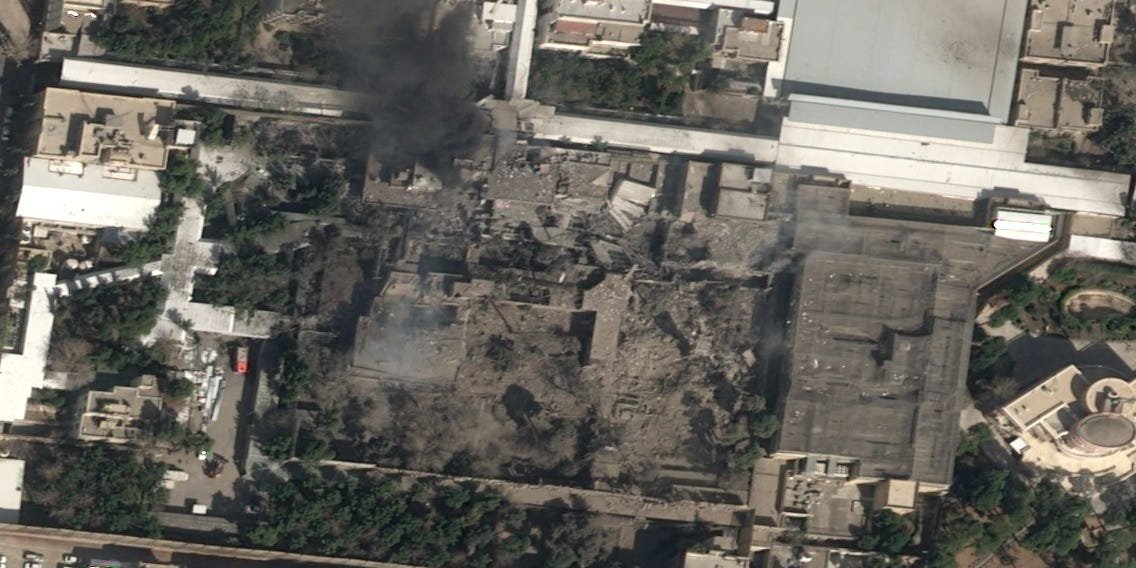
On Saturday, while many Americans were waking up to news of US and Israeli strikes on Iran, some were betting money on what would happen next — and expressing confusion and anger over what was happening on prediction markets like Kalshi and Polymarket.
The market-surveillance software company Bubblemaps said Saturday morning it had identified several new cryptocurrency wallets connected to Polymarket that collectively made over $1.2 million related to strikes on Iran.
JUST IN: 🇮🇷 🇺🇸 Six suspected insiders made $1.2M betting on a US strike on Iran
Most of these wallets:
• were funded in the last 24h
• specifically bet for February 28
• bought “yes” hours before the strike pic.twitter.com/n3G6OIEOXt— Bubblemaps (@bubblemaps) February 28, 2026
Meanwhile, hours after the strikes began, Kalshi posted on X about the volatility in markets related to the ousting of Iranian Supreme Leader Ali Khamenei.
BREAKING: The odds Ali Khamenei is out as Supreme Leader have surged to 68%
Reminder: Kalshi does not offer markets that settle on death.
If Ali Khamenei dies, the market will resolve based on the last traded price prior to confirmed reporting of death. pic.twitter.com/geL2CgdRwI
— Kalshi (@Kalshi) February 28, 2026
On Polymarket, at least $200 million was staked on four wagers related to US strikes on Iran, regime change, or Khamenei’s death. Kalshi, which is more regulated and barred by US law from offering markets related to war and assassination, recorded almost $55 million in contracts related to whether or not Khamenei would be “out” in the next several months before activity in those markets was halted on Saturday afternoon.
The drip-drip of news and ambiguities in the contractual language on Kalshi and Polymarket led some users to think they had an edge as the day progressed. But several expressed outrage at the processing of their bets — or “trades,” as Kalshi calls them.
“Robbery. This platform is terrible,” wrote one Kalshi user, who posted an image showing a loss of $11.25 on a long-shot bet on Khamenei’s ouster.
While Kalshi only lists seven open markets on its “Iran” page, Polymarket had 187 Iran-related markets open as of Sunday morning, many with very little trading volume.
One that has since closed asked whether the US would “forcibly remove” Khamenei by March 31. Polymarket posted a “clarification” that the market resolved to “no” because the US had “merely contribute[d] to or assist[ed]” in the killing of Khamenei.
Some commenters urged that the outcome be disputed. Polymarket, where activity is logged on the Polygon blockchain, has a complex, decentralized resolution mechanism for many of its markets.
Markets that hinge partly on death are among the most controversial ones offered on prediction markets because they could create financial incentives for killing. In Israel, several people were reportedly arrested, and at least two were indicted in February based on their use of military secrets to make Polymarket bets.
In late February, six Democratic senators asked the Commodity Futures Trading Commission, which has emerged as the main regulator of US prediction markets, to take action against contracts that “incentivize physical injury or death,” citing several Polymarket contracts and not mentioning Kalshi.
Chris Murphy, another Democratic senator, said this weekend on X that he would introduce legislation “ASAP” to prevent “people around Trump” from “profiting off war.”
By the end of Saturday, Kalshi co-founder Tarek Mansour posted on X that bets on Khamenei’s ouster would be paid out for their value the minute before Israel and the US reportedly struck Iran. Users who bought contracts after that point would be partly reimbursed, he said.
Some people protested or expressed confusion over how their positions would resolve. Others were supportive of Kalshi’s decisions.
“90% of you never read any rules and are mad at Kalshi because you couldn’t make money off your lil $10,” one user said in the comment section on Kalshi. “Get a grip, start reading rules.”
Representatives for Kalshi and Polymarket didn’t immediately respond to questions sent by email on Sunday morning.
Have a tip? Know more? Reach Jack Newsham via email (jnewsham@businessinsider.com) or via Signal (+1-314-971-1627). Use a personal email address, a nonwork device, and nonwork WiFi; here’s our guide to sharing information securely.