

NATO-allies-are-linking-their-defenses-together-to-better-hunt.jpeg

NATO allies are linking their defenses together to better hunt and kill drones on its eastern edge

The US and its NATO allies are boosting their ability to detect, track, and target drone threats along the alliance’s eastern edge, its border with Russia.

Through rapid 90-day testing cycles designed to replicate real situations, US forces, Baltic allies, and defense companies are building a shared data network for faster decision-making. The effort links sensors that detect aerial threats with counter-drone systems that can destroy them, aiming to improve defenses against Russian-style drone attacks, including Shahed-type systems.

US and Estonian forces executed exercise Digital Shield 2.0 earlier this month, the second stage in an ongoing testing series.

The exercise “was really born from an initiative to integrate different sensor types into an easily accessible and shareable integrated sensor architecture, or an air picture,” US Army Capt. Micah Maule, plans officer for the 10th Army Air and Missile Defense Command, told Business Insider.

While the first Digital Shield proved the concept, the second expanded the scale, adding more sensors to detect larger uncrewed aerial systems such as Shahed-type drones and additional air-defense and counter-UAS radars to sharpen the picture of incoming threats.

Those systems feed into a common command-and-control network using commercially developed software, creating a streamlined flow of surveillance data that operators can view in a single air picture before deciding how to respond.

“So you could actually task effectors to go out and destroy drones from the same common operational picture,” Maule said.

Digital Shield 2.0 included several simulated scenarios that could become real-world threats, including cyberattacks disrupting operations, high-stress conditions with lots of drone targets, and a live-fire situation running the entire process against Shahed replicators.


A man wearing camouflage stands next to a tall radar. A small white drone stands sits on the beach.

The second testing involved various sensors, counter-drone interceptors, and Shahed replicators.

US Army photo by Maj. Alexander Watkins


Adding more sensors layers the defenses, but it also increases the volume of incoming data. Maule said the goal of the shared command-and-control system is to merge those inputs into one clear picture, reducing the cognitive burden on operators.

An advantage of the design is that the system can be operated farther from the front, out of range of many types of drones, and that it feeds data to multiple partners for heightened awareness.

The rapid pace of the Digital Shield testing reflects the Pentagon’s Silicon Valley-style “move fast, fail fast, fix fast” approach for developing new technology. It also pressures industry partners to keep up. Vendors must meet strict integration requirements, and the swift development cycle forces faster fixes and upgrades based on field feedback.

Digital Shield is an example of the work being done as part of the new Eastern Flank Deterrence Line initiative, which is led by the US and NATO. The effort is intended to build a robust defense against Russia that can detect drones across wide areas and counter them with lower-cost solutions.

Artificial intelligence is also being integrated into the initiative to analyze sensor data faster and speed up decisions on how to respond.

One persistent problem remains the cost of stopping cheap drones.

“We have to beat the cost curve,” Maule said. “If the UAS is a couple or tens of thousands of dollars, you can’t be using extremely expensive interceptors.” The US and its allies have learned that lesson from Ukraine and in the Middle East.


Source link

Anthropics-top-lawyer-says-AI-will-kill-the-legal-professions.jpeg

Anthropic’s top lawyer says AI will kill the legal profession’s dreaded billable hour

The billable hour’s time is approaching midnight, according to Anthropic’s top lawyer.

“I don’t think the billable hour is the solution, and we’ve known it for a long time,” Jeff Bleich, the AI company’s general counsel, said Thursday.

Speaking at the American Bar Association’s White Collar Crime Institute in San Diego, Bleich said that artificial intelligence tools are eliminating the need for companies to hire armies of lawyers to do lucrative yet “tedious” work.

“Now we’ve got a technology that’s going to eliminate the sorts of things that allow people to become wealthy off of tedious work,” Bleich said on the panel, alongside top lawyers at Google, IBM, and Liberty Mutual. “That was not what lawyers are trained to do, and not what we ultimately look to lawyers for.”

The much-maligned billable hour is the standard method that law firms use to bill their clients.

Attorneys track the work done for each client, often in six-minute increments, tally them up, and charge their clients accordingly.

While the billable hour has been useful to help companies and other clients understand what they are paying lawyers for, it has also “created a wedge,” Bleich said.

Under the current system, “the interests of firms are at odds with the interests of their clients,” he said. Companies want lawyers to resolve problems quickly, but law firms get paid more when the work takes longer.

“Clients want you to solve the problem as efficiently as possible and with as little drama as possible,” Bleich said. “And if you’re a company, the bigger the case gets, and the more dramatic it gets, and the more complicated it gets, and the more work that has to be done — the more lucrative it is.”

The other panelists largely agreed with Bleich’s remarks.

“The value is no longer you putting in time,” said Damon Hart, the top lawyer at Liberty Mutual. “The value is your strategy, your results.”

Anne Robinson, IBM’s general counsel, told the audience that she’s open to working with them to figure out more creative billing methods.

“I’m open to firms coming and saying, ‘I’d really like to work with you on this matter or this type of work, I get that the billable hour model is not one of aligned incentives, and so let’s sit down and talk about what you expect as far as outcomes and how we can both get there in a way that reflects your pressures and your priorities,'” Robinson said.

Bleich said he still values the work of outside law firms, but wants them to find an alternative to the billable hour that works for everyone.

“We’re not going to sort of cheap out and starve you,” Bleich said. “On the other hand, you have to have an economic model that works. And the firms that adapt to that faster and better will be leapfrogging other firms, because they’ll be more attractive to work with.”

Bleich’s comments come at a critical moment for Anthropic, which sued federal agencies this week after the Trump administration effectively blacklisted it following the collapse of contract negotiations with the Department of Defense.

In the lawsuit, Anthropic is represented by WilmerHale, one of the law firms that Trump targeted last year with an executive order that was quickly blocked by a federal judge.

“I like firms that show some spine,” Bleich said following the panel, when asked about using law firms that fought back against Trump’s executive orders targeting them. He declined to comment on the lawsuit itself.

WilmerHale is distinguished in another way: Reginald Heber Smith, who in the early 20th century managed the Big Law firm — then called Hale and Dorr — is widely credited with inventing the billable hour.


Source link

After-weeks-of-getting-bashed-two-software-giants-can-make.jpeg

After weeks of getting bashed, two software giants can make the case for why AI won’t kill them

After being marked for dead, software companies have a chance to tell their side of the story.

Excluding Canada’s Olympic hockey teams, no one has had a tougher go recently than software companies. Everyone faces some fear over AI, but software’s diagnosis has been more dire than most. (Author Nassim Taleb was the latest to write software’s eulogy, although he’s not known for his optimism.)

Two software giants — Salesforce and Snowflake — get to make the case for why they’re still very much alive. Both companies report earnings after the bell and will be interested in changing a narrative that’s helped push their stocks down 27% (Salesforce) and 26% (Snowflake) this year.

(Workday, another software company that’s been getting hammered, made the case yesterday why AI is friend, not foe.)

A major problem for software companies is that their opponent is largely hypothetical. Even if both companies report blockbuster earnings, there’s still the counterargument that AI will eventually eat their lunch.

Anthropic has played this game masterfully. The startup has strategically rolled out product announcements for its AI chatbot, Claude. The news has devastated entire industries despite there being no evidence of widespread adoption yet.

Here’s what to look out for from Salesforce and Snowflake when they report:

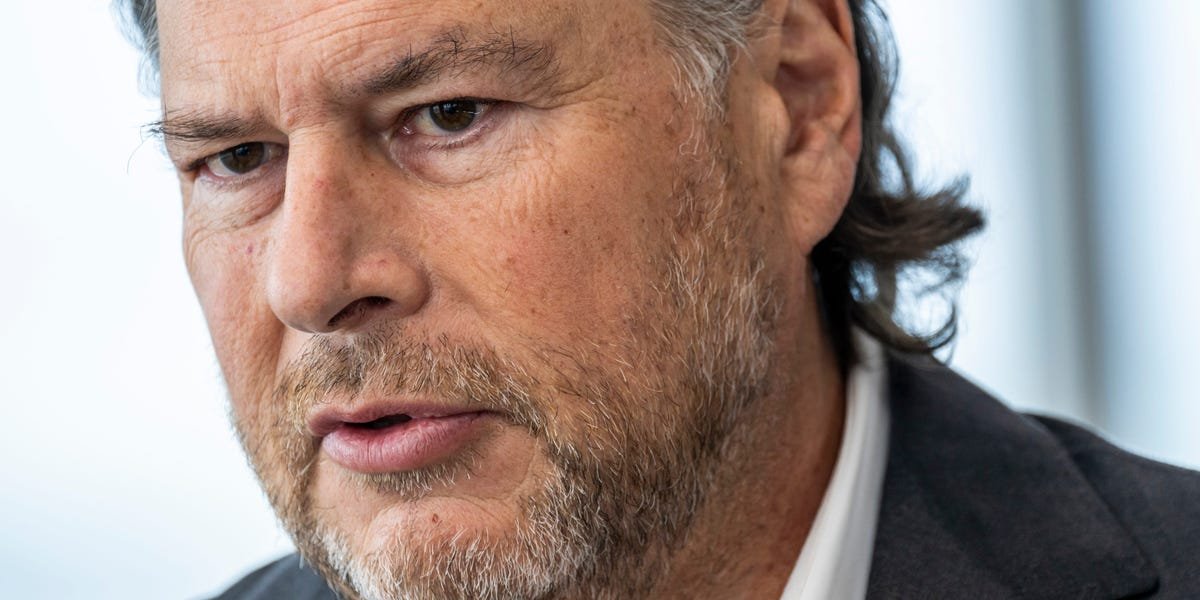
Salesforce: Marc Benioff’s company is the prototypical enterprise software company. Customer relationship management systems are all about workflow and rely heavily on seat-based subscriptions. That makes Salesforce a prime target for AI automation and a bellwether for other software companies.

Benioff has sought to address competitors head-on with Salesforce’s own AI agents and even contemplated a name change to acknowledge the shift. But Agentforce has had its share of challenges. An internal survey showed that most employees feel AI is increasing their productivity, but Salesforce will want the same positivity coming from outside its walls.

These days, AI might not even be Salesforce’s biggest headache. An off-color joke from Benioff at a recent employee event has outraged many workers and even prompted fellow Salesforce executives to speak out.

Snowflake: The data-warehousing giant might seem like a major beneficiary of AI. Models need tons of data to function. Snowflake helps companies organize and analyze massive amounts of data. Everybody wins!

The potential future isn’t as rosy. Snowflake’s business might not face the direct risk that other software companies struggle with, but it could slide down the totem pole of customers’ tool set. Instead of being considered a crucial software, it could become just another piece of back-end infrastructure.

Snowflake’s own CEO warned of this future, saying models’ desire to have easy access to all types of data means “everything else, the world, is just a dumb data pipe that feeds into that big brain.”

And unfortunately for Snowflake, the value you provide to customers as a “dumb data pipe” is a lot lower, meaning you can’t charge as much.


Source link

Peter Kafka

Donald Trump’s shadow hangs over the call to kill a ’60 Minutes’ story

Ever since Bari Weiss arrived as the head of CBS News, people inside and outside the company have been waiting to see whether her politics — and those of CBS owner David Ellison — would show up in the journalism.

This weekend, they may have gotten their answer. Or they may not have.

And that uncertainty is the problem.

It’s possible Weiss had legitimate editorial concerns about a “60 Minutes” segment on the Trump administration’s use of El Salvador’s notorious CECOT prison. CBS pulled the segment abruptly before it was scheduled to air on Sunday evening. News organizations do periodically delay or spike stories.

But the reported details around this decision make it hard to take the explanation entirely at face value. And Weiss’s position — and the politics surrounding her appointment — mean that editorial calls like this one will always be read for hints of political bias.

The segment, reported by Sharyn Alfonsi, had been promoted by CBS ahead of Sunday’s broadcast and, according to multiple accounts, had cleared the network’s standard internal processes. A few hours before airtime, CBS News announced that the segment needed additional reporting and editorial work.

Alfonsi saw it differently.

“In my view, pulling it now — after every rigorous internal check has been met is not an editorial decision, it is a political one,” she wrote in a note to her co-workers. “We are trading 50 years of ‘Gold Standard’ reputation for a single week of political quiet.”

Weiss, meanwhile, told her staff Monday morning that she held the story because “it did not advance the ball,” and because it didn’t include on-camera comment from the Trump administration, which had sent hundreds of Venezuelans to the prison, where many were reportedly tortured. She had previously sent a memo to “60 Minutes” producers complaining that the report they’d made didn’t provide viewers with “the full context they need to assess the story.”

There are two big problems with those arguments: 1) Making them so late in the process of a long-running investigation, shortly before the air date, is guaranteed to raise eyebrows. And 2) arguing that a story about the Trump administration can’t air without on-camera participation from the Trump administration leads to a chilling endpoint: If the Trump administration doesn’t want a story to run on “60 Minutes,” it can kill it by not showing up on camera.

Now, add in the environment Weiss stepped into. She arrived at CBS News through a deal engineered by Paramount’s owners, the Ellison family, at a moment when the Ellison family is deeply enmeshed with the Trump administration.

David Ellison’s father, Larry, who funded his son’s acquisition of Paramount, controls Oracle — which just got approval to acquire part of the US operations of TikTok, in a deal the Trump administration negotiated with the Chinese government. And the Ellisons are also trying to get Trump to favor their bid to buy Warner Bros. Discovery — a deal that would require approval from the Trump-controlled Department of Justice, as well as other regulators.

Trump, meanwhile, has already been complaining about “60 Minutes” under Ellison’s ownership. “For those people that think I am close with the new owners of CBS, please understand that 60 Minutes has treated me far worse since the so-called ‘takeover,’ than they have ever treated me before,” he posted on his Truth Social platform last week.

None of which proves that politics drove Weiss’ decision. And it’s understandable if the way “60 Minutes” used to work isn’t the way Weiss wants it to work — she’s the new boss, and she has spent much of her career complaining about big media institutions like “60 Minutes.”

But it explains why people are wondering if Weiss’ call was directly, or indirectly, influenced by her owner and his political status. I’ve asked Weiss for comment; a Paramount rep declined to comment.

What we do know is this: The decision was made inside a system where the people who own the newsroom need things from a president who wants leverage over the press.

In that world, suspicion isn’t paranoia. It’s a rational response to how power works. And it’s not something Weiss can fix, explain away, or out-communicate.


Source link