
Chong Ming Lee, Junior News Reporter at Business Insider's Singapore bureau.

I work at Meta’s Superintelligence Labs and used to be at OpenAI. Here’s what the job is like — and what I’ve learned.

This as-told-to essay is based on a conversation with Prakhar Agarwal, an applied researcher at Meta Superintelligence Labs who previously worked at OpenAI. The following has been edited for length and clarity. Business Insider has verified his employment and academic history.

My day-to-day varies a lot depending on what stage of the project we are in versus what the immediate deliverables are.

At OpenAI and Meta, you have these milestones — say, a big training or reinforcement-learning run — in 10 months. It gets intense when we’re approaching the deadline.

Whatever work I identify is always based on the current iteration of the model. If I say the model isn’t good at X and my solution helps fix X, it is based on that version of the model. If I miss the deadline, I don’t know whether the next version will have the same issues or not.

If we are further away from that deadline, then we’re mostly working on evaluations and trying to find failure cases and issues with the existing model.

The work is super dynamic. Sometimes you think something is super easy and you’ll get it done in a day. Other times, it’s the opposite — because there are so many unknowns, it might take a week.

Working at frontier labs feels very different from Big Tech

What we’re limited by in these foundational labs is compute. It’s not like Big Tech or other places where you can keep hiring a bunch of people and give them small pieces of a task to do.

Everyone needs compute to actually do something, and as soon as you have a lot of people, the compute gets divided, so no one will be able to do anything.

You also want high-bandwidth communication between stakeholders — you don’t want 10 different layers of communication. The speed of iteration is much faster. These core groups tend to be much smaller and tighter.

The idea of a “team” is also very fluid. Each person has their own projects, but they collaborate with others to work on joint projects. At Meta and OpenAI, there are a lot of senior people and not a lot of junior people, so everyone has a decent scope of projects.

Sometimes I collaborate more with people outside my immediate team than within it. Your scope isn’t restricted to four or five people. Your scope is the problem you’re trying to solve.

Communication and going deep with coding are key

Communication is the most important aspect in these labs. Because a lot of things aren’t documented, you need to be able to articulate what you’re doing, why you’re doing it, what the next steps are, convey your results, and get feedback on your work.

Becoming comfortable going through the code and identifying the specifics is one of the most important skills I’ve seen. The speed at which the code evolves is much faster than the documentation. If you’re stuck on something, read the code and try to understand it yourself.

Having some understanding of what’s happening across different verticals also gives you a good overview of the ideas and approaches people are trying. Because everything is super related, you might learn something from there or find ways to contribute.

The biggest advantage these labs have is knowing what doesn’t work

A research paper tells you, “I did X, Y, and Z in this specific order, and it works.” But what you don’t see is that before doing X, Y, and Z, I tried 50 different things that didn’t work — and people don’t talk about that.

That, to me, is the real strength of these foundation labs. Because of all the experimentation and all the work that has already been done, the teams have built really strong intuitions. They know which things won’t work or won’t scale, and which are going to work well.

People outside often look for the gains, but they miss the point that even the misses are very valuable.

Advice for those who want to work in top labs

I don’t have a good answer for managing burnout. You’re pretty much just going with the flow. You’re working at the cutting edge, and to put it simply, if you want to be here, you can’t think about it on a strict day-to-day basis.

What I would tell my younger self is to be comfortable exploring new avenues and new ideas. What I’ve seen is that we try to play to our strengths or stay in a deterministic setting where we know we’ll do fine. But in these domains, the speed at which things are moving is so fast that you need to be able to switch to a new topic.

Build the muscle to handle being thrown into something completely new. Sometimes, it’s more psychological than a skill issue.

Do you have a story to share about working at a top AI lab? Contact this reporter at cmlee@businessinsider.com.
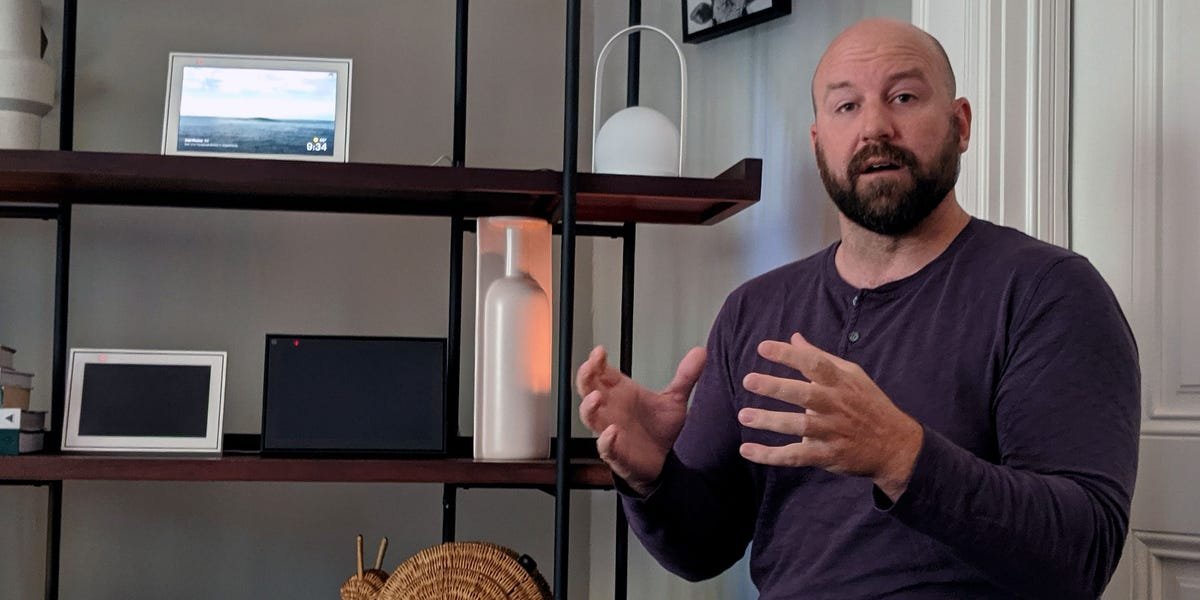
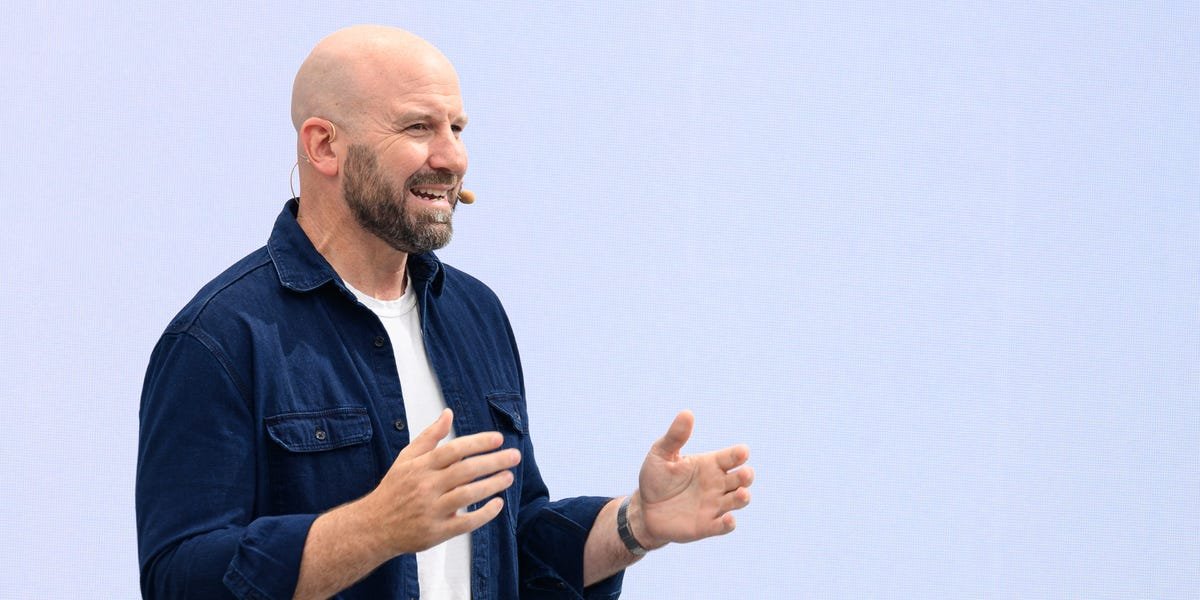
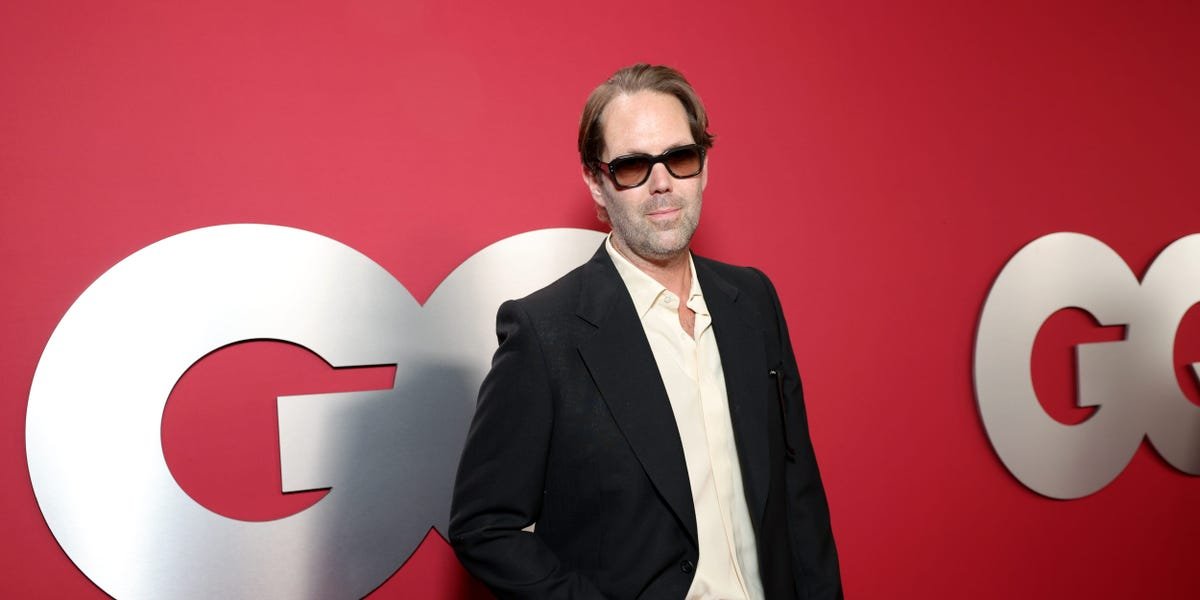

Source link

Meta-plans-layoffs-in-its-Reality-Labs-unit.jpeg

Meta plans layoffs in its Reality Labs unit

  • Meta plans layoffs in Reality Labs, affecting the teams behind VR headsets and Horizon Worlds.
  • The restructuring follows major financial losses and a strategic shift toward AI.
  • Reality Labs faces uncertainty as Meta leadership emphasizes 2025 as a decisive year for the unit.

Meta is preparing layoffs in its Reality Labs division, according to three people familiar with the matter who spoke with Business Insider.

The teams working on the company’s virtual reality headsets and Horizon Worlds, its VR-based social network, will be disproportionately affected, two employees said.

Roughly 10% to 15% of Reality Labs’ 15,000 employees are expected to be laid off, with the cuts set to be announced this week, The New York Times reported.

Meta declined to comment.

The move comes as Meta CTO and Reality Labs chief Andrew Bosworth has called a key division-wide meeting for Wednesday, describing it as the “most important” of the year and urging employees to show up in person, Business Insider previously reported.

Reality Labs has been a costly bet for Meta, racking up more than $70 billion in losses since 2020. It has faced repeated rounds of cuts as Meta shifts its attention — and spending — toward AI.

In a memo obtained by Business Insider last year, Bosworth called 2025 “the most critical” year of his tenure and warned the outcome would determine whether Reality Labs is remembered as visionary work or “a legendary misadventure.”

Have a tip? Contact Pranav Dixit via email at pranavdixit@protonmail.com or Signal at 1-408-905-9124. Use a personal email address, a nonwork WiFi network, and a nonwork device; here’s our guide to sharing information securely.


Source link

Metas-Reality-Labs-chief-is-calling-the-most-important-meeting.jpeg

Meta’s Reality Labs chief is calling the ‘most important’ meeting of the year and says employees should show up in person

Meta’s Chief Technology Officer and head of Reality Labs, Andrew Bosworth, has called an all-hands meeting for January 14, describing it as the “most important” of the year.

Bosworth is also strongly recommending that Reality Labs employees attend the division’s meeting in person, two Meta employees told Business Insider.

The emphasis on in-person attendance is unusual for the division, which oversees the company’s wearables, virtual and augmented reality initiatives, and a nascent robotics unit, these employees said. Some managers have told employees to “drop what they’re doing” to attend the all-hands in person, one employee told Business Insider.

Meta did not immediately respond to a request for comment about the meeting.

While the division has seen some success, such as its Ray-Ban smart glasses, Reality Labs has been a costly venture for Meta, incurring losses of more than $70 billion since 2020.

Last year, Meta CEO Mark Zuckerberg shifted the company’s strategic focus toward AI and away from the metaverse. In 2025, Meta invested $14.3 billion in Scale AI and hired its CEO, Alexandr Wang, as part of the major reset of the company’s AI efforts. Meta then embarked on a multibillion-dollar hiring spree, poaching top-tier AI researchers and engineers from rivals such as OpenAI and Google DeepMind.

Reality Labs has faced repeated rounds of cuts over the past year. In December, Business Insider reported that Meta was planning budget cuts up to 30% and considering job cuts in Reality Labs.

Last April, Meta laid off employees in Oculus Studios, its in-house gaming division, and the team behind Supernatural, the VR fitness app Meta acquired for over $400 million. Those cuts followed Meta’s broader January 2025 layoffs that eliminated nearly 4,000 roles companywide, with at least 560 affecting Reality Labs employees.

In a memo obtained by Business Insider earlier last year, Bosworth referred to 2025 as “the most critical” year in his eight-year tenure at Reality Labs.

“This year likely determines whether this entire effort will go down as the work of visionaries or a legendary misadventure,” he wrote.

Have a tip? Contact Pranav Dixit via email at pranavdixit@protonmail.com or Signal at 1-408-905-9124. Use a personal email address, a nonwork WiFi network, and a nonwork device; here’s our guide to sharing information securely.


Source link

Meta-hires-longtime-Apple-design-leader-Alan-Dye-to-run.jpeg

Meta hires longtime Apple design leader Alan Dye to run a new Reality Labs creative studio

Meta has hired longtime Apple design leader Alan Dye to run a new creative studio inside its Reality Labs division, CEO Mark Zuckerberg announced in a series of posts on Threads on Tuesday.

“Today we’re establishing a new creative studio in Reality Labs led by Alan Dye, who has spent nearly 20 years leading design at Apple,” Zuckerberg wrote on Threads, saying the group will help define “the next generation of our products and experiences.”

Zuckerberg said the studio will bring together “design, fashion, and technology” and that Meta wants to “treat intelligence as a new design material and imagine what becomes possible when it is abundant, capable, and human-centered.”

The goal, he added, is to “elevate design within Meta” by assembling a team with “craft, creative vision, systems thinking, and deep experience building iconic products that bridge hardware and software.”

Dye will work alongside several high-profile design leaders. He will report to Meta’s chief technology officer and Reality Labs head Andrew Bosworth.

Dye is one of the most prominent figures in Apple’s modern design history. He has led Apple’s design studio since 2015 and has played a key role in shaping the company’s software and the look and feel of many of its devices, including the interfaces for products such as the Apple Watch, iPhone X, and Vision Pro headset.

Most recently, Dye was responsible for Liquid Glass, Apple’s new design across its devices that makes elements of the user interface look transparent.

His team has also worked on a slate of new smart home hardware, according to Bloomberg, which first reported his move to Meta.

Zuckerberg said that Dye will be joined by “another acclaimed design lead from Apple,” Billy Sorrentino, as well as Joshua To, who leads interface design across Reality Labs; industrial design lead Pete Bristol; and metaverse design and art teams led by Jason Rubin.

The CEO framed the move as part of Meta’s push into AI-powered devices such as smart glasses.

“We’re entering a new era where AI glasses and other devices will change how we connect with technology and each other,” Zuckerberg wrote.

While the potential is “enormous,” he said the new studio will focus on making every interaction “thoughtful, intuitive, and built to serve people.”

Earlier this year, Meta hired another Apple engineer, Ruoming Pang, to its new Superintelligence Labs organization. Pang led Apple’s AI models team.

Apple did not respond to a request for comment from Business Insider. A Meta spokesperson pointed to Zuckerberg’s posts on Threads.

Have a tip? Contact Pranav Dixit via email at pranavdixit@protonmail.com or Signal at 1-408-905-9124. Use a personal email address, a nonwork WiFi network, and a nonwork device; here’s our guide to sharing information securely.


Source link