There is a yearslong lag in the AI hype cycle, according to one former AI researcher turned venture capitalist.
Jenny Xiao, who cofounded Leonis Capital in 2021 after a stint at OpenAI, said the current investment excitement around AI is far behind the actual research.
“There is a massive disconnect between what researchers are seeing and what investors are seeing,” Xiao said on the Fortune Magazine podcast this week.
What’s being discussed at the biggest AI conferencesis as much as 3 to 5 years behind what researchers are thinking about, Xiao said.
“We are so behind the technical frontier, and that’s the gap I really want to bridge,” she added.
Every time Lakshmi publishes a story, you’ll get an alert straight to your inbox!
Stay connected to Lakshmi and get more of their work as it publishes.
Xiao, who dropped out of a Ph.D. program in economics and AI to take a researcher role at OpenAI, founded Leonis Capital to bridge the worlds of venture capital and deep academic AI research.
“With AI, there needs to be a new generation of founders. There needs to be a new generation of VCs,” she said.
It’s also the first time investors need to be able to provide financial support to both the market and the technology, she added. Unlike SaaS companies, which were built on a “stable tech stack,” AI is moving fast. To keep up, Xiao said investors are going to need to be as technical as the founders.
If she has one piece of advice for investors who haven’t gone deep into the technical side, it’s that they should know “AI progress isn’t linear,” she said.
They should know AI progress happens in “lumps,” she said. So, questions about why AI progress is slowing down or speeding up aren’t the best way to characterize the rate of development.
“It’s neither of those two extremes,” she said. “It’s somewhere in between.”
Leonis Capital did not immediately respond to a request for comment from Business Insider.
This story is available exclusively to Business Insider
subscribers. Become an Insider
and start reading now. Have an account? .
Robotaxis and autonomous cars once again have a large presence at CES 2026.
Several companies, including Amazon’s Zoox, are providing off-site demos.
Business Insider is providing an on-the-ground look at the latest in the advanced mobility space.
Business Insider is taking on CES 2026.
I’m on the ground in Las Vegas from Tuesday to Thursday, taking in all there is to know about the latest in the driverless space.
Robotaxis and self-driving cars have already had an outsize presence at the tech conference, especially in the previous hype cycle of the late 2010s and early 2020s.
Things have changed since then. The industry has largely moved on from mere concepts and technology validation to: How are we going to realistically scale autonomy?
It’s day one of the conference, and there’s already a lot to take in.
Nvidia CEO Jensen Huang unveiled the Alpamayo family, which will serve as an autonomous-driving stack for OEMs to deal with those stubborn edge cases — or the “long tail” of self-driving.
Uber and Nuro showed off an early look at the Lucid Gravity SUV that the companies hope public riders will be able to take by late 2026.
I’ll be spending less time at keynotes and speaker events and more on real-life demonstrations and meetings with industry leaders and commentators in autonomy
Think of this as my personal notebook, where I jot down everything I’ve learned and seen at the conference.
Check back in for more updates.
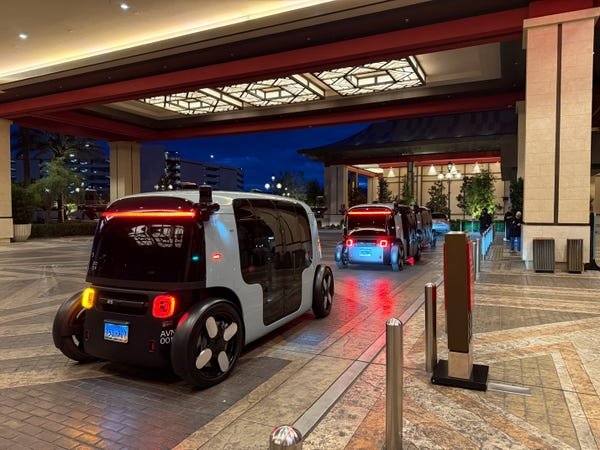
Amazon-backed Zoox is unlike any other robotaxi.
Zoox robotaxis line up in front of Resorts World Las Vegas Lloyd Lee/BI
This is the first year Zoox, an Amazon-backed robotaxi company, will be giving live demonstrations of its service during CES.
I got to take a ride in one on Monday night in front of Resorts World. (The company tagline that I saw from an ad at the Harry Reid International Airport was: “Don’t just do the Strip. Zoox it.”)
My immediate thoughts were that Zoox feels unlike any other robotaxi or pseudo-robotaxi on the market. It felt more like I was on a theme park ride than in an everyday car we’re familiar with.
Unlike Waymo’s robotaxis, Zoox is not a regular car you could buy that’s been retrofitted with sensors. The Zoox car is bi-directional — meaning there’s no real front or back of the car — and the inside has no steering wheel, just seats.
The robotaxis were clearly a great tourist attraction from what I saw. My Uber driver wasn’t too happy about them.
Uber, Lucid, and Nuro have big plans to scale.
Left to right: Uber’s Sarfraz Maredia, Lucid interim CEO Marc Winterhoff, and Nuro cofounder Dave Ferguson. Lloyd Lee/BI
Uber, Lucid, and Nuro had a swanky cocktail hour at Fontainebleau Las Vegas, where they quite literally wined and dined a room full of reporters, analysts, and investors: endless glasses of wine and an open bar, lobster tails, jumbo shrimp, too many appetizers to count, and a giant charcuterie board — the works.
Maybe understandably so? 2026 will be a big year for the three companies.
Uber’s plan is to roll out a robotaxi service by late 2026. The first market is San Francisco, where Uber will directly compete with Waymo. These two companies are partners in other markets, like Austin.
“We’ve been moving very, very quickly,” Nuro’s co-CEO and cofounder Dave Ferguson said. “We signed this partnership last July. We’re already testing the production-intent vehicles on public roads. And very soon, we’re going to have tens of thousands of them worldwide.”
Here’s a 60,000-pound John Deere combine for scale.
John Deere’s X9 combine. Lloyd Lee/BI
A quick image to get a sense of how big CES’s mobility division is at West Hall of the convention center: There’s a 60,000-pound combine from John Deere that’s sitting in the middle of the showroom.
The combine is one of the world’s largest on the market, according to Julian Sanchez, an engineer at the machinery company.
Even so, John Deere doesn’t even have the largest footprint on the floor. This year, it’s Hyundai.
The combine isn’t autonomous in the way we think about self-driving cars, Sanchez told me, but it is self-steering.
The world got a reality check on self-driving cars since the last hype cycle.
Tensor aims to sell a personally-owned vehicle that will have Level 4 driving. Lloyd Lee/BI
There’s a lot of talk of self-driving cars in the automotive industry, but the scope of what it can realistically achieve has narrowed down in the last decade or so.
Paul Costa, an ex-Apple veteran of 25 years who worked on the company’s abandoned self-driving car project, gave me a bit of interesting color from what he saw at CES in 2015 — when the driverless car hype was reaching its peak — and what’s different now.
“My sense at the time was that people really wanted to focus on Level 5 autonomy,” Costa, who now leads Ford’s electrical engineering team, told me. Level 5 is the highest level of autonomous driving set forth by the Society of Automotive Engineers. That means full autonomy in all weather conditions and no geofences. Waymo is currently Level 4.
The tone has been brought down to reality, according to Costa. The focus is on highly advanced driver assistance systems and eyes-off driving or Level 3 systems, he said.
“Now, I feel like here in 2026, L3 is extremely interesting,” Costa said. “It’s interesting for me to see how the industry — its focus has changed over the years.”
President Donald Trump said on Saturday that the United States had captured Venezuelan President Nicolás Maduro and his wife, Cilia Flores, following a “large-scale strike” on Venezuela.
Attorney General Pamela Bondi has said that Maduro and Flores have now been indicted in the Southern District of New York.
Maduro was charged with drugs and weapons offenses, Bondi said, adding that they would “soon face the full wrath of American justice on American soil in American courts.”
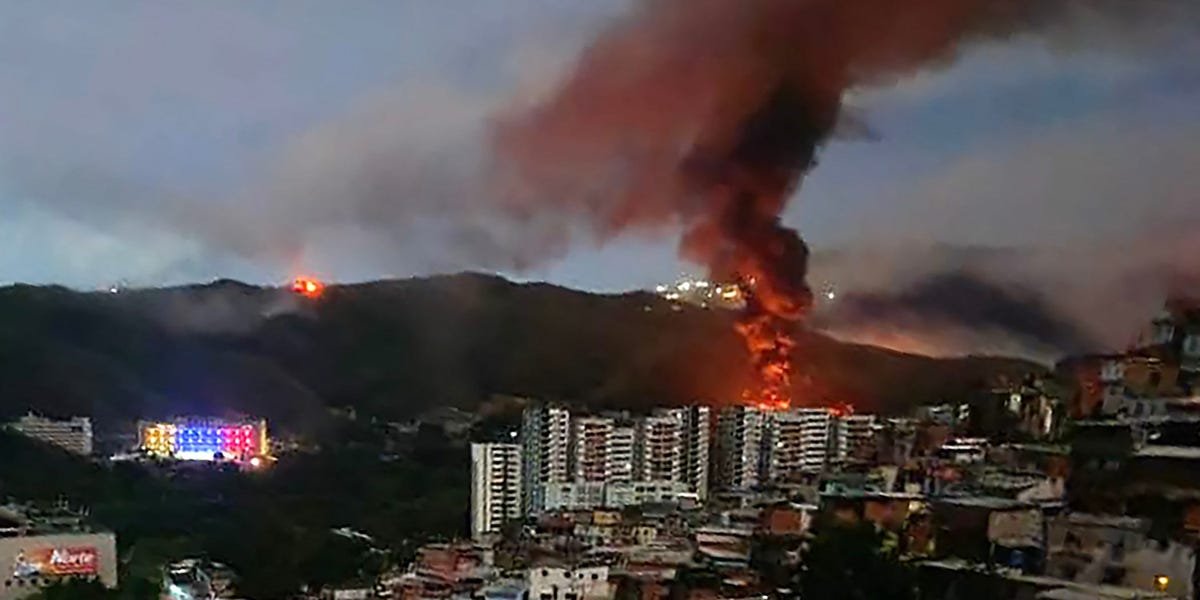
Venezuela said the US had carried out strikes on Caracas and the coastal states of Miranda, Aragua, and La Guaira early Saturday.
Trump had repeatedly threatened Venezuela with military action in recent months as tensions with Maduro soured over what the Trump administration says are drug trafficking networks in the country. Caracas has maintained that Washington’s aim is to overthrow the Venezuelan government.
The Justice Department’s long-awaited release of the Epstein files on Friday offered a deeper look at the jet-setting lifestyle of the late sex offender and financier Jeffrey Epstein — but few major revelations.
The data dump included thousands of files, mostly images,many of which were heavily redacted. The Justice Department released the documents to comply with the Epstein Files Transparency Act, which President Donald Trump signed into law last month.
The department, citing the task of ensuring no information included in the release could be used to identify victims, did not make public its entire database on Friday, as the law required. The department said it would turn over more files in the coming weeks.
In 2008, Epstein pleaded guilty to solicitation of prostitution and solicitation of prostitution with a minor under the age of 18. Nine years later, the financier was charged with the sex trafficking of minors. He died by suicide in 2019 while in federal custody.
Business Insider has been reviewing the latest files, which continued to roll out late Friday evening. Here are our biggest takeaways.
Jeffrey Epstein pictured with Virgin Group founder Richard Branson.
Department of Justice
1. Lots of famous faces
The files contained numerous images of celebrities and politicians, including former president Bill Clinton, pop star Michael Jackson, and British billionaire Richard Branson.
The photos are not evidence of wrongdoing.
Not all of the celebs were pictured with Epstein, and at least one photo — of Diana Ross with Bill Clinton and Michael Jackson — can be found on the professional photography service, Getty Images, suggesting it was not Epstein’s personal photo.
The context of many of the photos is also unclear, lacking dates, locations, and other identifying information.
Clinton featured prominently in the latest round of files, including several previously unseen photos.
Angel Ureña, a spokesperson for Clinton, said on X that the former president was unaware of Epstein’s criminal activity.
“There are two types of people here,” he wrote. “The first group knew nothing and cut Epstein off before his crimes came to light. The second group continued relationships with him after. We’re in the first. No amount of stalling by people in the second group will change that.”
Other famous figures seen in photos in the documents include actors Kevin Spacey and Chris Tucker, The Rolling Stones front man Mick Jagger, and Sarah Ferguson, the former Duchess of York. Business Insider reached out to them for comment.
Spacey had earlier called for the release of the Epstein files and said in a post on X in July that he has “nothing to fear.” In multiple interviews before the latest release, Tucker has denied any knowledge of criminal activity. Jagger has not responded publicly. Ferguson has said she cut ties with Epstein after his conviction.
Former President Bill Clinton in a pool.
Department of Justice
2. Redactions draw criticisms
The Justice Department’s release drew criticism from some victims and Democrats for its heavy redactions and limited initial release.
In some cases, entire documents were obscured by black boxes, including one 119-page file. The DOJ has attributed its delay in producing all the documents by the December 19 deadline in part to its duty to safeguard the personal information of victims and other individuals.
Image with redactions from the Epstein files released on Friday.
Screenshot
3. 1996 complaint
The files shed some light on how long young women have been accusing Epstein of wrongdoing.
Among the thousands of documents was a 1996 FBI memo included in a complaint filed against Epstein by a woman whose name the Justice Department redacted. Business Insider confirmed the accuser was Maria Farmer, who has previously said publicly that she reported Epstein to the authorities.
In her original complaint, Farmer says Epstein stole pictures of her 16-year-old sister and is “believed to have sold them to potential buyers.” She says he once asked someone to take photos of young women at swimming pools.
“I feel redeemed. This is one of the best days of my life,” Farmer said in a statement to Business Insider shared by her lawyer.
A photo of the 1996 FBI complaint filed by Maria Farmer.
Screenshot
4. More files to come
The Justice Department was required by law to release the documents by December 19, but US Deputy Attorney General Todd Blanche said Friday that the files would be released in batches over the coming weeks. Four sets of files were released on Friday evening. The Justice Department posted an additional three sets late Friday, which included photos of evidence files.
The Justice Department’s delay in releasing all the files at once has led to criticism from lawmakers. Republican Rep. Thomas Massie said the move “grossly fails to comply with both the spirit and the letter of the law.”
Democratic Rep. Ro Khanna told CNN that he and Massie were now drafting articles of impeachment against US Attorney General Pam Bondi following the release.
A chain of custody evidence envelope was found in the latest release.
Screenshot
Trump stays quiet
Trump is known to have socialized with Epstein in the 1990s and 2000s, and photos of the pair together have been well publicized in recent years.
He didn’t feature prominently in Friday’s document release. There was a photo of a messy desk that contained a photo of Trump inside a drawer. Trump has previously said he ended his ties with Epstein years ago.
Blanche told ABC News on Friday that there had been “no effort to hold anything back because there is the name Donald J Trump.”
Trump had not commented publicly on the files as of Saturday afternoon.
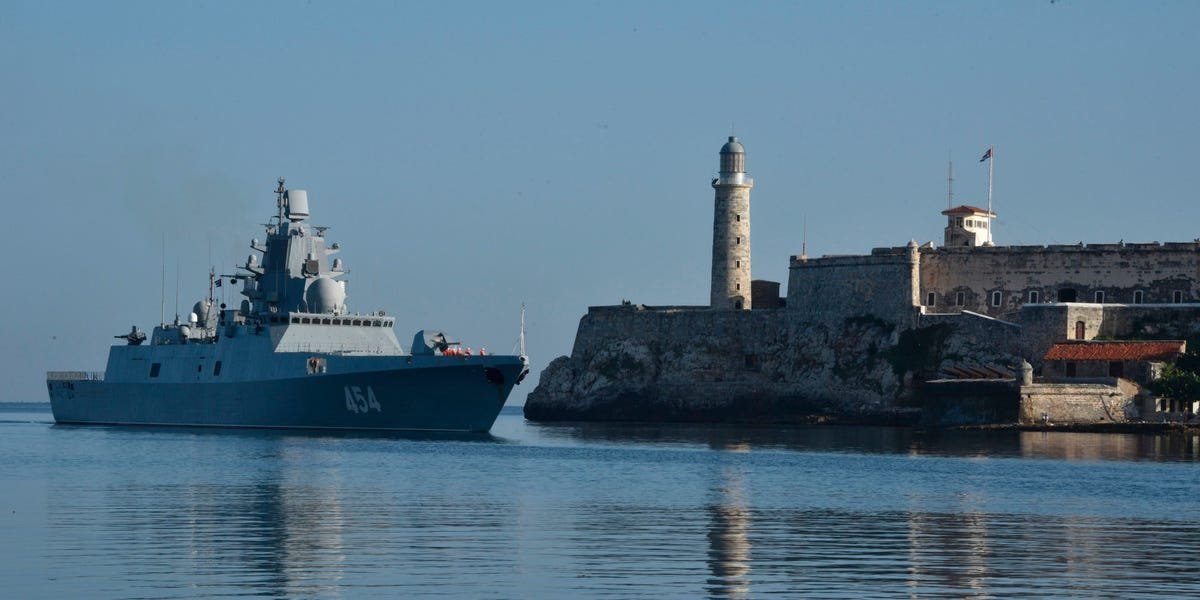
Russia sending warships to Cuba next week is an attempt to show its navy is still a global power after losses in the Black Sea, an unnamed US official told reporters, according to the Associated Press.
On Thursday, Cuba’s Ministry of Foreign Affairs said Russia was deploying four warships to Cuba, including a nuclear-powered submarine, with the vessels expected to be in Havana between June 12 and 17.
“Russia has sailed the Black Sea since 1783 but is now forced to constrain its fleet to port,” UK Defence Minister Grant Shapps wrote. “And even there Putin’s ships are sinking!”
This week, it was reported that Ukraine was using its exploding naval drones to go after smaller Russian vessels after Moscow pulled back its larger warships to reduce their vulnerability to attacks.
Not everyone agreed on Russia’s motive.
The visit of the ships, none of which will carry nuclear missiles, does not represent a threat to the region, the Cuban statement read, but was instead part of the historically cordial relations between the two countries.
But according to the US official, the deployment is an effort by Russia’s navy to flex its muscles on the world stage, after suffering losses in the Black Sea.
“This is about Russia showing that it’s still capable of some level of global power projection,” they said, per Reuters.
Russia’s navy has suffered a series of embarrassing setbacks in the Black Sea, where Ukraine claims to have destroyed a third of its fleet.
Ukraine has used drones, missiles, and other weaponry to take out many Russian warships, and has forced its fleet to seek safer ports further away from Crimea.
In March, the UK’s defense ministry declared Russia’s Black Sea Fleet “functionally inactive” after Ukraine claimed to have struck another two of its vessels.
Russia also shuffled its naval leadership earlier this year.
According to the unnamed US official, while the US expects “heightened” Russian naval and air activity this summer, and more going forward, deployments like those to Cuba incur costs for the Russian navy, which is “struggling to maintain readiness and conduct deployments with an aged fleet.”
In a military assessment on Thursday, the Washington DC-based think tank the Institute for the Study of War said it was likely part of an effort to bring back memories of the Cuban Missile Crisis, and dissuade the US from offering further support to Ukraine.
The deployment also comes after Putin threatened to send long-range weapons to “regions around the world” that want to strike Western targets.
Meanwhile, Russia’s Ministry of Defence said its goal was to keep a Russian naval presence in operationally important areas of the “far ocean zone,” RBC-Russia reported.