Jeffrey-Epsteins-top-accountant-and-lawyer-explain-why-they-think.jpeg

Jeffrey Epstein’s top accountant and lawyer explain why they think the sex offender left them $75 million

In Jeffrey Epstein’s last will and testament, he named two of his longtime associates — personal attorney Darren Indyke and accountant Richard Kahn — as co-executors of his $630 million estate.

He didn’t give them salaries for the job.

Since Epstein’s death in 2019 while awaiting trial on sex-trafficking charges, Indyke and Kahn have sold off his islands, mansions, and ranch; paid settlements to women who have accused him of sexual abuse; and dealt with other legal and financial headaches that the wealthy and well-connected pedophile left behind.

Neither has taken a salary from Epstein’s estate for that work, they told members of the House Oversight Committee in depositions earlier this month.

In their depositions, videos of which were made public Tuesday, each of them cited the lack of payment to explain why they believed Epstein bequeathed them millions.

“I am not getting paid from the estate,” Indyke said in his March 19 deposition.

Epstein bequeathed Indyke $50 million and Kahn $25 million. They are Epstein’s largest bequests behind Karyna Shuliak, Epstein’s fiancée at the time of his death, who would receive at least $100 million. Shuliak did not respond to Business Insider’s requests for comment last month about the bequests.

Epstein’s money still has a long road ahead

Indyke and Kahn may never see their millions from Epstein’s funds.

The money would be paid through an entity called The 1953 Trust, a “pour-over trust” that is set to receive all of the assets from Epstein’s estates that remain once its balances are settled.

In his March 11 deposition, Kahn estimated that handling the estate’s affairs would take a decade. Earlier this month, it settled a class-action lawsuit from Epstein victims for $35 million. The estate has several other pending lawsuits from other Epstein victims, Kahn said, with more potential claims.

The Epstein estate has about $127 million in assets, according to the most recent quarterly accounting publicly filed in the US Virgin Islands probate court. In addition to satisfying all claims against it, the estate can’t transfer its funds to The 1953 Trust until its investments are liquidated.

The estate has investments in two funds with Peter Thiel’s Valar Ventures that are together worth about $172 million, Indyke said. One is set to expire in 2026 but could be extended, he said.


richard kahn jeffrey epstein accountant

Richard Kahn, center, was deposed by the House Oversight Committee earlier this month. 

Tom Williams/CQ-Roll Call, Inc via Getty Images


Another investment fund, with a different asset manager, was in the process of liquidation and is worth less than $10 million, Indyke said.

Indyke said Epstein has investments in a firm, but the questioner in the deposition changed subjects before he could say its valuation.

Kahn said in his deposition that the estate is burning through between $5 million and $10 million in legal fees and other expenses each year. Their top-flight attorneys include Daniel Weiner, the chair of Hughes Hubbard & Reed’s litigation practice, and Daniel Ruzumna, the cochair of the white-collar defense practice at Patterson Belknap, who represent Indyke and Kahn, respectively.

Even after the Epstein estate’s debts are paid, claims resolved, and investments liquidated, Shuliak would be the first in line to receive any money from The 1953 Trust, according to its terms, which were made public through the Justice Department’s Epstein files release.

Kahn told members of Congress that he didn’t expect to receive any money, except for the $250,000 he’ll get once the estate’s affairs are settled.

“I believe that it’s likely that I will receive zero from Epstein’s 1953 Trust based on the value of its assets and its remaining obligations,” he said.


Jeffrey Epstein at 1995 Victoria's Secret Fashion Show

Jeffrey Epstein designated Darren Indyke and Richard Kahn as the co-executors of his estate. 

Patrick McMullan/Patrick McMullan via Getty Images


Kahn said the $25 million Epstein left for him was approximately equal to the “executive fee” that the estate would be legally required to pay him if it were based in New York or Florida, rather than the US Virgin Islands, plus an additional few million dollars similar to what other longtime employees stood to receive.

Indyke, who said Epstein paid him a $2 million salary at the time of his death, says he continues to make money through real estate investments and through a separate legal practice. He’s working at the law firm of Tim Parlatore, a former personal attorney to President Donald Trump who is now an advisor to Defense Secretary Pete Hegseth.

Indyke said he didn’t know why Epstein bequeathed him $50 million — far more than any other employee.

“Why he did what he did and why he gave money to whom he gave money to — we never had conversations like that with Epstein,” Indyke said. “He always did what he did for his reasons, and he never discussed his reasons with me.”

Epstein planned to open his own bank

The depositions shed light on how much money Epstein was spending.

According to Kahn, each year Epstein racked up between $25 million and $30 million in household expenses, including payroll for staff, fuel and maintenance for his private jets, and upkeep for his five homes.

Because of that spending, neither Indyke nor Kahn viewed it as suspicious when Epstein withdrew a lot of cash, they said.

JPMorgan Chase cut off Epstein in 2013, in part because bank employees viewed his frequent withdrawals of thousands of dollars in cash with suspicion. In 2008, Epstein pleaded guilty to sex offenses in Florida that involved paying teenage girls hundreds of dollars in cash for massages that turned into sexual encounters.

Both Indyke and Kahn said that they weren’t personally aware of Epstein’s abuse of girls or women. Indyke said that, when he personally withdrew cash from Epstein’s accounts, he believed it would be used for household expenses.


Jeffrey Epstein

Jeffrey Epstein used so much cash because a lot of places didn’t accept American Express, according to his accountant. 

DOJ’s Epstein files


Kahn, who oversaw the “petty cash” used for expenses from Epstein’s in-house accounting office, said he understood all of the cash payments to have a legitimate use. According to Kahn, Epstein had trouble getting a credit card after JPMorgan cut him off, and many vendors didn’t accept his American Express Card.

In 2013, Epstein moved his accounts to Deutsche Bank. But after Deutsche Bank cut him off in late 2018, following the publication of a Miami Herald article about his sexual abuse of girls, Epstein’s cash-flow problems became so vexing that he tried to open his own bank, Kahn said.

According to Kahn, Epstein held a dormant license in the US Virgin Islands that permitted him to open a bank. He had begun moving assets into the entity that would become the bank, Southern Country International, but the plans ground to a halt when Epstein was arrested again in 2019, Kahn said.

Kahn’s deposition revealed some other nuggets about Epstein’s financial life. He said he believed Epstein had a total of five clients who paid him for various financial services, which mostly consisted of estate-planning: L Brands founder Les Wexner, Apollo Global Management cofounder Leon Black, banker Ariane de Rothschild, former Microsoft executive Steven Sinofsky, and Highbridge Capital Management, the Glenn Dubin-owned hedge fund for which Epstein earned a consulting fee when it sold to JPMorgan Chase.

Kahn expressed ambivalence about being a co-executor of Epstein’s estate. He said the role caused “tremendous strife” for him and his family and caused irreparable damage to his own reputation.

He took the role, he said, because he believed he’d be able to fire Epstein’s household employees “in a respectful and kind fashion” and because his knowledge about Epstein’s assets would ensure his victims would be compensated for the harm they suffered.

“Other than compensating victims, I would never take on this role again, as co-executor,” Kahn said.



Source link

Lloyd Lee

Anthropic’s lawyer says government is ‘pressuring’ companies to ditch the AI startup, go to competitors

Anthropic’s lawyer said the US government is “pressuring” the startup’s customers to go to rival AI providers amid an escalating fight between the Claude developer and the Department of Defense.

During a status conference on Tuesday, Michael Mongan, an attorney for Anthropic, said the Defense Department’s decision to effectively blacklist the startup from working with the US military is bringing “real and irreparable harm” to the company each day.

Mongan said customers have begun “expressing doubt” about working with Anthropic and that the government has been on a pressure campaign to get Anthropic’s customers to drop the provider and go to competing AI companies.

“We’ve had university systems and business-to-business companies that have switched to competing AI companies,” Mongan said. “And this is all the predictable result of the defendant’s actions and the uncertainty they’ve created, as well as the fact that defendants have been affirmatively reaching out to our customers and pressuring them to stop working with Anthropic and switch to other AI companies.”

Last month, after contract negotiations with the AI startup fell apart, Defense Secretary Pete Hegseth announced that Anthropic was a “supply chain risk” and framed the move as extending beyond direct military work.

“Effective immediately, no contractor, supplier, or partner that does business with the United States military may conduct any commercial activity with Anthropic,” Hegseth said in an X post on February 27.

The scope of the supply chain risk label is in dispute. Microsoft previously told Business Insider that its lawyers concluded the company can still use Anthropic for non-military-related work. The company also filed an amicus brief, urging the federal court to temporarily block the government’s supply chain risk designation.

The issue centers on Anthropic’s stance that its frontier model, Claude, cannot be deployed for autonomous weapons and mass surveillance of US citizens. Defense officials have said in response that a private company cannot dictate what the military can and cannot do.

Anthropic CEO Dario Amodei said in a blog post on February 26 that the company could not accede to the government’s demand for unrestricted, lawful use of its model. A day later, Hegseth formally designated Anthropic a supply chain risk.

Anthropic sued the government on Monday, seeking a temporary restraining order to continue doing business with the government as the case proceeds. The company said in the suit that the Defense Department did not provide adequate grounds to label it a national security risk.

In addition, the company said the designation has never been applied to an American company and that the move was retaliatory, violating the company’s First Amendment rights to express its views on AI safety and limitations.

The fallout from Anthropic’s blacklisting has been swift, according to legal filings.

Krishna Rao, Anthropic’s chief financial officer, said in a declaration filed on Monday that the DoD had contacted several “portfolio companies about their use of Claude” and that those clients have “grown worried and uncertain” about their ability to use the model.

The CFO said the government’s action could reduce Anthropic’s 2026 revenue by “multiple billions of dollars.”

Spokespeople for Anthropic and the Pentagon, as well as Anthropic’s lawyer, did not respond to a request for comment.


Source link

Goldmans-CEO-David-Solomon-says-he-reluctantly-let-top-lawyer.jpeg

Goldman’s CEO David Solomon says he ‘reluctantly’ let top lawyer Kathy Ruemmler resign after Epstein fallout

Goldman Sachs CEO David Solomon addressed the complicated situation the firm faced this week as its general counsel and chief legal officer, Kathy Ruemmler, dominated headlines for her past connections and thousands of emails with disgraced former financier Jeffrey Epstein.

She is now set to step down this summer.

Ruemmler submitted her resignation on Thursday, which Solomon said he reluctantly accepted as the media storm grew about a variety of her contacts with Epstein and his lavish gifts to her, all of which transpired before she joined Goldman as its top legal official in 2020.

“She called me yesterday afternoon and told me that the press coverage of the work she had done previously and of this whole situation had just gotten to a level of noise and distraction that she thought it was distracting the firm,” Solomon told CNBC during a live interview on Friday. He added that he had “reluctantly accepted her resignation, but I respect her decision, and she and the firm are looking forward.”

“It was putting her in a position where it was hard for her to execute on her job and her responsibilities,” Solomon said, “and she just thought it was time to step away.”

The CEO said said that Ruemmler’s connections with Epstein predated her time at the Wall Street bank, but acknowledged the complexity the situation presented for the firm’s top leadership. Previously, Ruemmler was a member of President Barack Obama’s White House counsel, advising him on matters related to foreign policy and national security, and later served as a partner at the elite law firm Latham & Watkins before joining Goldman.

“As a CEO and a leadership team, we’re making real-time decisions with a very valued colleague that we worked with very closely, and that’s not an easy thing to work through. There is a lot of nuance to that.” He added that he was “proud of the way Kathy has handled herself and the way we’ve worked through this.”

And he added that Goldman wasn’t the only large organization facing the fallout of high-powered individuals’ apparent connections to Epstein, who died in 2019 but whose legacy has continued to cast a pall over large segments of the corporate sector.

“A lot of people are trying to work through it,” Solomon told CNBC’s Andrew Ross Sorkin when pressed for more detail on how the decision came about. He praised Ruemmler’s contributions, calling her “a tremendous human being” who had served as an “extraordinary general counsel with deep, deep experience” for the banking institution.

Ruemmler’s last day at Goldman is set to be June 30, the bank said.

Last month, Goldman representative Tony Fratto said in a statement that it is “well known that Epstein often offered unsolicited favors and gifts to his many business contacts.”

“As Kathy has said many times, she had a professional association with Jeffrey Epstein when she was a lawyer in private practice, heading the defense and investigations practice at a global law firm,” the statement said. “She regrets ever knowing him.”


Source link

Im-a-senior-lawyer-and-only-work-25-hours-a.jpeg

I’m a senior lawyer and only work 25 hours a week. I wanted to be present for my kids.

This as-told-to essay is based on a conversation with Maddi Thimont, 37, based in London. It has been edited for length and clarity.

I always wanted a big career in law. I finished my law degree in 2007 with first-class honors and got my big break at a private law firm, gaining experience in corporate law.

It was very busy, with long hours, but it was amazing training, so it suited me really well at the time.

Securing my next role in corporate counsel at a Big Tech firm was a real career high. It was intense, but the experience really shaped me. But then, I became a mother of two, and at first, the perks of working for such a big brand were indisputable. Despite that, I started wondering if I could really have it all.

I wanted a 4-day week

This company had a great plan allowing a phased return from maternity leave, so both times, I did two and a half days a week for eight weeks. Being able to gradually get back into my career while still spending time with my children was priceless. Then, for the second half of the year, I worked a four-day workweek.

That was when it started to get tricky, and when I began to question: can I have it all? I had hoped that I could make a four-day workweek my new normal, but there wasn’t much of a precedent for it in my team, so I felt like I’d be navigating uncharted territory on my own.


Maddi Thimont running race

Maddi Thimont says her weekends start at 3:10 p.m. on Fridays.

Courtesy of Maddi Thimont


And based on the pace I was already familiar with, I anticipated that I would have just had to fit a full-time load into less time. The thought of that didn’t thrill me, so that’s when I started to think about other opportunities.

I took a job that allowed me to have a shorter workday

I booked a call with a life coach to talk about what I wanted to do. I told her my ideal job would involve being intellectually stimulated during the day, but then to be around for my children, now aged 3 and 5, in the evening.

I started manifesting, in a way, by looking for my dream job as a senior lawyer that I could do during school hours. I did a double take when I saw a head of legal role advertised on LinkedIn for data analytics company Sagacity for 25 hours a week.

Just before Christmas 2023, I had an interview with the outgoing general counsel there. She talked about how she gave up her legal career for 15 years while raising her kids, and when she wanted to get back into it, someone gave her a chance in a part-time role. She wanted to pay that forward.

I did the math with my husband, and with our eldest close to starting school — meaning we’d have lower day care fees to pay — we were confident that we could make my new part-time salary work. I started my new job in March 2024 as Sagacity’s head of legal, working 10 a.m. to 3 p.m., five days a week. A year later, I was promoted to general counsel.

I have clear priorities and processes

What helps is having a really clear “ticket” system at the company for anyone who needs legal support. They raise a ticket, which goes into our legal dashboard with a deadline and a priority level (high, medium, or low). My team and I then provide an anticipated response date.

I’ve also created more templates and FAQs so people can be empowered to not have to come to legal for every single thing.

I am now on the senior leadership team and have frequent one-to-ones with other members to help prioritize my work. Then, obviously, if the CEO needs something, it usually takes priority.

I’m also very efficient with my time. If someone asks for a half-hour meeting, I try to cut it down to 15 minutes. I won’t accept a meeting without an agenda, either. I also don’t tend to have many coffee breaks or lunches with colleagues. I know it might sound a bit sad, but every minute counts.

I get to have a big career and be with my kids

I recognize that I’m in a privileged position to do this, as my husband is a lawyer too and works full-time as a partner at a firm. But I honestly feel so lucky, because our lives have totally changed.

Now, I still get to be a senior lawyer, and I can take the kids to their afternoon activities, like swimming and piano, and I can see how well they’re doing, which I love being part of. On Fridays, we just chill. I always say that our weekend starts at 3:10 p.m. on Friday.

With my shorter working hours, I have also found time to fit in additional opportunities. For example, I recently passed a well-recognised GDPR data protection qualification. I was also able to train for and complete the London Marathon.

Without this way of working, I would have likely continued on the corporate path with the long hours, paying for nannies, and after-school clubs. The alternatives may have been to take a demotion or find a part-time job doing something else, or just not work at all – none of which were right for me.

Committing to both work and the kids can feel intense at times – but I think the positives outweigh the negatives. Our family life is quite calm, so everything feels fulfilling.


Source link

Jacob Shamsian hollis unsmiling headshot cassidy edit 2

Meet Barry Pollack, Nicolás Maduro’s lawyer who also represented Julian Assange

When Nicolás Maduro needed someone to represent him in an American courtroom, he turned to a lawyer with experience facing off against the federal government.

The Venezuelan political leader hired Barry Pollack, a criminal defense attorney who’s represented WikiLeaks publisher Julian Assange, as well as other high-profile defendants.

The Justice Department has accused Maduro, who was serving as Venezuela’s president when he was captured by US forces, of participating in a narco-terrorism conspiracy, alleging he worked with illegal drug gangs. They also accused him and his wife, Cilia Flores, of conspiring to illegally import cocaine into the United States and of gun-related charges.

On Monday afternoon, US Marshals escorted the couple into a 26th-floor courtroom in lower Manhattan, where they entered not-guilty pleas and proclaimed their innocence. US military forces apprehended Maduro and Flores in a pre-dawn operation on Saturday in the Venezuelan capital of Caracas and brought them to the United States.

At the hearing, Pollack told US District Judge Alvin Hellerstein that he would file “voluminous and complicated” motions on Maduro’s behalf, suggesting he would challenge the charges and the basis for his arrest.

“Mr. Maduro is the head of a sovereign state,” Pollack said in court. “He is entitled to the privileges and immunities that go with that office. In addition, there are issues about the legality of this military abduction.”

Delcy Rodriguez was sworn in as Venezuela’s interim president on Monday afternoon.

Pollack, an attorney at the boutique law firm Harris St. Laurent & Wechsler LLP, is best known as one of the many lawyers who represented Assange, the publisher of WikiLeaks.

Prosecutors had accused Assange of working with hackers to obtain government secrets from federal agencies and American companies, as well as conspiring with former US Army officer Chelsea Manning to leak documents about the Iraq and Afghanistan wars.

Assange pleaded guilty to espionage charges in the summer of 2024, capping a six-year legal battle that involved complex negotiations with multiple governments.

Pollack’s experience with sensitive national security matters could be an asset for his representation of Maduro, which will likely involve classified information. The attorney has also represented Jeffrey Sterling, a former CIA officer who was convicted of espionage charges after leaking information to a journalist.


barry pollack nicolas maduro

Barry Pollack, on the left, represented Maduro in Manhattan federal court on Monday afternoon.

Jane Rosenberg/Reuters


To be paid, Pollack will likely need a waiver from the US Treasury Department, which has sanctioned Maduro and the Venezuelan government.

It’s not clear when Pollack began representing Maduro. He formally entered an appearance on the court docket late Monday morning. Maduro was first indicted in 2020, and Hellerstein has overseen court proceedings against other Venezuelan nationals accused of conspiring with him. Pollack didn’t respond to Business Insider’s request for comment.

A court-appointed lawyer for Maduro, David Wikstrom, told Business Insider he was informed at 8:40 a.m. on Monday that he would be representing the Venezuelan president in court. Shortly before the noon court hearing, he said he still hadn’t spoken to Pollack, who ultimately represented Maduro in the proceeding.

Flores is represented by Mark Donnelly, a Texas-based attorney who served as a federal prosecutor for 12 years, and one of his law partners, Andres Sanchez.

Pollack, a former public defender and president of the National Association of Criminal Defense Lawyers, has a long track record of successful defense outcomes in criminal trials.

He represented former Enron accountant Michael W. Krautz, who a jury acquitted of fraud charges. And he successfully overturned the conviction of Martin Tankleff, a Long Island man who spent 17 years in prison after he was falsely accused of killing his parents as a teenager.

More recently, Pollack represented the executive of a poultry company accused of conspiring to fix the price of chickens. Jurors declined to find the executive guilty in two separate trials.

In a 2025 interview with Lawdragon, Pollack decried the Justice Department’s “extraordinary view” of its jurisdiction for criminal cases, using the Assange case as an example.

“You’ve got somebody who’s not a United States citizen who is publishing information not in the United States, had not set foot in the United States, with respect to any of the alleged offensive conduct,” Pollack said. “The information was leaked to him by somebody in Iraq. Yet the United States obviously felt that it could pursue that as a criminal offense in the United States.”


Source link

Read-the-letter-celebrity-lawyer-Alex-Spiro-wrote-to-Gavin.jpeg

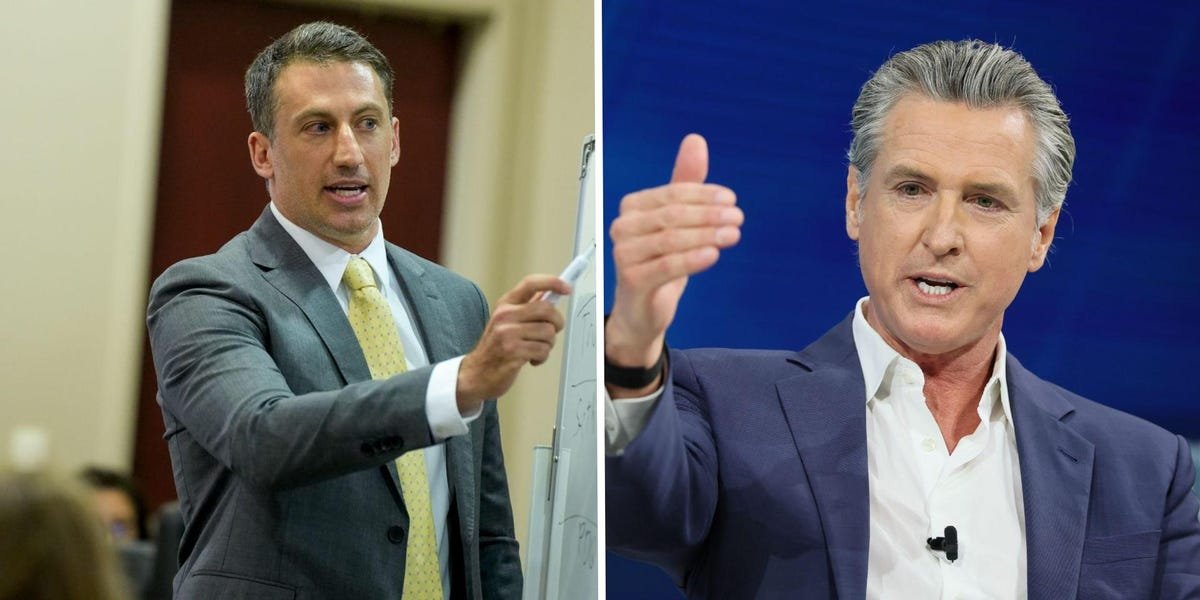
Read the letter celebrity lawyer Alex Spiro wrote to Gavin Newsom, warning that his clients will ‘permanently relocate’ if California wealth tax passes

A proposed billionaire tax in California has the wealthy threatening to flee, according to a letter written by power lawyer Alex Spiro to Gov. Gavin Newsom.

In a December 11 letter that was obtained by Business Insider, Spiro lays out his opposition to the proposed tax on behalf of his clients, whom he calls “California residents who would be subject to the proposed Billionaire Tax Act.”

“It will trigger an exodus of capital and innovation from California,” Spiro wrote. “Our clients have made clear they will permanently relocate if subjected to this tax.”

The measure proposes that California residents with assets exceeding $1 billion be subject to a one-time 5% tax on the value of their assets. If the proposal receives enough signatures, it will appear on the state ballot in November 2026. If passed, it would apply retroactively to all California residents as of January 1, 2026.

While Newsom has said he is against the tax and would “fight” it, he would not have the ability to veto it if it were to pass as a ballot measure.

Several wealthy Californians, including venture capitalist Peter Thiel and Google cofounder Larry Page, have considered shrinking their presence in California, according to a New York Times report. Representatives for Page and Thiel did not respond to Business Insider when asked if they were represented by Spiro.

Over the weekend, billionaire Palmer Luckey took to X to voice his opposition to the measure.

“I made my money from my first company, paid hundreds of millions of dollars in taxes on it,” the Anduril cofounder wrote. “Now me and my cofounders have to somehow come up with billions of dollars in cash.”

While it’s not clear which clients the lawyer was referencing in his letter to Newsom, Spiro’s client roster in the past has included billionaires and A-listers. He has previously represented Kim Kardashian, Jay-Z, and Elon Musk.

Read the full letter below:

Re: Constitutional Concerns Regarding Proposed Billionaire Tax Act
Dear Governor Newsom:
I represent California residents who would be subject to the proposed Billionaire Tax Act if it qualifies for the November 2026 ballot. I write to urge you to work to prevent this initiative from moving forward. The Act has serious legal problems and would cause significant economic damage to California and the broader economy.
First, and most importantly, the Act would be unconstitutional. Although the Act purports to be a tax, it is in reality an uncompensated confiscation of property. The Act imposes a 5% levy on total accumulated wealth, including illiquid assets that generate no income. That is in substance a taking without just compensation. As the Supreme Court explained in Armstrong v. United States, the government cannot force “some people alone to bear public burdens which, in all fairness and justice, should be borne by the public as a whole.” 364 U.S. 40, 49 (1960). The Act concentrates an extraordinary burden on a small group to solve a general revenue problem— exactly what the Constitution prohibits.
Second, for the people who relocate from California in 2026 before the November election, the Act would tax them after they have become citizens of other States and without any ability to vote on the measure. The Supreme Court has held that retroactive taxation cannot be “harsh and oppressive.” United States v. Carlton, 512 U.S. 26, 30 (1994). A 5% levy on total net worth imposed on former residents who departed before the law was even enacted clearly meets that definition.
Third, the Act’s unprecedented novelty makes it especially vulnerable to a legal challenge. California has never imposed a wealth tax, much less one that reaches former residents and that is targeted at a small group of citizens. The Supreme Court closely scrutinizes unprecedented exercises of government power precisely because they lack historical precedent. See Biden v. Nebraska, 600 U.S. 477, 505 (2023). In fact, it has not hesitated to invalidate the retroactive application of new taxes, even for far less extreme measures. See Blodgett v. Holden, 275 U.S. 142 (1927). There can be no doubt that the current Supreme Court would carefully evaluate a law so out of step with the American legal tradition.
From an economic perspective, the Act creates two serious problems. First, it will trigger an exodus of capital and innovation from California. Our clients have made clear they will permanently relocate if subjected to this tax. They are not alone. See California’s wealth-tax test: Have voters finally found a policy that the state’s inherent economic strengths can’t overcome?, Wash. Post (Nov. 17, 2025) (opinion) (describing the tax as “almost tailor-made to drive most Silicon Valley tech companies to Austin, Texas”). In other words, by passing this proposal California would exchange a one-time windfall for the permanent loss of billions in annual income taxes, capital gains taxes, property taxes, and economic activity. The state’s most economically productive residents would take their businesses, jobs, and charitable giving with them. Second, the Act will force destructive asset sales. Our clients hold equity stakes in operating businesses, venture capital funds, and real estate. Paying a 5% wealth tax would require massive forced liquidations, depressing asset values and triggering market instability that would harm ordinary investors whose retirement accounts hold these same investments.
Our clients are prepared to mount a vigorous constitutional challenge if this measure advances. Litigation would be protracted and expensive, and it would generate sustained negative attention to California’s business climate. The prudent course is to prevent this constitutionally defective measure from reaching the ballot. We respectfully ask that you discourage signature gathering, oppose qualification, and if necessary, campaign against passage.
Our clients prefer to remain in California and continue contributing to the state’s economy and civic life. But they will not remain if subjected to an unconstitutional confiscation of their wealth. We hope this can be resolved through political channels rather than through years of contentious litigation.
Respectfully,
Alex Spiro


Source link

Kaila Yu

I’m a business immigration lawyer. I’m telling my clients that if you have a valid visa stamp, return to the US now.

This as-told-to essay is based on a conversation with Tahmina Watson, a business immigration lawyer in Seattle. Business Insider has verified Watson’s employment history with documentation. The following has been edited for length and clarity.

I’m a business immigration lawyer, and in my day-to-day work with clients, I’m seeing immigration disruptions with immediate consequences, including H-1B visa holders who are outside the US being uncertain if they can return.

​​My law firm, Watson Immigration Law, assists founders and businesses in navigating the employment visa application process. It appears that, at this time, the administration is coordinating the rescheduling and delay of immigration appointments.

Non-immigrant visas generally must be scheduled at a US embassy or consulate in the person’s country of nationality or residence. From my experience, many employees accrue their holiday time and schedule immigration appointments during this period because they’re already planning to leave the country, allowing them to easily visit their designated US embassy or consulate.

These employees are now getting stuck, having already left the US, with their appointments getting rescheduled for June, July, or August 2026, and beyond.

A large group of H-1B work visa holders is stuck outside the country

Major tech companies, including Google, Apple, and Microsoft, sent memos out to their employees in the past week, warning visa-holding employees to avoid international travel amid long delays at US consulates. These policies are coming one after another, and they all intersect with each other.

The policies have created:

  • Visa-stamping delays at US embassies and consulates.
  • Expanded vetting and processing backlogs at consulates.
  • Increased risk that visa holders who travel cannot return to the US in a timely fashion.
  • Lack of guarantees once appointments are rescheduled.

If somebody is outside the country, what are employers supposed to do? Right now, my advice to clients outside the country is that if they have a valid visa stamp, they should return to the US as soon as possible.

We don’t know what changes could come, but I suggest that workers stuck abroad ask to work remotely

For someone who has left the country to obtain a new visa stamp, I’m not sure there’s a clear path to return. This includes individuals on F-1 student visas who traveled to visit family and were planning to re-enter the US. They will need that visa stamp from a consulate.

Ensure your employment is still active and consider whether remote work is an option. If an employer decides they cannot keep someone on the books, even an appointment months from now will not help if there’s no job waiting.

It’s tough to know how things will unfold. What we’re seeing is a confluence of policies coming in at the same time. For example, the Department of Homeland Security has just announced that it is replacing the lottery system for H-1B work visas, which randomly selects who receives a visa. The system is now set to prioritize higher-paid, higher-skilled workers.

Keeping social media accounts public is a good idea

Social media disclosure is being expanded from F-1 visa holders, which began during the student visa crisis, to now include H-1B workers. These applicants are required to change all social media privacy settings to public.

It could easily expand to other visa categories. The government has not provided clear guidance on what they are reviewing. By casting an overly broad net under the banner of national security, without clear standards or transparency, the administration is creating uncertainty that will ripple across families, employers, and the US economy.

Clients should limit what they post online.

My advice since November 2024 has remained the same: Avoid travel unless necessary

In 2024, I was already anticipating these issues with traveling and returning to the US. We’ve also seen issues affecting green card holders with past criminal convictions.

There are many stories of people who have lived in the US for decades, suddenly facing deportation proceedings. This is a highly precarious time for immigrants, and limiting travel is critical.

It feels like a fire hose of policies. Everyone in the immigrant ecosystem is on high alert: Immigration lawyers, immigrants, employers, investors, founders, and employees.


Source link