Jack-Dorseys-mea-culpa-on-Block-layoffs-We-overhired.jpeg

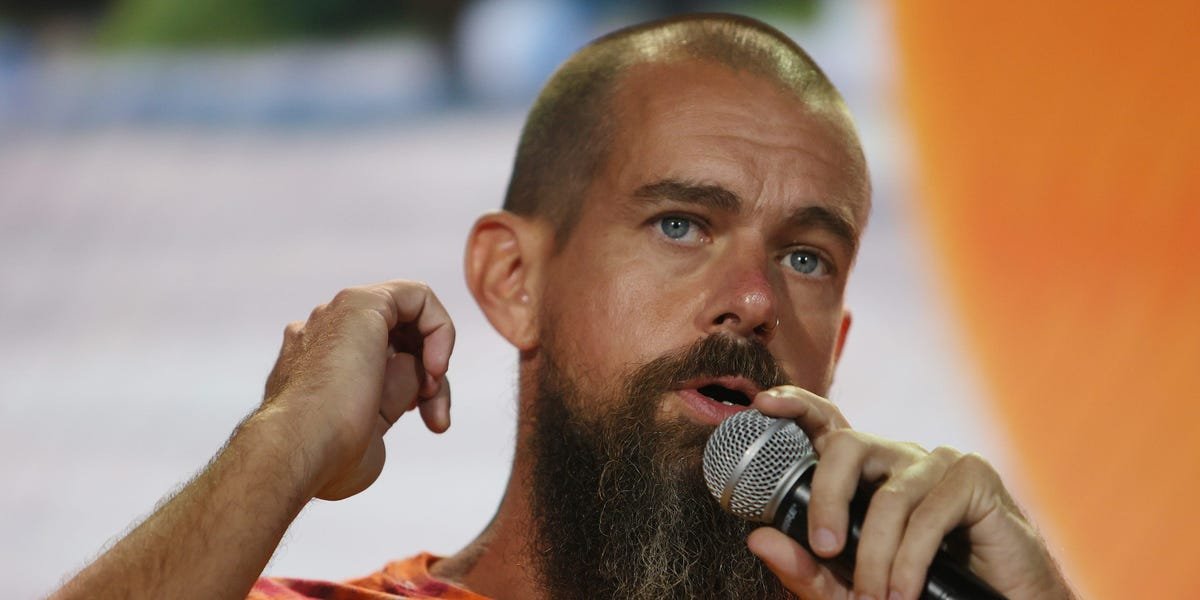
Jack Dorsey’s mea culpa on Block layoffs: ‘We overhired’

Jack Dorsey is taking responsibility for a key mistake behind Block’s sweeping job cuts.

“Yes we over-hired during COVID,” the Block cofounder and CEO wrote Friday on X, responding to criticism that the company’s recent layoffs reflected managerial incompetence.

The admission comes a day after Dorsey announced he was slashing nearly half of Block’s workforce — reducing head count from more than 10,000 employees to just under 6,000 in one of the most dramatic single-round layoffs in recent tech history.

In his latest X post, Dorsey said the overhiring stemmed in part from a structural misstep. He had built “2 separate company structures (square & cash app) rather than 1,” he wrote, a setup the company corrected in mid-2024, he said.

That duplication inflated head count as Block expanded aggressively during the pandemic.

But Dorsey said critics were oversimplifying the situation. Over the past several years, Block also took on significant operational complexity, expanding into lending, banking, and buy-now, pay-later products, he said.

Block is now targeting more than $2 million in gross profit per employee — roughly four times its pre-COVID efficiency, which Dorsey said remained flat at about $500,000 per person from 2019 through 2024.

“We have and do run an efficient company… better than most,” he wrote.

As of Friday, Block’s share price is roughly $54, virtually flat compared to its price in 2018, seven years ago.

The stock spiked from less than $75 pre-COVID to over $275 in early 2021, before dropping sharply at the end of that year. Since early 2022, the stock has traded at below $100 per share.

In the original memo announcing the cuts, Dorsey said he chose to make one large reduction rather than conduct repeated rounds of layoffs, which he called “destructive to morale.”

He said that the business itself is strong, with gross profit growing and profitability improving.

Instead, he pointed to what he described as a fundamental shift in how companies operate to justify the layoffs.

Intelligence tools and smaller, flatter teams are enabling “a new way of working,” he wrote, one that changes what it means to build and run a company.

Several other tech companies — including Amazon, eBay, Meta, and Workday — have also announced cuts in recent months, often citing AI-driven efficiency gains and organizational streamlining.

Last September, Micha Kaufman, the CEO and founder of Fiverr, announced a 30% workforce cut, citing the need to help turn Fiverr into a leaner, faster “AI-first company.”

“If you don’t ensure that you sharpen your knives, you’re going to be left behind. It’s that simple,” Kaufman told Business Insider last May.





Source link

Chong Ming Lee, Junior News Reporter at Business Insider's Singapore bureau.

I’m a data analyst who survived 3 rounds of layoffs at Block. I saw how AI was automating my work — it cost me my job.

This as-told-to essay is based on a conversation with Ivan Ureña-Valdes, who has worked at Block for nearly four years as a data analyst. It has been edited for length and clarity.

When I got an email from Jack Dorsey, I was in the middle of interviewing someone for a role at Block.

It was pretty strange because, in the past, with layoffs, I knew people had their access cut almost immediately.

A coworker messaged me: “Hey, are you okay?” My heart started racing. I knew from that message it meant that I was probably getting laid off.

I felt really bad because I was in the middle of interviewing someone. I had to tell them, “I was actually just let go from the company. I probably won’t be able to submit your feedback in time. Please reach out to your recruiter.”

I’m the sole provider for my family. It was tough.

I had a hunch that AI would lead to cuts at some point

We knew there were many performance cuts happening around right now, and those have largely finished. I had no idea this cut was coming.

For 4,000-plus people to be cut without anybody knowing, that tells me decisions were made very high up.

I’ve survived three rounds of layoffs, some companywide, some engineering organization-wide. I knew I wasn’t being let go for performance-related reasons. I was in the middle of working on two large projects, probably the largest projects I’d worked on since joining the company.

I had a hunch that, at some point, the company would cut people because of AI. I just didn’t think it would be right now.

Working at Block, I saw how AI was automating tasks away

I appreciate Jack for his honesty. It’s much fairer of him to come straight out and say why it happened — that it’s because of AI and the vision he sees.

I’m honestly grateful for the generous severance and benefits. It definitely helps make the rough situation a bit easier.

I’ve felt the rumblings of AI disruption for a while now, especially since Anthropic launched Opus 4.5 late last year.

Jack loves AI and was constantly pushing us to use it. I got to use these tools as much as possible every single day.

I could see in my own work very quickly how much of it was already being automated. So much of the data analyst world is finding the right dataset, writing something that will allow you to pull the data set that you want, and then generating output. Every single one of those steps is significantly faster and easier because of AI.

It was definitely a “whoa” moment when I realized just how powerful things had gotten.

AI will continue to replace jobs

I 100% think that more disruption and more of these types of cuts will probably come at other companies, which is unfortunate.

I’m much more pessimistic about all of it than many other people probably are.

Given that we live in the US, where growth is everything, it’s inevitable that AI will continue to replace people wherever it’s financially beneficial to do so.

I’m optimistic that I can find a job in the general data field, whether it’s something I’m extremely passionate about or pays as much as I did before. It will be difficult to find something that matches the environment I was working in because I had developed really strong ties with my coworkers. The pay was fair within the data analytics or business intelligence world, and the role was remote.

There are incredible companies out there doing great work, though I am nervous about the industry as a whole and the competitiveness as I search for that perfect next role. Some people are getting really, really high salaries at AI companies, while tons of people at Block are getting laid off.

Do you have a story to share about tech layoffs? Contact this reporter at cmlee@businessinsider.com or on Signal at cmlee.81.


Source link

After-2-layoffs-and-a-breakup-in-New-York-I.jpeg

After 2 layoffs and a breakup in New York, I booked a one-way flight to Asia. Travel changed how I define success.

I thought I was on track — until the year everything fell apart.

Just weeks into January 2023, I was blindsided by an unexpected breakup. In the months that followed, I moved through my days on autopilot, watching the year continue to unravel.

That May, I was laid off from my job coordinating large conferences and corporate travel. I took a position at a family-run wedding business that was building out its travel department. I told myself things were starting to look up.

But between a 90-minute commute, sitting at a desk all day, and performing mundane tasks not listed in my job description, I began to spiral instead of heal.

Almost every day, I’d retreat to my car at lunchtime and break down in tears, overwhelmed by how unhappy I was.

The “American dream” began to feel like a trap

Since I was a kid, I’d treated success like a checklist built from American expectations I absorbed through school, TV, and social media. It seemed simple enough: Stay in line with peers, get married before turning 30, and buy a big house to raise a family in.

It was becoming clear that this narrative might not align with the life I wanted for myself.

Later that same year, I dealt with a toxic roommate, a serious health scare in my family, and a car accident. Then, just days before the New Year, I got one final surprise: another layoff. This time, however, I felt relief.

Walking out of that office for the last time allowed me to stop chasing a version of success I knew would never satisfy me.

Distance changed the pressure I was living under

As 2024 began, I set a clear goal for myself to sublet my apartment, sell my belongings, and board a one-way flight to South Korea by April 15. My plan was to begin an eight-month journey across Asia and Australia. After four months of careful planning, I boarded that flight.

Starting the trip with a friend in Seoul made the beginning — and the 15-hour flight over — feel safe and manageable. When she boarded her flight back to the US, and I headed off to Thailand alone, that distraction disappeared. I was officially left alone with my own thoughts.

Early on in Southeast Asia, I questioned what I was doing and where it would all lead. I cried in hostels and had panic attacks on the back of motorbikes. My anxiety was triggered by the blasting music of Bangkok’s Khao San Road and Ho Chi Minh City’s endless traffic.


Woman in red, wearing sunglasses, standing on Ha Giang Loop, northern Vietnam.

Strum escaped the pressure she’d been living under while traveling through the mountains in northern Vietnam.

Provided by Macie Strum


The more I took note of my surroundings, the less the world around me matched the urgency in my head.

As I traveled the Ha Giang Loop in Northern Vietnam by motorbike, I realized that my idea of success was built upon a level of pressure that didn’t exist up in these Vietnamese mountains. Local life didn’t revolve around strict deadlines and productivity scales. Instead, it centered on routine, family, and staying present each day.

As I moved through each country, I connected with travelers of every age and background, many of whom were unemployed, exploring new paths, working online, or simply figuring things out as they went. Some were meticulous planners; others lived day to day.

In the jungles of Malaysian Borneo, I met a fellow American who was also redefining her life after a heavy breakup. I remember the first night we met, we talked for hours about life, expectations, and the fear of what would come next.

We ended up traveling together to Kuala Lumpur, meeting again in Penang, and later in Bali. Seeing her in so many different places reminded me how many others were navigating the same uncertainty.

It reframed my view of travel — not as a break from real life, but as an active part of it. For the first time, uncertainty no longer felt like failure.


A woman posing with the Yellow Fortress in Sarajevo, Bosnia and Herzegovina, in the background.

She’s building her career in Sarajevo, Bosnia and Herzegovina.

Provided by Macie Strum


I’ve redefined success

When that trip came to an end, I felt no pull toward the life I’d left the year before.

I returned to the US briefly, but chose to keep traveling to explore what alternative versions of success could look like for me.

In 2025, that decision took me to 17 European countries. As I explored, I found myself falling in love with one of the continent’s most misunderstood regions: the Balkans.

Today, I live in Sarajevo, Bosnia and Herzegovina, building a career as a freelance journalist without sacrificing my ability to travel. While the life I’m creating may not match the version of success I was raised with, it’s more aligned with how I want to live: flexibly, deliberately, and with purpose.

While I don’t know exactly what comes next, that no longer scares me the way it once did.

Do you have a story to share about living abroad? Contact the editor at akarplus@businessinsider.com.


Source link

Jeff-Bezos-speaks-out-about-The-Washington-Post-for-the.jpeg

Jeff Bezos speaks out about The Washington Post for the first time since mass layoffs — and focuses on ‘data’

Washington Post owner Jeff Bezos gave his first public statement since the paper enacted massive job cuts this week, and it focused on “data” and understanding reader interests.

The billionaire Amazon founder, who built one of the world’s most valuable companies with a relentless focus on customer satisfaction, indicated he wanted to see that same energy at the Post.

“The Post has an essential journalistic mission and an extraordinary opportunity,” Bezos wrote. “Each and every day our readers give us a roadmap to success. The data tells us what is valuable and where to focus.”

Bezos’ statement came as Post CEO Will Lewis announced he was stepping down, to be replaced in an interim capacity by Post CFO Jeff D’Onofrio.

Bezos’ statement struck a similar tone to comments made by the paper’s top editor, Matt Murray, in addressing staff earlier this week.

“Today is about positioning ourselves to become more essential to people’s lives in what has become a more crowded, competitive, and complicated media landscape,” Murray said during a staff call on Wednesday. “For too long, we’ve operated with a structure that’s too rooted in the days when we were a quasi-monopoly local newspaper.”

Murray sent staffers a detailed memo on Wednesday that outlined focus areas in which he said the Post demonstrates “authority, distinctiveness, and impact.” Those priority areas will include politics, national affairs, national security, and other forces “shaping our future,” like science and business, Murray wrote.

Murray spoke repeatedly about focusing on areas of reader interest and understanding audience data in an appearance following the layoffs on the Puck podcast “The Grill Room.”

The messaging from Bezos and Murray could help appease some critics who have seen moves by the Post in recent years as rooted in political ideology and not data — though it will be difficult to win them over.

The Post faced a revolt both inside the newsroom and among readers when Bezos made a late-hour call in 2024 that the paper wouldn’t endorse a presidential candidate for the first time in 36 years. NPR reported that more than 200,000 subscriptions were canceled in the days following.

The paper faced another round of criticism in February 2025 when Bezos decided to reorient the Post’s opinion section — generally considered the owner’s prerogative — around personal liberties and free markets.

Former Post executive editor Martin Baron, who worked closely with Bezos during his tenure as top editor, wrote in a LinkedIn post after the layoffs that the paper’s challenges had been made “infinitely worse by ill-conceived decisions that came from the very top.”

Critics of Bezos’ moves have said he should consider financially supporting the paper, given its role in society.

“It just seems heartbreaking that he doesn’t feel the paper is important enough to bankroll,” Sally Quinn, the longtime journalist and widow of former Post executive editor, Ben Bradlee, said this week on CNN.

Bezos said in his statement that he felt the Post’s leadership going forward could build an “exciting and thriving next chapter” for the paper.


Source link

Washington-Post-publisher-Will-Lewis-is-out-days-after-sweeping.jpeg

Washington Post publisher Will Lewis is out days after sweeping layoffs

  • The Washington Post’s chief executive, Will Lewis, announced his departure on Saturday.
  • Jeff D’Onofrio will serve as the interim CEO and publisher, effective February 7.
  • Lewis’ departure comes days after sweeping layoffs at the legacy publication.

Will Lewis is out as chief executive at the Washington Post, days after sweeping layoffs hit the legacy publication and following a rocky two-year tenure that saw the Post struggle to stabilize its business.

The newspaper said Saturday that Jeff D’Onofrio, CFO, would serve as the interim CEO and publisher, effective immediately.

Lewis’s departure comes after hundreds of Washington Post journalists were laid off across the company this week, in what executive editor Matt Murray described in a memo as part of a strategic reset. The cuts were felt across the newsroom, including the sports section, international, books, DC metro, and audio.

As news of the layoffs spread, Lewis came under widespread public criticism, both for the financial challenges at the Post and for not participating in the dissemination of the news. After Murray made the staff-cut announcements himself, Lewis was seen attending Super Bowl festivities.

In a note Saturday, Lewis said “now is the right time for me to step aside” and thanked Jeff Bezos, the paper’s owner.

D’Onofrio, who joined the Post in June 2025, said in an email to staffers on Saturday: “This is a challenging time across all media organizations, and The Post is unfortunately no exception.”

This is a developing story. Please check back for updates.


Source link

Ashley Stewart Business Insider

Amazon execs say layoffs are part of turning the company into the ‘world’s largest startup’

Internal memos from Amazon executives explained the company’s decision to lay off 16,000 corporate workers as necessary to become the “world’s largest startup,” according to the messages viewed by Business Insider.

“Our ambition is to be the world’s largest startup,” Amazon executives wrote in two such memos viewed by Business Insider. “That means doubling down on a culture of ownership, speed, and experimentation — which requires us to continue evolving how we’re structured.”

The “world’s largest startup” has become a common refrain under Amazon CEO Andy Jassy, who repeatedly referenced the company’s ability to operate like a startup in his latest shareholder letter.

The memos viewed by Business Insider, written by Amazon Web Services vice president Prasad Kalyanaraman and senior vice president Colleen Aubrey, include other similarities, providing insight into how Amazon likely directed its top executives to communicate about the layoffs:

  • Notifications within the teams in the US and Canada have been completed.
  • Identical language stating, “Please take care of yourselves and each other,” and that “the Employee Assistance Program (EAP) is available 24/7 for free and confidential support.”
  • Acknowledging that changes are difficult and ending with a forward-looking statement about what remaining teams can accomplish.

Greg Pearson, another AWS VP, also addressed layoffs in a memo and urged staff to “use technology to simplify work,” Business Insider previously reported. Amazon also shared more information for laid-off employees in an FAQ and emails from Amazon HR chief Beth Galetti.

Internal Slack messages viewed by Business Insider suggest affected teams include those within the company’s AWS cloud unit, such as the AI cloud service Bedrock, the cloud data warehouse service Redshift, and the ProServe consulting team, as well as retail business teams such as the Prime subscription service and the last-mile Delivery Experience team.

Amazon did not immediately respond to a request for comment from Business Insider.

Read the memos below:

Prasad Kalyanaraman, VP of AWS Infrastructure:

Team,
I want to provide an update on the organizational changes that Beth Galetti shared in her A to Z post earlier today. As Beth noted, these decisions are part of our ongoing effort to position the organization for the future while staying nimble and focused on delivering for our customers. Our ambition is to be the world’s largest startup. That means doubling down on a culture of ownership, speed, and experimentation—which requires us to continue evolving our structure.
The notifications to impacted colleagues in our organization who are based in the U.S. and Canada, have now been completed. In other regions, we are following local processes, which may include time for consultation with employee representatives and possibly result in longer timelines to communicate with impacted employees.
First and foremost, I want to thank the impacted colleagues who have worked tirelessly for our customers. I want to acknowledge that changes like this can be hard on our entire team. These decisions are difficult and are made thoughtfully as we position our organization for future success. Changes like these are difficult, especially when they affect colleagues we value. These decisions don’t diminish what we’ve built together; rather, they’re about positioning us to sustain and extend that impact as we continue to build the foundation for the future.
I also want to recognize what our team has accomplished this past year as we’ve made tremendous progress on scaling to meet unprecedented customer demand. These results reflect the talent, dedication, and collaboration across the breadth of our very diverse organization that must work together seamlessly — and those are qualities that will remain our foundation as we move forward.
Please take care of yourselves and each other. Remember that the Employee Assistance Program (EAP) is available 24/7 for free and confidential support.
Thank you for your resilience and continued focus on delivering for our customers. I’m confident in our team’s ability to navigate this transition and emerge stronger.
I’m looking forward to what we’ll accomplish together in the months ahead.
Prasad

Colleen Aubrey, SVP of Applied AI Solutions:

Hi,
I wanted to follow up on Beth Galetti’s post about organizational changes to A to Z earlier today. As Beth noted, this is a continuation of the work we’ve been doing for more than a year to strengthen the company by reducing layers, increasing ownership, and removing bureaucracy, so that we can move faster for customers. Our ambition is to be the world’s largest startup. That means doubling down on a culture of ownership, speed, and experimentation—which requires us to continue evolving how we’re structured.
Our organization plays a critical role in putting AI to work for our customers, transforming how companies deliver value to their customers, and these changes will help us sharpen our focus. I’ve seen how this team innovates and collaborates to solve real-world business challenges through applied Al. These strengths will be essential as we move forward with focus and clarity.
The notifications to impacted colleagues in our organization who are based in the U.S., Canada, and Costa Rica have now been completed. In other regions, we are following local processes, which may include time for consultation with employee representative bodies and possibly result in longer timelines to communicate with impacted employees. Changes like this are hard on everyone. These decisions are difficult and are made thoughtfully as we position our organization and AWS for future success. Please take care of yourselves and each other. The Employee Assistance Program (EAP) is available 24/7 for free and confidential support.
Thank you for your continued focus on delivering for our customers. I’m confident in our team’s ability to navigate this transition and emerge stronger, and I am positive that we’ll accomplish great things together in the months ahead.
Colleen

Have a tip? Contact Ashley Stewart via email at astewart@businessinsider.com or Signal at +1-425-344-8242. Use a personal email address and a nonwork device; here’s our guide to sharing information securely.


Source link

Amazon-staff-cope-with-looming-layoffs-by-roasting-Jeff-Bezos.jpeg

Amazon staff cope with looming layoffs by roasting Jeff Bezos’ ‘2-pizza rule’

Amazon employees are doing what Big Tech workers often do when they’re anxious about layoffs: making memes.

The company is expected to cut thousands more corporate roles as soon as next week, Business Insider reported on Thursday, citing people familiar with the matter. This coming round would mark another wave of mass layoffs at Amazon in just a few months, following the roughly 14,000 jobs eliminated in October.

In the absence of official companywide communication, workers have been trying to ease tension in an internal Slack channel with more than 26,000 employees who joined by posting memes and jokes, which Business Insider viewed.

The focus of their snark? Amazon founder and former CEO Jeff Bezos’ famous “two-pizza rule,” originally designed to keep meetings lean and productive. The rule was simple: never have a meeting so large that two pizzas couldn’t feed the entire group.

As the company continues to thin its ranks, employees are using the same logic to point out just how much leaner their teams are about to become.

Amazon did not respond to a request for comment from Business Insider.

One meme showed a single, thin sliver of pizza with the caption “how we feed two pizza teams.”

Another image featured two Amazon Web Services-branded pizza boxes, with the caption “did someone say 2 pizza team?” The meme is a nod to the company’s cloud division, where many of the cuts are expected to land.

“I don’t think I’ve ever been on a team that could be completely fed with just two reasonably sized pizzas until you were still hungry very frugal,” one employee wrote in the Slack channel. “Increasing ‘span-of-control’ for managers seems to be the new rage.”

Others wondered if two Costco pizzas would be considered “reasonably sized.”

“I was thinking more like Domino’s Large pizzas,” another employee wrote.

The pizza jokes weren’t the only coping mechanism. Employees also shared non-pizza memes.

One riffed on the rumored timing, splashing “JANUARY 27TH” over the scene from “The Shining” showing Jack Nicholson’s character smashing through a door with an ax and “AWS” over his face.

Another meme used the “panik/kalm” template to mock corporate buzzwords. It shows an error message about email not working, presumably because the employee was laid off, with the words “Mail not working (have I become Nimble?!)”, referring to CEO Andy Jassy’s 2025 remarks about cutting jobs to stay nimble.

Other posts leaned into the dread of the unknown: one meme laid out a checklist for employees for January 27: “able to login,” “mail and Slack works,” and “no random HR meeting in calendar.”

Another simply captured the vibe in all caps: “I don’t know what will happen on 27 Jan and at this point I’m too afraid to ask.”

Amazon isn’t the first tech giant to see a nervous workforce poke fun at its internal culture. In 2023, Google employees flooded the company’s internal message boards with memes mocking its lavish developer conference, which came months after it laid off 12,000 employees.

Have a tip? Contact Pranav Dixit via email at pranavdixit@protonmail.com or Signal at 1-408-905-9124. Use a personal email address and a nonwork device; here’s our guide to sharing information securely.


Source link

Meta-plans-layoffs-in-its-Reality-Labs-unit.jpeg

Meta plans layoffs in its Reality Labs unit

  • Meta plans layoffs in Reality Labs, affecting the teams behind VR headsets and Horizon Worlds.
  • The restructuring follows major financial losses and a strategic shift toward AI.
  • Reality Labs faces uncertainty as Meta leadership emphasizes 2025 as a decisive year for the unit.

Meta is preparing layoffs in its Reality Labs division, according to three people familiar with the matter who spoke with Business Insider.

The teams working on the company’s virtual reality headsets and Horizon Worlds, its VR-based social network, will be disproportionately affected, two employees said.

Roughly 10% to 15% of Reality Labs’ 15,000 employees are expected to be laid off, with the cuts set to be announced this week, The New York Times reported.

Meta declined to comment.

The move comes as Meta CTO and Reality Labs chief Andrew Bosworth has called a key division-wide meeting for Wednesday, describing it as the “most important” of the year and urging employees to show up in person, Business Insider previously reported.

Reality Labs has been a costly bet for Meta, racking up more than $70 billion in losses since 2020. It has faced repeated rounds of cuts as Meta shifts its attention — and spending — toward AI.

In a memo obtained by Business Insider last year, Bosworth called 2025 “the most critical” year of his tenure and warned the outcome would determine whether Reality Labs is remembered as visionary work or “a legendary misadventure.”

Have a tip? Contact Pranav Dixit via email at pranavdixit@protonmail.com or Signal at 1-408-905-9124. Use a personal email address, a nonwork WiFi network, and a nonwork device; here’s our guide to sharing information securely.


Source link

After-3-tech-layoffs-I-knew-I-had-to-lean.jpeg

After 3 tech layoffs, I knew I had to lean into being a founder

This as-told-to essay is based on a conversation with Kelly Withers, 36, who lives outside Detroit and is the founder of Carmu, a yoga mat startup. The following has been edited for brevity and clarity.

About seven years ago, I was in my 20s and getting divorced. I was a single mom to a 2-year-old and a 3-year-old, with no outside help. I had no place to live and no full-time job. So I started coming up with ideas as fast as I could. How am I going to take care of these two kids? I felt alone.

At that time, I was doing photography to help restaurants build their brands. Then I went to a yoga class. When I walked in, every person had the same mat and the same outfit. I started thinking about my mom and how she raised us to be individuals and stand out. I had this idea that since I was designing so many things already, I would go home and try to design a mat so I could feel more like myself when I went to class.

About a week before I went to place my order for all the mat designs, the pandemic hit, and I was back to square one. I also lost my photography clients, because restaurants were shuttered. I panicked because I had two tiny humans relying on me.

So, I started teaching myself design for tech, because it seemed much more lucrative. From everything I’ve ever heard, you go into the corporate world — that’s how you have a comfortable life.

I got a syllabus from an online boot camp, but I couldn’t afford it. So, I bought a book on every topic. Then I hired a tutor for 30 minutes at a time to go over my work and my portfolio, to make sure I was doing it right. He worked at Microsoft. He told me how much money I would potentially make as a junior designer. I remember thinking, “Well, I’m going to have to pretend I’m a senior designer.”

Pretty much on my first interview, I got a corporate job doing UX design as a lead designer. I was bullshitting, so it was a little nerve-racking. Whenever I had a project, I’d run it by the tutor, just praying that I didn’t get busted. I caught on quickly, and it was fine. I did that for a couple of years.

The layoffs

Eventually, there was a lot less work. So, I started panicking.

I found another job, so then I had two. Sure enough, about a month later, layoffs hit, and our whole team from the first job got wiped out.

People talk about corporate life and how that gives you security. In my experience, you’re handing over your control, your finances, your future — and it’s still a gamble. I can’t live my life constantly betting on somebody else and somebody else’s company.

I’ve always been into design. I want to build something tangible. I ordered about 250 mats to start. The idea was that I would continue working in tech, and then I would soft-launch these as my side hustle. That way, if I ever got laid off again, I’d have some security.

The day my yoga mats got delivered to my house, I got laid off. I looked at it as a sign: Go all in. You have some savings. See what you can do. Within about a month, I sold out.

I was like, “Now what am I going to do?” They’re made outside the US, so it takes a while for them to get here. I took the few mats that I had left and reached out to style editors.

Doubling down

I took the rest of my savings, and I bought 1,000 mats. It was a scary moment because I was living off those savings, too.

People talk about entrepreneurship and say, “Oh, it’s so risky.” Well, it isn’t. If you have the product, I like to think of it as a calculated risk. At this point, if I’m being honest, it was the only way I could think of making money, as I could not get a job interview.

The company is named after my mom, Carolyn Mulligan, who passed away 10 years ago after she was hit by a car on her bicycle. She had just been on my mind, and I’m convinced that because she was so strong, she has something to do with how this is working out.

The day I launched, in May, I sent out this post on Instagram to announce it. My friend called me and said to open up Vogue. Hailey Bieber was on the yoga mat in the magazine. About a week later, GQ wrote about Carmu. From there, it was just enough leverage where I could take it all over the place. We got into Goop, and we got into Anthropology in Europe. It’s just crazy because it’s been such a little amount of time.

When I got the next shipment of mats, I hadn’t had an interview in tech for a year. With my business, I was profitable from day one.

The big question now is whether I want to have outside investment or do it myself. I believe I could find outside investment. Have I been traumatized in handing over control of my life to other people? Yeah. I don’t know if I’m ready to give up control of anything right now, just because of how everything has gone.

Do you have a story to share about your career? Contact this reporter at tparadis@businessinsider.com.


Source link