

Lucia Moses

Leaked deck shows Elon Musk’s X is promoting Grok’s brand-safety scores after sexualized images backlash

Elon Musk’s X is promoting itself to potential advertisers with a new deck that underlines its commitment to brand safety, according to the leaked deck shared with Business Insider.

It comes after the AI chatbot shared “deepfake” sexualized images of women and children — a practice it stopped in late January after a backlash. The company said it would no longer generate AI images of real people in sexualized clothing.

The deck shows X is also promoting its use of “blocklists.” A blocklist is a list of sites or accounts that advertisers explicitly prevent their ads from appearing on. In the past, Musk’s X has taken legal action against advertisers who have used such tools to safeguard their ad placements.


X brand safety deck shows it uses Grok for brand safety

X touts its use of Grok to make the platform safe for advertisers.

X


In the deck, X said it had achieved a nearly 100% perfect “brand safe” or suitable scores using Grok, as measured by tech companies IAS and DoubleVerify.

It mentions ways it uses Grok to review posts and users’ profiles for brand suitability. For instance, if a user regularly posts about sensitive topics, the system can block ads from appearing alongside that user. X said it can target up to 4,000 keywords and 2,000 author handles this way.

The deck also promotes X as a place for brands to manage crises in real time.

X didn’t comment on the deck when reached by Business Insider.


X promotes use of blocklists in brand safety deck

X says its blocklists stop ads from appearing on up to 50 specific publishers per ad group.

X


The deck was shared at an event for clients and agencies on February 26. The 2026 Brand Suitability Webinar was billed as “empowering brands with new tools for safety & reach on X.”

It’s unclear if X’s newest charm offense will sway advertisers.

X is one of the smallest social media platforms by ad spending, with EMARKETER estimating it has less than 1% of worldwide digital ad revenue. It has an outsized influence because of its use by public figures and as a news channel.

Since Elon Musk bought X, formerly known as Twitter, in 2022, its relationship with advertisers has been fraught, with Musk publicly criticizing advertisers that cut or limited advertising on the platform.


X brand deck shows how it uses Grok and blocklists to assure brand safety

The deck details what X says it’s done to be brand-safe.

X


Advertisers left en masse after Musk’s acquisition. EMARKETER estimated its revenue would reach $2.2 billion in 2026, below its pre-acquisition level of $4.5 billion.

In 2023, Musk lashed out at advertisers, using an expletive on stage at an event directed toward those who had left.

And X is suing an advertiser trade group, alleging that its members conspired to boycott the platform in contravention of antitrust laws. The group denied it violated antitrust laws. The case is pending, with the last filing occurring on February 19.

X has also been criticized for loosening moderation and account-verification rules and for reinstating some banned accounts of provocative figures.


Source link

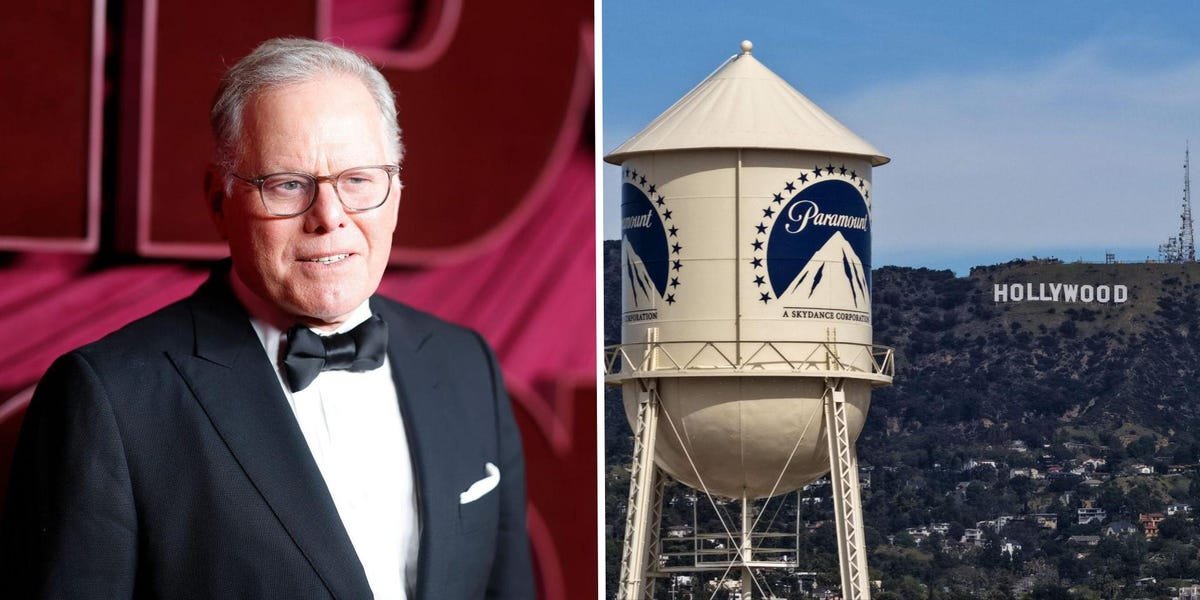
Leaked-audio-Warner-Bros-Discovery-CEO-David-Zaslav-tells-employees.jpeg

Leaked audio: Warner Bros. Discovery CEO David Zaslav tells employees Paramount deal felt ‘whiplash-y’

Warner Bros. Discovery’s CEO just pitched employees on its impending Paramount Skydance deal, after spending the last few months arguing against it in favor of the now-nixed Netflix deal.

David Zaslav told WBD staffers at a company town hall on Friday morning that he’s excited to join forces with Paramount.

“I think together, we can be a great company,” Zaslav said on the call, a recording of which was obtained by Business Insider.

“We’re getting bigger, and we’re getting stronger,” he said.

WBD had agreed to sell its studio and HBO assets to Netflix for $27.75 per share. Paramount launched a rival bid of $30 per share for the whole company, including its cable TV networks, and pitched WBD shareholders that its deal was better.

Zaslav acknowledged that the decision to switch from its Netflix deal to Paramount’s rival offer “all happened very quickly.”

“It feels a little whiplash-y,” Zaslav said, adding that he and WBD’s board of directors are still “getting our bearings.”

Paramount “acted with determination” in pursuing WBD, Zaslav said.

WBD underwent a “thorough, rigorous strategic review process” and was under a legal obligation to continue to review and evaluate unsolicited offers that could bring shareholders more value.

Zaslav suggested that teaming up with Paramount is crucial to WBD’s survival.

“If Warner Bros. is going to survive, then we needed to be bigger, and we needed to be global,” Zaslav said.

Zaslav added that “some of these companies are getting so big that they can just run us over.”

The Paramount-WBD deal still needs regulatory approval, a process that will likely take at least six to 12 more months.

“The deal may not close,” Zaslav said. “If it doesn’t close, we get $7 billion, and we get back to work.”

Last week, WBD’s board told its shareholders that there could be an employee exodus if it took Paramount’s deal, citing the $6 billion in cost savings that Ellison’s company planned to achieve. Netflix had said it planned to get $2 billion to $3 billion in savings from its deal.


Source link