

Netflix-shares-plunge-after-weak-guidance-and-news-that-cofounder.jpeg

Netflix shares plunge after weak guidance and news that cofounder Reed Hastings will leave the board

Netflix’s post-Warner Bros. honeymoon is over.

Wall Street wasn’t pleased with the streaming giant’s first-quarter earnings report, which was also its first since it backed out of its bid for WBD’s streaming and studio assets.

Netflix’s stock dropped by over 9% in after-hours trading. Netflix beat both revenue and earnings estimates last quarter, the company told investors on Thursday afternoon. However, Netflix’s second-quarter guidance came in below Wall Street’s estimates.

Netflix also announced that cofounder and former CEO Reed Hastings will leave the board in June.

“Netflix changed my life in so many ways, and my all‑time favorite memory was January 2016, when we enabled nearly the entire planet to enjoy our service,” Hastings said in a statement. “My real contribution at Netflix wasn’t a single decision; it was a focus on member joy, building a culture that others could inherit and improve, and building a company that could be both beloved by members and wildly successful for generations to come.”

Netflix’s revenue rose 16% to $12.25 billion in the first quarter, just over the consensus estimate of around $12.2 billion, as tracked by S&P Global.

Operating income also rose to $3.96 billion, roughly in line with the $3.9 billion estimate. Earnings per share came in at $1.23, well above S&P Global’s estimate of $0.77, in part because of the $2.8 billion breakup fee that Netflix collected from Paramount Skydance.

Shares had risen by more than 40% from their late-February low, when doubts mounted about the company’s chances of landing Warner Bros.

Wall Street wasn’t a fan of Netflix’s WBD deal, as its shares had lost about a third of their value during its pursuit of the company’s streaming and studios assets.

Boosting prices and ad revenue

Ahead of Netflix’s earnings report, analysts focused on two key catalysts: its recent price hikes and its growing advertising business.

Netflix raised prices by $1 to $2 a month in mid-March. Its ad tier now costs $8.99 a month, compared to $19.99 a month for its ad-free standard plan and $26.99 for its premium plan.

Luke Stillman, an advertising analyst at research firm Madison & Wall, told Business Insider before Netflix’s earnings report that “there’s more runway than most people believe to increase subscription prices.”

If Netflix subscribers balk at the cost of its pricier plans, they can trade down to its ad plan, which costs as much or less than comparable plans from other major streaming services.

Adding more ad-tier subscribers can help Netflix land larger brand deals and higher ad rates, said Mike Proulx, the marketing research director at Forrester.

Netflix on Thursday reiterated its forecast to double ad revenue from $1.5 billion last year to around $3 billion in 2026.



Source link

Americas-largest-labor-movement-calls-for-ICE-to-leave-Minnesota.jpeg

America’s largest labor movement calls for ICE to leave Minnesota before ‘anyone else is hurt or killed’

America’s largest network of labor unions has condemned ICE after a federal agent on Saturday shot and killed Alex Pretti, a 37-year-old Minneapolis resident.

The AFL-CIO, which represents nearly 15 million workers, called Pretti’s death “senseless.”

“As tens of thousands of Minnesotans made clear peacefully and powerfully yesterday, the Trump administration’s horrific operation — and their actions aimed at stoking violence and chaos — must end,” the labor group said in a statement.

“America’s unions join the call for ICE to immediately leave Minnesota before anyone else is hurt or killed. We demand local authorities conduct a full, transparent investigation that will lead to accountability for this tragic and violent act, and for Congress to use its power to hold ICE accountable.”


Alex Pretti of Minneapolis

Residents mourned Alex Pretti, who was killed by a federal agent in Minneapolis on Saturday.

Scott Olson/Getty Images


A federal agent fatally shot Pretti in Minneapolis, where he worked as an ICU nurse at a US Department of Veterans Affairs hospital. Minneapolis police confirmed on Saturday that Pretti is a US citizen. He had been filming the agents when the confrontation began.

The Department of Homeland Security, which oversees Border Patrol and ICE, said Pretti was carrying a 9 mm semiautomatic handgun and “approached” agents at the scene. The department said officers tried to disarm Pretti, but he resisted. In multiple videos of the incident, however, Pretti is never seen threatening agents and is disarmed and subdued before he is shot. Minneapolis police said Pretti had a permit to carry the weapon.

The DHS deployed ICE and other federal agents to Minnesota as part of an immigration enforcement sweep called Operation Metro Surge, which began in December. The department says it has deployed around 2,000 federal agents across the state to detain and deport illegal immigrants. Trump has made securing the border and deporting those in the US who lack proper paperwork a central part of his administration’s agenda.

Local residents and business owners, however, have criticized the tactics federal agents are using to find and detain those people, resulting in protests across the state. Tensions further escalated after an ICE agent shot and killed Renee Good, a 37-year-old American citizen, on January 7.

The CEOs of Minnesota’s largest businesses, including Target, Cargill, Allianz, and UnitedHealth, called for “immediate de-escalation” in a joint statement on Sunday.


Protests against ICE in Minnesota

A federal agent shot and killed Renee Good in Minneapolis on January 7.

ETIENNE LAURENT / AFP


On Saturday, Minnesota AFL-CIO President Bernie Burnham shared a statement calling for a “full and transparent investigation” into the recent shootings.

“‘Operation Metro Surge’ is not and has never been about enforcing immigration law. This is about a President who is angry with the people of Minnesota for disagreeing with his policies and is weaponizing the federal government against us in retribution,” Burnham said.

The American Federation of Government Employees, a union representing Pretti and other federal workers in the US, also criticized the Trump administration in a statement on Saturday. As an employee of the VA hospital, Pretti was a member of AFGE Local 3669.

“While details of the incident are still emerging, one fact is already clear: this tragedy did not happen in a vacuum. It is the direct result of an administration that has chosen reckless policy, inflammatory rhetoric, and manufactured crisis over responsible leadership and de-escalation,” AFGE National President Everett Kelley said in the statement.

Kelley said the presence of federal agents has stoked fear and division in the community.

“I urge everyone to remain disciplined and measured in public, even as we are rightly angry. Still, we must do what we can to maintain peace and calm,” Kelley said. “But do not mistake restraint for acceptance. Accountability will come, and AFGE will not be silent about the policies and decisions that led us here.”


Source link

Google-warns-some-visa-employees-not-to-leave-the-US.jpeg

Google warns some visa employees not to leave the US due to ‘significant’ return delays of up to a year

Google has advised some employees on visas not to travel outside the US due to delays at embassies, Business Insider has learned.

The company’s outside counsel BAL Immigration Law sent an email on Thursday advising staff who require a visa stamp to re-enter the US not to leave the country because visa processing was taking longer than usual, according to a copy of the memo reviewed by Business Insider.

“Please be aware that some US Embassies and Consulates are experiencing significant visa stamping appointment delays, currently reported as up to 12 months,” the memo read. It was recommended that employees avoid international travel as they would “risk an extended stay outside the US.”

American consulates and embassies around the world are seeing delays with routine visa appointments following the introduction of a new social media screening requirement, which applies to H-1B visa workers and their dependents, as well as students and exchange visitors.

On Friday, a spokesperson for the Department of State told Business Insider it was conducting “online presence reviews for applicants.” The department said it may move appointments as resources change, with applicants able to request expedited slots on a case-by-case basis.

“While in the past the emphasis may have been on processing cases quickly and reducing wait times, our embassies and consulates around the world, including in India, are now prioritizing thoroughly vetting each visa case above all else,” the State Department spokesperson said. Appointments in Ireland and Vietnam have also been postponed, according to immigration firm Reddy Neumann Brown PC.

Google’s lawyers said in the memo that the delays were affecting H-1B, H-4, F, J, and M visas. The advisory did not specify what anyone on a visa already outside the country with a postponed appointment should do.

A Google spokesperson declined to comment.

How enhanced visa vetting can complicate a routine trip abroad

Google’s warning echoes a wave of internal travel advisories that swept through corporate America in September, as the Trump administration imposed a $100,000 fee on new H-1B visas.

The H-1B visa typically lasts up to three years and can often be extended. If someone needs a new H-1B visa stamp, they typically must apply at a US embassy or consulate in their home country or a country where they have lawful residence.

As a general matter, said immigration attorney Jason Finkelman, who focuses on employment and family immigration, foreign nationals should be able to return to the US after travel abroad if they have a valid visa stamp and aren’t subject to any entry restrictions, including the Trump administration’s expanded travel ban, which the White House says takes effect January 1.

That’s where enhanced vetting can complicate an otherwise routine trip. If an H-1B worker leaves the US to get a new visa stamp and their consular appointment is canceled or delayed — sometimes by months — they can be stuck abroad until the visa is issued.

“My advice to clients is that if travel isn’t essential right now, better to stay put,” Finkelman said.

A spokesperson for the Department of State said consular officers “do not issue a visa unless the applicant can credibly demonstrate they meet all requirements under US law — including that they intend to engage only in activities consistent with the terms of their visa.”

The H-1B program, which is capped at 85,000 new visas a year, serves as a core pipeline for employers hiring skilled foreign workers. Tech giants have long been among the largest users of the visa, with companies such as Amazon, Google, Microsoft, and Meta topping the lists of approved new H-1B petitions in recent years. 

Under the Trump administration, the program has become a political flash point, with the White House framing H-1Bs as a threat to American jobs and rolling out measures that critics and employers say make it harder and more expensive to hire new workers.


Source link

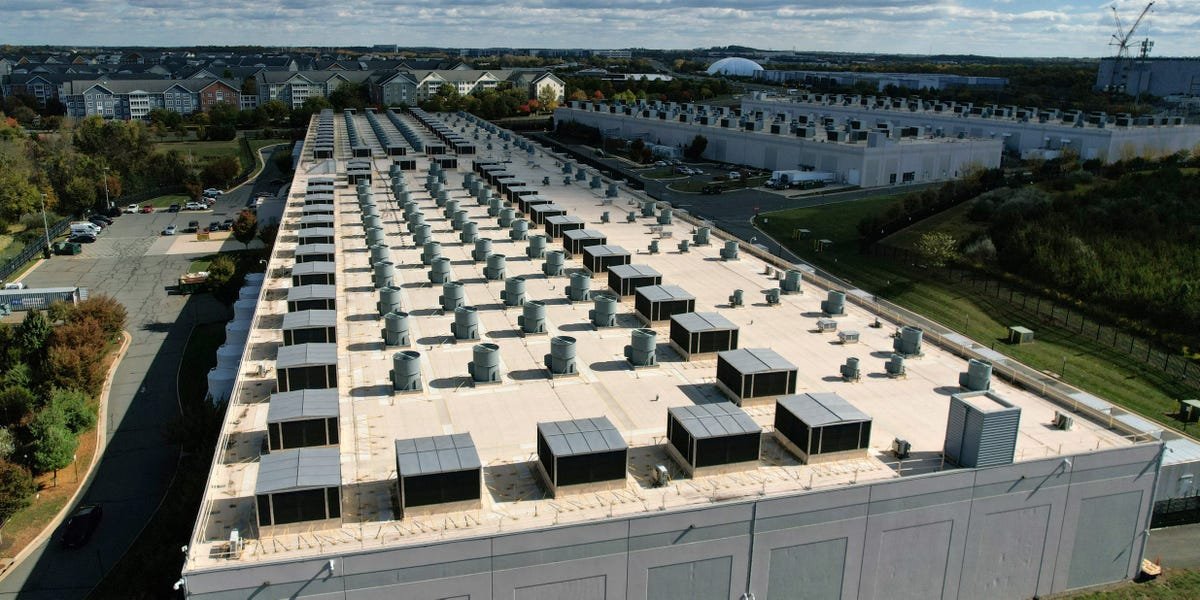
Watchdog-sounds-the-alarm-that-PJMs-approval-of-data-centers.jpeg

Watchdog sounds the alarm that PJM’s approval of data centers could leave other customers in the dark

The nation’s largest grid operator is facing a choice — between serving more data centers or keeping the lights on for all its existing customers.

In a complaint filed on November 25 with the Federal Energy Regulatory Commission, Monitoring Analytics, LLC, an independent market monitor for PJM, requested that the regulator mandate that the energy wholesaler only add large data centers to its system if all customers can be reliably served.

“PJM is currently proposing to allow the interconnection of large new data center loads that it cannot serve reliably and that will require load curtailments (black outs) of the data centers or of other customers at times,” the complaint read.

“That result is not consistent with the basic responsibility of PJM to maintain a reliable grid and is therefore not just and reasonable,” the complaint added.

PJM serves over 65 million people, including households and other consumers, across all or parts of 13 states and the District of Columbia. While it is not a utility provider, it helps move electricity across a service area of about 369,000 square miles.

According to the complaint, large data centers are responsible for higher transmission costs, as well as energy and capacity prices. Monitoring Analytics added that existing and expected data center loads already increased PJM’s capacity revenues in its last two capacity auctions by $16.6 billion, and the figure would only “continue to grow.”

The complaint also described a “Critical Issues” meeting among PJM’s Board of Managers to address the issue of data centers, but the board ultimately could not come to an agreement since “most stakeholders simply assume that PJM must agree to add large loads to the system.”

The purpose of the complaint, wrote Monitoring Analytics, is to make the board’s job “significantly more manageable” if a regulator could clarify that PJM does have the authority to “require that the loads can be served reliably before allowing the loads to be added to the system.”

A spokesperson of PJM told Business Insider that the company is still “going through the complaint” and would not comment at this time. The spokesperson added that the Board of Managers is “expected to act on the large load issues raised” in the meeting and “should provide an indication of its next steps over the next few weeks.”

Large data centers have been driving up utility costs nationwide, particularly in states like Virginia, where the “data center alley” is located. The North American Electric Reliability Corporation wrote in a November report that data centers are one of the leading causes of a rise in energy demand this winter, which increases the risk of blackouts.

The Trump administration plans to invest $500 billion to build AI infrastructure in collaboration with OpenAI, Oracle, and Softbank. OpenAI CEO Sam Altman told the White House Office of Science and Technology Policy in a letter in October that the US should add 100 gigawatts of new power capacity annually to stay competitive in the AI race.


Source link