

Matthew Loh Headshot

The US has less than 1 month left of its THAAD and PrSM missile stockpiles amid Iran fight: analysts

US stockpiles of advanced air defense interceptors and ground-attack missiles will run dry in weeks if the fighting pace with Iran continues, three analysts have warned.

Their commentary, published on Tuesday by the UK-based think tank Royal United Services Institute, indicated that the US would have depleted its Terminal High Altitude Area Defense, or THAAD, interceptors by April 17.

Munitions stockpiles for its Army Tactical Missile Systems and Precision Strike Missile, or ATACMS and PrSM, would run out more quickly, by April 12, they said.

The three analysts — independent researcher MacDonald Amoah and The Payne Institute of Public Policy’s Morgan D. Bazilian and Lt. Col. Jahara Matisek — projected a more dire situation for Israel’s Arrow 2 and Arrow 3 anti-ballistic missile stockpiles. Those would last only until Friday, they estimated.

“While the war could proceed with other munitions, this implies accepting greater risk for aircraft and tolerating more missile and drone ‘leakers’ damaging forces and infrastructure,” the analysis said.

Such stockpiles have long been a concern for the US, with fears that depleting them would undermine the Pentagon’s ability to maintain deterrence in other theaters, such as the Indo-Pacific.

The THAAD is considered one of the best missile defense systems in the world, with the touted rare ability to intercept long-range ballistic missiles and other threats inside Earth’s atmosphere.

Two to three of these US-operated batteries are believed to be in the Middle East, out of a total of five known to be deployed outside the continental US. Their interceptors can cost up to $15 million each.

Meanwhile, the ATACMS and the PrSM are precise, ground-launched missiles for striking other ground targets more than 180 miles away.

The PrSM is a newer munition, intended to eventually replace ATACMS, and made its combat debut in the Iran war. Defense Department records show that the US has manufactured at least 328 of these missiles in the last two years, with another 124 planned for this year.

“Our analysis shows that the coalition can continue fighting Iran, but with increased risk to forces in-theatre,” the analysts wrote. “The bigger risk, however, is what continued fighting against Iran does to deterrence and defence elsewhere.”

The Pentagon did not immediately respond to a request for comment sent outside regular business hours by Business Insider.

Replacing 11,000 munitions

Overall, the researchers said they tracked the US and its allies in the Middle East expending 11,294 munitions in the initial 16 days of the war. Roughly 5,000 of these — both for offensive strikes and air defense — were fired in the first four days of the conflict, they said.

When it comes to air defense, Iran’s retaliatory drone and missile attacks have since dropped sharply. After the war’s first four days, Gen. Dan Caine, the chairman of the Joint Chiefs of Staff, said ballistic missile launches and drone attacks plunged 86% and 73%, respectively.

The researchers said they tracked a daily average of 33 Iranian missile attacks and 94 drone strikes after the initial drop. And defeating one of these threats can take multiple munitions.

“Given that Iran has damaged at least a dozen US and allied radars and satellite terminals, the efficiency of interception decreases; using 10 or 11 interceptors for one missile or 8 Patriot missiles for one drone becomes unsustainable,” the researchers wrote.

They especially warned of challenges the US faces in its defense industrial base and rare-metal supply when replenishing those stocks. If the US wants to do so at speed, the total bill so far is likely to reach $50 billion, they said.

As an example, the trio estimated that the US fired more than 500 Tomahawk missiles against Iran, saying they would take “at least five years” to replace.

Meanwhile, restocking the roughly half a million 20mm rounds fired from air defense systems during the war also requires about 8,800 pounds of tungsten, they added. China is known to control over 80% of the global supply of the metal.

Besides recommending that the US invest heavily in its industrial base, the researchers urged building a “patchwork shield” by layering cheaper and more advanced air defenses that can be mixed and matched on the fly.

“Command of the commons remains necessary, but Epic Fury demonstrates it is increasingly insufficient without ‘Command of the Reload,'” they wrote.


Source link

I-never-left-Travis-Kalanick-launches-new-company-Atoms.jpeg

‘I never left’: Travis Kalanick launches new company Atoms

The former Uber CEO is venturing into robotics.

Travis Kalanick announced that Atoms is out of stealth mode and expanding beyond food delivery infrastructure into industries such as food service, mining, and transportation.

“When I told my friends, family, and colleagues about my plans for what was next, they were really excited that I was ‘coming back,'” Kalanick wrote on the website for the new venture.

“The thing is, I never left.”

In an interview on “TBPN” on Friday, Kalanick told show hosts John Coogan and Jordi Hays that he will be folding his ghost-kitchen startup CloudKitchens into the new venture, a detail that is also mentioned on Atoms’ website.

Atoms’ webpage says the company plans to build a “wheelbase for robots,” a platform designed to power specialized machines rather than humanoid robots. Kalanick said on “TBPN” that the company will focus on practical industrial systems instead of humanlike designs, and that the venture was just renamed as “Atoms” from “City Storage Systems” today.

“We’ve been in stealth mode for eight years,” said Kalanick. “Employees were not allowed to put the name of the company on their LinkedIn. We have thousands of employees.”

“Humanoids have their place, but there’s a lot of room for specialized robots that do things in an efficient, sort of industrial-scale kind of way, which is sort of where we play,” he added.

According to Kalanick, Atoms is close to acquiring Pronto, an autonomous vehicle startup focused on industrial and mining sites that was founded by his former Uber colleague, Anthony Levandowski.

Uber didn’t immediately respond to a request for comment.


Source link

We-moved-our-family-of-4-from-the-US-to.jpeg

We moved our family of 4 from the US to Spain. Looking back, there are 5 things I really wish we’d done before we left.

When my husband and I decided to move our four-person family from the US to Spain, we had roughly two semesters of college Spanish between us and zero experience living abroad.

We didn’t let that stop us, though. Beginning in March 2025, we researched obsessively, read books, made spreadsheets, and put together lists of pros and cons. The more research we did, the more confident we became that Spain was the correct place for our family.

Five months later, we packed up our lives and moved our 6- and 9-year-old sons from Northford, Connecticut, to Las Rozas de Madrid, a suburb northwest of the Spanish capital.

Despite our extensive preparation, lessons awaited us. After all, there’s so much to consider while moving abroad (especially with kids), and slipups are unavoidable.

That said, here are five mistakes I wish I’d avoided when my family moved.

I wish I’d started building my community abroad before we left

Between selling our home in Connecticut, finding a place to live in Spain, and figuring out where our sons would enroll in school, I deprioritized my new social life.

I assumed we’d naturally meet people once we got here, and we eventually did. But those first few months were lonely.

We arrived in August, a month before my sons’ school year started, and many locals were still away on summer trips. Once school started, it became easier to connect with other families. I also joined a few WhatsApp groups recommended to me by other expats.

I’m still very much in the early stages of building a network here. If I were doing the move over, I’d join related regional and professional groups, connect with families in our area, and start building relationships before I even left the US.

Having even one friend waiting for me in Spain would’ve made a huge difference.

My husband and I didn’t ask the right questions about our sons’ school curricula


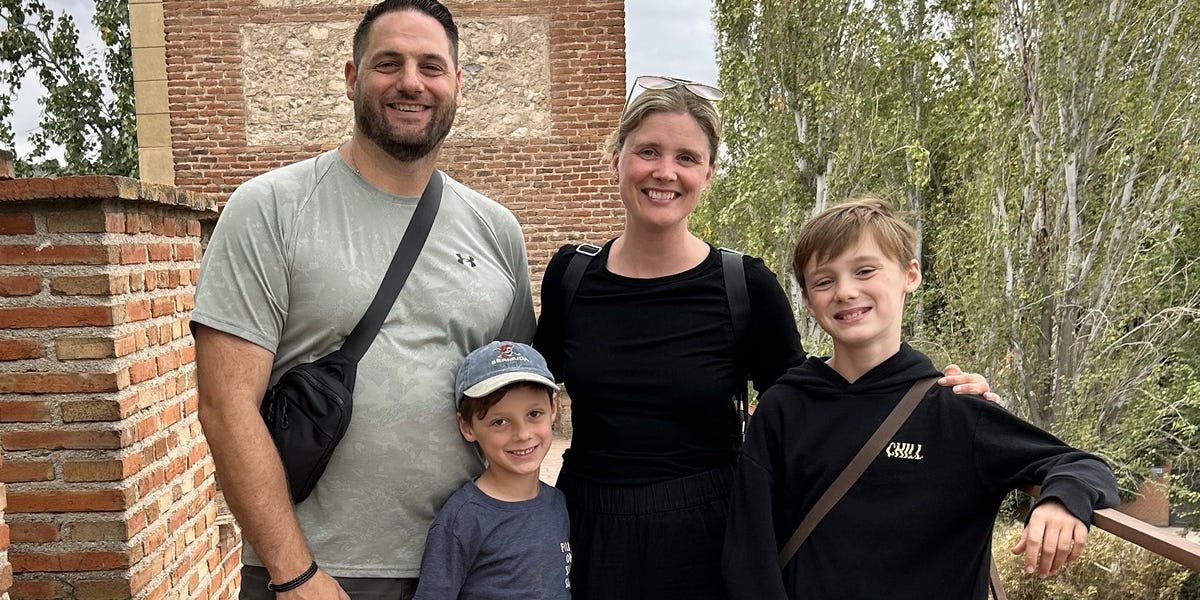
Rebecca Cretella and her family in Spain

Both of my sons are enrolled in an international school in Spain.

Rebecca Cretella


My husband and I planned to start our boys in an international school to ease their transition into a new country and language, with the goal of eventually moving them into a local Spanish school once they were fluent.

We selected an international private school that follows an International Baccalaureate (IB) curriculum with Spanish language support. It seemed like the perfect fit — until we realized we hadn’t asked the right questions.

We failed to realize that our boys, who didn’t arrive speaking Spanish, would be learning alongside native speakers rather than building introductory skills.

They’re getting an incredible education in Spain, but it’s not the foundational language curriculum we expected. We now supplement school with online Spanish tutoring twice a week to fill the gap.

To other parents moving their school-age kids abroad to Spain, I’d recommend asking specifically about language use and requesting sample lesson plans before enrolling to see what language support looks like in practice.

Translating important documents into the local language would’ve been extremely helpful

Four months after moving, I had to undergo emergency surgery. I felt completely unprepared as I relied on Google Translate and my husband’s elementary Spanish language skills to communicate with staff.

We got through it, but “getting through it” isn’t the same as feeling safe, understood, and informed.

The scariest moment in the ER was right before I went under anesthesia. I was crying because I couldn’t understand what the professionals were saying, couldn’t communicate my allergies or medical history, and didn’t know what was about to happen.

Luckily, the staff took good care of me, but the experience was harder and more frightening than it needed to be.

Before I left the US, I should have saved a translated medical profile with my allergies, medications, and past surgeries on my phone.

I also should’ve researched how to access medical translation services, so that if something unexpected happens, I wouldn’t have to figure it out in the middle of a crisis.

We didn’t know that we couldn’t rent a car without a special driving permit


Rebecca Cretella and her husband in Spain

Before moving to Spain, my husband and I had never lived abroad.

Rebecca Cretella


Las Rozas de Madrid is well-connected, so my family doesn’t own a car here. When we went to rent one for a holiday trip to Cádiz, we assumed we could do so using our US driver’s licenses, but we were wrong.

Without an International Driving Permit, renting a car was off the table. We made the best of the situation, but we were restricted in what we could see and do in Cádiz.

I regret not getting an International Driving Permit before leaving the US. It’s easy and costs $20.

Canceling our US numbers created a logistical nightmare

My husband and I both canceled our US phone numbers when we left the country, thinking we’d just use Spanish numbers instead. It was a big mistake.

Accessing our US banks and some key services required us to complete text verifications with our US numbers. So, we’ve gotten locked out of accounts, struggled with two-factor authentication, and spent hours on international calls trying to fix it.

Rather than canceling my number, I wish I’d ported it, which would’ve let me move it to an online service while keeping my number, to save us endless headaches.

Even with all the mistakes we’ve made, I’m glad my family made the move

Six months into our new life in Spain, one thing is certain: I’m so grateful for this journey.

Seeing my kids build new friendships, learn a new language, explore new places, try new foods, and gain confidence as their world expands has made every misstep worth it.

Now, we look back on them as part of our story.


Source link

I-got-the-perfect-job-in-my-field-after-graduating.jpeg

I got the ‘perfect job’ in my field after graduating. Two years later, I left it all behind and moved to Tokyo.

After four years of coursework, practicums, and part-time jobs, graduating felt like a huge accomplishment. I finally had room to breathe. Then fall approached, and it was time to get a “real job”.

I earned my bachelor’s degree in social work, picked up ESL teaching certifications along the way, and assumed I would either go straight into the field or head to teacher’s college.

It felt like the responsible choice — one that made sense to my family, to my need for stability, and to the unspoken expectation that, after graduation, you pick a path and stay on it.

That summer, I came across a college instructor position I was technically qualified for, so I applied, interviewed, and overcame some serious impostor syndrome. By September, I was teaching my first college-level courses from home.

At first, I felt great. The hours were good, my students were kind, and my family was proud of me. I was even teaching future community-service workers.

On paper, it was a dream job. It felt grown-up, fit my background, and seemed like the right thing to do. Over time, though, that feeling faded.

I wasn’t ready to settle down, and I could feel it


Womam smiling with flowers, diploma

After graduating, I got a job in my field as I felt I was supposed to.

Alessa Hickman


Between life changes, teaching burnout, and a growing disconnect from my passions, I felt stuck.

I’ve always been creatively inclined, whether that meant writing, making videos, cooking, or creating digital resources in my free time.

Instead, many of my nights were spent prepping lessons, grading assignments, and reading essays, leaving little room for the hobbies that filled me up.

Gradually, the work took a toll on me, but the expectation that a “good” job is one you stick with for years made leaving seem like breaking the rules.

In my early 20s, I felt boxed into this pipeline that didn’t suit me, and I didn’t want to follow a version of success that didn’t feel sustainable.

I’m entrepreneurial by nature, constantly chasing new ideas, certifications, and ways to apply them. So when I started exploring what else I could do with my skill set, freelance writing made the most sense.

With my husband’s support, I decided to leave teaching and pursue freelancing full-time — a move that raised quite a few eyebrows.

My craving for something radically different pushed me to leave my job and my country


Woman smiling with drum arcade games

I fell in love with Japan when I first visited.

Alessa Hickman


Around the time my teaching chapter closed, I learned about Japan’s Working Holiday Visa program. My husband and I first visited Japan in early 2024 and instantly fell in love with the country.

Back in Ontario, that feeling was hard to ignore. We were renting an apartment with a lease ending in October, and after spending my entire life in my hometown, staying felt more limiting than comfortable.

Between the rising cost of living and a sense that I had outgrown my routines, I wanted to explore something new.


Aerial view of city in Japan during daytime

I’ve enjoyed building a life in Tokyo.

Alessa Hickman


We applied for the visa, were approved, and sold most of our belongings as our move-out date approached. In December 2025, we flew to Tokyo and rang in the new year halfway across the world.

Living here has been incredible. Learning Japanese, navigating a new culture, and building a life in Tokyo have been exactly what I needed. And yes — the food’s been amazing, too.

Moving abroad and changing paths didn’t mean abandoning my education or values. Instead, it meant reframing them.

Read more stories about moving somewhere new

My definition of success looks different now


Woman smiling near koi pond

I’ve learned that life after college doesn’t have to be linear.

Alessa Hickman


I’m no longer in a classroom, but my background in social work and teaching continues to shape the work I do.

I create and edit content that’s rooted in helping others, and I’m lucky enough to write about my life and experiences abroad.

When I told people I was quitting teaching, and later that I was moving to Japan, it was seen as somewhat unconventional. My husband even left his stable job to come here.

However, the move opened many more doors than it closed. Living in Tokyo has brought new experiences, stories, and opportunities I would’ve never had otherwise.

I’ve learned that postgrad life doesn’t have to be linear — and maybe it shouldn’t be. For some people, stability is the right choice. But for others, taking a detour can lead to growth you’d never find by staying put.

For me, choosing uncertainty meant choosing myself.

I don’t know what my life will look like in two or five years from now, but I do know that I’m building it on my own terms. That feels like a pretty good place to start.


Source link

Im-a-native-Floridian-who-left-after-60-years-The.jpeg

I’m a native Floridian who left after 60 years. The high prices, traffic, and bad weather made it unlivable.

This as-told-to essay is based on a conversation with Kimberly Jones, a 60-year-old native Floridian who moved to North Carolina in 2025. The conversation has been edited for length and clarity.

I was born and raised in Miami and spent my entire life living in South Florida. But last year, my husband and I moved to North Carolina, and it wasn’t an easy decision.

Our reasons for moving were multifaceted. A major factor was affordability; the cost of living in Florida had gotten out of control. Prices increased for everything — homeowners’ and auto insurance, and even for everyday expenses like groceries and eating out. Those costs felt particularly high in South Florida compared with other parts of the state.

Another reason was that South Florida feels overly developed. If there’s a corner available, they’ll build a high-rise on it. It’s turned into a congested, expensive city. I used to spend 2.5 hours a day commuting to and from work.

Beyond affordability and congestion, my husband and I were also looking forward to a slower pace of life.

My children are still in Florida, along with the rest of my family, my friends, and the life I’d always known. For us to leave, it was a big deal.

I hardly recognize Florida anymore


A sunset over buildings in Miami, Florida, with cranes over new high-rise buildings under construction.

New high-rise buildings under construction in Miami.

Bilanol/Getty Images


South Florida is nothing like what it used to be.

When I passed another cluster of cranes and new buildings going up, I would always think: who’s living in all of these places, especially at these prices? It’s not the people who actually keep the city running. Not the teachers, the grocery store workers, or the hospitality workers.

These days, even young adults with a college degree and a decent job are having a hard time affording to live here unless they have a partner to help pay half the bills.

My kids are single and already out of college. My daughter works two jobs to keep up with expenses, and my son also has a secondary income.

My daughter managed to buy a condo a few years ago, when prices were lower, and interest rates were still low. But my son has little chance of buying anytime soon; he’ll be renting for the near future, like most of his friends — most of my friends talk about the same thing with their kids.


Construction workers building a mansion on Miami Beach.

Construction workers building a mansion on Miami Beach.

Miami Herald/TNS


I grew up in Florida, so seeing what’s happened is surreal. It’s just sad to watch that kind of change. Buildings just keep going up and up; they’re even trying to push farther into the Everglades. It feels like they’re displacing wildlife and disrupting the ecosystem.

And then there’s the question of infrastructure — what are they doing to support all of this growth?

My quality of life has improved since moving to North Carolina

In January and February, there’s no better place to be than South Florida. But the other months of the year, the heat and the humidity were just brutal. You couldn’t leave your house, and your AC never shut off.

We wanted better weather, but my husband and I didn’t want to go somewhere far, like the Northeast. Many Floridian transplants are moving to Southern states like North Carolina, South Carolina, Georgia, and Tennessee.

We chose to move to North Carolina.


A woman holds a dog as she sits on a boat.

Jones and her dogs in the family boat on their lake, next to their house.

Courtesy of Kimberly Jones


My husband retired a few years ago, and I was able to transition to remote work. We live in a small rural town about an hour from Charlotte. We love its slower pace of life and the fact that people are very nice up here.

My husband and I custom-built a lakefront home on 1.5 acres of land we bought in the town 20 years ago. There’s no way we could have afforded this quality of a home in Florida.


A woman and a man pose in front of a backdrop at a concert.

Jones and her husband at a concert in North Carolina.

Courtest of Kimebrly Jones


Living in North Carolina does have its give-and-takes. For one, there’s a state income tax, which Florida doesn’t have. Still, sales tax is pretty much the same in both states, and overall, the cost of everything else here is much lower than in Florida. We’ve been saving money on home insurance. Even grocery stores and restaurants are more affordable.

My quality of life — my stress level, everything — has improved tremendously just from being out of what felt like a rat race.

A lot of my friends have already left Florida, and the ones who haven’t want to, but they’re stuck for different reasons, like owning a business. I think my husband and I are really lucky our timing worked out.


Source link