
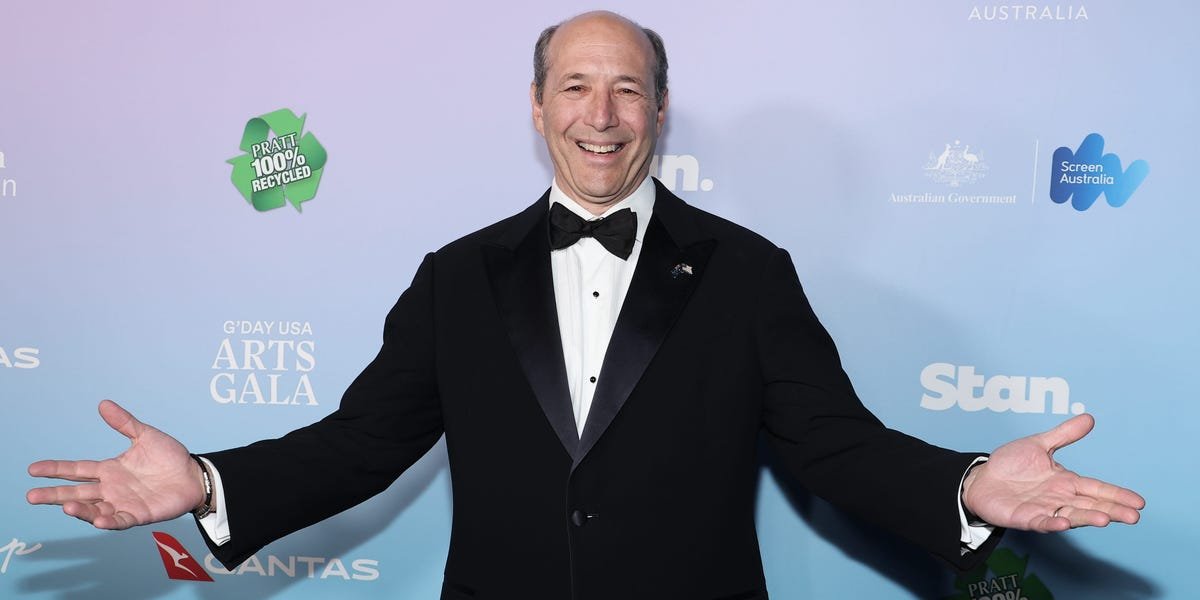
Anthropics-top-lawyer-says-AI-will-kill-the-legal-professions.jpeg

Anthropic’s top lawyer says AI will kill the legal profession’s dreaded billable hour

The billable hour’s time is approaching midnight, according to Anthropic’s top lawyer.

“I don’t think the billable hour is the solution, and we’ve known it for a long time,” Jeff Bleich, the AI company’s general counsel, said Thursday.

Speaking at the American Bar Association’s White Collar Crime Institute in San Diego, Bleich said that artificial intelligence tools are eliminating the need for companies to hire armies of lawyers to do lucrative yet “tedious” work.

“Now we’ve got a technology that’s going to eliminate the sorts of things that allow people to become wealthy off of tedious work,” Bleich said on the panel, alongside top lawyers at Google, IBM, and Liberty Mutual. “That was not what lawyers are trained to do, and not what we ultimately look to lawyers for.”

The much-maligned billable hour is the standard method that law firms use to bill their clients.

Attorneys track the work done for each client, often in six-minute increments, tally them up, and charge their clients accordingly.

While the billable hour has been useful to help companies and other clients understand what they are paying lawyers for, it has also “created a wedge,” Bleich said.

Under the current system, “the interests of firms are at odds with the interests of their clients,” he said. Companies want lawyers to resolve problems quickly, but law firms get paid more when the work takes longer.

“Clients want you to solve the problem as efficiently as possible and with as little drama as possible,” Bleich said. “And if you’re a company, the bigger the case gets, and the more dramatic it gets, and the more complicated it gets, and the more work that has to be done — the more lucrative it is.”

The other panelists largely agreed with Bleich’s remarks.

“The value is no longer you putting in time,” said Damon Hart, the top lawyer at Liberty Mutual. “The value is your strategy, your results.”

Anne Robinson, IBM’s general counsel, told the audience that she’s open to working with them to figure out more creative billing methods.

“I’m open to firms coming and saying, ‘I’d really like to work with you on this matter or this type of work, I get that the billable hour model is not one of aligned incentives, and so let’s sit down and talk about what you expect as far as outcomes and how we can both get there in a way that reflects your pressures and your priorities,'” Robinson said.

Bleich said he still values the work of outside law firms, but wants them to find an alternative to the billable hour that works for everyone.

“We’re not going to sort of cheap out and starve you,” Bleich said. “On the other hand, you have to have an economic model that works. And the firms that adapt to that faster and better will be leapfrogging other firms, because they’ll be more attractive to work with.”

Bleich’s comments come at a critical moment for Anthropic, which sued federal agencies this week after the Trump administration effectively blacklisted it following the collapse of contract negotiations with the Department of Defense.

In the lawsuit, Anthropic is represented by WilmerHale, one of the law firms that Trump targeted last year with an executive order that was quickly blocked by a federal judge.

“I like firms that show some spine,” Bleich said following the panel, when asked about using law firms that fought back against Trump’s executive orders targeting them. He declined to comment on the lawsuit itself.

WilmerHale is distinguished in another way: Reginald Heber Smith, who in the early 20th century managed the Big Law firm — then called Hale and Dorr — is widely credited with inventing the billable hour.




Source link

Melia Russell smiles

Docusign’s former CEO took a risk jumping into an older corner of legal tech. The numbers suggest it’s working.

For years, the software that companies use to draft, sign, and store contracts was legal tech’s center of gravity. Then ChatGPT arrived.

Budgets and attention snapped to agents and copilots, and legal pundits started declaring the contract software category a ticking time bomb.

Ironclad, one of the contract-lifecycle management (CLM) companies that rode the boom, says the obituary is premature.

The company told Business Insider it has crossed $200 million in annual recurring revenue, up from $150 million last May, and its customers include OpenAI, Salesforce, L’Oreal, and Mastercard. Founded in 2014, Ironclad has raised $333 million from investors including Sequoia Capital, Accel, and Bond.

“I mean, not surprisingly, we’re pretty bullish on CLM,” Ironclad CEO Daniel Springer said on a call.

He’s swaggering in a moment when the category is routinely declared dead. Springer bet his career on it. Early last year, he was a free agent, having stepped down as CEO of Docusign in 2022. He said he spoke to 40 companies before taking the Ironclad job in April. Since then, Springer’s been recruiting heavily, pulling in chief technology officer Sunita Verma, who spent 17 years at Google, and longtime Microsoft engineer Herman Man as Ironclad’s new chief product officer.

Springer said he’s heard the “CLM is dead” debate so many times that he compares it to the endless calls for email’s demise. Ironclad’s view is that the need for companies to contract with each other isn’t going away. What is changing, Verma told Business Insider, is how the work gets done: away from rigid workflow software and toward agentic systems that can do chunks of work on their own.

That shift has turned contract lifecycle management into a high-stakes catch-up game. The same platforms that once won clients by organizing contracts now have to show they can automate what legal teams do inside them. In November, Ironclad released a fleet of virtual assistants that it said can handle tasks such as intake, negotiation, and extracting information buried in contracts. Springer said a third of recent new customers also bought its agentic add-on, Jurist.

In that world, Ironclad isn’t just competing with other CLM vendors like Agiloft and Sirion. It’s facing a swarm of startups built on large language models, including Ivo and Spellbook, that promise to handle pieces of contract review. Even the foundational model makers are moving closer to legal workflows. OpenAI has publicly written about building a contract review tool for its own teams. More recently, Anthropic rolled out a legal plug-in that it says can speed up in-house tasks.

Ironclad eyes dealmaking

Springer said Ironclad is open to doing deals this year as it tries to capture more of the market. Some close competitors are for sale, he said, and he’s looked and passed. He added that he isn’t eager to buy another CLM platform, arguing that many older products “aren’t the platforms of the future.”

Instead, he said Ironclad would consider acquisitions that bring a crack team in-house, especially technical talent building something original that might struggle to break into large enterprise accounts on its own. Industry watchers expect more consolidation this year as buyers tire of single-use tools, and more founders start looking for distribution (or a soft landing) inside larger platforms.

Even so, Springer doesn’t think the CLM category is done spawning new entrants. He expects founders will keep building contract software — even if they try to dress it up in new language for the AI era.

“Maybe they won’t call themselves CLM,” he said. “But I will bet you dollars to doughnuts they will call themselves CLM, because that’s what the customer knows.”

Have a tip? Contact this reporter via email at mrussell@businessinsider.com or Signal at @MeliaRussell.01. Use a personal email address and a non-work device; here’s our guide to sharing information securely.


Source link

Melia Russell smiles

Harvey makes a big chief product officer hire as legal tech competition heats up

Harvey, the $8 billion legal software startup, is becoming a default vendor in Big Law. Now, with rival startups nipping at its heels and AI model providers moving closer to legal workflows, Harvey is bringing in a new executive to help defend its lead.

The company tells Business Insider it has hired Anique Drumright as its first chief product officer. In this role, she’ll shape what Harvey builds next and how quickly it can ship. Drumright has held roles at Uber, TripActions, Loom, and, most recently, HR software startup Rippling, where she led the company’s push into IT management software.

“Her slope of learning is very high,” said Winston Weinberg, Harvey’s chief executive. He described sending Drumright a lengthy Google Doc on the state of law firm technology and the day-to-day mechanics of legal work. She came back quickly with “really good product ideas,” he said.

The C-suite hire comes at a critical moment for Harvey — and for legal tech more broadly. Law firms are pouring money into new software meant to help lawyers work faster and save costs. Clients are driving much of that spend. After seeing chatbots and virtual assistants transform their own operations, they now expect the same efficiency from outside counsel.

Those tools don’t come cheap, and recent moves by the model providers themselves have complicated the picture. Anthropic’s release last week of a contract-review tool sent ripples through the industry and led to a major sell-off of legal-research stocks. It raised a pointed question: If a foundation model can review contracts, on top of handling tasks across the rest of the organization, how much specialized legal software will firms still pay for?

Harvey sits at the top of the heap for now. The startup has emerged as one of the best-known and best-funded players in legal tech, with licenses at over half of the 100 largest US law firms. The company said it ended last year with more than $190 million in annual recurring revenue. And job postings reviewed by Business Insider suggest it is pushing into mid-market and smaller firms, a long tail of potential growth beyond Big Law.

Earlier this week, Forbes reported that Harvey is raising a new round of funding that would value the company at $11 billion, citing unnamed people familiar with the deal. A Harvey spokesperson declined to comment on the report.

Harvey’s dominance comes with pressure. The company still needs to show lawyers its product can boost revenue, not just save hours. At the same time, competition is intensifying, from legal software startups like Legora and from OpenAI and Anthropic, the same companies whose technology powers Harvey’s platform.

Weinberg said Anthropic’s latest release doesn’t change Harvey’s product direction, but it does emphasize the need to move faster on shipping what makes the company distinctive. “Part of hiring Anique is to accelerate that,” he said.

If the next fight is adoption, Drumright has put in the reps. She’s spent years building products that ask people to change their habits.

At Uber, she worked in product and marketing as the ride-hailing giant scaled to billions of trips a year. Later, at Loom, she helped grow a product that nudged office workers away from meetings and long email chains, replacing them with screen-recorded video messages.

Drumright faces a similar challenge at Harvey, where the company has to convince reluctant lawyers, a famously luddite profession, to trade the familiar way of doing things for new tools. Those take time to use effectively.

“When something is new, even if it’s powerful, it’s still harder to do than the way you’ve always done it,” she said. Her job, she said, is to make those new capabilities feel intuitive.

Drumright is the daughter of two lawyers, and she has seen firsthand how low-tech legal work can be. She remembers her mother siting on the couch, preparing for a deposition by speaking into a tape recorder.

Drumright starts on Tuesday. Her first weeks at Harvey will be spent on a listening tour, meeting lawyers using the product and legal teams deciding whether to buy it. “Legal is a very specific domain,” she said, but the work starts with understanding how lawyers actually work today, and designing products that don’t slow them down.

Have a tip? Contact this reporter via email at mrussell@businessinsider.com or Signal at @MeliaRussell.01. Use a personal email address and a non-work device; here’s our guide to sharing information securely.


Source link

Kelsey Baker, Military and Defense Reporting Fellow

Legal experts: Veterans’ rights at stake in Kelly speech case

A new lawsuit from a Democratic senator and combat veteran at the heart of a free speech fight seeks to block the Pentagon’s intensifying crackdown.

Arizona Sen. Mark Kelly sued Defense Secretary Pete Hegseth on Monday, warning that the Pentagon’s effort to punish him “sends a chilling message” to veterans who speak out against the Trump administration.

Hegseth accused Kelly of “seditious” acts after Kelly publicly reminded US service members that they are not required to follow illegal orders. The Pentagon’s actions against Kelly have troubling implications for the political speech of millions of veterans, military law experts said.

Hegseth’s effort to muzzle a US senator “places other retirees who have spoken up potentially in jeopardy,” said Rachel VanLandingham, a professor at Southwestern Law School who is a retired Air Force JAG. “Not knowing whether or not he’s going to come after you already has a chilling effect.”

Kelly said his lawsuit is about fighting back. The Democratic lawmaker announced the federal lawsuit on Monday. His suit also named the Department of Defense, Navy Secretary John Phelan, and the Navy Department as defendants. Kelly’s video urging troops not to follow illegal orders.

Veterans who serve 20 years or more are eligible for a military pension, but those benefits can be revoked or reduced if retirees are found to have violated military law while in uniform. By contrast, Hegseth’s move seeks to punish a veteran for his speech long after serving in uniform, an approach one expert on military law called baseless.

Kelly’s lawsuit argues that using the military justice system to punish veterans’ political speech risks setting a precedent that abuses the First Amendment rights of other retired troops.


Secretary of Defense Pete Hegseth standing in front of a Department of War sign

Defense Secretary Pete Hegseth’s prosecution of Kelly has implications for veterans’ speech, legal analysts said.

DoW photo by U.S. Air Force Staff Sgt. Madelyn Keech


Legal basis in question

The lawsuit argues that nothing in the law allows the Pentagon to revisit a retirement determination based on a veteran’s speech. Such a move, the filing says, would raise “serious constitutional concerns” and leave retired service members facing a constant threat to their earned benefits.

There’s no legal basis for Hegseth’s pursuit, VanLandingham said. The defense secretary initially sought to court-martial Kelly, threatening him with the military equivalent of a criminal trial. It later opted for a lesser administrative punishment.

“The process is the punishment,” said Frank Rosenblatt, a retired Army JAG and professor at Mississippi College School of Law. “The claim against Kelly had no merit.”

“Senator Kelly’s speech is not punishable under the UCMJ,” the National Institute of Military Justice nonprofit group said in a December statement in reference to the Uniform Code of Military Justice.

The lawsuit seeks to halt actions that could reduce Kelly’s military rank and retirement pay and characterizes that effort as “unlawful.”

After filing the lawsuit, Kelly requested a temporary restraining order and a preliminary injunction from the federal court, seeking to halt the Pentagon’s actions while the case is reviewed on its merits. Both are emergency measures that ask a judge to stop government action before permanent harm occurs.

The federal government has been increasingly pushing cases important to the Trump administration onto a “rocket docket,” Rosenblatt said, accelerating litigation toward higher courts. If the judge assigned to the case, US District Judge Richard Leon, issues a ruling the government doesn’t like, “this could move very quickly to the DC Circuit and potentially the Supreme Court.”

Leon has previously ruled against the military’s authority over retirees.

“I am not concluding today that Congress could never authorize the court-martial of some military retirees,” Leon wrote in a 2019 memorandum opinion that rejected the government’s argument that military jurisdiction over all retirees was necessary to maintain good order and discipline of its active force. The judge noted he had not seen a clear argument for “why the exercise of such jurisdiction over all military retirees is necessary.”

In a post on X last week, Hegseth called Kelly’s video with five other Democratic lawmakers “reckless and seditious” and said it was “clearly intended to undermine good order and military discipline.”

The military justice provisions that Hegseth accused Kelly of violating — Articles 133 and 134 of the Uniform Code of Military Justice — are not explicitly tied to sedition and can cover a wide range of alleged misconduct.

Kelly’s lawsuit argues that allowing the executive branch to punish a member of Congress for speech is a threat to the Constitution and erodes congressional oversight of the armed services.

“We are aware of the litigation,” a Pentagon spokesperson said Tuesday when asked for comment on the lawsuit. “However, as a matter of policy, the Department does not comment on ongoing litigation.” That same day, Hegseth took aim at Kelly’s military rank in an X post: “‘Captain’ Kelly knows exactly what he did, and that he will be held to account.”


Source link

Legal-tech-is-too-big-for-one-winner-says-Harveys.jpeg

Legal tech is too big for one winner, says Harvey’s CEO

The legal tech market is only just beginning, and it’s huge, says Harvey’s CEO.

Winston Weinberg said during a Reddit “Ask Me Anything” session on Wednesday that the opportunity ahead for the legal tech industry is so massive that no single company — including his — could own it.

“I don’t think a single player is going to capture all of the pretty enormous amount of value that will be created in the next 10 years in this space,” said the CEO of the $8 billion legal tech startup.

Harvey announced last week that it raised $160 million in a round led by a16z, pushing the startup’s valuation to $8 billion.

Despite being one of the most closely watched startups in the sector, Weinberg said Harvey is barely scratching the surface of who AI tools can reach.

“There are around 10 million global legal professionals, and Harvey serves just single-digit percentage points of them,” he said.

He also said the legal tech sector represents only a tiny slice of the overall legal economy. The global legal market is worth an estimated $1 trillion, but only about $30 billion of that is spent on technology today, Weinberg said.

“Long term, it seems clear that technology penetration in the legal market will grow significantly,” he said.

“If we build a great product, we hopefully capture some of that very large upside,” Weinberg said, adding that there is “clearly” room for other legal AI startups.

Weinberg said the startup needs to “earn that valuation every day.”

The share of monthly users who return daily is up 81% since the company launched in 2023, and lawyers using multiple features show engagement patterns “similar to Slack or email,” said Weinberg.

“We have a long way to go with building out a full platform of use cases for lawyers,” he added.

AI is coming for law firms

Weinberg said many legal tasks will be absorbed by technology.

“That doesn’t mean the entire job of a lawyer gets consumed; it’ll evolve,” he added.

Weinberg told Business Insider in September that AI is already reshaping the industry, creating new practice areas while reducing the size of some in-house teams.

Some law firms are rethinking their staffing models entirely, flattening their traditional pyramid structures by relying more on associates and fewer partners, he said in an interview on the sidelines of TechLaw Fest in Singapore.

Younger lawyers who grew up using AI tools may gain an edge over senior partners when it comes to fluency, speed, and adaptability, he added.

AI has become an unavoidable part of lawyers’ work. Five of the 10 largest US law firms by revenue told Business Insider in July they were already embedding AI into their workflows — including document review, legal research, and spotting compliance risks.

Investor enthusiasm has also surged alongside the transformation. Legal-tech funding reached $3.2 billion this year, according to Business Insider’s December analysis of Crunchbase data and recent deals.


Source link