My-99-year-old-grandma-taught-me-important-lessons-about-the-power.jpeg

My 99-year-old grandma taught me important lessons about the power of silence, change, and living a good life

My grandma and I spent most of our lives apart, yet she taught me a deeper way to live.

I grew up in California, while my Grandma Jackie lived in Minnesota. We saw each other only on special occasions — summer visits, my high-school graduation, and a few holidays.

Because of the distance, I got to know her through stories from my parents. Most of what I knew about my grandma came from tales of her days fishing, playing slots, and trying her luck at Pokeno.

These stories, mixed in with my own memories of her wide smile and the taste of her one-of-a-kind sweet-potato pie, cemented my connection to her. Yet when she passed away at 99, I felt guilty for not being closer to her.

During my grieving, I reflected on our relationship that flourished despite the time and miles between us. Through our scattered time together, Grandma Jackie gave me three lessons that shape how I live today.

Love doesn’t need many words


Woman smiling in chair lift wearing Minnesota sweatshirt

Although my grandma didn’t always say much, I knew she loved me.

Kiersten Brown


My grandma wasn’t much of a talker — oftentimes, she could communicate more with a smile than with words.

Whenever I visited her, her brown eyes would light up, and in her raspy voice, she would say, “Well, hi sweetie, how ya doing?”

After a few minutes of pleasantries, the conversation would end. Then we would sit together and watch “Wheel of Fortune.” Occasionally, I’d glance at her, and she’d shoot me a smile.

The same pattern played out during her yearly birthday calls, which lasted three minutes, at best. She would sing “Happy Birthday,” ask how I was doing, and end with, “Well, I’ll holla at you later.”

Interactions felt more like small talk with a coworker than chats with a loved one, and these brief interactions made me question our connection. Short conversations made me feel like we weren’t close because we didn’t have much say.

Yet one day after my grandma’s passing I was talking with my aunt who revealed that love is measured in time spend together.

My aunt mentioned that Grandma Jackie often asked about me and prayed for me nightly. Although we didn’t speak often and saw each other less, she was always thinking of me.

This insight made me realize that silence was more of a way of being than a reflection of our relationship. I realize now that not having much to say was a choice rooted in acceptance and love — she was content with simply having me around.

Because of her, I now focus more on appreciating someone’s presence rather than filling space with chatter.

It’s never too late to change how you live and chase life — no matter the circumstances

My grandma had an unwavering will to live and really took charge of her health at the age of 80 when the doctor’s told her that her she might not have much time left.

She quit smoking, cold turkey. She enrolled in exercise programs, walked daily laps around the house, took supplements, and focused on eating more fruits and vegetables.

More than fearing death, I believe my grandma enjoyed life too much not to fight for it. She had always been someone who loved spending time with her friends, enjoyed traveling within her own state, and considered everyone she met a friend.

When I visited my family a year ago, my grandma attended nearly every event. If she saw someone getting ready to leave, she’d ask, “Where we going?” and expected us to bring her with us. It didn’t matter whether we went to the park or out to eat; she made sure to tag along.

Every day I’m reminded that circumstances don’t have to dictate how I live, and her strength has inspired me to live life to the fullest.

Never stop doing what you enjoy


Group of women smiling outside

My grandma tried to spend time with friends and family as much as she could.

Kiersten Brown


As a music lover, she danced whenever her favorite songs came on. When she became less mobile, she would still rock her hips and sway in her chair.

She loved visiting casinos, never focusing on hitting big wins, but rather finding pleasure in simply playing. During her last few years of life, she attended virtual and in-person family bingo every Friday night. When she craved cake and ice cream, she would have some — in moderation, of course.

As time goes on and I grow older, I’m committed to following my grandma’s example. I will be dancing, hiking, and hanging out with friends for as long as I’m alive.

I’d say my grandma reached 99 for two reasons: good genes and complete dedication to living her life the best way she could. Because of her, I live with more purpose and intention.



Source link

blank journal

I hosted a $30 vision workshop to reset my life and career. Here’s how I did it in 3 steps.


Seng Kui Lim / Getty Images

The Year of the Fire Horse

A dozen or so friends clamoured around my fireplace’s mantel to grab their Dollar Store-bought journals and select a fancy gel pen. A ChatGPT-designed workshop on creating a 2026 vision for one’s life was about to begin, and two of my friends were fighting over who would get the last brown leather-bound journal.

It was a little before Lunar New Year, a holiday rooted in honoring the past while setting intentions for the future. And this year, instead of enjoying fireworks and celebrations, I hosted something much quieter. I invited my circle into my home to answer several journal prompts around career, love, fitness, and finances.

For me, January 1 comes with too much pressure; you may remember me writing about my intentionally slow start to the New Year. Lunar New Year, however, gifted me a second chance at intention. And what resulted around my dining room table was the perfect anecdote to help me game-plan my goals. By the end of the party, we walked away with clarity and focus, and identified the gaps standing in our way.

If you want to recreate this moment, here are three tips to create an atmosphere designed for reflection.

  1. First things first, here was my prompt into ChatGPT: What are some good prompts for self-reflection? I want to create a vision workshop that sets goals on faith, finances, work, love, family, and life. Can you create the interactive workshop?
  1. Then, we laid ground rules: Yes, I encouraged my friends to share the goals they had scribbled down, but I also encouraged them to keep some answers close to the vest, as some goals thrive in incubation.
  2. Lastly, I prioritized making my friends feel comfortable. There were candles lit everywhere, a basket of cheap yet cozy socks so they could kick their shoes off and relax, and don’t forget the fancy gel pens to make the journaling experience feel whimsical.

I still don’t know what 2026 will bring, but instead of creating rushed, vague resolutions, at least I had a moment to be reminded that life moves in cycles, and ambition requires vision.


Source link

After-a-breakup-I-put-my-belongings-in-storage-and.jpeg

After a breakup, I put my belongings in storage and traveled full-time for 3 years. It was the best chapter of my life.

Three and a half years ago, I stood in my New Jersey apartment, surrounded by boxes I was about to put into storage. Tears streamed down my cheeks.

I’d recently ended a two-year, live-in relationship. We loved each other deeply, but just weren’t the right fit — and although the split was a gut-wrenching decision, we both knew it was the right move.

I had just accepted a fully remote job, which allowed me to explore moving out of the New York City area — something I had been considering for about a year.

I planned to just travel for a few months before settling down somewhere, but I ended up spending the next three years as a nomad.

Although it wasn’t quite what I’d pictured when I said goodbye to the apartment I shared with my ex, it turned into one of the most important chapters of my life.

My brief stint abroad turned into a longer chapter


A shot of a building and Mexican flag in Mexico City.

My time in Mexico City taught me about my own resourcefulness and independence.

Samantha Caffrey


My post-breakup plan was to put all of my belongings into a storage unit and spend a few months in Tulum.

After that, I would travel to Miami and Los Angeles, “interviewing” both cities as candidates for a longer-term move. I was about seven months into this plan when I learned my role was going to be eliminated.

Luckily, I was able to secure freelance work, so I decided to continue my travels since I wasn’t needed in one particular place for my job.

From Tulum, I headed to Mexico City. After just a few days, I fell in love with the food, vibrancy, people, and culture. My one-week vacation turned into an almost three-month stay.

During my time in Mexico City, I explored art galleries and museums, learned some Spanish, made friends, went on dates, visited small shops, and tipped local people well.

These little moments helped me learn how adaptable I truly was. I realized I could make friends anywhere, stay disciplined with my work even while exploring a new place, safely navigate dating as a solo traveler, and be extremely resourceful.

I kept exploring. I took the nomad life slowly, spending about four or five months abroad at a time in places like Paris, Lisbon, Málaga, London, Melbourne, Miami, and Tulum.

Between travels, I’d spend a few months recharging in a sublease (or a friend’s apartment) in New York City.

I felt my confidence grow as I navigated new cities and connected with inspiring women from all over the world


The writer roaming a hallway in Versailles.

I traveled the world, from France to Mexico to Australia.

Samantha Caffrey


When traveling solo, every choice you make is yours, from where you eat to how you spend your days. I felt immensely grateful for this freedom — every day, it struck me how lucky I was to have every minuscule decision be solely my own.

That’s not to say I felt lonely, though. With each new city and country I stayed in, I was delighted by the magic of connecting with strangers.

One time, I struck up a conversation with another woman at a particularly intense yoga class in Tulum. She was visiting from Canada, and we ended up spending a whole day together.

I had another memorable experience in Europe. I had been traveling by myself for about three years at that point, and although it was incredible, I was exhausted. I felt ready to return to New York City, but I wasn’t sure I could afford to do so.

Then, one afternoon, my spirits were lifted when I found myself in a café in Paris, enjoying a chocolate-chip cookie and a latte. An older woman started chatting with me, and soon, another young woman traveling solo from Korea joined in.

We all shared stories and giggled as we sipped our coffees. As the older woman left the café, she said, “You two girls exchange numbers now, and spend time together.”

We laughed at the gentle demand, but wound up spending that evening — and the next day, too — exploring the city as a pair. I may or may not ever see her again, but she told me that if I ever visit Seoul, I’ll be welcomed with open arms.

Best of all, this time in my life helped me stay open and live in the moment


The writer standing in front of buildings in London on a sunny day.

One of the best parts of traveling was connecting with people from around the world.

Samantha Caffrey


I learned that not every place has to be a permanent home, and not every relationship has to last forever; in fact, some friendships might just last for the span of a trip.

The memories I made during this time will stick with me, though I’ve since emptied out my storage unit and settled into a one-year lease in New York City.

My nomadic chapter is closed for now, but my encounters with strangers, small moments in new cities, and solo time with myself left me changed for the better — and will surely inspire my next adventure.


Source link

levittown 1950s

Vintage photos show daily life in America’s first ’50s suburb


Bernard Hoffman/Getty Images

Updated

  • Thanks to the postwar Baby Boom and other factors, families in the ’50s began moving to the suburbs.
  • Levittown in Long Island, New York, is widely recognized as the first modern American suburb.
  • Each home looked the same — they were all built in the Cape Cod-style and cost around $7,000.

As World War II came to an end, families looked for ways to start over. Emboldened by the GI Bill’s provisions for home loans, they moved out of the cities in droves for newly developed suburban communities. 

In fact, the suburbs expanded by 47% during the 1950s, according to the Gilder Lehrman Institute of American History.

Levittown in Long Island, New York, was one of the first to introduce the idea of a pre-planned, mass-produced uniform suburban community, The New York Times reported. Families started moving there on October 1, 1947.

Though the community welcomed an influx of families, non-white prospects weren’t allowed. Notably, African Americans didn’t see the same benefits from the GI Bill, and it would take some years before racial and ethnic minorities broadly shifted to the suburbs.

Here’s what it was like to live in America’s first modern suburb in the 1950s. 

Before the 1950s, people mostly lived in cities to be close to factory jobs.


children in 1940s


Historical/Getty Images

At the time, most people lived close to the city center to work in factories, or they lived in rural communities to work on farms, according to economist Jay Zagorsky.

Everything changed in the 1950s when soldiers returned from World War II, sparking the great migration to the suburbs.


soldier returns home from war


Irving Haberman/IH Images/Getty Images

The 1950 Census found that 60% of people lived in cities, while 40% lived in the suburbs. 

Thanks to factors like the construction of highways, the development of new neighborhoods from farmland, and even safety in the event of an atomic attack, these percentages would soon shift drastically.

The GI Bill made it easier to afford a new home, prompting this transition from urban to suburban.


levittown 1950s


Newsday LLC/Getty Images

The GI Bill provided each returning soldier with benefits designed to stimulate economic growth. Each soldier was given a year of unemployment and free tuition to go to college. The military pledged to back all home loans, which allowed veterans to buy houses with little to no down payments. 

The Baby Boom started at the same time, causing many families to outgrow their city apartments.


A family of four stands in front of their house in Levittown, NY.


Joseph Scherschel/Getty Images

Shortly after WWII ended, the Baby Boom began. In 1946, 3.4 million babies were born, more than ever before, and 20% more than in 1945, per History.com. This trend continued into the ’50s.

By the end of the boom in 1964, this generation made up 40% of the country’s population.

Most historians think it was because Americans were eager to have families after having postponed marriage and childbirth because of the Great Depression and World War II.

Whatever the reason, people flocked to the suburbs to accommodate their growing families.

In response to this growing need for space, suburban communities popped up at a faster rate in the ’50s.


aerial view of suburban community

An aerial view of a suburban community.

Hulton Archive/Getty Images

During the war, factories focused on creating wartime essentials, like airplanes and barracks. In the ’50s, they refocused their efforts on building home components and automobiles using the new practices — like the assembly line — they implemented in the war,

As a result, factories were able to produce materials for homes faster than ever before.

Levittown in Long Island, New York, is widely recognized as the first modern American suburb.


levittown 1950s


Tony Linck/Getty Images

Levitt and Sons, a construction company, purchased a 7-square-mile plot of potato and onion farms in Long Island in 1947. They set out to build one of the first uniform suburban communities in the US.

People flocked to home sale events to get themselves a slice of suburbia.


home sale in levittown


Al Fenn/Getty Images

The first homes in Levittown cost new residents around $7,000, The Guardian reported. For veterans, there was no down payment.

When adjusting for inflation, a Levittown home in 1950 would be roughly $97,000 in today’s money.

Every house in Levittown was identical. The Levitt family called it “the best house in the US.”


levittown


Joseph Scherschel/Getty Images

At first, all the homes were built in the same style, and some residents even admitted to walking into the wrong house at times because they couldn’t tell them apart, according to Khan Academy, citing Kenneth T. Jackson’s “Crabgrass Frontier: The Suburbanization of the United States.”

Outdoor spaces, like backyards, became focal points.


levittown


Robert W. Kelley/Getty Images

With the growing number of children, outdoor spaces became increasingly important to the suburban neighborhood. 

Inside each home, there were four rooms, a built-in TV set, and Hi-Fi for the radio.


levittown interior


Joseph Scherschel/Getty Images

At first, they were modest homes, but most families saw their new suburban lives as luxurious. 

Most Levittown residents experienced the responsibilities of owning a home for the first time.


A man and a woman clean opposite sides of a window.

A man and a woman clean opposite sides of a window. Many homeowners experienced the responsibilities of owning a home for the first time.

Newsday LLC/Newsday via Getty Images

Many Levittown homeowners learned homeownership responsibilities, such as tending to a lawn.

The suburb helped cement the idea of the “nuclear family” in American culture.

Levittown also had seven shopping centers.


levittown suburbs


Underwood Archives/Getty Images

The shopping centers were called “village greens” and were designed to make the town more of a bustling community, per Encyclopedia.com.

The suburbs were also known for being a safe alternative to the gritty city streets.


levittown school


Joseph Scherschel/Getty Images

Since the streets in the suburban neighborhood were considered safer than those in the city, parents used to allow children to bike around by themselves, per the National Center for Safe Routes to School.

Levittown was also known as a cheaper option compared to an apartment in the city.


levittown 1950s


Bernard Hoffman/Getty Images

The mortgage on a home in Levittown was reportedly about $29 per month, while most paid $90 per month in the city. 

By comparison, the average rent in New York City in 2026 is just under $3,500, according to Zillow. The monthly cost of a 30-year mortgage on a Levittown home today would be roughly $2,000.

With all the amenities and perks, the community grew rapidly. In less than a decade, the population of Levittown reached 82,000.


levittown


Bettmann/Getty Images

The community has over 17,000 homes, making it one of the largest private housing projects in the history of the US.

As a result, Levittown became a model for other suburban communities in the US during the 1950s.


suburban community in the 1950s

A suburban community in the 1950s.

Joseph Scherschel/Getty Images

Suburban home construction boomed in the 1950s. In fact, at least 15 million units were under construction by the end of the decade, according to the Wealth Management Group.

Although suburban communities boomed in the ’50s, the shift was reserved for white Americans.


levittown family


Joseph Scherschel/Getty Images

For years, there were rules that restricted minorities from buying homes in Levittown, and even as the Civil Rights Movement was starting to take form and the rest of the country began integrating after Brown v Board of Education in 1954, Levittown remained mostly white.

Two-thirds of Levittown residents today are white, according US Census estimates.

Some of the few non-white families resisted this standard.


William Cotter's Levittown home, plastered with signs.

Some non-white residents like William Cotter and his family fought against Levittown’s whites-only standard.

Newsday LLC/Newsday RM via Getty Images

In 1952, William Cotter, a Black man, and his family, sublet a home at 26 Butternut Lane. When the lease was up, Levitt refused to renew it or sell them the home.

The refusal sparked support for the Cotters, and the family eventually purchased another home from a white homeowner.

With modern highways leading to the suburbs, men commuted into the city.


Traffic on a highway near Levittown, New York.

New highways leading to the suburbs didn’t come without traffic.

Newsday LLC/Newsday via Getty Images

The suburban boom corresponded with the expansion of interstate highways in the US, starting the modern iteration of the commute from the suburbs to the city.

In 1950, 80% of men in Levittown commuted to Manhattan for work, The Guardian reported.

During a typical day, the streets of Levittown were filled with women, as the men were mostly working in the city.


levittown women


Bettmann/Getty Images

When men left to fight in WWII, women began entering the workforce, gaining newfound independence and freedom. However, they were suddenly expected to give this up again and instead focus on childbearing and rearing.

In 1963, author Betty Friedan wrote in “The Feminine Mystique” that the suburbs “were burying women alive.” However, some believe that women’s dissatisfaction with staying home “contributed to the rebirth of the feminist movement in the 1960s,” History.com reported.

Women also got active in civic engagement.


Women and children protest in favor of new stop signs.

Women and children protest in favor of new stop signs.

Newsday LLC/Newsday RM via Getty Images

In 1959, women of Levittown, with children in hand, protested in favor of putting stop signs in an area with automobile-related deaths.

Levittown became a symbol of prosperity and anticommunism in American politics and culture.


William J. Levitt speaks with three senators.

William J. Levitt speaks with three senators.

Bettmann/Bettmann Archive/Getty Images

As American politics increasingly centered on anticommunism and Cold War tensions rose, Levittown and suburbs like it took on a symbolic meaning in American culture, representing prosperity and the “American Dream.”

Levitt was once quoted saying, “No man who owns his own house and lot can be a Communist. He has too much to do.”

In 2026, Levittown is still a sizable community with a population of about 50,000. Though it’s full of modern businesses and technology, the community still holds a legacy as a post-war suburban haven.


Source link

Im-57-and-helping-raise-my-6-grandchildren-in-a.jpeg

I’m 57 and helping raise my 6 grandchildren in a crowded multigenerational home. I thought my life would be easier by now.

I turned 57 this year. I always thought that by this point in my life, I would be taking bucket-list trips, tending a garden, and writing the novel I’ve always known was in me. Instead, my days are filled with wiping noses and every surface imaginable while keeping tabs on everything from medications to musical instruments.

My husband and I now live with our adult daughter and her six children, and because it makes the most sense, I take care of the kids, the house, the dog, and everything else while the other two adults go to work.

One day, when my daughter had to take five hours of mandatory overtime, and I was losing my cool at hour 10 of juggling meltdowns and messes, it hit me. I wasn’t the fun, easygoing, they-grow-up-so-fast-so-nothing-is-worth-getting-upset-about Grammie anymore. I had become the person holding everything together, and if nothing changed, I was going to burn out.

My busy mornings show how much I care for my grandkids

On a typical morning, I hit the ground running at 6 a.m. My daughter is able to take the first grader to the bus stop before work, so I’m “only” responsible for five kiddos most mornings.

After getting myself dressed and ready, I take the dog out and feed him, and then get my oldest grandson ready for the bus that picks him up at our door.

By then, the two preschoolers are awake, which means diaper changes and getting everyone dressed and fed. The middle schoolers need to be up, dressed in clean clothing (which is a bigger struggle than you’d think), and out the door on time. Somewhere in there, I’ll manage a cup of coffee and some sort of breakfast before we settle into the rest of our daily routine.

That’s when everything goes as it should. But when the 14-year-old misplaces his headphones, the dog gets frantic because of an early morning Amazon delivery, and the commotion wakes the toddler, it can feel like there’s no way I’ll make it through the day. Even then, the work doesn’t end when the workday does. It simply shifts into a different part of the day.

Loving my family doesn’t make the daily weight any lighter

I would take a bullet for every single member of my family. But the load is heavy, and I carry a lot of guilt for the moments I mourn the version of midlife I thought I would live.

It’s not that my daughter or my grandchildren are a burden; they’ve all been through more heartache and struggle than most people could imagine, and I’m so thankful we can provide emotional support.

But I’d be lying if I said I don’t sometimes long for the clean, quiet home I used to wake up to. My longing for that other life sometimes admittedly makes me cranky with my grandkids.

I had to change the way I showed up, or I wasn’t going to make it

A series of steps helped me change the way I show up without breaking myself down. I set an (almost) concrete bedtime for myself, completing tasks, chores, and self-care by 9 p.m. This gives me a little time to read or catch a podcast before getting to sleep at a decent hour.

The extra rest also allows me to get up a little earlier. Now, I have at least 30 minutes of quiet alone time while everyone else is still sleeping. It helps me start the day feeling grounded, rather than immediately pouring from an empty cup. I’ve experienced a huge shift in my attitude, and it seems to set the tone for everyone.

I’ve also started following some of the life advice I often give to the kids, like “Done is better than perfect.” I’m working on not holding myself to expectations I would never put on others. While I still won’t allow things to pile up until they’re unmanageable, I’m learning to be OK with leaving a load of laundry in the dryer for tomorrow.

Helping raise six grandchildren has reshaped my understanding of midlife

If there’s one thing I’ve learned in my nearly six decades on this planet, it’s that life rarely goes as planned. Letting go of dreams is tough, especially when we’re sold a picture of how midlife ought to look — but whether it defines you is your choice.

I’m choosing to embrace my current purpose and see the significance in helping to shape the hearts and minds of six amazing human beings.

This chapter of my life is messy, exhausting, noisy, and chaotic. But at the heart of it all is unconditional love, and the simple truth I carry with me is that there’s nowhere else I’d rather be.


Source link

Savannah-Guthrie-asks-for-proof-of-life-in-tearful-video.jpeg

Savannah Guthrie asks for proof of life in tearful video appeal for her mother’s return: ‘We are ready to talk’

Savannah Guthrie shared a video message on Instagram on Wednesday pleading for her mother’s safe return.

Guthrie’s mother, Nancy Guthrie, has been missing since Sunday. She was last seen at her home outside Tucson, Arizona. Officials told NBC Nightly News on Monday that they believe she was “taken out of her home against her will.”

Guthrie appeared in the video alongside her siblings, Annie and Camron, and read from a prepared statement — at one point, addressing the people who may have her mother.

“As a family, we are doing everything that we can. We are ready to talk. However, we live in a world where voices and images are easily manipulated,” Guthrie said.

“We need to know, without a doubt, that she is alive, and that you have her. We want to hear from you, and we are ready to listen. Please, reach out to us,” she said.

In the nearly four-minute-long video, Guthrie described her mother as a “kind, faithful, loyal, fiercely loving woman of goodness and light,” and a person who is “funny, spunky, and clever.”

“Our mom is our heart and our home. She is 84 years old. Her health, her heart is fragile. She lives in constant pain. She is without any medicine. She needs it to survive. She needs it not to suffer,” Guthrie added.

In the closing seconds of the video, Guthrie spoke directly to her mother.

“Everyone is looking for you, Mommy, everywhere. We will not rest. Your children will not rest until we are together again,” she said. “We speak to you every moment. And we pray without ceasing, and we rejoice in advance for the day that we hold you in our arms again. We love you, Mommy.”

Both of Guthrie’s siblings also spoke, with her sister Annie saying she and her siblings are “just normal human people who need our mom.”

“Mama, mama, if you’re listening, we need you to come home. We miss you,” she said.

Near the end of the video, Guthrie’s brother Camron addressed their mother, saying, “We love you, Mom. Stay strong.”

On Wednesday morning, the sheriff’s office told Business Insider that Nancy’s home was “equipped with several cameras,” and that detectives are trying to determine what footage is available.

The FBI is also involved in the investigation.

“The FBI is doing everything in our power to bring Nancy Guthrie home to her family,” Jon Edwards, assistant special agent in charge of the FBI’s office in Tucson, said in a statement at a press conference on Tuesday.


Source link

I-spent-years-traveling-nonstop-It-took-me-too-long.jpeg

I spent years traveling nonstop. It took me too long to admit my ‘dream life’ was actually horrible for my health.

I was living the dream — flying internationally nearly once a month for my work as a travel writer, crisscrossing the globe to cover incredible destinations.

Invitations like cruising the Norwegian coastline and then jetting off to a buzzy restaurant opening in Las Vegas were too good to refuse, even if they were happening back-to-back.

Meanwhile, the frequent long-haul flights, indulgent meals, packed itineraries, and erratic sleep schedules were quietly taking a toll on my health — I was gaining a substantial amount of weight and frequently feeling exhausted.

I just told myself that less-than-stellar health was just the price of admission for this sort of career. After all, my job consisted of bucket-list-worthy experiences, like hiking in Peru and going on safari in Kenya!

It took me several years to admit to myself that I couldn’t keep living this way.

As much as I love traveling, doing it nonstop wasn’t great for my physical or mental health


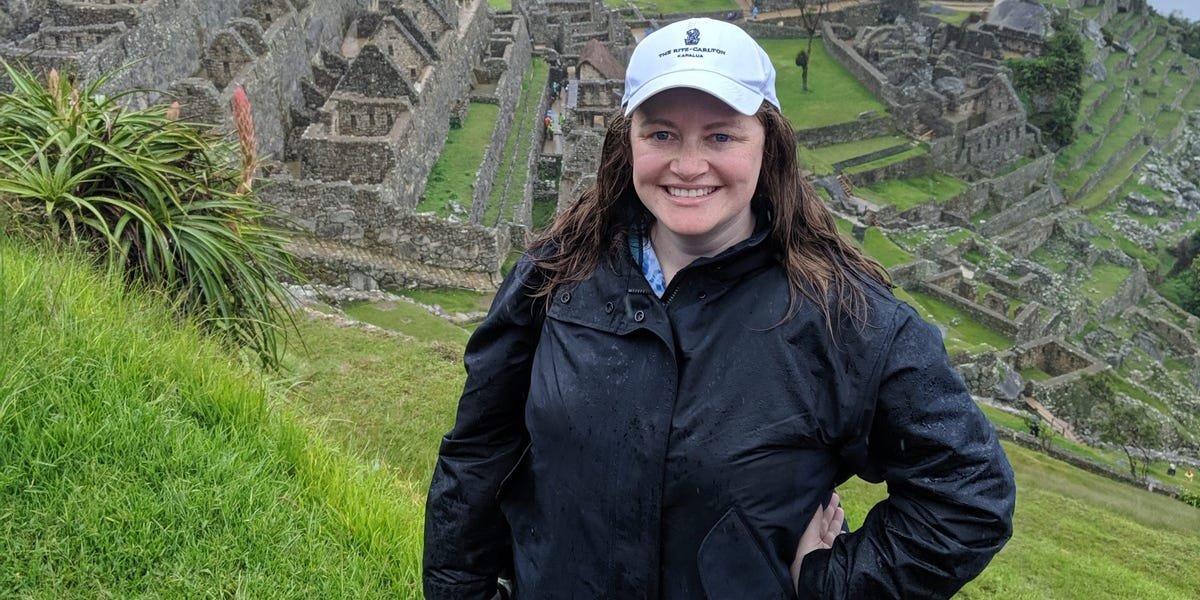
Woman smiling in front of stone relics

I love traveling, but it can be exhausting.

Meredith Bethune


In reality, the job of my dreams consisted of overnight flights where I’d get little to no rest, then hit the ground running as soon as I arrived at my destinations.

After I’d fly back home from some trips, it would take me nearly a week to recover from jet lag. My stress levels were often cranked up, dealing with flight delays, deadlines, and navigation across different states and countries.

With grueling daily schedules on the road, I rarely had time to answer emails. I’d come home to a full inbox and even fuller calendar.

The regular exposure to dry air on planes wasn’t helping my immune system, and neither was all the stress. I felt like I was constantly getting sick with colds, flus, or whatever was going around.

Meanwhile, my diet wasn’t balanced or nutritious. It largely consisted of indulgent meals on press trips, where I felt pressure to try everything so I could write about it.

Saying no felt awkward, even when I knew I’d feel better if I could set firmer boundaries.


Woman peeking out of red phone booth, smiling

I’ve been able to see many places through my work as a travel writer.

Meredith Bethune


On top of all that, I wasn’t exercising. After all, press trips run on tight schedules. I’d return to the hotel late, wake up early, sit in a van for hours between stops, and finish the day with a multicourse dinner.

Some fellow writers managed to fit in workouts, but I didn’t. It wasn’t a priority for me then.

All the travel felt isolating at times, too. I was spending most of my days with publicists, fellow writers, and guides. They were all lovely people, but not permanent fixtures in my life.

My closest friends lived far away, and I kept postponing visits because I was always either traveling or catching up from being away.

Meanwhile, my parents were getting older and needed more support.

After nearly a decade of jet-setting, by 2019, it had become undeniable that my mother’s memory problems went beyond normal aging. Finally, I felt compelled to take my health seriously.

My mother’s diagnosis felt like a wake-up call to prioritize my well-being


Woman smiling in ice hotel

Eventually, I realized I couldn’t travel so much without facing some consequences for my own health.

Meredith Bethune


By that time, my mother’s cognitive difficulties had progressed so much that she no longer seemed like herself. And though her official Alzheimer’s diagnosis came later, by then, it was just a formality. We had already known for years.

There wasn’t anything I could do to stop my mom’s Alzheimer’s from progressing, but I threw myself into researching the disease so I could know more about what the future held for her and, eventually, me.

I worried whether a similar diagnosis — one millions of Americans share — could be in the cards for me someday.

Though it’s not preventable, some studies and members of the medical community suggest that certain lifestyle changes, like being physically active and managing blood sugar and blood pressure levels, may lower one’s risk of developing some forms of the disease or delay its symptoms.

Even if I couldn’t prevent a future diagnosis, I knew finally taking care of my body and mind would be good for me. All that nonstop travel had been quietly wrecking my health, and the way I’d been living and working wasn’t sustainable.

I feel much better now that I’m traveling way less


Woman hiking grand canyon

I can’t control the future, but I can at least prioritize my health.

Meredith Bethune


It’s been over five years since I significantly cut back on travel.

I exercise almost every day and try to regularly follow a balanced diet. I’ve since lost over 50 pounds and sleep much better.

When I do go on trips, I do so with more intention and a lot of focus on the Northeast, close to home.

I probably take an overnight or weekend trip within driving distance about every six weeks. I still fly for work once or twice a year, but I’m no longer constantly on the road, and my body feels the difference.

When I go on bigger trips, I actually feel like I have more opportunities than I did before. Recently, I even hiked the Grand Canyon rim-to-rim, which I would never have attempted back when I was out of shape and constantly feeling drained.

Giving up on my dream job wasn’t easy, but I want to feel good and stay in great shape for as long as I can — even if that means finding peace at home instead of abroad.


Source link

Shuby headshot

Marc Benioff says a documentary about Character.AI’s effects on children was ‘the worst thing I’ve ever seen in my life’

Marc Benioff shared what he thinks is the darkest aspect of AI.

On an episode of the “TBPN” show streamed on Wednesday, the Salesforce CEO said that he couldn’t “believe what he was watching” when he saw a “60 Minutes” documentary on chatbot-building startup Character.AI and its impact on children.

“We don’t know how these models work. And to see how it was working with these children, and then the kids ended up taking their lives,” he said, “That’s the worst thing I’ve ever seen in my life.”

Character.AI allows users to build custom chatbots that can emulate the behaviour of a close friend or romantic partner. The startup did not immediately respond to Business Insider’s request for comment about Benioff’s remarks.

“Tech companies hate regulation. They hate it,” Benioff said. “Except for one regulation they love: Section 230. Which means that those companies are not held accountable for those suicides.”

Section 230 of the 1996 US Communications Decency Act protects social media companies from liability for user-generated content while also letting them moderate posts. Tech giants use Section 230 as a common defense strategy, saying they are just platforms and not responsible for what users say and do on them.

“Step one is let’s just hold people accountable,” he said. “Let’s reshape, reform, revise Section 230, and let’s try to save as many lives as we can by doing that.”

Executives, including Meta’s Mark Zuckerberg and former Twitter CEO Jack Dorsey, have repeatedly defended the regulation in Congress, asking for it to be expanded rather than removed.

Last week, Google and Character.AI agreed to settle multiple lawsuits from families whose teenagers died by suicide or hurt themselves after interacting with Character.AI’s chatbots.

These negotiations are among the first settlements in lawsuits that accuse AI tools of contributing to mental health crises and suicides among teenagers. OpenAI and Meta are facing similar lawsuits as they, along with others, race to build large language models that sound more friendly and helpful, ultimately keeping users coming back.


Source link

Life-as-a-private-jet-flight-attendant-and-earning-over.jpeg

Life as a private jet flight attendant and earning over $100K

By the time 33-year-old private jet flight attendant Kelley Lokensgard greets her VIP passengers on the tarmac, she has been working for hours.

“I grocery shop the night before, then arrive two hours before the flight; I load my flower arrangements, prep my boarding appetizers, and touch up the cabin,” Lokensgard, the chief cabin attendant at Silver Air Private Jets, told Business Insider. “People don’t realize how many fingerprints they leave behind.”

That behind-the-scenes work is part of serving wealthy vacationers, business executives, and celebrities who expect flawless service and discretion.

Lokensgard, what started in 2021, said the job can be nonstop: she’s on duty for up to 21 days a month, sometimes at a moment’s notice, and is responsible for catering meals and tailoring each flight to client preferences.

This is a level of invisible labor that few people outside private aviation ever see; it’s not the glitz and glamour that social media often portrays. But Lokensgard — whose background is in music, youth education, and fine dining — said she loves the grind.


Private flight attendant Kelley Lokensgard at the golden temple in Kyoto.

Lokensgard visited the Golden Temple in Kyoto.

Courtesy of Kelley Lokensgard


“It’s a lot of schlepping and problem-solving and delicate communication with a lot of moving parts and people; you have to be a laborer to want to do this job,” she said. “I can’t imagine something that better suits my random scope of skills.”

Private flight attendants are a small but growing niche within aviation. Jobs, which are largely non-union, span from small and medium-sized private companies like Silver Air to mega operators like NetJets and VistaJet.

While many roles offer full-time benefits, as in Lokensgard’s case, others resemble gig work, which can allow for a flexible lifestyle but often comes with less predictability and fewer labor protections than at most US airlines.

The work often involves long, irregular hours, extended travel, and the demands of high-profile clients. And private flight attendants usually don’t have access to the free standby flights that commercial crew typically enjoy — meaning they only fly if a seat is available.

Still, there’s a significant payoff. Lokensgard gets to see the world through the destinations of her clients — essentially for free — while earning much more than most of her airline counterparts.

Lokensgard, who lives in Los Angeles, earns in the low six figures, though she said some veteran, freelance, and specially skilled VIP cabin attendants can make as much as $350,000 annually. Glassdoor puts the nationwide median annual salary at about $94,000.

By comparison, commercial flight attendants at American, Delta, and United typically earn a base salary between $30,000 and $80,000, depending on seniority, along with a per diem and additional pay opportunities like overtime, holidays, and international flying. Many senior crew members reach six figures after years of service.


Inside one of Silver Air's G550s.

An example of one of Silver Air’s G550s.

Silver Air Private Jets


To prepare for her role, Lokensgard completed five days of training and an online course: “There was so much to learn, it’s professionalism, luxury, service, and safety,” she said. Silver Air also sponsored culinary classes.

Her training is far shorter than the weekslong courses commercial flight attendants must complete, though that’s because the Federal Aviation Administration does not regulate corporate cabin attendant positions — its “flight attendant” rules apply to airlines and public charters, not private jets.

This means cabin training varies widely across private operators, though Lokensgard, as chief attendant, said she is incorporating more shadow flying and collaborative learning at her company.

Private aviation is not your normal 9-to-5

Lokensgard spends most of her days on the Gulfstream G550, a giant multimillion-dollar private jet with a bedroom and enough range to travel across oceans and continents. The plane has an owner but is also managed by Silver Air as a rental; Lokensgard serves whoever is on board.

She said these often long flights mean she is away from home for days at a time and must work early and late hours. A flight from the Los Angeles-area Van Nuys Airport to Tokyo, for example, would take about 11 hours and involve at least two meal services, she said.

Lokensgard must organize catering for the passengers, but is regularly asked to cook. She’ll meal-prep meats and vegetables the night before and has access to an approved skillet, oven, microwave, and chiller to work with on the plane.

“Sometimes our clients don’t want catering, and I will be told, ‘Hey, arrange steak, sushi, chicken tenders, french fries, salads, fruit platter, snacks, and desserts for the flight,'” she said. “I’ll shop at Erewhon, or I’ll ask a local steakhouse to sear a steak that I’ll finish off on the plane. Your head just explodes with ideas.”

Erewhon is the US’ most expensive grocery store and a hotspot for the LA elite.


Examples of meals the flight attendant has made.

Some meal examples include a green goddess salad sourced from an Italian farmers market and a Yucatan-style ceviche.

Courtesy of Kelley Lokensgard


Besides food service, Lokensgard said she must also perform safety checks, prepare meals for the pilots, and make the bed, among other duties. She added that there is surprisingly little time to rest, even on ultra-long-haul flights.

On the ground, Lokensgard is responsible for tasks like dishes, dry cleaning, and arranging catering for the next trip. After international flights, everyone clears customs, and Lokensgard must follow agricultural rules when disposing of food and trash.

Rest policies vary by operator. Lokensgard said her crew gets at least a day of rest after long-haul international flights; previously, Silver Air cabin attendants often finished such trips only to almost immediately hop on a commercial flight home. She receives a minimum of 10 hours of rest after shorter flights.

Lokensgard added that it sometimes makes more logistical sense for the crew to stay with the plane for a few days in its destination, giving her extra time to explore places ranging from major cities like London, New York City, and Nice to quaint ski towns in Austria.

“I make the most of it since we’re sacrificing time away from our families and communities,” she said. “We explore, see museums, and eat amazing food.” She also dedicates time to cultivating relationships with local chefs in the cities she visits for catering needs.


Lokensgard with her husband after being proposed to on the French Riviera.

Lokensgard said her husband flew to the French Riviera to propose to her during one of her layovers. She said he’s supportive of her travel-heavy career.

Courtesy of Kelley Lokensgard


Once home, Lokensgard said the first thing she does is wash her clothes and repack her suitcase, adding that she keeps a spare uniform in her car: “I have my road wardrobe and toiletries and my home ones.”

That constant readiness is essential in private aviation.

For example, on one reserve day — when she’s on standby for last-minute flights — Lokensgard was called at 6 a.m. for a flight that had to take off by 8:30 a.m. But the plane was departing from Teterboro Airport in New Jersey, at least 30 minutes from the crew’s Manhattan hotel.

“We’re ripping back the covers and packing our bags,” she said. “We’re calling to get the fuel trucks ready; I’m DoorDashing food to the airport and studying the client’s eight-page portfolio, but we were in the air by 8:26 a.m. That really built trust with the client.”


Source link

Karoline-Leavitt-called-her-age-gap-marriage-an-atypical-love-story.jpeg

Karoline Leavitt called her age-gap marriage an ‘atypical love story.’ Here’s what to know about her life and career.

Leavitt was introduced to Riccio, a real-estate developer, at a campaign event by a mutual friend during her 2022 run for Congress.

They announced their engagement on Christmas in 2023 and welcomed a son, Niko, on July 10, 2024.

Leavitt and Riccio wed on January 4, 2025, days before Trump’s second inauguration. Leavitt spoke about their 32-year age gap in a February 2025 interview on The Megyn Kelly Show.

“I mean, it’s a very atypical love story, but he’s incredible,” she said of Riccio, adding, “He’s the father of my child, and he’s the best dad I could ever ask for. And he is so supportive, especially during a very chaotic period of life.”

In a November interview with Miranda Devine on the podcast “Pod Force One,” Leavitt spoke about her parents’ reaction to her “unusual” relationship with Riccio, who is older than her mother.

“It’s definitely a challenging conversation to have at first,” she said. “But then, of course, once they got to know him and saw who he is as a man and his character and how much he adores me, I think it became quite easy for them.”

On December 26, Leavitt announced that she and Riccio are expecting a baby girl in May, making her the first-ever pregnant White House press secretary.

“My husband and I are thrilled to grow our family and can’t wait to watch our son become a big brother,” she wrote in an Instagram post.


Source link