
I-moved-from-Spain-to-Florida-21-years-ago-My.jpeg

I moved from Spain to Florida 21 years ago. My first marriage fell apart, but I met the love of my life.

Twenty-one years ago, I faced the difficult decision to move from Spain to the United States with my 3-year-old daughter and 4-month-old baby to follow my then-husband, who had lost his job, in pursuit of a new position in Florida.

I was being asked to leave behind my family, friends, and an established writing career. I was to start over at 41, with no connections, no guarantees, and an already shaky marriage.

My family thought it was a terrible idea, yet my husband’s family felt it was a great opportunity. So, after some soul-searching and many promises of a better life in Florida, I decided to uproot my kids and take the chance.

As I boarded the plane to meet my children’s father (he had come to the US ahead of us), I had mixed feelings: I could feel the excitement of my eldest to see her dad again, but I also feared the unknown. I kept asking myself whether it was really possible that we could fix our marriage and thrive in a different country.

My worst fear came true

Going from living in a penthouse in the old part of Sevilla, where I could walk to just about everywhere, to being cooped up in a tiny apartment in a gated community in suburban Florida, where I needed a car to go anywhere, was brutal to my nervous system.

I felt trapped in suburbia without my own car. And with a history of major depressive disorder, I started having panic attacks and depressive episodes. One day, while driving my children to find a preschool for my eldest, I had to pull over to sob.

A few months later, my husband lost the job we had moved to Florida for. And so began one of the most difficult periods of our lives.

In four years, we moved several times within Florida, always because of his new jobs. I found work freelancing for newspapers and magazines and wrote more books for publishers in Spain. But our relationship was always floundering.

As our marriage crumbled, we took a time-out under the same roof. We went to marriage counseling, enrolled in self-improvement seminars, and so on. Trust, respect, and admiration had been completely lost, and in 2008, when the Great Recession hit, we had no money, no savings, and no jobs.

I walked away from my husband with my laptop, my books, joint custody of our children, and the huge regret of having moved so far away from my family and friends. But I stayed in Florida, because I didn’t want my children to be far from their father. From one day to the next, I found myself a single mother on food stamps.

I met the love of my life

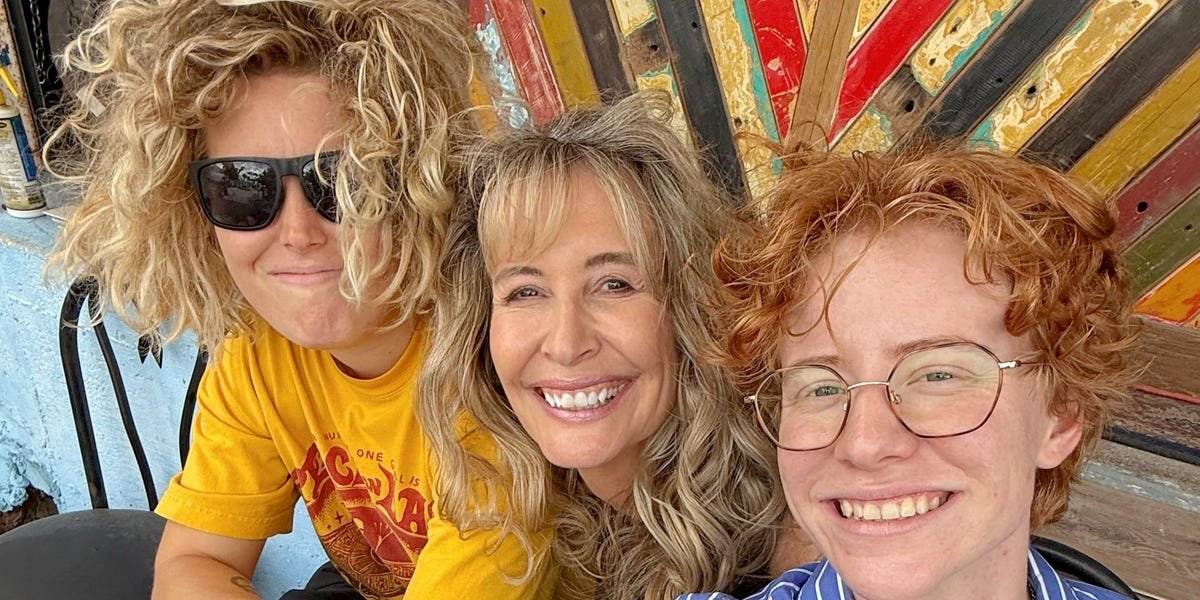
Nearly a year after separating, 16 years ago, I met the love of my life. We had many similarities: we were both newly single, bilingual and bicultural, and had children of a similar age. We were writers focused on creating a better life for our kids and ourselves. The best part was that neither of us had given up on love despite the tough times we’d lived through.


Family posing with kids

The author fell in love again in Florida.

Courtesy of the author


For nearly two years, we dated long-distance, spending only weekends and holidays together. One of us would drive two hours to meet the other, sometimes with the children, and when the kids were with our respective former spouses, we met alone.

We were both trying to rebuild ourselves personally and professionally, and together we made a great team. I once again moved for love, but this time with no regrets. Four years later, we married at sunset on the beach, surrounded by our children and close family.

Our kids are all in their 20s now, and we’ve been through the highest highs as well as some pretty rough times. But our relationship was never in question. We’ve cheered each other on and thrived together.

Whenever I think of past regrets and how I shouldn’t have moved to the US 21 years ago with my ex, I realize I would have missed out on finding true love. And I would never have built the stable and dependable family I always wanted.

Source link

Burned-out-in-her-50s-she-left-corporate-life-Starting.jpeg

Burned out in her 50s, she left corporate life. Starting over in Korea helped her heal.

Jane Newman spent her evenings watching K-dramas on her recliner during the pandemic lockdowns. She didn’t expect they’d spark a curiosity about South Korea that would eventually lead her to move there and start over.

In 2023, Newman was working for a consulting firm in Brisbane, Australia. As a manager, her heavy workload didn’t let up even as the world began to return to normal.

After months of long hours spent in front of a screen, she was burned out and beginning to feel the strain.

“I started out with a whole lot of shoulder and back pain, and then it developed into arm pain, and I couldn’t use my mouse,” Newman, now 60, told Business Insider.


A woman posing in a red suit in South Korea,

Jane Newman said she burned out from her corporate job in Australia.


Greg Samborski.


Standing desks and different chairs fixed little, so she took a sabbatical.

Newman had first visited South Korea the previous year, curious about the country she’d only seen on TV. Remembering how much she had enjoyed that trip, she decided to return for a two-month break.

When she went back to work, the symptoms didn’t take long to resurface. This time, Newman found herself struggling mentally and emotionally, too.

“I found it more and more difficult to do my work,” she said. By July 2024, she and her employer agreed it was best for her to step away from the company.

“I knew that South Korea was a place that I loved, and it made me feel good,” Newman said. “So I made the decision to go back and stay for a few months to see how it felt.”

New career, new home

For three months, she lived in an Airbnb in Gwacheon, a city just outside Seoul. Newman lived with her host, a local woman who had invited her to participate in the community events.

There, she joined a group supporting former US military “comfort women,” as well as two English clubs where members met to discuss news, read English fiction together, and give weekly presentations on various topics.

“I met the most wonderful people, and they really invited me into their conversations. And I got to know a lot more about Korea itself, and its history,” she said.


A woman leaning against a tree in South Korea.

Newman says she found healing in a small community outside Seoul, where she learned more about South Korean history and culture.


Greg Samborski.


“All of those things made me feel really welcomed, and at home, and part of a community, which is what I was really lacking back in Australia,” Newman added.

In Brisbane, her social life largely revolved around people she knew at work, or old friends she’d kept in touch with from her years living in the UK when her daughters were young. She was part of a bushwalking community and a social dining community, but most of those groups faded after the pandemic.

As Newman considered her next career steps, she found herself drawn toward public speaking and coaching to help people navigate the pressures of modern society and technology.

That focus also eventually led her to begin developing a tech startup in South Korea aimed at helping young people struggling with social isolation.

By February 2025, Newman moved to Seoul to begin her next phase of life.

She said her Gen Z daughters weren’t surprised by her decision since they already knew how much she loved South Korea. Both had already taken trips to visit her there.

When it was time for Newman to look for an apartment, she wanted a place that was close to public transport, with separate spaces for living and sleeping, and a good view.

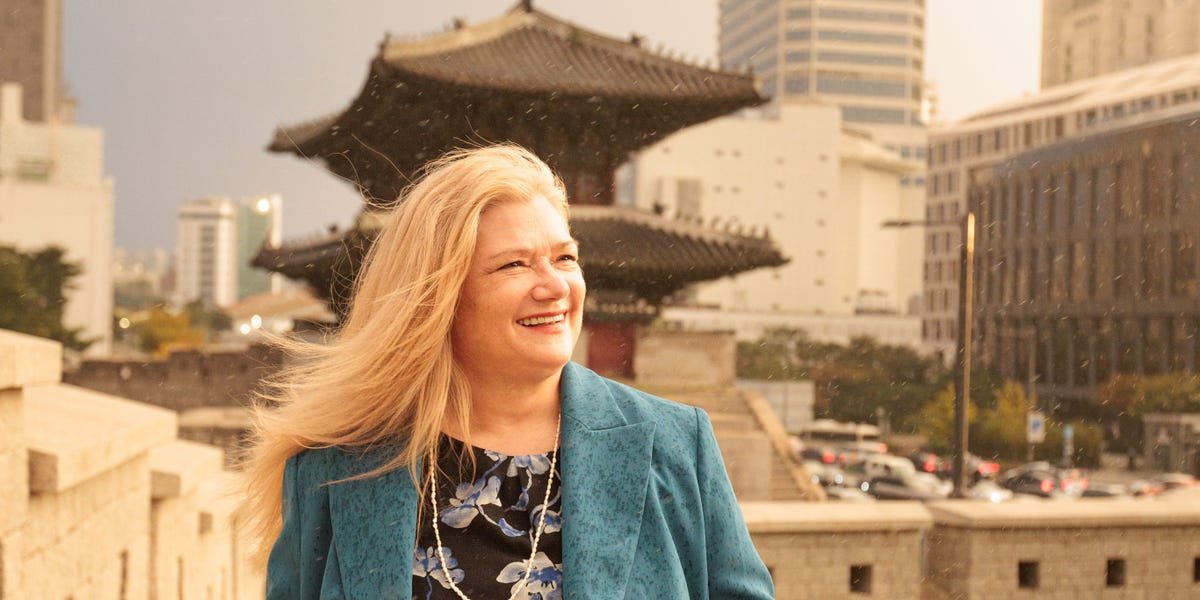
It took her about two weeks to find a place. She now lives in Dongdaemun, a popular neighborhood, where her two-bedroom apartment costs 1.43 million Korean won, or about $1,000, a month.


Skyline from Seoul City Wall at Dongdaemun.

Newman lives in Dongdaemun, a popular neighborhood in Seoul.


Jane Newman.


Building a new life from scratch

South Korea has become an increasingly popular choice for foreigners in recent years.

Data from the Ministry of Justice showed that the number of foreigners living in South Korea at the end of 2024 stood at 2.65 million, a 5.7% increase from the year before.

For Newman, building friendships in Seoul came more naturally than she expected.

“I’ve found that every time I’ve come to Korea, I’ve made new friends,” Newman said, adding that this included people she met through a fan group for a Korean actor she admired.


A photo of Cheonggyecheon stream in Seoul.

Newman says she makes it a point to get out of the house once a day to enjoy her surroundings.


Jane Newman.


These days, Newman’s routine is a mix of work and settling into life in Seoul.

She starts her mornings with a coffee from the Starbucks across the street before diving into her coaching sessions and working on getting her startup off the ground.

Compared to her previous job, where working 60 hours a week was common, Newman says she now works around 20 to 30 hours a week.

With the more flexible schedule, she has time to exercise, meet people, and sometimes work from libraries or cafés.

“But I do make sure I get out once a day to go out and enjoy this beautiful place I’m living in,” she said.

Do you have a story to share about relocating to a new city? Contact this reporter at agoh@businessinsider.com.


Source link

My-daughter-told-me-I-should-start-going-to-the.jpeg

My daughter told me I should start going to the gym. At 79, I’m in the best shape of my life.

This story is based on a conversation with Joan MacDonald, 79, a former driving examiner of Collingwood, Ontario. It has been edited for length and clarity.

January 2017 was a New Year I’ll never forget. It was one of the few times that my daughter, Michelle MacDonald, lost her cool with me.

She’d moved to Mexico the previous month and was visiting. “I won’t get to see you as often as I like,” she said. “And, every time I leave, I won’t know whether it will be the last time I see you.”

Then she made another blunt comment that changed my life. “Mom, why don’t you go to the gym?” she said.

I needed to improve my health

I had high blood pressure, kidney problems, and was at least 70 pounds overweight. Approaching my 71st birthday that March, I felt scared and miserable.

My doctor had already warned me that, if I didn’t make an effort to improve my health, I would end up on dialysis before very long. I was effectively dying.


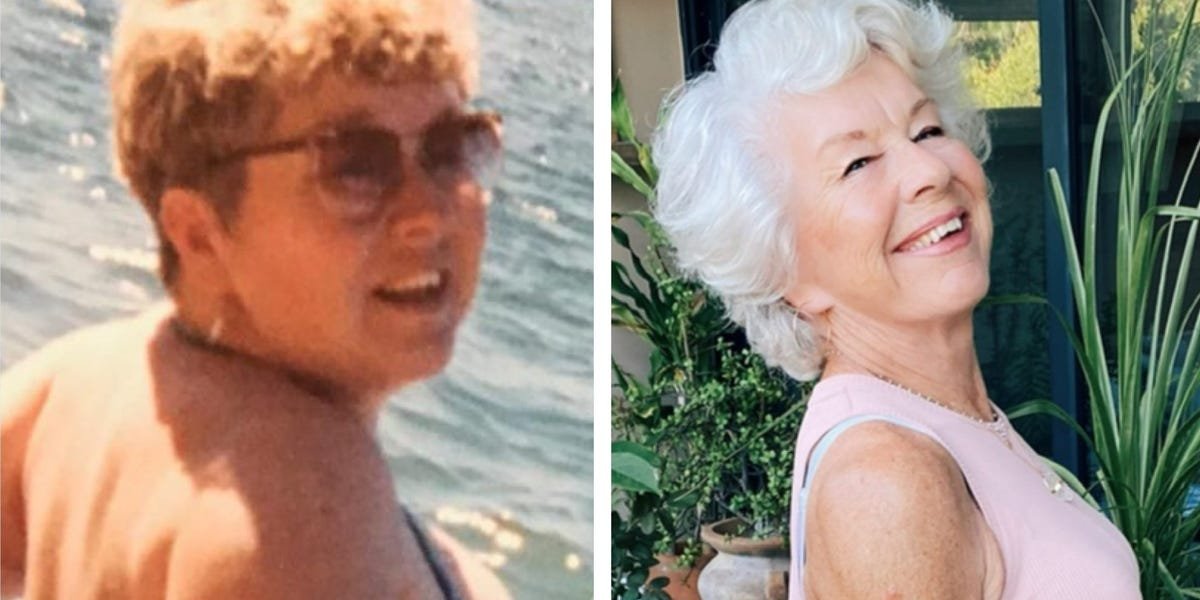
An older woman standing in a clothing store

MacDonald, before she discovered the gym and became healthier.

Courtesy of Michelle MacDonald.


Growing up in Canada, I’d been an active child. I played ball, skated in the winter, and went bowling. I enjoyed doing them because they were fun. But I was by no means an athlete.

I got married a month before my 21st birthday and settled into married life while working as a driving examiner. I juggled work with motherhood, raising Michelle and her older and younger brothers.

Going to the gym really wasn’t a thing back then. None of my married friends worked out, or even thought about doing so.

I took medication for high blood pressure

I believe that your body changes every seven years or so. I went through variations in terms of shape and size, and enjoyed certain foods, then went off them.

I didn’t have regular meals, often eating just two meals a day at irregular times. In between, I’d snack.

Throughout my 60s, I was in poor health. I’d get bronchitis in the fall and spring — I had weaker lungs after contracting rheumatic fever as a child — and the kidney issues began.

The weight had grown to 200 pounds, which was far too heavy for my height of 5 feet 3 inches. And my blood pressure was high; I was put on medication.


An older woman flexes her muscles on a beach.

MacDonald, after taking up exercise and eating five small meals a day.

Courtesy of Michelle MacDonald


I’m lucky because Michelle is a certified strength and conditioning specialist and sports nutrition coach. She saw how unhealthy I’d become and was worried, especially because she’d moved thousands of miles away and couldn’t keep an eye on me.

Her recommendation struck home. It was enough to jolt me into action. My doctor also encouraged me to lose weight and reduce my blood pressure.

I’d half-heartedly attended the gym before, but not consistently. This time, I went five times a week.

My body slimmed down

I sought advice from Michelle and studied YouTube videos to learn how to use the machines and do strength training with free weights. At first, I couldn’t believe how hard it was to pick up 20 pounds.

I began with small weights and increased them by increments. I’ve since done a deadlift of 170 pounds and a hip thrust of 230 pounds.

It was amazing to see my body slim down and fit into clothes, like jeans, that I hadn’t worn in a very long time.

I lost 45 pounds in six months and a further 25 pounds during the rest of my 70s. I’ve gone from a size XL to a medium. I was able to quit my medications.


An older woman doing the splits.

MacDonald has become stronger and more flexible.

Courtesy of Michelle MacDonald


My current regimen involves spending two hours at the gym, with around 15 minutes of cardio, followed by using weights. I often work out with Michelle, whom I joined in Mexico for around a year after my husband died.

As for my diet, I eat five small meals a day, including oatmeal with egg whites, protein powder, and 1% coconut milk for breakfast.

Then I’ll have yogurt, an egg white omelette with ground beef, chicken, turkey, and ham, a protein bar, and a final, plain meal without starches. If I start my day at 7 am, I’ll stop eating by 7 pm.

A shoulder injury hasn’t stopped me

Unfortunately, I suffered a shoulder injury while biking outside on a rough surface and needed surgery three months ago. I’ve had to take things a bit easier as I recover. However, I feel 100% happier and healthier than I did before going to the gym.

Michelle and I established “Train With Joan” to help inspire people to take up exercise, regardless of their age.

It may slow you down a bit, but I’ve seen many seniors, even older than me, accomplish great things. They have resolved to do it for themselves. Nobody else is living in your body but you.


Source link

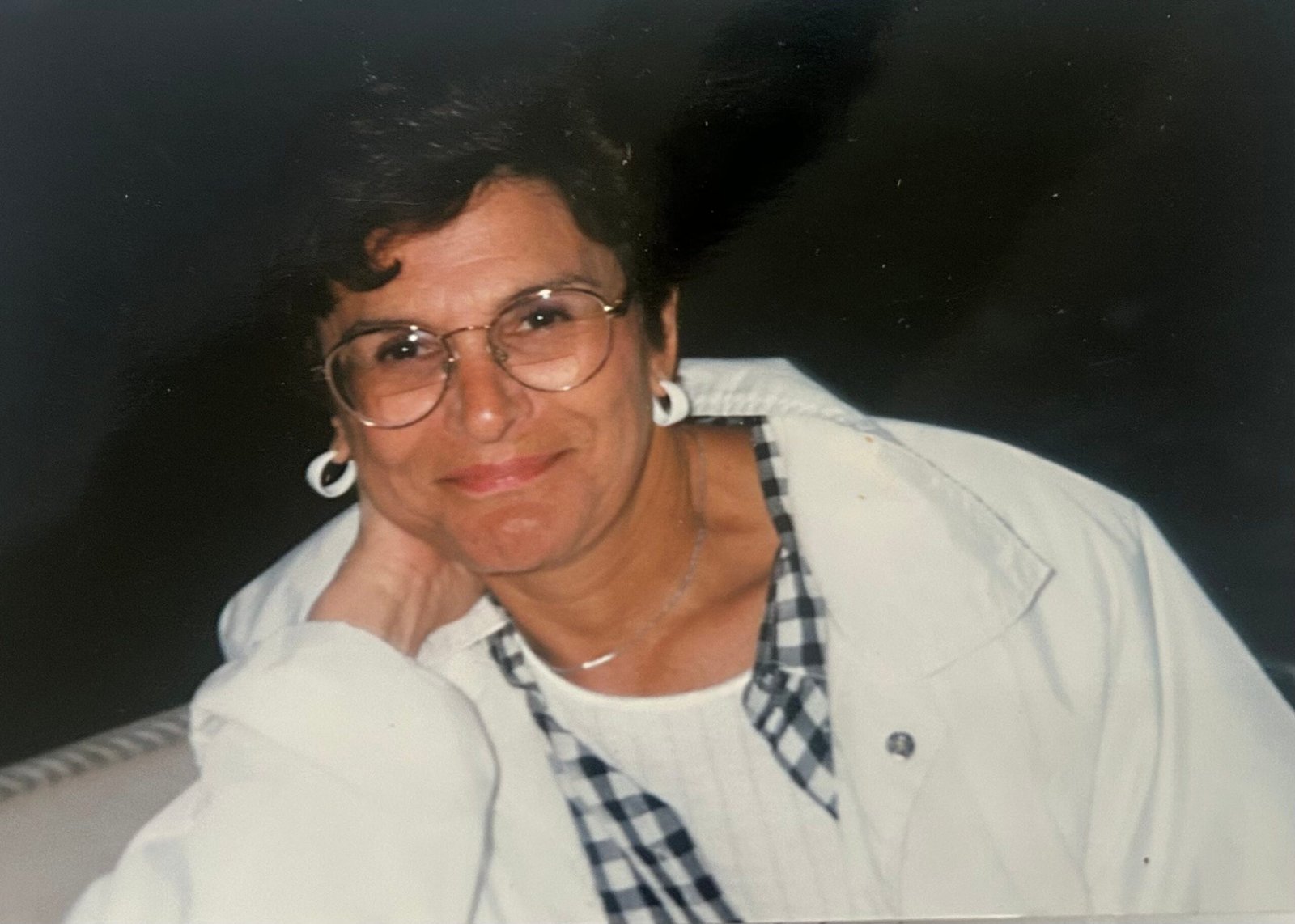
Woman posing for photo in the 80s

I wanted to be perfect like my grandmother. Then she asked me a question that changed my approach to life.

The author’s grandma was a perfectionist.

  • My grandmother’s terminal cancer diagnosis taught us both to let go of perfectionism.
  • Her lifelong pursuit of order and perfection shaped our family’s habits and expectations.
  • Facing illness, she embraced acceptance and inspired me to value effort over unattainable ideals.

My grandmother strove for perfection, convinced that it was an attainable goal if only you worked hard enough.

This meant eating less to lose weight. Food deprivation became a family bonding activity when my grandmother was on a diet. Diets lasted decades. We had marathon cleaning weekends while friends went to the mall. Play clothes were swapped out for school clothes for our rare trips to Burger King. Random dust checks were performed to ensure vacuuming of floors was done correctly. I’ll never forget her finger with a perfectly manicured nail grazing the cool Italian tile floor. Chore lists graced our refrigerator in the same way my friends’ quizzes and pictures graced theirs.

My grandmother wanted and demanded order, believing it led to perfection. My childhood was spent trying to please. She did not expect more from us than she did from herself, though. I hold many memories of Gram chastising herself for her too-big thighs or her less-than-stellar self-control around chocolate. It was a weakness that caused her significant guilt.

I followed her steps

Years later, as I began my own journey toward motherhood, I vowed that my children would not endure what I had. I would allow them to make messes. That dog I always wanted, but was never allowed to have because pets were dirty, would complete the large family I also always wanted. Perfection would become what it was meant to be, a foolish ideal — not a reality to strive for at all costs.

Family birthday
The author’s grandmother was diagnosed with terminal cancer.

Instead, I repeated exactly what I knew. My kids had to have matching outfits, picture-perfect Christmas cards, and all the things perfection required. I would clean and exercise until I reached the point of exhaustion. I worked out through all four pregnancies and directly after.

I recall throwing a birthday party for my son. He was turning 3 or 4. Someone commented on how great I looked. “Nicole makes sure everything is always perfect,” someone else said. I reveled in the praise. Gram heard the comment and smiled. We shared a common bond. When one of us inched closer to it, the other one felt proud.

Then my grandmother was diagnosed with cancer

The exhaustion of parenting four kids and attempting to create the perfect world for them and me was intense. I was stuck in a cycle. It would not break until one sunny fall day. I was running around attempting to clean and wrangle the kids for lunch. The plan was to work out after they took their naps. The phone rang, and my grandmother greeted me on the other end. All I heard was the word sick. I assumed it was regarding my grandfather, who had had heart problems for decades. I thought perhaps it was another heart attack.

“No, baby, it’s me. I’m sick.” It was shocking. Gram had lived a life of such order and perfection. She was in her 70s and active. She took only one pill for high blood pressure. Gram had Stage 4 ovarian cancer, which meant we discovered it late. We looked up the statistical odds of survival. My grandmother had a terminal illness.

The diagnosis changed her. For the first time, her constant need for perfection seemed foolish. Weight didn’t matter, nor did matching a purse to shoes to a blouse. When Gram lost her hair, one of her most beautiful features, and found herself struggling to keep the house clean, she understood things had to change. Maybe a wig wouldn’t be so bad. Maybe hiring someone to come in and help was OK. Her new favorite saying became, “Don’t sweat it.” What mattered was time and how she spent it.

She asked 1 simple question

When she saw me working myself to death to provide a perfect life for my family, Gram realized I had become just like her. She said, “Perfection isn’t worth it. It isn’t even real.” Then, she asked a question that changed everything for me.”Did you do your best?” When I answered that I had, she said, “Well, that’s all you can do then.”

It changed the way I lived my life and significantly reduced the pressure on me.

Watching her health diminish and understanding that she had limited time helped Gram realize what was important. Perfection and holding onto unrealistic expectations and ideals no longer fit into her life. Watching her learn this lesson allowed me to learn it alongside her. She taught me so that I didn’t have to wait until I was in my 70s battling a terminal illness. When I remember her now, I am forever grateful.

Read the original article on Business Insider

Source link

Dick-Van-Dyke-is-100-years-old-Here-are-his.jpeg

Dick Van Dyke is 100 years old. Here are his 3 tips for living a long life.

Dick Van Dyke, the larger-than-life comedian, is now a centenarian.

Van Dyke celebrated his 100th birthday on Saturday, marking a new chapter in his already storied life and career.

He became a household name in the 1960s while starring on the CBS sitcom, “The Dick Van Dyke Show,” which won 15 Emmys and two Golden Globes. Van Dyke’s star rose even higher when he headlined “Mary Poppins” alongside Julie Andrews in 1964 and “Chitty Chitty Bang Bang” with Sally Ann Howes in 1968.


Dick Van Dyke and Julie Andrews in

Dick Van Dyke and Julie Andrews in “Mary Poppins.”

Silver Screen Collection/Getty Images


In addition to an extensive filmography, Van Dyke also won a Tony Award in 1961 for his role as Albert Peterson in “Bye Bye Birdie.”

As Van Dyke grew older, he has often shared insights and advice on living a long life. Here are three tips Van Dyke follows.

Van Dyke exercises three times a week

During an appearance on actor Ted Danson’s podcast, “Where Everybody Knows Your Name,” in January, Van Dyke said he exercises several times a week.

“I’ve always exercised,” Van Dyke said. “Three days a week, we go to the gym. I think that’s why I’m not stove-up like my equals.”

Danson recalled seeing Van Dyke at the gym and being impressed by his routine.

“I would go to the same gym you did, and if I got there early enough, I would see you, literally, work out on some weight machine,” Danson said. “And then, almost like you were doing circuit training, you would not walk to the next machine, you’d dance. You literally danced to the next machine.”

Danson said he later asked Van Dyke about his workout routine.

“You said you would come to the gym and work out for whatever hour, whatever it is, then you would go home. You would swim laps and then get back into bed and take a nap.”

Van Dyke said these days, he’s doing a lot of stretching and yoga.

Van Dyke stays mentally fit by watching “Jeopardy!”


Dick Van Dyke at the Kennedy Center Honors

Dick Van Dyke at the 2021 Kennedy Center Honors.

CBS Photo Archive/CBS via Getty Images


In his new book, “100 Rules for Living to 100: An Optimist’s Guide to a Happy Life,” Van Dyke wrote that his short-term memory is “shot,” but he still has “his marbles.”

“I used to do the crossword religiously for years (in pen), and now it’s ‘Jeopardy!’ that keeps me sharp, though Arlene always has the answer before I do,” Van Dyke wrote, referring to his wife, Arlene Silver.

Van Dyke and Silver, 54, tied the knot in 2012. In his book, Van Dyke wrote that his job as an entertainer required him to have a good memory.

“For my whole career, I had to memorize pages and pages of lines and a ton of songs, backward and forward, so I was able to say or sing them without even thinking,” he wrote. “When I sing with The Vantastix, it’s often songs from shows and movies I’ve done, and those are right at the front of my brain.”

He added: “I can still pick up new material easily, too, though it might take three or four more run-throughs than it used to be before the lyrics feel like second nature.”

Van Dyke also wrote that cutting alcohol out of his diet likely played a part in his good brain health.

Keeping a positive mindset is essential, Van Dyke said

In his book, Van Dyke recalled his former roles, including a series of old men, like Mr. Dawes Sr. in “Mary Poppins.”

“I’m not playing super-old anymore. I am super old. Speaking now from this position of centenarian authenticity, I can look back on my old man roles and say that some stuff I got right,” he wrote.


Dick Van Dyke at the 76th Creative Arts Emmy Awards.

Dick Van Dyke at the 76th Creative Arts Emmy Awards.

Variety/Variety via Getty Images


Van Dyke wrote that it’s “frustrating to feel diminished in the world, physically and socially,” in addition to navigating the uncertainty of current global events.

However, Van Dyke said keeping a positive outlook on life is key.

“I’ve made it to one hundred, in no small part, because I have stubbornly refused to give in to the bad stuff in life: failure and defeats, personal losses, loneliness and bitterness, the physical and emotional pains of aging. Because, as I see it, to do that would be to throw in the towel on life itself.”

Instead, Van Dyke said, “for the vast majority of my years, I have been in what I can only describe as a full-on bear hug with the experience of living. Being alive has been doing life — not like a job, but rather like a giant playground.”


Source link