Personality hires, rejoice. LinkedIn’s CEO said soft skills are getting a hard rebrand.
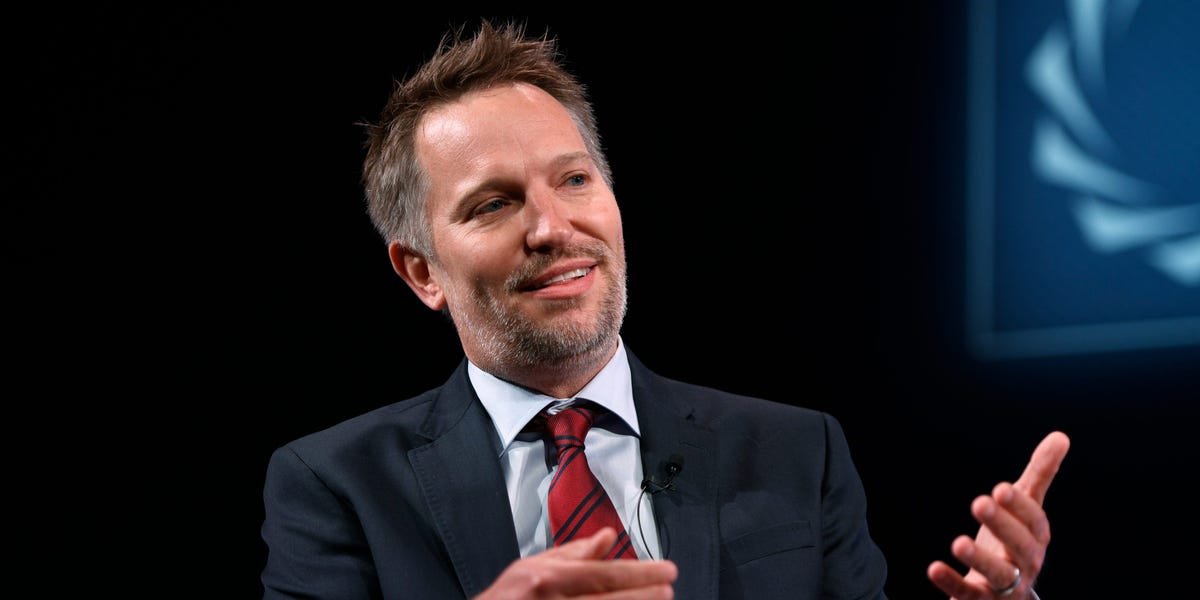
In an interview with the “Tools and Weapons” podcast, LinkedIn CEO Ryan Roslansky said AI is automating routine tasks. He argued that the shift is elevating four human-centered skills — curiosity, courage, communication, and compassion.
“These turn out to be some really, really important skills to do your job well,” the CEO said. “The focus and emphasis on those, along with the AI, is what I think gives us the opportunity to dream big and paint a much more positive picture that exists with humans and technology together moving forward.”
Roslansky has a broad view of the job market based on LinkedIn data, though he did not cite specific figures in the interview. His view contrasts with some other Silicon Valley voices (and a growing number of Americans).
This year, OpenAI investor Vinod Khosla predicted that today’s five-year-olds won’t need a job. Boris Cherny, the creator of Anthropic’s Claude Code, said the job title “software engineer” will fade away this year. Nvidia CEO Jensen Huang recently said he wants high-paid engineers to spend half their salary on AI tokens.
Roslansky’s vision is less jarring. Instead, he argues that AI is reshaping how people think about their jobs, encouraging workers to view their roles as a “collection of tasks” rather than a fixed title.
He breaks those tasks into three buckets: ones AI can fully automate, ones it can augment, and ones that remain deeply human — like resolving conflict, persuading a team, or setting strategy.
“These skills, they’re important, but they’ve historically been talked about as soft skills,” Roslansky said. “In a professional world where people are actually much better at these skills and have really honed their craft on it, I think that it makes things a lot better.”
As AI handles more automated responsibilities, Roslansky said that agents can free up time for coworker conversations, putting a greater premium on communication, judgment, and emotional intelligence.
He said his thought process has given him a hopeful view of AI’s future. Still, he said he doesn’t have a crystal ball and could ultimately be wrong.
“Sometimes when you’re mired in the technology, and especially with AI, and you kind of draw out where this could potentially go, it leads you to some dark places,” he said. “I believe that humans play such an integral role in shaping where that technology should go.”
This story is available exclusively to Business Insider
subscribers. Become an Insider
and start reading now. Have an account? .
LinkedIn cofounder Reid Hoffman said he met with Jeffrey Epstein for fundraising purposes.
Hoffman previously said his last meeting with Epstein was in 2015.
Now he says there were six more meetings, from 2016 to 2018.
Reid Hoffman says he had more meetings with Jeffrey Epstein than he originally thought.
The billionaire LinkedIn cofounder previously maintained that the last time he met with Epstein was in 2015, and that he only knew Epstein via fundraising efforts for the MIT Media Lab.
This week, as the latest tranche of Epstein-related documents from the Justice Department continues to make headlines, Hoffman revised his accounting.
“I was mistaken, as according to calendar entries I have become aware there were additional fundraising meetings in 2016 and 2018,” Hoffman wrote in a post on X on Tuesday night.
Hoffman listed six additional meetings, including various Skype calls and in-person meetings in Cambridge and Palo Alto. The most recent meeting Hoffman listed was a Skype call in March 2018.
I only knew Jeffrey Epstein because of a fundraising relationship with MIT, which I very much regret. In 2019 I told Axios the last meeting I had with him was in 2015 but I was mistaken, as according to calendar entries I have become aware there were additional fundraising…
“I have done multiple calendar searches, and if I find any other meetings, I will continue to share them,” Hoffman wrote. “The victims of Epstein’s abhorrent and vile actions deserve all the information they are seeking, and I continue to call on President Trump to deliver that for them.”
Hoffman said that those meetings had also been scheduled as part of his fundraising relationship with the MIT Media Lab.
Hoffman has also said he visited Epstein’s private island, Little Saint James, in the US Virgin Islands. In December, he told a podcast host that he stayed on the island for one night on a trip connected to fundraising activities.
“Note to self: Google before going,” Hoffman said on the podcast.
Hoffman’s appearance in the Epstein files has helped reignite the billionaire’s feud with Elon Musk.
Reid Hoffman loves AI. So much so that, for Christmas, instead of fuzzy socks or wool sweaters, he gave his friends and family an AI music album.
The LinkedIn cofounder and Greylock partner, who Forbes estimates has a $2.5 billion net worth, recently told Wired he generated silly Christmas songs using AI and pressed them onto records.
“There’s a song on ugly sweaters and all of this kinda stuff,” he said. “As opposed to the ‘Holly, Jolly Christmas,’ you know, something that actually has some humor. Almost like what ‘Weird Al’ Yankovic would do if he was doing a Christmas album.”
To create the Christmas music, Hoffman said he used two different AI agents: one to write the lyrics and another to compose the music.
It’s not clear which AI tool Hoffman used to generated the songs. His current firm, Greylock, doesn’t list any of the major music-generating apps — like Suno, Udio, or AIVA — in its investment portfolio.
But, whichever tool he used, Hoffman said he was impressed by the result.
He said he told everyone who received the gift that it was AI, but when he played it for his wife, she couldn’t tell it was computer-generated.
The Christmas surprise comes as Hoffman has been talking about AI while promoting a new book published with journalist Greg Beato titled “Superagency: What Could Possibly Go Right with Our AI Future.”
In it, the two argue that AI doesn’t need to be a dystopian technology destined to displace workers or lead to human extinction, as some more pessimistic about the technology have warned.
Hoffman argues that AI skeptics are falling into the same trap that has gripped tech cynics in the past, including existential complaints during the rollouts of the printing press, electricity, and the internet.
“My push for people is if you are not using AI in a way today that isn’t seriously helpful to you, you are not actually trying hard enough,” he told Wired. “Now, of course it’ll transform jobs, and there’ll be a bunch of pain in that transformation. But the way that you as an individual can avoid that is to be engaged.”
Finding a job on LinkedIn can feel overwhelming as some roles draw hundreds — or even thousands — of applicants within hours or days. The challenge for job seekers using the platform is standing out among the crowd.
Some LinkedIn users, however, have successfully done so. Whether by using overlooked job filters, crafting a targeted cold outreach, or intentionally sharing their work, people have found ways to secure new jobs on the platform.
Below are three people who strategically landed their roles through LinkedIn. They shared with Business Insider how they did it. Quotes have been edited for length and clarity.
Using a strategic filter on LinkedIn helped me find a new role
Lauren Young used the “under 10 applicants” filter to enhance her chances of securing a new job on LinkedIn.
Photo courtesy of Lauren Young
Lauren Young is a 28-year-old continuing education specialist in Indiana.
Last spring, I was becoming increasingly unhappy and stressed out at work, so I started applying to multiple jobs a day. Even within the short time that I was back in the job market, from March to June, it was getting worse, and I started to panic. I was having no luck landing a new role.
I live outside Chicago, and some of the jobs that would come up would be at huge Fortune 500 corporations. Even if the role was posted within the last day or the last hour, hundreds of applicants still applied immediately. I started experimenting with LinkedIn filters, trying to be more strategic about how I spent my time searching for work.
That’s when I found the “under 10 applicants” filter. It’s one of the last options under the function that says “all filters,” pretty close to the bottom. Once I started using it, I saw roles at small businesses that didn’t have a huge following on LinkedIn.
My role now is to help medical professionals who are seeking different educational opportunities or want to pursue further licensing. I didn’t think I would be a top applicant since I’d never worked in the medical industry, but the posting had just been posted and had very few applicants. I landed my first interview at the end of May and received my offer letter in mid-June.
My new role has been completely life-changing. I work primarily remotely and visit the office about once a month. The company offers excellent benefits, a generous PTO policy, and a great work-life balance.
A well-crafted cold outreach helped me land my job at OpenAI
Sophie Rose’s cold outreach on LinkedIn led to a job offer within five weeks of sending her message.
Photo courtesy of Sophie Rose
Sophie Rose is an OpenAI employee in her late 20s based in San Francisco.
In 2023, I joined OpenAI to build out what was then the associate team. I noticed that a leader on the go-to-market team had posted on LinkedIn that she was hiring a founding account associate, so I directly messaged her about the opportunity. Within five weeks of sending that message, I had an offer in hand.
I constructed my note by congratulating the lead on her role and said I saw she was hiring for this founding account associate job. I added that I’d love to learn more, plan to apply, and would be willing to relocate for the opportunity. I also asked if she could hop on a call.
In her response, she said she couldn’t jump on a call but would push my résumé through the initial screening. I applied the next day and immediately followed up with her, thanking her and saying I looked forward to exploring the opportunity with OpenAI.
There are two things I would warn people against doing: asking for time right away and rushing the follow-up.
I asked for time in my note, which I wouldn’t have done in hindsight. If you do ask for time, be very clear about why you need it. Also, try not to send that generic follow-up. Wait — maybe three weeks later — or look for something new that the person you’re reaching out to is posting or talking about.
For many of my peers, their OpenAI job started with a cold outreach to someone they might have heard of or had a mutual connection with. I think that’s how you can ultimately get ahead or pivot in your career.
Posting on LinkedIn brought the recruiters straight to my inbox
Dhyey Mavani strategically posted online to attract recruiters and mentors and grow his professional network.
Photo courtesy of Dhyey Mavani
Dhyey Mavani is a 21-year-old software engineer at LinkedIn, based in Sunnyvale, CA.
I moved to the US from India in 2021 to attend Amherst College, where I triple-majored in computer science, mathematics, and statistics.
I started posting because people on campus were reaching out and asking to chat through ideas and career advice. I wanted to share my resources, so I decided to document my learnings and my progress and share them online for everyone. Since I started posting, I’ve significantly expanded my network to over 500 connections and more than 6,000 followers.
I posted about a research paper I wrote, and in the post walked through a short summary about my research, how I got there, what the key accomplishments were, and what things I’m still looking into for future work. That gained some traction with over 45,000 post impressions on LinkedIn. I had people working in research labs at Princeton and other universities reach out to me.
It’s helpful to phrase the posts you share in a value-first manner, where you provide some of your own perspective and explain why you stand by it. When I share my work online, I like to walk readers through why I pursued this project, what it entails, and who it impacts.
I also try to engage with content I see to increase visibility and expand my network. I recently commented on a post about Google, sharing my thoughts on the company’s strategy, and my comment had over 100,000 impressions.
After seeing my work online in 2023, a recruiter at LinkedIn contacted me directly on the platform to discuss an internship opportunity, which ultimately led to my current full-time position as a software engineer at the company.
I realized that there are opportunities that arise from organic posting and genuinely engaging with other people’s content. I wouldn’t have the job options, the reach, the network for mentorship, and other opportunities if I hadn’t started sharing my journey online strategically.
Do you have a story to share about LinkedIn strategies? Contact this editor, Agnes Applegate, at aapplegate@insider.com.
This as-told-to essay is based on a conversation with Jillian Richardson, a 31-year-old ghostwriter for executives. She’s based in Brooklyn. The following has been edited for length and clarity.
I’m a ghostwriter focused on helping executives and founders grow their presence on LinkedIn.
I offer LinkedIn profile polishes for executives, as well as people looking for a new job or trying out self-employment. After helping a number of people edit their profiles, one of my takeaways is that people need to brag more. They are not hyping themselves up nearly enough.
LinkedIn is the place where it’s socially acceptable to brag. The point is to discuss your career and where you’re going next in life. LinkedIn is also a sea of people, and if you don’t share what makes you unique, you won’t stand out. People also assume you just need to share something about yourself once, and that’s it, but things get lost on social media, so you can share the same thing a few times.
I recently talked to a colleague, and we both have the same experience with ghostwriting clients. When they start posting more on LinkedIn, they’ll receive a text from a friend calling them a try-hard or poking fun at them.
Every time Ana publishes a story, you’ll get an alert straight to your inbox!
Stay connected to Ana and get more of their work as it publishes.
The idea that social media is not entirely real and only shows everyone’s best side is what’s called “discernment.” You’re not going to be sharing every horrible moment of your life on social media. If you did, you probably wouldn’t be in a super stable place. There are only parts of yourself that you want to share on the internet, and that’s up to you. I wouldn’t say that’s inauthentic. That’s just having boundaries.
There are a lot of places in the profile where the bragging — or lack of it — can show up. These are my suggestions to showcase your accomplishments more effectively:
The ‘Headline’
The headline is one of the places people share accomplishments. I always recommend that when people write their headline, they think about using the language they would if they were speaking to an individual customer.
You want to use the headline to let the reader know how you can support them. Just write it as a single sentence. Don’t use those divider lines that chop up everything because that’s when people get carried away, and then they have 10 different accomplishments that don’t connect to the person reading it.
The ‘About’ section
I can’t tell you the number of founders I’ve talked to who literally don’t have anything in their ‘About’ section. If I looked at their LinkedIn, I would assume their company doesn’t even exist.
In the ‘About’ section, you should share statistics of how you help your customers. This is the place to really brag about how you help people succeed; why people should trust you; and what makes you different from other people in your industry. You should also use client case studies and share testimonials.
The ‘Featured’ section
I always recommend that people pin a newsletter, a landing page, or a website that brings people outside LinkedIn, where you can collect their email so you can be in contact with them in another place, and continue to have them get familiar with you.
For example, you could feature a social media moment that you had. Recently, I was featured in Forbes, so I have that there to look like I’m a trustworthy human being. Or, I can pin a LinkedIn post that performed really well to demonstrate my industry expertise.
The ‘Recommendations’ section
The Recommendations section is located toward the bottom of the profile, and many people don’t pay attention to it. However, people really look at this section when considering hiring someone. Many people already have testimonials on their website, so I usually suggest asking for recommendations from those people by saying something like, “Hey, you said this exact thing to me. Would you be willing to copy and paste this on LinkedIn?”
Or, if somebody just said something nice to you on a call that they maybe didn’t write down, just email them being like, “Hey, I’m looking for recommendations on my LinkedIn. I remember you so generously said this thing. Would you be willing to copy and paste this as a LinkedIn recommendation?”
Most people will say yes, including a former boss or colleague.As long as you have a good relationship with them,why not reach out and ask? Everybody wants to see their team members succeed, hopefully.