When I was in college, studying abroad in Italy was a no-brainer. My great-grandparents are from a tiny village just outside Modena, and I was curious about my heritage.
Something that took me by surprise, though, was the realization that I didn’t want to leave.
After my semester ended, I lived and worked in Rome throughout my early 20s. Eventually, I moved back to the US and became an Italian teacher.
Although I now live in Chicago, Italy still feels like my second home: I make a point to spend summers there, mainly so my daughter can bond with her nonna.
As lucky as I am to visit Italy every year, I still wish I could go more often. Thankfully, I’ve discovered a handful of places across the US that capture the energy of my favorite Italian regions.
These cities offer Americans a slice of Italian culture, minus the hourslong flight overseas — and help quench my insatiable thirst for Italy with soul-stirring food, wine, history, and charm.
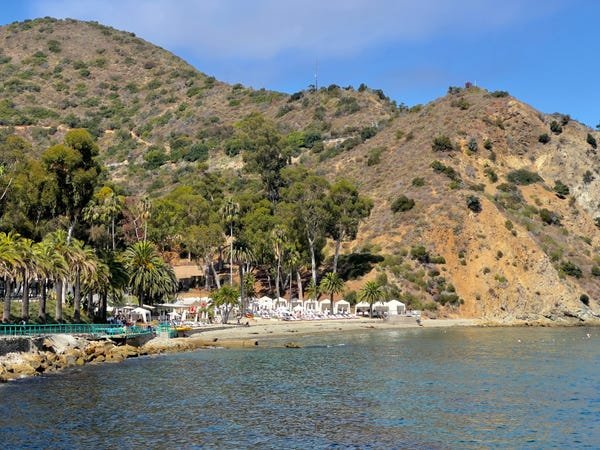
Catalina Island’s hidden coves and crystalline waters feel like Capri.
I plan a trip to Catalina Island whenever I find myself missing Capri. vesperstock/Shutterstock
Located off the coast of southern California, Catalina Island is about 22 miles long. It’s easily accessible via ferry service, which operates out of three ports near Los Angeles.
When I first visited Catalina Island, I was awed by the dramatic shorelines, crystal-clear waters, and hidden coves. I felt like I was back on Capri.
I hiked to the top of the Garden to Sky trail, catching panoramic views that felt straight out of a Mediterranean postcard. Then, I soaked up the sunshine at Descanso Beach while sipping a chilled glass of prosecco.
Florida is home to Coral Gables, a city that always reminds me of Lake Como.
Many of the homes and buildings around Coral Gables remind me of Italy. RAUL RODRIGUEZ/Getty Images
With its glamorous Mediterranean-style architecture, lush gardens, and waterfront estates, Coral Gables feels like Florida’s answer to Italy’s Lake Como.
The Italian Renaissance-inspired Vizcaya Museum and Gardens, built in the early 1900s, reminds me of the grand villas that line Como’s shores.
If you plan your own visit, don’t forget to check out the Venetian Pool — this public swimming spot was carved from a coral rock quarry, and (true to its name) feels straight out of Italy.
Chicago and Milan are “sister cities,” and it’s easy to see why.
There are a lot of similarities between the cities of Chicago and Milan. Lucky-photographer/Shutterstock
It’s no surprise to me that my hometown of Chicago and the metropolis of Milan are officially sister cities. Both feature vibrant street art, designer boutiques, and — unsurprisingly, maybe — delicious Italian food.
I always recommend that tourists plan a trip to coincide with the Randolph Street Market, a pop-up vintage extravaganza. You can also explore Chicago’s dynamic mural scene with a street art tour.
Finally, Chicago’s pizza is as hearty and rich as any slices you’d find in Italy. You can’t leave my hometown without trying our legendary deep dish.
For a classic experience, head to Giordano’s. The stuffed pizza here is a masterpiece of cheese and sauce wrapped in a golden crust.
Sonoma bears an uncanny resemblance to Tuscany.
The vineyards in Sonoma County make me feel transported to the Tuscan countryside. Robert_Ford/Getty Images
The first time I visited Sonoma, California, I was struck by how much it resembled the Tuscan countryside, from the golden hills to rustic farmhouses.
When I found myself gathered around a long wooden table at Pedroncelli Winery, surrounded by laughter, clinking glasses, and the comforting scent of fresh herbs and olive oil, I felt wrapped in the same warmth and magic of the Italian countryside.
Perhaps the most obvious similarity, though, is the locals’ deep appreciation for wine. You can even immerse yourself in vineyard life by staying at one of the several wineries that offer accommodations.
Venice Beach in California feels just like the Italian city of the same name.
I love visiting Venice Beach for a small taste of Europe. ALEXANDRE F FAGUNDES/Shutterstock
Venice Beach’s bohemian vibe and canals are an almost-perfect replica of Venice, Italy.
Developed in 1905, the canals of this coastal Los Angeles neighborhood were designed to look like those in Venice. Whenever I stroll along the picturesque bridges and waterfront homes, I almost feel like I’m in Italy … all that’s missing are the gondolas.
Frankenmuth, Michigan, reminds me of the Italian Dolomites.
If I can’t spend the holiday season near the Dolomite Alps, this city in Michigan makes me feel like I’m there. T-I/Shutterstock
This Michigan city’s Alpine-style buildings, hearty cuisine, and cozy charm really resemble the Dolomites in northeastern Italy.
Moments like browsing handcrafted wooden ornaments at Bronner’s Christmas Wonderland (the world’s largest Christmas store), enjoying a traditional Alpine feast, and setting off on a riverboat cruise on the Cass River made me feel like I was celebrating Natale — or Christmas — in Europe.
This story was originally published on August 18, 2025, and most recently updated on March 26, 2026.
This story is available exclusively to Business Insider
subscribers. Become an Insider
and start reading now. Have an account? .
I’ve lived in Florida for over 25 years and have explored some of the state’s most peaceful islands.
I love Cedar Key, a charming small town with lots of local businesses.
North Captiva Island, which is only accessible by boat or plane, is also worth a visit.
When thinking about islands in Florida, places like Key West, Sanibel, or Fisher Island probably come to mind. However, after living in the Sunshine State for more than 25 years, I know there are so many more beautiful places to explore.
Beyond the famous names are lesser-known gems that offer natural beauty, charm, and a sense of escape. Whether you’re craving a quiet beach day, a kayaking adventure, or a peaceful getaway without the crowds, these six islands deliver.
Santa Rosa Island feels like a secret paradise.
Santa Rosa Island has gorgeous sunsets. Joseph Sohm/Shutterstock
If you’re looking for a beach that feels like a total escape, Santa Rosa Island might just be your new favorite spot.
Tucked along the Florida panhandle, this barrier island includes areas that are part of the Gulf Islands National Seashore, a federally protected stretch of coastline.
I could spend days basking in the soft, sugar-white sand, emerald-green water, and peaceful vibes.
There’s plenty to do on St. George Island.
St. George Island offers everything from sunbathing to hiking. Leny Silina Helmig/Shutterstock
In my opinion, St. George Island is the definition of a true beach escape.
Located on the Florida Panhandle and connected to the mainland by a long bridge, it offers 22 miles of uncrowded beaches, clear water, and an easygoing vibe that’s hard to beat.
The island is known for its family-friendly atmosphere, stargazing (thanks to minimal light pollution), and state park, which is perfect for beachcombing, hiking, or just soaking up the sun.
Cedar Key has a charming small-town island vibe.
Cedar Key has an old-time feel. Leigh Trail/Shutterstock
Located on Florida’s Gulf Coast, visiting Cedar Key feels like stepping back in time — in the best way possible.
It’s a quaint little island town known for its charm, fresh seafood, and slower pace of life. I also love that most spots are small businesses run by locals.
Instead of modern architecture, you’ll find weathered wooden docks and colorful cottages, giving it an old-Florida feel. It’s the kind of place where you kayak through calm waters by day and eat local clams on a breezy porch by night.
Duck Key is the perfect place for a romantic getaway.
Visiting Duck Key is fun for the whole family. A. Emson/Shutterstock
If you’ve driven the Overseas Highway through the Florida Keys, you might’ve zoomed right past Duck Key without even realizing it. But in my opinion, it’s totally worth a stop.
About halfway between Key Largo and Key West, this little island is low-key, peaceful, and packed with old-school Keys charm.
I recommend visiting Hawks Cay Resort, which has everything from lagoon-style pools to a dolphin experience right on site. Go kayaking or paddleboarding right from the shore, take a snorkeling tour, or enjoy a cocktail with a view.
Whether you’re planning a family vacation or a romantic getaway, the island caters to both, offering activities for everyone.
Gasparilla Island is a quiet seaside escape.
My favorite part of Gasparilla Island is the Port Boca Grande Lighthouse. cpparrothead/Shutterstock
Located off Florida’s Gulf Coast, Gasparilla Island is a gorgeous spot with historic seaside charm.
With powdery white-sand beaches, clear waters, and a tranquil vibe, the island is perfect for those looking to unwind and enjoy the outdoors.
At the heart of the island is the charming town of Boca Grande, filled with pastel-colored cottages, golf carts cruising the streets, and a laid-back atmosphere.
On the island, you’ll also find the Port Boca Grande Lighthouse, which is, in my opinion, one of the most beautiful lighthouses in the state.
North Captiva Island is a true off-the-grid escape.
North Captiva Island is the perfect place to unplug. Marissa Sisco/Shutterstock
If you really want to unplug, North Captiva Island is the spot. It’s only accessible by boat or small plane, and there are no cars on the island — just golf carts and barefoot beachgoers.
With very little commercial development here, you’ll want to come prepared with snacks, water, and a good beach read. In return, you’ll get miles of untouched beaches and a truly remote escape.
This story was originally published on August 28, 2025, and most recently updated on March 16, 2026.
Our family’s first trip to Windermere changed everything.
Sitting on the bank of a stream with my feet dipped in its cold, clear water, surrounded by trees budding for spring — even with the baby kicking away inside me at eight months pregnant, I felt a kind of bliss that’s hard to put into words.
The only sounds were the distant mooing of cows and the occasional squeals of our toddler’s laughter at the nearby bed and breakfast.
I had no doubt in my mind that our four-hour drive from Northampton was worth it.
Since that trip nearly two decades ago, we’ve been to this small English town in the Lake District many times. Each visit only confirms there’s no place like Windermere — and I still dream of moving here someday.
The town feels like its own secret world, but it’s still well-connected and home to top-notch food and attractions
A train driving through the Lake District in the fall.
by Andrea Pucci/Getty Images
Tucked between rolling fells (grassy hills) and England’s largest lake of the same name, the town of Windermere feels like its own world.
Home to fewer than 10,000 residents, it’s small enough to cross on foot yet expansive in feel.
The surrounding hills and lake feel quietly confident. They soften the skyline and set a slower pace, making it clear this isn’t a place built for rushing.
All of this gives Windermere a wonderfully quiet, oasis-like rhythm.
Despite feeling removed from the hustle and bustle, it’s surprisingly well-connected and close enough to reach without much fuss.
It’s a short drive from cities like Lancaster and Carlisle. By train, it’s three hours from London, an hour and a half from Manchester, and two or three hours from Edinburgh.
It’s also in the county of Cumbria, which has something for everyone, whether you want to partake in watersports and hiking, visit Scafell Pike (England’s highest mountain and a war memorial), try local specialties like sticky toffee pudding and Cumberland sausage, or just seek out some serenity.
Fleetwith Pike and Buttermere in the English Lake District.
WhitcombeRD/Getty Images
Over the years, some of our most cherished Lake District moments have come from serene walks and hikes around the lakes and fells of Windermere and nearby towns, as well as leisurely cruises and visits to the world-famous Beatrix Potter attractions.
And though many of its local cafés have small-town charm, this area has serious food cred, too. The Lake District is home to several Michelin-starred restaurants.
Even so, unlike busier hot spots, Windermere has retained its identity and sense of self. It is protective of its pace, its peace, its essence.
People here seem to look out for each other. They don’t just nod as they pass; they stop to chat and remember people’s names.
By 5:30 p.m., many shops and cafés close, while a handful of restaurants, pubs, and the local Sainsbury’s stay open late. Even at night, the town feels safe and calm, especially compared to larger cities.
I dream of living here someday
Many places are lovely to visit, but Windermere feels like somewhere that meets you exactly where you are, offering something for every stage of life.
After all these years, I still sometimes feel that same stillness I felt on our very first trip when I was sitting by the water and realizing we’d found somewhere special.
Each visit has marked a different chapter in our family’s lives, from being pregnant with a toddler in tow to returning with teenagers who now set their own pace.
Somehow, though, Windermere has grown with us, and I often wonder what it might feel like if we stayed a little longer. After all, there’s something comforting and restorative about living where nature is such a big part of daily life.
When I imagine where I’d call home in the UK, it’s not London, Birmingham, Manchester, or even Northampton, where we live now.
It’s Windermere … maybe once the children have grown up.
This story is available exclusively to Business Insider
subscribers. Become an Insider
and start reading now. Have an account? .
After living in the Boston area for 14 years, I’ve thoroughly explored the city and its suburbs.
I always recommend tourists visit the Isabella Stewart Gardner Museum and Chinatown.
When I see itineraries with chain-filled food halls, I suggest swapping them for local restaurants.
When I moved to the Boston area from Denver 14 years ago, I felt like I’d walked into the pages of a storybook.
Venturing outside of my Cambridge apartment, I was surrounded by centuries-old trees, red-brick buildings, and cobblestone streets.
As I’ve spent more time in Boston neighborhoods, I’ve found that each one has its own unique character and cultural richness. Even after more than a decade living here, I’m still amazed by the city’s world-class museums, diverse cuisines, and vibrant arts and music scenes.
When out-of-towners seeking a uniquely Boston experience ask for recommendations, these are the five things I tell them to do and the two I advise skipping.
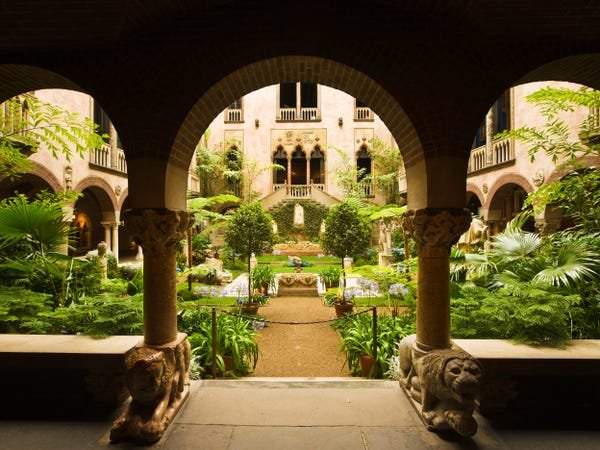
The Isabella Stewart Gardner Museum houses a world-renowned private art collection.
The Isabella Stewart Gardner Museum is one of my favorite places in the city. Atlantide Phototravel/Getty Images
Entering the Isabella Stewart Gardner Museum feels like stepping into a Venetian palace, complete with a central courtyard and authentic Italian architectural fragments.
Opened in 1903, the museum houses Isabella Stewart Gardner’s personal art collection of over 18,000 pieces. It was also the site of the biggest art heist in US history, which happened in 1990.
The museum uses a timed-entry system, and tickets sometimes sell out, particularly on weekends and holidays. If you want guaranteed entry at a specific time, I suggest booking tickets in advance.
The Isabella Stewart Gardner Museum is one of my personal favorites, but Boston is full of unbelievable museums, from the Museum of Fine Arts to the Larz Anderson Auto Museum. I always encourage visitors to seek out ones that align with their interests.
For a bit of fresh air, head to the Boston Public Garden and Boston Common.
Visitors can ride on the Swan Boats in the summer months. APCortizasJr/Getty Images
The first public botanical garden in the US, Boston’s Public Garden has winding paths, manicured flowerbeds, and shady benches that are perfect for people-watching.
It’s a wonderful, calm spot to rest or have a picnic, and when the weather warms between April and September, I love to watch the iconic Swan Boats sail across the lagoon.
The Public Garden also connects directly to the Boston Common, making it easy to build a leisurely stroll into an itinerary.
Boston’s Chinatown neighborhood is vibrant and unique.
Boston’s Chinatown neighborhood is located downtown. ROC
Dating back to the 1870s, Boston’s Chinatown is one of the oldest in the US and the only one remaining in New England.
I love to walk through the traditional paifang archway onto the main street, which is located directly downtown and packed with restaurants, bakeries, and tea shops.
Beyond the food, the neighborhood reflects immigrants’ history in Boston and the community activism that’s helped preserve it amid downtown development.
My family has a tradition of going to Chinatown for a Christmas meal, and we always find it packed. Three of my favorite restaurants to recommend are Q Restaurant, Shabu-Zen, and Jade Garden.
Shopping on Newbury Street is hard to beat.
On certain summertime days, cars are blocked off from Newbury Street. CHUYN/Getty Images
Whether someone is a big shopper or not, I always recommend a stroll down Newbury Street. It’s a beautiful walk among the 19th-century brownstones, and the eight-block stretch is filled with luxury shops, independent boutiques, cafés, and art galleries.
Although you should always check opening hours, most shops are open between 10 a.m. and 8 p.m.
In the summer, Newbury Street is closed to traffic on certain Sundays, so the entire road is filled with pedestrians and live music.
The Boston Public Library in Copley Square is a must-visit for all tourists, bookish or not.
The Boston Public Library is free to enter and open to the public. Tracee Herbaugh
I’m admittedly a book nerd, but even those who aren’t will enjoy the Boston Public Library, which dates back to 1848. There are technically 25 branches throughout the city, but the central building in Copley Square is the one worth visiting.
The building is beautiful, with grand murals and fascinating exhibitions. McKim Courtyard, situated right in the middle, is a perfect place to take a peaceful moment to relax before or after you stroll through the stacks.
The best part? The library is free and open to the public.
However, I recommend picking and choosing your stops on the Freedom Trail.
The Old State House is one of the stops on the Freedom Trail. APCortizasJr/Getty Images
Many visitors’ first stop in Boston is the Freedom Trail,a 2½ -mile walking path that connects 16 sites related to the American Revolution. Although it details important history, the path can get crowded and noisy.
Without a knowledgeable tour guide or resources to provide the necessary historical context, it can be challenging to understand each stop.
Plus, Boston can get extremely hot in the summer and freezing cold in the winter, so it might not be ideal to stand outside for such a long time.
Instead of diving into the path from start to finish, I recommend selecting some of the individual sites and focusing on them instead.
For those set on doing the whole walking path, I’d read up on the history first and tackle the Freedom Trail on the day with the best weather forecast.
Swap Faneuil Hall Marketplace’s Quincy Market for a spot with more local options.
I usually tell visitors to skip the Quincy Market. c. 1824-26
Faneuil Hall Marketplace’s Quincy Market is a popular spot that I tell folks to avoid. I find the eateries inside to be overpriced, and the shops outside are chains that exist in other US cities.
With so much good food in Boston, don’t waste time on dishes you can get elsewhere.
Those interested in visiting a market should head to the Boston Public Market, which has a host of yummy food from local vendors, and the High Street Place Food Hall, which is perfect for groups or travelers who can’t decide on one type of food.
These market-type establishments offer local favorites such as a lobster roll, oysters on the half shell, and cannolis.
I remember arriving in Leavenworth, a town of about 3,000 people, and immediately feeling like we had stepped into an entirely new country, despite being just a short three-hour day trip from Seattle.
The drive itself revealed just how varied Washington’s landscape can be, moving from familiar surroundings into farmland and alpine scenery.
Despite visiting in early April, right before wildflower season, the setting still felt storybook-like, with open fields nearby and snow-capped peaks in the distance.
Downtown Leavenworth leaned fully into its Bavarian theme, from German restaurants and beer gardens to a quirky nutcracker museum. Even the exteriors of everyday places, such as grocery stores and coffee shops, matched the town’s aesthetic, completing the immersion.
We stayed at Abendblume Inn, a small bed-and-breakfast with a distinctly European feel that overlooks the Cascade Mountains. It famously serves up breakfast aebleskiver, Danish pancake puffs often dusted with powdered sugar or served with jam, to make the Euro experience feel complete.
Perhaps my favorite find was the local reindeer farm, where we could pet and feed the animals. Although Leavenworth is known for its Christmas festivities, visiting out of season revealed a quieter version of the town that felt just as intentional.
On Saturday, I was standing on the beach below my home on Dubai’s Palm Crescent when I noticed thick plumes of black smoke rising from the Fairmont Hotel across the water on the trunk of the Palm Jumeirah.
I watched the dark fumes with dread as they rapidly grew thicker at sunset. The sight recalled the same images I saw from explosions in Beirut and Gaza during my own reporting in the region over the past few years.
I live in a beachfront apartment on the East Crescent, the outer arc that curves around Palm Jumeirah and shields it from the open sea.
She saw smoke when standing outside her home on Dubai’s Palm Crescent.
Provided by Rebecca Anne Proctor
I had just gotten back from visiting a friend from graduate school and her family at a beach club at the base of The Palm Jumeirah. An afternoon meant to be spent enjoying the beach and the cool waters during one of the Gulf’s best times of year, quickly turned into one of spotting numerous missiles in the sky as they were being intercepted by the United Arab Emirates’ defense system.
The US strikes on Iran, which we had anticipated for weeks, had begun, and as many in the Gulf had feared, they have led to hundreds of missile and drone attacks on Gulf soil.
After an intense few hours filled with worry, I had gone down to the beach at my home to watch the sunset and try to find a moment of calm. Others had done the same. A fisherman stood with his line in the water. Couples walked by the water’s edge as the evening light shimmered on the waves. Others lounged by the pool.
For a moment, it looked like any other Saturday.
Looking up at the sky in Dubai.
Provided by Rebecca Anne Proctor
But the smoke still spiraled into the sky, an eerie reminder that it wasn’t. People stood quietly, watching.
Then, without warning, a fast-moving ball of fire flew over our heads and our building. Instinct took over. We ran for the basement, breathless, confused, scared, and frustrated. A woman rushed in after us, crying. She said she’d just driven past The Fairmont and seen it in flames.
I’ve lived in the United Arab Emirates since 2009. I never would have imagined that the sights of bombings I have reported on in other Arab nations would be seen and experienced here, a Gulf nation considered to be one of the safest in the world.
This is a place where my friends from Lebanon, Palestine, Syria, and even Iran and parts of Africa have come to for a safer life and better work opportunities.
They did not escape war to come to experience another war.
We knew it was coming
Since mid-January, there had been growing talk of a possible military strike on Iran. For weeks, people across the Gulf — residents and visitors alike — had been bracing for it. At conferences, art fairs, dinners with friends, and even casual work meetings, the subject would come up.
People would whisper about it, sometimes even joke.
“Let’s see if it happens next week or next weekend,” someone would say.
“Let’s have lunch while we still can,” a friend in Downtown Dubai told me recently. “We may all be living in the basement soon,” they added with a laugh.
But the moment never came.
We’re now in the second week of Ramadan — a time meant for reflection, charity, community, and peace. Dubai had been full of festive iftars and suhoors, the celebratory meals where Muslims break their fast after sunset.
Until this week, the city felt joyful, as it always does during this month.
She has received texts warning her to stay away from windows and falling debris.
Provided by Rebecca Anne Proctor
Life is carrying on
The last few days have brought real fear and confusion. At times I’ve felt completely on edge. But I also feel safe. I feel grateful.
As I write this on the evening of March 3, flights across the Gulf are still suspended. The UAE says it has intercepted 186 ballistic missiles and more than 800 drones. I can hear the fighter jets roaring overhead. And yet, outside, children are playing again. Birds are chirping.
Businesses are open, even if many people are working from home. Life is going on, and I do feel safe. I’ve gone through several nights of fitful sleep, waking up to emergency texts from the government on my phone warning us to stay away from windows and falling debris.
The noise and uncertainty have been scary. But seeing how the UAE has been handling the situation — confidently and with resilience — has given me strength.
Don’t get me wrong, this isn’t easy. I have also seen commentary and reports online that have used this moment to criticize the nation, dismissing it as “glitzy,” as if it isn’t a real place where real people live. But for those of us who call it home, it’s very real.
Over the 17 years I’ve been here, I have lived through two recessions, the COVID pandemic, and several floods. During each catastrophe, the UAE has surprised its skeptics and bounced back.
I don’t know how or when this will end. I am still undecided as to when or if I will leave. I’m still nervous going to sleep at night. It’s only been a few days, and I’m still jumping at loud noises. But each hour and day that passes, I do feel calmer. We will get through this. The UAE will get through this.
This as-told-to essay is based on a conversation with Kat Smith, 35, who has lived abroad since 2015. Smith, the founder of Away Abroad, a website for female travelers, currently lives in Trieste, Italy, with her husband. This conversation has been edited for length and clarity.
I think people don’t always believe me when I say it, but living abroad has always felt more fun to me. I love the cultural challenges, the language barrier, the different food, and the process of figuring out the day-to-day.
I’m originally from Conyers, a small town just outside Atlanta. In high school, I moved to Athens, Georgia. It was a typical small, suburban place — there weren’t many people traveling internationally. Certainly, no one was moving abroad the way I eventually did.
When I was 18, between graduating from high school and starting at the University of Georgia, my parents basically forced a gap semester on me. They came home from a dinner party one night and were like, “Instead of going to college, you’re going to Guatemala.”
I did not want to go, but hindsight is 20/20.
Going to Guatemala was the best thing that could have happened to me. While I was there, I met a Peace Corps volunteer. Spending time with them and being in the country changed my perception of the world and opened my eyes to what was even possible.
When I got back and started university, I met with an advisor who had also served in the Peace Corps. After talking with him more, it just felt like the right path for me.
Living abroad changed me as a person
In 2013, almost exactly a month after I graduated from university, I joined the Peace Corps and left the US for Ecuador.
At the time I applied, you didn’t really have much say in where you went. I basically said, “Send me anywhere in the world,” and they sent me to Ecuador. During training, they placed me in a community based on my skill set and the community’s needs.
I ended up in Tumbaco for 3 months for training and then in Arenillas, a really small town in the southwestern province of El Oro, where I lived for about two years.
When my service ended, a friend of mine and I hitchhiked through the Peruvian Amazon and ended up working at an eco-lodge in the middle of the rainforest for a few months.
Smith’s boat ride on the Amazon River.
Courtesy of Kat Smith
Around that time, in 2015, my dad was like, “Okay, you haven’t been home in almost three years. I’m buying you a ticket—you’re coming to visit.” So, begrudgingly, I went back to the US.
I remember feeling reverse culture shock more intensely than I ever felt culture shock. It completely caught me off guard. All of a sudden, the US didn’t feel like home anymore. I felt like I didn’t fit in.
I also knew I wasn’t the same person I’d been when I’d left, which created an internal conflict. I don’t want to be that dramatic, but I had a different mindset, and trying to be the old me was hard.
I’ve traveled and lived all around the world
Over the years, I’ve lived in Panama City, been to Colombia, worked on a yacht in the South of France, and backpacked through Eastern Europe for a couple of months. I also backpacked between Vietnam and Thailand, and taught English in South Korea.
Smith and her husband, Rafael Tudela, in Cartagena, Colombia.
Courtesy of Kat Smith
Somewhere in the middle of all of that, I fell in love and got married in Colombia in 2018. Not long after, my husband and I moved to Vietnam, where we stayed for three years while I was teaching English, before leaving in 2021 because of COVID restrictions.
After Vietnam, we went back to the US for a while. We bought a van, converted it, and traveled up and down the West Coast. I loved nature, but after a few months, I was ready to leave again.
Smith inside of the van she traveled with across the West Coast.
Courtesy of Kat Smith
So we tried Albania next. We stayed for a couple of months, but it didn’t feel like the right long-term fit. Instead, we kept moving and spent time around the Balkans — traveling through Montenegro, Serbia, Bosnia, and Croatia.
My journey hasn’t been perfect
Looking back, I’ve made a few mistakes along the way.
One of the things I cringe about most is how I treated my friends and family back home. I was pretty insensitive about their choices — friends who just wanted to graduate, buy a house 10 minutes from where they grew up, and settle into a typical, structured, no-surprises kind of life. I think I judged that because I felt like what I was doing was so extravagant.
But honestly, I was a bit of a brat about accepting other people’s paths.
I did something similar with my family, too. I didn’t really consider what it meant for them when I left. I was so focused on what it meant for me, and not necessarily on how it was affecting everyone around me.
Smith and friends exploring a neighborhood in Seoul.
Courtesy of Kat Smith
Italy is home — for now
In 2023, we moved to Italy for a job opportunity for my husband. He has an EU Blue Card — basically a work permit for skilled workers — and I’m on a family reunification visa linked to his.
We’ve been living in Trieste for the past 2.5 years. Trieste is fantastic, but it’s also an up-and-coming city that’s gotten really expensive, fast. Even in the short time we’ve been here, we’ve seen a big jump in costs. Our rent, for example, increased by $308 a month, which still feels crazy.
Our apartment is really nice: one bedroom, one bath, open floor plan, and close to everything. I’m really into nature, and we have a beautiful view of the sea and the hills. We were paying $1,423 a month, and now it’s $1,732.
The view from Smith’s apartment in Trieste.
Courtesy of Kat smith
That rising cost of living is one of the reasons we started looking at other places — just to get more for our money.
We ended up buying an apartment in Belluno for $260,955, and we’ll move in April. Belluno is a much smaller town, kind of a gateway to the Dolomites, and it sits north of Venice. We’re big mountain people, and the Dolomites are genuinely my happy place. Being closer to them means we can hike and snowboard more regularly without a long drive, which was a huge perk for us.
Although we didn’t choose Italy initially and only moved here for my husband’s job, there are a lot of reasons we’ve chosen to stay rather than move on like we typically do after a few years.
Italy has a strategic geographic position. I love living smack dab in the middle of the world. Not only is this exciting adventure-wise, but it’s also meant more people have been able to visit us, including our parents, who aren’t as keen on the long-haul flights.
Smith and her dog on a hike in Montenegro.
Courtesy of Kat Smith
On top of that, the culture clicks for both of us. As an intercultural couple, we have different triggers, things we look for, and things we want to avoid. Northern Italy has provided the perfect balance for us.
I really hope Italy can be our home base, at least for the foreseeable future. But I also know myself: If, two years from now, it doesn’t feel right, we’ll pivot. I’m not setting a deadline; it’s more about whether it still feels like home. And right now, it does.
This story is available exclusively to Business Insider
subscribers. Become an Insider
and start reading now. Have an account? .
After living in Switzerland for five years, I’ve watched tourists make a lot of the same mistakes.
Don’t try to see too many places in one trip, and try visiting some smaller mountain villages.
Become at least a little familiar with the local languages and book your train tickets in advance.
Though I’m a US citizen, I’ve spent the past five years living in Switzerland.
As a semi-recent transplant, I know there’s much more to this amazing country than what visitors typically come to see. It’s one best experienced thoughtfully and authentically — not by mindlessly racing through “Top 10 ” lists.
In terms of mistakes tourists make, here are a few things I suggest you know — and avoid — before visiting Switzerland for the first time.
You’ll probably regret only visiting the Instagram-popularized spots.
Lucerne is incredible, but it’s not the only great place to visit in Switzerland. Peter Shaw/Getty Images
Zermatt, Lauterbrunnen, Interlaken, and Lucerne are popular, jaw-dropping locations, but they’re not the only spots worth visiting in Switzerland.
Instead of only seeing the few places on every tourist’s list, consider branching out to smaller, lesser-visited ones for at least a day trip. Fortunately, many are easily accessible by public transportation out of some of the area’s main hubs.
For example, close to Interlaken are the mountain villages of Frutigen, Kandersteg, and Adelboden, which offer gorgeous alpine views combined with fewer crowds and more authentic experiences.
Don’t assume the dining-out culture and prices will be what you’re used to back home.
Eating out in Switzerland can be expensive, but I’ve found the prices to be justified. Ashley Franzen
In Switzerland, dining out can seem expensive — in part because the cost of production, labor, and relevant service charges are typically already included in the price of the meal.
Personally, I find the prices easier to stomach when I remember you’re often paying for high-quality, regional fare, and restaurant staff here are typically earning a fair wage.
And although tipping servers 15% to 20% of a bill is standard practice in places like the US, it’s not the norm here. If you enjoyed the meal and the service, it’s customary to round up a few francs or leave a tip between 5% and 10%.
Make your train reservations in advance.
Not making reservations in advance could mean missing out on some special experiences. Ashley Franzen
Switzerland is a popular travel destination throughout the year, and its major attractions can fill up quickly — especially seats on our world-famous scenic routes.
If you plan on riding the Glacier Express or Bernina Express, book your train tickets as far in advance as possible.
However, don’t fret if you realize it’s too late to book a seat on a scenic route. You’ll be just fine on our “regular” trains, which tend to run faster, not book up as quickly, and still offer beautiful views.
Speaking of trains, don’t get fined for sitting in the wrong class.
Make sure you follow your ticket. Ashley Franzen
When traveling by train, it’s important to double-check your ticket class and location. (And, if you have a paper ticket, get it validated.)
Signage indicating first or second class can be found both outside and inside each car. Oftentimes, the class is also noted on the headrests of the seats themselves.
Ticketing agents on board will not hesitate to issue an on-the-spot fine for tourists seated in the wrong class. In addition to a fine of about 100 francs, you’ll also have to pay the difference in price for the ticket.
Also, pay attention to where your seats are before entering each car so you won’t have to lug an oversized suitcase through the entire train.
Switzerland is small, but I don’t advise trying to cram everything into a short trip.
While in Switzerland, take your time to experience the culture and stunning views. Ashley Franzen
Switzerland is one of the smallest countries in Europe, at about 16,000 square miles. However, I’ve seen tourists mistakenly assume they can just zip through and see everything it has to offer in just three or four days.
For example, Zurich may seem close to Geneva on a map, but they are actually about three hours apart by train. Sure, you could also opt for a one-hour flight — but my point is that trying to see so many cities in a short period won’t allow you to truly get a feel for each.
Travel is about experiencing a place, not just visiting to check it off a bucket list. If you’ve only got a week in Switzerland, I suggest you limit yourself to exploring two or three cities instead of trying to cram six or seven single-night stays in new places into your itinerary.
Become at least a little familiar with the local languages and commonly used symbols.
The Swiss take recycling seriously. Ashley Franzen
Switzerland is composed of 26 cantons, and each of these administrative regions has its own distinct culture, government, and history. They also don’t all speak the same languages.
Although you’ll find English speakers throughout the country — especially in popular tourist areas — Switzerland actually has four official languages: German, French, Italian, and Romansh.
It’s helpful to learn a few basic greetings in those major languages and ensure you use them in the appropriate region.
Also, it’s handy to become familiar with some of the commonly used symbols — especially when it comes to trash cans.
The Swiss are conscientious recyclers, so take a beat to look up the symbols printed on the bins before tossing something in them if you are confused. Your mindfulness will be appreciated