Meagan Drillinger, freelance writer

I travel for a living and can’t wait to get back to Mexico

After cartel violence erupted across the Mexican state of Jalisco this week, images and videos of burning cars and buildings, shuttered storefronts, and cities grinding to a halt hit the news. Flights into and out of Puerto Vallarta and Guadalajara were canceled. Residents were told to shelter in place and to ensure they had enough food and water. Tourists were on lockdown and frightened.

I watched it all from far away in Seattle, where I’m currently traveling, as my phone lit up every 15 seconds with messages of panic, forwarded video footage, and WhatsApp voice notes from friends and loved ones on the ground in Puerto Vallarta.

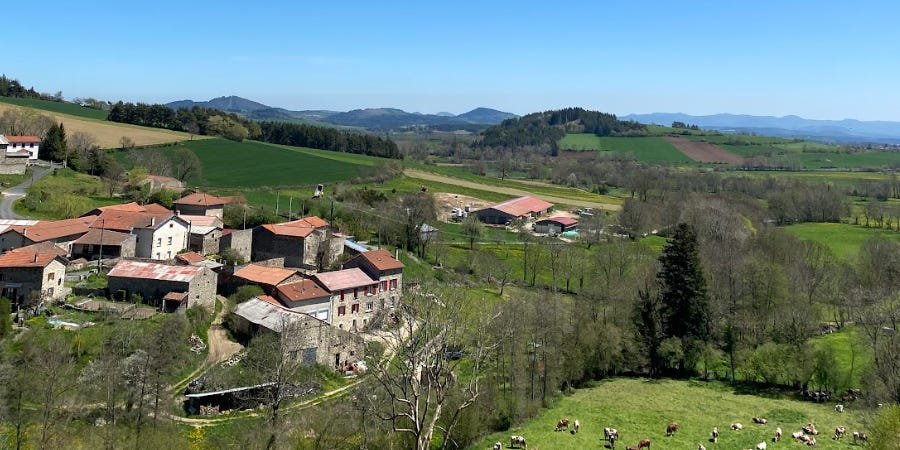
For most people, Puerto Vallarta was just one of several cities mentioned in the news cycle, but for me it was different — it’s been my chosen home base for the last five years.

I travel for a living, but Puerto Vallarta has always been special

My relationship with this city on Mexico’s Pacific coast began more than a decade ago, on my first visit in 2013. At the time, Puerto Vallarta was just another reporting assignment at a beach destination, but something hit differently, and I kept returning. It became the place I ran to whenever I needed a break from real life. Each visit stretched longer. By much of 2024 and 2025, I was there full-time.

When you spend that much time in a place, it stops feeling like an escape and becomes the backdrop of real life. You learn the traffic patterns, see familiar faces at the coffee shops and bars, pick up your mail. Routine sneaks up on you; it becomes home.

You also build relationships. As I watched footage of a still-smoldering flame-licked car skeleton at an intersection just a few blocks from my last address, I listened to voice notes from friends. Fear sounds different when it comes from people you love.

For decades, Puerto Vallarta has been framed as one of Mexico’s easiest international trips

You don’t need to be a seasoned traveler or an adrenaline seeker to feel comfortable there. There are direct flights, large resorts, familiar comforts, and an infrastructure built around welcoming visitors.

Read more stories about Mexico travel

Plus, it’s jaw-droppingly gorgeous with that broad, blue curve of the Bay of Banderas and the jungle-covered crown of peaks that rise behind it.

For many Americans, Vallarta has been shorthand for “safe Mexico.” Could incidents like this change that perception? Inevitably, for some.

Travel decisions are rarely driven by data alone. They are fueled by emotion, personal tolerance for uncertainty, and individual experience. As happens after virtually every high-profile incident in Mexico, reactions tend to fall into familiar categories. There will be people who write Mexico off forever as a country to visit or live. Others will decide to wait and see.

And there will be people, like me, who are already itching to return because they understand something fundamental about moments like this: They’re traumatic precisely because they are disruptions, not constants.


Woman near ocean in Mexico

The author says reports of violence in Mexico this week only increased her desire to return.

Courtesy of Meagan Drillinger


Like any place anywhere, Puerto Vallarta and Mexico are much more than their worst moments

Violence in Mexico is real. It’s serious. It’s also limited to very specific parts of a massive country. Mexico is vast and regionally complex. Episodes of cartel-related violence, while alarming, do not function as a constant across daily life in most destinations Americans visit.

Moments like Sunday’s violence highlight a perception gap that often shapes how Americans think about risk abroad versus risk at home. Americans tend to discuss violence in Mexico as though it exists in a fundamentally different category of danger. Yet in recent years, the US has developed its own unsettling familiarity with public acts of violence, mass shootings, random attacks, and sudden disruptions.

There is no longer a clean psychological divide between “safe at home” and “dangerous abroad.” We are, increasingly, navigating variations of the same reality.

I have no hesitation about returning to Puerto Vallarta

Living in Puerto Vallarta has not made me dismissive of safety concerns. What happened across Jalisco is devastating and serious. But living there has grounded my understanding of the city in lived experience rather than episodic headlines. It has made moments like Sunday’s violence feel personal without altering my relationship to Puerto Vallarta.

Watching the videos didn’t make me want to run further from Vallarta. If anything, it made me wish I were there with the community I love.

So, when do I plan to return? Soon. I’ll be heading back to Mexico in early March, this time to Puerto Escondido, Oaxaca, nearly 1,000 miles away from Puerto Vallarta. (Yes, Mexico is really big.) I have no hesitation about going. And, truthfully, if logistics allowed, I would go back to Puerto Vallarta this week. It’s not just a vacation destination to me, and it’s not just a clip on the news. It is nearly 13 years of memories, friendships, routines, and a sense of home that I have built over time.

Like any place anywhere, Puerto Vallarta and Mexico are larger than their worst moments. Like any place you love, those moments do not erase the steadier, more enduring reality of everyday life that surrounds them.


Source link

Lauren Crosby

I bought a house with my best friend. It’s the best living situation I’ve ever had.

This as-told-to essay is based on a conversation with Sarai Saez Rogers, a 36-year-old mom. It has been edited for length and clarity.

When Claire, my best friend for over 10 years, and I laid eyes on the late-18th-century duplex with a big front yard, we knew it was the perfect house to buy together.

We’d gotten to know each other in New Mexico, where both of our husbands were stationed while in the military. For 10 years, we were each other’s community. Neither of us had family around, so we had to make our own support systems.

We both got divorced

My husband and I divorced, and there was a six-month period when Claire’s husband was deployed. The two of us practically lived together for those six months. We cooked and ate together, picked each other’s kids up from school (she has two, and I have one), worked out together, and even had family sleepovers. I found that being a single mom didn’t mean I had to shoulder the load alone.

I moved to Maryland for a new job. I quickly found out how expensive it was to be a single parent, and relocated to upstate New York to live with my parents.

Claire and her husband then divorced, and she moved in with her parents in Wisconsin.

We stayed in touch, both dreaming about what it would be like to buy a house, but knowing we couldn’t afford it as single parents. Although we both appreciated living with our parents, it wasn’t an ideal situation after being used to living independently for so long.

We bought a house together

At some point during our phone calls, we considered moving in together. We trusted, respected, and liked each other. We’d both say that for the first time in a long time, we knew what it was to feel safe with another person, to be loved for who we were, rather than for who someone wanted us to be.

I had a steady income and credit, and Claire had savings, so we’d be a team if we were to buy a house together.


Friends jumping in front of house

Sarai Saez Rogers bought a house with her bestfriend.

Courtesy of Sarai Saez Rogers


In the summer of 2024, Claire visited us in New York, and on somewhat of a whim, we decided to look at houses for sale.

We saw a happy, yellow duplex, one that our real estate agent tried to dissuade us from viewing, as it was a bit odd, and both fell in love. It was built in the 1800s with period features, located on a quiet street, with a huge yard speckled with trees. It had originally been a farmhouse with different families, so it was a perfect setup for us. There are two bedrooms upstairs, and three downstairs, with a bathroom and kitchen on each floor.

We bought it, and every day, even on the days we have arguments, I’m so glad we made the decision to live together.

I get to live with my best friend

In a world where friendships aren’t always cherished because we’re too busy, I get to see my best friend every single day. We support, love, and are there for each other at the drop of a hat.

Recently, we had gin and tonics and watched “Mulan” together, belting each song. By bucking the trend that says our setup is reserved for youth, we’re experiencing the closeness many people have when they share rooms or houses in their early 20s.

One of the questions people have asked us is what we’ll do if we develop romantic connections. I tell them we both are in romantic relationships. Claire and I have boyfriends, but why should that impact our home situation? We don’t have to move in with partners out of necessity, but only if we choose to.


Women moving washer

Sarai Saez Rogers says her friendship with Claire is one of the deepest relationships she’s had.

Courtesy of Sarai Saez Rogers


We’ve also discussed the possibility of partners moving in — splitting the house right down the middle and having separate rather than shared living spaces.

Another question people ask is what happens if and when we argue. This is an easy one. I don’t think deep, authentic relationships can exist without conflict. In any relationship, romantic or platonic, there will be disagreements. It’s healthy if it’s dealt with in a caring, respectful way.

When we argue or get on each other’s nerves, we take space and then come back together to talk it through. It’s made us closer, rather than driving us apart.

I’m never taking friendships for granted

After my divorce, I thought a lot about how, for years, romantic love had been the epitome of a relationship, the most ideal love to build a life around.

Since living with Claire, I’ve realised I was wrong. My friendship with Claire is one of the deepest relationships I’ve ever had. Why would I not move in with her? Why would I not build a life alongside her? With her, with my friend, I feel like I’m not just surviving, but thriving.

Even though I am in a romantic relationship with someone else now, I’ll never take friendship for granted again.

Bucking convention, buying a house and living with my best friend has made me incredibly happy, happier than I ever have been.


Source link

I-moved-to-France-after-falling-in-love-with-it.jpeg

I moved to France after falling in love with it during summer visits. Nothing could’ve prepared me for living here full-time.

I’m originally from the Bahamas, but my love for France began while working there as an English language camp counselor every summer from 2011 to 2014.

Year after year, I fell more in love with the country — and, soon, the seed of a plan to live here began to sprout its roots. In August 2015, I finally packed my bags and made my dream of living in France a reality.

However, no amount of prior experience coming here for short spurts could’ve prepared me for moving to France and actually living there.

I underestimated how tough navigating the language barrier would be


Woman with hands in air smiling on stone path with flowers, building behid her

I wish I’d learned more French before I moved.

Nicole Bedford


Living in a foreign country can be a daunting shock to the system when you don’t speak the native language.

I knew my French being limited to phrases like “hello” and “thank you” would put me at a disadvantage — but I still wasn’t prepared for the frustration I’d feel and the judgment I’d get for being no better than a toddler trying to communicate.

Once I arrived in Rennes, where I’d chosen to move, it became clear to me English was not prevalent, and that I would need to navigate all my administrative procedures with limited French.

To navigate day-to-day transactions, such as opening a bank account, I used Google Translate to create a script. It was challenging, but I managed to get things done.

This experience taught me to never underestimate a language barrier or assume you can rely on English abroad — not even in big cities.

As a word of advice, if you plan to move to France or any country where you do not speak the native tongue, be sure to take classes in that language for six months to a year before you go.

Doing so will help you navigate day-to-day life and ensure a more seamless integration — especially when navigating the paperwork and administrative tasks that come with moving.

The slower pace of life has been nice, but it took me a bit to adjust to shops’ limited hours


Woman smiling at vineyard

It’s been nice getting to relax more often.

Nicole Bedford


Europe is known for having a slower-paced lifestyle than much of North America. However, I still couldn’t believe how relaxed my day-to-day life became after I moved — or how quickly I was able to get used to it.

My first summer living in France without having to work the whole time was the most surprising. During August, entire businesses close for summer holidays and cities feel emptier as locals go on vacation for two or three weeks at a time. It was refreshing.

I’ve grown to really appreciate how the French know how to relax and enjoy life. However, it did take me a little longer to get used to shops here having limited hours.

Businesses like pharmacies, grocery stores, clothing shops, and even private clinics often close before or just after sunset throughout France — even in many major cities.


Woman sipping from mug in front of Le Scoop

I’ve learned to check the hours on a business before I check it out.

Nicole Bedford


A lot of businesses are also closed on Sundays, as it’s meant to be a countrywide day of rest.

This was a bit jarring since I come from a country where many stores are open late for convenience — some are open 24/7, seven days a week.

However, I’ve since learned how to plan accordingly and mark which errands are time-sensitive on my to-do list.

Ultimately, though, this experience reminded me that no amount of research can prepare you for moving to a new country. There will always be surprises around the corner — but, for me, moving here has been worth it.


Source link

I-moved-to-Thailand-to-recover-from-burnout-Living-here.jpeg

I moved to Thailand to recover from burnout. Living here has been harder — and better — than I expected.

As a frequent traveler, I fell in love with Thailand’s diverse landscapes, rich culture, and — best of all — the food. So when I experienced career burnout in 2024 after five years in Hong Kong and needed a soft landing, Thailand felt like an instant safe haven.

I knew it like the back of my hand (or so I thought), and with the introduction of the digital nomad DTV visa that same year, the leap felt like a no-brainer.

Living here has largely lived up to my expectations. Still, the shift from enthusiastic visitor to long-term resident came with challenges I hadn’t anticipated.


A tuk tuk in Bangkok near Sala Deeng station.

Finding silence in Bangkok proved difficult, so he relocated to Phuket.

Provided by Andre Neveling


City buzz versus island serenity

I began my new life with a three-month immersion in Bangkok, my favorite city in the world. I wanted a familiar landing pad and the festive energy. I learned that even favorites have their downsides.

The city’s relentless buzz — thrilling at first — slowly became overwhelming. The constant motion, traffic, and density fueled my anxiety. In a metropolis so vast, finding genuine silence or peace felt nearly impossible. I often wanted to switch it all off, but Bangkok doesn’t come with an off switch.

As a remote freelancer, I had the freedom to chase a different dream by moving to Phuket. For anyone who’s ever wondered what it’s like to live there, it really does feel like paradise with a permanent holiday vibe. Even so, I realized how little I’d truly known it as a tourist. I keep discovering corners I’d never seen before.


A beach with sunbathers in Phuket, Thailand.

Despite Phuket always being packed with people, he found it difficult to make friends.

Provided by Andre Neveling


High season nightmare

Then high season arrived. My peaceful paradise transformed into an overtourism nightmare, especially in December and January. Secret beaches swarmed with festival-like crowds, and daily routines fell apart. Food deliveries took hours, shops ran out of staples, and transport apps like Grab and Bolt were overwhelmed.

On one recent beach day, I couldn’t book a ride home for nearly three hours, leaving me stranded in a roadside meltdown. My Zen mood quickly gave way to frustration.

Ironically, on an island packed with people, making real connections has felt harder than in Bangkok. With tourists constantly coming and going, most interactions are fleeting. Expat communities exist, but they’re scattered and often divided by nationality. Even amid the crowds, island life can feel surprisingly lonely.

Navigating the nuances

Then there’s the bureaucracy. Thailand operates with a certain fluidity that can be confusing. Laws around visas, business, and property don’t change often, but their interpretation can vary wildly between offices, officers, and provinces.

Take the 90-day reporting rule. It requires expats to report to immigration every 90 days, an outdated system that often pushes people to do quick “visa runs” instead of spending a full day in line. Many newcomers don’t learn about it until they’re hit with a hefty fine.

I’ve since joined expat groups just to keep up with the ever-shifting rules.

The constant tourist bubble

Thailand’s sex industry is impossible to ignore in heavy tourist zones. Living here, I’ve had to build a certain emotional distance from it. When I first arrived in Phuket, I stayed in a room next to a tourist who was clearly there for that purpose. For a week straight, I was an unwilling audience to noisy transactions — until I finally complained to management.

And as a foreigner, you’re often placed in the “tourist” box by default. I thought Tinder might be a way to meet people. Instead, half my matches offered a “massage” rather than a conversation.


Woman sending coconuts and drinks in Thailand.

Now that he’s become a regular at local markets, he receives the occasional “special price.”

Provided by Andre Neveling


Finding my footing

Thailand is known for its affordability, but a clear divide still exists between local and foreign pricing. You have to stay vigilant to avoid overpaying. The reward comes with time. As I’ve settled in and become a regular at local markets and shops, I’m now greeted with smiles — and the occasional “special price.”

That, in the end, is what makes all the headaches fade.

For every moment of frustration, there are many more filled with beauty, incredible food, and genuine kindness. The trade-offs are real, and the challenges come with the territory.

But most days, when I look around at the place I now call home, the struggles feel like a small price to pay for living in a real-life paradise.

Do you have a story to share about living abroad? Contact the editor at akarplus@businessinsider.com.


Source link

Im-a-millionaire-living-in-California-Im-happy-to-pay.jpeg

I’m a millionaire living in California. I’m happy to pay higher taxes since I have more wealth — it just makes sense.

This as-told-to essay is based on a conversation with Scott Ellis, a 55-year-old millionaire who lives in Silicon Valley, about California’s proposed 5% billionaire wealth tax. Ellis is a member of Patriotic Millionaires, a collection of wealthy Americans who advocate for a fair tax system, a livable wage, and equal access to political power. The following has been edited for length and clarity.

I never thought I’d live in California. I grew up in Colorado, went to college in Boston, and lived in Texas. I came out here for business school because I wanted to be at Stanford, and because you could play golf during the winter.

Now I love it here. It has nothing to do with taxes; taxes have never been anywhere on our list of criteria for deciding where to live. I want to live where my family is and love the weather, the jobs, and the dynamism.

Taxes are the price that we pay to live in a civil society. We have to do this together. There are examples all around the world of the power of effective government, and just like anything else, government needs to be funded. We should make it effective and efficient.

I’m proud to pay the taxes I pay. I should pay taxes that are higher than other people because I have more wealth than other people — that makes sense.

My wife and I achieved financial success in our careers

A lot of our financial success has been due to my wife’s success, as well as mine at the beginning of our careers.

I went to Harvard undergrad, worked at McKinsey for three years, and then went to Stanford. I then worked at Hewlett-Packard for almost eight years.

In 2007, my wife was a VP at Yahoo and we had two small kids. I looked at my boss’s job, and at the CEO’s job, and decided I didn’t ever want those roles. I thought, “Uh-oh, I’m on this ladder, and it’s not really where I want to go.”

Ultimately, my wife and I decided that I would step back and be the stay-at-home parent. My wife continued her career, and she’s been very successful in consumer internet at Yahoo, Google, and Pinterest.

I developed an interest in social issues in college

I studied poverty, urban America, housing, transportation, and sociology in college, and started thinking more about questions like: What does fairness look like? What does justice look like? What would it look like to build a great society?

I got busy pursuing my career, meeting my wife, and raising our kids, but as time passed and we progressed in our careers, I got back into thinking about how we help others around us. I did a bunch of volunteer work in different contexts, eventually becoming the COO and then the CSO of a nonprofit called New Teacher Center, which does intensive mentoring programs for new teachers.

Since 2012, I’ve started and run several nonprofits in the education space, and advised almost 200 individuals and organizations on things like strategy, finance, operations, and culture.

I’m also really focused on addressing excessive wealth and its impact on society and thinking about a future vision for American democracy, which is how I came to Patriotic Millionaires, an organization of wealthy Americans who advocate for higher taxes on wealthy people like ourselves, a higher minimum wage, and a broader distribution of political power across our society.

I’ve been struck by the massive accumulation of wealth

In recent years, I’ve been struck by the massive accumulation of wealth enabled by the consumer internet space, globalization, and the structure of the finance industry. It’s different from what it used to be in the ’80s and ’90s; this is a whole new ballgame.

More recently, I’ve been looking around Silicon Valley at all these people who are so incredibly wealthy, talented, and successful, and realizing how few of them are thinking about choosing to build a better society together.

They’re excited about starting new companies and raising new funds, but these are all people who have more money than they could ever spend, and their next goal is to generate even more money, mainly for people who already have more money than they could ever spend.

Meanwhile, 10% of our society is in poverty. It really feels unfair and wrong, and we can do better.

People don’t need more than $30 million

The proposed billionaire wealth tax in California doesn’t impact me and my family directly. People may think, “You’re happy to raise taxes on other people.”

But we need to start with a different conversation, about how much wealth is enough, how much wealth is too much, and what is financial success?

I believe that if you have $30 million in wealth, congratulations, you won capitalism. If you do the analysis of reasonable investment returns and inflation, you can buy a really nice first house, a nice second house, your kids’ college is paid for, your end-of-life expenses are covered, and you have a very, very luxurious ongoing existence.

So much of success in life is luck. Yes, people absolutely get educated and work hard. But it’s been found that the wealthier people are, the more they tend to attribute their wealth to how good they are and how hard they worked.

I look at single moms working three jobs, working the night shift — a heck of a lot of people who have less than $190,000 [the median household wealth] in wealth are working very hard.

Once you get beyond $30 million — and almost no one ever gets there — you get to a point where your life is so good, you really can’t materially improve your life anymore. We should implement a very aggressive annual 50% tax on all household wealth over $30 million. Excessive wealth turns into excessive power through huge campaign donations, which threatens and undermines democracy and capitalism.

The wealth tax is a step in the right direction — but not enough

I’m absolutely delighted that we’re moving in this direction, but I believe changes to wealth taxes need to happen at the federal level.

When wealthy folks bring up moving out of California, it’s a distraction. All of a sudden, instead of us talking about the fact that millions of people are going to be either losing healthcare or paying much more for healthcare, we’re worried about the 200 really rich people who might move.

People move all the time. Companies move all the time for all kinds of reasons — it’s just part of business. These conversations happen all the time — like, “Oh my gosh, there won’t be any more companies in Silicon Valley.” Well, 20 years later, look around. There are still some companies here; it’s just fine.

It’s 65 degrees and sunny here. The CEO of Nvidia recently said they’ll be staying in California because that’s where the talent is. We’ve got the Golden Gate Bridge, Hollywood, Tahoe, the Redwoods, the beach, and great weather. I’m really not worried that people aren’t going to want to live in California.

I love it here. My wife and I are thinking about living in different cities for maybe a month at a time, but I have no plans to go anywhere else. Although I definitely love Colorado — I still have my Denver Broncos coasters and will be cheering for my Broncos — I’m from Silicon Valley now, and that’s where I’m going to stay.


Source link

I-moved-back-home-after-living-abroad-for-12-years.jpeg

I moved back home after living abroad for 12 years. I worried it would be a step backward for my daughter and me.

After 12 years living abroad in Berlin and then Madrid, I never imagined returning home to Ireland. However, a breakup, becoming a single parent to a young teen, and growing concerns about my father’s health made moving back home something I had to consider.

The decision wasn’t easy. I worried about uprooting my daughter from the life we’d built in Madrid and returning to a country I’d once been so desperate to leave. Growing up in Dublin in the 1980s, a time marked by unemployment, diminishing women’s rights, and a deeply conservative church and state, greatly prompted my desire to live elsewhere. The following decades of living on and off in London, France, Germany, and Spain only reinforced that there was a greater world outside my home country.

Sure, there was no denying that Ireland had changed a lot since the ’80s. But there were still elements of the small-town mindset I despised.

Would my daughter resent me later for taking her away from a life in a more progressive and larger European city?

Moving back home was a difficult decision to make

Like many Western countries, Ireland’s housing crisis was at its peak. Moving back would likely mean temporarily living in my childhood home with my older parents — and that certainly felt like a step backward.

Still, in other ways, it felt right. My daughter, an only child, saw her extended family only a few times a year, and I believed being closer to them would help her through her parents’ breakup and those often-difficult teenage years.


Siobhan Colgan drinking outside in madrid

The author loved living abroad.

Courtesy of Siobhan Colgan


Plus, my father, now in his late 80s, had spent much of the year in and out of the hospital. After months of flying back and forth from Madrid to support him and my mother, staying abroad no longer felt realistic.

So I made the decision I never thought I’d make, and we moved back.

The move home surprisingly benefited all of us

Within a month of our return, my father was discharged from the nursing home he had been sent to after a six-month hospital stay. Being there to deal with doctors and carers, support my mother, and share the load with nearby relatives made me feel really grateful. I had always been close to my dad, but now that I was physically around, our bond deepened even more.

My daughter, too, began to thrive. She began building real relationships with aunts, uncles, cousins, and her grandparents. After becoming withdrawn during our final year in Madrid, I now saw her going out shopping with my mom or sitting laughing with my dad; she was slowly opening up again.

Then, four months after coming back, my father died suddenly after a short infection. It was devastating for everyone. But among the grief and tough emotions, I couldn’t deny feeling so thankful that my daughter and I spent those last few months with him.

Additionally, for all my misgivings about “small-town Ireland,” I got to see another side of living in a small community: friends, neighbours, and even locals who just knew them in passing rallied round my mother.

It was the best decision I never wanted to make

It’s still hard to accept my dad is gone, but, of course, life has continued. We now have our own home, a short walk from my mom, and my daughter loves her local school and the friends she’s made.

I still miss parts of our life abroad — my friends, the relaxing outdoor café culture, and reliable public transport. However, I’m building a stable life for my daughter, with deeper ties to family and community.

I will say that when it comes to big life choices, such as moving abroad or moving home, you can only make the decision that feels right to you in the moment. It’s rarely easy, but I’m relieved and glad that I made the choice I did.


Source link

Im-an-American-who-moved-to-a-small-French-village.jpeg

I’m an American who moved to a small French village. I tried to adjust, but learned I wasn’t built for country living.

Growing up in a remote California suburb, I spent most of my childhood counting down the days until I could leave for a big city.

When the time came to move to New York for college, I was prepared to say goodbye to country living for good. I spent six years in New York, and then another four in Berlin.

Although I loved my experiences in both cities, I was exhausted. Years of apartment hopping, navigating dirty subways, and dealing with nonstop hustle left me craving a reprieve — and wondering why I’d been so quick to swear off a quainter life in the country.

So, when my husband proposed that we move to a little village near his family in France, I surprised myself by agreeing to give it a try.

This was in 2021, when COVID-19 restrictions were making it challenging to live in Berlin, and we were both desperate for the benefits that such a relocation could offer — like more square footage, a yard, and, most importantly, proximity to our loved ones and their support.

The reservations I had about residing in the country were still nagging me, but I figured things would be different this time. I was older, wiser, and doing it in beautiful France, of all places.

I wish I had listened to my gut, though, because all my old qualms with country living ended up rearing their ugly heads — and we ended up leaving after two years.

Without a driver’s license, I felt isolated by the lack of public transit


A shot of the French village where the author lived, featuring houses, fields, and a skyline.

I’d hoped my new home would be a bit more walkable.

Audrey Bruno


I never needed a driver’s license when I lived in cities, but that all changed when we moved to the French village. There, we simply couldn’t get around without a car — but we sure tried.

I knew going in that my public transportation options would be more limited than they were in a city, but I didn’t expect to be as isolated as we were.

When we first arrived, it took us over a month to work up the funds to buy a car. In the meantime, we attempted one very hilly bike ride, but had to call it quits before we’d even made it halfway to our destination.

Walking was no better — it took hours to get to the nearest shops, and sometimes they wouldn’t even be open when we finally arrived.

Even after we obtained a vehicle, I couldn’t navigate on my own without my husband, since he was the only one with a license.

He was always willing to drive me around, but I was frustrated by my newfound lack of independence. I considered getting a license of my own, but the cost of driving school was out of our budget at the time, so it really seemed like there was no way out of the situation I’d gotten myself into.

I wasn’t prepared for the demands of caring for a house after years of apartment dwelling


A snow-covered house in a French village.

Years of living in apartments didn’t prepare me for the hard work of cleaning and maintaining a house.

Audrey Bruno


Apartment life certainly has its drawbacks, but extra square footage comes with pitfalls, too.

We loved that our rental home gave us the newfound ability to stretch out and make noise without bothering each other. The downside, though, was that it was up to us to care for and maintain all that extra space.

It wasn’t just the house, either — it was also our responsibility to tend to the adjoining garden, barn, and the attached horse stables. It was a full-time job’s worth of work, and I started to miss the days when I could clean my whole apartment in just an afternoon.

Living without any takeout options was harder than I expected

Normally, I’m a proponent of cooking as much of my own food as possible, but I at least like to have the option of ordering in or eating out — especially on days full of chores and work.

Unfortunately, getting to the closest takeout restaurant took an hour round-trip, and delivery applications like Uber Eats didn’t service our small village.

What’s more, our dining options were severely limited compared to what we’d had in Berlin. I realized that I missed trying different cuisines and checking out new restaurants, and even when cooking,

I didn’t have access to the same wide variety of ingredients that I’d had in the city. One example was sesame oil — if I wanted to use this pantry staple in a recipe, I’d have to go to a big city to find it.

Connecting with neighbors wasn’t easy

Our village was extremely small — as of 2020, the population was under 400 — and many of the people I met were much older.

Needless to say, our rhythms and beliefs didn’t always match up. We often had debates over everything from politics to local initiatives — like what to do with all the feral cats — and it wasn’t always easy to argue my point in my then-limited French.

Since most folks in Berlin are fluent in English, I’d never been up against such a language barrier before. All that and more made it challenging to form true connections and further contributed to my feelings of isolation.

That said, there were things I missed about country life once I left


The writer standing outside, holding up lettuce she grew.

When I lived in the countryside, I got to grow my own fruits and vegetables.

Audrey Bruno


Despite all my frustrations, there were a few great things about living in the French countryside.

For starters, it really is beautiful, and being there allowed me to grow my own fruit and vegetables, forage wild blackberries in the forest, and perfect my French with the folks in town who were willing and patient enough to help me out.

After two years, we ended up moving to Lyon, the nearest city, because it offered the best of both worlds. At only 84 miles away, we’d have proximity to my husband’s family and access to nature, plus all the advantages of living in a major city.

I’ll always remember the beautiful memories from my time in the village — but I’ll also always prefer to reminisce about them from an apartment in a city.


Source link

Living-abroad-for-28-years-gave-me-everything-I-wanted.jpeg

Living abroad for 28 years gave me everything I wanted — and a quiet guilt I still carry

I grew up on the shores of Lake Erie, in a town just south of Buffalo, New York. Ice was something we chiseled off a car in winter, not something that’s dropped into a drink. For me, life on a tropical island was a pipe dream.

In high school, I was the geeky kid, always excited to read stories in Time and The New York Times about exotic, far-off places. I knew early on that I wanted a job that would allow me to experience global events firsthand.

A semester abroad in France cemented my ambition. I lived with a family who also rented to an American expat. He talked casually about his Swiss ski holidays, escapes to Greece and Turkey, and his favorite cafés in Paris.

I already knew then, at 21, that was the life I wanted. Why work in “boring” New York or Chicago when I could aim for Paris, Hong Kong, or London?

After working as an editor in New York City for several years, my then-wife got offered a job in Singapore. It was the golden opportunity we both wanted. What we thought would be a posting of just a few years turned into decades. We divorced in 2011, but both stayed in Singapore, building our careers and lives.


Kris LeBoutillier on assignment 25 years ago in Vietnam, posing with a group of locals near the Ho Chi Minh Mausoleum in Hanoi.

LeBoutillier, 25 years ago in Vietnam, posing with a group of locals near the Ho Chi Minh Mausoleum in Hanoi.

Provided by Kris LeBoutillier


Singapore was the jolt my career needed

I’d always wanted to be a photojournalist, so in 2000 I decided to pursue it full-time. My location made me a standout. Asia was entering a travel boom, and magazine editors needed photographers on the ground. To paraphrase the cliché: I was in the right place at the perfect moment.

I’ve shot for National Geographic Traveler across Australia, Vietnam, Cambodia, Thailand, and India — Singapore was the perfect base. I could be ready to go anywhere in Southeast Asia with just a few hours’ notice.

My photography career eventually gave way to something more permanent and corporate, although still rooted in Singapore. I became a content director, producing and directing videos across the region.

It was a natural evolution for a writer-photographer in a world rapidly shifting to digital content.


Kris LeBoutillier posing with a camera in Rajasthan, India.

LeBoutillier traveled to Australia, Vietnam, Cambodia, Thailand, and India (pictured) on assignment.

Provided by Kris LeBoutillier


Living overseas for 28 years changed me

But it has come with a cost. My mother grew older, got sick, moved into a managed care facility, and then passed away suddenly.

I made every effort to visit twice a year, especially in the summer and around Christmas. But there was always a tinge of guilt and remorse that I wasn’t there more.

On one of my last trips back before she died, I remember her saying, “Haven’t you been in Singapore long enough?” She was always supportive of my choices, but as she approached 80, and her health declined, she wanted me closer to home.

She was getting the care she needed in the nursing home, but there was no substitute for a visit from me, my presence — complete with stories about my life overseas.

Was I selfish? Perhaps, but I also would never trade the life I have.


Kris LeBoutillier and his wife are posing near a sunset in Singapore.

LeBoutillier and his wife, Jamie, are raising their family in Singapore.

Provided by Kris LeBoutillier


Will I return to the US?

Probably, although I’m not sure, because everything is different. I remarried three years ago. I have a 9-year-old daughter from a previous marriage and a toddler son with my wife, Jamie. Both kids have US passports and deserve an American identity and a place to put down roots. They’ve been to the US to meet their cousins and my oldest friends, but have never had the chance to live there or fully experience life as Americans.

Recently, I told my daughter that she’d visited Manhattan when she was a toddler. Her response: “Where is that?” It was a stark realization.

They should know the country that shaped who I am.

Would I recommend an expat life to someone? Absolutely. I got the life I dreamed of. And despite the challenges and distance, it gave me everything I hoped for when I was that kid, growing up near Buffalo, reading about the rest of the world.

Do you have a story to share about living abroad? Contact the editor at akarplus@businessinsider.com.


Source link

Americans-are-living-in-a-career-industrial-complex-Venture-capitalist.jpeg

Americans are living in a ‘career industrial complex.’ Venture capitalist Bill Gurley explains how to break out and find your dream job.

A top Silicon Valley investor has an antidote for “quiet quitting.”

Bill Gurley is a general partner at venture capitalist firm Benchmark and the author of “Runnin’ Down a Dream, How to Thrive in a Career You Actually Love.” Gurley told Neal Freyman and Toby Howell on the “Morning Brew Daily” podcast that aired on Sunday that it is “horrific” how some people are actively disengaged at work, but the heart of the matter is that people “aren’t ending up in the right place.”

“We developed this mindset where you push kids toward economic safety — doctors, lawyers, jobs where unemployment is low, and salaries are high,” said Gurley. “But we’ve pushed a lot of kids into what I call the ‘career industrial complex.'”

Gurley said that the “career industrial complex” means pushing children toward a “résumé arms race” of standardization and credential accumulation, rather than encouraging curiosity and exploration.

A simple test as to whether you would be successful in your dream job, said Gurley, is whether you would be willing to learn on your own time.

“I like to say, you know, if you have three episodes of Breaking Bad left, would you study this instead?” said Gurley. “Like, does it compete with what you do in your free time?”

Gurley added that he once did a survey where he asked 10,000 people if they would choose a different career if given the chance to go back in time, and 60% said yes.

Gurley’s comments came as workplace trends such as “job hugging” and “quiet cracking” emerged in 2025.

While workers feared layoffs and the prospects of landing new roles dimmed for many young professionals.

A Gallup poll done in 2024 found that employee engagement in the US fell to its lowest level in a decade, with only 31% of employees feeling engaged. Additionally, workers under the age of 35 are less engaged compared to other age groups.


Source link

Dick-Van-Dyke-is-100-years-old-Here-are-his.jpeg

Dick Van Dyke is 100 years old. Here are his 3 tips for living a long life.

Dick Van Dyke, the larger-than-life comedian, is now a centenarian.

Van Dyke celebrated his 100th birthday on Saturday, marking a new chapter in his already storied life and career.

He became a household name in the 1960s while starring on the CBS sitcom, “The Dick Van Dyke Show,” which won 15 Emmys and two Golden Globes. Van Dyke’s star rose even higher when he headlined “Mary Poppins” alongside Julie Andrews in 1964 and “Chitty Chitty Bang Bang” with Sally Ann Howes in 1968.


Dick Van Dyke and Julie Andrews in

Dick Van Dyke and Julie Andrews in “Mary Poppins.”

Silver Screen Collection/Getty Images


In addition to an extensive filmography, Van Dyke also won a Tony Award in 1961 for his role as Albert Peterson in “Bye Bye Birdie.”

As Van Dyke grew older, he has often shared insights and advice on living a long life. Here are three tips Van Dyke follows.

Van Dyke exercises three times a week

During an appearance on actor Ted Danson’s podcast, “Where Everybody Knows Your Name,” in January, Van Dyke said he exercises several times a week.

“I’ve always exercised,” Van Dyke said. “Three days a week, we go to the gym. I think that’s why I’m not stove-up like my equals.”

Danson recalled seeing Van Dyke at the gym and being impressed by his routine.

“I would go to the same gym you did, and if I got there early enough, I would see you, literally, work out on some weight machine,” Danson said. “And then, almost like you were doing circuit training, you would not walk to the next machine, you’d dance. You literally danced to the next machine.”

Danson said he later asked Van Dyke about his workout routine.

“You said you would come to the gym and work out for whatever hour, whatever it is, then you would go home. You would swim laps and then get back into bed and take a nap.”

Van Dyke said these days, he’s doing a lot of stretching and yoga.

Van Dyke stays mentally fit by watching “Jeopardy!”


Dick Van Dyke at the Kennedy Center Honors

Dick Van Dyke at the 2021 Kennedy Center Honors.

CBS Photo Archive/CBS via Getty Images


In his new book, “100 Rules for Living to 100: An Optimist’s Guide to a Happy Life,” Van Dyke wrote that his short-term memory is “shot,” but he still has “his marbles.”

“I used to do the crossword religiously for years (in pen), and now it’s ‘Jeopardy!’ that keeps me sharp, though Arlene always has the answer before I do,” Van Dyke wrote, referring to his wife, Arlene Silver.

Van Dyke and Silver, 54, tied the knot in 2012. In his book, Van Dyke wrote that his job as an entertainer required him to have a good memory.

“For my whole career, I had to memorize pages and pages of lines and a ton of songs, backward and forward, so I was able to say or sing them without even thinking,” he wrote. “When I sing with The Vantastix, it’s often songs from shows and movies I’ve done, and those are right at the front of my brain.”

He added: “I can still pick up new material easily, too, though it might take three or four more run-throughs than it used to be before the lyrics feel like second nature.”

Van Dyke also wrote that cutting alcohol out of his diet likely played a part in his good brain health.

Keeping a positive mindset is essential, Van Dyke said

In his book, Van Dyke recalled his former roles, including a series of old men, like Mr. Dawes Sr. in “Mary Poppins.”

“I’m not playing super-old anymore. I am super old. Speaking now from this position of centenarian authenticity, I can look back on my old man roles and say that some stuff I got right,” he wrote.


Dick Van Dyke at the 76th Creative Arts Emmy Awards.

Dick Van Dyke at the 76th Creative Arts Emmy Awards.

Variety/Variety via Getty Images


Van Dyke wrote that it’s “frustrating to feel diminished in the world, physically and socially,” in addition to navigating the uncertainty of current global events.

However, Van Dyke said keeping a positive outlook on life is key.

“I’ve made it to one hundred, in no small part, because I have stubbornly refused to give in to the bad stuff in life: failure and defeats, personal losses, loneliness and bitterness, the physical and emotional pains of aging. Because, as I see it, to do that would be to throw in the towel on life itself.”

Instead, Van Dyke said, “for the vast majority of my years, I have been in what I can only describe as a full-on bear hug with the experience of living. Being alive has been doing life — not like a job, but rather like a giant playground.”


Source link