Im-an-American-who-moved-to-the-UK-5-years.jpeg

I’m an American who moved to the UK 5 years ago. Here are 9 things I wish I’d known before living abroad.

  • After spending most of my life in the US, I moved to the English countryside five years ago.
  • I expected a culture shift, but I didn’t realize that even small talk would look different here.
  • I wish I’d known that many groceries here tend to expire faster and that I’d be walking much more.

Having grown up watching the “Harry Potter” movies and “The Parent Trap” on repeat, part of me always dreamed of moving to England — but the reality of living here has been full of ups and downs.

I was born and raised in Portland, Oregon, and went to college in Orange County, California. I lived abroad for a couple of years before meeting my British husband and settling down in the UK countryside.

Even though the lack of a language barrier made this an easier adjustment than some of my other moves, there have still been more moments of culture shock than I expected.

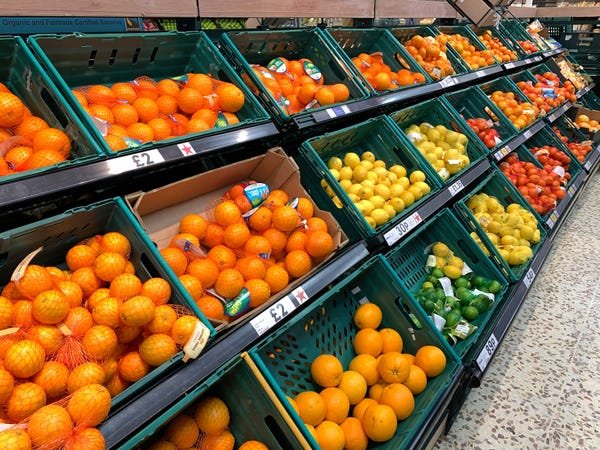
Groceries seem to expire faster, but they taste fresher.

In my experience, groceries in the UK taste much fresher.

Wirestock Creators/Shutterstock

I’ve found that some perishables can go stale very quickly here. Part of the reason is that a lot of the preservatives we add to produce in the US aren’t allowed in the UK.

Though a chicken breast or parsley would have lasted me at least a week in the US, these same goods expire within three to four days in the UK.

This has made grocery shopping a new kind of challenge, but my meals taste a lot fresher.

Non-gel, roll-on deodorant feels practically nonexistent.


A drugstore aisle in the UK.

Since moving to the UK, I’ve had a difficult time finding my favorite type of deodorant.

1000 Words/Shutterstock

One thing that was nearly impossible to find for my first three years living in the UK? A non-aerosol deodorant.

I came across a couple of sticks (also called roll-ons) in stores here, but the formulas were all gel-based. Now, whenever I’m back in the US, I stock up on my favorite non-gel, roll-on deodorants.

Conversational language is very different.


The writer poses in front of the doorway to a garden in the UK.

I was surprised to learn that casual communication is pretty different in the UK.

Nishaa Sharma

I came to the UK knowing that some words would take on new meanings: Underwear would become “pants,” for instance, and pants would become “trousers.”

Still, I didn’t expect casual small talk to look so different. It’s not uncommon to hear “You all right?” or “You OK?” while patronizing a supermarket or café.

As I quickly learned, people asking these questions usually aren’t worried about me having a bad day. They’re basically asking, “What’s up?”

The humor is much drier.


A close-up of people's hands holding pints of beer and cheersing.

I’ve had a few uncomfortable moments adjusting to British humor.

Tint Media/Shutterstock

I don’t have the strongest sarcasm detector, which made adjusting to the British sense of humor a challenge.

It took me a solid two years to get used to the self-deprecating, dry jokes here. As a sensitive soul used to America’s brand of straightforward humor, I even had to ask those around me to dial down the jabs.

Almost everything closes early — especially on Sundays.


A town center in the UK.

Even fast-food restaurants tend to close at about 10 or 11 p.m. in my UK town.

Pete Stuart/Shutterstock

Outside major cities such as London, Birmingham, and Manchester, it’s unusual to find shops open after 5 p.m. — or 6 p.m., if you’re lucky. Even grocery stores typically close by 8 p.m. on weekdays.

On Sundays, most local shops and eateries shut down even earlier. Pubs typically serve Sunday roast dinner between 12 and 4 p.m., and the average town center is fully quiet by 4 p.m.

This was an adjustment for me. Growing up in Oregon, grocery stores were typically open until 9 p.m., and some near my college in Southern California didn’t even close until 1 a.m.

I find myself walking much more often.


A nature trail in the UK.

There’s no shortage of nature trails throughout the UK.

edhphotography/Shutterstock

In most of the US, having a car is a necessity.

In the UK, meanwhile, many of the town centers I’ve lived around — and explored — are designed to be more walkable, with roads limited to pedestrian, bus, and cyclist access only.

The UK’s walking culture has also affected my social life and leisure activities. Though I lived near some beautiful greenery in the US, I often had to drive to visit a walkable nature trail.

Here in Southwest England, though, I’ve found many nature pathways in both bigger cities and smaller towns. Now, walks are a major part of our weekends and social lives.

The average salary is lower here — but the PTO allowances are higher.


A town street in Somerset, UK.

I was surprised and disappointed by UK salaries.

Helen Hotson/Shutterstock

One of the biggest drawbacks of living and working in the UK is that the pay is generally lower.

For example, according to data from the Office for National Statistics, the median household income in the UK in 2024 was £36,700.

The same year, census data showed that the median household income in the US was just over $83,000 — a salary that would’ve been worth at least £60,000 at the time.

On the plus side, full-time employees receive a minimum of 28 paid days off a year here in the UK, whereas US workers aren’t guaranteed any.

We also have a universal healthcare system in the UK, which helps bridge the pay gap in some ways.

The country feels pretty well-connected by public transportation.


Tower Bridge in London on a cloudy day.

Whenever I travel to London, I have an easy time getting around.

Nishaa Sharma

Even though I live in a remote town in the countryside, accessing the major cities is still easy. Many of the UK’s buses and trains run almost every hour.

Whenever I’m in London, I find the nation’s capital easier to navigate than many US cities. The city’s tube system is intuitive and fast, with tubes departing roughly every five minutes.

On the other hand, many trains I’d used to travel between US cities felt slower and more outdated. When I was in college, even getting around a major city such as Los Angeles felt next to impossible without a car.

Still, trains within the UK cost more than flights to mainland Europe.


A train on an autumn day in the UK.

Train prices in the UK can vary.

David Hughes/Shutterstock

Though trains to London are frequent and fast, they can also be really expensive.

A weekday round-trip ticket can cost up to £150 from where I live, nearly triple the price of a budget flight to Spain, Croatia, or Greece.

On the flip side, though, the accessibility of mainland Europe is one of the best parts of living here — and makes planning those extra PTO days I’ve banked much more fun.

This story was originally published on June 2, 2025, and most recently updated on March 9, 2026.


Source link

We-moved-to-Japan-after-nearly-a-decade-of-careful.jpeg

We moved to Japan after nearly a decade of careful planning. Living here is still nothing like we expected.

After a two-week trip in 2015, my husband and I came home completely hooked on Japan.

Reliability was the baseline; trains ran with a clockwork precision that transformed the daily commute into an exercise in discovery. We fell for the profound sense of safety that allowed small children to navigate the streets alone, the atmosphere of the neighborhood shrines, and the level of public order that made everything back home feel chaotic by comparison.

What began as a simple holiday evolved into a total life reset that would take over the next eight years of our lives. We decided Japan wasn’t just a spot to visit but the place we would raise our family.

We stopped saving for the “someday” dream of homeownership in New Zealand and instead invested in the present, putting our money toward several return trips to Japan to scout our new life.

In preparation for our move abroad, we researched local customs and dedicated ourselves to intensive language study. My husband and I enrolled in university-level courses, while we arranged private tutoring for our daughter to give her the best possible start.

We convinced ourselves that if we planned carefully enough, nothing would catch us off guard. By the time the move finally happened in 2023, my husband and I, along with my daughter, felt ready for anything.

We assumed the hardest part would be the logistics of moving and that first wave of culture shock. After two and a half years of actually living here, I’ve learned we weren’t even close.

You cannot plan for a change in identity


New Zealand passports

My husband and I spent almost a whole decade preparing to move to Japan.

Kerri King


I’ve always liked to feel prepared and in control, which is probably why it took me eight years to feel ready to leave New Zealand.

Before we moved, I researched everything I could think of, from how Japan’s specialized health clinics differed from our general practices in New Zealand to the specific paperwork required for city office registrations.

I watched vlogs of people sharing their grocery hauls in Tokyo, noting the prices of staples like milk and eggs, and read blog posts detailing a day in the life of expats in Japan.

Talk of culture shock and language barriers didn’t scare me, as practical problems often have practical solutions. What I couldn’t have anticipated was how living abroad would make me feel like an imposter.

On the surface, I looked confident and capable, sharing photos of our newest adventures with friends and family on social media. In reality, even small, daily interactions left me panicked and second-guessing myself.

My heart would race whenever someone asked me a question, and I couldn’t find the words to respond.

I felt embarrassed every time I had to rely on Google Translate at the supermarket or to make sense of yet another form. A parcel even sat on my bedroom floor, undelivered, for six months because I was too intimidated to figure out the local post-office process.

For someone who built her identity around independence, constantly needing help from others felt frustrating and humiliating.

Being the parent at school who needed things repeated, the customer holding up the line, or the one relying on her husband to translate slowly chipped away at my confidence.

Living without a support system is harder than I thought


Kerri and Dylan King at Kobe Steelers Rugby Game

As much as we love Japan, it’s tough to be far from home.

Kerri King


That same fierce independence I’d always been proud of also meant I didn’t prioritize building a support network when we arrived in Japan.

I assumed friendships would happen the way they always had — through school events, casual chats, and repeated proximity. I figured I’d naturally end up grabbing coffee with a few people, even if the coffee wasn’t quite as good as New Zealand’s.

It turns out friendships are harder to build when language and cultural barriers sit between every conversation.

So instead, I buried myself in work and told myself I was too busy to socialize. Our family travelled most weekends, which made it easy to stay occupied and harder to admit I felt lonely.

The few friends I have made, I love dearly. However, deep friendships take time, and life feels heavier when you don’t have someone nearby to lean on.

That absence felt sharpest when my grandmother passed away in 2024, and I couldn’t show up for my family. I wasn’t able to cook meals for my mum, sit with my grandfather, or say goodbye properly.

Grieving from afar isn’t something you can really plan for; you realize too late that a final goodbye is gated behind a 14-hour flight and a four-figure plane ticket.

Despite the small four-hour time difference, the geography of our new life meant I was out of reach when it mattered most.

Japan has made our lives easier in many practical ways. We save money, travel more, and have access to high-quality medical care whenever we need it.

However, all the convenience and travel in the world can’t replace community.

Even our best expectations didn’t survive real life


Man and woman smiling in front of temple in Japan

Japan gave us the frictionless life we dreamed of, but I’ve learned that convenience is a poor substitute for a sense of community.

Kerri King


Before we moved, we thought we’d covered the language gap: My husband completed a four-year Japanese degree, our daughter grew up exposed to the language, and I studied as much as I could.

We assumed that would be enough to get by, and from a practical point of view, it is. I can grocery shop, book appointments, and navigate daily life without much trouble.

However, existing within a community is not the same as belonging in one. At parent meetings and school events, conversations move too quickly for me to follow, and I rarely feel able to contribute anything meaningful.

Over time, I realized language wasn’t the only barrier to belonging.

Understanding the system’s gears didn’t mean I knew how to be one of them. I understood that Japan prioritizes the group over the individual, but adapting to this is a lot harder in practice.

Every time I asked school staff for an exception for my daughter — a quiet corner during assembly or permission for her to wear her noise-cancelling headphones during music classes — the smiles across the table turned thin and rigid. There was no argument, just a heavy, polite wall of silence that told me I’d stepped out of bounds.

It left me in an impossible spot: I was fighting to get her the support she needed, but by speaking up, I was highlighting the very differences I was trying to help her navigate.

Japan has still given us the life we planned for, just not in the ways we expected. Now, we have to decide if the life we worked eight years to build is worth the community we’re living without.

Read more stories about moving abroad


Source link

We-spent-2-summers-testing-out-living-in-different-European.jpeg

We spent 2 summers testing out living in different European countries. A year later, we’re happily settled in our top pick.

No one really tells you how to look for a home — and I don’t mean a structure with four walls and a front door.

I mean the place you’re proud to be part of, to describe to people who’ve never been, to bond over with strangers you’ve just met.

If I’m honest, my husband Cody and I started our search for a new home from vastly different perspectives: I’m a Guyanese-American Black woman raised by Caribbean parents in an eclectic corner of North Jersey.

I grew up proudly wearing my badge of independence as I took the bus and train between my hometown and New York City, the sound of different languages lulling me to sleep on the way home from Manhattan.

Cody, the firstborn in a blended, mostly evangelical family, jumped at the chance to leave rural Indiana as soon as he was able. He craved walkability, third spaces, and access to culturally diverse communities.

We met nearly 12 years ago in North Carolina and, for a while, found some common ground in Durham — its tight-knit community felt familiar to me, and the (semi) walkable neighborhoods suited him.

When remote companies became our sole source of work, we found ourselves with the freedom and opportunity to do what we hadn’t before: travel overseas.

Soon, we began to wonder if home might exist outside the contiguous US.

Throughout our summer of travel, we began looking for a place to settle


Woman in London smiling

We spent time exploring London.

Ashley Stahm


We’d never been to Europe, so we took two months in the summer of 2023 to travel to Paris, Nice, and Cassis, France; Brussels, Belgium; Amsterdam, Netherlands; and London, England.

Those cities, of course, are as different as the four corners of the US, and perhaps even more so due to linguistic, cultural, and climate differences.

We packed a single checked bag and hauled it from city to city on trains and across cobblestones, shedding our crewnecks and rain jackets as we walked along Amsterdam’s canals for shorts and bathing suits in the south of France.

We loved the bicycle infrastructure in Amsterdam, the café culture in Paris, and the cultural diversity and ample green space in London.

However, our research taught us that the Netherlands, France, and the UK would not be particularly easy countries for us to immigrate to.

Not to mention, we stayed in each city during the summer, experiencing the most vibrant version of each. What would living in London feel like in winter, with the sun lost behind endless overcast skies? What would Paris be like when it rained days on end?


Man with bicycle near bridge, flowers

We enjoyed visiting Amsterdam during the summer.

Ashley Stahm


Around six weeks into our foray across those four countries that summer, we took a beat. What, exactly, were we looking for?

We’d seen Big Ben. We’d seen the Eiffel Tower. We’d biked across canals in Amsterdam, and had Belgian waffles in the place they originated because, well, of course we did.

The magic of our first European tour was captivating, sure, but we were looking for a home.

We realigned on the basics: We specifically wanted a place where we could build a childfree community. We craved places for adults to meet and support one another, with the intent of growing old together.

We never, ever wanted to own a car again. We wanted healthcare to feel accessible. We needed a feasible way to immigrate and integrate, language, bureaucracy, and all.

We wanted to be in this new home for the long haul.

As our travels continued, we found a not-so-great fit and one city that felt right


Man and woman toasting drinks at table, smiling

We spent our travels exploring new places and celebrating milestones.

Ashley Stahm


It was with that renewed direction that we went home and planned for our next trip across the Atlantic: this time to Lisbon, Portugal, and Barcelona, Spain.

Although their two countries shared a border, these two cities couldn’t have been more different to us.

In Barcelona, Catalan was spoken so widely that my high-school Spanish wasn’t as useful as I’d hoped. Between the stifling summer heat and what I perceived as a noticeable lack of visible representation of dark-skinned Black (and Afro-Caribbean) women like myself, the city just wasn’t a match for me.

I wasn’t expecting to see reflections of myself everywhere; I was in Europe, after all. However, knowing that Spain is home to millions of immigrants, I also hadn’t expected to feel so conspicuous and be pored over so much.

Although I left Spain feeling more alienated than ever, Portugal soon stole our hearts.

Everywhere I looked, I saw melanin. Throughout our time in Lisbon, I heard a mix of languages and accents — not just European Portuguese, but also Brazilian, Angolan, and Mozambican Portuguese, along with French and English — reflecting the diversity of the people around me.

I sat among greenery, quiosques, miradouros, and old ladies in crisp slacks with beers in hand at 11 a.m., gossiping with their neighbors before heading to the local tasca for almoço and a pastel de nata.

For us, Lisbon felt like it could be home.

After 2 years of searching, we’ve settled on Lisbon


Woman smiling against colorful door

From the north in Porto to the south in the Algarve, I couldn’t pick my jaw up off the floor.

Ashley Stahm


Eventually, we decided to move to Portugal’s capital city, where we had found walkable neighborhoods and a social community of both locals and expats — just as we’d hoped.

It’s warm and sunny year-round, so we didn’t need to worry so much about possible gloominess during other seasons.

Portugal also offers a universal public healthcare system that seems accessible, plus more visa routes than some other countries we’d considered.

Like most truly multicultural countries, though, it is grappling with geopolitical and economic friction that we’re still learning about.

However, there was what was on our list, and then there was what our hearts needed: A country willing to welcome us, teach us, and be patient (as we figured out how to file our immigration paperwork in a language we’re still learning).

We’re immigrants in a land whose respect we are still earning, alongside friends from all over the globe who are starting over, just like us. The effort is well worth it.

From where we stand, a full two years after we began our search, we’re finally home.


Source link

I-moved-from-Southern-California-to-Michigan-so-I-could.jpeg

I moved from Southern California to Michigan so I could afford to buy a home. Living here changed me in surprising ways.

Born and raised in Orange County, I never considered leaving California until I got married.

We wanted to buy a house and start a family, but generally, the ones we could afford were fixer-uppers in neighborhoods we didn’t love.

So, we began looking at other states where we had family. My husband, who moved from Michigan to Los Angeles in middle school, swore he would never go back — and I couldn’t identify Michigan on a map or tell you one fact about it.

We didn’t want to be beholden to a big mortgage, though, and in Michigan, we could purchase an affordable home in a town known for having some of the state’s top public schools. Even better, we’d be welcomed by my husband’s big Italian family, who lived nearby.

When we told our friends we were moving to Michigan, they were shocked. All any Californian knew about Michigan was that it was cold and snowy — why would anyone choose that?

Now, 20 years later, I can confidently say it was a great decision.

When I first moved to Michigan, I experienced some culture shock


Fresh produce at a farmers market in Michigan.

At first, I had to adjust to the feeling of making small talk at markets and shops.

Kristi Valentini


In Orange County, I was the kind of person who would bury my nose in a magazine to avoid chatting with a hairdresser. I rushed through the checkout line and never said, “How are you doing?” to someone I didn’t know.

If small talk was ever forced upon me, I gave away as little about myself as possible. I never understood the point in discussing my life — or even something as simple as the weather — with someone I didn’t know.

In Michigan, though, small talk is unavoidable. I quickly learned that there’s no getting around friendly cashiers and shop owners. I was begrudgingly polite, but it initially took some effort to hide my impatience.

Chatting with neighbors feels much more commonplace here, too, especially because my subdivision doesn’t allow fences.

I was shocked to go from Orange County’s 6-foot cinder-block backyard walls to wide-open lawns and zero privacy, practically forcing me to interact with my new neighbors any time I gardened or enjoyed a glass of wine on the patio.

Over time, I noticed that having friendly neighbors and being a part of a community made me feel safer and more relaxed


A green backyard in Michigan with several trees.

My new neighborhood has less privacy than my old home did, but I’m glad I’ve gotten to know my neighbors.

Kristi Valentini


The kindness of Michiganders started to change me.

In my first year of living in Michigan, our mailbox got hit by a car while my husband and I were at the gym. Our neighbors had cleaned up the mess and gotten the driver’s info for us by the time we got home.

I was so surprised they would do that for us; it struck me as something that probably wouldn’t have happened back in California.

Then, when we had a baby three years into living here, another neighbor further down the street — one I hadn’t even met yet — brought us dinner just because she saw a baby announcement sign in our yard. I was touched that a stranger would go out of their way to do that for us.

When we started taking our kids trick-or-treating for Halloween, I discovered that Midwesterners do that differently, too. They didn’t just spoil the kids. They set up tables of spiked hot chocolate and Jell-O shots for the adults and invited people to warm up by their driveway bonfires. It became a community event.

Eventually, I found myself initiating connections with neighbors, too — and even starting up some small talk. It began with other dog-walkers in my neighborhood as our pups sniffed each other, and at the grocery store as a pleasant way to pass the time while being rung up.

Living in Michigan has changed what I value in a hometown


The writer posing with her two children in costumes on Halloween.

Living in Michigan has made me appreciate community in a new way.

Kristi Valentini


When I visited California to see friends and family a few years after living in Michigan, I could tell how much I’d changed already. It seemed rude to me when people didn’t say hi when passing me on a sidewalk, or when cashiers didn’t make chit-chat.

Because now, I’m the kind of person who makes caramel apples for my neighbors. I chat with fellow shoppers about candle scents in Crate and Barrel and know about my hairdresser’s children and chickens.

I even decorate my front porch — something I’ve noticed that nearly everyone in my neighborhood does. Seasonal wreaths and flowerpots, chairs with pillows and throw blankets, encourage people passing by to come on up and say hi.

I do sometimes miss California’s backyard privacy, and I’ll never stop using SoCal slang like “cool” and “dude.” Still, I’m glad I moved to a place that helped me become a friendlier person and taught me the value of community. I couldn’t imagine raising my children anywhere else.


Source link

I-used-to-think-living-at-home-as-an-adult.jpeg

I used to think living at home as an adult meant going backward. Losing my dad made me realize I was wrong.

Growing up, when I imagined my 20s, I pictured living in a huge city apartment on my own, with a partner or a quirky group of roommates. I’d decorate my home with chic art pieces, paint the walls a dusty rose, and host dinner parties for my friends.

I was desperate to begin my life. I thought adulthood started when you moved out; anything else felt like going backward.

Then, my dad died, and my entire reality shifted.

Living with family as an adult is often framed as a “failure to launch,” but navigating grief at home with my mom and younger sister helped me rethink growth.

Living at home in my 20s wasn’t easy at first


The writer posing while skiing with her dad and sister.

Initially, I was eager to move out of my parents’ house and live with my boyfriend.

Maya Kokerov


After I finished college at 22, I moved in with my parents while I figured out what my long-term plan would be.

I hoped this would be a very brief stint. Impatient to be more “independent” and worried I was falling behind my peers, I vowed to rent an apartment with my boyfriend as soon as we could afford one.

Before I had a chance to move out, though, the COVID-19 pandemic pushed us into a lockdown. I settled back into living with my family until further notice. There were practical benefits, such as saving money, but I still felt restless.

In ways, I reverted back to a teenager: whispering on FaceTime, sending messages on Snapchat, even sneaking out of my window to meet up with my partner after everyone had gone to sleep. At 22, I felt emotionally crowded and missed the freedom I’d experienced at college.

More than a loss of privacy, though, I was ashamed that I was still “waiting” to reach what I saw as the first big marker of adulthood.

After my dad died, living together became a lifeline


The writer posing on vacation with her parents and sister.

Losing my dad shifted my priorities.

Maya Kokerov


Four years after I moved back home, my dad suddenly passed away.

We couldn’t properly say goodbye. Instead, we sat in fear for months. His chair was empty, leaving a hole in our home.

As guilty as I felt for not always appreciating the years I’d spent with him, I realized how lucky I was to have gotten to spend his last few years at home with him.

Many fathers who get to grow old may never spend as much time with their children as I did with mine, precisely because I stayed home.

My dad had moved out of his house at a young age and lived in four countries. In one of our last one-on-one conversations, shortly before he was admitted into the hospital, he told me how everyone keeps moving to find their place, but everywhere is virtually the same. The main difference is the people that you’re leaving behind.

Looking back, those extra years at home were convenient, yes, but they were also the happiest I’ve ever been. Now, having my mom and sister by my side gives us space to grieve together and mutually support each other.

Memories and rituals reshaped how I define adulthood

As a very tight-knit family, we built our life around traditions, from holidays and vacations to sports and movie nights.

My dad’s favorite activity was spending time with us. He taught us skills like skiing, languages, and playing tennis.

Healing came from returning to the traditions he loved. Although it was challenging at first, we forced ourselves to engage with his hobbies and rituals, reliving our memories together. We cooked his favorite food, sang songs he loved, and played lots of tennis.

With time, the sadness became more tolerable as we created new rituals while preserving treasured old ones.

This wasn’t the “20-something” life I had envisioned, but this version of home became a symbol of my growth precisely because of how much I loved my past. I realized that living at home at 27 isn’t a lack of maturity or a so-called “failure to launch.”

If anything, grief sharpened my sense of responsibility. Adulthood can be communal, and I feel lucky to have familial support. Grief has made living with my family more meaningful, grounding, and empowering than ever.


Source link

My-99-year-old-grandma-taught-me-important-lessons-about-the-power.jpeg

My 99-year-old grandma taught me important lessons about the power of silence, change, and living a good life

My grandma and I spent most of our lives apart, yet she taught me a deeper way to live.

I grew up in California, while my Grandma Jackie lived in Minnesota. We saw each other only on special occasions — summer visits, my high-school graduation, and a few holidays.

Because of the distance, I got to know her through stories from my parents. Most of what I knew about my grandma came from tales of her days fishing, playing slots, and trying her luck at Pokeno.

These stories, mixed in with my own memories of her wide smile and the taste of her one-of-a-kind sweet-potato pie, cemented my connection to her. Yet when she passed away at 99, I felt guilty for not being closer to her.

During my grieving, I reflected on our relationship that flourished despite the time and miles between us. Through our scattered time together, Grandma Jackie gave me three lessons that shape how I live today.

Love doesn’t need many words


Woman smiling in chair lift wearing Minnesota sweatshirt

Although my grandma didn’t always say much, I knew she loved me.

Kiersten Brown


My grandma wasn’t much of a talker — oftentimes, she could communicate more with a smile than with words.

Whenever I visited her, her brown eyes would light up, and in her raspy voice, she would say, “Well, hi sweetie, how ya doing?”

After a few minutes of pleasantries, the conversation would end. Then we would sit together and watch “Wheel of Fortune.” Occasionally, I’d glance at her, and she’d shoot me a smile.

The same pattern played out during her yearly birthday calls, which lasted three minutes, at best. She would sing “Happy Birthday,” ask how I was doing, and end with, “Well, I’ll holla at you later.”

Interactions felt more like small talk with a coworker than chats with a loved one, and these brief interactions made me question our connection. Short conversations made me feel like we weren’t close because we didn’t have much say.

Yet one day after my grandma’s passing I was talking with my aunt who revealed that love is measured in time spend together.

My aunt mentioned that Grandma Jackie often asked about me and prayed for me nightly. Although we didn’t speak often and saw each other less, she was always thinking of me.

This insight made me realize that silence was more of a way of being than a reflection of our relationship. I realize now that not having much to say was a choice rooted in acceptance and love — she was content with simply having me around.

Because of her, I now focus more on appreciating someone’s presence rather than filling space with chatter.

It’s never too late to change how you live and chase life — no matter the circumstances

My grandma had an unwavering will to live and really took charge of her health at the age of 80 when the doctor’s told her that her she might not have much time left.

She quit smoking, cold turkey. She enrolled in exercise programs, walked daily laps around the house, took supplements, and focused on eating more fruits and vegetables.

More than fearing death, I believe my grandma enjoyed life too much not to fight for it. She had always been someone who loved spending time with her friends, enjoyed traveling within her own state, and considered everyone she met a friend.

When I visited my family a year ago, my grandma attended nearly every event. If she saw someone getting ready to leave, she’d ask, “Where we going?” and expected us to bring her with us. It didn’t matter whether we went to the park or out to eat; she made sure to tag along.

Every day I’m reminded that circumstances don’t have to dictate how I live, and her strength has inspired me to live life to the fullest.

Never stop doing what you enjoy


Group of women smiling outside

My grandma tried to spend time with friends and family as much as she could.

Kiersten Brown


As a music lover, she danced whenever her favorite songs came on. When she became less mobile, she would still rock her hips and sway in her chair.

She loved visiting casinos, never focusing on hitting big wins, but rather finding pleasure in simply playing. During her last few years of life, she attended virtual and in-person family bingo every Friday night. When she craved cake and ice cream, she would have some — in moderation, of course.

As time goes on and I grow older, I’m committed to following my grandma’s example. I will be dancing, hiking, and hanging out with friends for as long as I’m alive.

I’d say my grandma reached 99 for two reasons: good genes and complete dedication to living her life the best way she could. Because of her, I live with more purpose and intention.


Source link

After-living-in-South-America-for-7-years-theres-just.jpeg

After living in South America for 7 years, there’s just one region I always recommend to first-time visitors

In 2018, I moved to Ecuador for a “short time,” only to find myself captivated. I stayed for over seven years.

During my time in Ecuador, I was lucky enough to travel across the country, and though I was awed by the lush life in the Amazon rainforest, wowed by the coast, and truly amazed by the famous Galápagos Islands, the part that really captured my heart was the Andean Highlands.

One of the most impressive mountain ranges in the world passes through Ecuador. The Andes Cordillera is full of incredible sights, unique ecosystems, and unforgettable experiences. I believe there’s something here for everyone, from vibrant cities to towering volcanic peaks.

When making their itinerary for a trip to Ecuador, many people carve out most of their time for the jungles and the coast, and though these are great destinations, people are (literally) skipping over a real jewel: the Highlands.

Quito is so much more than a stopover city


Colorful buildings in Quito's historic center.

It’s easy to spend several days exploring Quito.

AscentXmedia/Getty Images


Ecuador’s capital city, located in the Highlands, is home to many beautiful parks and sights, museums and galleries, and world-class restaurants and artisanal breweries.

With elaborate churches, colonial architecture, and plenty of restaurants with stellar views, it’s easy to spend a few days exploring.

I love driving to The Panecillo, a small mountain topped with a massive Virgin Mary statue, which offers gorgeous views of the historic center below.

I also recommend visiting at night to enjoy the sprawling city lights while drinking a traditional canelazo, a hot beverage made with naranjilla fruit and cinnamon.

On top of all that, Quito has a rich history. You can learn all about it at its historical center, which just so happens to be one of the first UNESCO World Heritage sites.

There are also other great towns and cities to visit in the region

Quito might be the largest city in the region, but there are tons of other places worth exploring, too.

A few of my favorites are Otavalo, Papallacta, and Baños de Agua Santa. Otavalo is only two hours north of Quito, and is known for its colorful markets and scenic landscapes. There is also plenty of great traditional food to be found here — make sure you try a locro de papa, an amazing cheese-and-potato soup.

Papallacta, just an hour from Quito or from the airport, is a smaller town, but one that’s famous for its wonderful hot springs nestled among lush mountain tops. The public hot springs have many pools for relaxing, as well as cold plunges.

Baños is around four hours south of Quito, on the border where the Andes start to turn into the Amazon. I find this town to have the perfect mix of access to nature and adventure, lovely hotels and restaurants, and nightlife.

If you love the outdoors, this region is a must-visit


The writer posing on a cloudy hike in the Ecuador Highlands.

The hiking here is unlike anywhere else.

Kirstynn Joseph


For those who, like me, enjoy spending time in nature, the scenic route here is even more special. With most hikes even starting at heights of over 9,000 feet above sea level, the mountains — many of them volcanoes — still tower over you.

Rugged rocks and gleaming glaciers dominate the peaks; you’ll spot lots of bright green cushion plants and fields of golden grasses swaying in the winds. Bright-orange chuquiragua plants, found only at these high altitudes, dot the landscape.

One of my favorite hikes is Rucu Pichincha. After riding the Telefériqo cable car to the base camp — which has an incredible view of Quito, a lovely café, and many great spots for photo ops — you can begin to hike up the trail.

Here, you will experience the biodiverse páramo ecosystem and finish at more than 15,000 feet above sea level.

Elsewhere, in different directions but all within a few hours of Quito, the Antisana, Cayambe, and Cotopaxi volcanoes are sky-high with towering peaks covered by glistening glaciers that not even the equatorial sun can melt.


The view of turquoise water from a Quilotoa hike.

The Quilotoa crater lake is a must-visit.

Kirstynn Joseph


Last but not least, Quilotoa volcano, which is in the same province as Cotopaxi and just a bit further away, holds a turquoise crater lake where you can kayak — one of my absolute favorite things I’ve done here.

I may be biased, but I believe this region is one of the most underrated places in the world. If you find yourself in South America, it is absolutely worth it to set some time aside to get to know the Andes and everything they have to offer.

Just be careful on your journey there — you, too, may also find yourself staying just a bit longer than you planned.


Source link

Meagan Drillinger, freelance writer

I travel for a living and can’t wait to get back to Mexico

After cartel violence erupted across the Mexican state of Jalisco this week, images and videos of burning cars and buildings, shuttered storefronts, and cities grinding to a halt hit the news. Flights into and out of Puerto Vallarta and Guadalajara were canceled. Residents were told to shelter in place and to ensure they had enough food and water. Tourists were on lockdown and frightened.

I watched it all from far away in Seattle, where I’m currently traveling, as my phone lit up every 15 seconds with messages of panic, forwarded video footage, and WhatsApp voice notes from friends and loved ones on the ground in Puerto Vallarta.

For most people, Puerto Vallarta was just one of several cities mentioned in the news cycle, but for me it was different — it’s been my chosen home base for the last five years.

I travel for a living, but Puerto Vallarta has always been special

My relationship with this city on Mexico’s Pacific coast began more than a decade ago, on my first visit in 2013. At the time, Puerto Vallarta was just another reporting assignment at a beach destination, but something hit differently, and I kept returning. It became the place I ran to whenever I needed a break from real life. Each visit stretched longer. By much of 2024 and 2025, I was there full-time.

When you spend that much time in a place, it stops feeling like an escape and becomes the backdrop of real life. You learn the traffic patterns, see familiar faces at the coffee shops and bars, pick up your mail. Routine sneaks up on you; it becomes home.

You also build relationships. As I watched footage of a still-smoldering flame-licked car skeleton at an intersection just a few blocks from my last address, I listened to voice notes from friends. Fear sounds different when it comes from people you love.

For decades, Puerto Vallarta has been framed as one of Mexico’s easiest international trips

You don’t need to be a seasoned traveler or an adrenaline seeker to feel comfortable there. There are direct flights, large resorts, familiar comforts, and an infrastructure built around welcoming visitors.

Read more stories about Mexico travel

Plus, it’s jaw-droppingly gorgeous with that broad, blue curve of the Bay of Banderas and the jungle-covered crown of peaks that rise behind it.

For many Americans, Vallarta has been shorthand for “safe Mexico.” Could incidents like this change that perception? Inevitably, for some.

Travel decisions are rarely driven by data alone. They are fueled by emotion, personal tolerance for uncertainty, and individual experience. As happens after virtually every high-profile incident in Mexico, reactions tend to fall into familiar categories. There will be people who write Mexico off forever as a country to visit or live. Others will decide to wait and see.

And there will be people, like me, who are already itching to return because they understand something fundamental about moments like this: They’re traumatic precisely because they are disruptions, not constants.


Woman near ocean in Mexico

The author says reports of violence in Mexico this week only increased her desire to return.

Courtesy of Meagan Drillinger


Like any place anywhere, Puerto Vallarta and Mexico are much more than their worst moments

Violence in Mexico is real. It’s serious. It’s also limited to very specific parts of a massive country. Mexico is vast and regionally complex. Episodes of cartel-related violence, while alarming, do not function as a constant across daily life in most destinations Americans visit.

Moments like Sunday’s violence highlight a perception gap that often shapes how Americans think about risk abroad versus risk at home. Americans tend to discuss violence in Mexico as though it exists in a fundamentally different category of danger. Yet in recent years, the US has developed its own unsettling familiarity with public acts of violence, mass shootings, random attacks, and sudden disruptions.

There is no longer a clean psychological divide between “safe at home” and “dangerous abroad.” We are, increasingly, navigating variations of the same reality.

I have no hesitation about returning to Puerto Vallarta

Living in Puerto Vallarta has not made me dismissive of safety concerns. What happened across Jalisco is devastating and serious. But living there has grounded my understanding of the city in lived experience rather than episodic headlines. It has made moments like Sunday’s violence feel personal without altering my relationship to Puerto Vallarta.

Watching the videos didn’t make me want to run further from Vallarta. If anything, it made me wish I were there with the community I love.

So, when do I plan to return? Soon. I’ll be heading back to Mexico in early March, this time to Puerto Escondido, Oaxaca, nearly 1,000 miles away from Puerto Vallarta. (Yes, Mexico is really big.) I have no hesitation about going. And, truthfully, if logistics allowed, I would go back to Puerto Vallarta this week. It’s not just a vacation destination to me, and it’s not just a clip on the news. It is nearly 13 years of memories, friendships, routines, and a sense of home that I have built over time.

Like any place anywhere, Puerto Vallarta and Mexico are larger than their worst moments. Like any place you love, those moments do not erase the steadier, more enduring reality of everyday life that surrounds them.


Source link

Lauren Crosby

I bought a house with my best friend. It’s the best living situation I’ve ever had.

This as-told-to essay is based on a conversation with Sarai Saez Rogers, a 36-year-old mom. It has been edited for length and clarity.

When Claire, my best friend for over 10 years, and I laid eyes on the late-18th-century duplex with a big front yard, we knew it was the perfect house to buy together.

We’d gotten to know each other in New Mexico, where both of our husbands were stationed while in the military. For 10 years, we were each other’s community. Neither of us had family around, so we had to make our own support systems.

We both got divorced

My husband and I divorced, and there was a six-month period when Claire’s husband was deployed. The two of us practically lived together for those six months. We cooked and ate together, picked each other’s kids up from school (she has two, and I have one), worked out together, and even had family sleepovers. I found that being a single mom didn’t mean I had to shoulder the load alone.

I moved to Maryland for a new job. I quickly found out how expensive it was to be a single parent, and relocated to upstate New York to live with my parents.

Claire and her husband then divorced, and she moved in with her parents in Wisconsin.

We stayed in touch, both dreaming about what it would be like to buy a house, but knowing we couldn’t afford it as single parents. Although we both appreciated living with our parents, it wasn’t an ideal situation after being used to living independently for so long.

We bought a house together

At some point during our phone calls, we considered moving in together. We trusted, respected, and liked each other. We’d both say that for the first time in a long time, we knew what it was to feel safe with another person, to be loved for who we were, rather than for who someone wanted us to be.

I had a steady income and credit, and Claire had savings, so we’d be a team if we were to buy a house together.


Friends jumping in front of house

Sarai Saez Rogers bought a house with her bestfriend.

Courtesy of Sarai Saez Rogers


In the summer of 2024, Claire visited us in New York, and on somewhat of a whim, we decided to look at houses for sale.

We saw a happy, yellow duplex, one that our real estate agent tried to dissuade us from viewing, as it was a bit odd, and both fell in love. It was built in the 1800s with period features, located on a quiet street, with a huge yard speckled with trees. It had originally been a farmhouse with different families, so it was a perfect setup for us. There are two bedrooms upstairs, and three downstairs, with a bathroom and kitchen on each floor.

We bought it, and every day, even on the days we have arguments, I’m so glad we made the decision to live together.

I get to live with my best friend

In a world where friendships aren’t always cherished because we’re too busy, I get to see my best friend every single day. We support, love, and are there for each other at the drop of a hat.

Recently, we had gin and tonics and watched “Mulan” together, belting each song. By bucking the trend that says our setup is reserved for youth, we’re experiencing the closeness many people have when they share rooms or houses in their early 20s.

One of the questions people have asked us is what we’ll do if we develop romantic connections. I tell them we both are in romantic relationships. Claire and I have boyfriends, but why should that impact our home situation? We don’t have to move in with partners out of necessity, but only if we choose to.


Women moving washer

Sarai Saez Rogers says her friendship with Claire is one of the deepest relationships she’s had.

Courtesy of Sarai Saez Rogers


We’ve also discussed the possibility of partners moving in — splitting the house right down the middle and having separate rather than shared living spaces.

Another question people ask is what happens if and when we argue. This is an easy one. I don’t think deep, authentic relationships can exist without conflict. In any relationship, romantic or platonic, there will be disagreements. It’s healthy if it’s dealt with in a caring, respectful way.

When we argue or get on each other’s nerves, we take space and then come back together to talk it through. It’s made us closer, rather than driving us apart.

I’m never taking friendships for granted

After my divorce, I thought a lot about how, for years, romantic love had been the epitome of a relationship, the most ideal love to build a life around.

Since living with Claire, I’ve realised I was wrong. My friendship with Claire is one of the deepest relationships I’ve ever had. Why would I not move in with her? Why would I not build a life alongside her? With her, with my friend, I feel like I’m not just surviving, but thriving.

Even though I am in a romantic relationship with someone else now, I’ll never take friendship for granted again.

Bucking convention, buying a house and living with my best friend has made me incredibly happy, happier than I ever have been.


Source link

I-moved-to-France-after-falling-in-love-with-it.jpeg

I moved to France after falling in love with it during summer visits. Nothing could’ve prepared me for living here full-time.

I’m originally from the Bahamas, but my love for France began while working there as an English language camp counselor every summer from 2011 to 2014.

Year after year, I fell more in love with the country — and, soon, the seed of a plan to live here began to sprout its roots. In August 2015, I finally packed my bags and made my dream of living in France a reality.

However, no amount of prior experience coming here for short spurts could’ve prepared me for moving to France and actually living there.

I underestimated how tough navigating the language barrier would be


Woman with hands in air smiling on stone path with flowers, building behid her

I wish I’d learned more French before I moved.

Nicole Bedford


Living in a foreign country can be a daunting shock to the system when you don’t speak the native language.

I knew my French being limited to phrases like “hello” and “thank you” would put me at a disadvantage — but I still wasn’t prepared for the frustration I’d feel and the judgment I’d get for being no better than a toddler trying to communicate.

Once I arrived in Rennes, where I’d chosen to move, it became clear to me English was not prevalent, and that I would need to navigate all my administrative procedures with limited French.

To navigate day-to-day transactions, such as opening a bank account, I used Google Translate to create a script. It was challenging, but I managed to get things done.

This experience taught me to never underestimate a language barrier or assume you can rely on English abroad — not even in big cities.

As a word of advice, if you plan to move to France or any country where you do not speak the native tongue, be sure to take classes in that language for six months to a year before you go.

Doing so will help you navigate day-to-day life and ensure a more seamless integration — especially when navigating the paperwork and administrative tasks that come with moving.

The slower pace of life has been nice, but it took me a bit to adjust to shops’ limited hours


Woman smiling at vineyard

It’s been nice getting to relax more often.

Nicole Bedford


Europe is known for having a slower-paced lifestyle than much of North America. However, I still couldn’t believe how relaxed my day-to-day life became after I moved — or how quickly I was able to get used to it.

My first summer living in France without having to work the whole time was the most surprising. During August, entire businesses close for summer holidays and cities feel emptier as locals go on vacation for two or three weeks at a time. It was refreshing.

I’ve grown to really appreciate how the French know how to relax and enjoy life. However, it did take me a little longer to get used to shops here having limited hours.

Businesses like pharmacies, grocery stores, clothing shops, and even private clinics often close before or just after sunset throughout France — even in many major cities.


Woman sipping from mug in front of Le Scoop

I’ve learned to check the hours on a business before I check it out.

Nicole Bedford


A lot of businesses are also closed on Sundays, as it’s meant to be a countrywide day of rest.

This was a bit jarring since I come from a country where many stores are open late for convenience — some are open 24/7, seven days a week.

However, I’ve since learned how to plan accordingly and mark which errands are time-sensitive on my to-do list.

Ultimately, though, this experience reminded me that no amount of research can prepare you for moving to a new country. There will always be surprises around the corner — but, for me, moving here has been worth it.


Source link